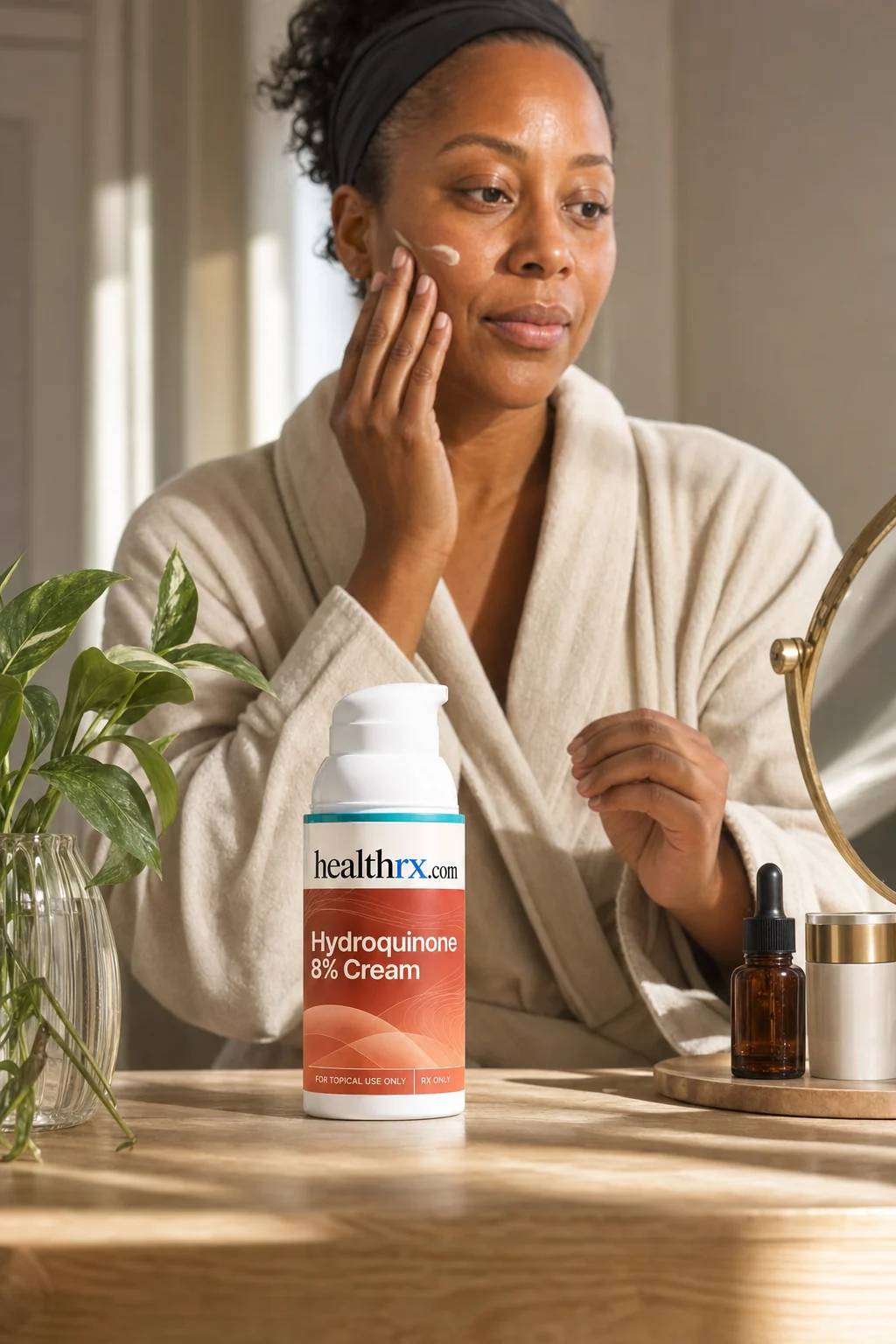
Four actives on the pigment pathway
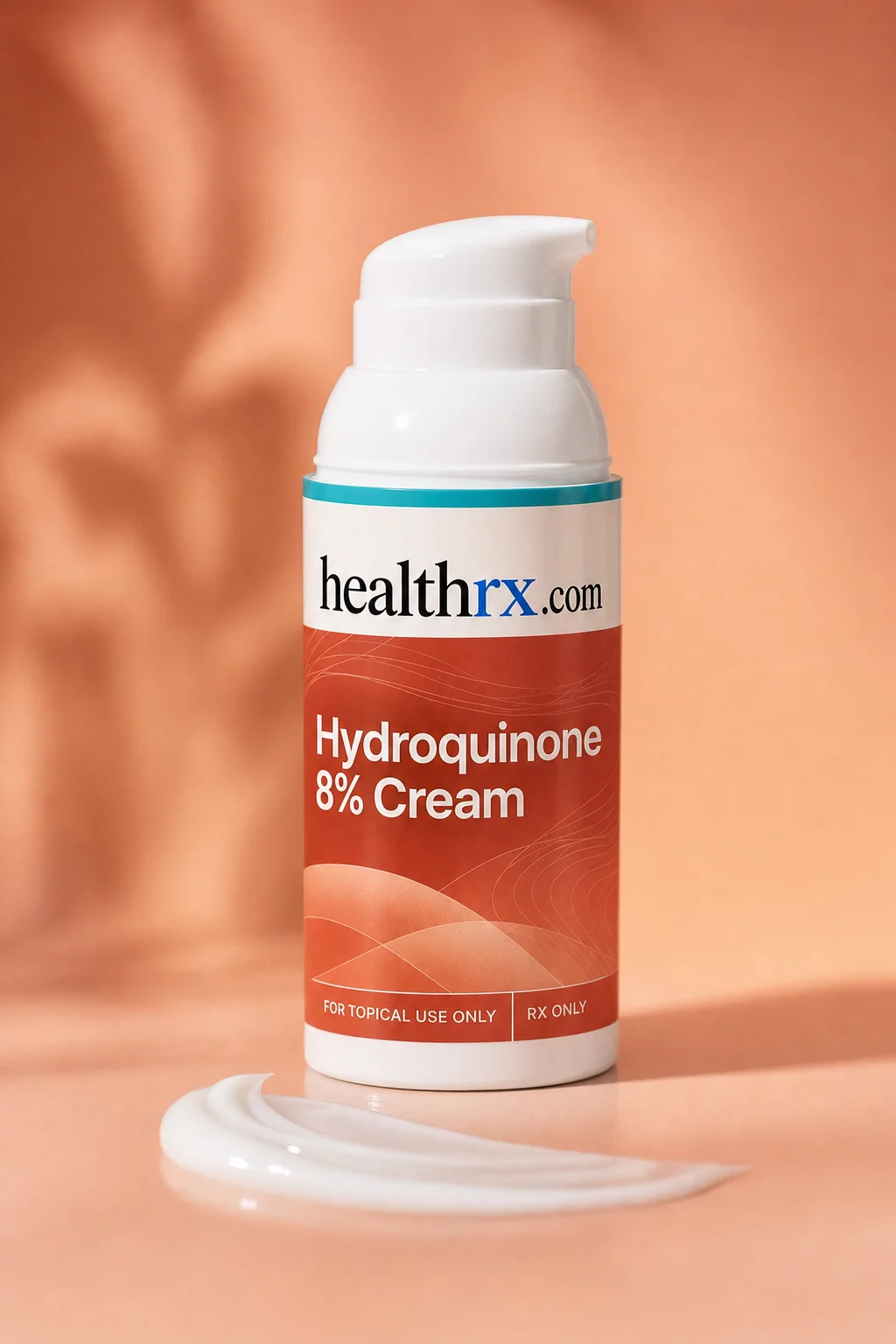
Prescription hydroquinone is compounded with tretinoin, vitamin C, and niacinamide, so your cream works on several points in melanin production at once instead of just one.
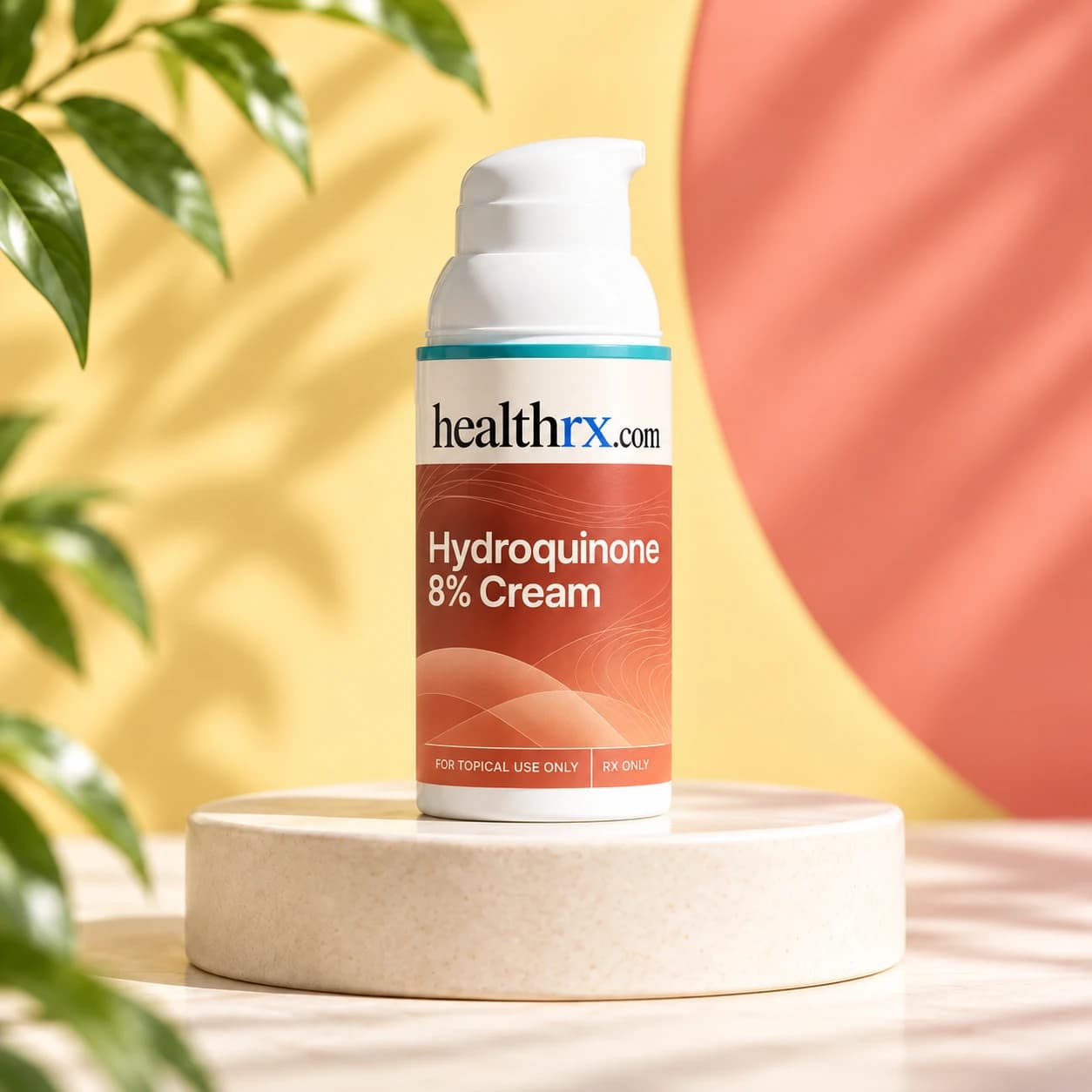
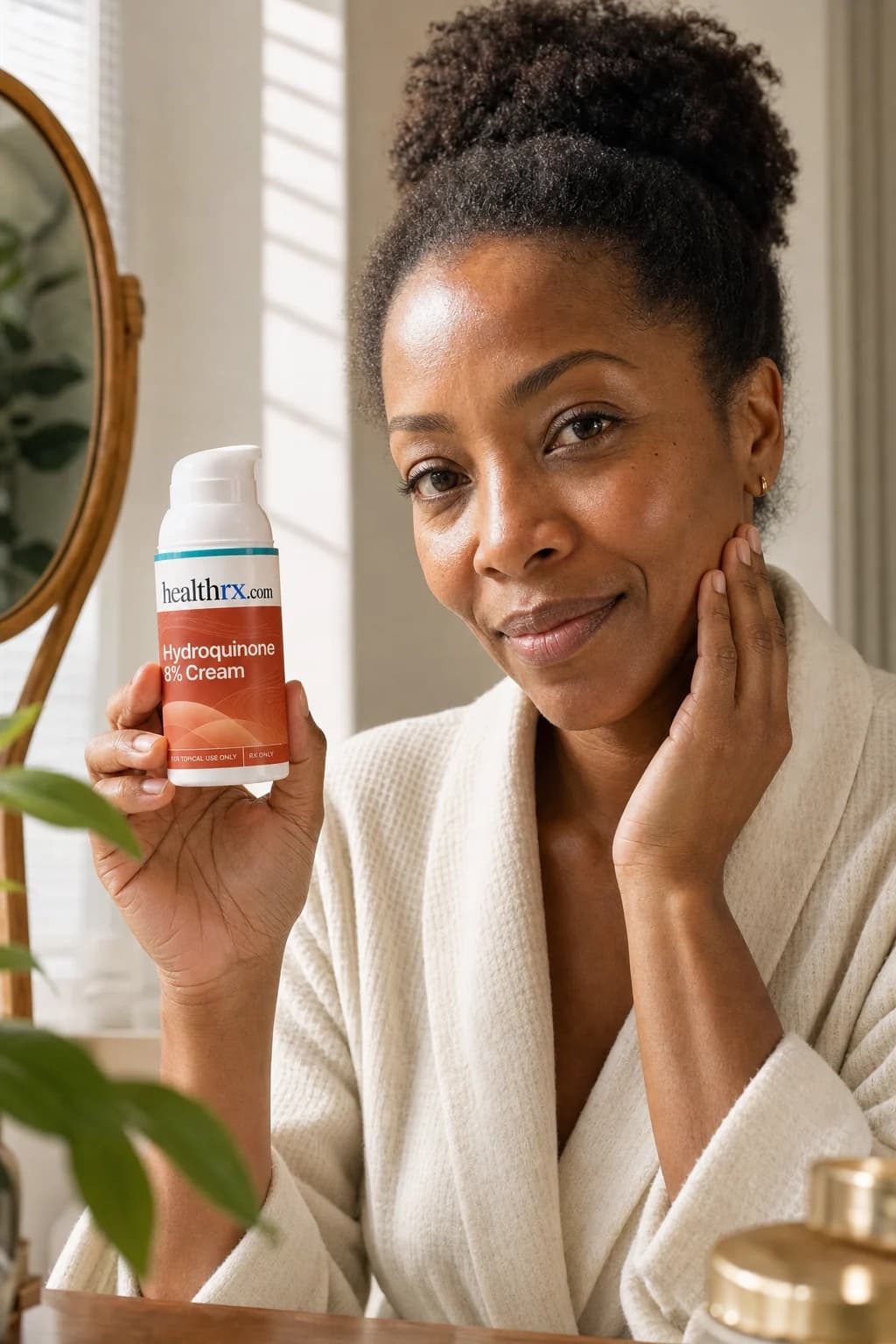
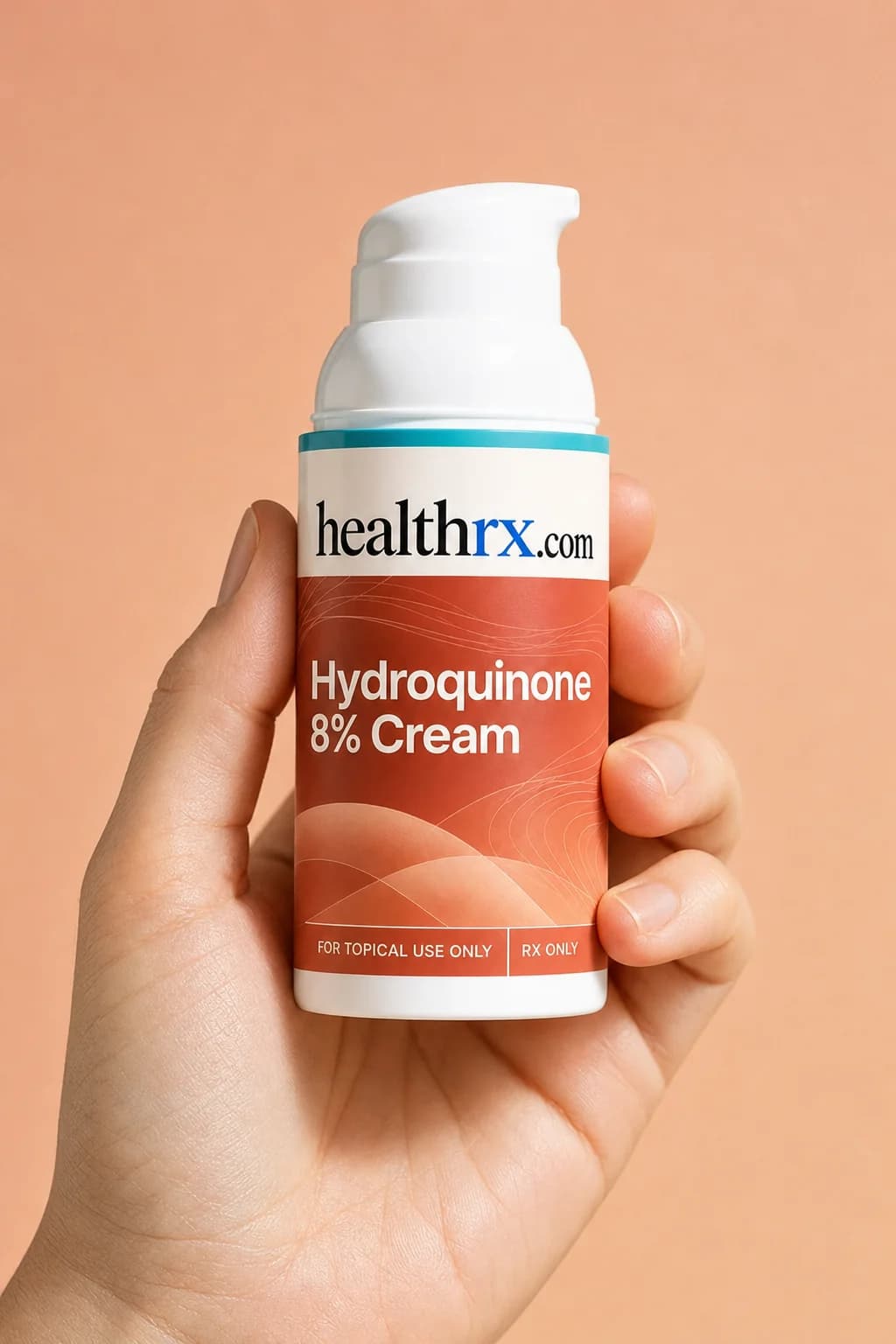
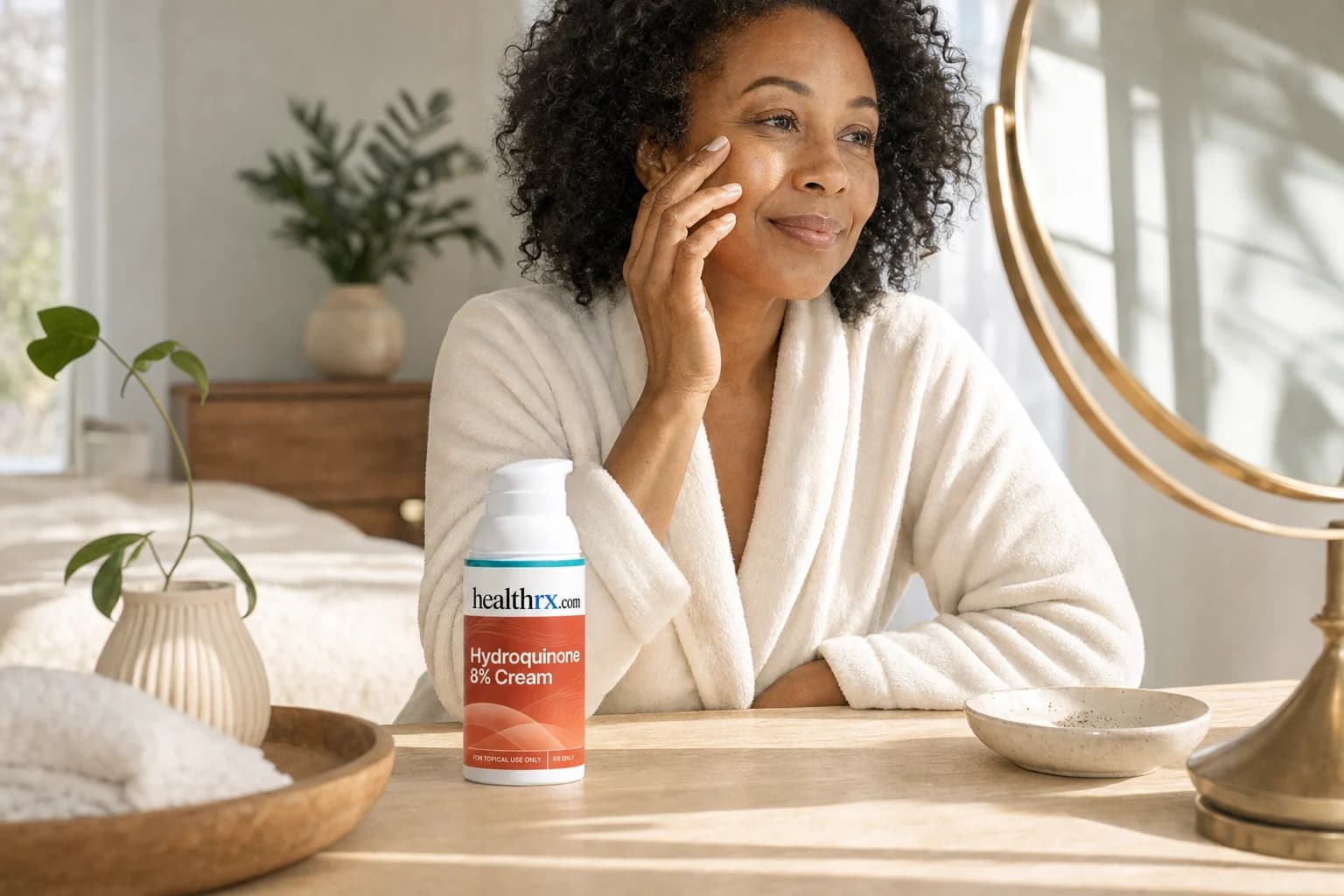
The people pictured are models, not patients.
RxPrescription Skincare
For the dark spots that stay.
40,000+ products sold · LegitScript certified
Hydroquinone 8% cream · With tretinoin, vitamin C and niacinamide
Pause, change, or cancel anytime from your account.
How Would You Like To Pay?
Choose Your Plan
Or pay with
$134 billed today, then every month until canceled.
Not prescribed? Full refund.
After checkout you complete a short medical review in your member portal, and a US-licensed provider reviews it before your hydroquinone cream ships.
Full refund if not prescribed Free, discreet shipping Cancel anytime






Order today and here is what happens next
Common questions
 LegitScript certifiedCert. 50087439
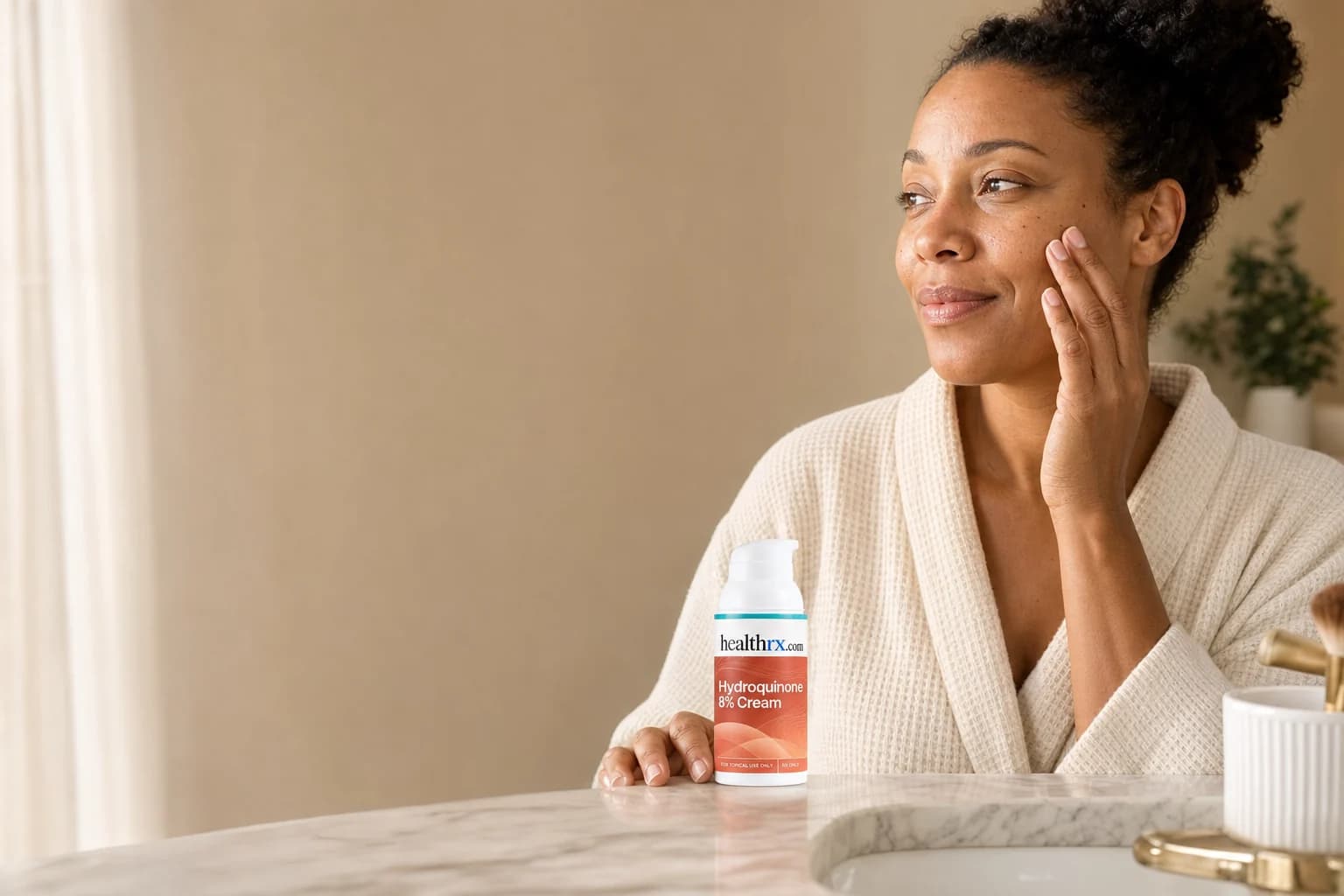
Morning skincare
The people pictured are models, not patients.
Prescription hydroquinone is compounded with tretinoin, vitamin C, and niacinamide, so your cream works on several points in melanin production at once instead of just one.
At 8 percent, the hydroquinone in your cream is stronger than anything sold over the counter, dispensed by a US-licensed pharmacy on a provider's prescription.
Hydroquinone is used in defined cycles rather than continuously. Your provider sets the length and the breaks so you get results without overusing it.
A US-licensed provider confirms this cream is appropriate for your pigment concern and skin type before it ships. Real pricing, shown up front.
How we compare
Understand your treatment
This cream combines hydroquinone 8% with tretinoin, vitamin C and niacinamide. Hydroquinone is studied for reducing melanin production, while tretinoin provides a retinoid component. The combination gives this listing a more specific identity than a general brightening product. Pigment-focused treatment differs from addressing pores or inflammatory blemishes, even when those concerns occur together. Compare the complete formulation with the separate hydroquinone, kojic acid and niacinamide blend.
A closer look
Focus on pigmentation, not every skin concern.
Make a more informed choice
Hydroquinone targets pigmentation biology. Tretinoin acts through retinoid signaling. A combination formula brings separate roles together, so compare the listed actives and strengths.
HealthRX.com verified facts
Hydroquinone 8% Cream starts at $107 per month on 12-month plan; the lowest checkout charge is $134 (billed monthly). A prescription is never guaranteed. A licensed provider reviews each request before a pharmacy can dispense treatment.
Catalog verified August 26, 2026. Source: HealthRX.com checkout catalog and refund policy. Monthly equivalent divides the discounted plan charge by the number of months; checkout may collect a multi-month total.
Choose your treatment options and complete secure checkout. Then complete the online health intake.
A licensed physician (MD) reviews your completed intake and prescribes your cream if it is appropriate for you.
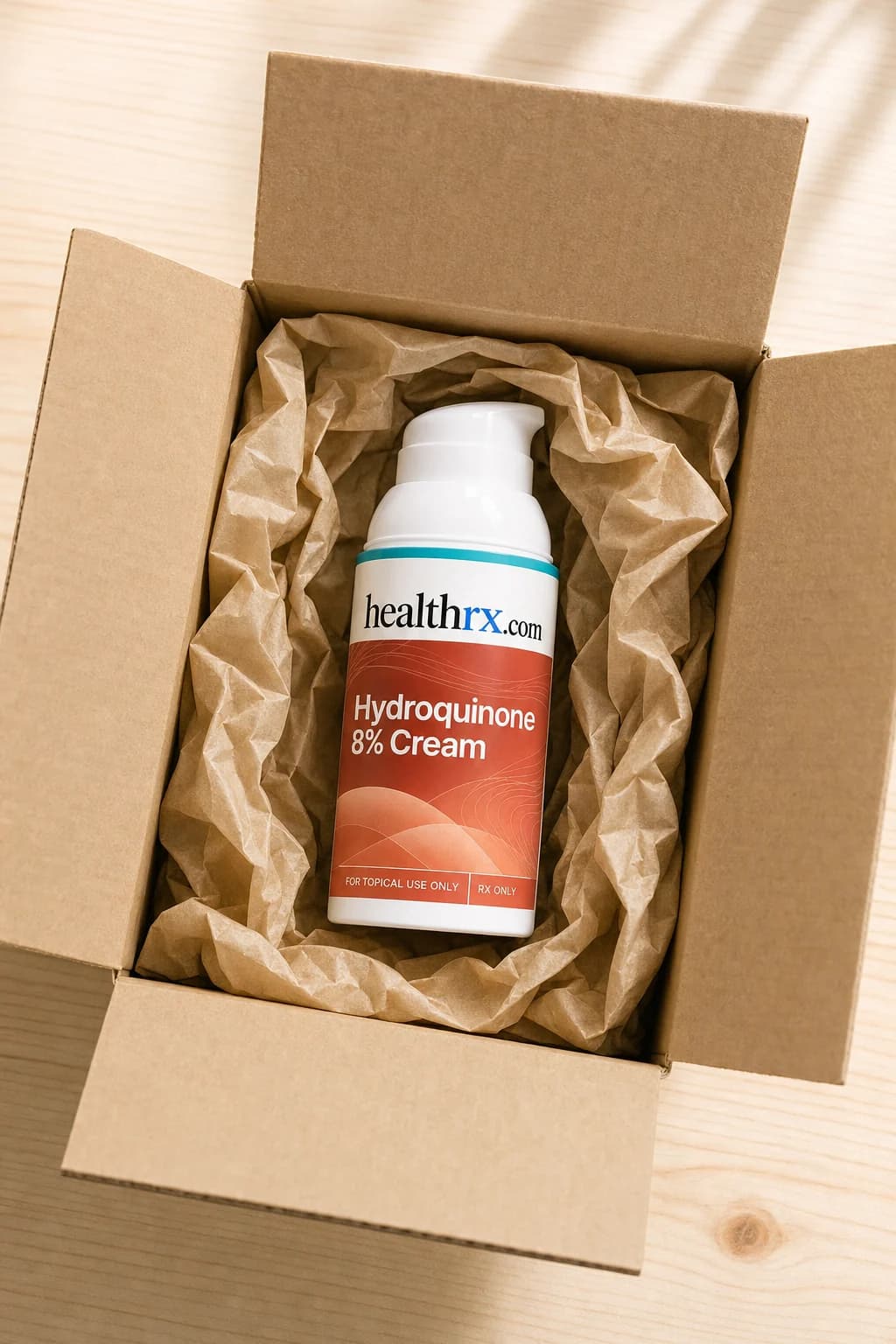
A US-licensed pharmacy compounds your formula and ships it free in discreet packaging.
Message your care team anytime, and your provider guides your cycle and adjusts your plan as your skin responds.
Over-the-counter brighteners cap out below the strength that moves stubborn pigment. This is prescription hydroquinone compounded with tretinoin, vitamin C and niacinamide, targeting three points in the pigment pathway at once. It runs as a cycled course, not indefinitely, and your provider tells you when to pause. Compounded by a US-licensed pharmacy.
Hydroquinone reduces melanin production; tretinoin speeds turnover, niacinamide limits pigment transfer, vitamin C supports brightening. Compounded by a US-licensed pharmacy.
Hydroquinone slows new pigment
It inhibits tyrosinase, the enzyme your melanocytes use to make melanin, so less new pigment forms.
Tretinoin speeds cell turnover
The retinoid moves pigmented cells up and out faster and helps the other actives penetrate.
Vitamin C and niacinamide support the effect
Vitamin C limits pigment production and niacinamide slows the transfer of pigment into skin cells.
Less new pigment forms, and existing spots can gradually fade over a provider-guided course.
The actives in your cream have each been studied on their own for melasma and hyperpigmentation. This exact compounded combination has not been tested as a single product, so the research below reflects the individual ingredients, studied at their own strengths.
93%
In a double-blind randomized melasma trial, hydroquinone 4% produced good to excellent improvement in 93 percent of patients by clinician and patient assessment.
Espinal-Perez et al., Int J Dermatol 2004
44%
In a separate double-blind randomized melasma trial, niacinamide 4% produced good to excellent improvement in 44 percent of patients, with fewer side effects than hydroquinone.
Navarrete-Solis et al., Dermatol Res Pract 2011
Two ways to approach stubborn dark spots
| Compounded hydroquinone cream | Over-the-counter brighteners | |
|---|---|---|
| Prescription hydroquinone | Yes, at 8 percent | Not sold over the counter |
| Number of actives | Four, across several pigment steps | Usually one or two |
| Provider oversight | Reviewed and titrated by a provider | None |
| Use pattern | Cycled course with planned breaks | Continuous and indefinite |
| Strength grade | Prescription grade | Cosmetic grade |
| Cost up front | Higher, provider and prescription included | Lower |
Discrete spots often lighten around week four to eight; melasma takes closer to three or four months. Daily sunscreen is essential, or pigment returns.
Weeks 1 to 2
Begin nightly application after your provider confirms your prescription. Some mild dryness or flaking from the retinoid is normal as your skin adjusts, and daily sunscreen starts now.
Weeks 4 to 8
Individual dark spots and post-acne marks often begin to fade first. Keep using sunscreen every day, or pigment can return.
Months 3 to 4
Broader melasma tends to take longer and improves closer to the three to four month mark with consistent use.
Ongoing
Your provider guides breaks in your course to protect your skin, then sets a maintenance plan to hold your results.
Not prescribed in pregnancy. Used in cycles rather than continuously, because long unbroken use can cause a paradoxical darkening called ochronosis. Stop and contact your provider if skin darkens.
This is not a complete list of side effects. Hydroquinone is used in time-limited cycles, not indefinitely, because long unbroken use can cause ochronosis, a paradoxical darkening of the skin. Wear sunscreen every day or pigment can return. This cream is not used in pregnancy because it contains a retinoid. Tell your provider about every product you apply and any history of skin reactions before starting.

Tretinoin 0.025 / 0.05 / 0.1%
From $122/mo
Learn More
Tretinoin + Niacinamide 4% + Hyaluronic Acid
From $107/mo
Learn More
Dapsone 3% / Tretinoin 0.07% / Niacinamide 4%
From $143/mo
Learn More
Oxymetazoline 0.88% / Ivermectin 0.88% / Niacinamide 4%
From $122/mo
Learn MoreNo prescription needed. Dietary supplements to keep alongside your skin care routine, sold separately from prescription treatment. Ask your provider before adding one to your routine.
Dietary supplements, not medications. These statements have not been evaluated by the Food and Drug Administration. These products are not intended to diagnose, treat, cure, or prevent any disease.
An independent US-licensed clinician reviews every request. If they decide the treatment is not right for you, you get a full refund for the medication.
Prescriptions are filled by a US-licensed pharmacy and shipped free, in discreet packaging, on every plan.
LegitScript-certified · Cert 50087439
Compounded medications are prepared by a US-licensed pharmacy and are not reviewed by the FDA for safety or effectiveness. Products are dispensed only after a licensed provider determines they are appropriate. Information here is educational and is not a substitute for medical advice.


