A mitochondrial electron carrier
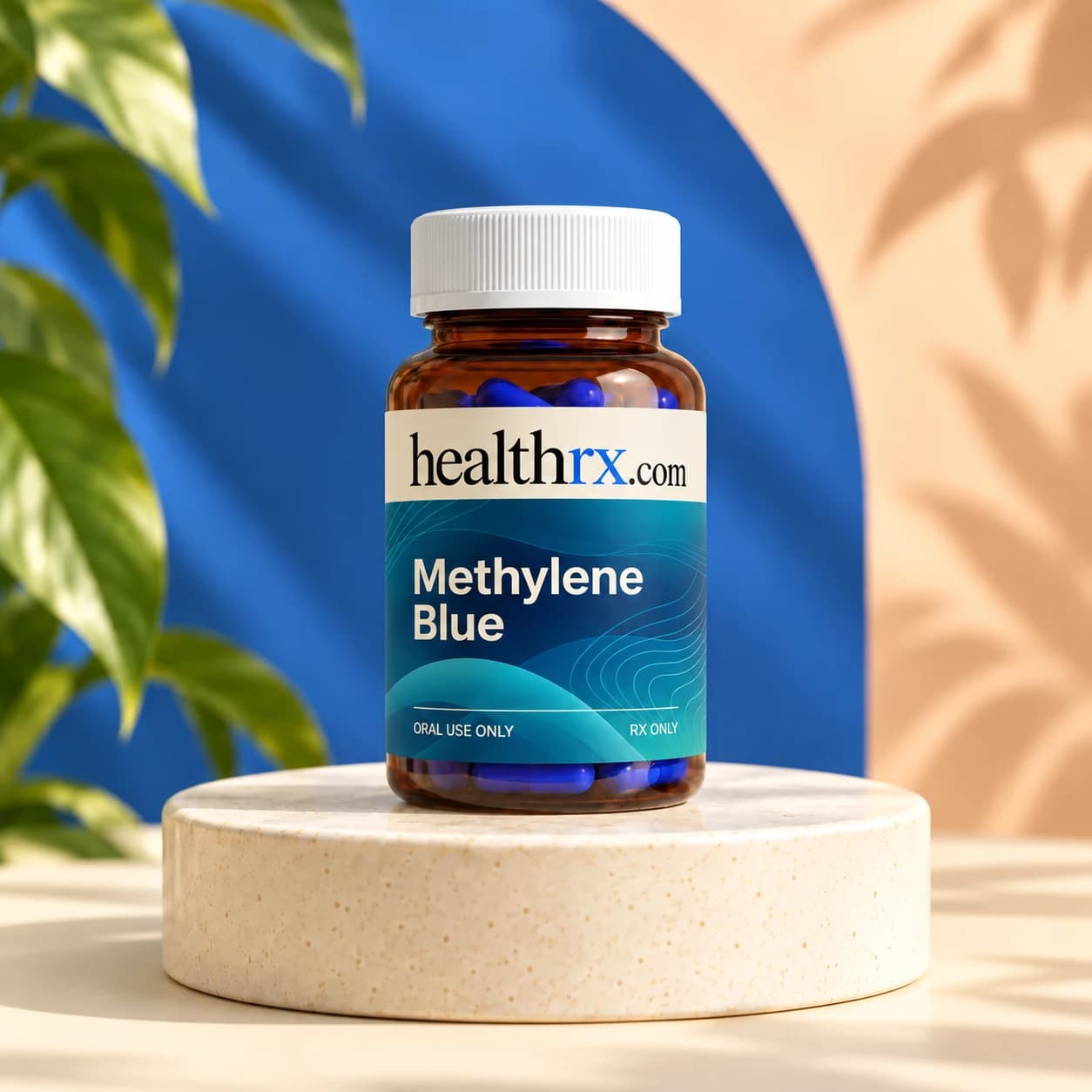
Methylene blue is a redox-active compound studied as an alternative electron carrier in the mitochondrial electron transport chain.
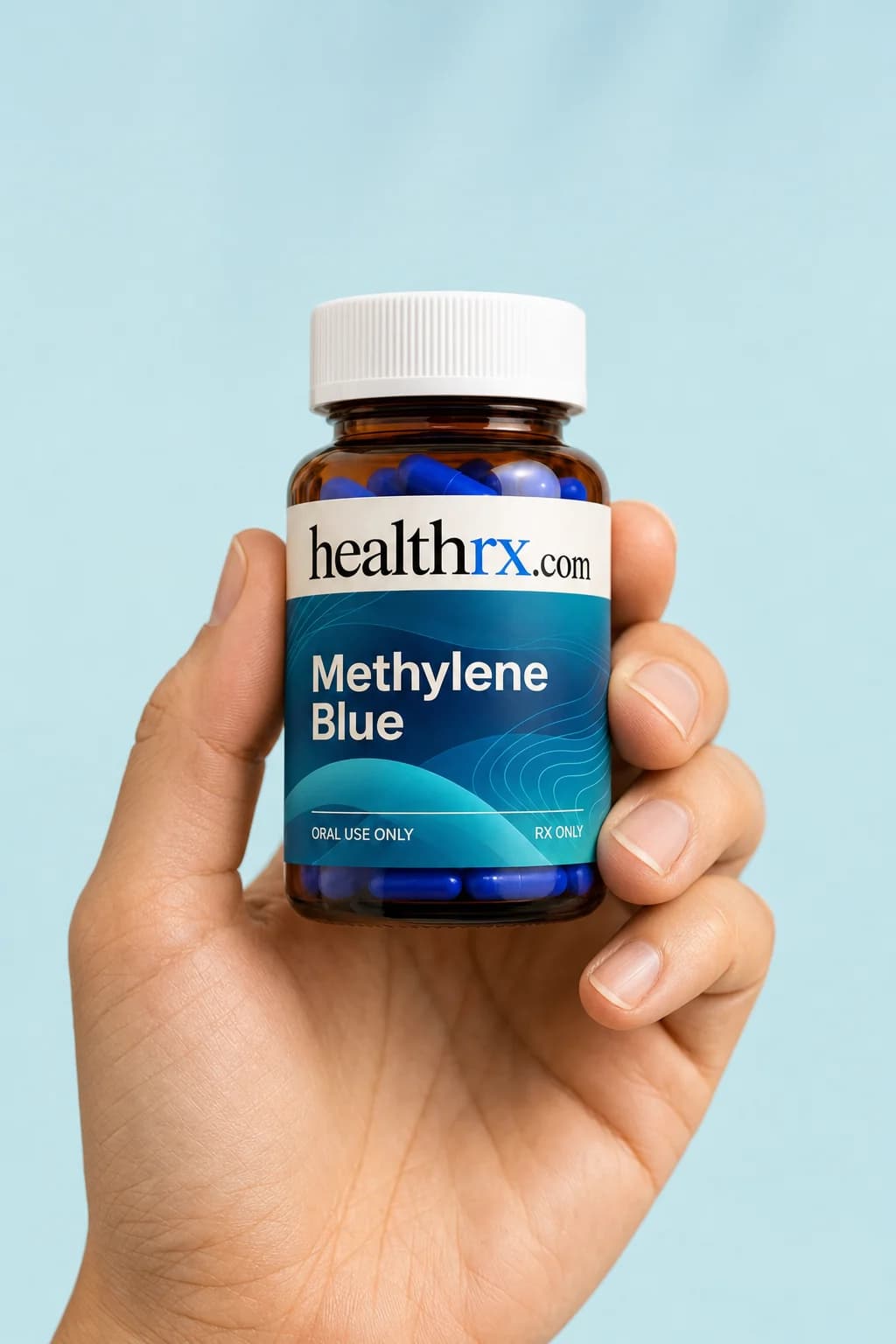
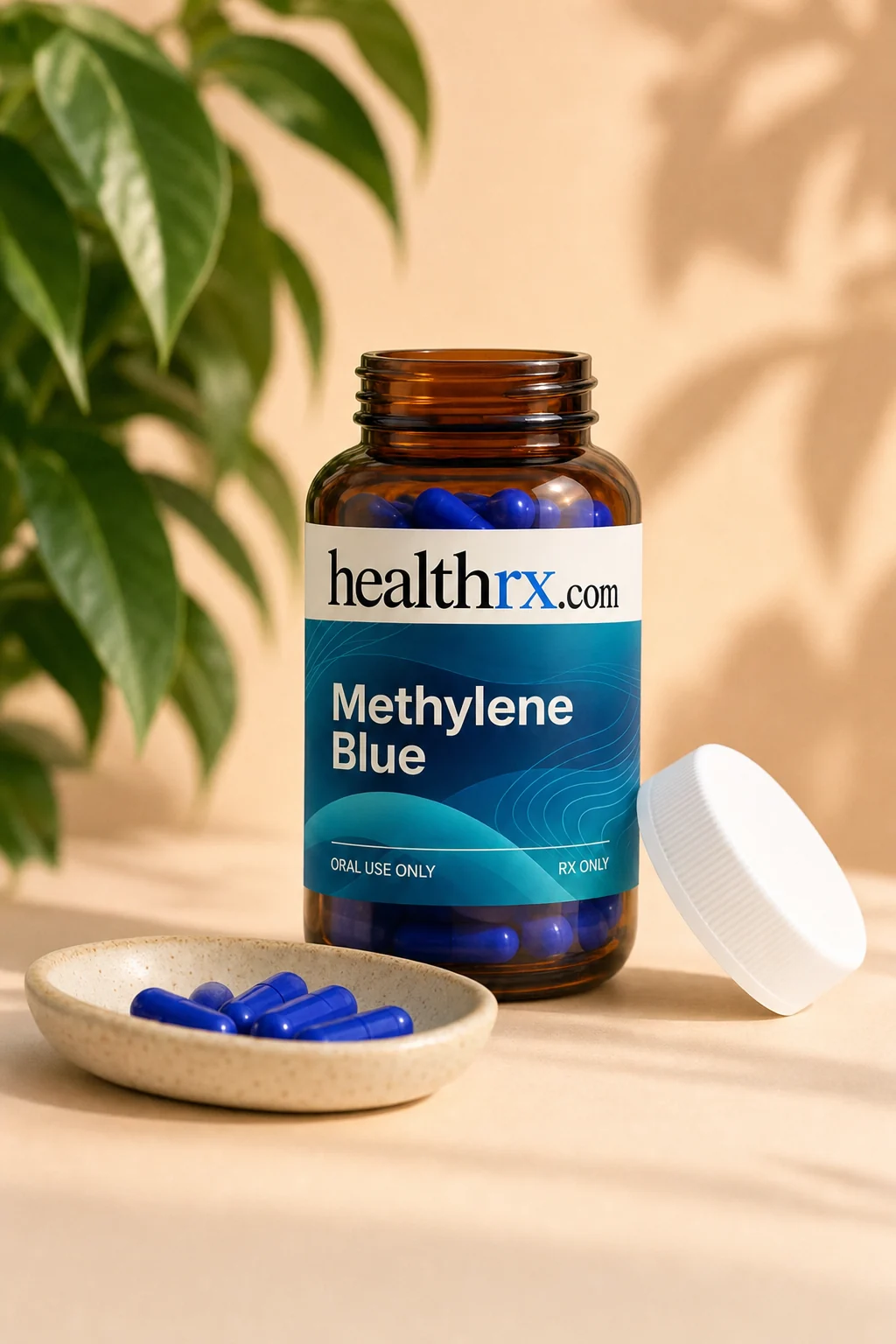
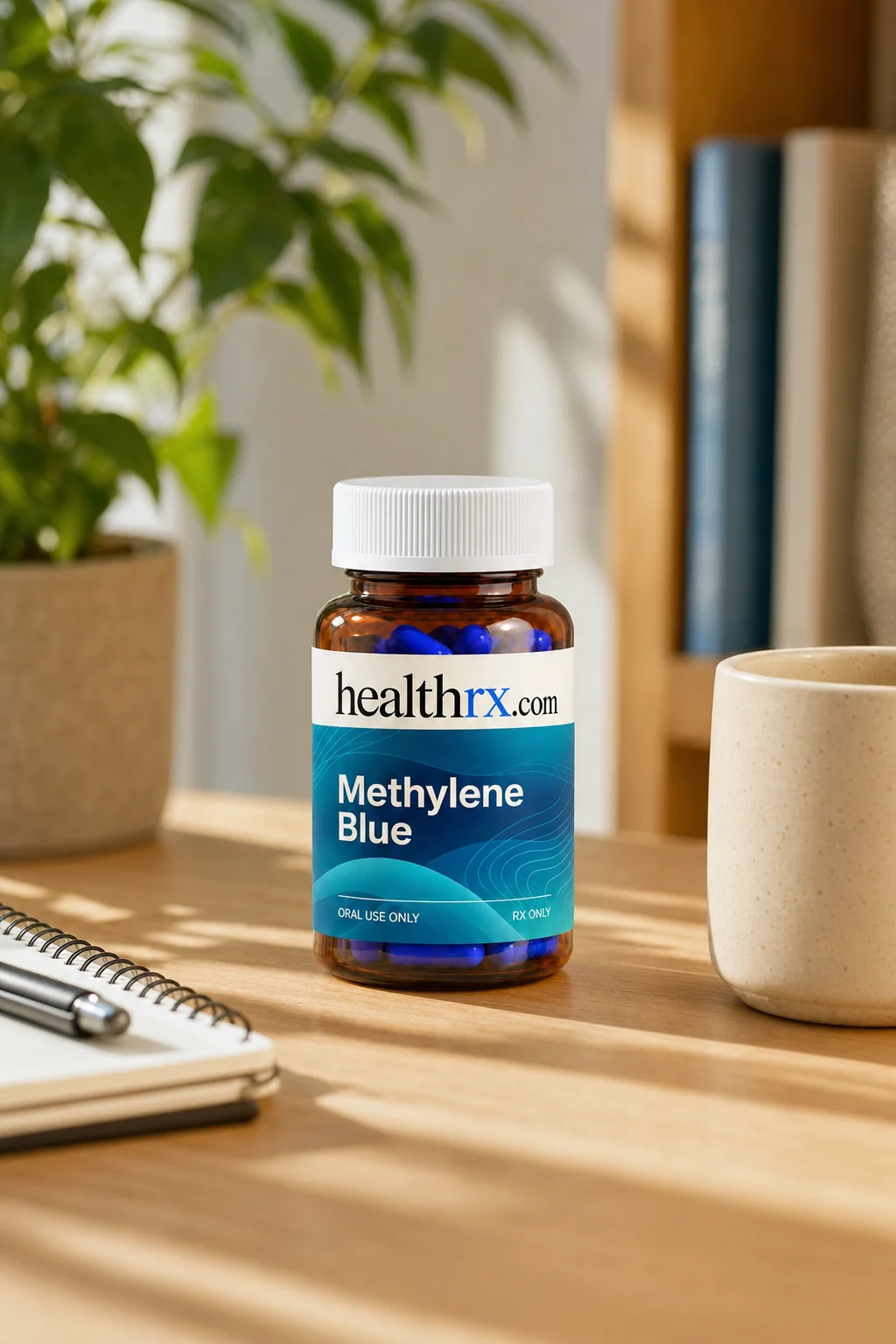
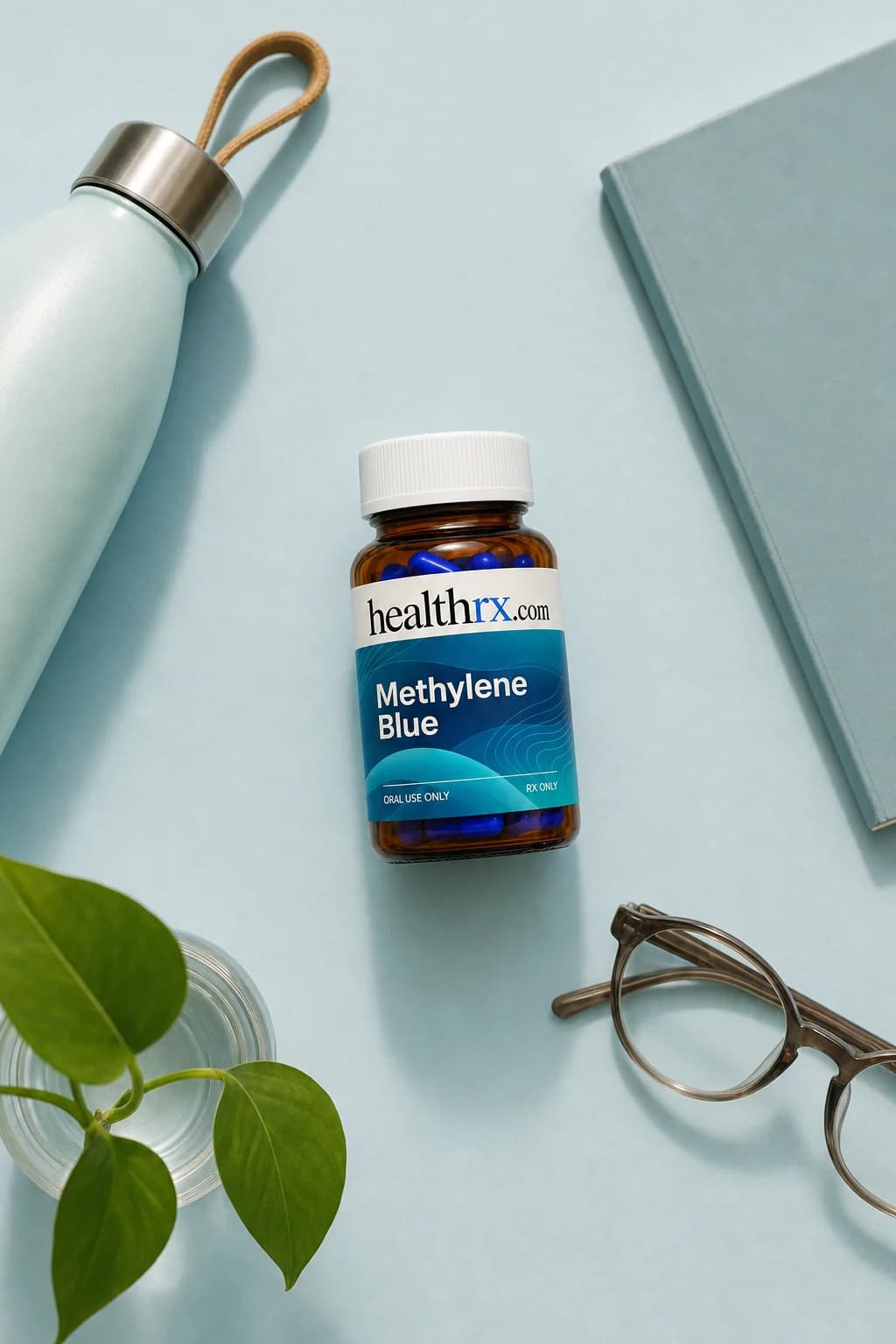
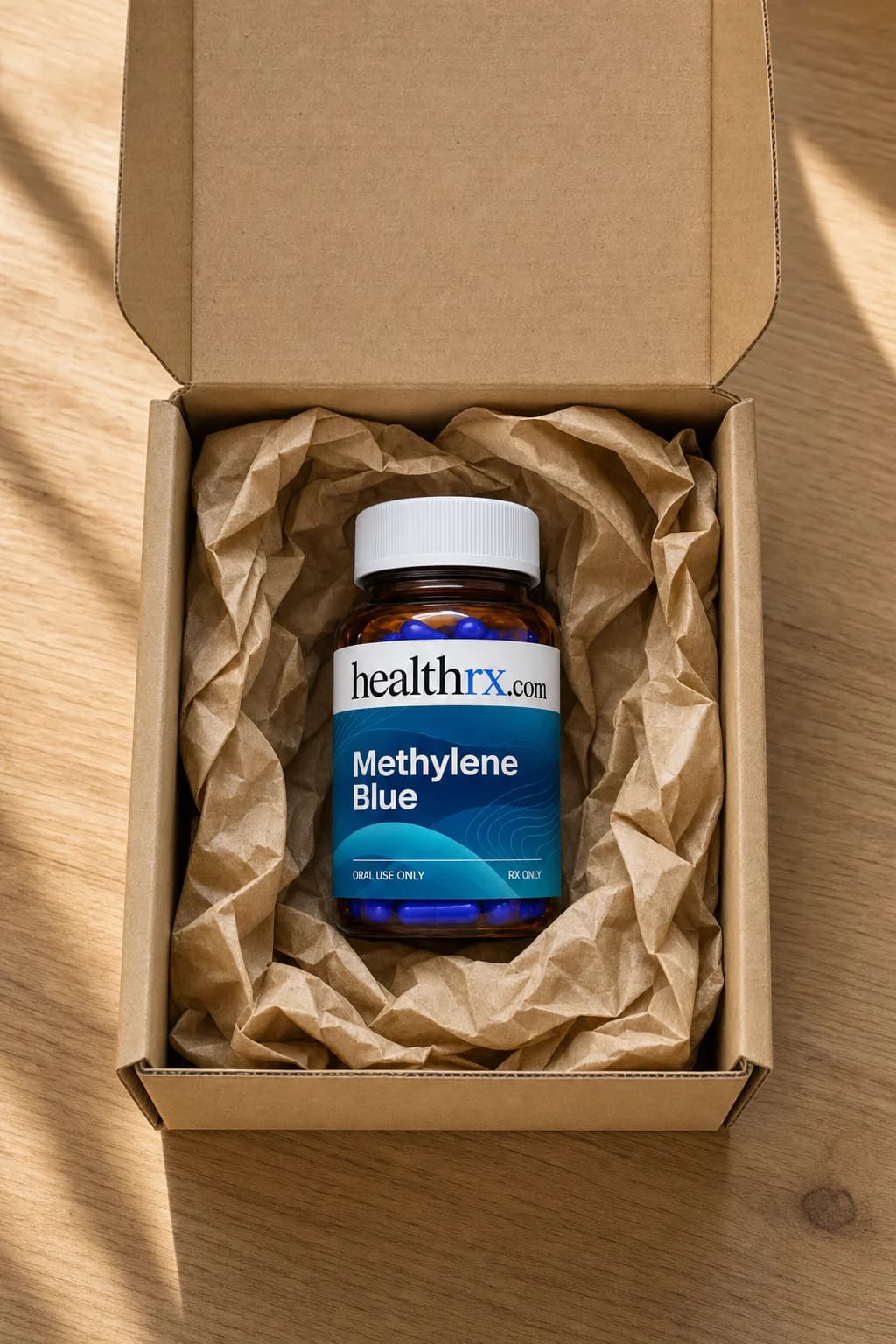
The people pictured are models, not patients.
RxLongevity
Mitochondrial support, done properly.
40,000+ products sold · LegitScript certified
Methylene blue 5 mg or 10 mg capsules. Explore redox chemistry, electron transfer and what a human brain-imaging study measured.
Explore the ingredients and compare options →Pause, change, or cancel anytime from your account.
How Would You Like To Pay?
Choose Your Plan
Or pay with
$152 billed today, then every month until canceled.
Not prescribed? Full refund.
After checkout you complete a short medical review in your member portal, and a US-licensed provider reviews it before anything ships.
Full refund if not prescribed Free, discreet shipping Cancel anytime






Order today and here is what happens next
Common questions
 LegitScript certifiedCert. 50087439

Workdays
The people pictured are models, not patients.
Methylene blue is a redox-active compound studied as an alternative electron carrier in the mitochondrial electron transport chain.
Your capsule is compounded by a US-licensed pharmacy at a defined 5 mg or 10 mg strength, not an unregulated powder or dye.
Methylene blue interacts with serotonergic medications, so a provider checks your full medication list and your G6PD status before prescribing.
A licensed physician (MD) reviews your completed intake and prescribes only if methylene blue is appropriate for you. Real pricing, shown up front.
How we compare
Meet the formula
Methylene blue is a recognizable compound with a specific chemical identity. It is redox-active, meaning it can participate in reactions involving the transfer of electrons. That property is part of the reason researchers examine its effects on cellular processes and brain activity. The HealthRX.com catalog lists 5 mg and 10 mg capsule strengths. Understanding the molecule, the format and the actual study endpoints provides a more informative product story than a broad label such as clarity or brain boosting.
A redox-active compound
Electron transfer and cellular processes
Task performance and brain-imaging endpoints
Inside the formula
5 mg / 10 mg catalog strengths
Redox is short for reduction and oxidation, complementary reactions involving electrons. A redox-active compound can participate in that chemistry. The term describes a property of methylene blue; it does not by itself describe a clinical outcome. This capsule product supplies the named compound in listed strengths, which gives a concrete formulation to compare with other products that may mention the same molecule.
A closer look / 01
Cells use electron-transfer reactions in many biochemical processes. Methylene blue’s redox properties make those reactions part of its research story. The chemistry explains why scientists ask questions about cellular activity; the design of a study determines which of those questions was actually tested. Mechanism and measured outcome are connected pieces of the explanation, rather than the same statement.
This distinction is especially useful when reading claims about mental energy. A biochemical pathway, an imaging measurement and the experience of staying focused during a workday are different levels of observation. Naming each level makes a page clearer and gives the reader a better way to evaluate a scientific description.
A closer look / 02
A randomized, placebo-controlled study used functional MRI and cognitive tasks to examine the effects of an oral methylene-blue dose in healthy adults. It measured responses during attention and short-term-memory tasks. The study gives a specific example of how researchers connect a molecule with a measured human brain response.
The research dose, test setting and observation window belong to that experiment. The 5 mg and 10 mg strengths on this page identify the HealthRX.com capsule listing, which is separate from the study regimen. Keeping those details visible prevents an imaging result from becoming a blanket description of every methylene-blue product.
A closer look / 03
Short-term-memory recall, sustained attention, fatigue and the feeling of mental clarity describe different things. A laboratory task measures a defined performance under controlled conditions. A personal observation happens amid sleep, workload and daily routines. Both can be described clearly, but they answer different questions.
For an informative personal record, choose one observation and use it consistently. Describe the task, the time of day and the surrounding routine. That is more useful than changing the definition of focus from one day to the next, and helps keep an everyday goal separate from the endpoints in a published study.
A closer look / 04
The catalog lists 5 mg or 10 mg strengths and a 30-capsule quantity. Strength describes the amount of methylene blue in a listed capsule; quantity describes the catalog option. Oral capsules are also a distinct format from products used in other clinical or laboratory contexts. The active ingredient name is therefore only one part of identifying the actual product.
Make an informed comparison
Different products in the longevity category have different molecules and targets. Methylene blue’s redox chemistry differs from metformin’s glucose-regulation pharmacology and rapamycin’s mTOR inhibition. The shared category is useful for browsing; the mechanism identifies the product.
| Option | Ingredient identity | What distinguishes it |
|---|---|---|
| Methylene Blue | Methylene blue | Redox-active compound; oral capsule |
| Metformin ER | Metformin | Glucose-regulation pharmacology; ER tablet |
| Rapamycin | Sirolimus | mTOR inhibition; capsule formulation |
The useful details
Redox-active describes chemical behavior. A focus-related outcome would need its own definition and measurement. The imaging study provides one specific experimental setting, while the capsule listing provides product strength and format. Those pieces are most useful when read together.
The participant group, route, regimen and task identify what was investigated. Without those details, a scientific finding can sound broader than the experiment. A clear guide lets you understand the actual research question and distinguish it from a daily experience or another formulation.
See the available product options.
View optionsHealthRX.com verified facts
Methylene Blue starts at $122 per month on 12-month plan; the lowest checkout charge is $152 (billed monthly). A prescription is never guaranteed. A licensed provider reviews each request before a pharmacy can dispense treatment.
Catalog verified August 26, 2026. Source: HealthRX.com checkout catalog and refund policy. Monthly equivalent divides the discounted plan charge by the number of months; checkout may collect a multi-month total.
Choose your treatment options and complete secure checkout. Then complete the online health intake.
A US-licensed provider checks your history, your medication list, and your G6PD status, then prescribes if it is appropriate.
A US-licensed pharmacy compounds your capsules and ships them free in discreet packaging.
Message your care team with questions, and adjust or cancel your plan whenever you need.
Methylene blue is studied for the mitochondria, the parts of your cells that make energy, where it can act as an alternative electron carrier. Interest has grown for focus and cellular energy, and quality matters: this is pharmaceutical-grade, dosed precisely, not an aquarium-grade supplement. Reviewed by a licensed provider, dispensed by a US-licensed pharmacy.
Methylene blue can act as an alternative electron carrier in the mitochondrial electron transport chain at low doses. Dispensed by a US-licensed pharmacy.
Methylene blue
is a redox-active compound that cycles between its oxidized and reduced forms.
In the mitochondria
it can accept and donate electrons, acting as an alternative electron carrier in the electron transport chain.
As an antioxidant
at low concentrations it can cycle to lower oxidative stress markers in laboratory settings.
These are biochemical properties studied in the laboratory, not proven clinical outcomes in people. A US-licensed provider reviews whether methylene blue fits your history and medications before it ships.
Pharmaceutical grade versus everything else
| HealthRX.com methylene blue | Methylene blue sold online | |
|---|---|---|
| Grade | Pharmaceutical grade, compounded by a US-licensed pharmacy | Often dye or lab grade, not made for people |
| Dose | Defined 5 mg or 10 mg capsules | Drops or powders with no precise dose |
| Interaction screening | Provider checks your medications and G6PD status | No screening for serotonergic drugs or G6PD |
| Oversight | A US-licensed provider prescribes | No provider involved |
| Purity | Tested and consistent | May contain contaminants such as heavy metals |
| Pricing | Shown up front | Varies, often unclear |
Used at low doses in daily protocols. Effects people describe are subtle; your provider guides dosing. It temporarily tints urine blue-green, which is harmless.
Day 1
Begin your once-daily dose after your provider confirms your prescription.
Week 1 to 2
Take your capsule as directed. You may notice a harmless blue or green tint to your urine.
Ongoing
Message your care team anytime about how you feel or any change to your medications.
Anytime
Change your strength with your provider, or pause and cancel whenever you need.
Not taken with serotonergic medications, which include SSRIs, SNRIs, MAOIs, tricyclics, triptans, tramadol, bupropion and St. John’s Wort (serotonin syndrome risk). Tell your provider about G6PD deficiency and all medications.
This is not a complete list of side effects. Methylene blue can cause serotonin syndrome when taken with serotonergic medications, so tell your provider every medication and supplement you take. It is not for people with G6PD deficiency or during pregnancy. Methylene blue is compounded by a US-licensed pharmacy and used off-label.
No prescription needed. Dietary supplements for the daily habits around your care, sold separately from prescription treatment. Ask your provider before adding one to your routine.
Dietary supplements, not medications. These statements have not been evaluated by the Food and Drug Administration. These products are not intended to diagnose, treat, cure, or prevent any disease.
An independent US-licensed clinician reviews every request. If they decide the treatment is not right for you, you get a full refund for the medication.
Prescriptions are filled by a US-licensed pharmacy and shipped free, in discreet packaging, on every plan.
LegitScript-certified · Cert 50087439
Compounded medications are prepared by a US-licensed pharmacy and are not reviewed by the FDA for safety or effectiveness. Products are dispensed only after a licensed provider determines they are appropriate. Information here is educational and is not a substitute for medical advice.