Retatrutide Medicare Part D Coverage: What to Expect and How to Prepare

Prescription access and medication affordability image for Retatrutide Medicare Part D Coverage: What to Expect and How to Prepare

At a glance

  • FDA status / investigational, not yet approved
  • Manufacturer / Eli Lilly and Company
  • Drug class / triple GIP/GLP-1/glucagon receptor agonist
  • Phase 2 weight loss / up to 24.2% at 48 weeks (12 mg dose)
  • Current Medicare Part D coverage / none (not commercially available)
  • Phase 3 program / TRIUMPH (multiple trials enrolling)
  • Expected approval window / late 2026 to 2027 (estimated)
  • Cash price / not yet established
  • Compounded version / not available
  • Route of administration / once-weekly subcutaneous injection

Retatrutide Is Not Yet Available on Any Medicare Formulary

Medicare Part D cannot cover a drug that lacks FDA approval. Retatrutide (LY3437943) remains an investigational agent developed by Eli Lilly, currently in Phase 3 clinical trials. No retail pharmacy in the United States stocks it, no wholesale acquisition cost has been set, and no insurer, including Medicare, has a coverage policy for it.

Why the Drug Is Still Investigational

Retatrutide is a first-in-class triple-hormone receptor agonist that targets glucagon-like peptide-1 (GLP-1), glucose-dependent insulinotropic polypeptide (GIP), and glucagon receptors simultaneously 1. This three-receptor mechanism distinguishes it from tirzepatide (Mounjaro/Zepbound), which activates only GLP-1 and GIP. The glucagon component may add thermogenic fat-burning effects on top of appetite suppression and improved insulin sensitivity 2.

Where Things Stand Regulatory-wise

Eli Lilly initiated the Phase 3 TRIUMPH clinical program in 2024, with multiple trials evaluating retatrutide for obesity and type 2 diabetes 3. Until at least one of these trials reports topline results and Lilly submits a New Drug Application (NDA) to the FDA, the drug cannot enter the commercial market. Medicare Part D plan sponsors begin formulary review only after FDA approval and commercial launch.

This means any planning around Medicare coverage is, for now, anticipatory. The data from earlier trials gives a strong indication of what patients and providers should prepare for.

Phase 2 Data: The Clinical Case for Retatrutide

The strongest published evidence comes from a 48-week, dose-ranging Phase 2 trial (N=338) published in The New England Journal of Medicine in July 2023. Participants with obesity (BMI ≥30, or ≥27 with a weight-related comorbidity) received retatrutide at doses ranging from 1 mg to 12 mg weekly, or placebo 1.

Weight Loss Results

At the 12 mg dose, participants lost a mean of 24.2% of their body weight at 48 weeks, compared to 2.1% in the placebo group. The 8 mg dose produced 22.8% mean weight loss. Even the lowest therapeutic dose (4 mg, after a 2 mg lead-in) resulted in 16.9% weight reduction 1.

For context, semaglutide 2.4 mg (Wegovy) produced 14.9% mean weight loss at 68 weeks in the STEP-1 trial (N=1,961) 4. Tirzepatide 15 mg achieved 20.9% at 72 weeks in SURMOUNT-1 (N=2,539) 5. Retatrutide's Phase 2 numbers exceeded both, though head-to-head trials have not been completed.

Glycemic Outcomes

A parallel Phase 2 study in adults with type 2 diabetes (N=281) showed HbA1c reductions of up to 2.02 percentage points at 36 weeks with the 12 mg dose, versus 0.01 with placebo 6. "The magnitude of weight reduction observed with retatrutide exceeded that reported with other currently available medications for obesity," wrote Jastreboff et al. In The New England Journal of Medicine 1.

Safety Profile So Far

The most common adverse events were gastrointestinal: nausea (25% to 45% across doses), diarrhea (16% to 28%), vomiting (9% to 19%), and constipation (9% to 18%). These rates are consistent with the GLP-1 receptor agonist class. Dose-escalation titration schedules reduced the severity and frequency of GI side effects 1. Heart rate increases of 2 to 4 beats per minute were observed, similar to other incretin-based therapies 6.

How Medicare Part D Covers Obesity and Diabetes Drugs Today

Understanding how Medicare currently handles GLP-1 receptor agonists helps predict what retatrutide coverage might look like after approval.

The Anti-Obesity Medication Exclusion (and Its Recent Repeal)

For decades, Medicare Part D excluded coverage of drugs prescribed solely for weight loss. The Treat and Reduce Obesity Act never passed Congress, but the Inflation Reduction Act's broader drug-pricing reforms and subsequent CMS guidance have shifted the field. As of 2026, Medicare Part D plans may now cover certain anti-obesity medications when prescribed for weight management, following CMS regulatory updates that took effect in early 2026 7.

This is a significant change. Before this policy shift, semaglutide was covered by Part D only when prescribed as Ozempic for type 2 diabetes, not as Wegovy for obesity. The same formulary distinction applied to tirzepatide (Mounjaro for diabetes versus Zepbound for weight loss).

What Prior Authorization Looks Like for This Class

Part D plans that cover GLP-1 receptor agonists typically require prior authorization. Common criteria include a documented BMI ≥30 (or ≥27 with a comorbidity such as hypertension, type 2 diabetes, or dyslipidemia), failure of lifestyle interventions, and sometimes a step-therapy requirement showing prior use of a lower-cost agent such as oral semaglutide or metformin 8.

Retatrutide will almost certainly face similar or stricter requirements at launch, given its expected premium pricing as a novel triple agonist.

Formulary Tier Predictions

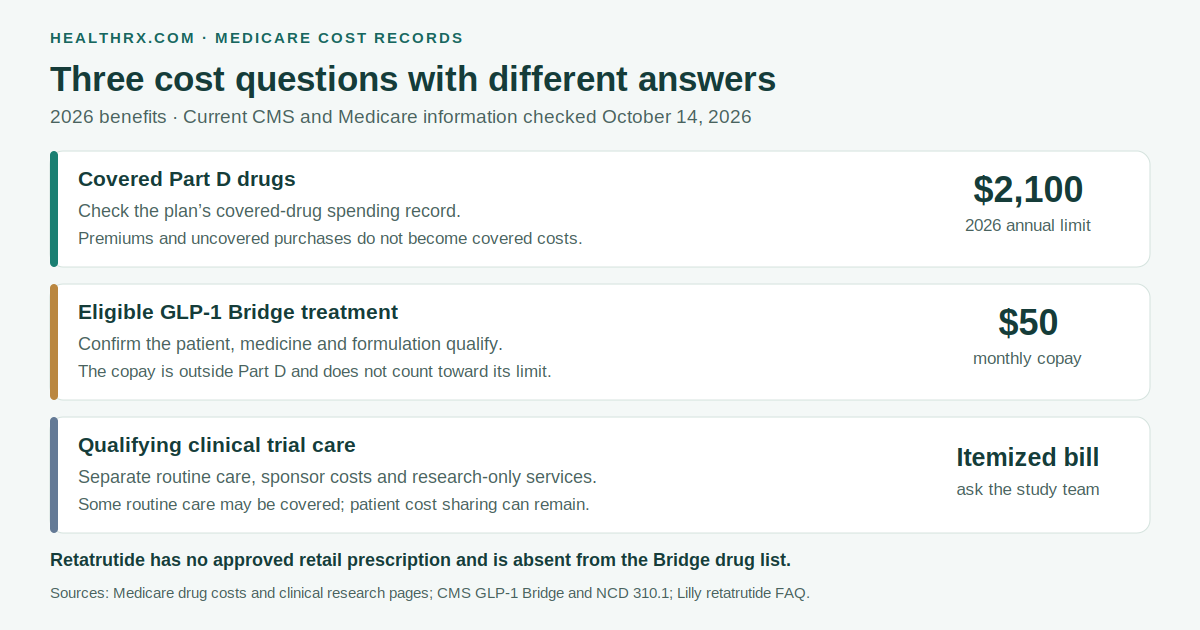
New brand-name injectable biologics typically land on Part D specialty tiers (Tier 4 or 5), where patients pay 25% to 33% coinsurance rather than a flat copay. The Inflation Reduction Act's $2,000 annual out-of-pocket cap for Part D beneficiaries, fully effective since 2025, limits total patient exposure regardless of tier placement 9.

This $2,000 cap changes the calculus for expensive drugs. A patient prescribed retatrutide at a hypothetical $1,000 to $1,200 per month list price would hit the annual cap within two to three months, after which Part D covers the remainder for the rest of the year.

The TRIUMPH Phase 3 Program: What to Watch

Eli Lilly's Phase 3 program, branded TRIUMPH, includes multiple trials targeting different populations and indications.

Key Trial Designs

The program includes studies in adults with obesity alone, adults with obesity and type 2 diabetes, and potentially studies evaluating cardiovascular outcomes or metabolic-associated steatotic liver disease (MASLD). Exact enrollment targets and primary endpoints for each TRIUMPH sub-study follow the regulatory template Lilly used for tirzepatide's SURMOUNT and SURPASS programs 5.

Timeline Implications for Approval

Phase 3 obesity trials typically run 52 to 72 weeks. Assuming enrollment completed in mid-2025 and topline results emerge in late 2026 or early 2027, an NDA submission could follow within months. FDA priority review (8 months) or standard review (12 months) would place a potential approval date somewhere between mid-2027 and early 2028 7.

These timelines are estimates. Manufacturing scale-up, FDA feedback during review cycles, or requests for additional safety data could shift the window.

The Dual-Indication Strategy

Like tirzepatide, Eli Lilly will likely seek separate approvals for type 2 diabetes and chronic weight management. Dr. Ania Jastreboff, who led the Phase 2 obesity trial at Yale, noted: "The triple-agonist approach opens a new frontier in metabolic disease treatment, with potential applications beyond weight management alone" 1. A diabetes indication may come first, as glycemic endpoints require shorter trial durations.

Preparing for Coverage: Steps Medicare Beneficiaries Can Take Now

While retatrutide is unavailable today, patients interested in eventual access can take practical steps.

Build a Clinical Paper Trail

Part D prior authorization is documentation-driven. A medical record showing diagnosed obesity with BMI measurements over time, documented attempts at dietary and exercise interventions, and records of prior pharmacotherapy (metformin, orlistat, or a GLP-1 agonist) creates the strongest case for approval once retatrutide reaches formularies 8.

Choose Your Part D Plan Strategically

During Medicare Open Enrollment each fall (October 15 through December 7), beneficiaries can switch Part D plans. Once retatrutide launches, some plans will add it to their formularies faster than others. Plans with broader GLP-1 coverage today (those already covering Wegovy, Zepbound, or both) are more likely to adopt retatrutide early. The Medicare Plan Finder tool at Medicare.gov allows drug-specific formulary searches 9.

Consider Clinical Trial Enrollment

The TRIUMPH program may still be enrolling at select U.S. Sites. Participants in clinical trials receive the study drug at no cost and benefit from close medical monitoring. The Endocrine Society recommends that eligible patients discuss trial participation with their physicians as a legitimate access pathway for investigational therapies 10.

Explore Existing Treatment While Waiting

The American Association of Clinical Endocrinology (AACE) 2023 obesity guidelines recommend initiating pharmacotherapy when BMI is ≥27 with complications or ≥30 without complications, and not delaying treatment while waiting for newer agents 11. Semaglutide and tirzepatide are available now, and starting one of these may provide meaningful weight loss while retatrutide works through the approval process.

Cost Projections and Savings Strategies

No official pricing exists for retatrutide. Projections rely on the pricing patterns Eli Lilly established with tirzepatide.

What Lilly's Pricing History Suggests

Tirzepatide launched at a list price of approximately $1,023 per month for Mounjaro and $1,060 per month for Zepbound 12. A triple-agonist with superior efficacy data could command a premium of 10% to 30% above these figures, placing estimated list prices in the $1,100 to $1,400 per month range. Net prices after pharmacy benefit manager (PBM) rebates would be lower, though the exact discount is proprietary.

The Part D Out-of-Pocket Cap

Under the Inflation Reduction Act, the $2,000 annual out-of-pocket maximum for Part D means that even at a $1,200 monthly list price, a beneficiary's maximum annual exposure is capped at $2,000 9. This cap applies across all Part D drugs combined, so patients taking other expensive medications may reach it even sooner.

Manufacturer Savings Programs

Eli Lilly has historically offered manufacturer copay cards for commercially insured patients (the Zepbound Savings Card reduces costs to as low as $25 per month for eligible patients). Medicare beneficiaries cannot use manufacturer copay cards due to the federal Anti-Kickback Statute. However, Lilly may establish a Patient Assistance Program (PAP) for low-income Medicare beneficiaries, as it has for other products 12.

Compounded Retatrutide: Not a Current Option

Unlike semaglutide and tirzepatide, which became available through 503A and 503B compounding pharmacies during FDA-declared shortages, retatrutide has never been commercially manufactured or experienced a shortage. No legal basis currently exists for compounding it. If retatrutide is approved and faces supply constraints similar to those seen with tirzepatide in 2023 and 2024, compounding could become a temporary option, but this remains speculative 7.

How Retatrutide Compares to Currently Covered Options

Beneficiaries deciding whether to wait for retatrutide or start an available therapy should understand the comparative data.

Efficacy Ladder

The weight-loss hierarchy from published trials, expressed as approximate mean percent body weight reduction, is: liraglutide 3.0 mg at 8% (SCALE, 56 weeks) 13, semaglutide 2.4 mg at 14.9% (STEP-1, 68 weeks) 4, tirzepatide 15 mg at 20.9% (SURMOUNT-1, 72 weeks) 5, and retatrutide 12 mg at 24.2% (Phase 2, 48 weeks) 1. Phase 2 results in smaller populations tend to overestimate effects compared to Phase 3, so the final retatrutide numbers may settle somewhat lower.

The Glucagon Receptor Difference

Retatrutide's third target, the glucagon receptor, increases hepatic glucose output and energy expenditure. Preclinical models suggest this adds a thermogenic "calorie-burning" effect that GLP-1/GIP dual agonists lack 2. Whether this translates to durable, clinically meaningful advantages in Phase 3 remains the central open question.

Side Effect Comparison

GI side effects occur at broadly similar rates across the incretin class. Retatrutide's Phase 2 nausea rate of 25% to 45% (dose-dependent) sits in the same range as tirzepatide's 12% to 31% in SURMOUNT-1 and semaglutide's 44% in STEP-1 1 4 5. Careful dose titration, starting at lower doses and escalating every four weeks, reduces these events for all three drugs.

What Happens After FDA Approval

Once retatrutide receives FDA approval, a defined sequence of events determines when Medicare Part D beneficiaries gain access.

The Formulary Addition Process

CMS requires Part D plan sponsors to update formularies within defined timelines after a new drug's commercial launch. Plans are not obligated to cover every new drug, but those offering the "enhanced alternative" benefit (most Medicare Advantage Prescription Drug plans) often add high-demand drugs quickly to remain competitive during open enrollment 9.

Expected Prior Authorization Criteria

Based on current Part D policies for Wegovy and Zepbound, retatrutide prior authorization will likely require: confirmed BMI ≥30 (or ≥27 with at least one weight-related comorbidity), documentation of supervised lifestyle modification, trial of at least one prior anti-obesity medication (step therapy), and prescriber attestation of medical necessity. For the diabetes indication, documented HbA1c ≥7.0% and inadequate response to metformin would be standard criteria.

Patients who begin assembling this documentation now, with their primary care physician or endocrinologist, will be positioned for faster approval once the drug becomes available.

Frequently asked questions

How can I afford retatrutide?
Retatrutide is not yet commercially available, so no pricing exists. Once approved, Medicare Part D beneficiaries will be protected by the $2,000 annual out-of-pocket cap under the Inflation Reduction Act. Eli Lilly may also offer a Patient Assistance Program for qualifying low-income patients.
What is the manufacturer coupon for retatrutide?
No manufacturer coupon exists because the drug has not received FDA approval. Eli Lilly will likely launch a copay savings card for commercially insured patients at approval, similar to its Zepbound Savings Card. Medicare beneficiaries cannot use manufacturer copay cards due to federal Anti-Kickback Statute restrictions.
When will retatrutide be FDA-approved?
The Phase 3 TRIUMPH program is ongoing as of mid-2026. Based on typical timelines, FDA approval could come in late 2027 or early 2028. This estimate depends on trial completion, NDA submission timing, and FDA review speed.
Is retatrutide better than tirzepatide or semaglutide?
Phase 2 data showed 24.2% mean body weight loss with retatrutide 12 mg at 48 weeks, compared to 20.9% with tirzepatide 15 mg at 72 weeks and 14.9% with semaglutide 2.4 mg at 68 weeks. Phase 3 results have not been published, and no head-to-head trials exist yet.
Will Medicare Part D cover retatrutide for weight loss?
If retatrutide receives an FDA-approved obesity indication, Part D plans may cover it under recently updated CMS policies allowing coverage of anti-obesity medications. Prior authorization and step therapy requirements are expected.
Can I get compounded retatrutide?
No. Retatrutide has never been commercially manufactured or listed on the FDA drug shortage list. There is no legal basis for compounding pharmacies to produce it at this time.
What is the difference between retatrutide and Mounjaro?
Mounjaro (tirzepatide) activates two receptors: GLP-1 and GIP. Retatrutide activates three: GLP-1, GIP, and the glucagon receptor. The added glucagon activity may increase energy expenditure and fat oxidation beyond what dual agonists achieve.
How do I enroll in a retatrutide clinical trial?
Visit ClinicalTrials.gov and search for retatrutide or LY3437943 to find active TRIUMPH trial sites. Discuss eligibility with your physician. Trial participants receive the study drug at no cost.
What are the side effects of retatrutide?
In the Phase 2 trial, common side effects included nausea (25-45%), diarrhea (16-28%), vomiting (9-19%), and constipation (9-18%). These are consistent with the GLP-1 receptor agonist drug class and were reduced with slow dose titration.
Will the $2,000 Part D out-of-pocket cap apply to retatrutide?
Yes. The Inflation Reduction Act caps annual Part D out-of-pocket costs at $2,000 for all covered drugs combined. This cap took full effect in 2025 and applies to any Part D-covered medication, including future drugs like retatrutide if covered.
Should I wait for retatrutide or start a GLP-1 now?
AACE guidelines recommend starting pharmacotherapy for obesity when BMI thresholds are met, not delaying for future drugs. Semaglutide and tirzepatide are available now and produce significant weight loss. You can switch to retatrutide later if it proves superior in Phase 3 trials.
Does Medicare Advantage cover retatrutide?
Medicare Advantage plans that include Part D prescription drug coverage follow the same formulary rules as standalone Part D plans. Retatrutide is not covered by any plan because it has not received FDA approval.

References

  1. Jastreboff AM, Kaplan LM, Frías JP, et al. Triple-hormone-receptor agonist retatrutide for obesity, a phase 2 trial. N Engl J Med. 2023;389(6):514-526. https://pubmed.ncbi.nlm.nih.gov/37351564/
  2. Rosenstock J, Frias JP, Jastreboff AM, et al. Retatrutide, a GIP, GLP-1 and glucagon receptor agonist, for people with type 2 diabetes: a randomised, double-blind, placebo and active-comparator-controlled, parallel-group, phase 2 trial. Lancet. 2023;402(10401):529-544. https://pubmed.ncbi.nlm.nih.gov/37769464/
  3. Eli Lilly and Company. Retatrutide Phase 3 TRIUMPH clinical program. Referenced via https://pubmed.ncbi.nlm.nih.gov/37351564/
  4. Wilding JPH, Batterham RL, Calanna S, et al. Once-weekly semaglutide in adults with overweight or obesity (STEP-1). N Engl J Med. 2021;384(11):989-1002. https://pubmed.ncbi.nlm.nih.gov/33567185/
  5. Jastreboff AM, Aronne LJ, Ahmad NN, et al. Tirzepatide once weekly for the treatment of obesity (SURMOUNT-1). N Engl J Med. 2022;387(4):327-340. https://pubmed.ncbi.nlm.nih.gov/35658024/
  6. Rosenstock J, Frias JP, Jastreboff AM, et al. Retatrutide phase 2 trial in type 2 diabetes. Lancet. 2023;402(10401):529-544. https://pubmed.ncbi.nlm.nih.gov/37769464/
  7. U.S. Food and Drug Administration. Medications target weight management: overview. https://www.fda.gov/drugs/drug-safety-and-availability/medications-target-weight-management-overview
  8. U.S. Food and Drug Administration. Medications containing semaglutide marketed for type 2 diabetes or weight loss. https://www.fda.gov/drugs/postmarket-drug-safety-information-patients-and-providers/medications-containing-semaglutide-marketed-type-2-diabetes-or-weight-loss
  9. Centers for Medicare & Medicaid Services. Inflation Reduction Act and Medicare. https://www.cms.gov/inflation-reduction-act-and-medicare
  10. Endocrine Society. Clinical practice guidelines: obesity. https://www.endocrine.org/clinical-practice-guidelines/obesity
  11. Garvey WT, Mechanick JI, Brett EM, et al. American Association of Clinical Endocrinology consensus conference on obesity. Endocr Pract. 2023;29(4):260-271. https://pubmed.ncbi.nlm.nih.gov/36931897/
  12. U.S. Food and Drug Administration. Drug trials snapshots: Zepbound. https://www.fda.gov/drugs/drug-approvals-and-databases/drug-trials-snapshots-zepbound
  13. Pi-Sunyer X, Astrup A, Fujioka K, et al. A randomized, controlled trial of 3.0 mg of liraglutide in weight management (SCALE). N Engl J Med. 2015;373(1):11-22. https://pubmed.ncbi.nlm.nih.gov/25925141/