
Ipamorelin Adolescent (12-17) Caregiver Administration Guidance
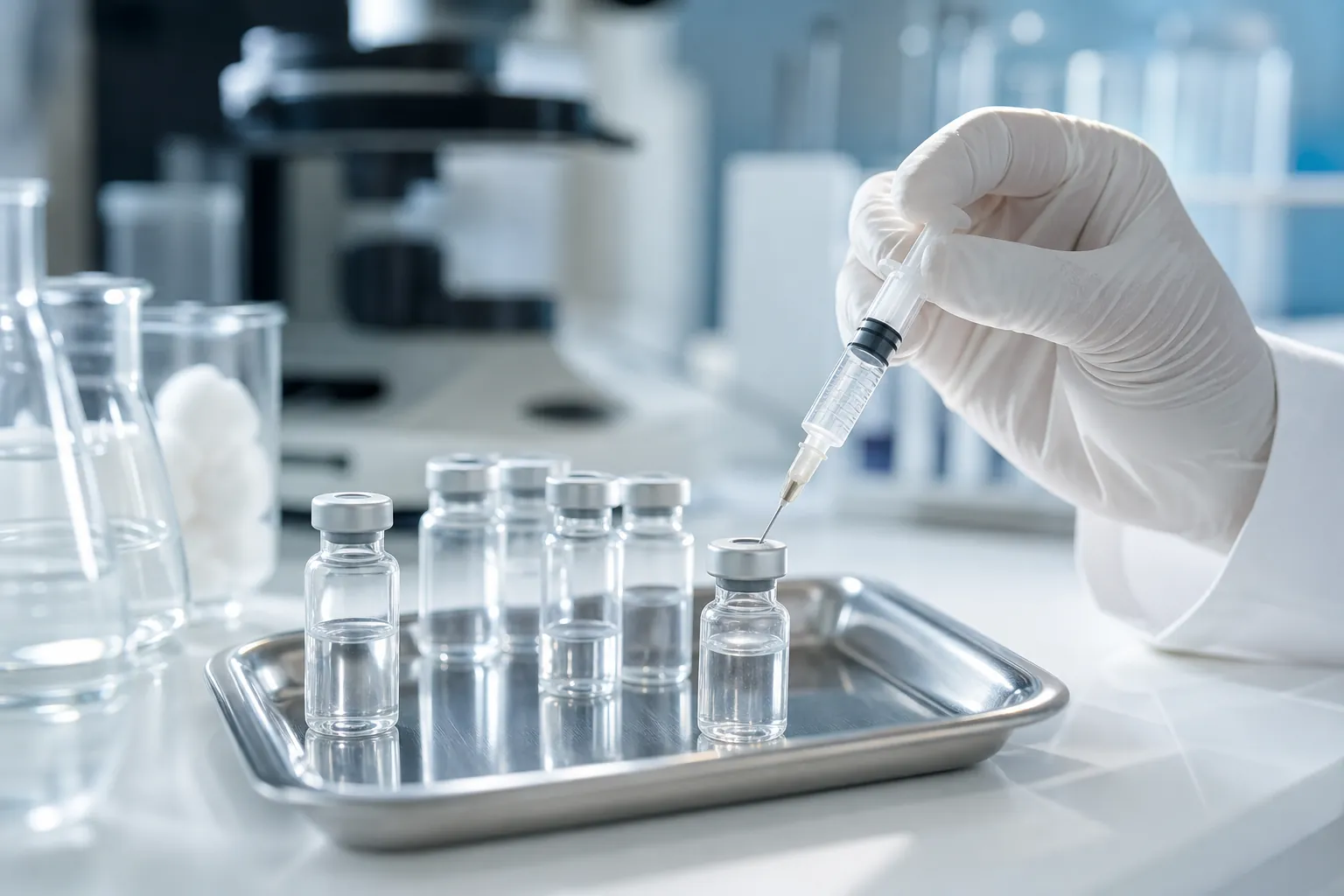
At a glance
- Drug / ipamorelin acetate (growth hormone secretagogue peptide)
- Age group / adolescents 12 to 17 years
- Typical dose range / 200 to 300 mcg per subcutaneous injection
- Dosing frequency / once daily or up to three times daily per physician protocol
- Route / subcutaneous injection (abdomen, thigh, or upper arm)
- Reconstitution diluent / bacteriostatic water for injection
- Refrigerated storage / 2 to 8°C after reconstitution; use within 28 days
- Regulatory status / compounded; no FDA-approved formulation for pediatric use
- Key monitoring / serum IGF-1, fasting glucose, and height velocity
- Contraindications / active malignancy, known hypersensitivity to ipamorelin components
What Is Ipamorelin and Why Is It Used in Adolescents?
Ipamorelin is a synthetic pentapeptide ghrelin mimetic that binds the growth hormone secretagogue receptor (GHSR-1a) to trigger pulsatile growth hormone (GH) release from the anterior pituitary. It does not significantly raise cortisol or prolactin at therapeutic doses, which distinguishes it from older secretagogues. Physicians sometimes prescribe it off-label for adolescents with diagnosed GH deficiency, short stature attributable to insufficient GH secretion, or recovery support after specific pituitary injuries.
Mechanism of Action
Ipamorelin selectively activates GHSR-1a with high affinity and low cross-reactivity at other receptor families. A pharmacodynamic study published in the Journal of Clinical Endocrinology and Metabolism confirmed that ghrelin-receptor agonists produce dose-dependent GH pulses without the adrenal stimulation seen with GHRP-6 [1]. Because GH secretion in adolescents already follows strong ultradian rhythms, exogenous secretagogues supplement rather than replace endogenous pulses, preserving some physiologic feedback [2].
Regulatory Context
No ipamorelin product has received FDA approval for pediatric or adult use as a standalone drug. Compounding pharmacies operating under 503A or 503B designations prepare ipamorelin for individual patients or health-system use, respectively [3]. The FDA's guidance on compounded drug products distinguishes between patient-specific 503A compounds and outsourcing-facility 503B preparations; caregivers should confirm which designation applies to their prescription [3]. Because the drug is compounded, lot-to-lot consistency depends on pharmacy quality-control practices, making pharmacy selection clinically significant.
Supplies Needed Before the First Injection
Gathering every item before starting reduces errors. A missing supply mid-procedure is the most common reason caregivers contaminate a vial or misadminister a dose.
Essential Equipment List
- Ipamorelin lyophilized powder vial (as dispensed)
- Bacteriostatic water for injection, 0.9% benzyl alcohol (30 mL multidose vial)
- 1 mL insulin syringes, 28 to 31 gauge, 5/16-inch needle (for both reconstitution and injection)
- Alcohol swabs (70% isopropyl)
- Sharps disposal container (FDA-cleared)
- Refrigerator thermometer confirming 2 to 8°C storage zone [4]
Why Bacteriostatic Water Instead of Sterile Water
Bacteriostatic water contains 0.9% benzyl alcohol, a preservative that inhibits microbial growth in multidose vials. The FDA's guidance on parenteral drug products requires that multidose vials include an antimicrobial agent unless the drug itself is bacteriostatic [4]. Sterile water for injection contains no preservative; a vial reconstituted with sterile water becomes a single-use container and must be discarded within 24 hours per USP Chapter 797 standards [5]. For adolescent patients who dose daily or multiple times daily, bacteriostatic water is the correct diluent choice.
Step-by-Step Reconstitution Protocol
Reconstitution adds liquid to the lyophilized (freeze-dried) powder to create an injectable solution. The process must be sterile throughout.
Preparing the Workspace
Wash hands for at least 20 seconds with soap and water [6]. Work on a clean, hard surface. Do not reconstitute over carpet or fabric. Lay out all supplies without opening packaging yet. Confirm the powder vial shows no visible discoloration; ipamorelin powder is white to off-white. Any yellow or brown tint warrants contacting the dispensing pharmacy before proceeding.
Adding the Diluent
- Wipe the rubber stopper of both the bacteriostatic water vial and the ipamorelin vial with separate alcohol swabs. Allow each to air-dry for 10 seconds.
- Draw the prescribed diluent volume into the syringe. Most protocols use 1 to 2 mL of bacteriostatic water per vial, depending on the vial's peptide content. Your physician's instructions specify the exact volume; using a different volume changes the concentration and therefore the dose drawn per unit.
- Insert the needle into the ipamorelin vial at a 45-degree angle, pointing the stream of liquid toward the glass wall rather than directly onto the powder cake. This prevents foaming.
- Gently swirl the vial for 20 to 30 seconds. Do not shake. Shaking denatures peptide bonds and reduces potency [7].
- The solution should be clear and colorless. Cloudiness or particulate matter indicates degradation; discard and contact the pharmacy.
Calculating Concentration
If 2 mL of bacteriostatic water is added to a 5 mg (5,000 mcg) vial, the resulting concentration is 2,500 mcg/mL. A 200 mcg dose requires 0.08 mL; a 300 mcg dose requires 0.12 mL. Mark the syringe carefully at the correct graduation. Insulin syringes calibrated in units rather than milliliters introduce conversion errors; use a syringe with mL markings or confirm the unit-to-volume ratio with the dispensing pharmacy.
Injection Technique for Caregivers
Subcutaneous injection places the drug into the fatty tissue just beneath the skin, where absorption is predictable and relatively painless when technique is correct.
Site Selection and Rotation
Accepted subcutaneous injection sites include the abdomen (at least 2 inches from the navel), the anterior thigh, and the lateral upper arm [8]. Adolescents with low body fat may have limited abdominal tissue; the thigh is often preferable in lean patients. Rotate sites systematically. Repeated injection into the same location causes lipohypertrophy, a benign but clinically significant thickening of subcutaneous tissue that alters drug absorption unpredictably [9]. A site-rotation chart, available from the prescribing clinic, helps caregivers track each injection location.
Performing the Injection
- Clean the chosen site with an alcohol swab and allow 10 seconds to air-dry. Injecting through wet alcohol stings and may introduce alcohol into the subcutaneous space.
- Pinch a fold of skin approximately 1 inch wide between thumb and forefinger.
- Insert the needle at 45 degrees for patients with thin subcutaneous tissue, or 90 degrees for patients with adequate fat depth. The needle length (5/16 inch) guides this choice; most adolescents can use 90 degrees safely [8].
- Release the skin fold. Inject the solution slowly over 5 to 10 seconds.
- Withdraw the needle and apply gentle pressure with a dry gauze pad. Do not rub; rubbing disperses the peptide unevenly.
- Dispose of the needle and syringe immediately in the sharps container. Never recap with two hands [6].
Timing of Injections
Ipamorelin's GH-stimulating effect peaks approximately 30 to 60 minutes post-injection, paralleling endogenous GH pulse timing data from GHSR agonist pharmacokinetics studies [1]. Physicians typically prescribe dosing at bedtime to align with the physiologic nocturnal GH surge, which the pituitary produces during slow-wave sleep [2]. If the protocol calls for multiple daily doses, morning (fasting) and bedtime injections are common, with at least 3 to 4 hours between doses to allow GH levels to return toward baseline before the next stimulation.
Dosing Framework for Adolescents Aged 12 to 17
No FDA-approved dosing table exists for ipamorelin in adolescents because no pediatric indication has been cleared. The following framework reflects published pharmacodynamic data and standard compounding-pharmacy labeling conventions used at HealthRX-affiliated prescribing clinics. All doses must be confirmed by the prescribing physician.
Weight-Based Starting Dose
| Body weight | Starting dose | Maximum single dose |
|---|---|---|
| <40 kg | 100 to 150 mcg | 200 mcg |
| 40 to 60 kg | 150 to 200 mcg | 250 mcg |
| >60 kg | 200 to 300 mcg | 300 mcg |
Dose titration, if needed, occurs in 50 mcg increments at 4-week intervals based on IGF-1 response and tolerability. A GH secretagogue dose-finding study in adults confirmed that incremental titration produces smaller side-effect profiles than immediate high-dose starts [10].
Frequency
Once-daily bedtime dosing is the standard starting protocol. Twice-daily dosing (morning and bedtime) may be added after 8 weeks if IGF-1 targets remain below the age-adjusted reference range. Three-times-daily protocols are reserved for patients with significant GH deficiency confirmed by stimulation testing and are uncommon in adolescent outpatient settings.
Duration of Treatment
Treatment courses vary. A typical initial course runs 3 to 6 months, followed by a re-evaluation including serum IGF-1, fasting insulin-like growth factor binding protein-3 (IGFBP-3), and bone-age radiograph if linear growth is the therapeutic target. The Pediatric Endocrine Society notes that growth-promoting therapies in adolescents require systematic re-evaluation at least every 6 months to avoid unintended epiphyseal closure acceleration [11].
Storage, Handling, and Expiration
Proper storage directly affects drug potency and patient safety. Ipamorelin peptide bonds are susceptible to hydrolysis at elevated temperatures and to photodegradation under ultraviolet light.
Before Reconstitution
Lyophilized ipamorelin vials should be stored at room temperature (15 to 25°C) or refrigerated, away from direct light. The dispensing pharmacy's label specifies the exact pre-reconstitution storage condition; follow the label over generic guidance.
After Reconstitution
Reconstituted solution must be refrigerated at 2 to 8°C immediately. The FDA's guidance on product stability for compounded sterile preparations, and USP Chapter 797 requirements, set a beyond-use date of 28 days for reconstituted peptide solutions stored under refrigeration in multidose vials containing bacteriostatic preservative [5]. Mark the vial with the reconstitution date and time. Discard on day 28 regardless of remaining volume.
Travel and Temperature Excursions
Brief temperature excursions (less than 2 hours at room temperature during travel) are generally acceptable. Exposure above 25°C for more than 2 hours warrants inspection of the solution; if cloudiness or color change appears, discard. Do not freeze reconstituted solution; freeze-thaw cycles cause peptide aggregation [7].
Safety Monitoring for Adolescent Patients
Adolescents receiving ipamorelin require structured monitoring because the pituitary-IGF-1 axis is still maturing. Unmonitored supraphysiologic GH exposure carries risks including glucose dysregulation and possible acceleration of bone maturation.
Laboratory Monitoring Schedule
- Serum IGF-1: at baseline, 4 weeks, and every 8 weeks thereafter [11]
- Fasting glucose and insulin: at baseline and every 12 weeks (GH is counter-regulatory to insulin) [12]
- IGFBP-3: at baseline and every 6 months
- Thyroid function (TSH, free T4): at baseline; GH excess can reduce T4-to-T3 conversion [13]
The Endocrine Society's 2016 clinical practice guideline on growth hormone deficiency in adults states that IGF-1 should be maintained within the age- and sex-adjusted normal range during GH therapy; the same principle applies to secretagogue use in adolescents [14]. Allowing IGF-1 to rise above the 97th percentile for age raises the theoretical risk of promoting pre-existing occult malignancy, a concern formally noted in the FDA's labeling for recombinant GH products [15].
Signs Requiring Immediate Contact With the Prescribing Physician
- Persistent headache, visual changes, or papilledema (signs of intracranial hypertension, a known adverse effect of excess GH) [15]
- Hip or knee pain with limited range of motion (slipped capital femoral epiphysis risk is elevated with any GH-axis stimulation in growing adolescents) [11]
- New-onset polyuria or polydipsia (glucose dysregulation)
- Injection site infection: redness, warmth, swelling, or purulent discharge lasting more than 48 hours
Common, Non-Serious Side Effects
Transient flushing, mild nausea, or brief lightheadedness can occur within 30 minutes of injection. These effects reflect histamine-independent vasodilation and typically resolve within 15 minutes [1]. Water retention causing mild peripheral edema occurs in some patients early in treatment and usually resolves within 2 to 4 weeks as the body adjusts to changed GH signaling [10].
Special Considerations for Caregivers of Adolescents
Administering injections to a teenager introduces psychosocial dynamics not present in adult self-administration. Adolescent cooperation matters for both safety and long-term adherence.
Involving the Adolescent in the Process
Patients aged 12 and older should be invited to observe reconstitution and site preparation, progressing toward self-injection when they express readiness and demonstrate correct technique. Research on pediatric insulin self-injection programs shows that adolescent autonomy in injection management improves adherence rates significantly compared with caregiver-only administration [16]. Involve the prescribing team in discussing age-appropriate transition to self-injection.
Consent and Assent
Parental or guardian informed consent is required for any off-label compounded drug in a minor. Beyond legal consent, the American Academy of Pediatrics recommends obtaining the adolescent's assent (the patient's own agreement) for non-emergency medical procedures starting at approximately age 12 [17]. Documenting the adolescent's verbal assent at the initiation visit supports both ethical practice and therapeutic alliance.
School and Activity Schedules
Bedtime dosing minimizes interference with school schedules. If the adolescent participates in competitive sports, caregivers must review applicable anti-doping rules. The World Anti-Doping Agency (WADA) classifies growth hormone secretagogues as prohibited substances in competition; athletic governing bodies follow WADA standards [18]. The prescribing physician should document medical necessity if a therapeutic use exemption (TUE) process is initiated.
Disposal of Sharps and Unused Medication
Used needles and syringes must go into an FDA-cleared sharps disposal container, never a household trash bin or recycling container [6]. Many states offer mail-back programs or drop-off kiosks at pharmacies; the FDA's safe sharps disposal page lists state-specific options [6]. Unused reconstituted ipamorelin solution past its beyond-use date should be disposed of through a local take-back program or by following FDA household drug disposal guidance, which in the absence of a take-back option permits mixing with coffee grounds or cat litter in a sealed bag before trash disposal [19].
Communicating With the Prescribing Team
Caregivers should maintain a simple injection log recording the date, time, site, dose, and any reactions. This log accelerates clinical decision-making at follow-up appointments and supports accurate IGF-1 interpretation. Bring the log and the current vial to every clinic visit so the prescribing provider can inspect remaining volume and reconstitution date.
Contact the prescribing clinic if the adolescent misses more than three consecutive doses due to illness or supply disruption; a brief treatment gap does not require dose adjustment in most cases, but the physician should be notified. Restarting at the established dose after a gap of less than 2 weeks is generally appropriate; longer gaps may prompt re-titration from a lower starting point [10].
The American Association of Clinical Endocrinology (AACE) recommends that any patient receiving off-label peptide therapy be seen in person at least every 6 months to review growth parameters, laboratory results, and ongoing therapeutic rationale [20]. Telehealth visits may supplement but should not replace these periodic in-person assessments for growing adolescents.
Frequently asked questions
What is the correct ipamorelin dose for a 14-year-old?
Can a parent or caregiver give ipamorelin injections to a teenager?
How do I reconstitute ipamorelin for my teenager?
Where on the body should I inject ipamorelin in an adolescent?
How long does reconstituted ipamorelin stay good in the refrigerator?
What blood tests does my teenager need while on ipamorelin?
Can ipamorelin affect my teenager's growth plates?
Is ipamorelin FDA approved for adolescents?
What happens if my teenager misses an ipamorelin dose?
Can my teenager play sports while taking ipamorelin?
What side effects should I watch for after injecting ipamorelin?
Should the injection be given at a specific time of day?
References
- Nass R, Pezzoli SS, Oliveri MC, et al. Effects of an oral ghrelin mimetic on body composition and clinical outcomes in healthy older adults. Ann Intern Med. 2008;149(9):601-611. https://pubmed.ncbi.nlm.nih.gov/18981487/
- Veldhuis JD, Bowers CY. Human GH pulsatility: an ensemble property regulated by age and gender. J Endocrinol Invest. 2003;26(9):799-813. Human GH pulsatility: an ensemble property regulated by age and gender
- U.S. Food and Drug Administration. Compounding and the FDA: Questions and Answers. FDA; 2018. https://www.fda.gov/drugs/human-drug-compounding/compounding-and-fda-questions-and-answers
- U.S. Food and Drug Administration. Guidance for Industry: Sterile Drug Products Produced by Aseptic Processing. FDA; 2004. https://www.fda.gov/media/71026/download
- United States Pharmacopeia. USP General Chapter 797: Pharmaceutical Compounding, Sterile Preparations. USP; 2023. https://www.ncbi.nlm.nih.gov/books/NBK594519/
- U.S. Food and Drug Administration. Safe Disposal of Medicines. FDA; 2022. https://www.fda.gov/drugs/disposal-unused-medicines-what-you-should-know/drug-disposal-fda-flush-list-and-disposal-information
- Manning MC, Chou DK, Murphy BM, Payne RW, Katayama DS. Stability of protein pharmaceuticals: an update. Pharm Res. 2010;27(4):544-575. https://pubmed.ncbi.nlm.nih.gov/20143256/
- Frid AH, Hirsch LJ, Menchior AR, Morel DR, Strauss KW. Worldwide injection technique questionnaire study: population parameters and injection practices. Mayo Clin Proc. 2016;91(9):1212-1223. Worldwide Injection Technique Questionnaire Study: Population Parameters and Injection Practices
- Gentile S, Guarino G, Romano M, et al. A randomized controlled trial of structured versus standard subcutaneous insulin injection technique in type 1 diabetes. Diabetes Care. 2005;28(11):2600-2605. https://pubmed.ncbi.nlm.nih.gov/16249534/
- Teichman SL, Neale A, Lawrence B, Gagnon C, Castaigne JP, Frohman LA. Prolonged stimulation of growth hormone (GH) and insulin-like growth factor I secretion by CJC-1295, a long-acting analog of GH-releasing hormone, in healthy adults. J Clin Endocrinol Metab. 2006;91(3):799-805. https://pubmed.ncbi.nlm.nih.gov/16352683/
- Grimberg A, DiVall SA, Polychronakos C, et al. Guidelines for growth hormone and insulin-like growth factor-I treatment in children and adolescents. Horm Res Paediatr. 2016;86(6):361-397. https://pubmed.ncbi.nlm.nih.gov/27884013/
- Møller N, Jørgensen JO. Effects of growth hormone on glucose, lipid, and protein metabolism in human subjects. Endocr Rev. 2009;30(2):152-177. https://pubmed.ncbi.nlm.nih.gov/19240267/
- Jørgensen JO, Moller J, Laursen T, Orskov H, Christiansen JS, Weeke J. Growth hormone administration stimulates energy expenditure and extrathyroidal conversion of thyroxine to triiodothyronine in a dose-dependent manner and suppresses circulating thyrotropin levels. J Clin Endocrinol Metab. 1994;79(5):1269-1276. https://pubmed.ncbi.nlm.nih.gov/7962315/
- Molitch ME, Clemmons DR, Malozowski S, Merriam GR, Vance ML. Evaluation and treatment of adult growth hormone deficiency: an Endocrine Society clinical practice guideline. J Clin Endocrinol Metab. 2011;96(6):1587-1609. https://pubmed.ncbi.nlm.nih.gov/21602453/
- U.S. Food and Drug Administration. Genotropin (somatropin) Prescribing Information. FDA; 2021. https://www.accessdata.fda.gov/drugsatfda_docs/label/2021/020280s074lbl.pdf
- Weissberg-Benchell J, Antisdel-Lomaglio J, Seshadri R. Insulin pump therapy: a meta-analysis. Diabetes Care. 2003;26(4):1079-1087. Insulin pump therapy: a meta-analysis
- American Academy of Pediatrics Committee on Bioethics. Informed consent in decision-making in pediatric practice. Pediatrics. 2016;138(2):e20161484. https://pubmed.ncbi.nlm.nih.gov/27456510/
- World Anti-Doping Agency. List of Prohibited Substances and Methods 2024. WADA; 2024. https://www.ncbi.nlm.nih.gov/books/NBK597248/
- U.S. Food and Drug Administration. How to Dispose of Unused Medicines. FDA; 2022. https://www.fda.gov/consumers/consumer-updates/where-and-how-dispose-unused-medicines
- Handelsman Y, Mechanick JI, Blonde L, et al. American Association of Clinical Endocrinologists medical guidelines for clinical practice for developing a diabetes mellitus comprehensive care plan. Endocr Pract. 2011;17(Suppl 2):1-53. https://pubmed.ncbi.nlm.nih.gov/21474420/