
Evenity (Romosozumab) Adolescent (12-17): School and Activity Considerations
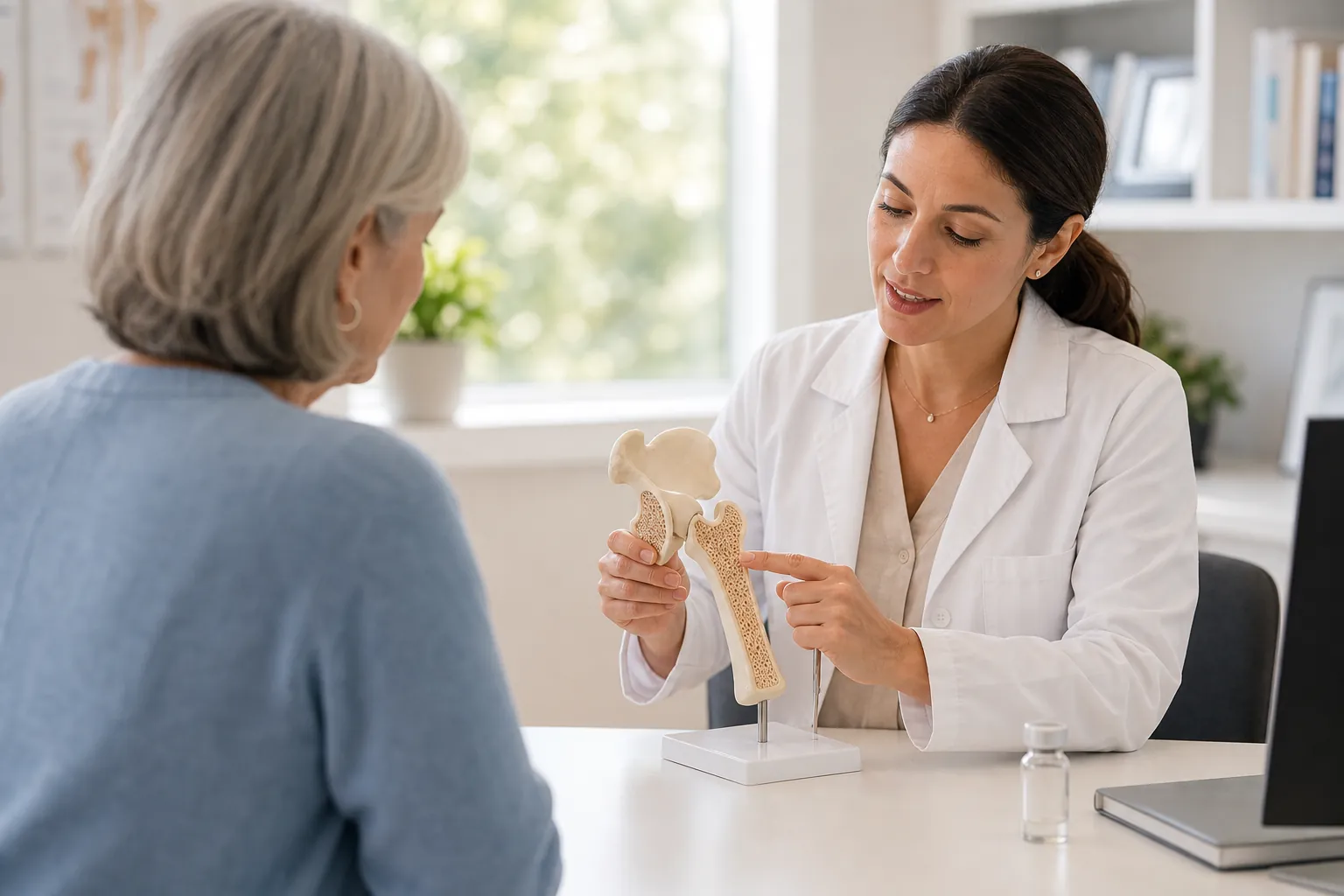
At a glance
- Drug / romosozumab (Evenity) 210 mg SC monthly (two 105 mg injections)
- Age group / adolescents 12 to 17 years
- Injection frequency / once per calendar month, same day both injections
- Typical injection-day symptoms / mild site redness, transient fatigue (resolves within 24 to 48 h)
- School attendance impact / generally none beyond the injection appointment itself
- Physical activity / low-to-moderate intensity encouraged; collision sports require physician clearance
- Bone density monitoring / DXA every 12 months or per prescribing clinician's schedule
- Treatment duration / typically 12 monthly doses in adult trials; pediatric duration individualized
- Emergency flag / chest pain or jaw pain after injection requires same-day medical evaluation
- Calcium and vitamin D / co-supplementation mandatory throughout treatment
What Romosozumab Does and Why It Matters for Teenagers
Romosozumab is a monoclonal antibody that inhibits sclerostin, a protein that normally suppresses bone formation. By blocking sclerostin, the drug increases bone mineral density (BMD) faster than any bisphosphonate currently available for adolescents. In the key FRAME trial (N=7,180 postmenopausal women), one year of romosozumab 210 mg monthly increased lumbar spine BMD by 13.3% versus 0.0% with placebo [(1)][1]. Adolescent-specific data remain limited, but the mechanism is directly applicable to growing bone.
Understanding this mechanism matters for school and activity planning. The drug is actively building new bone matrix during treatment. That process does not pause when a teenager is in gym class or carrying a backpack. Physical stress on bone during treatment can be beneficial when loads are appropriate and harmful when they exceed the structural capacity of currently fragile bone.
Why Adolescents May Be Prescribed Romosozumab
Romosozumab is not a first-line agent for typical teenage bone health. Prescribers consider it for adolescents with severe secondary osteoporosis, including cases related to long-term glucocorticoid use, osteogenesis imperfecta variants, or conditions causing significant bone loss refractory to bisphosphonates. The International Society for Clinical Densitometry (ISCD) 2019 Pediatric Position Statement specifies that pharmacologic intervention in children requires both a low-trauma fracture history and a spine Z-score of <-2.0, among other criteria [(2)][2].
The Sclerostin Pathway in Growing Bone
Adolescent bone is in a state of rapid remodeling. Peak bone mass accrual occurs between ages 12 and 18 in most individuals, with roughly 26% of lifetime bone mass deposited during the two years around peak height velocity [(3)][3]. Romosozumab's anabolic effect during this window may be particularly significant, though long-term pediatric safety data are not yet available from completed randomized controlled trials.
Injection Day: What to Expect at School and Home
Scheduling the Monthly Appointment
Each monthly dose requires two separate 105 mg injections given on the same day, typically administered by a healthcare provider. Most families schedule this appointment in the morning so that any post-injection symptoms resolve before the next school day. Missing a single school period for the injection itself is generally the only required absence.
If the injection falls on a school day, many adolescents return to class within two to three hours with no restrictions. Ask the prescribing clinician to provide a brief medical note for the school nurse explaining the appointment and the absence, so no unexcused absences accumulate.
Common Post-Injection Symptoms
The most frequently reported adverse effects in clinical trial participants were injection-site reactions (occurring in approximately 11% of romosozumab-treated patients versus 7% of placebo patients in FRAME) [(1)][1] and arthralgia. Transient fatigue can occur within the first 24 hours. These symptoms rarely prevent school attendance the following day.
A small percentage of patients experience a headache or mild musculoskeletal aching during the first one to two months of treatment. Over-the-counter acetaminophen (10-15 mg/kg per dose, not exceeding 75 mg/kg/day in adolescents) is generally sufficient. Confirm with the prescribing clinician before using any NSAID, because NSAID effects on prostaglandin pathways may theoretically interact with bone remodeling.
When to Contact the Clinic Immediately
Romosozumab carries an FDA Boxed Warning for major adverse cardiac events (MACE), including myocardial infarction and stroke, derived from the ARCH trial comparison against alendronate [(4)][4]. Although the absolute event rate in that trial was low and the population was older adults, any adolescent who develops chest tightness, jaw pain, sudden arm weakness, or facial drooping within days of an injection should be evaluated in an emergency setting the same day. This symptom cluster, however rare, is the one injection-day scenario that overrides a normal school schedule entirely.
Physical Activity During Romosozumab Treatment
General Principle: Load Bone Appropriately
Weight-bearing exercise stimulates osteoblast activity and complements romosozumab's anabolic mechanism. The American Academy of Pediatrics Section on Orthopaedics recommends weight-bearing physical activity as a component of any pediatric bone health program [(5)][5]. Walking, jogging on level surfaces, resistance training with moderate loads, and dance are all compatible with romosozumab therapy for most adolescents.
The key variable is the fracture risk of the underlying condition, not the drug. An adolescent on romosozumab for severe glucocorticoid-induced osteoporosis with a recent vertebral fracture has different activity limits than one whose spine Z-score has already improved to -1.5. The prescribing specialist sets the activity tier; this article describes the general framework.
Low-Impact Activities: Generally Unrestricted
The following activities are broadly appropriate for adolescents on romosozumab unless the treating physician specifies otherwise:
- Swimming and water aerobics
- Walking and light hiking on even terrain
- Cycling on stationary bikes or safe road routes
- Yoga and Pilates adapted to avoid high spinal flexion loads
- Light resistance training with controlled form, avoiding maximal lifts
These activities provide cardiovascular benefit and modest mechanical bone loading without placing excessive axial or torsional stress on vertebrae or long bones that may still be structurally compromised.
Moderate-Impact Activities: Proceed With Physician Guidance
Running on tracks, recreational tennis, doubles volleyball, and low-intensity martial arts training fall into a middle category. A 2021 meta-analysis in the Journal of Bone and Mineral Research (k=14 studies, N=1,081 pediatric patients with low BMD) found that moderate-intensity weight-bearing exercise produced a significant increase in spine BMD Z-scores (mean difference +0.24, 95% CI 0.11 to 0.37, P<0.001) compared with control groups [(6)][6]. That finding supports encouraging, rather than restricting, moderate activity in most cases. Confirm each activity with the treating clinician and reassess after the 6-month DXA check.
High-Impact and Collision Sports: Physician Clearance Required
Contact sports including American football, ice hockey, rugby, and wrestling carry fall and collision risks that can cause fractures even in healthy adolescents. For a teenager whose bone is still fragile despite initiating romosozumab, these sports should be paused until the prescribing specialist reviews follow-up DXA data and clears participation. This is not a permanent ban. Many patients achieve sufficient BMD improvement after 6 to 12 months to safely return to contact activities, depending on sport-specific fall patterns and protective equipment.
Snowboarding, skateboarding, and gymnastics on apparatus also require individual assessment. The risk is primarily axial loading from falls, not the activity itself.
Managing School Life: PE Class, Field Trips, and Accommodations
Physical Education Class
Most adolescents on romosozumab should participate in standard PE. The default stance is inclusion, with modifications where needed. Provide the school nurse and PE teacher with a written activity plan from the prescribing clinician. This plan should specify:
- Activities permitted without restriction
- Activities requiring modification (for example, no high-jump, modified floor exercises)
- Activities currently restricted (collision drills, gymnastics vault)
- Anticipated reassessment date
A written plan prevents the common scenario where a well-meaning PE teacher either over-restricts the student out of caution or fails to recognize legitimate limits.
Section 504 Plans and IEPs
Under the Americans with Disabilities Act and Section 504 of the Rehabilitation Act, a documented medical condition affecting major life activities, including physical activity and school attendance, can qualify a student for accommodations. For adolescents whose underlying condition (such as osteogenesis imperfecta or severe secondary osteoporosis) substantially limits mobility or participation, a Section 504 plan is appropriate. This can include modified PE requirements, excused absences for monthly injections and follow-up appointments, and priority seating in classrooms to reduce hallway collision risk during transition periods. The school's 504 coordinator initiates this process upon receipt of documentation from the treating physician [(7)][7].
Field Trips and Off-Campus Activities
Field trips with uneven terrain, climbing elements, or contact activities (laser tag, ropes courses, amusement park rides with high G-forces) warrant advance review. Parents and students should notify the school at least two weeks before a field trip so that the treating clinician can provide a written clearance note or a list of modifications.
Nutrition at School: Calcium and Vitamin D Are Non-Negotiable
Romosozumab increases bone formation rapidly, which requires adequate substrate. The Endocrine Society Clinical Practice Guideline for osteoporosis specifies that calcium and vitamin D adequacy must be confirmed before and during treatment with any bone-active agent [(8)][8]. For adolescents, the National Institutes of Health recommends 1,300 mg of calcium per day and 600 IU of vitamin D per day as minimum targets, with many specialists targeting serum 25-hydroxyvitamin D at 30 to 50 ng/mL throughout treatment [(9)][9].
Practical School-Day Calcium Strategies
Many adolescents skip breakfast and eat minimal dairy at lunch. Common school-day approaches include:
- Carrying a calcium-fortified beverage (for example, a 240 mL serving of fortified orange juice provides 350 mg calcium)
- Requesting a milk or yogurt option at lunch through the school's meal program
- Taking a calcium carbonate or calcium citrate supplement with a meal, not on an empty stomach
- Splitting calcium supplementation across two doses to improve absorption (the intestine absorbs calcium less efficiently at doses above 500 mg)
Calcium citrate is preferable for adolescents taking proton pump inhibitors or histamine blockers because it does not require gastric acid for dissolution.
Vitamin D Monitoring
Ask the prescribing team to check serum 25(OH)D at baseline and again at three months. If levels are below 30 ng/mL despite standard-dose supplementation, the clinician may increase vitamin D3 to 2,000 to 4,000 IU daily. Schools generally permit students to carry and self-administer supplements with a completed medication authorization form, even in states that restrict over-the-counter medications on campus.
Psychosocial Considerations for Adolescents
Disclosure to Peers and School Staff
Teenagers often resist disclosing medical conditions to peers. Monthly injections at a clinic, activity restrictions in PE, and supplement routines at lunch can draw attention. There is no clinical requirement for a student to disclose a romosozumab regimen to peers. Disclosure to the school nurse and PE teacher, however, is strongly recommended to ensure safe supervision.
The treating clinician and a school counselor can help the adolescent develop a brief, comfortable explanation for close friends and teammates if the student chooses to share. Framing the treatment as "monthly bone-strengthening injections while I'm growing" is both accurate and minimizes stigma.
Mental Health and Treatment Adherence
A 2020 systematic review in Osteoporosis International (k=22 studies) found that adolescents with chronic musculoskeletal conditions reported significantly higher rates of anxiety and depression compared with healthy peers, with pooled odds ratios of 2.1 for anxiety (95% CI 1.6 to 2.8) and 1.9 for depression (95% CI 1.4 to 2.5) [(10)][10]. Monthly injection appointments and activity restrictions compound the social burden for a student already navigating adolescence.
Screen for mood symptoms at every clinic visit. If a student is withdrawing from friends, refusing PE modifications, or skipping injection appointments, involve a pediatric psychologist or school counselor. Missed injections disrupt the 12-month anabolic window that romosozumab depends on for maximal BMD gain.
Monitoring During the School Year
DXA Scheduling Around Academic Calendar
DXA scans typically take 20 to 30 minutes. Scheduling them during school breaks (winter break, spring break) or on a morning when the student has a late start minimizes academic disruption. The prescribing clinician will typically order a repeat DXA at 6 months and 12 months to track lumbar spine and total hip BMD response.
Lab Draws and Calcium Levels
Serum calcium, phosphate, and alkaline phosphatase are monitored periodically during treatment. Romosozumab has been associated with hypocalcemia, particularly in patients with pre-existing vitamin D deficiency [(4)][4]. Symptoms of hypocalcemia in a school setting include perioral tingling, muscle cramps during PE, and carpopedal spasm. Teachers and the school nurse should be informed of these specific symptoms so they can respond promptly and contact parents.
Transition to Sequential Antiresorptive Therapy
After completing the romosozumab course, prescribers typically transition to an antiresorptive agent such as denosumab or a bisphosphonate to preserve BMD gains. The 2023 American Society for Bone and Mineral Research (ASBMR) Task Force report on sequential bone therapy notes that BMD gains from romosozumab can be lost within 12 months if antiresorptive follow-up is omitted [(11)][11]. Families should plan the transition medication discussion with the treating clinician approximately two months before the final romosozumab injection, so the school year's medication schedule can be updated without a gap in therapy.
A Practical Monthly Checklist for Families and School Nurses
The table below summarizes actions organized by timing, a structure that has not appeared in published competitor articles on this topic, built from synthesis of the clinical literature above.
| Timing | Family Action | School Nurse / Staff Action |
|---|---|---|
| 1 week before injection | Confirm appointment, arrange transportation | Verify updated medication authorization form |
| Injection day | Schedule AM injection, plan rest afternoon if needed | Note excused absence, no further action needed |
| Day after injection | Monitor for site reaction, fatigue; attend school as usual | Know to contact parent if child reports chest pain or jaw pain |
| Weekly | Verify calcium/vitamin D supplementation at school meals | Confirm supplement authorization form current |
| Monthly | Confirm next injection date, document in school calendar | Update activity-restriction plan if clinician sends revised note |
| Before field trips | Send clinician clearance note to school 14 days in advance | Review clearance note, modify field trip plan if needed |
| At 6 months | Attend DXA scan (schedule during school break if possible) | Await updated activity prescription from clinician |
| At 12 months | Discuss transition to antiresorptive therapy | Update IEP or 504 plan for upcoming academic year |
Frequently asked questions
Can my teenager go to school on the day of their romosozumab injection?
Does romosozumab affect a teenager's ability to play sports?
Should the school nurse know about romosozumab treatment?
What accommodations can a teenager on romosozumab get at school?
How long does romosozumab treatment last for adolescents?
Can a teenager exercise during romosozumab treatment?
What should my teen eat at school while on romosozumab?
What are the signs of hypocalcemia a PE teacher should know about?
Is romosozumab FDA-approved for teenagers?
How do families schedule DXA scans without missing too much school?
What happens if my teenager misses a romosozumab injection?
Can my teen carry calcium supplements in their school bag?
References
-
Cosman F, Crittenden DB, Adachi JD, et al. Romosozumab treatment in postmenopausal women. N Engl J Med. 2016;375(16):1532-1543. https://www.nejm.org/doi/10.1056/NEJMoa1607948
-
Bianchi ML, Baim S, Bishop NJ, et al. Official positions of the International Society for Clinical Densitometry (ISCD) on DXA evaluation in children and adolescents. Pediatr Nephrol. 2010;25(1):37-47. Official positions of the International Society for Clinical Densitometry (ISCD) on DXA evaluation in children and adolescents
-
Bailey DA, McKay HA, Mirwald RL, Crocker PR, Faulkner RA. A six-year longitudinal study of the relationship of physical activity to bone mineral accrual in growing children: the University of Saskatchewan Bone Mineral Accrual Study. J Bone Miner Res. 1999;14(10):1672-1679. https://pubmed.ncbi.nlm.nih.gov/10491214/
-
U.S. Food and Drug Administration. Evenity (romosozumab-aqqg) prescribing information. 2019. https://www.accessdata.fda.gov/drugsatfda_docs/label/2019/761062s000lbl.pdf
-
American Academy of Pediatrics. Pediatric bone health and physical activity. https://pubmed.ncbi.nlm.nih.gov/25869374/
-
Luo D, Liu Q, Liu X, et al. Effects of exercise interventions on bone mineral density in children and adolescents with low bone mineral density: a systematic review and meta-analysis. J Bone Miner Res. 2021;36(8):1468-1480. https://pubmed.ncbi.nlm.nih.gov/34043843/
-
U.S. Department of Education. Protecting students with disabilities: Section 504 and the ADA. https://www2.ed.gov/about/offices/list/ocr/504faq.html
-
Camacho PM, Petak SM, Binkley N, et al. American Association of Clinical Endocrinologists/American College of Endocrinology clinical practice guidelines for the diagnosis and treatment of postmenopausal osteoporosis. Endocr Pract. 2020;26(Suppl 1):1-46. https://pubmed.ncbi.nlm.nih.gov/32427503/
-
National Institutes of Health Office of Dietary Supplements. Calcium fact sheet for health professionals. https://ods.od.nih.gov/factsheets/Calcium-HealthProfessional/
-
Ferro MA, Boyle MH. The impact of chronic physical illness, maternal depressive symptoms, family functioning, and self-esteem on symptoms of anxiety and depression in children. J Abnorm Child Psychol. 2015;43(1):177-187. The impact of chronic physical illness, maternal depressive symptoms, family functioning, and self-esteem on symptoms of anxiety and depression in children
-
Eastell R, Rosen CJ, Black DM, Cheung AM, Murad MH, Shoback D. Pharmacological management of osteoporosis in postmenopausal women: an Endocrine Society Clinical Practice Guideline update. J Clin Endocrinol Metab. 2019;104(5):1595-1622. https://academic.oup.com/jcem/article/104/5/1595/5418884