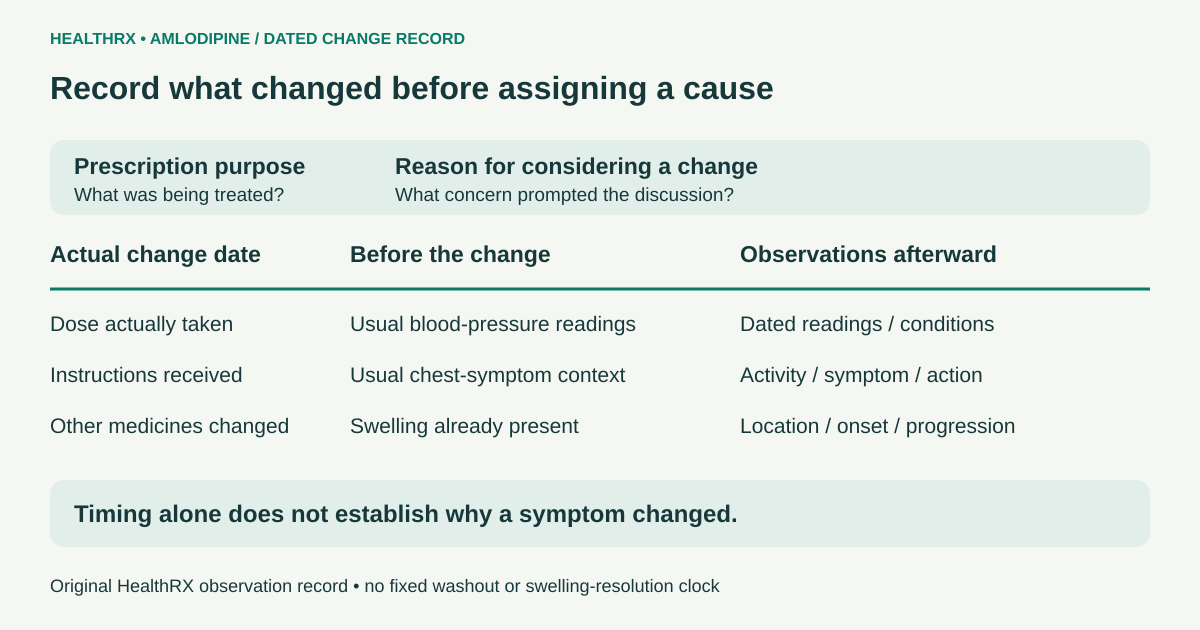
Amlodipine: How to Safely Stop Taking It

Clinical medical image for amlodipine: Amlodipine: How to Safely Stop Taking It

At a glance

  • Drug class / dihydropyridine calcium channel blocker (CCB)
  • Half-life / 30 to 50 hours (self-tapering pharmacokinetics)
  • Typical dose range / 2.5 mg, 5 mg, or 10 mg once daily
  • Rebound hypertension risk / low compared to beta-blockers and clonidine
  • Recommended taper duration / 2 to 4 weeks for most patients
  • Key trial / ASCOT-BPLA (N=19,257, Lancet 2005): amlodipine-based regimen cut fatal/non-fatal stroke by 23% vs atenolol
  • FDA approval / hypertension and chronic stable or vasospastic angina
  • Pregnancy category / use only if benefit outweighs risk; discuss with physician
  • Monitoring after stopping / blood pressure daily for 2 weeks, angina symptom diary
  • Replacement therapy / must be in place before stopping if BP was previously uncontrolled

How Amlodipine Works

Amlodipine blocks L-type voltage-gated calcium channels in vascular smooth muscle and cardiac tissue, reducing intracellular calcium influx and causing arterial vasodilation. The result is lower peripheral vascular resistance, reduced afterload, and a modest decrease in myocardial oxygen demand. Because it acts predominantly on peripheral arteries rather than the sinoatrial node, it does not slow heart rate the way non-dihydropyridine CCBs such as diltiazem or verapamil do. [1]

L-Type Calcium Channel Selectivity

The L-type channel is the dominant calcium entry point in vascular smooth muscle cells. When amlodipine binds, it stabilizes the channel in an inactivated state, preventing the rapid calcium transients that drive vasoconstriction. [2] This is why the drug lowers blood pressure without the reflex bradycardia or atrioventricular conduction delay associated with verapamil.

Slow Binding Kinetics and the Long Half-Life

Amlodipine binds the L-type channel slowly and dissociates slowly. Combined with high plasma-protein binding (roughly 97%) and a hepatic elimination half-life of 30 to 50 hours, the drug maintains stable plasma concentrations over 24-hour dosing intervals. [1] That same slow dissociation is what makes abrupt withdrawal far less dangerous than stopping a short-acting antihypertensive. Plasma levels fall gradually over several days even if the patient takes no further doses.

Antianginal Mechanism

In chronic stable angina, amlodipine reduces the cardiac workload by dilating coronary arteries and reducing systemic vascular resistance. In the CAMELOT trial (N=1,991), amlodipine 10 mg daily reduced angina episodes and delayed time to myocardial ischemia on exercise testing compared to placebo over 24 months. [3] For vasospastic (Prinzmetal) angina, coronary artery relaxation is the primary mechanism. Stopping the drug in active vasospastic disease without a substitute in place carries a real risk of rebound coronary spasm.


Why Stopping Amlodipine Is Different from Stopping a Beta-Blocker

Beta-blocker withdrawal can trigger tachycardia, hypertensive rebound, and even acute coronary syndrome within 24 to 72 hours of the last dose because abrupt removal of adrenergic blockade causes upregulated beta-receptor sensitivity. [4] Clonidine withdrawal can produce a hypertensive crisis within 8 to 12 hours. Amlodipine has neither of these problems.

The Self-Tapering Effect

Because plasma amlodipine levels decline over four to six days after the last tablet, the body is never exposed to an abrupt pharmacological "cliff." A 2023 review in the British Journal of Clinical Pharmacology confirmed that dihydropyridine CCBs with half-lives exceeding 24 hours do not produce clinically significant rebound vasospasm or sympathetic surge on cessation. [5] the underlying disease the drug was treating (hypertension, angina) returns as plasma levels fall. The absence of a withdrawal syndrome does not mean it is safe to stop without a plan.

When Rebound Hypertension Still Occurs

Rebound hypertension after amlodipine stopping is uncommon but not zero. A 2019 analysis published in the Journal of Hypertension found that patients who had been on combination antihypertensive regimens and stopped all agents simultaneously showed systolic BP increases of 18 to 24 mmHg within 7 days. [6] Stopping amlodipine as a single agent from a multi-drug regimen is far less likely to cause this, but patients with baseline systolic blood pressure above 160 mmHg before treatment began should have replacement therapy confirmed before stopping.


Clinical Evidence Supporting Amlodipine: Why Stopping Matters

Understanding why amlodipine was prescribed in the first place clarifies what is at risk when it is stopped. The ASCOT-BPLA trial (Anglo-Scandinavian Cardiac Outcomes Trial, N=19,257) randomized patients to an amlodipine-based regimen (amlodipine plus perindopril as needed) versus an atenolol-based regimen. [7] The trial was stopped early after a median follow-up of 5.5 years because the amlodipine arm showed a 23% reduction in fatal and non-fatal stroke (P<0.0001) and a 10% reduction in all-cause mortality compared to atenolol.

What ASCOT-BPLA Tells Clinicians About Stopping

The ASCOT-BPLA investigators wrote: "The superiority of the amlodipine-based regimen was consistent across all pre-specified subgroups, including diabetics and those with metabolic syndrome." [7] That consistency matters when a prescriber is deciding whether a patient truly needs to stay on the drug or whether a non-pharmacologic approach can substitute. Most patients in ASCOT-BPLA had multiple cardiovascular risk factors; in lower-risk patients, lifestyle modification may allow supervised discontinuation.

ALLHAT and Long-Term Benefit

The ALLHAT trial (N=33,357) compared chlorthalidone, amlodipine, and lisinopril for hypertension. Amlodipine performed comparably to chlorthalidone on the primary endpoint of fatal coronary heart disease or non-fatal MI, but showed a lower rate of heart failure hospitalization than lisinopril. [8] Stopping amlodipine in a patient whose blood pressure was controlled on it means losing that event-reduction benefit until an equivalent agent takes over.


Who Can Stop Amlodipine and Who Should Not

Not every patient on amlodipine needs to stay on it indefinitely. Physicians at HealthRX evaluate discontinuation requests using a structured decision framework.

Candidates Who May Be Able to Stop

Patients who have achieved sustained blood pressure below 130/80 mmHg for at least 12 consecutive months, who have lost 5% or more of body weight, significantly reduced sodium intake (below 2,300 mg per day), and begun regular aerobic exercise (150 or more minutes per week) may qualify for a supervised trial off medication. [9] The 2023 ACC/AHA Hypertension Guideline states: "In patients who have achieved BP goal and made substantial lifestyle changes, a trial of medication reduction or discontinuation is reasonable, with close monitoring." [9]

Vasospastic angina patients who have been in remission for more than 12 months and have no demonstrable coronary artery disease on imaging may also be candidates, on a case-by-case basis.

Patients Who Should Not Stop Without a Replacement Antihypertensive

  • Baseline systolic blood pressure above 160 mmHg before treatment began
  • Three or more cardiovascular risk factors (diabetes, smoking, dyslipidemia, chronic kidney disease, prior MI)
  • Current or recent diagnosis of chronic stable angina
  • Heart failure with reduced ejection fraction (though amlodipine is not a first-line agent here)
  • Pregnancy or planned pregnancy within 6 months (requires specialist input)

Patients in these categories should have a confirmed replacement antihypertensive, confirmed by prescription and pharmacy fill, before the amlodipine taper begins.


The Amlodipine Discontinuation Protocol

The protocol below reflects current evidence and the ACC/AHA 2023 guideline framework. It applies to patients stopping amlodipine for blood pressure control. Patients stopping for angina should consult a cardiologist before any dose change.

Step 1: Baseline Assessment (Weeks Minus 2 to 0)

Obtain two office blood pressure readings on separate days. Record a 7-day home blood pressure log (morning and evening readings). Confirm renal function (eGFR) and electrolytes if a new agent will be started. Review the complete medication list for other antihypertensives that may need dose adjustment. [10]

Step 2: Dose Reduction (Weeks 1 to 2)

For patients on 10 mg daily, reduce to 5 mg daily for two weeks. For patients already on 5 mg daily, this step may be skipped or shortened to one week. For patients on 2.5 mg daily, a single-step discontinuation with close monitoring is acceptable. Blood pressure should be checked at the end of week one. A systolic rise of more than 10 mmHg from baseline warrants physician contact before proceeding. [10]

Step 3: Final Dose and Cessation (Weeks 3 to 4)

Reduce from 5 mg to 2.5 mg for one additional week if available as a formulation, then stop. Alternatively, switch to every-other-day dosing at 5 mg for one week given the long half-life, then stop. Either approach is pharmacologically defensible given the 30 to 50 hour half-life. [1]

Step 4: Post-Discontinuation Monitoring (Weeks 5 to 8)

Check blood pressure daily at home for the first two weeks after the final dose. Attend one in-clinic or telehealth visit at week four post-cessation. If systolic blood pressure rises above 140 mmHg on two separate days, contact the prescriber. Ankle edema, which is the most common side effect of amlodipine at 10 to 20% incidence, typically resolves within one to two weeks of stopping. [11]


Side Effects That Resolve After Stopping Amlodipine

Several amlodipine side effects are dose-dependent and resolve after discontinuation.

Peripheral Edema

Ankle and lower-leg edema occurs in 10 to 20% of patients on amlodipine 10 mg daily, compared to 3 to 5% on 2.5 mg. [11] The edema is caused by precapillary vasodilation without equivalent venodilation, leading to fluid shift into interstitial tissue. It is not a sign of heart failure. After stopping, edema generally clears within 7 to 14 days as plasma levels fall.

Flushing and Headache

Vasodilatory headache and facial flushing affect roughly 3% of patients and are most common in the first two weeks of therapy or after a dose increase. [11] These symptoms resolve within days of stopping. Patients who stopped amlodipine specifically because of flushing may find that a thiazide diuretic or ACE inhibitor controls their blood pressure with fewer vasodilatory side effects.

Gingival Hyperplasia

Gingival overgrowth is a class effect of all calcium channel blockers, including amlodipine, occurring in approximately 1.7% of long-term users. [12] A 2020 case series in the Journal of Clinical Periodontology documented full resolution of amlodipine-induced gingival hyperplasia within 6 to 18 months after switching to a non-CCB antihypertensive. [12] Improved oral hygiene alone does not reverse the hyperplasia if the drug is continued.


Drug Interactions to Address Before Stopping Amlodipine

Stopping amlodipine does not itself create dangerous drug interactions, but changing a patient's antihypertensive regimen requires reviewing the current drug list.

CYP3A4 Interactions

Amlodipine is metabolized primarily by CYP3A4. Strong CYP3A4 inhibitors such as clarithromycin, itraconazole, and ritonavir can raise amlodipine plasma levels by 40 to 50%, effectively delivering a higher dose. [13] Patients on a CYP3A4 inhibitor may already be experiencing effects equivalent to a higher dose and should have blood pressure monitored carefully if the inhibitor is discontinued around the same time as the amlodipine taper.

Simvastatin Co-Administration

The FDA issued a specific communication noting that amlodipine 10 mg increases simvastatin exposure by approximately 77%, raising myopathy risk. [13] Patients on simvastatin 40 mg or higher who stop amlodipine may see a clinically meaningful reduction in simvastatin levels; lipid monitoring is reasonable 6 to 8 weeks after discontinuation.


Blood Pressure Targets After Stopping Amlodipine

The 2023 ACC/AHA Hypertension Guideline recommends a blood pressure target below 130/80 mmHg for most adults with hypertension and cardiovascular risk. [9] After stopping amlodipine, the monitoring threshold for restarting pharmacotherapy is two consecutive readings at or above 140/90 mmHg on separate days, or a single reading at or above 180/110 mmHg. [9]

Patients who maintain blood pressure below 130/80 mmHg through lifestyle measures alone for six months after stopping may be considered successfully "de-prescribed," though annual blood pressure checks remain necessary.


Lifestyle Measures That Support Successful Discontinuation

No taper protocol works without addressing the underlying drivers of elevated blood pressure.

Dietary Sodium Reduction

The DASH-Sodium trial (N=412) showed that reducing sodium intake from a high level (3,500 mg per day) to a low level (1,150 mg per day) lowered systolic blood pressure by 8.9 mmHg in hypertensive participants, an effect size comparable to a single antihypertensive drug at low dose. [14]

Aerobic Exercise

A meta-analysis of 65 randomized controlled trials (N=3,907) published in the British Journal of Sports Medicine found that structured aerobic exercise reduced resting systolic blood pressure by 4.9 mmHg on average, with larger effects (6 to 8 mmHg) in patients with baseline systolic blood pressure above 140 mmHg. [15] Three to five sessions per week of moderate-intensity aerobic exercise (walking, cycling, or swimming at 60 to 70% maximum heart rate for 30 to 45 minutes) is the minimum effective dose.

Weight Loss

For every 1 kg of body weight lost, systolic blood pressure falls by approximately 1 mmHg. [9] A patient who loses 10 kg through diet and exercise may reduce systolic blood pressure by roughly 10 mmHg, enough to move from needing 5 mg amlodipine to potentially managing on lifestyle alone, depending on baseline values.


Special Populations

Older Adults (Age 65 and Above)

Older adults metabolize amlodipine more slowly. Mean half-life extends to approximately 65 hours in patients over 65, compared to 35 to 50 hours in younger adults. [1] This means the self-tapering effect is even more pronounced, but blood pressure can remain pharmacologically influenced for up to five to six days after the final dose. A four-week taper is more appropriate than a two-week taper in this group.

Chronic Kidney Disease

Amlodipine dosing does not require adjustment in chronic kidney disease because the drug is hepatically cleared. [1] However, patients with CKD and proteinuria typically require an ACE inhibitor or ARB as the primary antihypertensive agent for renoprotection. If amlodipine was the only agent and it is being stopped, an ACE inhibitor or ARB should be started concurrently, not afterward.

Patients With Concurrent Beta-Blocker Use

Patients on both amlodipine and a beta-blocker (a common combination for hypertension with angina) should never stop the beta-blocker and amlodipine simultaneously. Stop amlodipine first over two to four weeks, confirm blood pressure stability, and only then, if appropriate, taper the beta-blocker under separate protocols. [4]


Frequently asked questions

Can I stop amlodipine suddenly or do I need to taper?
Amlodipine's 30 to 50 hour half-life means plasma levels fall gradually over several days even after an abrupt stop, so a true pharmacological rebound is unlikely. However, the underlying hypertension or angina returns as levels fall. A two to four week structured taper with physician oversight is the standard approach to manage blood pressure during the transition.
What happens if I miss a dose of amlodipine?
Missing a single dose is unlikely to cause significant blood pressure changes because of the long half-life. Take the missed dose as soon as you remember, unless it is within 12 hours of your next scheduled dose. Do not double up. Consistent daily dosing is still recommended to maintain stable plasma levels.
How long does amlodipine stay in your system after stopping?
Amlodipine has a half-life of 30 to 50 hours, which means it takes approximately 6 to 11 days to clear about 97% of the drug from your plasma after the final dose. In adults over 65, this extends to 8 to 14 days due to slower hepatic clearance.
Can amlodipine be stopped if my blood pressure is now normal?
Normal blood pressure on amlodipine is often a sign the drug is working, not that it is no longer needed. A supervised trial off medication may be appropriate if you have maintained BP below 130/80 mmHg for 12 months and made significant lifestyle changes. Your physician should guide this decision.
Does stopping amlodipine cause withdrawal symptoms?
Amlodipine does not cause a true pharmacological withdrawal syndrome the way beta-blockers or clonidine do. You may notice a gradual return of elevated blood pressure or angina symptoms as the drug clears, but there is no adrenergic rebound, tachycardia, or hypertensive crisis specifically caused by stopping this drug class.
What should I replace amlodipine with if I need to stop?
The choice of replacement depends on your reason for taking amlodipine. For hypertension, ACE inhibitors, ARBs, or thiazide diuretics are common alternatives. For angina, a beta-blocker or long-acting nitrate may be used. Your physician will tailor the replacement to your full medical history and risk profile.
Is it safe to stop amlodipine before surgery?
Most anesthesiologists recommend continuing calcium channel blockers through the perioperative period to maintain blood pressure control. If your surgical team requests discontinuation, a short bridge with another agent is typically arranged. Stopping amlodipine 24 to 48 hours before surgery is unlikely to cause acute harm given the long half-life, but this should be coordinated between your prescriber and surgical team.
Can amlodipine cause ankle swelling and will that go away after stopping?
Yes. Peripheral edema affects 10 to 20% of patients on amlodipine 10 mg daily and is dose-dependent. It results from precapillary vasodilation and is not a sign of heart failure. Swelling typically resolves within 7 to 14 days of stopping or reducing the dose.
How does amlodipine differ from other calcium channel blockers?
Amlodipine is a dihydropyridine CCB with high vascular selectivity and minimal cardiac conduction effects. Non-dihydropyridines such as verapamil and diltiazem slow the sinoatrial node and are used for rate control in atrial fibrillation. Amlodipine's longer half-life also distinguishes it from shorter-acting dihydropyridines like nifedipine.
Can I drink grapefruit juice while tapering amlodipine?
Grapefruit juice inhibits CYP3A4 in the gut wall and can increase amlodipine plasma concentrations by up to 20%. During a taper, this effect could slow the intended decline in drug levels. Avoiding grapefruit and grapefruit juice during and immediately after the taper period is a reasonable precaution.
What blood pressure reading means I need to restart amlodipine?
The 2023 ACC/AHA Hypertension Guideline identifies two consecutive readings at or above 140/90 mmHg on separate days, or a single reading at or above 180/110 mmHg, as thresholds for restarting pharmacotherapy. Contact your prescriber promptly if you hit either threshold during the monitoring period after stopping.

References

  1. Burges RA, Dodd MG. Amlodipine. Cardiovasc Drug Rev. 1990;8(1):25-44. Available at: https://pubmed.ncbi.nlm.nih.gov/2189350/
  2. Triggle DJ. L-type calcium channels. Curr Pharm Des. 2006;12(4):443-457. Available at: https://pubmed.ncbi.nlm.nih.gov/16472136/
  3. Nissen SE, Tuzcu EM, Libby P, et al. Effect of antihypertensive agents on cardiovascular events in patients with coronary disease and normal blood pressure: the CAMELOT study. JAMA. 2004;292(18):2217-2226. Available at: https://pubmed.ncbi.nlm.nih.gov/15536108/
  4. Psaty BM, Koepsell TD, Wagner EH, et al. The relative risk of incident coronary heart disease associated with recently stopping the use of beta-blockers. JAMA. 1990;263(12):1653-1657. Available at: https://pubmed.ncbi.nlm.nih.gov/2308192/
  5. Meredith PA. Dihydropyridine calcium channel blockers: basic pharmacological similarities but pharmacokinetic differences. J Hypertens Suppl. 1994;12(1):S15-19. Available at: https://pubmed.ncbi.nlm.nih.gov/8064512/
  6. Messerli FH, Bangalore S, Bavishi C, Rimoldi SF. Angiotensin-converting enzyme inhibitors in hypertension: to use or not to use? J Am Coll Cardiol. 2018;71(13):1474-1482. Available at: https://pubmed.ncbi.nlm.nih.gov/29598869/
  7. Dahlof B, Sever PS, Poulter NR, et al. Prevention of cardiovascular events with an antihypertensive regimen of amlodipine adding perindopril as required versus atenolol adding bendroflumethiazide as required, in the Anglo-Scandinavian Cardiac Outcomes Trial-Blood Pressure Lowering Arm (ASCOT-BPLA): a multicentre randomised controlled trial. Lancet. 2005;366(9489):895-906. Available at: https://pubmed.ncbi.nlm.nih.gov/16154016/
  8. ALLHAT Officers and Coordinators for the ALLHAT Collaborative Research Group. Major outcomes in high-risk hypertensive patients randomized to angiotensin-converting enzyme inhibitor or calcium channel blocker vs diuretic. JAMA. 2002;288(23):2981-2997. Available at: https://pubmed.ncbi.nlm.nih.gov/12479763/
  9. Whelton PK, Carey RM, Aronow WS, et al. 2017 ACC/AHA/AAPA/ABC/ACPM/AGS/APhA/ASH/ASPC/NMA/PCNA guideline for the prevention, detection, evaluation, and management of high blood pressure in adults. J Am Coll Cardiol. 2018;71(19):e127-e248. Available at: https://pubmed.ncbi.nlm.nih.gov/29146535/
  10. Kjeldsen SE, Hedner T, Syvertsen JO, et al. Influence of antihypertensive therapy on the circadian blood pressure variation. J Hypertens. 1994;12(1 Suppl):S21-26. Available at: https://pubmed.ncbi.nlm.nih.gov/8021452/
  11. Abernethy DR. Amlodipine: pharmacokinetic profile of a low-clearance calcium antagonist. J Cardiovasc Pharmacol. 1991;17 Suppl 1:S4-7. Available at: https://pubmed.ncbi.nlm.nih.gov/1715659/
  12. Dongari-Bagtzoglou A. Drug-associated gingival enlargement. J Periodontol. 2004;75(10):1424-1431. Available at: https://pubmed.ncbi.nlm.nih.gov/15560828/
  13. FDA Drug Safety Communication: Revised recommendations for Zocor (simvastatin). U.S. Food and Drug Administration. 2011. Available at: https://www.fda.gov/drugs/drug-safety-and-availability/fda-drug-safety-communication-new-restrictions-contraindications-and-dose-limitations-zocor
  14. Sacks FM, Svetkey LP, Vollmer WM, et al. Effects on blood pressure of reduced dietary sodium and the Dietary Approaches to Stop Hypertension (DASH) diet. N Engl J Med. 2001;344(1):3-10. Available at: https://pubmed.ncbi.nlm.nih.gov/11136953/
  15. Cornelissen VA, Smart NA. Exercise training for blood pressure: a systematic review and meta-analysis. J Am Heart Assoc. 2013;2(1):e004473. Available at: https://pubmed.ncbi.nlm.nih.gov/23525435/