Does WellCare Cover Forteo? Formulary Status, Costs, and Prior Authorization

Does WellCare Cover Forteo?
At a glance
- Forteo (teriparatide) is an injectable parathyroid hormone analog approved for osteoporosis
- WellCare Medicare Part D plans typically list Forteo on Tier 4 or Tier 5 (specialty)
- Prior authorization is required on virtually all WellCare formularies
- Step therapy usually mandates a trial of oral bisphosphonates before approval
- Monthly out-of-pocket costs range from $100 to $500+ before catastrophic coverage
- The standard prior authorization decision timeline is 72 hours (standard) or 24 hours (expedited)
- Forteo treatment duration is limited to 24 months per FDA labeling
- Biosimilar teriparatide (Terrosa) may offer lower-tier placement on some plans
- Eli Lilly's Forteo Savings Card can reduce copays for commercially insured patients
- WellCare Medicaid plans vary by state in formulary placement and cost-sharing
WellCare Formulary Placement for Forteo
Most WellCare Medicare Advantage and standalone Part D plans place Forteo on Tier 4 (preferred specialty) or Tier 5 (non-preferred specialty), which means higher cost-sharing than generic medications. This placement reflects Forteo's wholesale acquisition cost of approximately $3,900 per 28-day pen, a figure that puts it squarely in the specialty drug category across nearly every commercial and government payer [1].
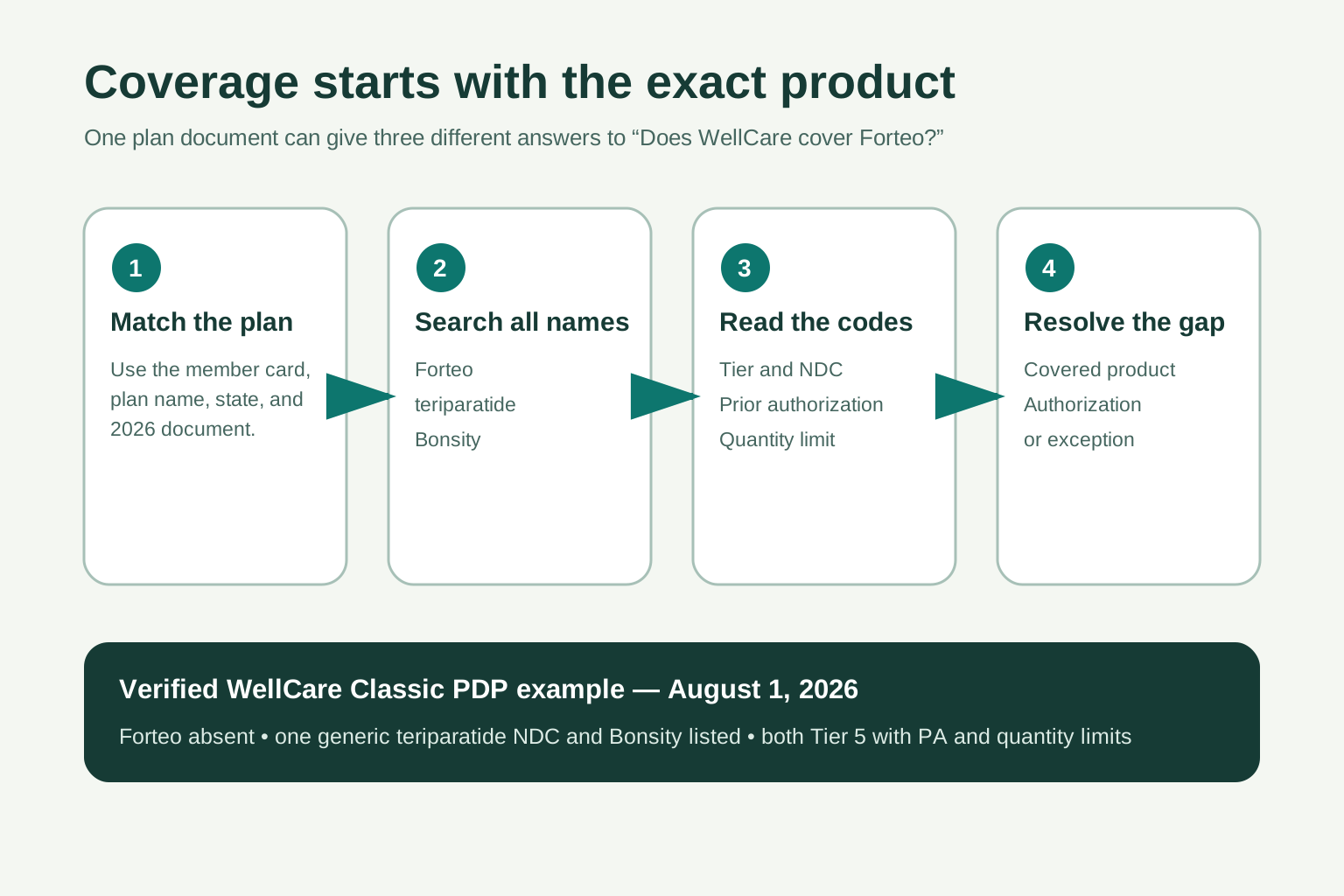
WellCare operates multiple plan variants across states. The exact tier depends on which specific plan a member holds. WellCare Classic (PDP), WellCare Value Script (PDP), and WellCare Medicare Advantage HMO plans each publish separate formularies annually. A drug listed on Tier 4 in one plan could sit on Tier 5 in another. Members should check the WellCare online formulary lookup tool or call the number on the back of their member ID card to confirm placement for the current plan year.
The Centers for Medicare & Medicaid Services (CMS) requires Part D sponsors to cover "all or substantially all" drugs in six protected classes, but osteoporosis agents are not among those protected classes [2]. This gives WellCare latitude to apply utilization management tools like prior authorization, step therapy, and quantity limits to Forteo. In practice, the plan uses all three.
For WellCare Medicaid managed-care enrollees, formulary access varies by state Medicaid contract. States like Florida, Georgia, and Kentucky, where WellCare has large Medicaid enrollment, maintain their own preferred drug lists. Forteo may require a non-preferred prior authorization in these Medicaid plans, adding an extra layer of documentation for prescribers [3].
Prior Authorization Requirements
WellCare requires prior authorization for Forteo across its Medicare and Medicaid product lines. The prior authorization criteria typically include a confirmed diagnosis of osteoporosis (T-score of -2.5 or lower at the spine, femoral neck, or total hip on DXA scan), documented trial and failure of at least one oral bisphosphonate (alendronate or risedronate for a minimum of 12 months), and evidence of a fragility fracture or very high fracture risk as defined by the FRAX tool [4].
The step therapy requirement is the most common barrier. WellCare's clinical policy aligns with the American Association of Clinical Endocrinology (AACE) 2020 guidelines, which recommend anabolic agents like teriparatide as first-line therapy only for patients at "very high" fracture risk, defined as a recent fracture within the past 12 months, a T-score below -3.0, or a FRAX 10-year major osteoporotic fracture probability exceeding 30% [5]. For patients who do not meet that very-high-risk threshold, the plan expects bisphosphonate therapy first.
Prescribers submit prior authorization requests through CoverMyMeds, the WellCare provider portal, or by fax. Standard requests receive a decision within 72 hours. Expedited requests, appropriate when a delay could seriously jeopardize a patient's health, must be decided within 24 hours per CMS regulations [2].
A complete submission should include the DXA scan report with T-scores, documentation of prior bisphosphonate therapy (drug name, dose, start and stop dates, reason for discontinuation), FRAX score or clinical fracture history, and the prescriber's attestation that the patient has no contraindications to teriparatide such as Paget's disease, unexplained alkaline phosphatase elevation, open epiphyses, or prior radiation therapy to the skeleton [1].
Expected Out-of-Pocket Costs
What you actually pay depends on your plan's benefit structure and where you fall in the Medicare Part D coverage phases. During the initial coverage phase, specialty-tier coinsurance on WellCare Part D plans typically runs 25% to 33% of the negotiated drug cost. For a drug with a negotiated price near $3,500 per month, that translates to roughly $875 to $1,155 before any manufacturer discount or Extra Help subsidy applies [6].
The Inflation Reduction Act (IRA) changed this equation significantly starting in 2025. The $2,000 annual out-of-pocket cap on Part D spending means that even high-cost specialty drugs like Forteo become effectively free once a member hits that threshold [7]. For many Forteo users, the $2,000 cap is reached within the first two to three months of therapy, after which the plan and the manufacturer (through the Coverage Gap Discount Program) absorb remaining costs for the rest of the calendar year.
WellCare also offers the Medicare Part D Low-Income Subsidy (LIS), commonly called "Extra Help." Dual-eligible members or those who qualify for full LIS pay no more than $4.50 for generic drugs and $11.20 for brand-name drugs in 2026 [2]. Forteo under LIS benefits costs a fraction of what it would without the subsidy.
For WellCare Medicaid members, state-specific cost-sharing rules apply. Many Medicaid programs cap monthly prescription copays at $3 to $4 per drug, though some states exempt specialty injectables from copays entirely. Florida Medicaid, for example, caps total monthly copays at $4 per preferred brand and $8 per non-preferred brand [3].
Step Therapy: What Drugs Must You Try First?
WellCare's step therapy protocol for Forteo generally requires failure of, intolerance to, or contraindication to at least one oral bisphosphonate. The two most commonly required first-step agents are alendronate (generic Fosamax, 70 mg weekly) and risedronate (generic Actonel, 35 mg weekly or 150 mg monthly). Both are Tier 1 generics on WellCare formularies, costing members $0 to $10 per month [8].
"Failure" in this context means continued bone loss (a statistically significant decrease in BMD on repeat DXA) or a new fracture occurring during at least 12 months of adherent bisphosphonate therapy. "Intolerance" typically means documented gastrointestinal adverse effects (esophagitis, severe dysphagia, or gastric ulceration) that prevent continued oral therapy. A simple statement of "patient prefers injectable" will not satisfy the step therapy requirement.
Some WellCare plans also accept prior use of IV zoledronic acid (Reclast, 5 mg annually) or denosumab (Prolia, 60 mg subcutaneously every 6 months) as meeting the step therapy prerequisite, particularly if the patient experienced a fracture while on these agents. The VERO trial (N=1,360) demonstrated that teriparatide reduced new vertebral fractures more effectively than risedronate over 24 months (5.4% vs. 12.0%, p<0.0001), providing the clinical rationale for anabolic therapy after antiresorptive failure [9].
Physicians who believe step therapy is clinically inappropriate can file a step therapy exception request. CMS mandates that Part D plans grant exceptions when the required first-step drug is contraindicated, has caused an adverse reaction, or is expected to be ineffective based on the patient's clinical history [2].
How Forteo Compares to Covered Alternatives
WellCare formularies list several osteoporosis therapies at lower tiers than Forteo, and understanding the clinical differences helps patients and prescribers build a stronger case for approval when anabolic therapy is genuinely needed.
Alendronate and risedronate (Tier 1) are antiresorptive agents that slow bone breakdown. The Fracture Intervention Trial (FIT; N=2,027) showed alendronate reduced hip fractures by 51% over 3 years compared to placebo in women with existing vertebral fractures [10]. These drugs are appropriate first-line agents for most patients with osteoporosis but do not build new bone the way teriparatide does.
Denosumab (Prolia) typically sits on Tier 3 or 4 in WellCare plans. The FREEDOM trial (N=7,868) demonstrated that denosumab reduced vertebral fractures by 68%, hip fractures by 40%, and nonvertebral fractures by 20% over 3 years [11]. Denosumab requires indefinite therapy because discontinuation triggers rapid bone loss and rebound vertebral fractures, a concern the FDA addressed in a 2022 safety communication [12].
Abaloparatide (Tymlos), another anabolic agent, may appear on the same specialty tier as Forteo. The ACTIVE trial (N=2,463) showed abaloparatide reduced new vertebral fractures by 86% versus placebo at 18 months [13]. Some WellCare plans prefer one anabolic agent over the other based on negotiated rebates; if Forteo is denied, asking whether Tymlos has preferred status is a practical next step.
Romosozumab (Evenity), a sclerostin inhibitor with both anabolic and antiresorptive effects, is the newest option. The ARCH trial (N=4,093) found romosozumab followed by alendronate reduced clinical fractures by 27% compared to alendronate alone over a median of 33 months [14]. WellCare generally places Evenity on the specialty tier with prior authorization requirements similar to Forteo's, plus an additional cardiovascular risk screening criterion given the black-box warning for increased risk of myocardial infarction and stroke [14].
Filing an Appeal if Forteo Is Denied
A denial does not end the conversation. WellCare members have a structured appeals process mandated by CMS, and success rates on first-level appeals for specialty drugs generally range from 40% to 60% when supported by adequate clinical documentation.
The first step is a Coverage Determination redetermination request. This must be filed within 60 days of the denial notice. The prescribing physician should submit a letter of medical necessity that addresses each specific criterion the plan cited as unmet. If the denial was based on insufficient bisphosphonate trial documentation, include pharmacy claims data or medical records showing the dates, doses, and outcomes of prior therapy [2].
If the first-level appeal is denied, the case moves to an Independent Review Entity (IRE), a third-party organization contracted by CMS. The IRE reviews the case de novo and is not bound by WellCare's internal policies. According to CMS data, IREs overturn Part D plan denials in approximately 30% to 40% of cases that reach this level [15].
Beyond the IRE, further appeal levels include an Administrative Law Judge hearing (for claims exceeding $190 in 2026), the Medicare Appeals Council, and ultimately federal district court [2]. Few osteoporosis drug denials proceed past the IRE stage, but the option exists.
During the appeal process, physicians can request a temporary supply. CMS requires Part D plans to provide a one-time, temporary 30-day supply (or less if the prescription is written for fewer days) during a transition period, such as when a new member's existing Forteo prescription is not on the new plan's formulary [2].
Patient Assistance and Copay Support Programs
Eli Lilly, the manufacturer of Forteo, operates the Lilly Cares Foundation Patient Assistance Program for uninsured or underinsured patients. Eligible individuals receive Forteo at no cost. Income thresholds are typically set at 400% of the Federal Poverty Level or below, which in 2026 equals $62,400 for a single-person household [16].
For commercially insured patients (not Medicare or Medicaid), the Forteo Savings Card can reduce out-of-pocket costs to as low as $4 per month. This card cannot be used by government-insured patients, as federal anti-kickback statutes prohibit manufacturer copay assistance for Medicare and Medicaid beneficiaries [16].
Medicare patients who need additional help should explore State Pharmaceutical Assistance Programs (SPAPs). States including New York (EPIC), Pennsylvania (PACE), and Connecticut (ConnPACE) offer supplemental drug coverage that wraps around Part D benefits and can reduce specialty-tier copays [3].
The nonprofit organization NeedyMeds maintains a database of assistance programs at needymeds.org, and the Patient Advocate Foundation provides case management services for patients who face insurance barriers to osteoporosis treatment. Both resources are free.
Biosimilar Teriparatide: A Lower-Cost Option
The FDA approved the first teriparatide biosimilar, Terrosa (manufactured by Gedeon Richter), and additional biosimilar products have entered the market since the original Forteo patent expired. Biosimilar teriparatide contains the same amino acid sequence (recombinant human parathyroid hormone 1-34) and has demonstrated equivalent efficacy and safety in analytical, pharmacokinetic, and clinical studies required for biosimilar approval under the 351(k) pathway [17].
WellCare may place biosimilar teriparatide on a lower formulary tier than branded Forteo, potentially moving it from Tier 5 to Tier 3 or 4. This shift can substantially reduce copays. In the initial coverage phase, a Tier 3 preferred-brand coinsurance of 20% on a $2,000 biosimilar yields a $400 monthly copay versus $875+ for branded Forteo. That difference matters even with the $2,000 annual cap, because reaching the cap faster means fewer months of high-cost payments.
The Endocrine Society's 2024 position statement supports the use of biosimilar teriparatide as clinically interchangeable with the reference product for all approved indications, provided the biosimilar has been granted interchangeability status by the FDA [18]. Prescribers should specify "DAW-0" (dispense as written not required) on prescriptions to allow pharmacy substitution of the biosimilar when it is formulary-preferred.
Patients who are stable on branded Forteo and concerned about switching should know that the FDA's biosimilar approval standard requires no clinically meaningful differences in safety, purity, or potency. Over 100 clinical studies globally have confirmed teriparatide biosimilar equivalence [17].
Duration Limits and Renewal Considerations
Forteo carries an FDA-labeled maximum treatment duration of 24 months, a restriction based on the original osteosarcoma signal observed in Fischer 344 rats exposed to near-lifetime high-dose teriparatide [1]. WellCare enforces this 24-month limit through quantity management edits in its pharmacy claims system. After 24 months, the system will auto-reject refills.
The 2020 AACE guidelines note that following a course of anabolic therapy, patients should transition to an antiresorptive agent (typically a bisphosphonate or denosumab) to maintain the bone density gains achieved during teriparatide treatment [5]. The DATA-Switch extension study showed that women who received denosumab after teriparatide continued to gain BMD at the spine and hip, while those who received placebo after teriparatide lost a portion of their gains within 24 months [19].
If a patient completes 24 months of Forteo and later experiences a new fracture or significant bone loss, a second course of teriparatide is not explicitly prohibited by the FDA label but is rarely approved by payers. WellCare's clinical policy on repeat courses varies by plan year, and a peer-to-peer review with the plan's medical director is usually required. Abaloparatide (Tymlos) may serve as an alternative anabolic agent for patients who have exhausted their Forteo eligibility, as the two drugs have distinct NDC codes and may not trigger the same utilization management block.
Frequently asked questions
›Does WellCare cover Forteo?
›How much does Forteo cost with WellCare insurance?
›What prior authorization criteria does WellCare require for Forteo?
›Can I get Forteo through WellCare Medicaid?
›What happens if WellCare denies my Forteo prescription?
›Is there a cheaper alternative to Forteo on WellCare?
›Does the Forteo Savings Card work with WellCare?
›How long will WellCare approve Forteo treatment?
›Does WellCare require step therapy before approving Forteo?
›Can my doctor request an expedited prior authorization for Forteo from WellCare?
References
- Eli Lilly and Company. Forteo (teriparatide) prescribing information. https://www.accessdata.fda.gov/drugsatfda_docs/label/2020/021318s053lbl.pdf
- Centers for Medicare & Medicaid Services. Medicare Prescription Drug Benefit Manual, Chapter 6: Part D Drugs and Formulary Requirements. https://www.cms.gov/medicare/prescription-drug-coverage/prescriptiondrugcovcontra
- Centers for Medicare & Medicaid Services. Medicaid Pharmacy Benefits. https://www.cms.gov/medicaid/prescription-drugs
- Camacho PM, Petak SM, Binkley N, et al. American Association of Clinical Endocrinologists/American College of Endocrinology Clinical Practice Guidelines for the Diagnosis and Treatment of Postmenopausal Osteoporosis, 2020 Update. Endocr Pract. 2020;26(Suppl 1):1-46. https://www.aace.com/disease-state-resources/bone-and-parathyroid/clinical-practice-guidelines/aaceace-clinical-practice
- Shoback D, Rosen CJ, Black DM, et al. Pharmacological Management of Osteoporosis in Postmenopausal Women: An Endocrine Society Guideline Update. J Clin Endocrinol Metab. 2020;105(3):dgaa048. https://pubmed.ncbi.nlm.nih.gov/32068863/
- Kaiser Family Foundation. Medicare Part D in 2025: The Inflation Reduction Act's Redesign of the Benefit. https://www.kff.org/medicare/issue-brief/medicare-part-d-in-2025
- U.S. Congress. Inflation Reduction Act of 2022, Section 11201: Redesign of Medicare Part D. https://www.congress.gov/bill/117th-congress/house-bill/5376
- Black DM, Cummings SR, Karpf DB, et al. Randomised trial of effect of alendronate on risk of fracture in women with existing vertebral fractures (FIT). Lancet. 1996;348(9041):1535-1541. https://pubmed.ncbi.nlm.nih.gov/8950879/
- Kendler DL, Marin F, Zerbini CAF, et al. Effects of teriparatide and risedronate on new fractures in post-menopausal women with severe osteoporosis (VERO): a multicentre, double-blind, double-dummy, randomised controlled trial. Lancet. 2018;391(10117):230-240. https://pubmed.ncbi.nlm.nih.gov/29129436/
- Black DM, Thompson DE, Bauer DC, et al. Fracture risk reduction with alendronate in women with osteoporosis: the Fracture Intervention Trial. J Clin Endocrinol Metab. 2000;85(11):4118-4124. https://pubmed.ncbi.nlm.nih.gov/11095442/
- Cummings SR, San Martin J, McClung MR, et al. Denosumab for prevention of fractures in postmenopausal women with osteoporosis (FREEDOM trial). N Engl J Med. 2009;361(8):756-765. https://pubmed.ncbi.nlm.nih.gov/19671655/
- U.S. Food and Drug Administration. FDA Drug Safety Communication: Increased risk of severe vertebral fractures after discontinuation of denosumab. https://www.fda.gov/drugs/drug-safety-and-availability
- Miller PD, Hattersley G, Riis BJ, et al. Effect of abaloparatide vs placebo on new vertebral fractures in postmenopausal women with osteoporosis (ACTIVE). JAMA. 2016;316(7):722-733. https://pubmed.ncbi.nlm.nih.gov/27533157/
- Saag KG, Petersen J, Brandi ML, et al. Romosozumab or alendronate for fracture prevention in women with osteoporosis (ARCH trial). N Engl J Med. 2017;377(15):1417-1427. https://pubmed.ncbi.nlm.nih.gov/28892457/
- Medicare Payment Advisory Commission (MedPAC). Report to the Congress: Medicare Payment Policy, Chapter 14: Part D. https://www.medpac.gov
- Eli Lilly and Company. Lilly Cares Foundation Patient Assistance Program. https://www.lillycares.com
- U.S. Food and Drug Administration. Biosimilar Product Information. https://www.fda.gov/drugs/biosimilars/biosimilar-product-information
- Eastell R, Rosen CJ, Black DM, et al. Pharmacological Management of Osteoporosis in Postmenopausal Women: An Endocrine Society Clinical Practice Guideline. J Clin Endocrinol Metab. 2019;104(5):1595-1622. https://pubmed.ncbi.nlm.nih.gov/30907953/
- Leder BZ, Tsai JN, Uihlein AV, et al. Denosumab and teriparatide transitions in postmenopausal osteoporosis (the DATA-Switch study). Lancet. 2015;386(9999):1147-1155. https://pubmed.ncbi.nlm.nih.gov/26144908/