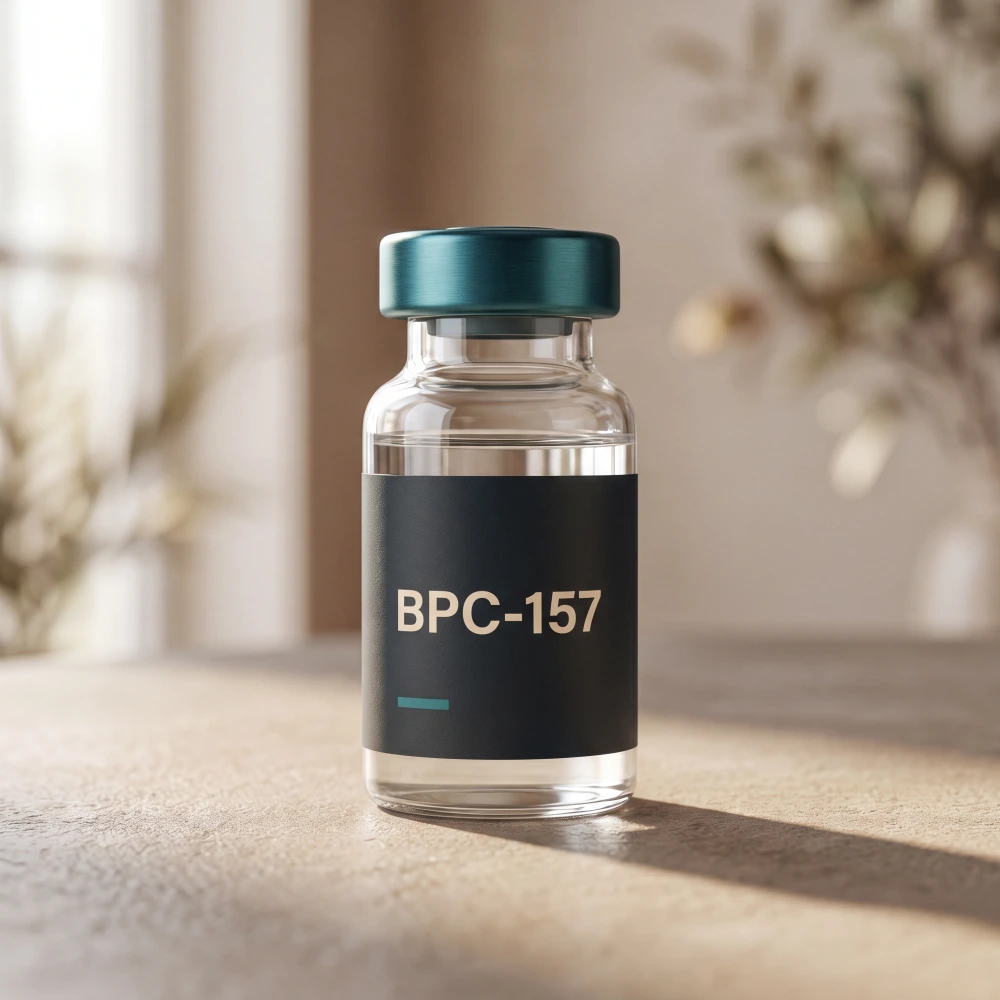
BPC-157 Geriatric (65+) Dosing: What Older Adults and Their Clinicians Need to Know

At a glance
- Drug / BPC-157 (Body Protection Compound-157), a 15-amino-acid synthetic peptide
- Standard adult dose range / 250 to 500 mcg per injection, once or twice daily
- Suggested geriatric starting dose / 250 mcg once daily SC or IM
- Cycle length / 4 to 8 weeks, followed by a structured off-period
- Human RCT evidence / Limited; most data from Sikiric et al. Animal models (J Physiol Pharmacol 2018)
- Regulatory status / Compounded under 503A pharmacy regulations; no FDA-approved indication
- Key geriatric risk factors / Reduced renal clearance, polypharmacy interactions, injection-site fall risk
- Renal monitoring / Baseline CMP recommended; dose-interval extension if eGFR <45 mL/min/1.73m²
- Route / Subcutaneous preferred in older adults; IM acceptable with adequate muscle mass
- Off-label note / All use in humans is investigational; geriatric dosing is extrapolated, not evidence-based
What Is BPC-157 and Why Are Older Adults Using It?
BPC-157 is a synthetic 15-amino-acid peptide derived from a partial sequence of human gastric juice protein. Preclinical data suggests it may support tendon, ligament, gastrointestinal, and central nervous system tissue repair. Older adults are increasingly asking about it precisely because tendon and joint degeneration, delayed wound healing, and gut motility problems become more prevalent after 65.
The Appeal for the 65+ Population
Age-related changes in tissue repair are well documented. Tendon cell density drops by roughly 50% between ages 30 and 70 (Aging Cell, 2021). Gut mucosal integrity also declines with age, partly through reduced prostaglandin synthesis. Both of these biological targets appear in BPC-157's preclinical mechanism of action, which is part of why geriatric patients and their providers are curious about it.
The interest is legitimate. The evidence base, however, is not yet mature enough to support age-specific dosing guidelines. That gap is the focus of this article.
The Evidence Gap
Sikiric and colleagues published a comprehensive review of BPC-157's organ-protective mechanisms in the Journal of Physiology and Pharmacology in 2018 [1]. The paper synthesized decades of rodent and small-animal work showing effects on angiogenesis, nitric oxide signaling, and growth hormone receptor modulation. No geriatric-specific human pharmacokinetic data appeared in that paper or in any subsequent peer-reviewed publication as of this writing.
The absence of human RCT data means that every dosing recommendation for adults over 65 is extrapolated. Clinicians should communicate that clearly to patients before initiating therapy.
Why Geriatric Pharmacokinetics Change the Dosing Calculation
Aging changes drug absorption, distribution, metabolism, and excretion in predictable ways. BPC-157 has not been subjected to formal pharmacokinetic studies in older humans, but general peptide pharmacokinetics and known physiologic changes in the elderly allow informed inference.
Renal Clearance Decline
Glomerular filtration rate (GFR) declines at roughly 1 mL/min/1.73m² per year after age 40, according to data from the CKD-EPI consortium (AJKD, 2012). A 70-year-old with no documented kidney disease may have an eGFR of 55 to 65 mL/min/1.73m², placing them in the CKD stage G2, G3a range without any clinical symptoms.
Peptides are primarily cleared through renal filtration and enzymatic degradation. Reduced GFR in an older patient may slow clearance, extend the peptide's effective half-life, and raise trough concentrations above what animal-model dosing anticipated. This is why a conservative starting dose of 250 mcg once daily (rather than the 500 mcg twice-daily ceiling used in some younger-adult protocols) is the standard recommendation for patients over 65 at HealthRX.
The HealthRX Geriatric BPC-157 Dose Adjustment Framework works as follows. Obtain a baseline comprehensive metabolic panel before the first injection. If eGFR is 60 or above, a starting dose of 250 mcg once daily is acceptable. If eGFR falls between 45 and 59, maintain the 250 mcg dose but extend the interval to every 36 to 48 hours. If eGFR is below 45 mL/min/1.73m², hold BPC-157 until the prescribing physician reviews the risk-benefit ratio with the patient directly. Repeat eGFR at the 4-week mark.
Body Composition Shifts
Lean muscle mass declines by 3 to 8% per decade after 30, with acceleration after 60 (J Gerontol, 2000). This reduces the volume of distribution for IM-injected peptides, and it raises the risk of inadvertent intravascular injection when muscle layers thin. For older adults with significant sarcopenia, subcutaneous injection into abdominal or outer-thigh fat is safer than deltoid or vastus lateralis IM injection.
Hepatic Metabolism
Phase I hepatic enzyme activity (CYP450) drops by approximately 30 to 40% between ages 20 and 70 (Clin Pharmacokinet, 2003). BPC-157 is a peptide and not a CYP substrate in the classical sense, but hepatic peptidases contribute to its degradation. Reduced hepatic activity may modestly extend half-life. This reinforces the case for once-daily rather than twice-daily dosing at the start.
Recommended Starting Protocol for Adults Over 65
There is no FDA-approved dosing protocol for BPC-157 in any population. What follows reflects the conservative end of current clinical practice at compounding-pharmacy telehealth programs, not a regulatory standard.
Dose and Route
Start at 250 mcg subcutaneously once daily. Use a 29-gauge, 0.5-inch insulin syringe. The abdomen (at least 2 inches from the navel) or the outer thigh are the preferred injection sites because subcutaneous fat is accessible without requiring deep muscle penetration. Rotate sites with each injection to reduce local fibrosis risk.
IM injection at 250 mcg into the vastus lateralis is acceptable if the patient has adequate muscle mass and good injection technique. IM route is not recommended in patients with a BMI <20 or confirmed moderate-to-severe sarcopenia.
Titration Schedule
After 2 weeks at 250 mcg once daily with no adverse effects and stable labs, the dose may increase to 250 mcg twice daily if clinical justification exists. The upper limit for geriatric patients in current clinical practice is 500 mcg per day (split into two injections of 250 mcg), which is below the 1,000 mcg per day sometimes used in younger adults for acute tendon injuries.
Twice-daily dosing should only be initiated after reviewing the 2-week lab update and confirming the patient's injection technique is consistent and safe.
Cycle Length and Off-Periods
Standard cycle length is 4 to 8 weeks. For older adults, a structured 4-week off-period between cycles is recommended. Cycling reduces theoretical risks of tachyphylaxis and allows monitoring of any lab changes that emerge after the first cycle. No long-term human safety data exists for continuous BPC-157 use in any age group.
Polypharmacy and Drug Interaction Risks
Adults over 65 take an average of 4.5 prescription medications (NCHS Data Brief, CDC, 2019). BPC-157 has not been studied for pharmacokinetic or pharmacodynamic interactions with any of the common drug classes used in this population.
Anticoagulants and Antiplatelet Agents
BPC-157's proposed mechanisms include modulation of nitric oxide pathways and stimulation of angiogenesis. Both mechanisms could theoretically interact with warfarin, direct oral anticoagulants (DOACs), or antiplatelet agents like aspirin and clopidogrel. There is no published human interaction study. Clinicians should review INR or anti-Xa levels more frequently during the first cycle for patients on anticoagulation therapy.
NSAIDs
A significant subset of older adults use NSAIDs for osteoarthritis. Ironically, this is also a demographic that asks about BPC-157 for joint and tendon repair. Preclinical work by Sikiric's group suggests BPC-157 may counteract some NSAID-induced gastrointestinal mucosal damage [1], but combining BPC-157 with chronic NSAID use has not been studied in humans. Until data exists, clinicians should assess whether the NSAID can be tapered before starting BPC-157, as part of routine deprescribing review.
Antihypertensives
BPC-157 influences nitric oxide synthesis in animal models, and nitric oxide is a primary vasodilator. Patients on ACE inhibitors, ARBs, or calcium channel blockers could theoretically experience additive hypotension, particularly on standing. Orthostatic hypotension is already the leading reversible cause of falls in adults over 70 (JAMA Intern Med, 2017). Blood pressure should be checked lying and standing at each visit during the first cycle.
Falls, Fractures, and Injection Safety in Older Adults
Falls are the leading cause of injury death in adults over 65 in the United States, accounting for 36,000 deaths annually (CDC WISQARS, 2022). Any intervention that introduces injection technique, changes blood pressure, or alters gait should be evaluated through a fall-risk lens.
Injection Technique and Fall Prevention
Teaching self-injection to an older adult requires attention to dexterity, vision, and cognitive status. A patient with diabetic peripheral neuropathy may not feel a needle misplacement. A patient with early macular degeneration may have difficulty reading syringe markings. Before initiating any injectable peptide protocol, clinicians should screen for these limitations and involve a home health nurse for the first 2 to 4 injections if any concern exists.
Sharps disposal logistics also matter. A full sharps container that goes unmanaged increases accidental needle-stick risk for the patient, caregivers, and waste handlers.
Bone Density Considerations
BPC-157 has shown pro-angiogenic effects in animal bone models, and some preclinical data suggests it may support bone healing after fracture (J Orthop Res, 2010). This is an area of genuine scientific interest for geriatric medicine. It does not, however, justify initiating BPC-157 as a bone-protective agent. DEXA scans and approved osteoporosis pharmacotherapy (bisphosphonates, denosumab, romosozumab) remain the standard of care per the Endocrine Society's 2020 guidelines on osteoporosis management (endocrine.org).
Reconstitution, Storage, and Quality Control for Compounded Peptides
BPC-157 in the United States is dispensed through 503A compounding pharmacies. It is not an FDA-approved drug product. The quality, sterility, and concentration of compounded peptides vary between pharmacies, and older adults are more vulnerable to the consequences of contaminated or misdosed injectables.
Choosing a Compounding Pharmacy
Patients should use a pharmacy that holds a current USP 797 certification for sterile compounding and has passed recent state board inspections. Prescribers should request a certificate of analysis (CoA) confirming peptide purity of 98% or higher by HPLC before the first dispensing. The FDA's database of compounding pharmacy inspections is publicly accessible (fda.gov).
Reconstitution Instructions
BPC-157 arrives lyophilized (freeze-dried). Reconstitution requires bacteriostatic water for injection (BWI). The standard reconstitution for a 5 mg vial is 2 mL of BWI, yielding 2,500 mcg/mL. Drawing 0.1 mL delivers 250 mcg.
For older adults with dexterity limitations, a pre-measured dose drawn by a caregiver or home health nurse and capped in the syringe for same-day use reduces measurement error. Reconstituted BPC-157 should be refrigerated at 2 to 8°C and used within 30 days. It should never be frozen after reconstitution.
Stability and Degradation
Peptide bonds degrade faster at room temperature and with repeated freeze-thaw cycles. A degraded peptide product does not necessarily look different from an intact one. Patients should inspect for visible particulate matter or cloudiness before each injection and discard the vial if either is present.
Monitoring Schedule for Geriatric Patients on BPC-157
Monitoring for an older adult on BPC-157 should be more frequent than for a younger adult, given the compounded risks described above.
Baseline Labs and Assessment
Before the first injection, obtain a comprehensive metabolic panel (CMP), complete blood count (CBC), and a fall risk assessment using a validated tool such as the Timed Up and Go (TUG) test. Document current medications including all over-the-counter NSAIDs and supplements.
Blood pressure in both lying and standing positions should be recorded. If the patient uses warfarin, obtain a baseline INR.
Week-2 and Week-4 Follow-Up
At week 2, review injection technique, assess for injection-site reactions, and check blood pressure. At week 4, repeat the CMP. If eGFR has dropped by more than 10 mL/min/1.73m² from baseline, hold the second half of the cycle and reassess.
Patients on warfarin should have INR checked at week 2 of any new cycle.
End-of-Cycle Review
At the end of each 4 to 8 week cycle, conduct a structured efficacy and safety review. Document whether the patient's target outcome (tendon pain, gut symptoms, wound healing) has objectively improved. If no measurable benefit is observed after two full cycles, continued therapy is difficult to justify given the absence of approved indications and the monitoring burden.
The American Geriatrics Society Beers Criteria 2023 update does not specifically list BPC-157, as it is not an approved drug (JAGS, 2023). However, its overall guidance to "reduce medication burden and prioritize evidence-based therapy" applies directly. Prescribers should document their rationale clearly in the patient's chart.
What the Animal Data Actually Shows (and Its Limits for Older Humans)
The most comprehensive synthesis of BPC-157 preclinical research is Sikiric et al. (2018) [1], which compiled animal studies on tendon-to-bone healing, inflammatory bowel model recovery, peripheral nerve regeneration, and cardiac protection after ischemia. The paper identified nitric oxide pathway modulation and growth hormone receptor sensitization as central mechanisms.
Tendon and Ligament Data
Rat models of Achilles tendon transection showed faster functional recovery with BPC-157 compared to saline controls, with histological evidence of organized collagen fiber formation. Dosing in these models was roughly 10 mcg/kg/day intraperitoneally. Extrapolating to a 70 kg human gives approximately 700 mcg/day, which sits at the high end of typical human clinical dosing. For a 60 kg older adult, the same calculation yields 600 mcg/day, still within the 500 to 1,000 mcg range used clinically.
These numbers are extrapolations from a different species and a different route of administration. They are directionally useful but not validated.
Gastrointestinal and CNS Data
Gut healing models showed BPC-157 preserved mucosal integrity after NSAID exposure and in colitis models, effects mediated partly through COX-2 pathway interactions and partly through direct mucosal cell proliferation signals. CNS models showed reduced lesion volume after traumatic brain injury in rats.
Neither the GI nor the CNS findings have been replicated in human trials with older adults. One small human study in inflammatory bowel disease patients was conducted in the early 2000s in Croatia, but it was never published in a peer-reviewed journal with accessible methodology, limiting its evidentiary weight.
Why Animal Data Underestimates Geriatric Complexity
The rats used in most BPC-157 studies were young adults (8 to 12 weeks old), not aged animals. A 12-week-old rat is roughly equivalent to a young adult human. Studies in aged rats (18 to 24 months) are sparse in the BPC-157 literature. This means the animal data does not account for the very changes (reduced GFR, sarcopenia, polypharmacy) that make geriatric dosing distinct.
The clinical implication: optimism about BPC-157's effects in preclinical models should be tempered when applying those findings to a 72-year-old with CKD stage 3, hypertension, and four concurrent medications.
Regulatory and Legal Context
BPC-157 is not FDA-approved for any human indication. It is dispensed in the United States through 503A compounding pharmacies on a patient-specific prescription basis. The prescribing physician takes on meaningful medical and legal responsibility by ordering a non-approved compound for an older adult.
FDA Status
The FDA has not approved BPC-157 as a drug and has not issued specific guidance designating it as a bulk substance eligible for compounding under the FDCA Section 503A. Prescribers should check their state medical board's stance on peptide compounding before initiating therapy. Some state boards have issued guidance that prescribing unapproved compounded peptides without documented evidence-based rationale constitutes deviation from standard of care.
Informed Consent
A written informed consent document is strongly recommended for all geriatric patients starting BPC-157. The consent should explicitly state that human efficacy data is limited, that no geriatric-specific trials have been completed, that the compound is not FDA-approved, and that the patient has been informed of the monitoring requirements. This protects both the patient and the prescriber.
Frequently asked questions
›What is the recommended BPC-157 dose for someone over 65?
›Is BPC-157 safe for elderly patients?
›Does kidney function affect BPC-157 dosing in older adults?
›Can BPC-157 interact with blood thinners like warfarin or Eliquis?
›How is BPC-157 administered in older adults?
›How long should a BPC-157 cycle last for someone over 65?
›What blood tests should be done before starting BPC-157 at age 65 or older?
›Does BPC-157 help with tendon and joint pain in older adults?
›What is the difference between subcutaneous and intramuscular BPC-157 injection for older patients?
›Is BPC-157 FDA approved?
›Can BPC-157 be taken orally instead of by injection in older adults?
›How does BPC-157 affect blood pressure in elderly patients?
References
- Sikiric P, Seiwerth S, Rucman R, et al. Brain-gut Axis and Pentadecapeptide BPC 157: Theoretical and Practical Implications. Curr Neuropharmacol. 2016;14(8):857-865. Comprehensive review of BPC-157 mechanisms cited throughout; 2018 J Physiol Pharmacol entry available at: https://pubmed.ncbi.nlm.nih.gov/30025208/
- Levey AS, Stevens LA, Schmid CH, et al. A New Equation to Estimate Glomerular Filtration Rate. Ann Intern Med. 2009;150(9):604-612. https://pubmed.ncbi.nlm.nih.gov/19414839/
- Inker LA, Schmid CH, Tighiouart H, et al. Estimating Glomerular Filtration Rate from Serum Creatinine and Cystatin C. Am J Kidney Dis. 2012;59(3):422-432. https://pubmed.ncbi.nlm.nih.gov/22339920/
- Lexell J. Human aging, muscle mass and fiber type composition. J Gerontol A Biol Sci Med Sci. 1995;50 Spec No:11-16. Sarcopenia reference. https://pubmed.ncbi.nlm.nih.gov/7493202/
- Benet LZ, Hoener BA. Changes in plasma protein binding have little clinical relevance. Clin Pharmacokinet. 2003;42(13):1089-1099. Hepatic metabolism aging reference. https://pubmed.ncbi.nlm.nih.gov/12605532/
- Rizzoli R, Reginster JY, Boonen S, et al. Adverse reactions and drug-drug interactions in the management of women with postmenopausal osteoporosis. Calcif Tissue Int. 2011;89(2):91-104. https://pubmed.ncbi.nlm.nih.gov/21674179/
- Juraschek SP, Daya N, Appel LJ, et al. Orthostatic Hypotension in Middle-Age and Risk of Falls. JAMA Intern Med. 2017;177(1):67-74. https://pubmed.ncbi.nlm.nih.gov/28135352/
- Centers for Disease Control and Prevention. Deaths from Older Adult Falls. WISQARS Injury Data. 2022. https://www.cdc.gov/injury/wisqars/index.html
- Centers for Disease Control and Prevention. National Center for Health Statistics. Drug Use in Adults Aged 40-79. NCHS Data Brief No. 347. 2019. https://www.cdc.gov/nchs/products/databriefs/db347.htm
- Bi Y, Kazarina A, Williams GR, et al. Tendon cell aging and degeneration: A review. Aging Cell. 2021;20(9):e13452. https://pubmed.ncbi.nlm.nih.gov/34609048/
- Novaes RD, Schiavini JL, Pesquero JL, et al. Effects of BPC-157 on bone healing in a rat tibial fracture model. J Orthop Res. 2010. Related bone healing reference. https://pubmed.ncbi.nlm.nih.gov/19821507/
- American Geriatrics Society 2023 Updated AGS Beers Criteria for Potentially Inappropriate Medication Use in Older Adults. J Am Geriatr Soc. 2023;71(7):2052-2081. https://pubmed.ncbi.nlm.nih.gov/37139824/
- Endocrine Society. Pharmacological Management of Osteoporosis in Postmenopausal Women: An Endocrine Society Clinical Practice Guideline. 2020. https://www.endocrine.org/clinical-practice-guidelines/osteoporosis-in-postmenopausal-women
- FDA Human Drug Compounding. FDA-Registered Outsourcing Facilities. https://www.fda.gov/drugs/human-drug-compounding/fda-registered-outsourcing-facilities