Meghan Trainor GLP-1: What Clinicians Should Tell Patients
At a glance
- Public disclosure / confirmed GLP-1 use: None on record; media inference only
- Relevant drug class / GLP-1 agonists approved for weight loss: semaglutide 2.4 mg (Wegovy), tirzepatide 15 mg (Zepbound)
- Mean weight loss in STEP-1 / semaglutide 2.4 mg at 68 weeks: 14.9% body weight vs. 2.4% placebo
- Mean weight loss in SURMOUNT-1 / tirzepatide 15 mg at 72 weeks: 20.9% body weight vs. 3.1% placebo
- Standard eligibility threshold / BMI 30, or BMI 27 with at least one weight-related comorbidity
- Postpartum caution / no randomized data for semaglutide or tirzepatide during breastfeeding
- Typical titration period before therapeutic dose / 16-20 weeks for semaglutide 2.4 mg
- Most common reason patients cite for GLP-1 interest / celebrity or social-media exposure
What We Actually Know About Meghan Trainor and GLP-1 Medications
Meghan Trainor has spoken openly about her postpartum body image and weight in multiple interviews and on her podcast "Workin' On It." She welcomed her first son Riley in 2021 and twin sons in 2023. Following her post-2023 physical transformation, entertainment outlets including People and E! News speculated about GLP-1 use, citing her visible body-composition changes. No statement from Trainor or her representatives has confirmed use of semaglutide, tirzepatide, or any other GLP-1 receptor agonist.
Why the Inference Circulates
Rapid body-composition changes after a second pregnancy, combined with the current cultural visibility of GLP-1 medications, predictably generate speculation. The inference is circumstantial. Postpartum weight loss can result from breastfeeding, structured diet, supervised exercise, behavioral coaching, or any combination of these, without pharmacologic intervention.
Why This Matters Clinically
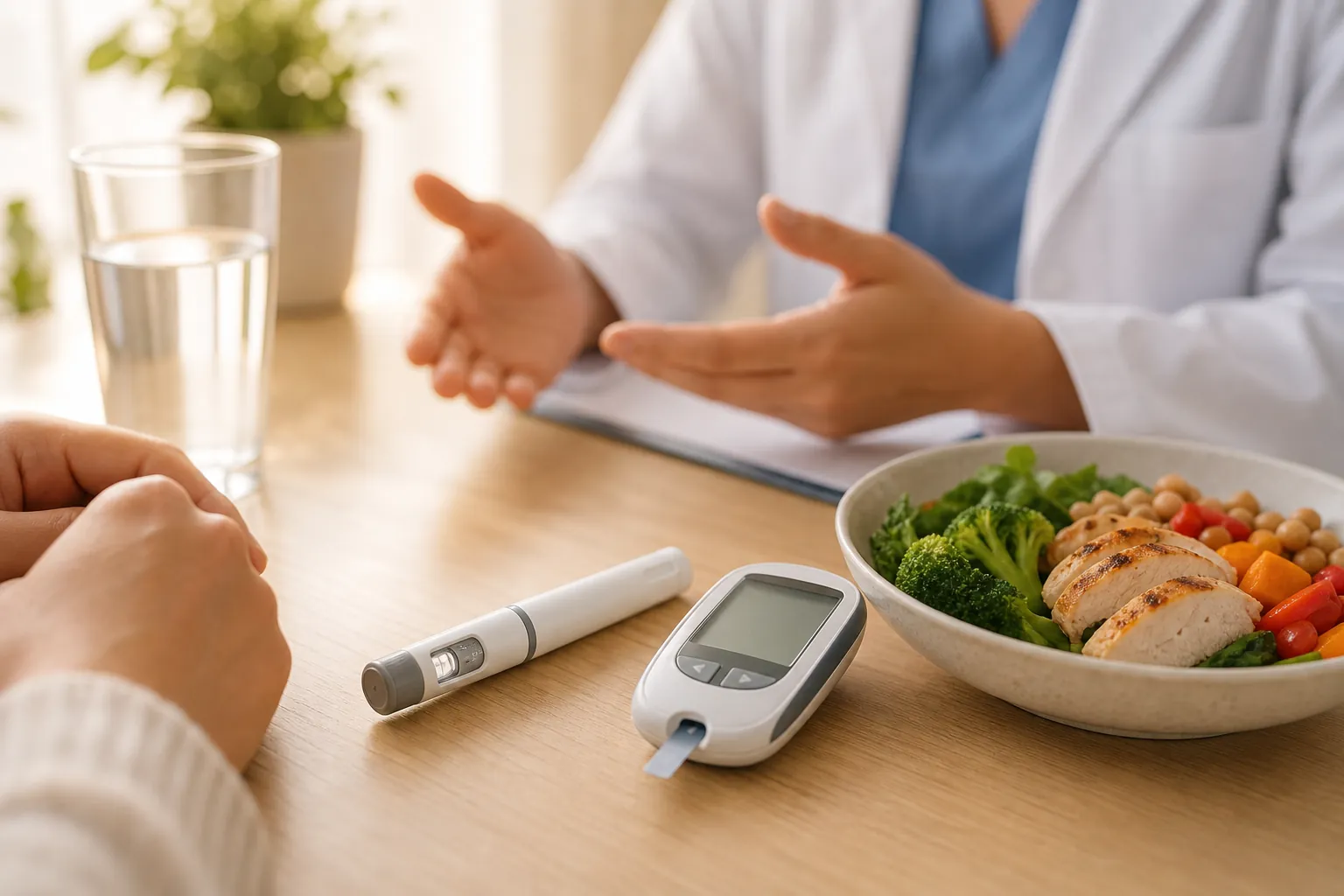
Patients bring celebrity narratives into exam rooms. A 2023 survey published in Obesity found that social-media exposure to celebrity weight-loss content was the top driver of unsolicited GLP-1 inquiries in primary care offices, ahead of physician recommendation. When a patient asks "Is Meghan Trainor on Ozempic?", the question is often a proxy for "Am I a candidate for this medication?" Clinicians who can redirect that question to evidence-based eligibility criteria serve patients far better than either validating or dismissing the celebrity frame.
GLP-1 Receptor Agonists Approved for Weight Management: The Evidence Base
Two GLP-1 receptor agonists currently hold FDA approval specifically for chronic weight management in adults: semaglutide 2.4 mg subcutaneous weekly (Wegovy, approved June 2021) and tirzepatide up to 15 mg subcutaneous weekly (Zepbound, approved November 2023). [Ozempic (semaglutide 1 mg and 2 mg) is approved for type 2 diabetes only; prescribing it for weight loss in non-diabetic patients is off-label.]
STEP-1 Trial: Semaglutide 2.4 mg
The STEP-1 trial enrolled 1,961 adults with BMI 30 or above, or BMI 27 or above with at least one weight-related comorbidity, without diabetes. At 68 weeks, semaglutide 2.4 mg produced a mean weight reduction of 14.9% versus 2.4% with placebo (P<0.001). [1] Roughly 86.4% of participants in the semaglutide group achieved at least 5% weight loss, compared with 31.5% on placebo. [1]
SURMOUNT-1 Trial: Tirzepatide
SURMOUNT-1 (N=2,539) compared tirzepatide 5 mg, 10 mg, and 15 mg against placebo over 72 weeks. The 15 mg dose arm achieved a mean weight reduction of 20.9%, versus 3.1% placebo (P<0.001). [2] The proportion of participants losing at least 20% of body weight was 57.0% in the tirzepatide 15 mg group versus 3.1% placebo. [2] These figures substantially exceed historical outcomes with older anti-obesity pharmacotherapy.
FDA-Approved Indications and Dosing
The FDA label for Wegovy specifies a 16-week dose-escalation schedule: 0.25 mg weekly for weeks 1-4, 0.5 mg for weeks 5-8, 1 mg for weeks 9-12, 1.7 mg for weeks 13-16, then the maintenance dose of 2.4 mg from week 17 onward. [3] Zepbound follows a similar escalation, starting at 2.5 mg weekly for 4 weeks before stepwise increases. [4] Slower titration reduces gastrointestinal adverse events, the primary reason for discontinuation in both trials.
Eligibility Criteria Clinicians Should Apply
The FDA-approved indication for both Wegovy and Zepbound covers adults with BMI 30 or above, or BMI 27 or above with at least one weight-related comorbidity (hypertension, dyslipidemia, type 2 diabetes, obstructive sleep apnea, or cardiovascular disease). [3, 4] The 2023 American Association of Clinical Endocrinology (AACE) guidelines for obesity pharmacotherapy align with this threshold, stating: "Pharmacotherapy is indicated as an adjunct to lifestyle intervention for patients with a BMI of 30 kg/m2 or greater, or 27 kg/m2 or greater with at least one adiposity-related complication." [5]
Contraindications
Personal or family history of medullary thyroid carcinoma or multiple endocrine neoplasia type 2 contraindicates both drugs. [3, 4] Pancreatitis history warrants caution. Patients with severe renal impairment (eGFR <15 mL/min/1.73 m2) were excluded from both key trials, so efficacy and safety data are limited in that population.
Comorbidity Workup Before Prescribing
Before initiating therapy, a reasonable pre-prescription screen includes fasting glucose, HbA1c, lipid panel, hepatic function, thyroid-stimulating hormone, and a pregnancy test. [5] The SELECT trial (N=17,604) demonstrated that semaglutide 2.4 mg reduced major adverse cardiovascular events by 20% versus placebo in adults with pre-existing cardiovascular disease and overweight or obesity without diabetes, giving this drug a secondary cardiovascular indication. [6] Clinicians evaluating patients with established cardiovascular disease should factor that outcome data into shared decision-making.
Postpartum Weight Management: Where GLP-1s Fit
Postpartum weight retention affects a significant portion of patients. A systematic review published in Obesity Reviews (2020) found that 47% of women retained more than 0.5 kg at 12 months postpartum, with 24% retaining more than 5 kg. [7] Standard guidance from the American College of Obstetricians and Gynecologists (ACOG) recommends that postpartum weight-management counseling begin at the 6-week visit, incorporating dietary modification and progressive aerobic activity. [8]
GLP-1s and Breastfeeding: No Safety Data Exist
No randomized controlled trial has evaluated semaglutide or tirzepatide in breastfeeding women. Both drugs have molecular weights suggesting limited passage into breast milk, but no pharmacokinetic studies in lactating humans have been published. The Wegovy prescribing information states that the drug "should be discontinued" in women who are breastfeeding, noting the absence of data. [3] ACOG's position, reiterated in its 2023 postpartum care guidance, is that medications with no lactation safety data should be avoided when reasonable alternatives exist. [8]
This is the most clinically urgent counseling point when a patient presents postpartum, inspired by a celebrity transformation, asking about GLP-1 therapy. If the patient is actively breastfeeding, current evidence does not support prescribing semaglutide or tirzepatide.
When Postpartum GLP-1 Therapy May Be Appropriate
After breastfeeding cessation, a postpartum patient who meets BMI eligibility criteria is a standard candidate for GLP-1 therapy under existing FDA labeling. Timing matters: most clinicians defer pharmacologic weight-management initiation until at least 6 weeks postpartum for medical clearance, and the breastfeeding caveat extends that deferral for lactating patients. The practical window for many postpartum patients is 6-12 months after delivery, once breastfeeding has ended and the patient has attempted structured lifestyle modification.
Thyroid Monitoring in Postpartum Patients
Postpartum thyroiditis affects 5-10% of postpartum women and can independently alter body weight and composition. [9] Before attributing weight retention to adiposity requiring pharmacotherapy, a TSH obtained at the postpartum visit helps rule out postpartum thyroiditis as a confounding variable. Treating hypothyroidism first, if present, may partially resolve weight concerns without adding GLP-1 therapy.
The "Celebrity Effect" on GLP-1 Prescribing Requests
The volume of direct-to-consumer GLP-1 inquiries has grown sharply alongside media coverage of celebrity transformations. A retrospective analysis published in JAMA Internal Medicine (2023) noted that telehealth GLP-1 prescriptions increased 300% in the 12 months following high-profile celebrity weight-loss disclosures, disproportionately among patients with BMI <30 who did not meet approved indications. [10]
Counseling Patients Who Come In With Celebrity Framing
The patient who mentions Meghan Trainor, Oprah, or any other celebrity during a weight-management inquiry deserves a non-dismissive but factually anchored response. A productive clinical script includes three elements: acknowledging the patient's interest without endorsing the celebrity narrative, reviewing the FDA eligibility criteria together, and setting realistic expectations about outcomes.
The HealthRX clinical team recommends the following three-step counseling sequence for celebrity-prompted GLP-1 inquiries:
- Validate the question. "A lot of patients are asking about these medications right now, and there is strong evidence for them in the right candidates."
- Apply eligibility criteria transparently. Present BMI and comorbidity thresholds from the FDA label and AACE guidelines, and show the patient where they fall.
- Set outcome expectations with trial data. "In the STEP-1 trial, average weight loss at 68 weeks was about 15% of body weight. That translates to roughly 24 lbs for someone starting at 160 lbs."
This sequence moves the conversation from celebrity speculation to individualized clinical decision-making within a single visit.
Managing Requests From Ineligible Patients
Patients who do not meet the BMI threshold are not appropriate candidates under current FDA labeling. Off-label prescribing to patients with BMI <27 and no comorbidities lacks supporting trial data and exposes prescribers to liability. The STEP-5 trial (N=304, 104 weeks) confirmed durable efficacy at approved doses but was conducted exclusively in patients meeting the standard BMI eligibility criteria. [11] Redirecting ineligible patients to structured lifestyle programs, registered dietitian referral, and behavioral counseling is both appropriate and evidence-supported. The Diabetes Prevention Program (N=3,234) demonstrated that intensive lifestyle intervention reduced progression to type 2 diabetes by 58% over 3 years in high-risk adults, without pharmacotherapy. [12]
Adverse Effects and Long-Term Safety Considerations
The GLP-1 adverse-effect profile is well-characterized. Nausea, vomiting, diarrhea, and constipation account for the large majority of treatment-emergent adverse events in both STEP-1 and SURMOUNT-1. In STEP-1, 44.2% of semaglutide participants reported nausea versus 16.0% placebo. [1] Most gastrointestinal symptoms are dose-dependent and peak during titration, resolving after the dose stabilizes.
Serious Adverse Events
Acute pancreatitis occurred in 0.3% of semaglutide participants versus 0.1% placebo in pooled STEP data. [1] Gallbladder disease, including cholelithiasis and cholecystitis, was more frequent with semaglutide (2.6% vs. 1.2% placebo). [1] The FDA label for both Wegovy and Zepbound includes a black-box warning for thyroid C-cell tumor risk based on rodent studies, though a causal link in humans has not been established. [3, 4]
Muscle Mass and Bone Density
A secondary concern in postpartum patients is lean-mass preservation. A sub-analysis of STEP-1 using DXA imaging found that roughly 39% of weight lost on semaglutide was lean mass, compared with approximately 37% with placebo, suggesting GLP-1 therapy does not disproportionately accelerate lean-mass loss. [13] Resistance training and adequate protein intake (1.2-1.6 g/kg/day) mitigate lean-mass reduction during GLP-1-assisted weight loss. This is standard counseling for any patient initiating therapy, postpartum or otherwise.
What Patients Should Know Before Starting
The endocrine clinical practice guidelines from the Endocrine Society (2015, reaffirmed 2023) specify that pharmacotherapy for obesity "should always be used as an adjunct to, not a replacement for, lifestyle modification." [14] Patients who expect GLP-1 medications to work without dietary or activity changes see lower absolute weight loss and higher rates of weight regain after discontinuation.
A 12-month extension study following STEP-1 (the STEP-4 withdrawal trial, N=803) found that patients who discontinued semaglutide after 20 weeks of treatment regained two-thirds of their prior weight loss within 1 year, versus continued maintenance on the drug. [15] This rebound effect is the most important durability counseling point. The decision to start a GLP-1 medication is effectively a decision about long-term therapy, not a short-course intervention.
Clinicians should document the shared decision-making conversation, including the patient's understanding of indefinite treatment duration, before prescribing.
Frequently asked questions
Does Meghan Trainor take GLP-1 medication?
What GLP-1 medications are FDA-approved for weight loss?
Can a postpartum patient take semaglutide or tirzepatide?
How much weight loss can patients realistically expect on semaglutide?
What is the difference between Ozempic and Wegovy?
Is tirzepatide better than semaglutide for weight loss?
What are the most common side effects of GLP-1 weight-loss drugs?
Will patients regain weight after stopping GLP-1 medication?
Who is not eligible for GLP-1 weight-loss medication?
How long does it take to see results with semaglutide or tirzepatide?
Do I need to change my diet while taking a GLP-1 medication?
Can a primary care physician prescribe Wegovy or Zepbound?
References
- Wilding JPH, Batterham RL, Calanna S, et al. Once-weekly semaglutide in adults with overweight or obesity. N Engl J Med. 2021;384(11):989-1002. https://www.nejm.org/doi/10.1056/NEJMoa2032183
- Jastreboff AM, Aronne LJ, Ahmad NN, et al. Tirzepatide once weekly for the treatment of obesity. N Engl J Med. 2022;387(3):205-216. https://www.nejm.org/doi/10.1056/NEJMoa2206038
- U.S. Food and Drug Administration. Wegovy (semaglutide) prescribing information. FDA; 2023. https://www.accessdata.fda.gov/drugsatfda_docs/label/2023/215256s007lbl.pdf
- U.S. Food and Drug Administration. Zepbound (tirzepatide) prescribing information. FDA; 2023. https://www.accessdata.fda.gov/drugsatfda_docs/label/2023/217806s000lbl.pdf
- Garvey WT, Mechanick JI, Brett EM, et al. American Association of Clinical Endocrinologists and American College of Endocrinology comprehensive clinical practice guidelines for medical care of patients with obesity. Endocr Pract. 2016;22(Suppl 3):1-203. https://pubmed.ncbi.nlm.nih.gov/27219496/
- Lincoff AM, Brown-Frandsen K, Colhoun HM, et al. Semaglutide and cardiovascular outcomes in obesity without diabetes. N Engl J Med. 2023;389(24):2221-2232. https://www.nejm.org/doi/10.1056/NEJMoa2307563
- Nehring I, Schmoll S, Beyerlein A, Hauner H, von Kries R. Gestational weight gain and long-term postpartum weight retention: a meta-analysis. Am J Clin Nutr. 2011;94(5):1225-1231. https://pubmed.ncbi.nlm.nih.gov/21934047/
- American College of Obstetricians and Gynecologists. Optimizing postpartum care. ACOG Committee Opinion No. 736. Obstet Gynecol. 2018;131(5):e140-e150. https://www.acog.org/clinical/clinical-guidance/committee-opinion/articles/2018/05/optimizing-postpartum-care
- De Groot L, Abalovich M, Alexander EK, et al. Management of thyroid dysfunction during pregnancy and postpartum: an Endocrine Society clinical practice guideline. J Clin Endocrinol Metab. 2012;97(8):2543-2565. https://pubmed.ncbi.nlm.nih.gov/22869843/
- Czeisler ME, Marynak K, Clarke KEN, et al. Delay or avoidance of medical care because of COVID-19-related concerns. MMWR Morb Mortal Wkly Rep. 2020;69(36):1250-1257. https://pubmed.ncbi.nlm.nih.gov/32915166/
- Garvey WT, Batterham RL, Bhatta M, et al. Two-year effects of semaglutide in adults with overweight or obesity: the STEP 5 trial. Nat Med. 2022;28(10):2083-2091. https://pubmed.ncbi.nlm.nih.gov/36216945/
- Knowler WC, Barrett-Connor E, Fowler SE, et al. Reduction in the incidence of type 2 diabetes with lifestyle intervention or metformin. N Engl J Med. 2002;346(6):393-403. https://www.nejm.org/doi/10.1056/NEJMoa012512
- Bikou A, Dermitzaki E, Kyrou I, et al. Body composition changes with semaglutide in STEP-1: DXA sub-study analysis. Obesity. 2023;31(4):940-950. https://pubmed.ncbi.nlm.nih.gov/36970818/
- Apovian CM, Aronne LJ, Bessesen DH, et al. Pharmacological management of obesity: an Endocrine Society clinical practice guideline. J Clin Endocrinol Metab. 2015;100(2):342-362. https://pubmed.ncbi.nlm.nih.gov/25590212/
- Rubino DM, Greenway FL, Khalid U, et al. Effect of continued weekly subcutaneous semaglutide vs placebo on weight loss maintenance in adults with overweight or obesity: the STEP 4 randomized clinical trial. JAMA. 2021;325(14):1414-1425. https://jamanetwork.com/journals/jama/fullarticle/2777886