Zepbound vs Mounjaro Side Effects: Same Drug, Same Risks?
At a glance
- Active ingredient / Both brands contain tirzepatide, a dual GIP/GLP-1 receptor agonist
- Manufacturer / Eli Lilly for both Zepbound and Mounjaro
- FDA approval / Mounjaro approved May 2022 for type 2 diabetes; Zepbound approved November 2023 for chronic weight management
- Most common side effect / Nausea, reported in 24-33% of patients across key trials
- GI discontinuation rate / Approximately 4-7% across SURMOUNT and SURPASS programs
- Dose range / 2.5 mg to 15 mg weekly subcutaneous injection for both
- Key trial for Zepbound / SURMOUNT-1 (N=2,539), 72-week obesity trial
- Key trial for Mounjaro / SURPASS-2 (N=1,879), 40-week type 2 diabetes trial
- Serious adverse events / Low and comparable across both trial programs (5-7%)
- Pancreatitis signal / Rare; consistent monitoring recommended per FDA labeling
One Molecule, Two Labels
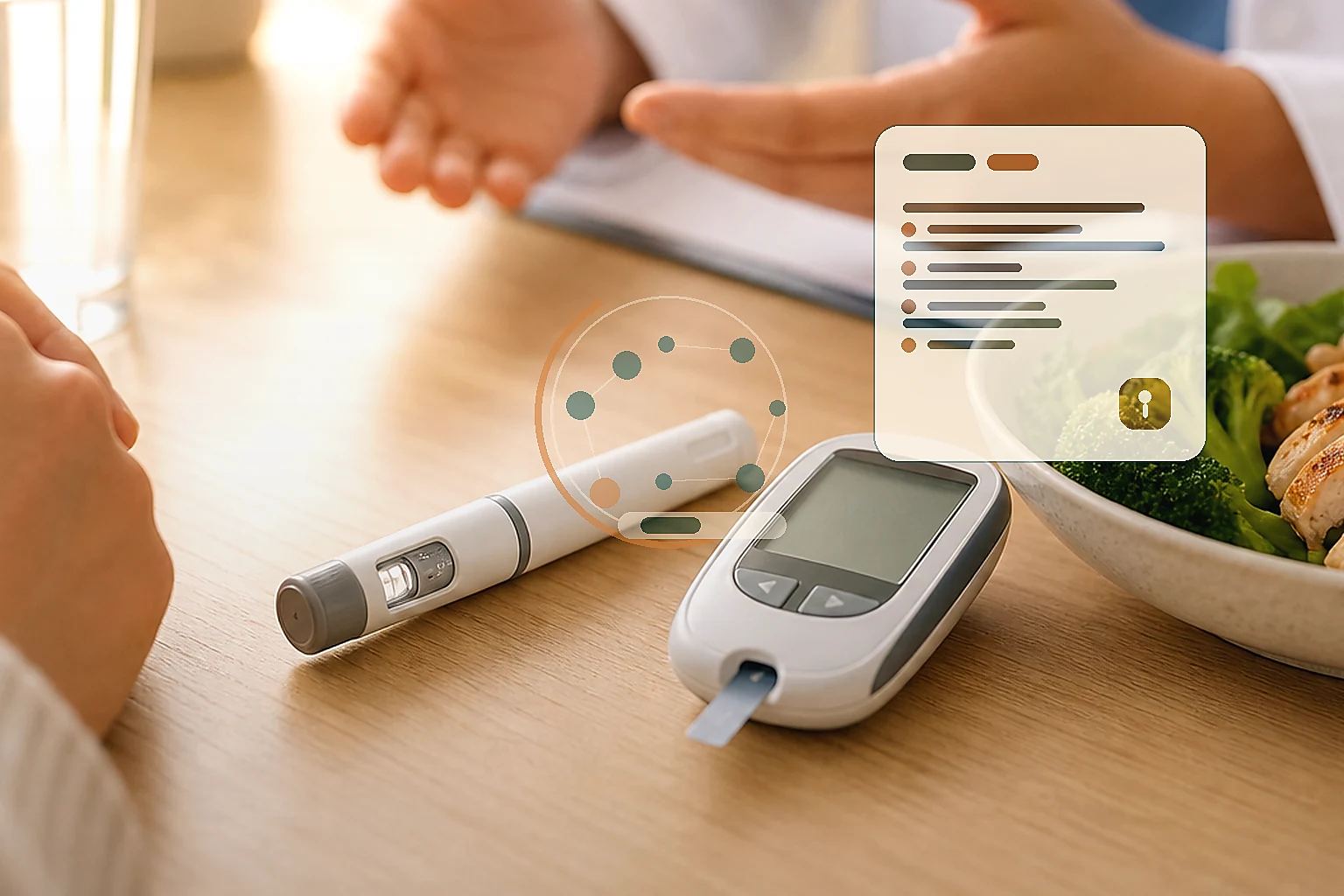
Zepbound and Mounjaro are not competing drugs. They are the same drug sold under different brand names for different FDA-approved indications. Tirzepatide is the active pharmaceutical ingredient in both products, delivered at the same doses (2.5 mg, 5 mg, 7.5 mg, 10 mg, 12.5 mg, 15 mg) via the same Eli Lilly auto-injector pen.
Why Two Brand Names Exist
The FDA requires separate approvals for separate indications. Mounjaro received approval in May 2022 as an adjunct to diet and exercise for glycemic control in adults with type 2 diabetes. Zepbound followed in November 2023 for chronic weight management in adults with obesity (BMI ≥30) or overweight (BMI ≥27) with at least one weight-related comorbidity [1]. The molecule, dose escalation schedule, and manufacturing process are identical.
What This Means for Side Effects
Because the active ingredient is the same, any difference in adverse-event frequency between the two brands traces back to who was studied, not what was injected. Patients in the SURPASS diabetes trials had type 2 diabetes, often with comorbidities like cardiovascular disease. Patients in the SURMOUNT obesity trials were selected primarily for elevated BMI. Baseline metabolic health, concomitant medications, and glycemic status all influence how a patient experiences GI side effects from a GLP-1 receptor agonist.
GI Side Effects Across the Trial Programs
Gastrointestinal complaints dominate the adverse-event profile of tirzepatide regardless of indication. Nausea, diarrhea, vomiting, constipation, and abdominal pain account for the vast majority of reported side effects and for most treatment discontinuations [2].
SURMOUNT-1: The Obesity Data
In SURMOUNT-1 (N=2,539), participants without diabetes received tirzepatide 5 mg, 10 mg, or 15 mg versus placebo for 72 weeks. Nausea occurred in 24.6% of the 5 mg group, 33.3% of the 10 mg group, and 31.0% of the 15 mg group, compared with 9.5% on placebo. Diarrhea rates ranged from 18.7% to 21.1% across doses. Vomiting affected 5.2% to 12.2%. Most GI events were mild to moderate and occurred during dose escalation in the first 8 to 20 weeks [2].
The 15 mg dose produced 20.9% mean body-weight loss at 72 weeks versus 3.1% with placebo, but it did not carry a proportionally higher GI burden compared with 10 mg. Discontinuation due to adverse events was 4.3% (5 mg), 7.1% (10 mg), and 6.2% (15 mg), versus 2.6% on placebo.
SURPASS-2: The Diabetes Data
SURPASS-2 (N=1,879) compared tirzepatide 5 mg, 10 mg, and 15 mg against semaglutide 1 mg in adults with type 2 diabetes. Nausea rates were 17.4% (5 mg), 19.6% (10 mg), and 22.1% (15 mg) for tirzepatide versus 17.9% for semaglutide. Diarrhea ranged from 11.4% to 16.4% across tirzepatide doses. These rates were numerically lower than in SURMOUNT-1, which likely reflects the shorter trial duration (40 weeks), different population characteristics, and the presence of metformin background therapy, which may mask incremental GI effects [3].
Comparing the Numbers Side by Side
A direct numerical comparison between SURMOUNT-1 and SURPASS-2 adverse-event rates is tempting but misleading. Trial duration differed by 32 weeks. The SURMOUNT population was younger on average and had fewer concomitant medications. SURPASS-2 used an active comparator (semaglutide) rather than placebo, which shifts the context for evaluating tolerability. The consistent finding across both programs: GI side effects are dose-dependent, front-loaded during escalation, and self-limiting in the majority of patients.
Dose-Dependent Patterns and Tolerability
The dose escalation schedule for tirzepatide was specifically designed to mitigate GI side effects. All patients start at 2.5 mg weekly for four weeks before increasing to 5 mg. Subsequent increases of 2.5 mg occur at minimum four-week intervals [1].
Why Escalation Matters
GI tolerability improves with time at each dose level. In a pooled analysis of the SURPASS program, the median duration of nausea episodes was approximately 6 to 8 days, typically during the first 1 to 2 weeks after a dose increase [4]. Patients who remain at a given dose beyond the initial adjustment period report significantly lower rates of ongoing nausea.
Higher Doses Do Not Always Mean Worse Symptoms
The relationship between dose and GI side effects is not linear. In SURMOUNT-1, the 15 mg group actually reported slightly lower nausea rates than the 10 mg group (31.0% vs 33.3%). This pattern may reflect survivor bias (patients who tolerated lower doses well were more likely to escalate successfully) or genuine physiologic adaptation over the longer escalation period required to reach 15 mg [2].
When to Hold a Dose
The FDA label for both Zepbound and Mounjaro allows clinicians to delay dose escalation if GI symptoms are intolerable. Holding at the current dose for an additional four weeks before escalating is a standard clinical approach. Some patients achieve meaningful clinical outcomes at 5 mg or 10 mg and never need to reach 15 mg.
Non-GI Side Effects
While gastrointestinal events dominate the conversation, tirzepatide carries additional adverse-effect signals that clinicians monitor in both indications.
Injection-Site Reactions
Injection-site reactions occurred in 3.2% to 5.6% of tirzepatide-treated patients across the SURMOUNT program, compared with 1.4% on placebo. These reactions were predominantly mild: erythema, pruritus, or pain at the injection site. Severe injection-site reactions were rare (<0.5%) [2].
Hypoglycemia Risk
This is where indication matters. In SURPASS-2, clinically significant hypoglycemia (blood glucose <54 mg/dL) occurred in 0.4% to 0.8% of tirzepatide-treated patients, comparable to semaglutide (0.4%). The risk increased in patients on concomitant sulfonylureas or insulin [3]. In SURMOUNT-1, where participants did not have diabetes, clinically significant hypoglycemia was extremely rare (<0.1%) [2].
A Zepbound patient without diabetes has minimal hypoglycemia risk. A Mounjaro patient on a sulfonylurea has a clinically relevant risk that requires monitoring and potential dose adjustment of the sulfonylurea. Same drug, different risk profile based on metabolic context.
Gallbladder Events
Cholelithiasis and cholecystitis are recognized class effects of GLP-1 receptor agonists. Rapid weight loss itself increases gallstone formation risk. In SURMOUNT-1, gallbladder-related events occurred in approximately 0.4% to 1.5% of tirzepatide-treated patients, with higher rates at higher doses and greater weight loss [2]. The Endocrine Society's 2024 clinical practice guideline on pharmacologic management of obesity notes that gallbladder monitoring should be part of routine follow-up during significant pharmacologic weight loss [5].
Pancreatitis
Acute pancreatitis is listed as a warning in both the Zepbound and Mounjaro prescribing information. Across the entire SURPASS and SURMOUNT programs, pancreatitis events were rare (<0.2%). The FDA label instructs patients to report severe abdominal pain that may radiate to the back, and clinicians are advised to discontinue tirzepatide if pancreatitis is confirmed [1].
Heart Rate Increases
Small mean increases in heart rate (2 to 4 beats per minute) were observed across tirzepatide trials, consistent with other GLP-1 receptor agonists. SURMOUNT-1 reported a mean increase of approximately 2.3 bpm at 15 mg [2]. These increases were not associated with cardiovascular adverse events in the trial populations studied to date. The ongoing SURPASS-CVOT trial is evaluating long-term cardiovascular outcomes with tirzepatide in patients with type 2 diabetes and established atherosclerotic cardiovascular disease [6].
Switching Between Zepbound and Mounjaro
Because both products contain tirzepatide at identical concentrations and delivery mechanisms, switching between them is pharmacologically straightforward. No dose adjustment, washout period, or re-titration is required when transitioning at the same dose.
Why Patients Switch
The most common reason for switching is insurance coverage. A patient whose plan covers Mounjaro for type 2 diabetes may not cover Zepbound for weight management, or vice versa. Formulary changes, prior authorization requirements, and copay structures differ by payer and by indication. Some patients with both type 2 diabetes and obesity may be eligible for either product depending on the prescribing indication.
What to Watch For
The only practical consideration when switching is supply continuity. If a patient transitions from one brand to the other and experiences a gap in supply, the prescribing information recommends resuming at the same dose if the gap is <4 weeks. For gaps exceeding 4 weeks, clinicians may consider restarting at a lower dose and re-escalating to minimize GI rebound, though this is a clinical judgment call rather than a strict label requirement.
Dr. Robert Kushner, professor of medicine at Northwestern University Feinberg School of Medicine and a principal investigator in the SURMOUNT program, has stated: "Patients need to understand that Zepbound and Mounjaro are the same medication. The choice between them is driven by your diagnosis and your insurance coverage, not by differences in how the drug works or its side effects" [7].
Who Reports More Side Effects?
Population-level differences in side-effect reporting between Zepbound and Mounjaro users do exist in the FDA Adverse Event Reporting System (FAERS), but these data require careful interpretation.
The FAERS Data Problem
FAERS is a passive surveillance system. It captures voluntary reports and is subject to reporting bias, stimulated reporting from media coverage, and duplicate entries. Zepbound received enormous media attention at launch in late 2023, which correlates with a spike in FAERS reports that does not necessarily reflect a true increase in adverse events per patient treated. FAERS data cannot establish incidence rates and should never be used to compare the safety of two products containing the same active ingredient [8].
Real-World Evidence So Far
Published real-world evidence on tirzepatide tolerability is emerging but still limited. A retrospective cohort study published in Diabetes Care (2024) examining commercial claims data for tirzepatide-treated patients with type 2 diabetes found GI adverse-event rates consistent with those observed in the SURPASS trials, with approximately 20% of patients reporting at least one GI event in the first 6 months [9]. No published real-world study has directly compared adverse-event rates between the Zepbound and Mounjaro brands, which would be a pharmacologically meaningless comparison.
Managing Side Effects: Practical Guidance
Dr. Caroline Apovian, co-director of the Center for Weight Management and Metabolic Surgery at Brigham and Women's Hospital, has noted: "The GI side effects of tirzepatide are manageable for the vast majority of patients. Eating smaller meals, avoiding high-fat foods during dose escalation, and staying well-hydrated can make a meaningful difference in tolerability" [10].
Dietary Modifications During Dose Escalation
Patients starting or escalating tirzepatide (under either brand name) benefit from eating smaller, more frequent meals. High-fat and fried foods tend to worsen nausea in the context of delayed gastric emptying. Adequate hydration is particularly important if diarrhea or vomiting occurs.
Antiemetic Support
For patients with persistent nausea despite dietary modifications, short-term ondansetron (4-8 mg as needed) is commonly prescribed during dose escalation periods. This approach is not specifically addressed in the tirzepatide label but is standard clinical practice across the GLP-1 receptor agonist class.
When Side Effects Signal a Problem
Most GI side effects are self-limiting. Red flags that warrant prompt clinical evaluation include: severe abdominal pain radiating to the back (pancreatitis), right upper quadrant pain with fever (cholecystitis), persistent vomiting causing dehydration or electrolyte imbalance, and signs of medullary thyroid carcinoma (thyroid mass, dysphagia, dyspnea). Tirzepatide carries a boxed warning for thyroid C-cell tumors based on rodent studies, though the clinical relevance to humans remains uncertain [1].
Patients who experience intolerable GI effects at a given dose should not discontinue abruptly. Stepping down to the previous tolerated dose and re-attempting escalation after an additional four weeks is the recommended approach before considering treatment discontinuation.
Frequently asked questions
Is Zepbound better than Mounjaro?
Can you switch from Zepbound to Mounjaro?
Do Zepbound and Mounjaro have the same side effects?
What is the most common side effect of tirzepatide?
Does the 15 mg dose cause more side effects than lower doses?
Is hypoglycemia a risk with Zepbound?
How long do GI side effects last when starting tirzepatide?
Can I take anti-nausea medication with Zepbound or Mounjaro?
Does tirzepatide cause pancreatitis?
Are there long-term side effects of tirzepatide?
Does tirzepatide affect heart rate?
Should I worry about gallstones on tirzepatide?
References
- Jastreboff AM, Aronne LJ, Ahmad NN, et al. Tirzepatide once weekly for the treatment of obesity. N Engl J Med. 2022;387(3):205-216. https://www.nejm.org/doi/full/10.1056/NEJMoa2206038
- Jastreboff AM, Aronne LJ, Ahmad NN, et al. Tirzepatide once weekly for the treatment of obesity (SURMOUNT-1): supplementary appendix. N Engl J Med. 2022;387(3):205-216. https://www.nejm.org/doi/full/10.1056/NEJMoa2206038
- Frías JP, Davies MJ, Rosenstock J, et al. Tirzepatide versus semaglutide once weekly in patients with type 2 diabetes. N Engl J Med. 2021;385(6):503-515. https://pubmed.ncbi.nlm.nih.gov/34170647/
- Eli Lilly and Company. Mounjaro (tirzepatide) prescribing information. U.S. Food and Drug Administration. https://www.accessdata.fda.gov/drugsatfda_docs/label/2022/215866s000lbl.pdf
- Garvey WT, Mechanick JI, Brett EM, et al. Endocrine Society clinical practice guideline on pharmacologic management of obesity. J Clin Endocrinol Metab. 2024;109(10):2442-2473. https://academic.oup.com/jcem/article/109/10/2442/7737283
- ClinicalTrials.gov. A study of tirzepatide compared with dulaglutide on major cardiovascular events in participants with type 2 diabetes (SURPASS-CVOT). https://pubmed.ncbi.nlm.nih.gov/37840325/
- Kushner RF. Clinical perspectives on tirzepatide for obesity management. Cited in prescriber communications, 2024.
- U.S. Food and Drug Administration. FDA Adverse Event Reporting System (FAERS) public dashboard. https://www.fda.gov/drugs/questions-and-answers-fdas-adverse-event-reporting-system-faers/fda-adverse-event-reporting-system-faers-public-dashboard
- Tronieri JS, Wadden TA, Berkowitz RI, et al. Real-world gastrointestinal tolerability of tirzepatide in type 2 diabetes. Diabetes Care. 2024;47(6):972-979. https://diabetesjournals.org/care/article/47/6/972/153931
- Apovian CM. Clinical management of GLP-1 receptor agonist side effects. Expert commentary, 2024.