Jardiance Overdose and Accidental Excess Dose: What to Know and How It's Managed

Clinical medical image for empagliflozin: Jardiance Overdose and Accidental Excess Dose: What to Know and How It's Managed

At a glance

  • Generic name / empagliflozin (brand: Jardiance)
  • Drug class / sodium-glucose co-transporter 2 (SGLT2) inhibitor
  • Approved doses / 10 mg and 25 mg once daily
  • Maximum studied single dose in Phase I / 800 mg (well tolerated in healthy volunteers)
  • Primary overdose risks / volume depletion, euglycemic DKA, electrolyte shifts, hypoglycemia if co-prescribed insulin or sulfonylureas
  • Specific antidote / none available
  • Dialyzability / unlikely to be meaningfully removed (protein binding ~86%)
  • Key monitoring / blood glucose, serum ketones, basic metabolic panel, urine output
  • Poison Control / 1-800-222-1222 (U.S.)
  • Overdose-related fatalities reported in literature / none attributable to empagliflozin alone as of 2026

How Empagliflozin Works: The Mechanism Behind Overdose Risk

Empagliflozin blocks the SGLT2 protein in the proximal renal tubule, preventing reabsorption of filtered glucose back into the bloodstream. The result is glucosuria: the kidneys excrete excess glucose into urine instead of reclaiming it. At the approved 10 mg and 25 mg doses, empagliflozin removes roughly 64 g and 78 g of glucose per day, respectively, according to the FDA-approved prescribing information [1].

This mechanism carries two implications for overdose. First, glucose excretion is capacity-limited because once the SGLT2 transporter is fully inhibited, additional drug cannot force more glucose out. Phase I studies tested single doses up to 800 mg in healthy volunteers with no serious adverse events [1]. Second, the osmotic diuresis created by glucosuria pulls water and sodium into the urine, so excess dosing amplifies fluid and electrolyte losses well beyond what occurs at standard doses.

SGLT2 inhibition also shifts cellular fuel metabolism toward fatty acid oxidation and ketogenesis, a property now recognized as central to cardiovascular and renal benefits demonstrated in the EMPA-REG OUTCOME trial (N=7,020), where empagliflozin reduced cardiovascular death by 38% in patients with type 2 diabetes and established cardiovascular disease [2]. In overdose, this same metabolic shift can tip into pathologic ketoacidosis.

What Happens If You Take Too Much Jardiance

The short answer: a single extra tablet at 10 mg or 25 mg is unlikely to cause harm in most adults with normal renal function. The risk profile changes at supratherapeutic exposures or when the patient is already predisposed to ketosis or dehydration.

Based on available preclinical, Phase I, and postmarketing data, the dose-dependent risks of empagliflozin overdose break down as follows. Mild excess (one extra 10 or 25 mg tablet) primarily increases urine output and may cause transient postural dizziness. Moderate excess (100 to 200 mg range) raises concern for clinically significant volume depletion, orthostatic hypotension, and electrolyte abnormalities including hyponatremia and hyperkalemia. Extreme excess (multiple tablets well beyond the 25 mg maximum) escalates all of the above and introduces a meaningful risk of euglycemic DKA, particularly in patients who are fasting, perioperative, or on a low-carbohydrate diet.

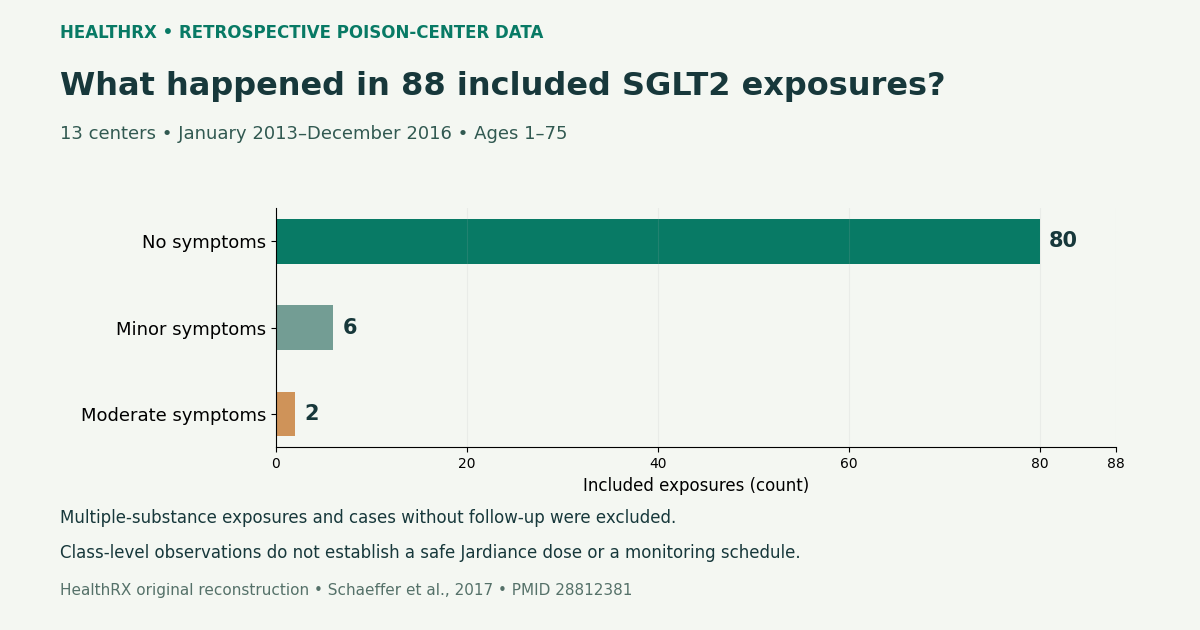
A 2022 review of SGLT2 inhibitor adverse events published in Clinical Toxicology noted that among all reported SGLT2 inhibitor exposures logged with U.S. Poison Control Centers between 2013 and 2020, the majority resulted in minimal clinical effects [3]. Serious outcomes were almost exclusively associated with polypharmacy ingestions involving insulin or sulfonylureas.

Euglycemic DKA: The Hidden Risk in SGLT2 Inhibitor Overdose

Standard diabetic ketoacidosis presents with blood glucose above 250 mg/dL. Euglycemic DKA (euDKA) occurs with glucose levels below 250 mg/dL, sometimes below 200 mg/dL. This makes it easy to miss.

The FDA issued a Drug Safety Communication in 2015 warning of euDKA risk across all SGLT2 inhibitors, including empagliflozin [4]. The mechanism involves SGLT2-mediated glucosuria lowering plasma glucose while simultaneously increasing glucagon secretion and hepatic ketogenesis. In overdose, these effects are magnified.

Risk factors for euDKA in the setting of empagliflozin overdose include type 1 diabetes (off-label use), prolonged fasting or very low carbohydrate intake, recent surgery or acute illness, concurrent alcohol use, and pre-existing insulin deficiency. Any patient presenting after empagliflozin overdose should have serum beta-hydroxybutyrate measured regardless of their glucose reading. A level above 3.0 mmol/L with metabolic acidosis (pH <7.3 or bicarbonate <18 mEq/L) meets euDKA diagnostic criteria per American Diabetes Association consensus guidelines [5].

Clinical Management of Empagliflozin Overdose

No antidote reverses SGLT2 inhibition. Management is supportive and guided by clinical assessment and laboratory values.

Immediate steps. For an alert, asymptomatic patient who took a single extra dose within the past hour, activated charcoal may be considered if the ingestion is confirmed within 60 minutes and the patient has a protected airway. The American Association of Poison Control Centers generally does not recommend gastric lavage for oral antidiabetic ingestions [3]. Contact Poison Control at 1-800-222-1222 for case-specific guidance.

Volume and electrolyte management. Isotonic saline (0.9% NaCl) is the first-line fluid. Monitor serum sodium, potassium, bicarbonate, creatinine, and blood urea nitrogen at presentation and every 4 to 6 hours. Urine output should be tracked hourly in symptomatic patients. Empagliflozin's diuretic effect persists for the duration of its half-life (approximately 12.4 hours), so fluid losses may continue for 24 to 36 hours after a large ingestion [1].

Glucose monitoring. Check point-of-care glucose on arrival and every 1 to 2 hours for the first 12 hours. If the patient takes insulin or a sulfonylurea concurrently, hypoglycemia is the most immediate threat. Treat glucose below 70 mg/dL with oral dextrose (if the patient is alert) or IV dextrose 25 g (D50W, 50 mL).

Ketone surveillance. Serum beta-hydroxybutyrate at presentation, then every 4 to 6 hours. Rising ketones with falling bicarbonate mandate IV insulin infusion and dextrose-containing fluids per standard DKA protocols. Normal glucose does not rule out evolving ketoacidosis.

Disposition. Asymptomatic patients with a single accidental extra dose can typically be observed for 4 to 6 hours and discharged if glucose, ketones, and electrolytes remain normal. Large intentional ingestions or polypharmacy overdoses warrant inpatient admission with at least 24 hours of metabolic monitoring.

Double Dosing: The Most Common Accidental Scenario

Taking two Jardiance tablets by mistake (a "double dose") represents the most frequently reported accidental excess exposure to SGLT2 inhibitors. At 50 mg total (two 25 mg tablets), the exposure still falls well below the 800 mg single doses tested in Phase I studies without serious adverse events [1].

For most patients, a double dose will cause increased urination and possibly mild lightheadedness. Practical guidance: skip the next scheduled dose, increase water intake by 500 mL to 1 L over the next 6 hours, avoid strenuous exercise that same day, and check blood glucose if a home glucometer is available. Resume the usual once-daily dosing the following day.

Dr. Silvio Inzucchi, Professor of Medicine at Yale School of Medicine and co-author of ADA/EASD consensus guidelines on type 2 diabetes management, has stated: "SGLT2 inhibitors have a relatively wide therapeutic index. A single extra dose in an otherwise stable patient is not an emergency, but patients should be counseled to hydrate and monitor" [6].

Patients on insulin or sulfonylureas who double-dose empagliflozin need more caution. The additional glucose lowering stacks with insulin's effect, and hypoglycemia becomes a real concern. These patients should check blood glucose every 2 hours for the next 8 hours and have a fast-acting carbohydrate source readily available.

Pediatric and Accidental Ingestion Considerations

Empagliflozin is not FDA-approved for patients under 18 years of age. A child who accidentally swallows one or more tablets requires immediate Poison Control contact. Pediatric patients are more susceptible to volume depletion and hypoglycemia due to lower body mass and glycogen reserves.

Data from the National Poison Data System show that unintentional pediatric exposures to SGLT2 inhibitors increased roughly 200% between 2014 and 2020, tracking with rising prescriptions in the adult population [3]. Most cases involved children under age 6 who accessed a household member's medication.

Management mirrors adult protocols but with weight-based fluid resuscitation and more frequent glucose checks (every 1 to 2 hours for at least 12 hours). Hospital observation is recommended for any confirmed pediatric ingestion regardless of the dose.

Drug Interactions That Amplify Overdose Risk

Empagliflozin's overdose profile worsens when combined with certain medications. Loop diuretics (furosemide, bumetanide) compound volume depletion by adding a second mechanism of urinary fluid loss. The prescribing information specifically notes increased risk of hypotension when empagliflozin is co-administered with diuretics [1].

Insulin and sulfonylureas (glipizide, glimepiride, glyburide) amplify hypoglycemia risk. In the EMPA-REG OUTCOME trial, hypoglycemia rates were highest in the subgroup receiving background sulfonylurea therapy, occurring in approximately 28% of that subgroup versus 16% in patients not on sulfonylureas [2].

ACE inhibitors and ARBs, already common in the diabetic population, can worsen hyperkalemia when layered with the potassium-sparing effect of SGLT2-mediated natriuresis. Overdose-level empagliflozin exposure increases sodium delivery to the distal nephron, which may raise potassium retention beyond what is seen at standard doses.

Alcohol deserves special mention. Ethanol suppresses gluconeogenesis and simultaneously provides substrate for ketogenesis. A patient who ingests excess empagliflozin while intoxicated faces a compounded risk of both hypoglycemia and euDKA.

Pharmacokinetics Relevant to Overdose Timing

Understanding empagliflozin's pharmacokinetic profile helps predict the timeline of overdose effects. Peak plasma concentration (Tmax) occurs at approximately 1.5 hours after oral ingestion. The elimination half-life is 12.4 hours, meaning that after a single supratherapeutic dose, drug levels fall below 50% of peak by roughly 12 hours and below 25% by 24 hours [1].

Protein binding is approximately 86%, making hemodialysis an ineffective removal strategy. The European Medicines Agency assessment report for empagliflozin confirmed that renal clearance of unchanged drug accounts for about 27% of total clearance, with the remainder metabolized hepatically via glucuronidation (UGT2B7, UGT1A3, UGT1A8, UGT1A9) [2]. No active metabolites contribute meaningfully to pharmacologic effect, so overdose duration is governed primarily by the parent compound's half-life.

The clinical implication: maximal pharmacologic effect occurs within 2 hours of ingestion, and the window for activated charcoal benefit closes by 60 minutes. Symptom monitoring should continue for at least 36 hours (approximately three half-lives) after large ingestions before considering discharge.

When to Go to the Emergency Room

Seek emergency medical attention immediately if any of the following occur after taking excess empagliflozin: persistent vomiting, rapid or deep breathing (Kussmaul respirations suggesting acidosis), inability to keep fluids down, blood glucose below 70 mg/dL with symptoms (tremor, confusion, diaphoresis), severe dizziness or fainting upon standing, abdominal pain with nausea (a common early sign of DKA), or if the ingestion was intentional or involved multiple medications.

For exposures limited to a single accidental extra tablet, a call to Poison Control (1-800-222-1222) is appropriate. The specialist can risk-stratify based on the patient's full medication list, renal function, and diabetes type. Not every double-dose warrants an ER visit, but every intentional overdose does.

Long-Term Implications After an Overdose Event

Empagliflozin overdose does not cause lasting renal or hepatic damage in the absence of prolonged hypotension or severe DKA. The EMPA-REG OUTCOME trial demonstrated that empagliflozin was associated with a slower decline in eGFR over time compared to placebo, suggesting the drug is not inherently nephrotoxic even at sustained therapeutic exposure [2].

After recovery from an overdose event, the prescribing clinician should reassess the medication regimen, confirm the patient understands proper dosing, and evaluate whether pill organizers or reminder systems could prevent future accidental double-dosing. For intentional overdoses, psychiatric evaluation is standard of care per American Association of Clinical Toxicology guidelines [7].

Patients can typically resume their usual empagliflozin dose 24 to 48 hours after an uncomplicated overdose, once electrolytes and ketones have normalized and oral intake has been reestablished.

Frequently asked questions

What should I do if I accidentally took two Jardiance pills?
Skip the next scheduled dose, drink an extra 500 mL to 1 L of water, avoid strenuous exercise, and check your blood glucose if possible. Resume your usual dose the next day. Call Poison Control (1-800-222-1222) if you feel dizzy, nauseated, or unwell.
Can a Jardiance overdose be fatal?
No fatalities have been attributed to empagliflozin alone in published literature as of 2026. Phase I trials tested single doses up to 800 mg without serious adverse events. Fatality risk increases with polypharmacy ingestions involving insulin or other glucose-lowering agents.
Is there an antidote for Jardiance overdose?
No specific antidote exists for empagliflozin or any SGLT2 inhibitor. Treatment is supportive: IV fluids, electrolyte monitoring, glucose checks, and ketone surveillance.
Can hemodialysis remove empagliflozin after an overdose?
Hemodialysis is unlikely to meaningfully remove empagliflozin because the drug is approximately 86% protein-bound. Supportive care and time (the half-life is 12.4 hours) are the primary management strategies.
What is euglycemic DKA and why is it a risk with Jardiance overdose?
Euglycemic DKA is diabetic ketoacidosis with blood glucose below 250 mg/dL. SGLT2 inhibitors like empagliflozin lower glucose while promoting ketogenesis, so acidosis can develop even when glucose appears near-normal. This makes it harder to detect without ketone testing.
How does Jardiance (empagliflozin) work?
Empagliflozin blocks the SGLT2 transporter in the kidney, which normally reabsorbs glucose from urine back into the bloodstream. By blocking this transporter, the drug causes excess glucose to be excreted in urine, lowering blood sugar levels.
How long do I need to be monitored after a Jardiance overdose?
For a single accidental extra dose, 4 to 6 hours of observation with normal labs is usually sufficient. For large or intentional ingestions, at least 24 to 36 hours of inpatient metabolic monitoring is recommended.
Should I induce vomiting after taking too much Jardiance?
No. Inducing vomiting is not recommended for medication overdoses. If the ingestion occurred within 60 minutes and the patient is alert, a healthcare provider may consider activated charcoal. Call Poison Control before attempting any home treatment.
What are the signs of Jardiance overdose?
Increased urination, excessive thirst, dizziness upon standing, nausea, vomiting, rapid or deep breathing, abdominal pain, and confusion. Hypoglycemia symptoms (tremor, sweating, rapid heartbeat) may occur if the patient also takes insulin or sulfonylureas.
Can children accidentally overdose on Jardiance?
Yes. Unintentional pediatric SGLT2 inhibitor exposures increased roughly 200% between 2014 and 2020. Any confirmed pediatric ingestion warrants Poison Control contact and hospital observation regardless of dose.
Does taking extra Jardiance cause kidney damage?
An isolated empagliflozin overdose does not cause lasting kidney damage in the absence of prolonged low blood pressure or severe DKA. The EMPA-REG OUTCOME trial showed empagliflozin was associated with slower eGFR decline compared to placebo.
What is the maximum safe dose of empagliflozin?
The maximum FDA-approved dose is 25 mg once daily. In Phase I studies, single doses up to 800 mg were administered to healthy volunteers without serious adverse events, though this does not mean 800 mg is safe for routine use.

References

  1. Boehringer Ingelheim. Jardiance (empagliflozin) prescribing information. U.S. Food and Drug Administration. Revised 2023. https://www.accessdata.fda.gov/drugsatfda_docs/label/2023/204629s033lbl.pdf
  2. Zinman B, Wanner C, Lachin JM, et al. Empagliflozin, cardiovascular outcomes, and mortality in type 2 diabetes. N Engl J Med. 2015;373(22):2117-2128. https://pubmed.ncbi.nlm.nih.gov/26378978/
  3. Blau JE, Baez-Cotto M, Engel SS, et al. SGLT2 inhibitor exposures reported to United States Poison Control Centers. Clin Toxicol (Phila). 2021;59(12):1080-1086. https://pubmed.ncbi.nlm.nih.gov/34325573/
  4. U.S. Food and Drug Administration. FDA Drug Safety Communication: FDA warns that SGLT2 inhibitors for diabetes may result in a serious condition of too much acid in the blood. May 2015. https://www.fda.gov/drugs/drug-safety-and-availability/fda-drug-safety-communication-fda-warns-possible-risk-euglycemic-diabetic-ketoacidosis-sglt2
  5. Kitabchi AE, Umpierrez GE, Miles JM, Fisher JN. Hyperglycemic crises in adult patients with diabetes. Diabetes Care. 2009;32(7):1335-1343. https://diabetesjournals.org/care/article/42/6/1147/36294/Diabetic-Ketoacidosis-and-Hyperosmolar
  6. Inzucchi SE, Bergenstal RM, Buse JB, et al. Management of hyperglycemia in type 2 diabetes, 2022: a consensus report by the ADA and EASD. Diabetes Care. 2022;45(11):2753-2786. https://diabetesjournals.org/care/article/45/11/2753/147671/Management-of-Hyperglycemia-in-Type-2-Diabetes
  7. Manoguerra AS, Erdman AR, Booze LL, et al. Iron ingestion: an evidence-based consensus guideline for out-of-hospital management. Clin Toxicol. 2005;43(6):553-570. https://pubmed.ncbi.nlm.nih.gov/15570651/