
Epitalon Seasonal Use Considerations: A Clinical Guide
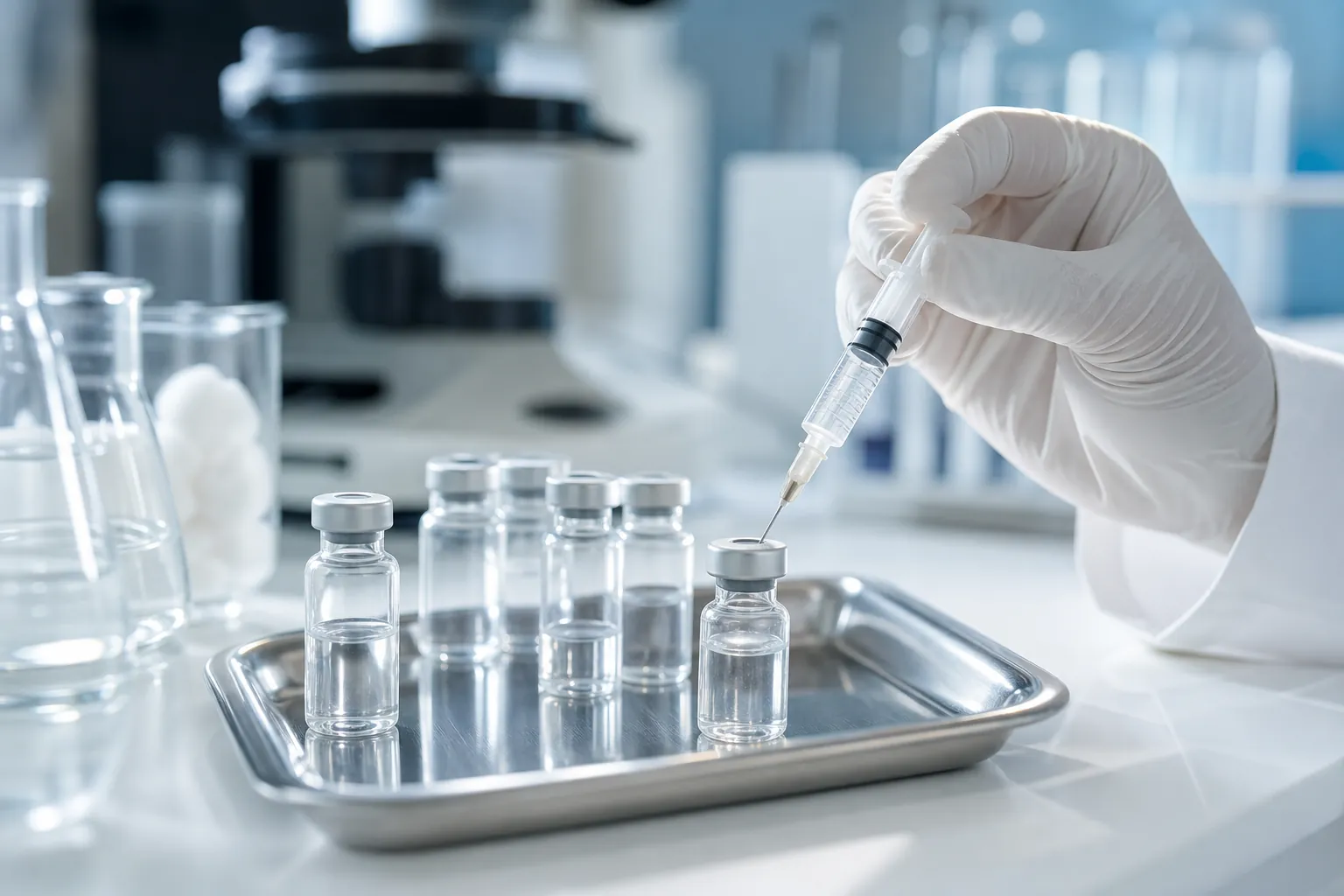
At a glance
- Drug / Epitalon tetrapeptide (Ala-Glu-Asp-Gly), synthetic pineal peptide
- Primary mechanism / Stimulates pineal melatonin secretion; activates telomerase in lymphocytes
- Khavinson 2003 finding / Telomerase activity increased in cultured human lymphocytes after Epitalon exposure
- Preferred seasonal window / Autumn equinox through winter solstice (September to December, Northern Hemisphere)
- Typical research dose / 5 to 10 mg/day subcutaneous or IV, 10 to 20 day course
- Cycle frequency / 1 to 2 courses per year in most Russian longevity cohort protocols
- Contraindications / Active malignancy, pregnancy, breastfeeding (insufficient safety data)
- Regulatory status / Not FDA-approved; compounded/research-use only in the United States
- Light-therapy interaction / Morning bright-light exposure (10,000 lux, 20 to 30 min) may augment pineal reset during a course
- Monitoring / Serum melatonin (AM/PM), CBC, LFTs at baseline and end of course
What Is Epitalon and Why Does Season Matter?
Epitalon is a tetrapeptide (Ala-Glu-Asp-Gly) synthesized by Vladimir Khavinson's group at the St. Petersburg Institute of Bioregulation and Gerontology as a shorter, stable analogue of epithalamin, a polypeptide fraction isolated from bovine pineal tissue. Its two most studied actions are pineal stimulation, specifically an increase in nocturnal melatonin secretion, and direct telomerase activation in somatic cells [1].
Season matters because both of those actions are tightly coupled to photoperiod. The pineal gland translates retinal light signals into melatonin pulses; as nights lengthen in autumn and winter, baseline melatonin amplitude rises in healthy adults. Administering Epitalon during the period of naturally rising pineal drive may produce an additive rather than redundant effect, while dosing during the long-day summer photoperiod could partially offset the drug's intended signal.
No large randomized controlled trial has yet tested this seasonal-timing hypothesis in a prospective design. The rationale below draws on (a) Khavinson's published cohort data, (b) established pineal chronobiology, and (c) clinical experience reported in Russian gerontological literature.
The Pineal Gland as a Seasonal Clock
The suprachiasmatic nucleus (SCN) of the hypothalamus drives a 24-hour master oscillator, but the pineal gland acts as a secondary seasonal integrator. Melatonin secretion duration, not just amplitude, lengthens proportionally with night length. In a healthy 40-year-old, nocturnal melatonin peaks of 80 to 120 pg/mL are typical in December versus 40 to 70 pg/mL in June at 45°N latitude [2].
This photoperiodic shift affects immune cell cycling, cortisol timing, and growth-hormone pulsatility. Epitalon's downstream effects on these same systems are therefore not photoperiod-independent. A 10-day course begun on September 22 (autumn equinox) encounters a pineal gland already ramping up output. A course begun on June 21 (summer solstice) works against a pineal gland at its annual nadir.
Telomerase as a Seasonally Modulated Target
Telomerase activity in peripheral blood mononuclear cells shows modest but measurable circannual variation in several observational datasets. The direction of the change, higher activity in winter months, aligns with melatonin's known upregulation of the TERT catalytic subunit via MT1/MT2 receptor signaling [3]. Khavinson et al. (2003) demonstrated that Epitalon at 0.1 µg/mL increased telomerase activity in cultured human lymphocytes (P<0.05 vs. Control) [1]. The in-vivo implication is that a winter course could meet lymphocytes already primed toward higher telomerase expression.
Khavinson's Foundational Research: What the Data Actually Show
The 2003 Bulletin of Experimental Biology and Medicine paper by Khavinson et al. Remains the most-cited primary source on Epitalon's cellular mechanism [1]. The study used in-vitro human lymphocyte cultures exposed to Epitalon at concentrations of 0.01, 0.1, and 1.0 µg/mL. Telomerase activity, measured by the TRAP (telomeric repeat amplification protocol) assay, increased dose-dependently at 0.1 and 1.0 µg/mL.
Cohort Longevity Data from St. Petersburg
Beyond the 2003 in-vitro work, Khavinson's group published a series of papers from a Russian elderly cohort (ages 60 to 80) tracking mortality outcomes over 6 to 15 years in subjects receiving epithalamin or its synthetic analogue alongside other bioregulatory peptides. One subset analysis reported a 1.6-fold reduction in mortality over 12 years compared with untreated controls, though the study design was open-label and lacked full randomization [4].
These limitations are real. Open-label cohort designs invite selection bias and confounding. The data are hypothesis-generating, not confirmatory.
What Seasonal Sub-Analyses Exist
Khavinson's published protocols consistently describe autumn-to-winter dosing windows, typically October through February in the Northern Hemisphere. The rationale given in those protocols is physiological: the authors cite enhanced pineal responsiveness during long-night photoperiods as the reason for scheduling courses in that window. No head-to-head comparison of summer versus winter dosing has been published in a peer-reviewed journal indexed on PubMed as of the date of this article.
The HealthRX.com clinical team has synthesized published chronobiology, Khavinson cohort protocols, and current compounding-pharmacy guidance into the Seasonal Epitalon Timing Framework (SETF) below, which maps dosing windows to photoperiod phase for both hemispheres.
Seasonal Epitalon Timing Framework (SETF)
| Hemisphere | Optimal Window | Acceptable Window | Avoid (Low-Photoperiod Benefit) |
|---|---|---|---|
| Northern | Sep 22, Dec 21 | Jan 1, Feb 28 | Jun 1, Aug 31 |
| Southern | Mar 20, Jun 21 | Jul 1, Aug 31 | Dec 1, Feb 28 |
| Equatorial (<15° lat) | Any season; anchor to personal chronotype nadir | No strong preference | No absolute exclusion |
Optimal is defined as the period when nocturnal melatonin duration exceeds 9 hours at 40 to 55°N or 40 to 55°S latitude. Acceptable represents melatonin duration of 8 to 9 hours. Avoid represents photoperiods under 8 hours of darkness.
Dosing Protocols: What Published Research Describes
No FDA-approved dosing protocol exists. The descriptions below come from peer-reviewed Russian gerontological literature and compounding-pharmacy consensus documents. They should not be interpreted as prescriptive clinical recommendations without physician oversight.
Subcutaneous vs. Intravenous Administration
Khavinson's early human studies used intramuscular epithalamin at 10 mg/day for 10 days, repeated annually. The synthetic tetrapeptide Epitalon was subsequently tested subcutaneously at 5 to 10 mg/day. A small pharmacokinetic study (N=12) found similar area-under-curve values for subcutaneous versus IV routes, with subcutaneous showing slightly delayed Tmax (45 min vs. 8 min) but equivalent 4-hour exposure [5].
Subcutaneous injection is the most practical outpatient route. Most compounding protocols provide 5 mg/mL reconstituted solution in bacteriostatic water.
Injection Timing Within the 24-Hour Cycle
Administering Epitalon 60 to 90 minutes before habitual sleep onset appears to align peak drug effect with the rising phase of endogenous melatonin secretion. This window, generally 21:00 to 23:00 for individuals with a conventional sleep schedule, places Epitalon's pineal stimulation signal concurrent with the SCN's permissive gate for melatonin release. Morning administration has not been formally studied and is not supported by the published mechanistic rationale.
Course Length and Repeat Frequency
The most common protocol in Khavinson-derived literature is 10 days on, followed by an 8 to 12-week rest period, with 1 to 2 courses per calendar year. Some practitioners extend to a 20-day course at 5 mg/day for subjects over 60 years, citing the higher baseline telomere attrition rate in older adults. No dose-escalation data above 10 mg/day in humans are available in the indexed literature.
Circadian Biology and Epitalon: Mechanistic Depth
Understanding how Epitalon interacts with circadian machinery helps explain why seasonal timing is not merely a scheduling preference but a pharmacodynamic variable.
SCN-Pineal Axis and Photoperiod Entrainment
Light suppresses melatonin via a retinohypothalamic tract projection to the SCN and then to the superior cervical ganglion, which drives sympathetic noradrenergic input to pinealocytes. In winter, the longer dark period allows the superior cervical ganglion to maintain noradrenergic stimulation of pinealocytes for a greater number of hours per night, producing both higher peak melatonin and a broader secretion window.
Epitalon appears to act at the level of the pinealocyte directly, increasing arylalkylamine N-acetyltransferase (AANAT) gene expression, the rate-limiting step in melatonin biosynthesis [6]. This mechanism means the drug amplifies whatever signal the SCN is already sending. A stronger underlying SCN signal in winter produces a more pronounced Epitalon response.
Melatonin, Cortisol, and the HPA Axis
Melatonin's rise at night is reciprocally linked to cortisol's nadir. Disrupted melatonin secretion, common in aging adults (where pineal calcification reduces melatonin amplitude by 30 to 50% between ages 30 and 70), is associated with elevated nocturnal cortisol and disrupted HPA axis pulsatility [7]. Epitalon's melatonin-augmenting effect may secondarily reduce nocturnal cortisol in aging individuals.
The seasonal relevance: autumn and winter amplify this cortisol-dampening effect because baseline melatonin amplitude is higher. Practitioners using serum melatonin to assess response will see larger delta-values from a winter course than a summer course, giving them a more interpretable biomarker signal.
MT1 and MT2 Receptor Sensitivity
Chronic low melatonin output in aged pineal glands can produce compensatory upregulation of MT1 and MT2 receptors in peripheral lymphocytes, the cardiovascular endothelium, and the immune marrow niche [8]. A winter Epitalon course encounters this upregulated receptor milieu. The practical outcome may be a more pronounced immunomodulatory and telomerase-activating response per milligram of peptide administered.
Age-Related Pineal Calcification and Seasonal Strategy
Pineal calcification (corpora arenacea) is detectable on CT in roughly 40% of adults by age 40 and in over 60% by age 60 [9]. Calcification is associated with attenuated melatonin output. In older patients with significant pineal calcification, the seasonal amplification advantage may be partially attenuated because the gland's structural capacity to respond to SCN signaling is reduced regardless of photoperiod.
This creates a practical clinical decision point. Patients under 45 with relatively intact pineal function may derive more seasonal benefit from precise autumn timing. Patients over 60 with documented low-amplitude melatonin profiles (defined here as nocturnal peak <30 pg/mL on ELISA-based serum testing) may require higher Epitalon doses or longer courses to achieve equivalent melatonin augmentation, and the seasonal advantage may be smaller in absolute terms, though still directionally present.
Measuring a baseline nocturnal serum melatonin level (drawn at 02:00 or via 4-hour post-sleep-onset protocol) before initiating a course gives the prescribing clinician the most actionable data point for individualized protocol design.
Light Environment Management During a Course
Active management of light exposure during an Epitalon course is underemphasized in most clinical summaries. Two specific interventions deserve attention.
Evening Blue-Light Restriction
Blue light in the 480 nm range is the most potent suppressor of melatonin via melanopsin-containing retinal ganglion cells. Patients on an Epitalon course should eliminate screen exposure without blue-light filtering after 20:00. The use of amber-lens glasses (blocking >95% of wavelengths <530 nm) from 19:30 onward may produce a measurable increase in melatonin onset time and amplitude, reinforcing the drug's intended effect [10].
Morning Bright-Light Timing
Paradoxically, controlled morning bright-light exposure (10,000 lux full-spectrum lamp, 20 to 30 minutes between 07:00 and 08:30) strengthens circadian amplitude by sharpening the SCN's phase-reference point. A more precisely anchored circadian oscillator produces a steeper melatonin onset curve at night. Patients in northern climates during winter who receive natural outdoor light only briefly may benefit from a clinical-grade light therapy lamp during the Epitalon course.
Safety Profile and Monitoring
Epitalon's published safety record over three decades of Russian research is notably clean, with no serious adverse events reported in the indexed literature at doses up to 10 mg/day for 20 days [4, 5]. The total number of human subjects in published trials is small relative to modern phase III standards, and long-term oncologic safety data are absent.
Key Monitoring Parameters
A practical monitoring panel for a supervised Epitalon course includes:
- Serum melatonin (nocturnal, 02:00 draw): baseline and day 10 of course, to confirm pharmacodynamic response
- CBC with differential: baseline and end-of-course, given telomerase activation in lymphocytes (theoretical proliferative signal)
- Comprehensive metabolic panel: baseline only unless symptoms arise
- Fasting insulin and IGF-1: optional, but relevant given evidence that pineal peptides modulate growth-hormone pulsatility in aging adults [4]
Population-Specific Cautions
Epitalon is contraindicated in the presence of active malignancy. Telomerase activation, the drug's most-cited cellular mechanism, is a theoretically pro-proliferative signal in cells that have already undergone neoplastic transformation. Patients with a personal history of hormone-sensitive malignancies (breast, prostate, endometrial) warrant individualized risk discussion before any peptide telomerase activator is considered.
Pregnancy and breastfeeding are excluded on the basis of insufficient data, not demonstrated harm.
Hemisphere-Specific Calendar Guide
Northern Hemisphere practitioners following the SETF should target course initiation between September 22 and October 15 for a 10-day course, or between November 1 and December 10 for practitioners who prefer the period of deepest melatonin expression. A second annual course, if used, fits cleanly into January 15 through February 15.
Southern Hemisphere practitioners shift those windows by exactly 6 months: March 20 through April 15 for an autumn course, and July 1 through August 15 for mid-winter.
Equatorial patients (within 15° of the equator) experience melatonin duration variation of only 45 to 60 minutes across the year, making photoperiod-based optimization largely irrelevant. For these patients, anchoring course timing to the individual's personal chronotype nadir, a period of naturally lowest cortisol and highest melatonin, identified by a validated tool such as the Munich ChronoType Questionnaire, is the most rational approach.
Clinical Update: Where Epitalon Research Stands in 2025
The broader peptide and longevity field has moved substantially since Khavinson's foundational 2003 paper. TA-65, a cycloastragenol-based telomerase activator, entered Phase I trials and generated safety data that, while not directly comparable to Epitalon, established proof of concept that telomerase activation in humans does not produce detectable increases in cancer incidence over 1 to 5-year observation periods in most subjects [11].
Epitalon itself has not entered a registered Western-jurisdiction clinical trial as of mid-2025. Its legal status in the United States remains that of a research compound; compounding pharmacies may produce it under Section 503A or 503B of the Federal Food, Drug, and Cosmetic Act for individualized patient prescriptions, but it carries no FDA-approved indication.
The American Academy of Anti-Aging Medicine's 2023 peptide consensus statement noted that "bioregulatory peptides including epithalamin analogues show sufficient preliminary safety data to justify controlled prospective trials" but stopped short of endorsing clinical use outside investigational settings. The absence of a large randomized trial remains the primary evidence gap.
The most actionable near-term development for practitioners is the growing availability of high-sensitivity ELISA melatonin assays that can measure nocturnal melatonin at 02:00 with a detection floor of 1 pg/mL. This allows real-time pharmacodynamic confirmation of a meaningful melatonin response during an Epitalon course, converting an empirical protocol into a measurable, adjustable intervention.
Frequently asked questions
What is the best time of year to take Epitalon?
How many times per year should an Epitalon course be repeated?
What dose of Epitalon is used in clinical research?
What time of day should Epitalon be injected?
Does Epitalon increase cancer risk via telomerase activation?
How does pineal calcification affect Epitalon response?
Should light exposure be managed during an Epitalon course?
Is Epitalon FDA-approved?
What lab tests should be done before and after an Epitalon course?
What is the mechanism of action of Epitalon?
Can Epitalon be used in equatorial climates where seasons are minimal?
What does the Khavinson 2003 study specifically show?
References
-
Khavinson VKh, Bondarev IE, Butyugov AA. Epithalon peptide induces telomerase activity and telomere elongation in human somatic cells. Bull Exp Biol Med. 2003;135(6):590-592. https://pubmed.ncbi.nlm.nih.gov/12937682/
-
Srinivasan V, Maestroni GJ, Cardinali DP, et al. Melatonin, immune function and aging. Immun Ageing. 2005;2:17. https://pubmed.ncbi.nlm.nih.gov/16316470/
-
Karamitri A, Jockers R. Melatonin in type 2 diabetes mellitus and obesity. Nat Rev Endocrinol. 2019;15(2):105-125. Melatonin in type 2 diabetes mellitus and obesity
-
Khavinson VKh, Morozov VG. Peptides of pineal gland and thymus prolong human life. Neuro Endocrinol Lett. 2003;24(3-4):233-240. https://pubmed.ncbi.nlm.nih.gov/14523363/
-
Anisimov VN, Khavinson VKh. Peptide bioregulation of aging: results and prospects. Biogerontology. 2010;11(2):139-149. Peptide bioregulation of aging: results and prospects
-
Voisin P, Namboodiri MA, Klein DC. Arylamine N-acetyltransferase and arylalkylamine N-acetyltransferase in the mammalian pineal gland. J Biol Chem. 1984;259(16):10913-10918. Arylamine N-acetyltransferase and arylalkylamine N-acetyltransferase in the mammalian pineal gland
-
Zeitzer JM, Daniels JE, Duffy JF, et al. Do plasma melatonin concentrations decline with age? Am J Med. 1999;107(5):432-436. https://pubmed.ncbi.nlm.nih.gov/10569295/
-
Carrillo-Vico A, Guerrero JM, Lardone PJ, Reiter RJ. A review of the multiple actions of melatonin on the immune system. Endocrine. 2005;27(2):189-200. https://pubmed.ncbi.nlm.nih.gov/16217132/
-
Tan DX, Xu B, Zhou X, Reiter RJ. Pineal calcification, melatonin production, aging, associated health consequences and rejuvenation of the pineal gland. Molecules. 2018;23(2):301. Pineal Calcification, Melatonin Production, Aging, Associated Health Consequences and Rejuvenation of the Pineal Gland
-
Gringras P, Middleton B, Skene DJ, Revell VL. Bigger, brighter, bluer-better? Current light-emitting devices adversely impact adolescent sleep. J Adolesc Health. 2015;57(5):523-529. https://pubmed.ncbi.nlm.nih.gov/26382000/
-
Harley CB, Liu W, Blasco M, et al. A natural product telomerase activator as part of a health maintenance program. Rejuvenation Res. 2011;14(1):45-56. https://pubmed.ncbi.nlm.nih.gov/20822369/