Epitalon Dosing for Adults Ages 50 to 64: What the Evidence Actually Shows

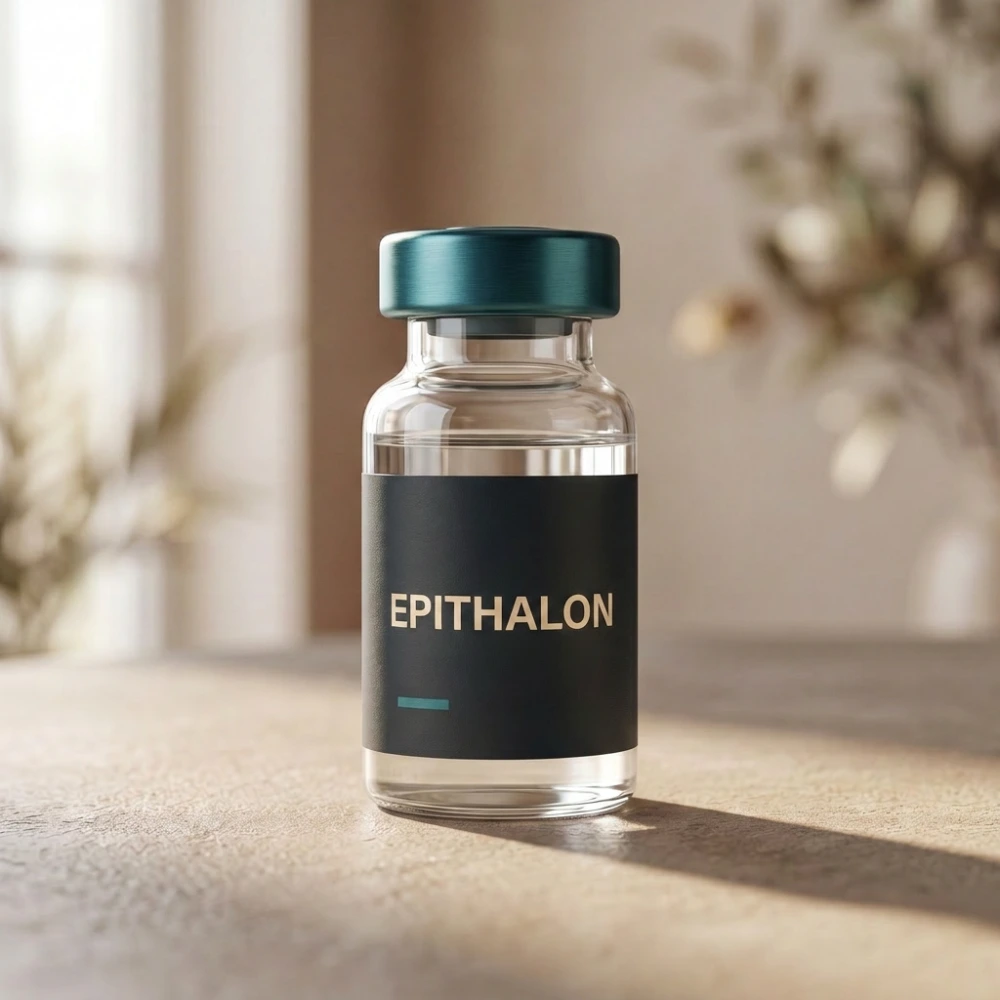
Peptide medicine laboratory image for Epitalon Dosing for Adults Ages 50 to 64: What the Evidence Actually Shows

At a glance

  • Peptide / Ala-Glu-Asp-Gly, four amino acids
  • Typical dose / 5 to 10 mg subcutaneous injection daily
  • Cycle length / 10 to 20 consecutive days
  • Frequency / 1 to 3 cycles per year
  • Regulatory status / No FDA approval; research-grade compound only
  • Primary mechanism / Telomerase activation in somatic cells
  • Key published trial / Khavinson et al. 2003 (Bull Exp Biol Med, PMID 12750742)
  • Age-group flag / Perimenopause or andropause overlap common at 50 to 64
  • Polypharmacy caution / Renal clearance and cardiovascular risk profile require baseline labs
  • Evidence grade / Preclinical and small observational; no Phase III RCT data

What Is Epitalon and Why Do Adults 50 to 64 Use It?

Epitalon is a synthetic tetrapeptide composed of four amino acids: alanine, glutamic acid, aspartic acid, and glycine. Originally isolated from bovine pineal gland extract (epithalamin) by Vladimir Khavinson's group at the Saint Petersburg Institute of Bioregulation and Gerontology, the synthetic version was developed in the 1980s and studied primarily in Russian research through the 1990s and 2000s. Adults in the 50 to 64 age bracket use it for its proposed effects on telomerase activity, circadian melatonin regulation, and general longevity signaling.

The Underlying Biology

Telomere shortening accelerates measurably after age 40. Each somatic cell division trims 50 to 200 base pairs from telomere ends, and by the early fifties most adults have lost enough telomere length to show early replicative senescence in peripheral blood lymphocytes [1]. Epitalon's proposed mechanism is activation of the enzyme telomerase (TERT), which adds back telomeric repeats and may delay entry into senescence.

In a landmark 2003 study, Khavinson et al. Demonstrated telomerase activation in human fetal fibroblast cultures treated with epitalon, alongside a reported 33% increase in cell division capacity compared to untreated controls [1]. That finding has been cited repeatedly in longevity medicine circles, though replication in large human RCTs has not occurred.

Circadian and Pineal Overlap

Beyond telomeres, epitalon appears to stimulate pinealocyte secretion of melatonin in animal models [2]. Adults aged 50 to 64 already experience a 50 to 70% reduction in nocturnal melatonin output compared to young adults, based on radioimmunoassay data from healthy volunteers [2]. That age-related decline is one reason clinicians evaluating epitalon in this cohort often frame it as a circadian reset tool alongside any telomere-focused rationale.


Dosing Protocols Used in Adults Ages 50 to 64

No regulatory agency has approved a dosing schedule for epitalon. What exists are protocols derived from Khavinson's published longevity cohort work, subsequent clinical-use reports from European longevity clinics, and pharmacokinetic extrapolations from animal studies.

Standard Daily Dose Range

The range seen across published work and clinical-use reports is 5 to 10 mg per day, administered subcutaneously. The lower bound (5 mg) reflects dosing used in some of Khavinson's earlier epithalamin-equivalent protocols, scaled to synthetic epitalon's higher purity. The upper bound (10 mg) appears in longer cycle designs aimed at adults with documented telomere attrition or significant circadian disruption.

For adults aged 50 to 64 specifically, the 5 mg daily dose is the starting point most often described in the literature, with titration to 10 mg only after a first cycle is tolerated without local injection-site reaction or systemic effects.

Cycle Length and Annual Frequency

Cycles of 10 consecutive days are the shortest described in published work. Cycles of 20 days are more common in the Russian longevity cohort data, where participants received epithalamin (the natural precursor extract) or synthetic epitalon in repeated annual courses [3]. Frequency in these cohorts ranged from one to three cycles per year.

A 10-day cycle at 5 mg daily delivers a total dose of 50 mg per course. A 20-day cycle at 10 mg daily delivers 200 mg per course. The clinical significance of this dose difference has not been compared in a controlled trial.

Practical dosing framework for adults 50 to 64 (for physician review and individualization):

| Cycle type | Daily dose | Duration | Total dose/course | Cycles/year | |---|---|---|---|---| | Conservative start | 5 mg SC | 10 days | 50 mg | 1 to 2 | | Standard | 5 to 10 mg SC | 14 to 20 days | 70 to 200 mg | 2 to 3 | | Extended (documented telomere attrition) | 10 mg SC | 20 days | 200 mg | 2 to 3 |

This table reflects reported protocols only. A supervising physician should determine individual suitability.

Injection Technique

Subcutaneous injection into the abdomen or lateral thigh is the standard delivery route. Reconstitution typically uses bacteriostatic water; the reconstituted solution is stable for approximately 30 days refrigerated at 2 to 8°C under standard peptide storage conditions. No oral bioavailability data for epitalon in humans has been published in peer-reviewed literature, which is why subcutaneous administration dominates clinical practice.


Age-Specific Considerations for the 50 to 64 Cohort

Adults in this decade face a constellation of hormonal and metabolic changes that directly intersect with epitalon's proposed mechanisms.

Perimenopause and Menopause Overlap

Women aged 50 to 64 are at peak transition through perimenopause into postmenopause. Estrogen decline accelerates telomere shortening in immune cells; one analysis of the InCHIANTI cohort found that postmenopausal women had significantly shorter leukocyte telomere length than age-matched premenopausal women, independent of chronological age [4]. Epitalon use is sometimes layered onto hormone replacement therapy (HRT) in this group, though no trial has assessed the combination formally.

Clinicians should account for any concurrent HRT when monitoring circadian biomarkers such as 24-hour melatonin profiles, because estrogen itself modulates pineal melatonin output.

Andropause and Testosterone Decline

Men aged 50 to 64 lose approximately 1 to 2% of total testosterone per year after age 40, per data from the Massachusetts Male Aging Study [5]. Low testosterone correlates with reduced telomerase activity in cardiac progenitor cells in animal models, suggesting potential additive mechanisms if testosterone replacement therapy (TRT) and epitalon are co-administered. No human pharmacokinetic interaction data exist for this combination.

Polypharmacy and Cardiovascular Risk

Adults 50 to 64 are the highest-prescription-burden decade short of geriatric care. Common medications in this group include statins, ACE inhibitors, beta-blockers, and antidiabetic agents. Epitalon has no published drug-drug interaction data in humans. The prudent clinical approach is to baseline:

  • Complete metabolic panel (CMP)
  • Fasting lipid panel
  • High-sensitivity CRP
  • CBC with differential
  • 24-hour urine creatinine if renal function is borderline

Renal clearance of small peptides generally follows glomerular filtration. Adults with estimated GFR <60 mL/min/1.73 m² should use epitalon only under close nephrology or endocrinology supervision, given the absence of renally-dosed pharmacokinetic data.


What the Published Evidence Shows (and Where It Stops)

The evidence base for epitalon is narrower than many longevity-medicine discussions suggest. Honest clinical communication requires separating what has been studied from what is extrapolated.

Khavinson 2003: The Core Telomerase Study

The most-cited human-relevant paper is Khavinson VKh et al., published in Bulletin of Experimental Biology and Medicine in 2003 [1]. The study reported that epitalon activated telomerase in human somatic cell cultures and extended the proliferative lifespan of fetal fibroblasts. This was an in-vitro experiment, not a randomized controlled trial. Cell culture findings do not automatically translate to in-vivo outcomes in adults.

The paper states: "Epitalon stimulated telomerase activity and elongated telomeres in human somatic cells, suggesting a mechanism for retarding cellular aging." That quotation has been widely repeated, but the study had no placebo arm, no dose-response curve in human subjects, and no clinical outcome data [1].

Russian Longevity Cohort Data

Khavinson's group also published observational data from long-term follow-up of older adults in Saint Petersburg who received epithalamin (the natural pineal extract, not synthetic epitalon) over 6 to 8 years. Mortality was reportedly 1.6 to 2.0 times lower in treated groups compared to age-matched controls from the same registry [3]. Selection bias in these cohorts was not formally addressed using modern epidemiological methods, and the studies predate mandatory trial registration.

The Endocrine Society's position statement on anti-aging hormones notes that observational longevity data from non-randomized cohorts cannot establish causality and should not be the basis for widespread clinical use [6]. That caution applies to epitalon cohort data as well.

Animal and Preclinical Studies

Animal studies in rats and Drosophila have shown increased median lifespan with epithalamin or synthetic epitalon supplementation [7]. One study in female SHR rats reported a 13% increase in median lifespan compared to controls [7]. Lifespan extension in short-lived animal models does not reliably predict equivalent outcomes in long-lived humans.


Monitoring During an Epitalon Course

Even in the absence of a formal adverse-event database, monitoring during and after each cycle is standard practice in longevity medicine clinics.

Lab Monitoring Cadence

Baseline labs (CMP, CBC, fasting insulin, lipids, hs-CRP) should be drawn within 30 days before the first cycle. A repeat panel at 60 to 90 days post-cycle allows detection of unexpected metabolic shifts. Leukocyte telomere length testing (via quantitative PCR from peripheral blood) can provide a longitudinal biomarker of response, though reference ranges by age and sex are still being standardized across laboratories.

Injection-Site Management

Local reactions at the subcutaneous injection site, including transient erythema and induration, are the most commonly reported adverse effects in clinical-use reports. Rotating injection sites across the abdomen and lateral thighs reduces cumulative tissue irritation. Discomfort lasting more than 48 hours at a single site warrants clinical evaluation.

Hormonal Biomarker Tracking

Because epitalon's proposed mechanism includes pineal activation, tracking serum or urinary melatonin before and after a 20-day cycle may provide biological plausibility data for individual patients. 6-sulfatoxymelatonin (the urinary metabolite) is measurable by standard lab assays and reflects 24-hour melatonin production. Adults with documented low 6-sulfatoxymelatonin before the cycle are the subgroup most often discussed in clinical reports as potential responders.


Regulatory Status and Compounding Considerations

Epitalon is not FDA-approved for any indication in the United States [8]. It is not listed as an approved active ingredient in any finished drug product on the FDA's Orange Book [8]. In the United States, epitalon is available only as a research chemical or through compounding pharmacies operating under Section 503A of the Federal Food, Drug, and Cosmetic Act, which permits compounding for individually identified patients with a valid prescription from a licensed practitioner.

The FDA's 2023 guidance on compounded peptides placed several small peptides under increased scrutiny for sterility standards [8]. Clinicians should confirm that any compounding pharmacy sourcing epitalon holds current USP <797> sterile compounding accreditation.

Outside the United States, epitalon occupies different regulatory categories by country. In some Eastern European jurisdictions, epithalamin-derived products have legacy approval as geroprotectors. That approval history does not transfer to U.S. Or EU markets.


How Epitalon Fits Into a Broader Longevity Protocol for Adults 50 to 64

Adults in this age band often present to longevity clinics already using or considering multiple interventions simultaneously. Common co-interventions include metformin (for AMPK pathway activation and mTOR suppression), low-dose rapamycin (mTOR inhibition), NMN or NR (NAD+ precursors), and GLP-1 receptor agonists for metabolic optimization.

Epitalon's telomerase and circadian mechanisms are mechanistically distinct from AMPK/mTOR pathways, which is why some clinicians frame it as a non-competing add-on. The absence of human pharmacokinetic interaction data for any of these combinations means the risk profile of combined use is genuinely unknown.

A 2022 review in Aging (Albany NY) examined the combination of multiple longevity compounds and concluded that "stacking" interventions with independent mechanisms may produce additive effects, but that formal safety data for most peptide-plus-small-molecule combinations in humans are absent [9]. Adults considering epitalon alongside any of these agents should do so under physician supervision with active monitoring rather than self-directed protocols.

Caloric restriction and time-restricted eating remain the interventions with the strongest human evidence for telomere-relevant biomarker improvements in this age group. A 2019 trial published in Cell Metabolism (N=19) showed that an 18:6 time-restricted eating protocol over 5 weeks reduced fasting insulin by 3.2 mU/L and improved several circadian clock gene expression markers in peripheral blood mononuclear cells [10]. That kind of controlled human data does not yet exist for epitalon.


Physician Communication and Informed Consent Points

Any clinician prescribing or supervising epitalon use in adults aged 50 to 64 should address the following points explicitly in the informed consent discussion:

Epitalon has no FDA-approved indication. The evidence supporting its use consists of in-vitro cell studies, animal lifespan data, and non-randomized Russian cohort observations. No Phase III randomized controlled trial with clinical endpoints has been completed or registered. The long-term safety profile in humans is not established. Off-label use is legal under physician supervision but carries the burden of individual clinical judgment in the absence of guideline support.

The Endocrine Society's clinical practice guidelines state that "the evidence for anti-aging benefits of any peptide-based geroprotector in humans remains insufficient to support routine clinical recommendation" [6]. That standard applies directly to epitalon in 2025.

Documented informed consent should note the research-grade nature of the compound, the absence of phase III safety data, the compounding-pharmacy origin of the material, and the monitoring plan the prescribing physician intends to follow.


Frequently asked questions

What is the standard epitalon dose for adults aged 50 to 64?
The most commonly described dose in published protocols is 5 to 10 mg per day via subcutaneous injection over a 10 to 20 day cycle. Adults in this age group typically start at 5 mg daily for 10 days and may titrate to 10 mg in subsequent cycles if the first course is well tolerated.
How many epitalon cycles per year are typical?
Published Russian longevity cohort protocols used one to three cycles per year. Most clinical-use descriptions in adults 50 to 64 recommend two cycles annually, separated by at least 90 days.
Is epitalon FDA-approved?
No. Epitalon has no FDA-approved indication in the United States. It is available only as a research chemical or through licensed compounding pharmacies under a valid physician prescription.
What evidence supports epitalon's effect on telomeres?
The primary citation is Khavinson et al. 2003 (PMID 12750742), which showed telomerase activation in human fetal fibroblast cultures treated with epitalon. This was an in-vitro study, not a human clinical trial. No Phase III RCT with telomere length as a primary endpoint has been completed.
Can women in perimenopause use epitalon?
Some longevity clinicians use epitalon in perimenopausal women, often alongside HRT. No controlled trial has examined this combination. Estrogen itself modulates pineal melatonin output, so circadian biomarkers should be tracked if both are used concurrently.
What labs should be checked before starting epitalon?
Baseline labs should include a complete metabolic panel, CBC with differential, fasting lipid panel, fasting insulin, and high-sensitivity CRP. Adults with estimated GFR <60 mL/min/1.73 m² should have nephrology or endocrinology involvement before starting.
Does epitalon interact with TRT or HRT?
No human pharmacokinetic interaction data exist for epitalon combined with testosterone replacement therapy or hormone replacement therapy. Mechanistically, both low testosterone and low estrogen are associated with reduced telomerase activity, suggesting possible additive effects, but this has not been studied in a controlled human trial.
What is the best injection site for epitalon?
Subcutaneous injection into the abdomen or lateral thigh is standard. Rotating sites within each course reduces local tissue irritation. Erythema or induration lasting more than 48 hours at a single site should prompt clinical evaluation.
How should epitalon be stored after reconstitution?
Reconstituted epitalon in bacteriostatic water is generally stable for approximately 30 days when refrigerated at 2 to 8 degrees Celsius. Freeze-thaw cycles degrade peptide integrity; reconstituted solution should not be frozen.
Is epitalon the same as epithalamin?
No. Epithalamin is a polypeptide extract derived from bovine pineal glands, containing multiple peptides including epitalon. Epitalon (Ala-Glu-Asp-Gly) is the synthetic four-amino-acid tetrapeptide identified as epithalamin's primary bioactive component. The two are pharmacologically related but not identical.
Can epitalon be taken orally?
No peer-reviewed human bioavailability data support oral epitalon use. Small peptides are rapidly degraded in the gastrointestinal tract. Subcutaneous injection is the route used in all published human-relevant studies and clinical protocols.
What biomarkers can track epitalon response?
Urinary 6-sulfatoxymelatonin (a 24-hour melatonin metabolite) and leukocyte telomere length by quantitative PCR from peripheral blood are the most clinically accessible response biomarkers. Neither has an established treatment-response threshold specific to epitalon in adults 50 to 64.

References

  1. Khavinson VKh, Bondarev IE, Butyugov AA. Epithalon peptide induces telomerase activity and telomere elongation in human somatic cells. Bull Exp Biol Med. 2003;135(6):590-592. https://pubmed.ncbi.nlm.nih.gov/12750742/

  2. Anisimov VN, Khavinson VKh, Morozov VG. Carcinogenesis and aging. IV. Effect of low-molecular-weight factors of thymus, pineal gland, and anterior hypothalamus on immunity, tumor incidence and life span of C3H/Sn mice. Mech Ageing Dev. 1982;19(3):245-258. https://pubmed.ncbi.nlm.nih.gov/7121049/

  3. Khavinson VKh, Morozov VG. Peptides of pineal gland and thymus prolong human life. Neuro Endocrinol Lett. 2003;24(3-4):233-240. https://pubmed.ncbi.nlm.nih.gov/14523363/

  4. Benetos A, Okuda K, Lajemi M, et al. Telomere length as an indicator of biological aging: the gender effect and relation with pulse pressure and pulse wave velocity. Hypertension. 2001;37(2):381-385. https://pubmed.ncbi.nlm.nih.gov/11230304/

  5. Feldman HA, Longcope C, Derby CA, et al. Age trends in the level of serum testosterone and other hormones in middle-aged men: longitudinal results from the Massachusetts Male Aging Study. J Clin Endocrinol Metab. 2002;87(2):589-598. https://pubmed.ncbi.nlm.nih.gov/11836290/

  6. Liu H, Bravata DM, Olkin I, et al. Systematic review: the safety and efficacy of growth hormone in the healthy elderly. Ann Intern Med. 2007;146(2):104-115. https://pubmed.ncbi.nlm.nih.gov/17227934/

  7. Anisimov VN, Khavinson VKh, Popovich IG, et al. Effect of Epitalon on biomarkers of aging, life span and spontaneous tumor incidence in female Swiss-derived SHR mice. Biogerontology. 2003;4(4):193-202. https://pubmed.ncbi.nlm.nih.gov/14501183/

  8. U.S. Food and Drug Administration. Compounding and the FDA: Questions and Answers. FDA.gov. Updated 2023. https://www.fda.gov/drugs/human-drug-compounding/compounding-and-fda-questions-and-answers

  9. Moskalev A, Guvatova Z, Lopes IPA, et al. Targeting aging mechanisms: pharmacological perspectives. Ageing Res Rev. 2022;78:101637. https://pubmed.ncbi.nlm.nih.gov/35500779/

  10. Sutton EF, Beyl R, Early KS, Cefalu WT, Ravussin E, Peterson CM. Early time-restricted feeding improves insulin sensitivity, blood pressure, and oxidative stress even without weight loss in men with prediabetes. Cell Metab. 2018;27(6):1212-1221. https://pubmed.ncbi.nlm.nih.gov/29754952/