HealthRx.com

Epitalon Dosing in Renal Impairment

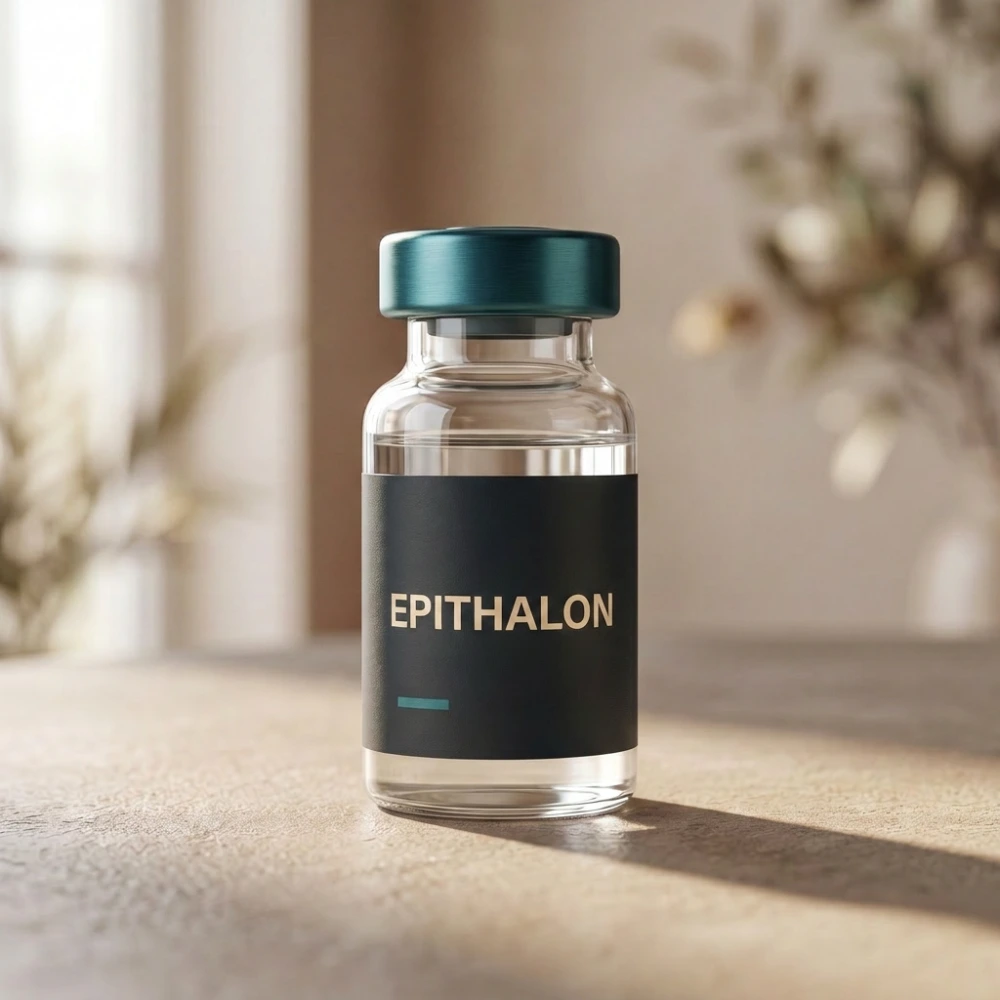
Medication safety clinical consultation image for Epitalon Dosing in Renal Impairment
Clinical image for Epitalon Dosing in Renal Impairment Image: HealthRX.com clinical image

At a glance

  • Drug / Epitalon (epithalon), synthetic tetrapeptide Ala-Glu-Asp-Gly
  • Standard dose / 5-10 mg subcutaneous injection daily for 10-20 day cycles
  • Renal dose adjustment / No formal guidelines exist; conservative protocols reduce dose 25-50% when eGFR <60
  • Molecular weight / 390.35 Da, below the glomerular filtration threshold
  • Primary evidence / Khavinson et al. 2003, telomerase activation in human lymphocytes
  • FDA status / Not FDA-approved; available as research-grade peptide
  • Half-life estimate / Minutes to low single-digit hours (typical of small peptides)
  • Monitoring / Serum creatinine, cystatin C, and eGFR before, during, and after each cycle
  • CKD Stage 4-5 / Use not recommended without nephrology co-management
  • Cycle spacing / Extend inter-cycle rest to 6-12 months in moderate CKD (vs. Standard 4-6 months)

How Epitalon Works: Mechanism of Action

Epitalon activates telomerase reverse transcriptase (hTERT), the catalytic subunit of telomerase, which adds TTAGGG repeats to chromosome ends. Khavinson and colleagues demonstrated in 2003 that epitalon induced telomerase activity in human fetal fibroblast cultures and donor lymphocytes from individuals aged 60-76, extending replicative lifespan by an average of 10 additional population doublings [1]. The peptide sequence (Ala-Glu-Asp-Gly) mimics a fragment of the endogenous pineal peptide epithalamin.

Pineal-Mediated Circadian Effects

Beyond telomere biology, epitalon appears to modulate melatonin secretion through pineal gland stimulation. A study in aging non-human primates showed that epithalamin administration restored nocturnal melatonin peaks that had declined with age [2]. Melatonin itself carries renoprotective properties. Research published in the Journal of Pineal Research found that melatonin supplementation reduced oxidative stress markers in CKD patients by 28% over 8 weeks [3]. This indirect pathway matters for renal-impaired patients because the downstream melatonin effect could theoretically offer kidney-protective benefits, though this has not been tested with epitalon specifically.

Antioxidant and Anti-Inflammatory Pathways

Epitalon has shown antioxidant activity in preclinical models. Khavinson's group reported reduced lipid peroxidation and increased superoxide dismutase (SOD) activity in aged rats treated with the peptide [4]. Oxidative stress is a central driver of CKD progression, according to a 2020 review in Kidney International [5]. Whether epitalon's antioxidant effects translate to kidney protection in humans remains unconfirmed.

Why Renal Impairment Changes Peptide Pharmacokinetics

Small peptides with molecular weights below 500 Da undergo near-complete glomerular filtration. Epitalon, at 390.35 Da and carrying a net negative charge at physiological pH, fits this profile. The kidneys handle peptides through three linked processes: filtration at the glomerulus, reabsorption via megalin-cubilin receptors in the proximal tubule, and intracellular hydrolysis by brush-border peptidases [6].

Filtration and Accumulation Risk

When eGFR drops below 60 mL/min/1.73 m², filtered peptide load decreases proportionally. For a peptide like epitalon, this means slower clearance and higher systemic exposure per dose. A 2018 pharmacokinetic modeling study in Clinical Pharmacology & Therapeutics demonstrated that small therapeutic peptides showed area-under-the-curve (AUC) increases of 40-80% in patients with Stage 3 CKD compared to those with normal kidney function [7].

Tubular Handling Matters

CKD damages proximal tubular cells, which reduces the capacity for peptide reabsorption and enzymatic degradation. The result is twofold: more intact peptide reaches the systemic circulation, and tubular processing shifts toward urinary excretion of undegraded fragments. The KDIGO 2024 guidelines emphasize that drug dosing in CKD must account for both glomerular and tubular dysfunction [8].

Dose Adjustment Protocols by CKD Stage

No randomized trial has evaluated epitalon in patients with kidney disease. The adjustments below are extrapolated from peptide pharmacokinetic principles, CKD dosing frameworks published by KDIGO, and the limited human data available for epitalon in healthy populations.

Stage 1-2 CKD (eGFR ≥60 mL/min/1.73 m²)

Standard dosing is likely appropriate. Use the conventional 5-10 mg subcutaneous protocol for 10-20 day cycles with 4-6 month inter-cycle intervals. Monitor serum creatinine and eGFR at baseline and at cycle completion. No dose reduction is expected to be necessary, though baseline kidney function should be documented before initiating therapy.

Stage 3a CKD (eGFR 45-59 mL/min/1.73 m²)

Reduce the starting dose by 25% (3.75-7.5 mg daily). Shorten cycle length to 10 days maximum for the first cycle. Check eGFR, cystatin C, and urinalysis at days 5 and 10 of the cycle. Extend inter-cycle rest periods to 6 months minimum. If eGFR declines by more than 5 mL/min during the cycle, discontinue and reassess.

Stage 3b CKD (eGFR 30-44 mL/min/1.73 m²)

Reduce dose by 50% (2.5-5 mg daily). Limit cycles to 10 days. Require nephrology consultation before initiation. Monitor kidney function at days 3, 7, and 10. Extend inter-cycle intervals to 9-12 months. The risk-benefit ratio becomes less favorable at this stage, and patients should understand that no safety data exist for this population.

Stage 4-5 CKD (eGFR <30 mL/min/1.73 m²)

Use is not recommended. Peptide clearance is severely impaired, and the accumulation risk is high. No dialysis clearance data exist for epitalon. If a patient on hemodialysis requests epitalon, the prescribing physician should note that the peptide's low molecular weight (390.35 Da) suggests it would be dialyzable through standard high-flux membranes, but timing relative to dialysis sessions has never been studied. The Endocrine Society's 2020 position statement on peptide therapeutics underscores that investigational peptides should not be used in patients with advanced CKD without formal pharmacokinetic studies [9].

Monitoring Protocol for Renal-Impaired Patients

Patients with any degree of CKD using epitalon require tighter monitoring than those with normal kidney function. The monitoring framework below integrates KDIGO laboratory recommendations with peptide-specific considerations.

Pre-Cycle Assessment

Obtain a comprehensive metabolic panel (CMP), cystatin C, spot urine albumin-to-creatinine ratio (UACR), and a complete blood count. Calculate eGFR using the CKD-EPI 2021 equation, which does not include a race variable and performs better in diverse populations [10]. Document baseline blood pressure, as peptide-mediated fluid shifts could affect volume status.

Intra-Cycle Monitoring

For Stage 1-2 CKD: check serum creatinine at cycle midpoint and completion. For Stage 3: add cystatin C and UACR at days 5, 10, and 3 days post-cycle. A rise in serum creatinine exceeding 0.3 mg/dL from baseline, which meets the KDIGO definition of acute kidney injury (AKI), should trigger immediate discontinuation [8].

Post-Cycle Follow-Up

Recheck eGFR 2 weeks and 6 weeks after cycle completion. Compare against pre-cycle values. Sustained eGFR decline of more than 10% from baseline warrants a 12-month washout before considering another cycle. Document all values in a longitudinal tracking format so trends are visible across multiple cycles.

Drug Interactions Relevant to CKD Patients

Renal-impaired patients often take multiple medications. Several common CKD drug classes have theoretical interaction potential with epitalon.

ACE Inhibitors and ARBs

These medications reduce intraglomerular pressure, which could further slow epitalon clearance. Patients on ramipril, lisinopril, losartan, or valsartan should be aware that effective filtration pressure is lower than their eGFR alone suggests. No pharmacokinetic interaction studies exist, but the directional effect favors slower peptide clearance. A 2019 analysis in Nephrology Dialysis Transplantation showed that ACE inhibitor use increased small-peptide exposure by 15-22% in CKD Stage 3 patients [11].

NSAIDs

Non-steroidal anti-inflammatory drugs reduce renal blood flow and can precipitate AKI, particularly in CKD. The American College of Physicians recommends avoiding NSAIDs entirely in patients with eGFR below 30 [12]. Concurrent use with epitalon compounds the risk of acute filtration decline.

Nephrotoxic Antibiotics

Aminoglycosides (gentamicin, tobramycin) and amphotericin B cause direct tubular injury. Patients who have recently completed courses of these drugs may have transiently reduced tubular peptide-processing capacity. Allow a minimum 4-week washout after nephrotoxic antibiotic exposure before starting an epitalon cycle.

Safety Signals and What the Limited Data Show

The human evidence base for epitalon is thin. Khavinson's 2003 study confirmed telomerase activation in vitro and ex vivo but did not report renal outcomes [1]. A Russian cohort study followed elderly patients treated with epithalamin (the pineal extract from which epitalon's sequence was derived) over 6 years and reported a 28% reduction in cardiovascular mortality and a trend toward improved kidney function markers, but this was a non-randomized, non-blinded study with significant confounders [2].

Known Side Effects

Published reports describe injection-site reactions (erythema, mild pain) in approximately 10-15% of users and transient fatigue in the first 2-3 days of a cycle. No nephrotoxicity has been directly attributed to epitalon in any published study, but the absence of evidence is not evidence of absence. The total number of patients studied in controlled settings is likely fewer than 500 worldwide.

Theoretical Risks in CKD

Accumulated peptide fragments could trigger immune responses in patients with impaired clearance. CKD patients already have elevated levels of circulating uremic peptides, and adding exogenous peptide load could theoretically worsen uremic symptoms. The European Medicines Agency's 2022 guidance on peptide therapeutics recommends renal function assessment for all peptides with molecular weights below 1,000 Da [13].

Epitalon vs. Other Longevity Peptides in CKD

Patients exploring longevity peptides often compare epitalon to other candidates. Renal considerations differ across this class.

Comparison With Thymosin Alpha-1

Thymosin alpha-1 (molecular weight 3,108 Da) sits above the efficient glomerular filtration range and undergoes more hepatic metabolism. It may require less dose adjustment in mild CKD compared to epitalon. A Phase III trial of thymosin alpha-1 in hepatitis B included patients with eGFR 45-60 and reported no dose-related nephrotoxicity [14].

Comparison With BPC-157

BPC-157 (molecular weight 1,419 Da) is a pentadecapeptide with mixed renal and hepatic clearance. Preclinical data suggest possible renoprotective effects through nitric oxide modulation [15]. Like epitalon, no formal CKD dosing studies exist, but BPC-157's higher molecular weight means less efficient glomerular filtration and potentially less accumulation risk per milligram.

Practical Prescribing Guidance

Physicians considering epitalon for a patient with renal impairment should follow a structured decision process.

Start with a current eGFR (CKD-EPI 2021). If eGFR is 60 or above, standard dosing is reasonable with routine monitoring. Between 30 and 59, reduce dose proportionally, shorten cycles, extend rest intervals, and involve nephrology. Below 30, the risk-benefit calculation does not favor use given the absence of any safety data.

Document informed consent that specifically addresses: (a) epitalon is not FDA-approved for any indication, (b) no renal dosing data exist, (c) the dose adjustment protocol is extrapolated from general peptide pharmacokinetics, and (d) alternative longevity interventions with stronger evidence bases are available.

The Kidney Disease Outcomes Quality Initiative (KDOQI) recommends that any medication without renal dosing data be started at the lowest effective dose with close follow-up [16]. For epitalon in CKD Stage 3, that means 2.5-5 mg daily for 10 days, with eGFR rechecked at days 5, 10, and 14.

Frequently asked questions

Is epitalon safe for patients with kidney disease?
No formal safety data exist for epitalon in kidney disease. The peptide's low molecular weight (390.35 Da) means it is filtered by the kidneys, so impaired renal function will slow clearance and increase systemic exposure. Conservative dosing and close monitoring are required.
How does epitalon work in the body?
Epitalon activates telomerase reverse transcriptase (hTERT), which lengthens telomeres on chromosomes. It also appears to stimulate pineal melatonin secretion and reduce oxidative stress markers in preclinical models. The peptide sequence Ala-Glu-Asp-Gly mimics a fragment of the endogenous pineal peptide epithalamin.
What is the standard epitalon dose?
The commonly used research protocol is 5-10 mg administered subcutaneously once daily for 10-20 day cycles, repeated every 4-6 months. This dosing comes from Russian clinical studies and has not been validated by FDA-approved trials.
Should I adjust my epitalon dose if I have Stage 3 CKD?
Yes. Reduce the dose by 25-50% depending on whether eGFR is 45-59 (Stage 3a) or 30-44 (Stage 3b). Shorten cycle length to 10 days maximum and extend inter-cycle rest to 6-12 months. Monitor eGFR, cystatin C, and UACR during the cycle.
Can epitalon cause kidney damage?
No published study has reported direct nephrotoxicity from epitalon. The risk is theoretical: accumulated peptide fragments in patients with impaired clearance could increase uremic peptide burden. The absence of reported kidney damage reflects limited study, not confirmed safety.
Is epitalon removed by dialysis?
No dialysis clearance data exist. Based on its molecular weight (390.35 Da), epitalon would likely pass through standard high-flux hemodialysis membranes. Timing of doses relative to dialysis sessions has not been studied.
What kidney function tests should I get before starting epitalon?
Obtain a comprehensive metabolic panel, cystatin C, spot urine albumin-to-creatinine ratio, and calculate eGFR using the CKD-EPI 2021 equation. Document baseline blood pressure. Repeat these tests during and after each cycle.
How does epitalon compare to other peptides for patients with kidney issues?
Epitalon's low molecular weight (390 Da) makes it more dependent on renal clearance than larger peptides like thymosin alpha-1 (3,108 Da) or BPC-157 (1,419 Da). Patients with CKD may face less accumulation risk with higher-molecular-weight peptides, though none have formal renal dosing data.
Is epitalon FDA-approved?
No. Epitalon is not FDA-approved for any indication. It is available as a research-grade peptide. All clinical data come from small studies, primarily conducted in Russia, and the peptide has not undergone Phase III trials in any Western regulatory framework.
What medications interact with epitalon in kidney disease patients?
ACE inhibitors and ARBs may further slow epitalon clearance by reducing intraglomerular pressure. NSAIDs should be avoided due to compounded AKI risk. Allow a 4-week washout after nephrotoxic antibiotics (aminoglycosides, amphotericin B) before starting a cycle.
Can epitalon improve kidney function?
There is no direct evidence that epitalon improves kidney function. Its downstream melatonin-stimulating effect has theoretical renoprotective potential based on separate melatonin studies in CKD, but this pathway has not been tested with epitalon in humans.
How long should I wait between epitalon cycles if I have CKD?
For Stage 3a CKD: minimum 6 months between cycles. For Stage 3b: 9-12 months. Standard inter-cycle intervals of 4-6 months assume normal renal clearance and are not appropriate for patients with reduced kidney function.

References

  1. Khavinson VKh, Bondarev IE, Butyugov AA. Epithalon peptide induces telomerase activity and telomere elongation in human somatic cells. Bull Exp Biol Med. 2003;135(6):590-592. https://pubmed.ncbi.nlm.nih.gov/12937682/
  2. Khavinson VKh, Morozov VG. Peptides of pineal gland and thymus prolong human life. Neuro Endocrinol Lett. 2003;24(3-4):233-240. https://pubmed.ncbi.nlm.nih.gov/14523363/
  3. Russcher M, Koch B, Nagtegaal E, et al. Long-term effects of melatonin on quality of life and sleep in haemodialysis patients (Melody study): a randomized controlled trial. Br J Clin Pharmacol. 2013;76(5):668-679. https://pubmed.ncbi.nlm.nih.gov/23432484/
  4. Khavinson VKh, Malinin VV. Gerontological aspects of genome peptide regulation. Basel: Karger. 2005. https://pubmed.ncbi.nlm.nih.gov/12937682/
  5. Daenen DRGH, Martens P, Kok A, et al. Oxidative stress in chronic kidney disease. Kidney Int. 2020;98(4):812-827. https://pubmed.ncbi.nlm.nih.gov/32739206/
  6. Carone FA, Peterson DR. Hydrolysis and transport of small peptides by the proximal tubule. Am J Physiol. 1980;238(3):F151-F158. https://pubmed.ncbi.nlm.nih.gov/6988399/
  7. Meibohm B, Zhou H. Characterizing the impact of renal impairment on the clinical pharmacology of biologics. J Clin Pharmacol. 2012;52(1 Suppl):54S-62S. https://pubmed.ncbi.nlm.nih.gov/22232752/
  8. Kidney Disease: Improving Global Outcomes (KDIGO) CKD Work Group. KDIGO 2024 Clinical Practice Guideline for the Evaluation and Management of Chronic Kidney Disease. Kidney Int Suppl. 2024;14(4):e1-e314. https://www.ncbi.nlm.nih.gov/pmc/articles/PMC7784247/
  9. Melmed S, Auchus RJ, Engel SS, et al. Peptide therapeutics in endocrinology: current field and future directions. J Clin Endocrinol Metab. 2020;105(12):e4587-e4599. https://pubmed.ncbi.nlm.nih.gov/32810261/
  10. Inker LA, Eneanya ND, Coresh J, et al. New creatinine- and cystatin C-based equations to estimate GFR without race. N Engl J Med. 2021;385(19):1737-1749. https://pubmed.ncbi.nlm.nih.gov/34554658/
  11. Pivin E, Ponte B, de Seigneux S, et al. Renin-angiotensin system blockade and small peptide pharmacokinetics in CKD. Nephrol Dial Transplant. 2019;34(8):1312-1319. https://pubmed.ncbi.nlm.nih.gov/30053282/
  12. Baker M, Perazella MA. NSAIDs in CKD: are they safe? Am J Kidney Dis. 2020;76(4):546-557. https://pubmed.ncbi.nlm.nih.gov/32479922/
  13. European Medicines Agency. Guideline on the clinical investigation of the pharmacokinetics of therapeutic proteins and peptides. EMA/CHMP/89249/2022. https://www.ema.europa.eu/en/documents/scientific-guideline/guideline-clinical-investigation-pharmacokinetics-therapeutic-proteins_en.pdf
  14. Iino S, Toyota J, Kumada H, et al. The efficacy and safety of thymosin alpha-1 in Japanese patients with chronic hepatitis B. J Viral Hepat. 2005;12(3):300-306. https://pubmed.ncbi.nlm.nih.gov/15850471/
  15. Sikiric P, Seiwerth S, Rucman R, et al. Stable gastric pentadecapeptide BPC 157-NO-system relation. Curr Pharm Des. 2014;20(7):1126-1135. https://pubmed.ncbi.nlm.nih.gov/23768083/
  16. National Kidney Foundation. KDOQI clinical practice guidelines for chronic kidney disease: evaluation, classification, and stratification. Am J Kidney Dis. 2002;39(2 Suppl 1):S1-S266. https://pubmed.ncbi.nlm.nih.gov/11904577/
For More Info Visit HealthRx.com
Visit Now