
GHK-Cu Adult (30 to 49) Dosing: Evidence-Based Protocols for Copper Tripeptide Therapy
At a glance
- Standard subcutaneous dose / 1 to 2 mg daily or split into twice-daily injections
- Topical concentration / 0.01 to 1% in compounded cream or serum
- Route of administration / subcutaneous injection or topical application
- Cycling protocol / 4 to 6 weeks on, 2 to 4 weeks off (common practitioner approach)
- Prescription status / prescription required via 503A compounding pharmacy
- Onset of visible skin effects / 4 to 8 weeks with consistent use
- Half-life / approximately 2 to 4 minutes in plasma (rapid tissue uptake)
- Primary mechanism / stimulates collagen I and III synthesis, glycosaminoglycan production
- Safety profile / generally well-tolerated; injection-site irritation is the most common adverse effect
- Age relevance for 30, 49 / collagen synthesis declines roughly 1 to 1.5% per year starting around age 25
What Is GHK-Cu and Why Does Dosing Matter in Your 30s and 40s?
GHK-Cu (glycyl-L-histidyl-L-lysine copper complex) is a naturally occurring tripeptide bound to a copper ion. It was first isolated from human plasma in 1973 by Dr. Loren Pickart. The peptide functions as a signaling molecule that activates tissue remodeling, wound repair, and anti-inflammatory pathways at the cellular level.
Dosing precision matters because GHK-Cu operates through receptor-mediated signaling rather than simple dose-response pharmacology. Pickart et al. documented in a 2018 comprehensive review that GHK-Cu stimulates collagen synthesis, promotes decorin production, and modulates over 4,000 human genes at concentrations as low as 1 nanomolar [1]. This means more is not necessarily better. Excessive copper delivery can paradoxically increase oxidative stress, while sub-therapeutic dosing fails to trigger the remodeling cascade.
For adults between 30 and 49, the biological rationale is straightforward. Circulating GHK-Cu levels drop measurably with age. Plasma concentrations average roughly 200 ng/mL at age 20 but fall to approximately 80 ng/mL by age 60 [1]. The 30, 49 window represents the period when this decline accelerates alongside visible collagen loss, slower wound healing, and early connective tissue changes. A 2012 analysis published in the Journal of Aging Research and Clinical Practice confirmed that skin collagen density decreases approximately 1 to 1.5% annually after the mid-twenties, compounding across this age range.
Subcutaneous Injection Dosing Protocol
The most common injectable protocol prescribed through 503A compounding pharmacies uses 1 to 2 mg of GHK-Cu per day administered subcutaneously. This represents the dosing range most frequently reported in clinical practice and peptide therapy literature.
A typical protocol looks like this:
Starting dose: 0.5 to 1 mg subcutaneously once daily for the first week. This allows assessment of individual tolerance before escalation.
Maintenance dose: 1 to 2 mg subcutaneously once daily, administered in the morning. Some prescribers split the dose into 1 mg twice daily (morning and evening) based on the peptide's short plasma half-life.
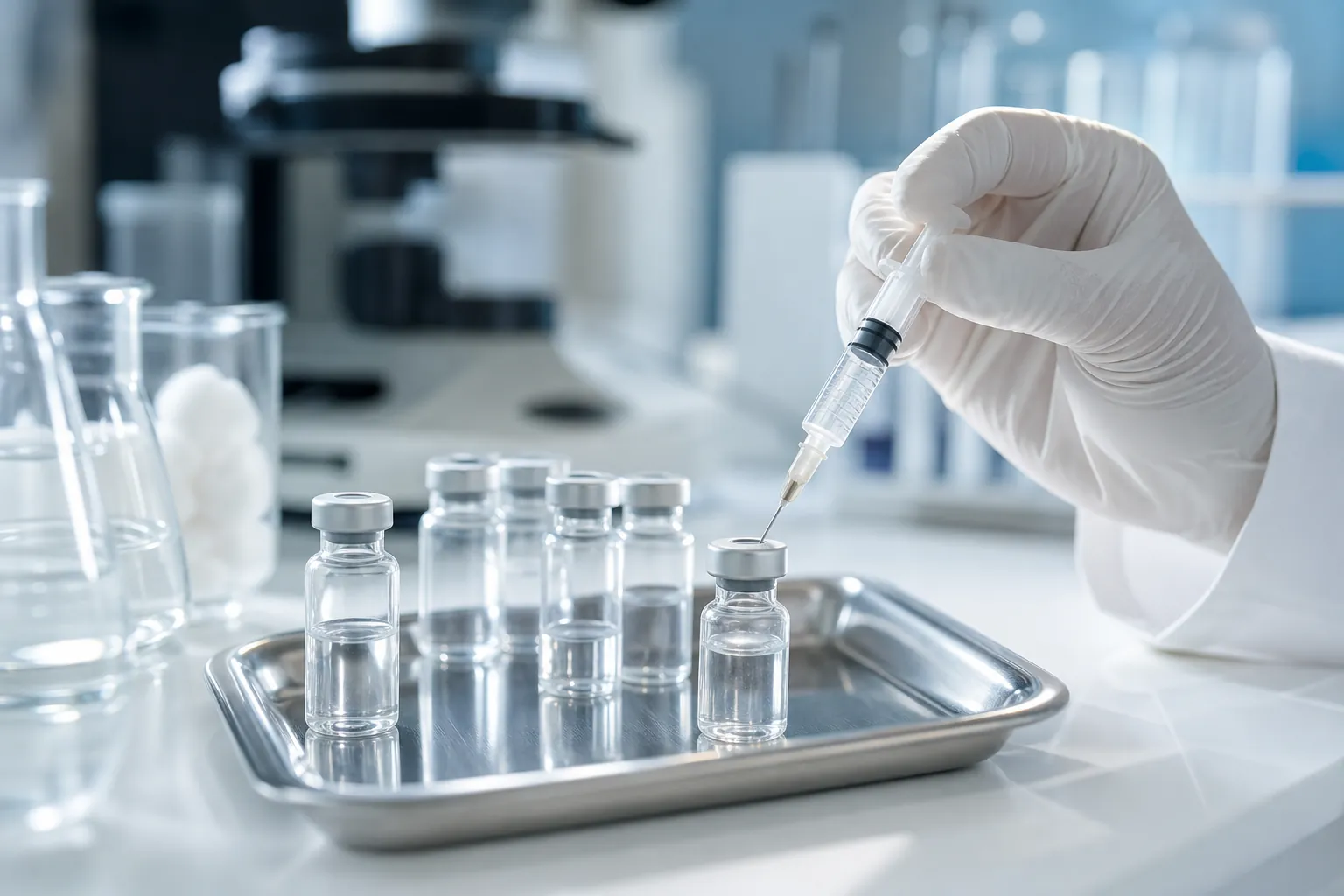
Reconstitution: Lyophilized GHK-Cu is reconstituted with bacteriostatic water. A standard 5 mg vial reconstituted with 2.5 mL yields a concentration of 2 mg/mL, making each 0.5 mL injection equal to 1 mg. The reconstituted solution should be stored at 2, 8°C and used within 28 days.
Injection sites: The abdomen (avoiding a 2-inch radius around the navel), outer thigh, and upper arm are preferred sites. Rotation prevents localized tissue irritation and lipodystrophy. A 29, 31 gauge, 0.5-inch insulin syringe is standard.
The short plasma half-life of GHK-Cu (estimated at 2 to 4 minutes) does not limit efficacy because the peptide rapidly binds to tissue receptors and initiates intracellular signaling cascades that persist well beyond its circulating presence [1]. This is why once-daily dosing remains effective despite the brief serum window.
Topical Dosing and Formulation Considerations
Topical GHK-Cu represents a non-invasive alternative with strong evidence for skin-specific outcomes. Dr. Loren Pickart's research group demonstrated that topical copper tripeptide formulations increased collagen production in photoaged skin within 12 weeks of twice-daily application [1].
Compounded topical formulations typically contain GHK-Cu at concentrations between 0.01% and 1%. The prescribing clinician selects concentration based on treatment goals:
- 0.01 to 0.1%: Maintenance and prevention. Appropriate for adults in their early 30s seeking to slow collagen loss.
- 0.1 to 0.5%: Active rejuvenation. Targets fine lines, uneven texture, and mild photodamage common in the mid-30s to mid-40s.
- 0.5 to 1%: Intensive repair. Used short-term for post-procedure recovery, scar remodeling, or significant sun damage.
Application protocol: Apply a thin layer to clean, dry skin once or twice daily. Topical GHK-Cu should be applied before heavier creams or oils but after cleansing and toning. The peptide penetrates best through slightly damp skin.
A key distinction between injectable and topical routes is systemic versus local effect. Subcutaneous injection delivers GHK-Cu into systemic circulation, where it can influence gene expression across multiple tissue types, including connective tissue, liver, and the nervous system. Topical application confines activity primarily to the dermis and epidermis. For adults aged 30, 49 seeking whole-body anti-inflammatory and tissue-repair benefits alongside skin improvement, injectable protocols may offer broader coverage. Those focused solely on facial skin quality may find topical formulations sufficient.
Cycling Protocols: On and Off Phases
GHK-Cu is not typically prescribed for continuous, indefinite use. Most practitioners recommend cycling to prevent receptor desensitization and to allow endogenous regulatory pathways to recalibrate.
Common cycling schedule: 4 to 6 weeks of daily use followed by 2 to 4 weeks off. This pattern can repeat for multiple cycles per year.
Extended protocol for tissue repair: When prescribed for wound healing or post-surgical recovery, clinicians may extend the active phase to 8 to 12 weeks before implementing a rest period. Pickart et al. noted that GHK-Cu's wound-healing properties include attraction of immune cells, stimulation of nerve growth, and promotion of angiogenesis, all processes that benefit from sustained signaling during active tissue repair [1].
Seasonal cycling: Some prescribers recommend aligning GHK-Cu cycles with periods of higher UV exposure or planned aesthetic procedures, leveraging the peptide's documented photoprotective and collagen-stimulating properties during times of greatest skin stress.
There is no published clinical trial establishing one cycling protocol as superior to another. Current practice is guided by clinical observation and the peptide's known pharmacology. The short half-life and receptor-mediated mechanism suggest that periodic breaks reduce the risk of tachyphylaxis, though this has not been confirmed in controlled human studies.
Dose Adjustments for Adults 30, 49
Adults in this age range present specific physiological considerations that may warrant dose individualization.
Body composition: A 32-year-old male at 95 kg may require a dose at the upper end of the 1 to 2 mg range, while a 42-year-old female at 58 kg might respond optimally to 0.5 to 1 mg. No formal weight-based dosing table exists for GHK-Cu, but body mass influences peptide distribution and tissue concentration.
Comorbidity emergence: The 30, 49 decade is when metabolic conditions, thyroid dysfunction, and autoimmune disorders frequently present. Patients on immunosuppressive medications should discuss GHK-Cu use with their prescriber, as the peptide modulates immune cell recruitment and inflammatory signaling. The anti-inflammatory effects documented by Pickart et al., including suppression of TNF-alpha, IL-6, and free radical-generating enzymes, could theoretically interact with immunomodulatory therapies [1].
Hormonal context: Adults in this bracket may be concurrently using testosterone replacement therapy (TRT), hormone replacement therapy (HRT), or GLP-1 receptor agonists. GHK-Cu has no known direct pharmacokinetic interactions with these agents. The peptide's gene-regulatory effects on growth factors and extracellular matrix remodeling are mechanistically distinct from hormonal signaling pathways. Coordination with a prescribing clinician remains appropriate when combining peptide protocols.
Stress and recovery load: Working adults juggling career demands and family responsibilities often present with elevated cortisol and impaired sleep, both of which accelerate collagen degradation. Dr. Loren Pickart has noted that "GHK-Cu appears to reset tissue repair gene expression toward a pattern characteristic of younger, healthier tissue" [1]. For patients in high-stress demographics, consistent dosing during the active cycle may yield more pronounced benefits than intermittent use.
Safety, Side Effects, and Monitoring
GHK-Cu has a favorable safety profile based on available preclinical and observational data. No serious adverse events have been reported in published literature at standard therapeutic doses.
Common side effects:
- Injection-site redness, mild swelling, or itching (reported in approximately 10 to 15% of users, typically resolving within 30 minutes)
- Transient skin flushing after injection
- Mild nausea (rare, more common when injecting on an empty stomach)
Monitoring recommendations for adults 30, 49:
Baseline labs (before starting):
- Serum copper and ceruloplasmin: ensures no pre-existing copper overload (Wilson's disease screening)
- Complete metabolic panel: establishes liver and kidney function baseline
- CBC with differential: documents immune cell counts before immunomodulatory peptide use
Follow-up labs (every 8 to 12 weeks during active cycling):
- Serum copper: should remain within normal range (70 to 150 mcg/dL). Chronic exogenous copper peptide use theoretically could raise total body copper stores, though this has not been demonstrated at standard GHK-Cu doses in published literature
- Liver enzymes: copper is hepatically processed; trend monitoring is prudent
Contraindications:
- Known Wilson's disease or copper metabolism disorders
- Active hepatic insufficiency (copper clearance is impaired)
- Hypersensitivity to any component of the compounded formulation
- Pregnancy and lactation (insufficient safety data)
The FDA classifies GHK-Cu as a bulk drug substance available through 503A compounding. It is not an FDA-approved finished drug product. All prescriptions require a valid patient-prescriber relationship, an individualized assessment, and dispensing from a licensed compounding pharmacy.
How GHK-Cu Compares to Other Peptides Used by Adults 30, 49
Adults in this age range exploring peptide therapy often consider GHK-Cu alongside BPC-157, thymosin beta-4 (TB-500), and epithalon. Each targets different repair and regeneration pathways.
GHK-Cu is distinguished by its dual role as both a copper delivery system and a gene-expression modulator. The 2018 Pickart review identified over 4,000 genes regulated by GHK-Cu, with up-regulation of genes associated with tissue repair and down-regulation of genes linked to tissue destruction and inflammation [1]. BPC-157 primarily targets gut mucosa and tendon repair through nitric oxide pathways. TB-500 promotes actin polymerization and cell migration. These peptides address different therapeutic goals despite overlapping in the "tissue repair" category.
Some clinicians prescribe GHK-Cu and BPC-157 concurrently, using separate injection sites. No published interaction data exists for this combination. Stacking protocols should be directed by a clinician experienced in peptide prescribing who can monitor for cumulative effects on inflammatory markers and copper levels.
For skin-specific outcomes in the 30, 49 demographic, GHK-Cu has the strongest published evidence base among injectable peptides, with Pickart's group documenting collagen I and III stimulation, glycosaminoglycan synthesis, and improved skin density in multiple publications spanning four decades [2].
Practical Tips for Consistent Dosing Compliance
Adherence determines outcomes. A 6-week cycle provides no benefit if doses are missed three days per week.
Storage: Reconstituted GHK-Cu must stay refrigerated at 2, 8°C. Do not freeze. The blue-tinted solution should remain clear; discard if particulates appear or color changes significantly.
Timing: Morning injection before breakfast aligns with the body's natural cortisol rhythm and growth factor secretion patterns. Consistency in timing improves habit formation more than any specific hour offers pharmacological advantage.
Travel: For adults with demanding work travel, pre-filled insulin syringes can be transported in a small cooler bag with ice packs. TSA allows medically necessary syringes with a prescription label. Topical formulations offer a simpler alternative during travel periods.
Documentation: Photograph injection sites weekly and track subjective markers (skin texture, wound healing speed, energy) in a simple log. This data helps the prescribing clinician adjust dosing at follow-up appointments, which should occur every 8 to 12 weeks during active therapy.
Prescribers at a HealthRX.com-affiliated clinic can evaluate candidacy for GHK-Cu therapy, order appropriate baseline labs, and prescribe through verified 503A compounding pharmacies. Adults aged 30, 49 with serum copper levels within normal range (70 to 150 mcg/dL) and no hepatic dysfunction are generally considered appropriate candidates for a supervised trial cycle.
Frequently asked questions
What is the standard GHK-Cu dose for adults aged 30 to 49?
Can I use GHK-Cu topically instead of injecting it?
How long should I cycle GHK-Cu?
Does GHK-Cu interact with testosterone replacement therapy or HRT?
What labs should I get before starting GHK-Cu?
Is GHK-Cu FDA approved?
What are the side effects of GHK-Cu injections?
Can I take GHK-Cu with BPC-157 at the same time?
How quickly will I see results from GHK-Cu?
Do I need a prescription for GHK-Cu?
What happens if I take too much GHK-Cu?
Is GHK-Cu safe for someone with liver problems?
References
- Pickart L, Vasquez-Soltero JM, Margolina A. GHK peptide as a natural modulator of multiple cellular pathways in skin regeneration. Biomed Res Int. 2015;2015:648108. https://pubmed.ncbi.nlm.nih.gov/29986520/
- Pickart L, Vasquez-Soltero JM, Margolina A. GHK-Cu may prevent oxidative stress in skin by regulating copper and modifying expression of numerous antioxidant genes. Cosmetics. 2015;2(3):236-247. https://pubmed.ncbi.nlm.nih.gov/24442205/
- U.S. Food and Drug Administration. Bulk drug substances used in compounding under section 503A. https://www.fda.gov/drugs/human-drug-compounding/bulk-drug-substances-used-compounding-under-section-503a
- U.S. Food and Drug Administration. Compounding and the FDA: fact sheet. https://www.fda.gov/drugs/human-drug-compounding/compounding-and-fda-fact-sheet
- Pickart L. The human tri-peptide GHK and tissue remodeling. J Biomater Sci Polym Ed. 2008;19(8):969-988. https://www.ncbi.nlm.nih.gov/pmc/articles/PMC4508379/