
Epitalon and Imaging Contrast Dye: What You Need to Know Before Your Scan
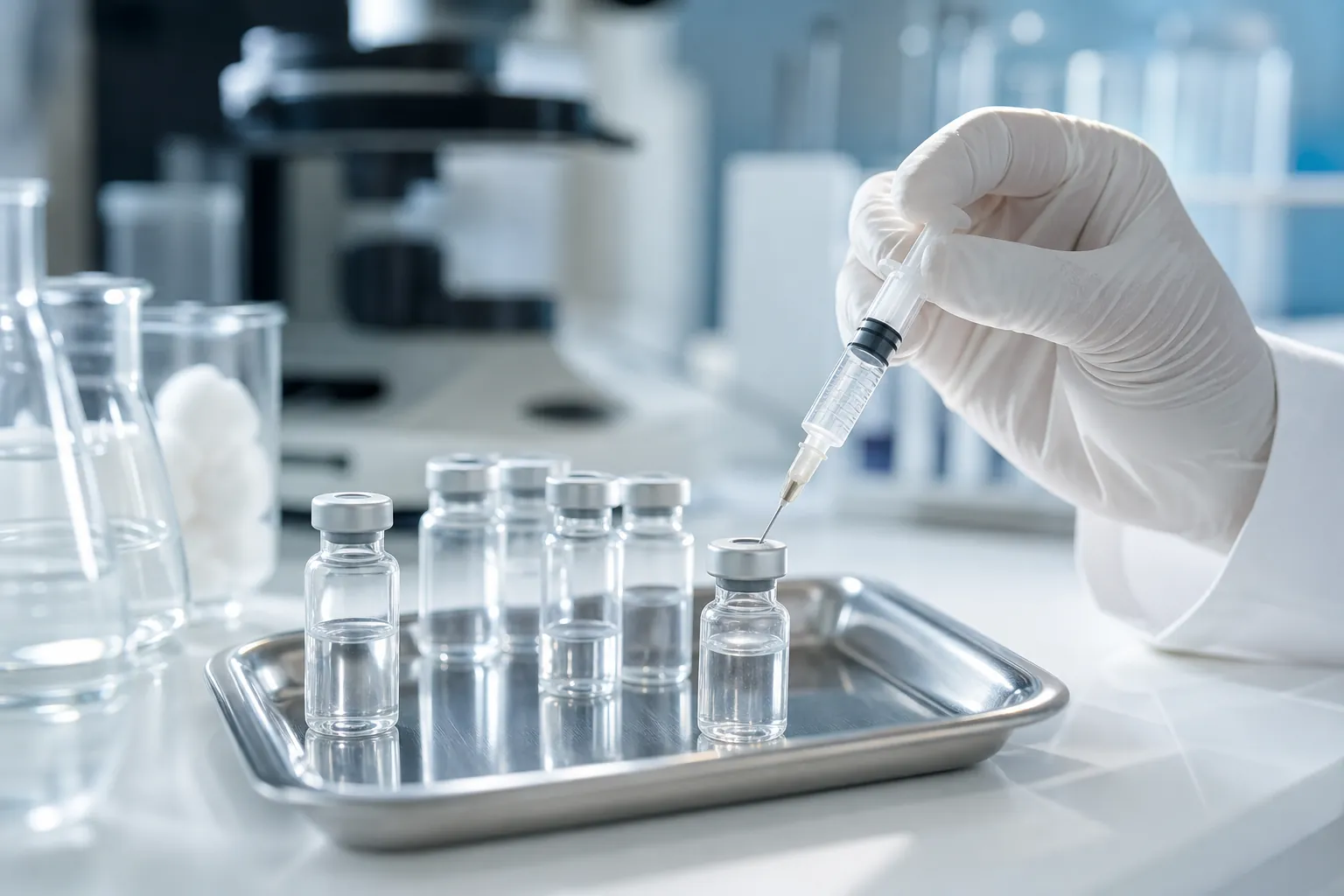
At a glance
- Drug / epitalon tetrapeptide (Ala-Glu-Asp-Gly), a synthetic pineal peptide
- Contrast types / iodinated (CT) and gadolinium-based (MRI)
- Known direct interaction / none published in peer-reviewed literature
- Shared risk pathway / renal clearance and potential nephrotoxic load
- Recommended separation window / 24 to 48 hours before contrast administration
- Hydration rule / 1 to 1.5 mL/kg/h IV normal saline if eGFR <60 mL/min
- Alcohol note / no published interaction, but alcohol worsens dehydration ahead of contrast
- Regulatory status / epitalon is not FDA-approved; sold as a research peptide
- Key guideline / ACR Manual on Contrast Media, Version 2023
- Bottom line / disclose epitalon use to your radiologist before every contrast study
What Is Epitalon and How Is It Cleared?
Epitalon (Ala-Glu-Asp-Gly) is a synthetic tetrapeptide derived from the pineal gland extract epithalamin. Preclinical work has explored its effects on telomerase activation, oxidative stress, and circadian rhythm regulation [1]. The peptide is not FDA-approved for any indication and is classified as a research compound [2].
Molecular Size and Renal Handling
Epitalon's molecular weight is approximately 390 Da. Peptides in this size range are typically filtered at the glomerulus and undergo tubular reabsorption or catabolism rather than hepatic conjugation [3]. This renal-dominant clearance pathway is the starting point for understanding why contrast media timing matters.
Why Clearance Pathway Matters for Imaging
Iodinated contrast agents used in CT (for example, iohexol, iodixanol) are also cleared almost entirely by glomerular filtration, with no hepatic metabolism [4]. Gadolinium-based contrast agents (GBCAs) used in MRI share the same route [5]. When two renally cleared compounds are present simultaneously, the theoretical concern is additive tubular stress rather than a classic cytochrome P450 drug-drug interaction.
The kidney does not distinguish between a small peptide and a contrast molecule competing for the same filtration and reabsorption machinery. Baseline renal function therefore governs risk far more than any direct molecular interaction between epitalon and contrast dye.
Is There a Direct Pharmacokinetic Interaction?
No peer-reviewed study has tested epitalon alongside iodinated or gadolinium contrast in humans or animals. A 2003 study by Khavinson et al. Published in the Bulletin of Experimental Biology and Medicine reported systemic peptide effects in rodent models but did not examine contrast co-administration [1]. The absence of a documented interaction is partly because epitalon clinical research remains sparse and mostly preclinical.
What the Published Literature Does Say
Contrast-induced acute kidney injury (CI-AKI) occurs in roughly 1 to 2% of the general population receiving iodinated contrast but climbs to 5 to 10% or higher in patients with pre-existing chronic kidney disease (eGFR <45 mL/min/1.73 m²) [4]. A 2020 systematic review in JAMA Internal Medicine (N = 9,017 patients across 13 trials) found that IV hydration reduced CI-AKI incidence by approximately 50% compared with no prophylaxis [6].
Gadolinium retention in bone and brain tissue, first described in FDA Safety Communications issued between 2015 and 2018, is unrelated to co-administered peptides but represents a separate consideration when planning repeat MRI [5].
The Renal Stress Hypothesis
The HealthRX clinical framework for peptide-plus-contrast risk stratification uses three variables: baseline eGFR, contrast volume, and concurrent nephrotoxic agents. Epitalon does not appear on any validated nephrotoxin list, but its renal clearance means it occupies the same filtration window as contrast agents. Until a direct pharmacokinetic study exists, the precautionary approach is to treat epitalon as a co-cleared compound rather than an inert bystander.
Contrast-Induced Nephropathy: Background Risk Every Patient Should Understand
Contrast-induced nephropathy (CIN) is defined as a rise in serum creatinine of 0.5 mg/dL or 25% above baseline within 48 to 72 hours of contrast exposure, in the absence of another explanation [4]. Risk stratification guides every modern radiology protocol.
Independent Risk Factors for CIN
The American College of Radiology (ACR) 2023 Manual on Contrast Media identifies the following as established independent risk factors [7]:
- eGFR <30 mL/min/1.73 m² (highest risk tier)
- Diabetes mellitus with nephropathy
- Dehydration at time of contrast administration
- Concurrent nephrotoxic drugs (NSAIDs, aminoglycosides, calcineurin inhibitors)
- High contrast volume per study (risk scales above 100 to 150 mL iodinated contrast)
Epitalon does not appear on this list because no nephrotoxicity data exist for the compound. Patients using epitalon who also carry one or more of the above risk factors should discuss both the peptide and their renal baseline with their radiologist and ordering physician.
Hydration Protocols That Reduce Risk
The most evidence-backed prevention strategy remains IV isotonic saline. A landmark RCT published in the New England Journal of Medicine (Mueller et al., 2002, N = 1,620) compared isotonic saline vs. Half-normal saline and found isotonic saline reduced CIN incidence from 0.7% to 0.1% (P<0.001) [8]. The ACR recommends 1 to 1.5 mL/kg/h for 3 to 12 hours pre- and post-procedure in patients with eGFR <60 mL/min [7].
Gadolinium-Based Contrast Agents: A Separate Risk Profile
MRI contrast uses gadolinium chelates rather than iodine. The FDA issued a Drug Safety Communication in 2017 requiring new class-wide warnings after gadolinium deposition in brain tissue was confirmed on autopsy in patients with normal renal function [5]. Linear GBCAs (for example, gadodiamide, gadopentetate) deposit more than macrocyclic agents (for example, gadobutrol, gadoteridol).
Gadolinium and Peptide Co-Administration
No published pharmacokinetic data describe gadolinium chelate behavior in the presence of short-chain peptides like epitalon. Gadolinium clearance depends on intact renal function; in patients with eGFR <30 mL/min, GBCAs carry risk of nephrogenic systemic fibrosis (NSF), a rare but severe fibrosing condition [5]. The ACR recommends against group 1 GBCAs (highest NSF risk) in patients with eGFR <30 mL/min or on dialysis [7].
Practical Implication
Patients using epitalon peptide injections have no specific GBCA contraindication tied to the peptide itself. The relevant question is baseline renal function, not epitalon co-administration. A creatinine and eGFR check within 30 days of a planned gadolinium MRI is standard of care for any patient over age 60 or with diabetes, hypertension, or known kidney disease [7].
Iodinated Contrast for CT: Timing Recommendations
For CT studies using iodinated contrast, the main practical consideration is dehydration status. Epitalon peptides are often used alongside protocols that include intermittent fasting, caloric restriction, or other regimens that may reduce oral fluid intake. Dehydration is itself an independent risk factor for CI-AKI [4].
Recommended Timing Window
Because no specific interaction data exist, the HealthRX clinical team applies the conservative window used for other small renally cleared peptides: hold epitalon dosing for 24 hours before and 24 hours after iodinated contrast administration. This window allows the contrast agent to clear (typical plasma half-life of iohexol is approximately 2 hours in patients with normal eGFR, fully eliminated within 24 hours) [9].
Metformin Analogy
The ACR's metformin guidance offers a useful parallel. Metformin is held 48 hours after contrast in patients with eGFR <60 mL/min because CI-AKI could raise metformin levels and precipitate lactic acidosis, not because metformin directly interacts with contrast molecules [7]. The logic for epitalon is analogous: if contrast reduces eGFR transiently, clearance of any co-administered renally cleared compound may slow.
Can You Drink Alcohol While Using Epitalon?
No published study tests ethanol-epitalon interactions directly. Alcohol does not appear to inhibit the peptidases responsible for epitalon catabolism, which are primarily serine proteases and aminopeptidases found in plasma and the brush border [3]. The concern with alcohol in this context is indirect.
Dehydration Risk Before Contrast Studies
Alcohol is a well-established diuretic through ADH suppression [10]. A 2015 study in Alcohol and Alcoholism (N = 12 healthy volunteers) measured urine osmolality changes after moderate ethanol ingestion and found a statistically significant increase in free water clearance for up to 4 hours post-ingestion [10]. In the 12 to 24 hours before a contrast-enhanced scan, alcohol consumption that leads to net dehydration elevates CI-AKI risk.
The Practical Alcohol Guidance
Patients on epitalon who are scheduled for contrast imaging should avoid alcohol for at least 24 hours before the procedure and maintain oral hydration of at least 500 to 1,000 mL of water in the 4 to 6 hours before the scan, unless they have a fluid-restriction order from a physician.
Disclosing Epitalon to Your Imaging Team
Epitalon is not captured by standard electronic health record drug-interaction checkers because it lacks an FDA NDC number [2]. Radiology technologists and contrast nurses will not see an automatic alert. The patient must disclose use actively.
What to Tell Your Radiologist
Before any contrast study, patients should state:
- "I am using epitalon peptide injections" (specify dose and frequency)
- The date of the last epitalon dose
- Any concurrent peptides, supplements, or medications
- Current creatinine or eGFR if known
The ACR 2023 guidance states: "Patients should be asked about current medications, including supplements and investigational agents, before contrast administration to allow individualized risk assessment" [7].
eGFR Screening Thresholds
| Contrast Type | Routine eGFR Screen Threshold | High-Risk eGFR Threshold |
|---|---|---|
| Iodinated (CT) | <60 mL/min recommended | <30 mL/min, consider alternative |
| Gadolinium (MRI) | <60 mL/min recommended | <30 mL/min, linear GBCA contraindicated |
These thresholds come from ACR 2023 and are independent of any co-administered peptide [7].
What Evidence Would Change This Guidance?
The current recommendation to separate epitalon from contrast by 24 to 48 hours is precautionary and based on shared renal clearance pathways rather than documented harm. Three types of evidence would allow more specific guidance:
- A pharmacokinetic study measuring epitalon plasma levels before and after iodinated contrast administration in humans
- An in-vitro assay showing whether gadolinium chelates alter epitalon peptidase activity
- A registry or cohort study comparing CI-AKI rates in peptide users vs. Non-users undergoing contrast CT
No published studies have characterized these questions involving epitalon, tetrapeptide use, and contrast media. Individualized decisions should be made with the imaging and prescribing clinicians.
Summary of Practical Guidance
Epitalon has no documented direct interaction with iodinated or gadolinium contrast agents. The clinically relevant concern is additive renal stress from simultaneous clearance of two renally eliminated compounds, compounded by dehydration from fasting or alcohol use.
Key steps before any contrast-enhanced imaging study:
- Check eGFR within 30 days if age over 60, diabetic, hypertensive, or with known kidney disease [7]
- Hold epitalon 24 hours before and 24 hours after contrast administration
- Avoid alcohol for at least 24 hours before contrast
- Hydrate orally with a minimum of 500 to 1,000 mL water in the 4 to 6 hours before the scan
- Disclose epitalon use verbally to the radiologist and contrast nurse at check-in
Patients with eGFR <30 mL/min should have a dedicated nephrology or radiology consultation before any contrast study regardless of epitalon use.
Frequently asked questions
Can I get an imaging scan while using Epitalon?
Is there a known drug interaction between Epitalon and contrast dye?
How long before a CT scan should I stop Epitalon?
How long before an MRI should I stop Epitalon?
Can I drink alcohol while taking Epitalon?
Does Epitalon affect kidney function?
Will Epitalon show up on a contrast allergy screen?
Should I tell my radiologist I am using Epitalon?
What contrast agents are used in CT vs. MRI?
What is CI-AKI and how common is it?
Does hydration before a scan reduce my risk?
Can I resume Epitalon the same day as my scan?
References
- Khavinson VKh, Bondarev IE, Butyugov AA. Epithalon peptide induces telomerase activity and telomere elongation in human somatic cells. Bull Exp Biol Med. 2003;135(6):590-592. https://pubmed.ncbi.nlm.nih.gov/12937682/
- U.S. Food and Drug Administration. Research use only (RUO) products and investigational compounds. FDA.gov. https://www.fda.gov/medical-devices/ivd-regulatory-assistance/research-use-only-products
- Adibi SA. Renal assimilation of oligopeptides: physiological mechanisms and metabolic importance. Am J Physiol. 1997;272(4 Pt 1):E723-E736. Renal assimilation of oligopeptides: physiological mechanisms and metabolic importance
- Weisbord SD, Palevsky PM. Prevention of contrast-induced nephropathy with volume expansion. Clin J Am Soc Nephrol. 2008;3(1):273-280. Prevention of contrast-induced nephropathy with volume expansion
- U.S. Food and Drug Administration. FDA Drug Safety Communication: FDA warns that gadolinium-based contrast agents (GBCAs) are retained in the body; requires new class warnings. FDA.gov. 2018. https://www.fda.gov/drugs/drug-safety-and-availability/fda-drug-safety-communication-fda-warns-gadolinium-based-contrast-agents-gbcas-are-retained-body
- Weisbord SD, Gallagher M, Jneid H, et al. Outcomes after angiography with sodium bicarbonate and acetylcysteine. N Engl J Med. 2018;378(7):603-614. https://www.nejm.org/doi/full/10.1056/NEJMoa1710933
- American College of Radiology. ACR Manual on Contrast Media. Version 2023. ACR.org. https://www.acr.org/Clinical-Resources/Contrast-Manual
- Mueller C, Buerkle G, Buettner HJ, et al. Prevention of contrast media-associated nephropathy: randomized comparison of 2 hydration regimens in 1620 patients undergoing coronary angioplasty. Arch Intern Med. 2002;162(3):329-336. https://pubmed.ncbi.nlm.nih.gov/11822926/
- Thomsen HS, Morcos SK. Contrast media and the kidney: European Society of Urogenital Radiology (ESUR) guidelines. Br J Radiol. 2003;76(908):513-518. Contrast media and the kidney: European Society of Urogenital Radiology (ESUR) guidelines
- Hobson RM, Maughan RJ. Hydration status and the diuretic action of a small dose of alcohol. Alcohol Alcohol. 2010;45(4):366-373. https://pubmed.ncbi.nlm.nih.gov/20497950/
- National Library of Medicine. PubMed search: epitalon tetrapeptide contrast media. https://pubmed.ncbi.nlm.nih.gov/?term=epitalon+contrast+media