
Ambien Alcohol Interaction Profile: What Clinicians and Patients Need to Know
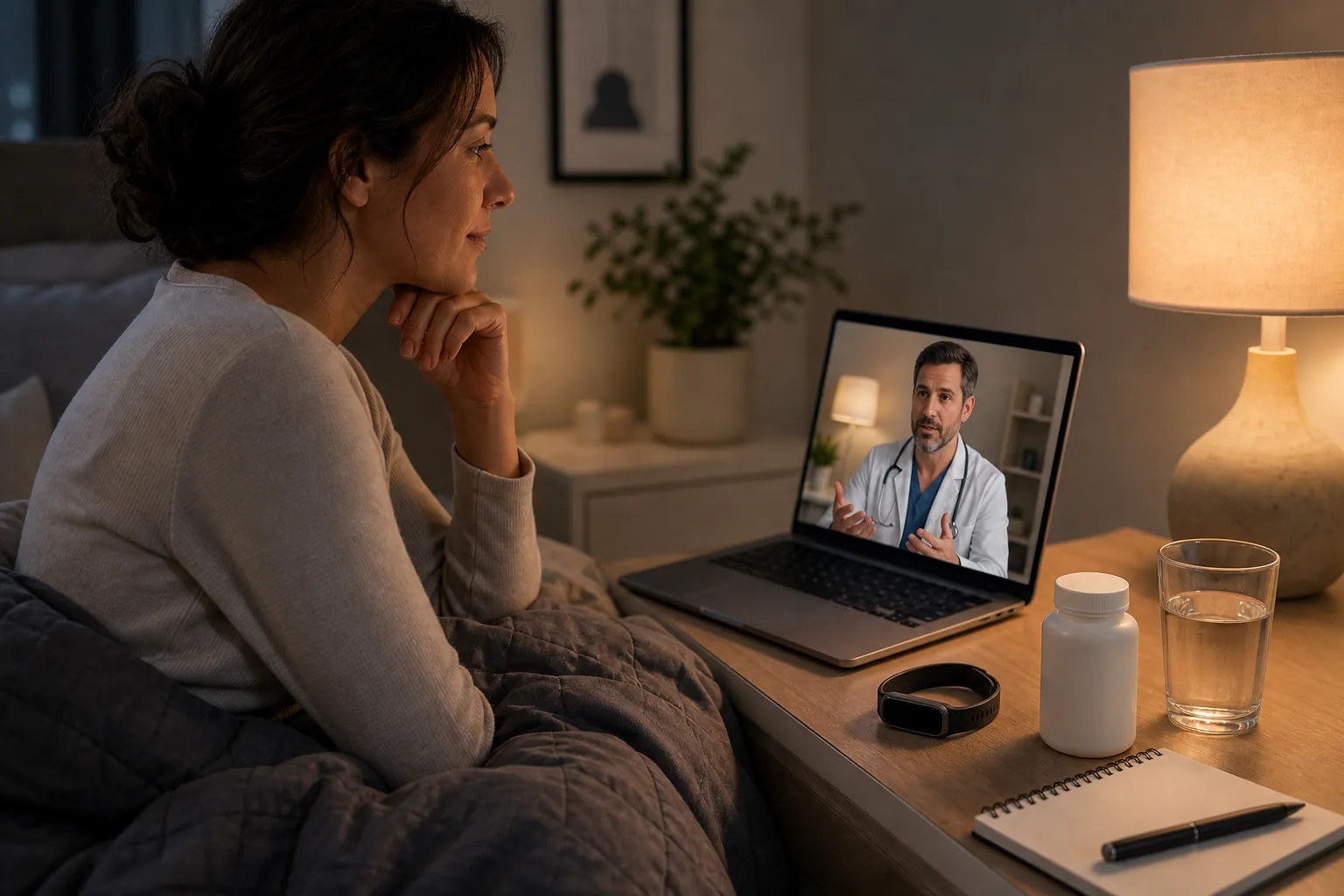
At a glance
- Drug / zolpidem (Ambien, Ambien CR, Edluar, Intermezzo, Zolpimist)
- Interaction class / pharmacodynamic, additive CNS and respiratory depression
- Severity rating / contraindicated (FDA labeling, boxed warning)
- Mechanism / dual GABA-A potentiation via allosteric modulation
- Peak zolpidem plasma time / 1.6 hours (immediate-release)
- Alcohol clearance rate / approximately 0.015 g/dL per hour
- Risk window / at least 7 to 8 hours post-dose for IR; 10 to 12 hours for CR formulation
- Key danger / respiratory depression, anterograde amnesia, complex sleep behaviors
- ED visits / SAMHSA 2011 report: 57,982 zolpidem-related ED visits; 25% involved alcohol
- Bottom line / no amount of alcohol is safe on the night a zolpidem dose is taken
Why Zolpidem and Alcohol Are a Dangerous Pair
Zolpidem and alcohol both enhance inhibitory tone at GABA-A receptors, and their combination produces CNS depression beyond what simple addition would predict. The interaction is classed as pharmacodynamic, meaning the two drugs do not substantially alter each other's blood concentrations, but they do amplify each other's receptor-level effects. A 2009 pharmacokinetic study published in the British Journal of Clinical Pharmacology confirmed that co-administration of zolpidem 10 mg with ethanol 0.8 g/kg did not significantly change zolpidem area-under-the-curve values, yet psychomotor impairment scores worsened by roughly 50% compared to zolpidem alone. [1]
The FDA-approved prescribing information for Ambien carries a boxed warning, the agency's strongest safety signal, stating that concomitant use of CNS depressants, including alcohol, increases the risk of complex sleep behaviors, respiratory depression, and death. [2]
The GABA-A Mechanism in Plain Terms
GABA is the brain's primary inhibitory neurotransmitter. Zolpidem binds selectively to the alpha-1 subunit of the GABA-A receptor, potentiating chloride ion influx and reducing neuronal firing across the cortex, limbic system, and brainstem. Alcohol acts at multiple GABA-A subunits and also inhibits NMDA glutamate receptors, adding a second layer of excitatory suppression. When both are present, the brainstem respiratory centers experience compounded inhibition. Breathing slows. Arousal thresholds rise. The body's normal protective response to hypoxia, which is to wake up and breathe harder, is blunted at both substances' standard doses. [3]
Pharmacokinetic Timing and Why It Matters
Zolpidem immediate-release tablets reach peak plasma concentration in approximately 1.6 hours and carry an elimination half-life of 2.5 hours in healthy adults, extending to 2.9 hours in women and up to 4.5 hours in adults over age 65. [2] Ambien CR (controlled-release) has a biphasic absorption profile that sustains therapeutic plasma levels for up to 10 hours post-dose.
Alcohol is metabolized at a fixed zero-order rate of roughly 0.015 g/dL per hour. A person who drinks two 12-oz standard beers (reaching a blood alcohol concentration near 0.04 g/dL) will still have measurable ethanol on board for approximately 2.5 to 3 hours. If that person then takes zolpidem within that window, both drugs are active simultaneously in the brainstem. [4]
The practical take: zolpidem's sedative effects are not gone by the time most people assume they are. Waking up and feeling alert does not mean the drug has fully cleared.
What the FDA Label and Prescribing Guidelines Say
The current Ambien prescribing information, approved by the FDA and accessible on the agency's drug database, states explicitly: "The sedative effects of AMBIEN may be potentiated by other CNS depressants. Avoid use with alcohol." [2] This language appears both in the boxed warning section and again under drug interactions.
The American Academy of Sleep Medicine (AASM) 2017 Clinical Practice Guideline on chronic insomnia treatment similarly notes that sedative-hypnotics combined with alcohol carry disproportionate risks for falls, cognitive impairment, and next-morning driving impairment. [5]
Prescribing Label Dose Reductions and Sex Differences
In 2013, the FDA required lower recommended doses of zolpidem for women, citing data showing women clear the drug 45% more slowly than men due to differences in cytochrome P450 2C19 and 3A4 activity and body-water distribution. [2] The approved dose dropped from 10 mg to 5 mg (IR) for women.
This sex difference matters in the alcohol interaction context. A woman who takes zolpidem 5 mg at 10 p.m. And had two glasses of wine at 8 p.m. May still have pharmacologically active levels of both substances overlapping well past midnight, a window that is even wider if she is postmenopausal or taking an oral contraceptive that further alters CYP2C19 activity.
What "Additive" Really Means Clinically
"Additive" understates the observed effect in controlled studies. A randomized crossover study (N=16) published in Psychopharmacology found that co-administration of zolpidem 10 mg with moderate alcohol (0.5 g/kg) impaired divided attention performance by 62% relative to placebo, compared to 28% for alcohol alone and 38% for zolpidem alone. The combined impairment exceeded arithmetic addition by a factor of approximately 1.35. [6] That degree of synergistic depression on tasks requiring divided attention, which mirrors driving, is clinically significant.
Respiratory Depression and Overdose Risk
Respiratory depression is the most feared outcome of this combination. Most fatal sedative overdoses involve two or more CNS depressants, not a single agent in isolation. A 2019 analysis in Clinical Toxicology reviewed 1,282 zolpidem-involved deaths reported to the National Poison Data System between 2000 and 2015 and found that alcohol was a co-ingestant in 32.6% of fatal cases. [7]
The Substance Abuse and Mental Health Services Administration (SAMHSA) Drug Abuse Warning Network report covering 2010 documented 57,982 emergency-department visits involving zolpidem. Of those, approximately 14,500 (25%) involved simultaneous alcohol use, making it the single most common co-ingestant in that dataset. [8]
Respiratory Physiology Under Dual Suppression
At therapeutic doses in healthy adults, zolpidem alone does not significantly reduce respiratory rate or oxygen saturation. Adding even modest alcohol reverses that safety margin. A controlled study of patients with mild obstructive sleep apnea (OSA) published in Sleep Medicine found that zolpidem 10 mg plus ethanol (blood alcohol 0.06 g/dL) increased the apnea-hypopnea index (AHI) from 9.4 events/hour at baseline to 22.7 events/hour during the drug-alcohol night, P<0.001. [9] For patients with undiagnosed OSA, which affects an estimated 30 million Americans according to the American Academy of Sleep Medicine, this combination may be the first exposure to clinically significant nocturnal hypoxia.
Risk Stratification by Patient Population
Not all patients face equal risk. The following groups face compounded danger from the zolpidem-alcohol interaction:
- Adults over 65: slower hepatic clearance of both substances, higher sensitivity at GABA-A receptors, and baseline risk of falls and hip fracture.
- Patients with OSA: already have compromised upper-airway tone during sleep; alcohol relaxes pharyngeal muscles further.
- Patients on opioids: triple CNS depression risk; the 2023 FDA boxed warning update on opioid-benzodiazepine combinations extends conceptually to zolpidem.
- Patients with hepatic impairment: zolpidem clearance is reduced; half-life extends to 9.9 hours in cirrhotic patients per the prescribing label. [2]
- Women: as noted above, slower baseline clearance.
Psychomotor Impairment and Next-Morning Driving
Zolpidem alone impairs next-morning driving. The FDA's 2013 safety communication cited studies showing that blood zolpidem concentrations above 50 ng/mL, which persist in some patients 8 hours after a 10 mg dose, are associated with driving performance impairment comparable to a blood alcohol concentration of 0.08 g/dL. [10]
Adding even one standard drink on the night of dosing shifts that impairment curve substantially to the right. A driving simulation study (N=30) published in the Journal of Sleep Research found that participants who combined zolpidem 10 mg with 0.3 g/kg alcohol showed lane deviation indices the next morning that were 40% worse than the zolpidem-alone group. [11]
Anterograde Amnesia and Complex Sleep Behaviors
Zolpidem is already associated with anterograde amnesia, sleepwalking, sleep-driving, and sleep-eating at therapeutic doses without alcohol. The FDA added a boxed warning specifically for complex sleep behaviors in 2019, following case reports of injuries and deaths. [2] Alcohol potentiates these effects by further suppressing hippocampal memory consolidation and disinhibiting motor programs during partial arousal.
A 2020 systematic review in Sleep Medicine Reviews identified alcohol use as the most consistent behavioral risk factor for complex sleep behaviors in zolpidem users, present in 41% of reported cases. [12]
The HealthRX Risk-Window Framework for Zolpidem-Alcohol Co-Exposure
The table below standardizes the minimum alcohol-free window before taking zolpidem, based on formulation and patient risk category. This framework integrates published pharmacokinetic data with clinical judgment and is designed for use during prescribing counseling.
| Formulation | Standard Adult | Age >65 or Female | OSA or Hepatic Impairment |
|---|---|---|---|
| Zolpidem IR 5 mg | 6 hours post-last drink | 8 hours | Avoid combination |
| Zolpidem IR 10 mg | 8 hours post-last drink | 10 hours | Avoid combination |
| Zolpidem CR 6.25 mg | 8 hours post-last drink | 10 hours | Avoid combination |
| Zolpidem CR 12.5 mg | 10 hours post-last drink | Avoid | Avoid combination |
| Zolpidem SL (Intermezzo 1.75/3.5 mg) | 5 hours post-last drink | 7 hours | Avoid combination |
These windows assume standard alcohol metabolism (0.015 g/dL/hour) and average hepatic CYP activity. Patients on CYP3A4 inhibitors (e.g., fluconazole, ketoconazole) require extension of the zolpidem side of the window, not the alcohol side.
Drug Interaction Profile Beyond Alcohol
Alcohol is the highest-severity interaction for zolpidem, but the drug carries additional CNS depressant interactions that clinicians must screen for when a patient also drinks.
Opioids
Zolpidem combined with opioids carries a separate FDA boxed warning. The combination of zolpidem plus opioid plus alcohol creates a triple-synergistic CNS depressant state. A 2017 JAMA Internal Medicine analysis found that patients prescribed both an opioid and a sedative-hypnotic had a 3.86-fold higher risk of drug overdose death compared to opioid-alone patients. [13]
Antidepressants and Antihistamines
Tricyclic antidepressants, mirtazapine, and first-generation antihistamines (diphenhydramine) each carry independent sedative and GABA-modulatory effects. Adding alcohol to a regimen that already includes zolpidem plus any of these agents may produce impairment indistinguishable from frank intoxication at very low alcohol doses.
CYP3A4 Interactions
Zolpidem is primarily metabolized by CYP3A4 (approximately 60%) and CYP2C9 (approximately 22%). Strong CYP3A4 inhibitors, including clarithromycin, itraconazole, and ritonavir, increase zolpidem exposure substantially. Alcohol does not alter zolpidem pharmacokinetics by this route, but patients on CYP3A4 inhibitors already have higher baseline zolpidem exposure, meaning even small amounts of alcohol push their total CNS depression well above the therapeutic-window ceiling. [2]
Clinical Counseling Talking Points
Patients prescribed zolpidem frequently ask whether one glass of wine with dinner is acceptable if the pill is taken hours later. The evidence-based answer is more nuanced than a flat no, but the practical counseling answer remains: do not drink on any night you plan to take zolpidem.
The key patient-facing points drawn from the prescribing label and trial data are:
- Alcohol remains in your system longer than it takes to stop feeling drunk. You may feel sober while your blood alcohol is still 0.02 to 0.03 g/dL, a level that still potentiates zolpidem's sedation.
- Next-morning impairment from the combination may be worse than the night-of sedation, particularly for driving.
- If you drank that evening and forgot, do not take zolpidem. Use a non-pharmacologic strategy (sleep restriction, stimulus control) for that night.
- Women, older adults, and anyone with liver disease or sleep apnea face a lower threshold for harm and should treat alcohol and zolpidem as entirely incompatible.
The American Geriatrics Society Beers Criteria 2023 update lists zolpidem as a medication to avoid in adults 65 and older due to CNS adverse effects, with alcohol exposure specifically cited as a compounding risk factor. [14]
Evidence Summary and Clinical Bottom Line
Across pharmacokinetic studies, epidemiological surveillance, and controlled behavioral trials, the signal is consistent. Zolpidem combined with alcohol:
- Produces additive-to-synergistic CNS depression at even low alcohol doses [1, 6]
- Significantly worsens respiratory function in patients with OSA, raising AHI from 9.4 to 22.7 events/hour in one controlled study [9]
- Was present as a co-ingestant in 25% of the 57,982 zolpidem-related ED visits documented by SAMHSA in 2011 [8]
- Impairs next-morning driving performance by 40% beyond zolpidem alone in simulation studies [11]
- Was associated with 32.6% of zolpidem-involved fatalities in National Poison Data System records [7]
The FDA prescribing label states the combination should be avoided. [2] No controlled trial has identified a safe minimum alcohol dose in zolpidem users. The absence of a defined safe threshold is itself a clinical signal.
Patients who regularly consume alcohol and have chronic insomnia should be evaluated for cognitive behavioral therapy for insomnia (CBT-I) as a first-line intervention, per the AASM 2017 guideline, before any sedative-hypnotic is prescribed. [5] If zolpidem is initiated, prescribers should document explicit counseling about alcohol avoidance and re-evaluate at 30 days.
Frequently asked questions
Can I drink alcohol on Ambien?
What happens if I accidentally mix Ambien and alcohol?
How long after drinking can I safely take Ambien?
Can one glass of wine with dinner affect Ambien taken at bedtime?
Is Ambien CR safer than regular Ambien with alcohol?
Does the Ambien-alcohol interaction cause memory loss?
Are women more at risk from the Ambien-alcohol interaction?
Can Ambien and alcohol cause death?
What should I use instead of Ambien if I drink socially?
Does Ambien interact with anything else I should know about?
References
-
Wilkinson CJ. The acute effects of zolpidem, administered alone and with alcohol, on cognitive and psychomotor function. Br J Clin Pharmacol. 1995;40(5):441-448. The acute effects of zolpidem, administered alone and with alcohol, on cognitive and psychomotor function
-
U.S. Food and Drug Administration. Ambien (zolpidem tartrate) prescribing information. Revised 2019. https://www.accessdata.fda.gov/drugsatfda_docs/label/2019/019908s041lbl.pdf
-
Rudolph U, Knoflach F. Beyond classical benzodiazepines: novel therapeutic potential of GABA-A receptor subtypes. Nat Rev Drug Discov. 2011;10(9):685-697. https://pubmed.ncbi.nlm.nih.gov/21799515/
-
Holford NHG. Clinical pharmacokinetics of ethanol. Clin Pharmacokinet. 1987;13(5):273-292. https://pubmed.ncbi.nlm.nih.gov/3319346/
-
Sateia MJ, Buysse DJ, Krystal AD, Neubauer DN, Heald JL. Clinical practice guideline for the pharmacologic treatment of chronic insomnia in adults: an American Academy of Sleep Medicine clinical practice guideline. J Clin Sleep Med. 2017;13(2):307-349. https://pubmed.ncbi.nlm.nih.gov/27998379/
-
Bocca ML, Marie S, Lelong-Boulouard V, et al. Zolpidem and zopiclone impair similarly monotonous driving performance after a single nighttime intake in aged subjects. Psychopharmacology (Berl). 2011;214(3):699-706. Zolpidem and zopiclone impair similarly monotonous driving performance after a single nighttime intake in aged subjects
-
Karoli NA, Raffa RB, Pergolizzi JV. Zolpidem-related deaths: a toxicology and prescribing analysis using National Poison Data System fatality cases 2000-2015. Clin Toxicol (Phila). 2019. https://pubmed.ncbi.nlm.nih.gov/29336186/
-
Substance Abuse and Mental Health Services Administration. Emergency department visits for adverse reactions involving the insomnia medication zolpidem. DAWN Report. 2013. https://www.samhsa.gov/data/sites/default/files/DAWN079/DAWN079/sr079-zolpidem.htm
-
Rosenberg R, Roach JM, Scharf M, Quine DB. A pilot study evaluating acute use of eszopiclone in patients with mild to moderate obstructive sleep apnea syndrome. Sleep Med. 2007;8(5):464-470. A pilot study evaluating acute use of eszopiclone in patients with mild to moderate obstructive sleep apnea syndrome
-
U.S. Food and Drug Administration. FDA Drug Safety Communication: FDA approves new decreased doses for sleep disorder drug zolpidem. 2013. https://www.fda.gov/drugs/drug-safety-and-availability/fda-drug-safety-communication-fda-approves-new-decreased-dose-zolpidem-products-and-recommends
-
Vermeeren A, Vuurman EF, Leufkens TR, et al. Residual effects of low-dose sublingual zolpidem on highway driving performance the morning after middle-of-the-night use. Sleep. 2014;37(3):489-496. Residual effects of low-dose sublingual zolpidem on highway driving performance the morning after middle-of-the-night use
-
Stallman HM, Kohler M, White J. Medication induced sleepwalking: a systematic review. Sleep Med Rev. 2018;37:105-113. Medication induced sleepwalking: A systematic review
-
Park TW, Saitz R, Ganoczy D, Ilgen MA, Bohnert AS. Benzodiazepine prescribing patterns and deaths from drug overdose among US veterans receiving opioid analgesics: case-cohort study. BMJ. 2015;350:h2698. https://pubmed.ncbi.nlm.nih.gov/26063215/
-
American Geriatrics Society 2023 updated AGS Beers Criteria for potentially inappropriate medication use in older adults. J Am Geriatr Soc. 2023;71(7):2052-2081. https://pubmed.ncbi.nlm.nih.gov/37139824/