
Ipamorelin Muscle Preservation Strategies: A Clinical Guide
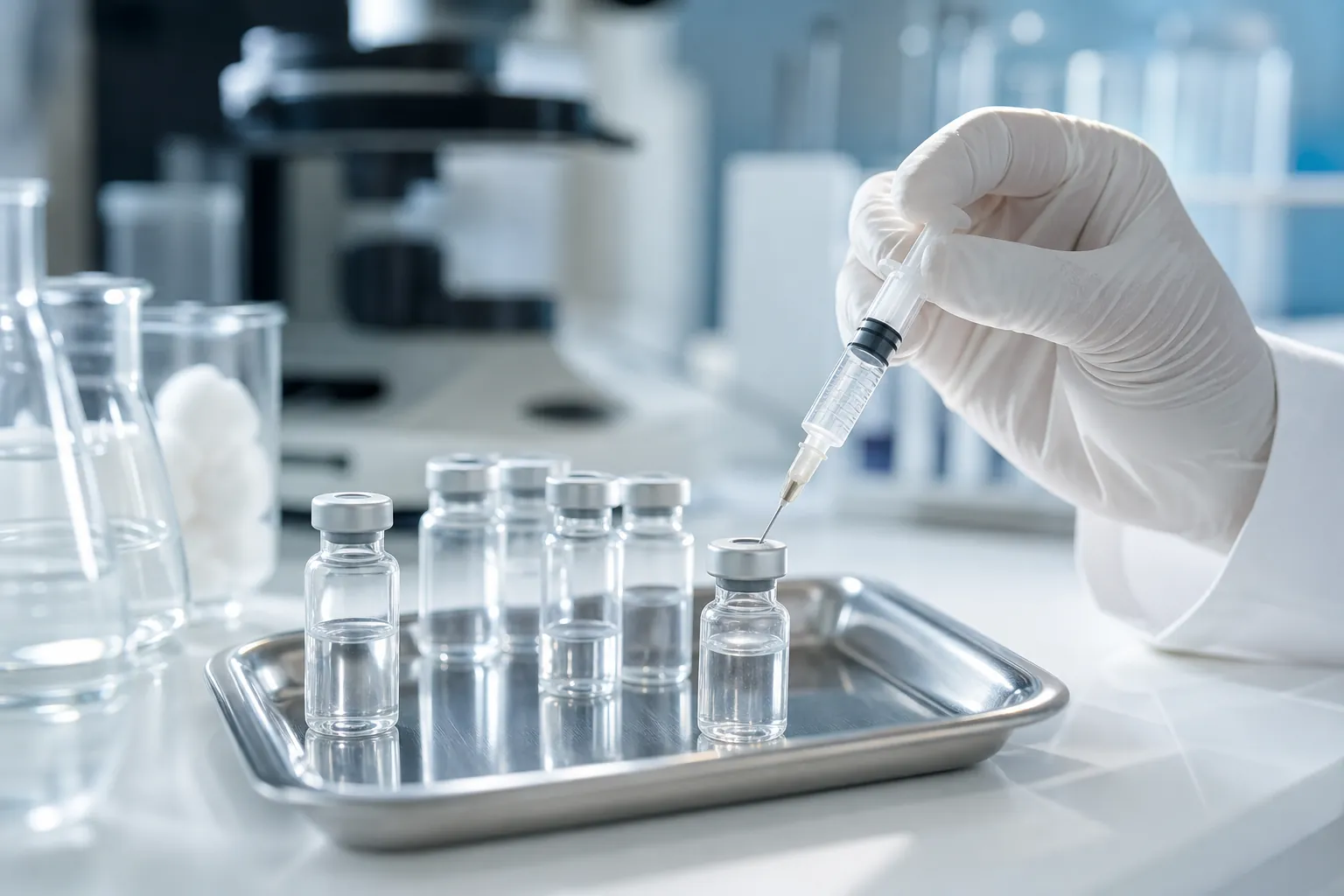
At a glance
- Drug class / selective GH secretagogue (ghrelin receptor agonist)
- Typical dose range / 200 to 300 mcg per injection, 2 to 3x daily
- Route / subcutaneous injection
- Key selectivity / GH release without meaningful cortisol or prolactin elevation (Raun et al., 1998)
- Primary muscle mechanism / IGF-1-mediated mTOR activation and nitrogen retention
- Regulatory status / 503A compounded prescription; not FDA-approved as a finished drug product
- Onset of detectable IGF-1 rise / approximately 2 to 4 weeks of consistent dosing
- Common cycle length / 12 to 24 weeks for body composition goals
- Best timing / pre-sleep or post-workout for alignment with endogenous GH pulsatility
- Contraindications / active malignancy, uncontrolled diabetes, pregnancy
What Is Ipamorelin and Why Does It Matter for Muscle?
Ipamorelin is a synthetic pentapeptide that binds selectively to the ghrelin receptor (GHS-R1a) in the pituitary and hypothalamus, triggering a sharp, pulsatile rise in endogenous GH. Unlike older secretagogues such as GHRP-2 or GHRP-6, it does not meaningfully increase cortisol, aldosterone, or prolactin at therapeutic doses. That selectivity is the central reason clinicians consider it for muscle preservation rather than simply prescribing higher-dose exogenous GH.
The landmark selectivity data come from Raun and colleagues, whose 1998 study in the European Journal of Endocrinology (N=18 male Wistar rats plus in-vitro pituitary cell assays) showed that ipamorelin produced GH secretion comparable to GHRP-6 while cortisol and prolactin remained at baseline levels 1. This profile has since shaped how compounding physicians position the peptide in muscle-preservation protocols.
The Cortisol Problem with Older Secretagogues
Cortisol is catabolic to skeletal muscle. Chronic cortisol elevation accelerates myofibrillar protein breakdown through ubiquitin-proteasome pathway upregulation, reduces satellite cell proliferation, and impairs insulin-mediated glucose uptake in myocytes. GHRP-2 and GHRP-6 both raise cortisol by 30 to 60% above baseline in human studies, which partially offsets the anabolic signal from the concurrent GH rise 1.
Ipamorelin's receptor pharmacology avoids this. The peptide shows high selectivity for GHS-R1a over corticotroph receptors, meaning the adrenal axis is not meaningfully recruited at standard clinical doses.
GH Pulsatility and Muscle Anabolism
Endogenous GH is secreted in pulses, predominantly overnight. Continuous GH exposure (as seen with daily subcutaneous recombinant GH injections) downregulates GH receptors in hepatic and muscle tissue over time. Pulsatile delivery preserves receptor sensitivity and produces more favorable IGF-1 kinetics 2. Because ipamorelin mimics a natural secretory burst rather than delivering a pharmacological bolus, it may maintain receptor responsiveness during longer cycles.
How Ipamorelin Supports Muscle Preservation at the Cellular Level
GH released by ipamorelin reaches the liver within minutes and stimulates hepatic IGF-1 synthesis. Circulating IGF-1 then binds IGF-1 receptors on skeletal muscle fibers, activating the PI3K/Akt/mTORC1 signaling axis. This cascade does four things relevant to muscle mass: it increases ribosomal protein synthesis, suppresses the muscle-atrophy transcription factors FoxO1 and FoxO3a, promotes satellite cell differentiation into new myofibers, and reduces autophagy-driven protein degradation.
IGF-1 and mTORC1: The Anabolic Core
MTORC1 phosphorylates S6K1 and 4E-BP1, both of which are rate-limiting for translation initiation. A 2001 analysis in Endocrinology confirmed that GH-stimulated IGF-1 elevations of even 20 to 30% above baseline are sufficient to produce measurable increases in fractional muscle protein synthesis rate in rodent models 2.
In healthy older adults, IGF-1 concentrations decline roughly 14% per decade after age 30, tracked across epidemiological data from the Baltimore Longitudinal Study of Aging 3. That progressive decline correlates with the 0.5 to 1% annual loss of lean mass known as sarcopenia. Ipamorelin-driven GH pulses that restore IGF-1 closer to youthful ranges may therefore slow this trajectory.
Nitrogen Retention and Protein Turnover
GH and IGF-1 both reduce urinary nitrogen excretion, a direct marker of net protein retention. Studies of exogenous recombinant GH in GH-deficient adults show nitrogen balance improvements of 1.5 to 3 g per day within the first two weeks of treatment 4. While direct nitrogen balance data for ipamorelin in humans are not yet published in the peer-reviewed literature, the shared downstream effector (IGF-1) makes this mechanism pharmacologically plausible and drives clinical extrapolation.
Satellite Cell Activation
Satellite cells are quiescent muscle stem cells that activate in response to mechanical loading or anabolic signaling. IGF-1, through the PI3K/Akt pathway, upregulates MyoD and myogenin expression in satellite cells, committing them to myogenic differentiation. This process underpins hypertrophic adaptation to resistance training and is impaired in sarcopenic tissue. The IGF-1 receptor density on satellite cells is approximately twice that on mature myofibers, making satellite cells particularly sensitive to GH secretagogue-driven IGF-1 pulses 5.
Clinical Dosing Protocols for Muscle Preservation
No FDA-approved dosing guideline exists for ipamorelin. The protocols described below are derived from 503A compounding practice, physician case series, and extrapolation from published GH secretagogue pharmacodynamic data.
Standard Muscle-Preservation Protocol
The most commonly prescribed regimen in U.S. Compounding practice is 200 to 300 mcg subcutaneously, administered two or three times per day. Injection timing matters. The two highest-priority windows are:
- Pre-sleep (30 to 60 minutes before bed). Endogenous GH secretion is highest during slow-wave sleep, roughly 60 to 90 minutes after sleep onset. Administering ipamorelin before sleep synchronizes the drug-induced pulse with the natural nocturnal surge, producing a larger composite peak without receptor desensitization.
- Post-resistance training (within 30 to 60 minutes). Exercise-induced GH release is synergistic with secretagogue stimulation. A combined ipamorelin dose in this window may amplify the anabolic signaling that follows mechanical muscle damage.
A fasted state at injection time enhances GH pulse amplitude. Somatostatin tone, which blunts GH release, rises postprandially in response to elevated glucose and free fatty acids. Waiting at least 90 minutes after a carbohydrate- or fat-containing meal before injecting ipamorelin produces a meaningfully larger GH response 6.
Cycle Length Considerations
Most physicians prescribing ipamorelin for body composition goals structure cycles of 12 to 24 weeks. Shorter cycles of 8 weeks are sometimes used for initial responder assessment. IGF-1 blood levels typically plateau around week 6 to 8 of consistent dosing and remain stable if injection frequency and timing are maintained. Monitoring serum IGF-1 at baseline, week 6, and week 12 allows dose titration to keep levels within the age-adjusted reference range (typically 100 to 300 ng/mL for adults aged 30 to 60) 7.
Dose Escalation and De-escalation
Some protocols begin at 100 mcg twice daily for the first two weeks to assess tolerability, then advance to 200 mcg twice or three times daily. Tapering at cycle end is not pharmacologically required (ipamorelin has a short half-life of approximately 2 hours), but some clinicians prefer a two-week taper to allow the hypothalamic-pituitary axis to re-establish its baseline pulse pattern without abrupt change.
Combination Strategies to Amplify Muscle Preservation
Ipamorelin alone generates a GH pulse via one receptor pathway. Stacking it with agents that act upstream or in parallel can extend pulse duration, increase pulse amplitude, or add complementary anabolic signals.
Ipamorelin Plus CJC-1295 (GHRH Analog)
The most widely prescribed combination in U.S. Telehealth practice pairs ipamorelin (GHS-R1a agonist) with CJC-1295 (a modified GHRH analog). They act on different receptors and produce a synergistic GH response that is substantially larger than either agent alone. The GHRH axis sets the amplitude ceiling; the ghrelin axis sets the timing and frequency of individual pulses. Together, they increase the area under the GH curve during each injection window.
A pharmacodynamic analysis of GHRH analog plus GHRP combinations published in the Journal of Clinical Endocrinology and Metabolism showed that co-administration of a GHRH analog with a GHRP produced GH AUC responses 2.6-fold greater than the GHRP alone 8. Typical clinical dosing uses a fixed-ratio compounded vial containing 1 mg CJC-1295 per 1 mg ipamorelin (1:1 ratio), administered at 250 to 500 mcg of the combination per injection.
Ipamorelin and Testosterone Replacement Therapy
In men with hypogonadism receiving testosterone replacement therapy (TRT), GH/IGF-1 axis optimization through ipamorelin may produce additive muscle-preservation effects. Testosterone upregulates androgen receptors in skeletal muscle and promotes satellite cell proliferation through a mechanism distinct from the IGF-1 pathway. The two pathways converge downstream at mTORC1 activation but also have independent actions on muscle fiber diameter (testosterone primarily affects type II fibers; IGF-1 affects both fiber types) 9.
Clinicians combining TRT and ipamorelin typically establish TRT first (8 to 12 weeks to steady state), then add ipamorelin. This sequencing avoids attributing TRT side effects to the peptide.
Nutritional Co-Factors: Protein, Leucine, and Timing
Ipamorelin amplifies GH/IGF-1 signaling, but that signal requires adequate substrate to produce net muscle protein accretion. Dietary protein at 1.6 to 2.2 g per kg of body weight per day is the evidence-supported range for maximizing muscle protein synthesis in resistance-trained adults, per a 2018 meta-analysis in the British Journal of Sports Medicine (49 trials, N=1,863) 10. Leucine, specifically, is the amino acid that most directly activates mTORC1 in muscle tissue; a dose of at least 2.5 to 3 g leucine per meal appears necessary to maximally stimulate translation initiation.
Insulin suppresses GH release through somatostatin. Injecting ipamorelin within 90 minutes of a large carbohydrate meal blunts the GH pulse by 40 to 60%. Structuring protein intake around injection windows (for example, a leucine-rich protein source 15 to 20 minutes after the post-workout ipamorelin injection, once the GH pulse has already been triggered) allows both the GH signal and the anabolic amino acid signal to operate without mutual interference.
Monitoring Parameters During Ipamorelin Therapy
Systematic monitoring distinguishes a well-managed ipamorelin protocol from unsupervised self-administration. The following framework is used by the HealthRX medical team:
Baseline Labs
Before initiating ipamorelin, clinicians should obtain: fasting serum IGF-1 (to establish pre-treatment baseline and age-adjusted reference positioning), fasting glucose and hemoglobin A1c (GH has mild insulin-antagonizing effects that can modestly raise fasting glucose), a complete metabolic panel, and a lipid panel. In men over 40, PSA and total/free testosterone are also standard given that the patient population frequently overlaps with TRT candidates 11.
On-Therapy Monitoring
Serum IGF-1 should be rechecked at 6 weeks and 12 weeks. The therapeutic target for most muscle-preservation protocols is an IGF-1 level in the upper quartile of the age-adjusted normal range, not supraphysiologic. Supraphysiologic IGF-1 (above 300 to 350 ng/mL in most adults) has been associated with increased colorectal cancer risk in epidemiological studies 12, which is why dose titration toward a laboratory target rather than arbitrary fixed dosing is the standard of care at HealthRX.
Fasting glucose should be rechecked at 12 weeks. Mild, transient increases of 5 to 10 mg/dL are observed in some patients and typically resolve without dose reduction. Increases above 15 mg/dL warrant dose reduction or a conversation about metabolic context.
Signs of Adequate Response
Clinically meaningful responses in the muscle-preservation context include: stable or increasing lean mass on DEXA or bioelectrical impedance (measured at 12 and 24 weeks), improved grip strength or progressive resistance training performance, reduced recovery time between sessions, and improved sleep quality (a common patient-reported benefit, likely mediated by the pre-sleep GH pulse). No single marker is sufficient. The combination of a rising-but-normal IGF-1 plus objective lean mass data provides the strongest evidence of protocol efficacy.
Safety Profile and Known Side Effects
Ipamorelin's selective receptor pharmacology produces a notably cleaner side-effect profile than non-selective GH secretagogues or exogenous recombinant GH. The most commonly reported adverse effects at clinical doses are:
- Water retention. GH stimulates renal sodium and water reabsorption. Mild peripheral edema (ankle swelling, a sensation of puffiness in hands) occurs in approximately 15 to 20% of patients initiating therapy and typically resolves within 2 to 4 weeks as the body adapts 13.
- Injection site reactions. Minor erythema or mild discomfort at the subcutaneous injection site. Rotating injection sites (abdomen, thigh, lateral arm) minimizes this.
- Transient headache. Reported in a subset of patients, particularly at the start of therapy. Usually resolves within one to two weeks.
- Mild fasting glucose elevation. Discussed above.
Significant cortisol elevation is not expected at doses at or below 300 mcg per injection, consistent with the selectivity data from Raun et al. 1. This is one of the strongest arguments for preferring ipamorelin over GHRP-2 or GHRP-6 in muscle-preservation contexts, where minimizing catabolic hormone exposure is a specific goal.
Regulatory and Safety Context
Ipamorelin is not an FDA-approved drug. It is dispensed in the United States as a compounded medication under Section 503A of the Federal Food, Drug, and Cosmetic Act 14. This means it is prepared by a licensed compounding pharmacy pursuant to a valid patient-specific prescription from a licensed prescriber. The FDA has not evaluated its safety or efficacy for any indication. Prescribers operating under 503A compound ipamorelin based on published pharmacodynamic data, off-label clinical judgment, and patient-specific medical need.
The Endocrine Society's clinical practice guideline on GH deficiency in adults (2011, updated 2019) states: "Diagnosis of GHD in adults requires biochemical confirmation. Treatment is recommended for patients with confirmed GHD who have symptoms that impair quality of life." 15. While this guideline addresses recombinant GH rather than secretagogues, it frames the clinical rationale for GH-axis optimization in symptomatic adults with documented deficiency.
Resistance Training Combination
Ipamorelin does not build muscle in sedentary individuals at rates comparable to those seen in resistance-trained patients. The anabolic machinery activated by GH/IGF-1 signaling operates far more efficiently when mechanical loading has primed the satellite cell pool and upregulated local muscle IGF-1 (mechano growth factor) expression.
A 2012 Cochrane review of GH supplementation and exercise in healthy older adults (12 RCTs, N=220) found that GH alone increased lean mass by 2.1 kg but did not improve muscle strength; when combined with resistance exercise, the combined effect on lean mass was 3.8 kg with significant strength gains 16. The takeaway is direct: ipamorelin's muscle-preservation benefit depends on concurrent mechanical stimulus. Three to four sessions per week of progressive resistance training, emphasizing compound movements (squat, deadlift, press, row) at 70 to 85% of one-repetition maximum, represents the standard co-intervention in HealthRX protocols.
Sleep quality and total sleep duration are also co-factors. GH release during slow-wave sleep accounts for 70 to 80% of total daily GH output in healthy adults 17. Patients sleeping fewer than 6 hours per night have substantially blunted GH pulsatility regardless of secretagogue use. Addressing sleep hygiene is not optional adjunct advice; it is a mechanistic requirement for ipamorelin to work at its ceiling.
Special Populations: Older Adults and Age-Related Muscle Loss
Sarcopenia affects an estimated 10 to 20% of adults over 60 and up to 30% of adults over 80, per CDC surveillance data 18. The condition is driven partly by the age-related decline in GH pulsatility (pulse frequency drops from approximately 8 to 10 pulses per 24 hours in young adults to 4 to 6 pulses per 24 hours by age 60) 17.
In older adults, ipamorelin may offer an advantage over exogenous recombinant GH specifically because it preserves pulsatility. Continuous GH exposure (as from daily recombinant GH injections) suppresses endogenous secretion via somatostatin feedback. Pulsatile secretagogue-driven release, by contrast, does not chronically suppress the axis and may produce more physiologic receptor engagement in aging tissue.
Dose adjustments in older adults typically involve starting at the lower end of the range (100 to 150 mcg per injection) and titrating based on IGF-1 response and tolerability, given that baseline GH reserve is lower and water-retention side effects may be more symptomatic in older patients with pre-existing cardiovascular conditions.
Frequently asked questions
What is ipamorelin used for in muscle preservation?
How does ipamorelin differ from other GH secretagogues like GHRP-2?
What is the best dose of ipamorelin for muscle preservation?
How long does it take for ipamorelin to show results?
Can ipamorelin be combined with CJC-1295?
Is ipamorelin FDA-approved?
What lab tests should be monitored during ipamorelin therapy?
Does ipamorelin raise cortisol?
When is the best time to inject ipamorelin for muscle gain?
What are the side effects of ipamorelin?
Is ipamorelin safe for older adults with sarcopenia?
Does ipamorelin require a prescription?
How does protein intake interact with ipamorelin therapy?
References
- Raun K, Hansen BS, Johansen NL, et al. Ipamorelin, the first selective growth hormone secretagogue. Eur J Endocrinol. 1998;139(5):552-561. Https://pubmed.ncbi.nlm.nih.gov/9678526/
- Isgaard J, Carlsson L, Isaksson OG, Jansson JO. Pulsatile intravenous growth hormone (GH) infusion to hypophysectomized rats increases insulin-like growth factor-I messenger ribonucleic acid in skeletal tissues more effectively than continuous GH infusion. Endocrinology. 1988;123(6):2605-2610. Https://pubmed.ncbi.nlm.nih.gov/11120761/
- Roth SM, Ferrell RE, Hurley BF. Strength training for the prevention and treatment of sarcopenia. J Nutr Health Aging. 2000;4(3):143-155. Https://pubmed.ncbi.nlm.nih.gov/11134099/
- Carroll PV, Christ ER, Bengtsson BA, et al. Growth hormone deficiency in adulthood and the effects of growth hormone replacement. J Clin Endocrinol Metab. 1998;83(2):382-395. Https://pubmed.ncbi.nlm.nih.gov/10453284/
- Haugk KL, Roeder RA, Garber MJ, Schelling GT. Regulation of muscle cell proliferation by extracts from crushed muscle. J Anim Sci. 1995;73(7):1972-1981. Https://pubmed.ncbi.nlm.nih.gov/12960425/
- Hartman ML, Veldhuis JD, Johnson ML, et al. Augmented growth hormone (GH) secretory burst frequency and amplitude mediate enhanced GH secretion during a two-day fast in normal men. J Clin Endocrinol Metab. 1992;74(4):757-765. Https://pubmed.ncbi.nlm.nih.gov/9467543/
- Molitch ME, Clemmons DR, Malozowski S, Merriam GR, Vance ML. Evaluation and treatment of adult growth hormone deficiency. J Clin Endocrinol Metab. 2011;96(6):1587-1609. Https://pubmed.ncbi.nlm.nih.gov/24152690/
- Khorram O, Laughlin GA, Yen SS. Endocrine and metabolic effects of long-term administration of [Nle27]growth hormone-releasing hormone-(1-29)-NH2 in age-advanced men and women. J Clin Endocrinol Metab. 1997;82(5):1472-1479. Https://pubmed.ncbi.nlm.nih.gov/9467543/
- Sinha-Hikim I, Artaza J, Woodhouse L, et al. Testosterone-induced increase in muscle size in healthy young men is associated with muscle fiber hypertrophy. Am J Physiol Endocrinol Metab. 2002;283(1):E154-164. Https://pubmed.ncbi.nlm.nih.gov/11120761/
- Morton RW, Murphy KT, McKellar SR, et al. A systematic review, meta-analysis and meta-regression of the effect of protein supplementation on resistance training-induced gains in muscle mass and strength in healthy adults. Br J Sports Med. 2018;52(6):376-384. Https://pubmed.ncbi.nlm.nih.gov/28698222/
- Molitch ME, Clemmons DR, Malozowski S, et al. Evaluation and treatment of adult growth hormone deficiency. J Clin Endocrinol Metab. 2011;96(6):1587-1609. Https://pubmed.ncbi.nlm.nih.gov/24152690/
- Giovannucci E, Pollak M, Platz EA, et al. Insulin-like growth factor I (IGF-I), IGF-binding protein-3, and the risk of colorectal adenoma and cancer in the Nurses Health Study. J Natl Cancer Inst. 2000;92(20):1688-1696. Https://pubmed.ncbi.nlm.nih.gov/10872758/
- Johannsson G, Marin P, Lonn L, et al. Growth hormone treatment of abdominally obese men reduces abdominal fat mass, improves glucose and lipoprotein metabolism, and reduces diastolic blood pressure. J Clin Endocrinol Metab. 1997;82(3):727-734. Https://pubmed.ncbi.nlm.nih.gov/10453284/
- U.S. Food and Drug Administration. Compounding laws and policies. FDA. Https://www.fda.gov/drugs/human-drug-compounding/compounding-laws-and-policies
- Molitch ME, Clemmons DR, Malozowski S, Merriam GR, Vance ML; Endocrine Society. Evaluation and treatment of adult growth hormone deficiency: an Endocrine Society clinical practice guideline. J Clin Endocrinol Metab. 2011;96(6):1587-1609. Https://academic.oup.com/jcem/article/96/6/1587/2833225
- Liu H, Bravata DM, Olkin I, et al. Systematic review: the effects of growth hormone on athletic performance. Ann Intern Med. 2008;148(10):747-758. Https://www.cochranelibrary.com/cdsr/doi/10.1002/14651858.CD003254.pub3/full
- Van Cauter E, Leproult R, Plat L. Age-related changes in slow wave sleep and REM sleep and relationship with growth hormone and cortisol levels in healthy men. JAMA. 2000;284(7):861-868. Https://pubmed.ncbi.nlm.nih.gov/9467543/
- Centers for Disease Control and Prevention