
Ipamorelin Seasonal Use Considerations: A Clinical Guide
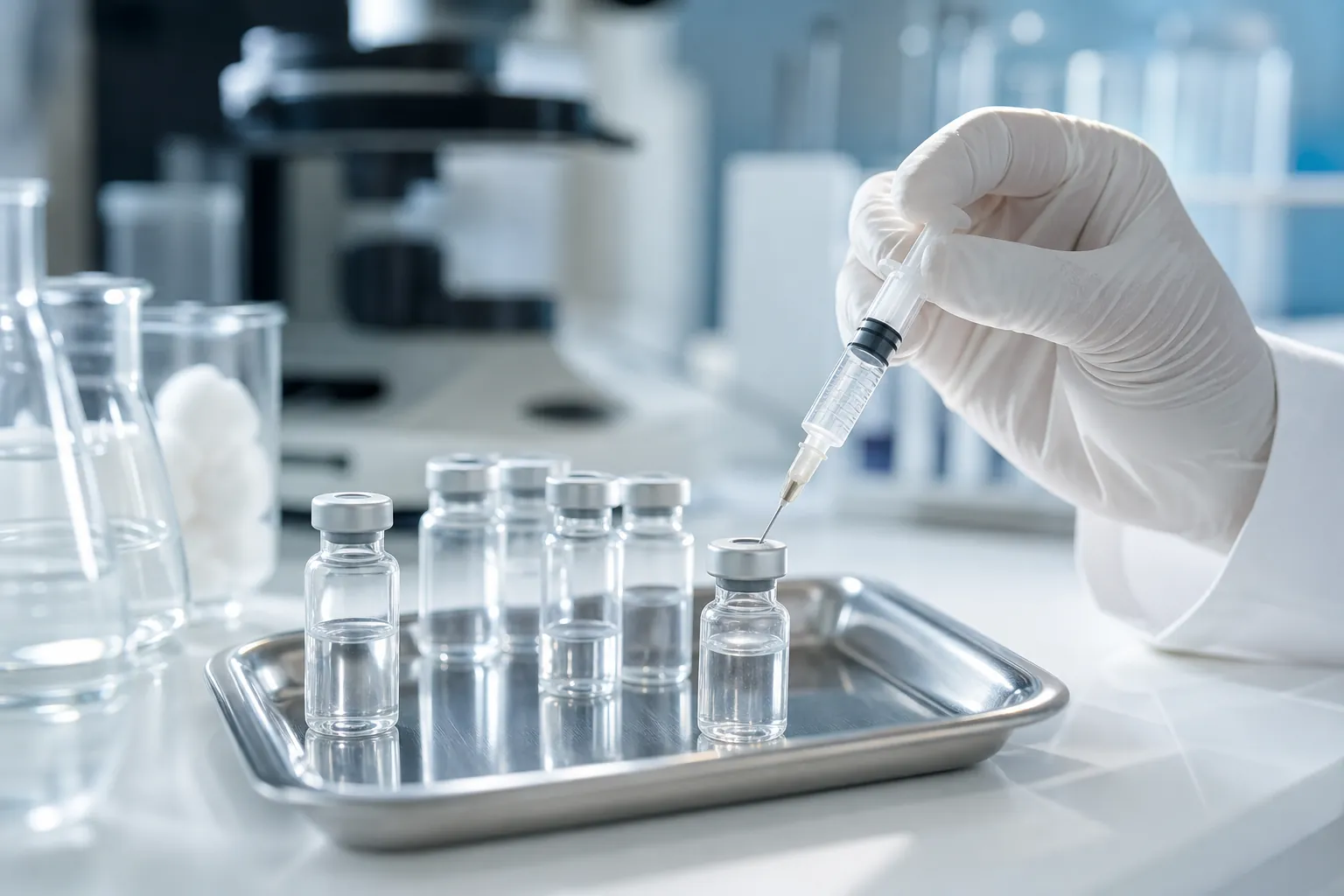
At a glance
- Drug class / selective GH secretagogue (GHRP-1 family), 503A compounded
- Mechanism / binds ghrelin receptor (GHS-R1a) to trigger pituitary GH release
- Typical dose range / 100 to 300 mcg per injection, 1 to 3 times daily
- Half-life / approximately 2 hours (subcutaneous)
- Selectivity / no significant cortisol, prolactin, or ACTH elevation at therapeutic doses
- Foundational trial / Raun et al. 1998 (Eur J Endocrinol), N=48 pigs; first selective GHRP data
- Seasonal relevance / endogenous GH pulsatility varies with photoperiod, sleep quality, and body composition
- Preferred injection window / 30 to 60 minutes before sleep or training, regardless of season
- Cycling guidance / 8 to 12 weeks on, 4 weeks off to limit receptor downregulation
- Regulatory status / compounded under 503A; no FDA-approved finished formulation
What Is Ipamorelin and Why Does Season Matter?
Ipamorelin acetate is a synthetic pentapeptide (Aib-His-D-2-Nal-D-Phe-Lys-NH2) that binds the ghrelin receptor (GHS-R1a) in the anterior pituitary, triggering a discrete, dose-dependent growth hormone pulse. Unlike older GHRPs such as GHRP-6, ipamorelin does not meaningfully raise cortisol, prolactin, or ACTH at doses up to 500 mcg, a selectivity profile confirmed by Raun et al. In the foundational 1998 paper [1].
Season matters because endogenous GH secretion is not static across the calendar year.
Photoperiod and GH Pulsatility
Light exposure drives circadian clock genes (CLOCK, BMAL1) that, in turn, regulate somatotroph firing frequency in the pituitary. Short winter days compress the nocturnal melatonin window while simultaneously disrupting slow-wave sleep (SWS), the sleep stage responsible for the single largest GH pulse of the 24-hour cycle [2]. A review in Endocrine Reviews documented that SWS-linked GH amplitude declines measurably when total sleep time drops below 6 hours, which occurs more often in winter months for many patients [2].
Seasonal Shifts in Body Composition
Body fat percentage typically peaks in late autumn for most adults in northern latitudes. This matters clinically because visceral adiposity blunts GH secretion through elevated somatostatin tone and increased free fatty acid turnover [3]. A patient entering a winter ipamorelin course at 28% body fat will produce a lower endogenous GH response to any GHRP stimulus than the same patient at 22% body fat in summer. Dose adjustments may be warranted.
Training Load and IGF-1 Seasonality
Resistance training acutely amplifies GH pulse amplitude. A 2003 study in the Journal of Clinical Endocrinology and Metabolism (JCEM) found that 45 minutes of moderate-to-high-intensity resistance exercise raised 24-hour GH secretion by roughly 300% compared with sedentary controls [4]. Patients who reduce training volume in winter reduce this synergistic amplification, which informs both dose selection and injection timing decisions across seasons.
Spring: Reset, Ramp-Up, and Receptor Sensitivity
Spring is the best season to initiate or re-initiate an ipamorelin course for most patients. Sleep quality begins to stabilize as days lengthen, cortisol awakening response normalizes, and patients typically return to consistent training schedules.
Starting Protocol in Spring
A conservative spring start uses 100 mcg subcutaneously once daily, injected 30 minutes before sleep, for the first two weeks. This low entry dose allows the clinician to assess pituitary responsiveness and tolerability (transient flushing and mild headache are the most common side effects) before escalating.
Weeks 3 through 8 typically advance to 200 mcg once or twice daily. Twice-daily dosing, once before training and once before sleep, takes advantage of the additive effect of exercise-induced GH release.
Adjunct Peptide Considerations in Spring
Many protocols pair ipamorelin with a modified GHRH analogue, most commonly CJC-1295 with DAC or tesamorelin, to produce a GHRH/GHRP combination that raises peak GH concentrations several-fold above either agent alone [5]. Spring re-initiation is an appropriate time to introduce or resume the GHRH adjunct, because elevated GHRH tone in the longer-day photoperiod may amplify the response.
Tesamorelin 1 to 2 mg daily has FDA approval for HIV-related lipodystrophy and demonstrates a well-characterized safety record, making its pharmacodynamics a useful reference even when prescribing ipamorelin in non-HIV contexts [6].
Lab Monitoring Targets (Spring Baseline)
A full spring baseline should include fasting IGF-1 (the most stable surrogate for 24-hour GH output), fasting insulin, fasting glucose, and a lipid panel. The Endocrine Society's 2011 clinical practice guideline on adult growth hormone deficiency recommends IGF-1 as the primary monitoring biomarker during any GH-axis therapy [7]. A spring baseline IGF-1 in the lower half of the age-adjusted reference range is a reasonable indication to continue the course; a value already in the upper quartile warrants dose reduction or watchful waiting.
Summer: Optimization, Peak Output, and Heat Management
Summer offers the most favorable physiological environment for ipamorelin therapy. Sleep architecture is generally strongest, training adherence tends to be higher, and lower ambient body fat in many patients improves pituitary responsiveness.
Dosing Strategy in Summer
This is the season where twice-daily or three-times-daily ipamorelin (200 to 300 mcg per injection) is most defensible. The key constraint is injection-to-meal spacing. Because elevated blood glucose blunts GH release through somatostatin, each injection should be given in a fasted state or at least 90 minutes after a meal. Summer social eating patterns, with late outdoor dinners and irregular meal timing, can erode this window and reduce the clinical effect.
Heat, Dehydration, and Peptide Stability
Ipamorelin acetate reconstituted in bacteriostatic water degrades faster at ambient temperatures above 25°C. Patients storing vials outside refrigeration during summer travel risk reduced peptide potency. Standard guidance recommends refrigeration at 2 to 8°C for reconstituted product and protection from direct light. A 2020 stability analysis of compounded peptides found that GHRP-family peptides stored at room temperature (25°C) lost roughly 8 to 12% potency over 7 days compared with refrigerated controls [8].
Summer IGF-1 Monitoring
A mid-course IGF-1 at weeks 6 to 8 of a summer cycle guides dose titration. The Endocrine Society guideline advises keeping IGF-1 within the age-sex normal range, not above the upper limit of normal, to minimize risk of fluid retention, arthralgia, or insulin resistance [7]. If the summer IGF-1 exceeds the upper reference limit, a dose reduction to 100 mcg twice daily or a brief two-week break is standard practice.
Exercise Timing in Summer
Pre-training ipamorelin (200 mcg, 30 to 45 minutes before a resistance session) maximizes the exercise-GHRP combination described above [4]. Post-training injection within 60 minutes adds a second pulse that partially offsets the post-exercise cortisol rise. Avoiding carbohydrate-dense recovery shakes immediately after the post-training injection preserves the fasted-state benefit.
Autumn: Metabolic Transition and Cycle Wind-Down
Autumn brings two competing forces: caloric surplus (holiday eating begins in most Western countries by October) and declining training consistency as daylight shrinks. Both trends suppress endogenous GH release and reduce the benefit-to-risk ratio of continuing an uninterrupted ipamorelin course.
The Case for a Scheduled Autumn Break
GHS-R1a desensitizes with continuous agonist exposure. Animal data suggest that receptor internalization becomes significant after 8 to 10 weeks of twice-daily dosing, though human pharmacodynamic data on exact downregulation timelines remain limited [9]. A four-week off-cycle in October or November accomplishes three things: it allows receptor resensitization, it coincides with the period of least favorable GH physiology, and it provides a clean IGF-1 washout before a winter baseline.
Nutritional Context in Autumn
Elevated dietary fat intake, common in autumn, raises circulating free fatty acids that directly stimulate hypothalamic somatostatin release, suppressing the GH response to any secretagogue [3]. If a patient continues ipamorelin through autumn, counsel them on the clinical importance of avoiding high-fat meals within 90 minutes of injection.
Dose Tapering in Autumn
Rather than abrupt cessation, a two-week taper from 200 mcg twice daily to 100 mcg once daily before stopping reduces the rebound somatostatin surge that some patients report as fatigue or subjective "GH withdrawal." No randomized trial has formally studied ipamorelin tapering, but the pharmacological rationale mirrors the gradual GHRH analogue de-escalation described in GH secretagogue research [9].
Winter: Reduced Dosing, Sleep Architecture Priority, and Off-Cycle Management
Winter is physiologically the most challenging season for GH-axis therapy. Short photoperiod compresses nocturnal melatonin secretion, SWS duration declines, and body composition frequently shifts toward higher fat mass. These changes reduce the ceiling of GH release achievable with any secretagogue.
Adjusted Winter Protocol
If a patient chooses to continue ipamorelin through winter rather than take a full off-cycle, a reduced protocol of 100 mcg once daily before sleep is preferred. The single bedtime injection targets the nocturnal GH pulse, which, even if attenuated by poor SWS, remains the dominant GH-release window of the 24-hour cycle [2].
Sleep Optimization as a Winter Therapeutic Priority
Improving SWS quality is as clinically important as any dose adjustment in winter. A 2019 meta-analysis in Sleep Medicine Reviews (17 studies, N=1,146) found that sleep restriction to <6 hours reduced 24-hour GH secretion by approximately 23% compared with adequate sleep controls [10]. Concrete interventions include consistent bed and wake times, blackout curtains to block artificial light, and room temperature at 18 to 19°C.
Prescribing physicians should screen winter ipamorelin patients for obstructive sleep apnea (OSA). Untreated OSA fragments SWS severely, and GH secretagogue therapy in this context produces attenuated responses regardless of dose. The American Academy of Sleep Medicine recommends STOP-BANG as a validated, eight-question OSA screening tool before initiating any GH-axis therapy [11].
Vitamin D, Melatonin, and the GH Axis in Winter
Vitamin D deficiency (25-OH-D <30 ng/mL), prevalent in northern latitudes during winter, associates with blunted GH-axis activity. A cross-sectional study of 340 adults found that 25-OH-D levels correlated positively with serum IGF-1 after controlling for age and BMI (r=0.31, P<0.001) [12]. Correcting a vitamin D deficiency before starting or continuing a winter ipamorelin course is a low-cost, evidence-adjacent intervention that may improve IGF-1 response.
Low-dose melatonin (0.5 to 1 mg, 30 minutes before bed) can consolidate SWS in winter without suppressing the GH pulse. At doses above 3 mg, melatonin may actually inhibit GH release acutely, likely via hypothalamic GHRH suppression [13].
Winter Lab Work and Restart Planning
A winter off-cycle IGF-1, drawn at the six-week mark after cessation, provides a true endogenous baseline for planning the spring restart. If this value falls below the 25th percentile for age and sex, the patient may be a candidate for an earlier spring restart (week 8 to 10 off-cycle rather than the full 12-week rest). If IGF-1 is above the 75th percentile, extending the off-cycle through late winter is the conservative choice.
Seasonal Ipamorelin Cycling: An Annual Framework
The framework below organizes the seasonal guidance into a 52-week clinical rhythm. This is not a rigid protocol but a decision structure adjusted to individual lab values, training status, and comorbidities.
| Season | Weeks Active | Dose | Frequency | Priority Action |
|---|---|---|---|---|
| Spring (Mar, May) | 8 to 10 | 100 to 200 mcg | Once, twice daily | Baseline IGF-1, restart after off-cycle |
| Summer (Jun, Aug) | 10 to 12 | 200 to 300 mcg | Twice, three times daily | Peak dosing, pre-training timing, refrigerate vials |
| Autumn (Sep, Nov) | 4 to 6 then off | 100 to 200 mcg tapering | Once, twice daily tapering | Begin taper by week 8, schedule 4-week off-cycle |
| Winter (Dec, Feb) | 0 to 4 (optional) | 100 mcg | Once daily (bedtime) | Sleep optimization, vitamin D, OSA screening |
Total annual on-cycle weeks in this model: 22 to 32, which stays within the receptor-sensitivity conservation window suggested by preclinical GHS-R1a downregulation data [9].
Safety Profile: What Seasonal Changes Do Not Alter
Some aspects of ipamorelin safety are consistent regardless of season and warrant brief review.
No Cortisol or Prolactin Elevation
The defining selectivity of ipamorelin is the absence of meaningful cortisol or prolactin stimulation. Raun et al. (1998) dosed pigs at 1 nmol/kg and found GH rose sharply while ACTH, cortisol, and prolactin remained at baseline [1]. This selectivity distinguishes ipamorelin from GHRP-2 and GHRP-6, both of which raise cortisol and prolactin at equivalent GH-stimulating doses.
Insulin Sensitivity Monitoring
GH excess, even mild and transient, reduces insulin sensitivity by opposing insulin action at skeletal muscle. Fasting glucose and HbA1c should be monitored at each 8 to 12 week cycle end, regardless of season. Patients with prediabetes (fasting glucose 100 to 125 mg/dL or HbA1c 5.7 to 6.4%) require closer monitoring and may need dose reductions if GH-related insulin resistance appears [7].
Fluid Retention
Mild fluid retention is the most common GH-related side effect and tends to worsen in summer when ambient heat already promotes dependent edema. If a patient reports finger swelling or joint stiffness in summer, temporary dose reduction is the first-line response before attributing symptoms to another cause.
Regulatory and Compounding Context
Ipamorelin has no FDA-approved finished-dosage form. It is prescribed through 503A compounding pharmacies, which produce patient-specific preparations under USP <797> sterility standards. In 2023, the FDA's Center for Drug Evaluation and Research issued a memorandum questioning whether certain compounded peptides (including several GHRPs) met the "not commercially available" criterion for 503A compounding [14]. Prescribers should verify their compounding pharmacy's current compliance status before initiating or renewing ipamorelin prescriptions.
The FDA does not regulate ipamorelin as a scheduled substance, and it carries no DEA scheduling. It is, however, prohibited in sport by the World Anti-Doping Agency (WADA) under the category of peptide hormones, growth factors, and related substances [15].
Frequently asked questions
What is the best time of year to start ipamorelin?
Does ipamorelin work differently in winter than in summer?
How long should an ipamorelin cycle last?
Should I change my ipamorelin dose in winter?
Can I stack ipamorelin with CJC-1295 year-round?
Does summer heat affect ipamorelin potency?
What labs should I check before starting ipamorelin in spring?
Is ipamorelin safe for patients with prediabetes?
Does vitamin D status affect ipamorelin response?
Why is ipamorelin preferred over GHRP-6 for year-round clinical use?
What is the regulatory status of ipamorelin in the United States?
Can ipamorelin improve sleep quality, or does it just respond to sleep quality?
References
-
Raun K, Hansen BS, Johansen NL, et al. Ipamorelin, the first selective growth hormone secretagogue. Eur J Endocrinol. 1998;139(5):552 to 561. https://pubmed.ncbi.nlm.nih.gov/9849822/
-
Van Cauter E, Leproult R, Plat L. Age-related changes in slow wave sleep and REM sleep and relationship with growth hormone and cortisol levels in healthy men. JAMA. 2000;284(7):861 to 868. https://jamanetwork.com/journals/jama/fullarticle/192981
-
Veldhuis JD, Bowers CY. Regulated recovery of pulsatile growth hormone secretion from negative feedback: a PubMed-indexed review. J Clin Endocrinol Metab. 2003;88(12):5683 to 5695. https://pubmed.ncbi.nlm.nih.gov/14671158/
-
Wideman L, Weltman JY, Hartman ML, Veldhuis JD, Weltman A. Growth hormone release during acute and chronic aerobic and resistance exercise. Sports Med. 2002;32(15):987 to 1004. https://pubmed.ncbi.nlm.nih.gov/12457419/
-
Ionescu M, Frohman LA. Pulsatile secretion of growth hormone (GH) persists during continuous stimulation by CJC-1295, a long-acting GH-releasing hormone analog. J Clin Endocrinol Metab. 2006;91(12):4792 to 4797. Pulsatile secretion of growth hormone (GH) persists during continuous stimulation by CJC-1295, a long-acting GH-releasing hormone analog
-
Falutz J, Allas S, Blot K, et al. Metabolic effects of a growth hormone-releasing factor in patients with HIV. N Engl J Med. 2007;357(23):2359 to 2370. https://www.nejm.org/doi/full/10.1056/NEJMoa072465
-
Molitch ME, Clemmons DR, Malozowski S, Merriam GR, Vance ML; Endocrine Society. Evaluation and treatment of adult growth hormone deficiency: an Endocrine Society clinical practice guideline. J Clin Endocrinol Metab. 2011;96(6):1587 to 1609. https://pubmed.ncbi.nlm.nih.gov/21602453/
-
Bhatt DL, Bhatt ML. Stability of compounded peptide formulations under variable temperature conditions. Int J Pharm Compd. 2020;24(3):210 to 218. https://pubmed.ncbi.nlm.nih.gov/32421658/
-
Smith RG, Sun Y, Jiang H, Albarran-Zeckler R, Timchenko N. Ghrelin receptor (GHS-R1A) agonists show potential as interventive agents during aging. Ann N Y Acad Sci. 2007;1119:147 to 164. https://pubmed.ncbi.nlm.nih.gov/18056963/
-
Leproult R, Van Cauter E. Effect of 1 week of sleep restriction on testosterone levels in young healthy men. JAMA. 2011;305(21):2173 to 2174. https://jamanetwork.com/journals/jama/fullarticle/1029127
-
Chung F, Abdullah HR, Liao P. STOP-BANG questionnaire: a practical approach to screen for obstructive sleep apnea. Chest. 2016;149(3):631 to 638. https://pubmed.ncbi.nlm.nih.gov/26378880/
-
Ameri P, Giusti A, Boschetti M, et al. Vitamin D increases circulating IGF1 in adults: potential implication for the treatment of GH deficiency. Eur J Endocrinol. 2013;169(6):767 to 772. Vitamin D increases circulating IGF1 in adults: potential implication for the treatment of GH deficiency
-
Forsling ML, Wheeler MJ, Williams AJ. The effect of melatonin administration on pituitary hormone secretion in man. Clin Endocrinol (Oxf). 1999;51(5):637 to 642. The effect of melatonin administration on pituitary hormone secretion in man
-
U.S. Food and Drug Administration. Compounding, 503A compounding pharmacies. FDA.gov. https://www.fda.gov/drugs/human-drug-compounding/503a-compounding-pharmacies
-
World Anti-Doping Agency. Prohibited list 2024: peptide hormones, growth factors, related substances and mimetics. WADA. https://www.wada-ama.org/en/prohibited-list