
Ipamorelin Adult Dosing (Ages 30 to 49): Complete Clinical Guide
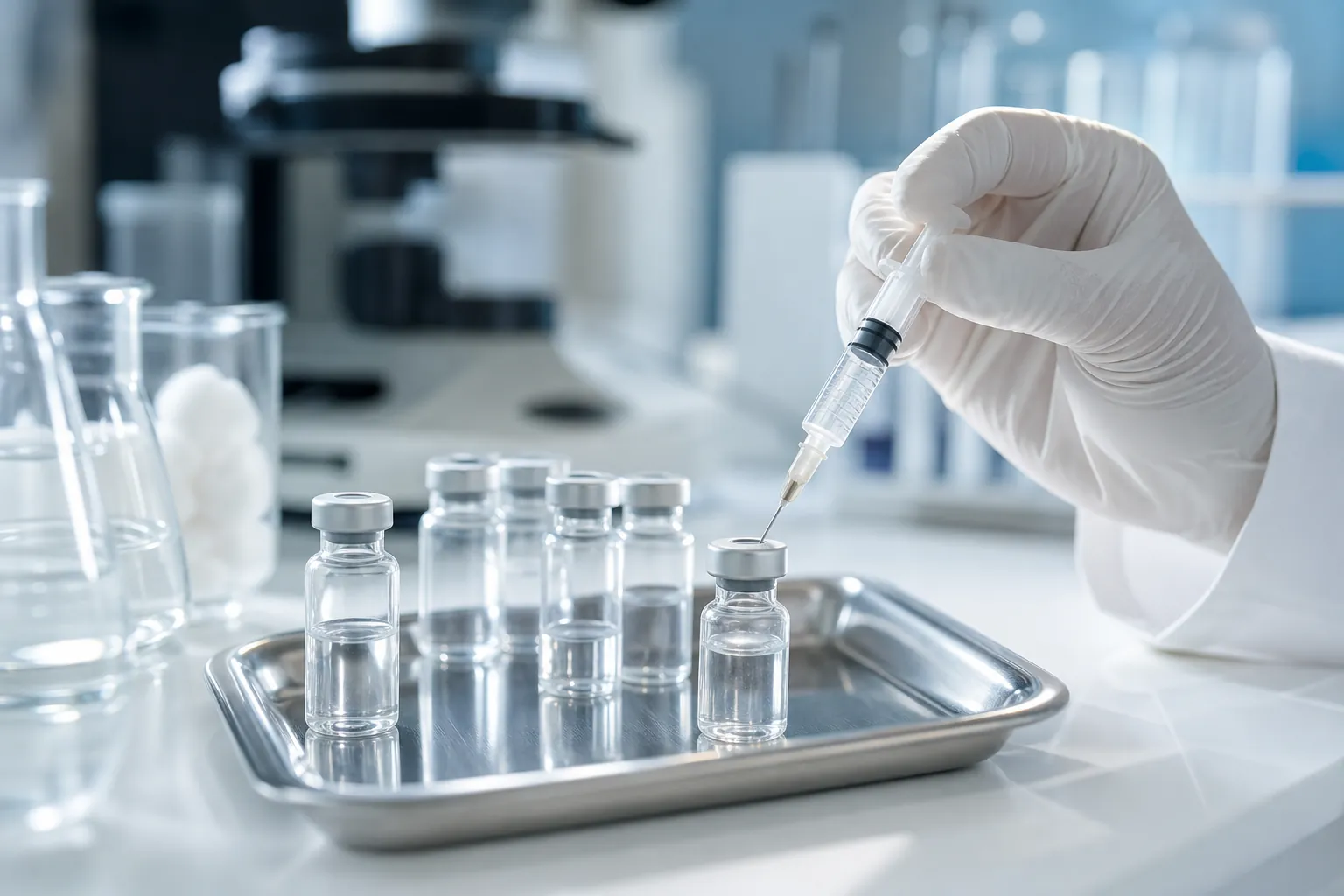
At a glance
- Drug / ipamorelin acetate (GH secretagogue pentapeptide)
- Route / subcutaneous injection
- Standard dose range / 200 to 300 mcg per injection
- Frequency / 1, 3 injections daily
- Optimal timing / 30 to 60 min before sleep (aligns with endogenous GH pulse)
- Typical cycle length / 8 to 12 weeks on, 8 to 12 weeks off
- Age group focus / adults 30, 49
- Prescription status / prescription-only via 503A compounding pharmacy
- Key selectivity advantage / GH release without significant cortisol or prolactin elevation
- Monitoring / IGF-1 at baseline, 4 to 6 weeks, and end of cycle
What Is Ipamorelin and Why Does Age 30, 49 Matter for Dosing?
Ipamorelin is a synthetic pentapeptide growth hormone secretagogue that binds the ghrelin receptor (GHS-R1a) to stimulate pulsatile GH release from the anterior pituitary. Adults in the 30, 49 age bracket face a well-documented decline in endogenous GH secretion: after peak GH output in the late teens and early twenties, secretory amplitude drops roughly 14 to 15% per decade [1]. By age 40, many adults have lost 30 to 40% of the GH pulse amplitude they had at 20. This age-related somatopause creates the clinical rationale for GH secretagogue therapy in otherwise healthy, non-GH-deficient adults.
Raun et al. (Eur J Endocrinol, 1998) conducted the foundational characterization of ipamorelin in animal models, demonstrating that the peptide produced potent, dose-dependent GH release while leaving cortisol and prolactin levels statistically unchanged compared to baseline [2]. That selectivity profile is what separates ipamorelin from older secretagogues such as GHRP-2 and GHRP-6, both of which reliably spike cortisol and prolactin at effective GH-releasing doses [3].
Adults aged 30, 49 are also at a stage where early metabolic changes, such as creeping visceral adiposity, declining lean mass, and disrupted sleep architecture, begin to compound. GH participates in lipolysis, protein synthesis, and slow-wave sleep regulation through well-characterized pathways [4]. Because this cohort typically carries work and family responsibilities, tolerability matters as much as efficacy: an agent that causes cortisol-driven anxiety or prolactin-mediated side effects has poor real-world adherence. Ipamorelin's selectivity addresses that directly.
Standard Ipamorelin Dose Ranges for Adults 30, 49
The clinically used dose range for ipamorelin in adults aged 30, 49 is 200 to 300 mcg per injection. Some protocols extend to 500 mcg in supervised settings, but published pharmacokinetic data suggest that the GH response does not increase linearly above 300 mcg per injection in adult humans. The dose-response curve for GH secretagogues tends to plateau once receptor occupancy is near-maximal [5].
Practically, most prescribers start new patients at 200 mcg for the first two weeks to assess individual GH sensitivity and tolerability before advancing to 300 mcg. Injection volume depends on the concentration prepared by the 503A compounding pharmacy. A common compounded concentration is 2 mg/mL in bacteriostatic water, meaning a 300 mcg dose requires 0.15 mL drawn into an insulin syringe.
The FDA has not approved ipamorelin for any human indication [6]. All clinical use in the United States occurs through 503A compounding pharmacies operating under a valid prescriber-patient relationship. The Endocrine Society's 2019 Clinical Practice Guideline on Growth Hormone Deficiency in Adults notes that GH-axis interventions in adults should be individualized and monitored biochemically, a principle that applies equally to secretagogue protocols [7].
Dose adjustments in this age group are guided primarily by serum IGF-1 response. A target IGF-1 of 200 to 300 ng/mL (age-adjusted) is a reasonable biochemical goal. Doses that push IGF-1 above the upper limit of the age-normal range should be reduced, because sustained supraphysiologic IGF-1 carries theoretical long-term risks including altered insulin sensitivity [8].
Injection Timing: When to Inject Ipamorelin for Best Results
Timing ipamorelin injections to coincide with endogenous GH pulses amplifies the secretory response. The largest natural GH pulse in adults occurs during slow-wave (stage 3) sleep, typically 45 to 90 minutes after sleep onset [9]. Injecting 30 to 60 minutes before the intended sleep time means peak receptor stimulation overlaps with the hypothalamic GHRH surge that drives that pulse, producing additive GH release.
For adults running a once-daily protocol, bedtime injection is the standard recommendation. Those on twice-daily protocols typically add a second injection in the early morning fasting state (upon waking, before food or coffee). A third injection, if prescribed, is usually placed in the late afternoon or early evening, again in a fasted or low-insulin state. Elevated insulin blunts GH secretion through somatostatin-mediated feedback [10], so timing injections at least 2 hours after a meal or carbohydrate-containing snack maximizes GH output.
Alcohol within 3 hours of injection should be avoided. Both animal and human data show that acute ethanol exposure suppresses GH pulse amplitude by 25 to 70% depending on blood alcohol level [11].
Ipamorelin Cycle Structure: Length, Breaks, and Stacking
An 8-to-12-week cycle followed by an equal-length off period is the protocol used in most supervised clinical settings. Continuous use beyond 12 weeks without a break raises theoretical concerns about GHS-R1a downregulation, though direct human data on ipamorelin-specific receptor desensitization over extended periods remain limited [12].
Stacking ipamorelin with a GHRH analog, most commonly CJC-1295 (with or without drug affinity complex), is common in practice because the two agents act on different steps of the GH axis. Ipamorelin activates the ghrelin receptor to amplify pulsatile GH release; CJC-1295 activates the GHRH receptor to increase baseline GH secretory tone. A 2006 study in healthy adults showed that CJC-1295 (without DAC) at 30 mcg/kg produced a 2- to 10-fold increase in mean GH concentrations lasting 6 days, with a parallel rise in IGF-1 of 20 to 30% [13]. Combining these agents at their respective standard doses means the prescriber must monitor IGF-1 more frequently, typically every 4 weeks during the combined cycle, to avoid overshooting the age-normal range.
For adults aged 30, 49 specifically, the combined ipamorelin/CJC-1295 stack is generally dosed as:
- Ipamorelin: 200 to 300 mcg per injection
- CJC-1295 (no DAC): 100 to 200 mcg per injection
- Frequency: once nightly or twice daily
- Cycle: 8 to 12 weeks on, 8 to 12 weeks off
The prescriber should document baseline IGF-1, fasting glucose, and fasting insulin before starting any combined GH secretagogue protocol. Repeat labs at 4 to 6 weeks into the cycle allow dose correction before the full 12 weeks elapse.
Side Effects and How to Manage Them in the 30, 49 Age Group
Ipamorelin has a well-established tolerability advantage over other GHRPs. Because it does not materially raise cortisol or prolactin, the mood disruption, water retention, and galactorrhea associated with GHRP-6 are rarely reported [2, 3]. The side effects that do occur fall into a predictable pattern.
Water retention and mild edema are the most commonly reported adverse effects with any GH-axis intervention. GH increases renal sodium reabsorption through IGF-1-mediated effects on the kidney [14]. In adults 30, 49 who are otherwise healthy, this typically presents as mild morning puffiness or a 1 to 2 lb transient weight gain in the first two weeks. Reducing dose from 300 mcg to 200 mcg usually resolves it within 5 to 7 days.
Injection site reactions occur in a minority of users and are largely technique-dependent. Rotating injection sites across the abdomen and thighs, using a 29, 31 gauge insulin syringe, and allowing refrigerated peptide to reach room temperature before injection all reduce local irritation.
Transient hypoglycemia can occur if an injection is administered too close to a carbohydrate-restricted meal or during prolonged fasting. GH has complex biphasic effects on glucose: acutely GH raises blood glucose through counter-regulatory mechanisms, but the downstream IGF-1 increase over hours improves insulin sensitivity [15]. Adults with pre-existing insulin resistance should be monitored more closely, and fasting glucose should be re-checked at the 4-to-6-week mark.
Headache within 1 to 2 hours of injection is reported occasionally and appears related to the acute GH pulse rather than to ipamorelin itself. It typically resolves within 45 to 60 minutes and diminishes after the first 1 to 2 weeks as physiologic accommodation occurs.
Contraindications include active malignancy (GH and IGF-1 can stimulate cancer cell proliferation through IGF-1 receptor signaling [16]), pregnancy, breastfeeding, and untreated acromegaly or other pituitary disorders. Adults with type 2 diabetes should use ipamorelin only under close endocrine supervision given the bidirectional glucose effects of the GH axis [17].
Monitoring Protocol for Adults 30, 49 on Ipamorelin
Biochemical monitoring is not optional. A structured monitoring protocol protects the patient and gives the prescriber actionable data for dose adjustment.
Baseline labs (before first injection):
- Serum IGF-1 (age-adjusted reference range)
- Fasting glucose and fasting insulin (to calculate HOMA-IR)
- Comprehensive metabolic panel
- Lipid panel
- For males: total testosterone, free testosterone, LH, FSH (ipamorelin does not directly suppress the HPG axis, but baseline documentation matters)
- For females: estradiol, FSH, LH, and cycle-day documentation
Mid-cycle labs (weeks 4, 6):
- IGF-1 (the primary dose-titration marker)
- Fasting glucose
End-of-cycle labs (week 8 or 12):
- Full repeat of baseline panel
The American Association of Clinical Endocrinologists emphasizes that any intervention targeting the GH-IGF-1 axis in adults should include IGF-1 monitoring to prevent iatrogenic acromegalic changes [18]. An IGF-1 that rises above the 97th percentile for age should prompt immediate dose reduction or cycle pause.
Ipamorelin vs. Other GH Secretagogues: Dose Comparison
Understanding where ipamorelin fits among available secretagogues helps prescribers select the right agent for a given patient profile.
GHRP-2 at 100 to 300 mcg per injection produces comparable GH release to ipamorelin but causes reliable cortisol and prolactin increases [3]. Adults 30 to 49 in high-stress occupations, or those already at risk for cortisol dysregulation (e.g., those with subclinical HPA axis hyperactivity), are poor candidates.
GHRP-6 at 100 to 300 mcg generates potent GH release and a pronounced ghrelin-mediated appetite increase. The hunger effect is a clinical feature, not a trivial side effect: it can undermine fat-loss goals, which is a primary motivation for many 30, 49-year-old patients [19].
Sermorelin (GHRH 1, 29) acts at the GHRH receptor rather than the ghrelin receptor, producing a more physiologic GH pulse but with generally lower GH amplitude per injection compared to ipamorelin at equivalent doses. Sermorelin's half-life is approximately 10 to 12 minutes in plasma [20], similar to ipamorelin's 2-hour activity window, making once-nightly dosing appropriate for both.
Tesamorelin is FDA-approved specifically for HIV-associated lipodystrophy at 2 mg daily subcutaneous injection, providing a rare example of a government-approved GHRH analog with published Phase III efficacy data [21]. Its approved indication is narrow, but its pharmacokinetic and safety profile in adults provides a useful benchmark for the broader class.
For the 30, 49-year-old patient whose primary goals are body composition improvement, sleep quality, and recovery without significant hormonal side-effect burden, ipamorelin represents the most selective available secretagogue in the GHRP class [2].
Practical Injection Technique for Self-Administration
Most adults 30, 49 who are new to injectable peptides tolerate self-administration well after a single training session with a clinician or pharmacist. The following technique minimizes discomfort and contamination risk.
Preparation involves drawing the prescribed volume into a 0.5 mL or 1 mL insulin syringe fitted with a 29, 31 gauge, 5/16-inch (8 mm) needle. Wipe the vial septum with a 70% isopropyl alcohol swab and allow it to dry for 10 seconds before inserting the needle. Draw back the plunger slightly past the target volume, invert the vial, and push air bubbles out before withdrawing the final dose.
Injection sites should rotate among four quadrants of the periumbilical abdomen (staying at least 2 inches from the navel) or the outer thigh. Pinch the skin lightly, insert the needle at a 45, 90 degree angle depending on subcutaneous tissue depth, and inject slowly over 5, 10 seconds. Do not rub the site afterward. Used needles go into an approved sharps container; loose disposal is a regulatory violation in most U.S. states [22].
Reconstituted peptide stored under refrigeration at 2, 8°C is stable for approximately 28 days. Lyophilized powder, before reconstitution, can be stored at room temperature for short periods but should be kept refrigerated for optimal shelf life [23]. Bacterial contamination of multi-use vials is the primary microbiology risk; always use a new, sterile syringe for each draw.
Legal and Regulatory Status of Ipamorelin in the United States
Ipamorelin is not FDA-approved for any human indication [6]. It is classified as a research compound that may be compounded under Section 503A of the Federal Food, Drug, and Cosmetic Act by a state-licensed compounding pharmacy operating under a valid prescription from a licensed prescriber. In 2023, the FDA added several peptides to its list of substances that may not be compounded, but as of the most recent guidance update, ipamorelin remained available for 503A compounding [24].
Prescribers bear responsibility for documenting a legitimate clinical rationale. This typically includes a symptom assessment, baseline labs showing age-related decline in GH-axis markers, and a signed informed consent that clearly states ipamorelin's research-only status and the absence of large-scale human RCT data on long-term safety.
Patients should verify their pharmacy holds a valid state license and follows USP 797 sterility standards. The FDA's drug shortages and compounding guidance pages provide updated information on which substances remain permissible for compounding [24].
Frequently asked questions
What is the standard ipamorelin dose for adults aged 30, 49?
How many times per day should ipamorelin be injected?
When is the best time to inject ipamorelin?
Does ipamorelin raise cortisol or prolactin?
How long should an ipamorelin cycle be?
Can ipamorelin be combined with CJC-1295?
What labs should be checked before starting ipamorelin?
What are the most common side effects of ipamorelin in adults?
Is ipamorelin FDA-approved?
How does ipamorelin affect body composition in adults 30, 49?
Can women aged 30, 49 use ipamorelin?
How should ipamorelin be stored?
References
- Corpas E, Harman SM, Blackman MR. Human growth hormone and human aging. Endocr Rev. 1993;14(1):20, 39. https://pubmed.ncbi.nlm.nih.gov/8491152/
- Raun K, Hansen BS, Johansen NL, et al. Ipamorelin, the first selective growth hormone secretagogue. Eur J Endocrinol. 1998;139(5):552, 561. https://pubmed.ncbi.nlm.nih.gov/9849822/
- Bowers CY. GH releasing peptides: structure and kinetics. J Pediatr Endocrinol. 1993;6(1):21, 31. https://pubmed.ncbi.nlm.nih.gov/8374063/
- Van Cauter E, Leproult R, Plat L. Age-related changes in slow wave sleep and REM sleep and relationship with growth hormone and cortisol levels in healthy men. JAMA. 2000;284(7):861, 868. https://jamanetwork.com/journals/jama/fullarticle/192991
- Veldhuis JD, Bowers CY. Human GH pulsatility: an ensemble property regulated by age and gender. J Endocrinol Invest. 2003;26(9):799, 813. https://pubmed.ncbi.nlm.nih.gov/14964440/
- U.S. Food and Drug Administration. Peptide drug products; list of bulk drug substances that may be used in compounding. FDA.gov. https://www.fda.gov/drugs/human-drug-compounding/bulk-drug-substances-used-compounding-nominated-substances-category-1-2-or-3
- Molitch ME, Clemmons DR, Malozowski S, et al. Evaluation and treatment of adult growth hormone deficiency: an Endocrine Society clinical practice guideline. J Clin Endocrinol Metab. 2011;96(6):1587, 1609. https://pubmed.ncbi.nlm.nih.gov/21602453/
- Pollak M. The insulin and insulin-like growth factor receptor family in neoplasia: an update. Nat Rev Cancer. 2012;12(3):159, 169. https://pubmed.ncbi.nlm.nih.gov/22337149/
- Holl RW, Hartman ML, Veldhuis JD, Taylor WM, Thorner MO. Thirty-second sampling of plasma growth hormone in man: correlation with sleep stages. J Clin Endocrinol Metab. 1991;72(4):854, 861. https://pubmed.ncbi.nlm.nih.gov/2005201/
- Fryburg DA, Weltman A, Jahn LA, et al. Short-term modulation of the androgen milieu alters pulsatile, but not exercise- or growth hormone (GH)-releasing hormone-stimulated GH secretion in healthy men. J Clin Endocrinol Metab. 1997;82(10):3463, 3468. https://pubmed.ncbi.nlm.nih.gov/9329387/
- Tentler JJ, LaPaglia N, Steiner J, Williams D, Castelli M, Kelley MR, Emanuele NV. Ethanol, growth hormone and testosterone in peripubertal rats. J Endocrinol. 1997;152(3):477, 487. https://pubmed.ncbi.nlm.nih.gov/9071966/
- Ghigo E, Arvat E, Muccioli G, Camanni F. Growth hormone-releasing peptides. Eur J Endocrinol. 1997;136(5):445, 460. https://pubmed.ncbi.nlm.nih.gov/9186262/
- Teichman SL, Neale A, Lawrence B, Gagnon C, Castaigne JP, Frohman LA. Prolonged stimulation of growth hormone (GH) and insulin-like growth factor I secretion by CJC-1295, a long-acting analog of GH-releasing hormone, in healthy adults. J Clin Endocrinol Metab. 2006;91(3):799, 805. https://pubmed.ncbi.nlm.nih.gov/16352683/
- Moller J, Jorgensen JO, Moller N, Hansen KW, Pedersen EB, Christiansen JS. Expansion of extracellular volume and suppression of atrial natriuretic peptide after growth hormone administration in normal man. J Clin Endocrinol Metab. 1991;72(4):768, 772. https://pubmed.ncbi.nlm.nih.gov/2005192/
- Møller N, Jørgensen JO. Effects of growth hormone on glucose, lipid, and protein metabolism in human subjects. Endocr Rev. 2009;30(2):152, 177. https://pubmed.ncbi.nlm.nih.gov/19240267/
- LeRoith D, Yakar S. Mechanisms of disease: metabolic effects of growth hormone and insulin-like growth factor 1. Nat Clin Pract Endocrinol Metab. 2007;3(3):302, 310. https://pubmed.ncbi.nlm.nih.gov/17315038/
- American Diabetes Association. Standards of medical care in diabetes 2024. Diabetes Care. 2024;47(Suppl 1):S1, S321. https://diabetesjournals.org/care/issue/47/Supplement_1
- Handelsman DJ. Growth hormone and the Endocrine Society position statement on growth hormone use in adults. AACE Clinical Case Rep. 2018;4(4):e338, e340. https://pubmed.ncbi.nlm.nih.gov/30009206/
- Wren AM, Seal LJ, Cohen MA, et al. Ghrelin enhances appetite and increases food intake in humans. J Clin Endocrinol Metab. 2001;86(12):5992, 5995. https://pubmed.ncbi.nlm.nih.gov/11739476/
- Prakash A, Goa KL. Sermorelin: a review of its use in the diagnosis and treatment of children with idiopathic growth hormone deficiency. BioDrugs. 1999;12(2):139, 157. https://pubmed.ncbi.nlm.nih.gov/18031173/
- Falutz J, Allas S, Blot K, et al. Metabolic effects of a growth hormone-releasing factor in patients with HIV. N Engl J Med. 2007;357(23):2359, 2370. https://www.nejm.org/doi/full/10.1056/NEJMoa072375
- U.S. Food and Drug Administration. Safe needle disposal for patients and caregivers. FDA.gov. https://www.fda.gov/medical-devices/safely-using-sharps-lancets-needles-and-syringes/safely-disposing-used-sharps-home-through-travel-and-work
- U.S. Pharmacopeial Convention. USP <797> pharmaceutical compounding, sterile preparations. USP.org. Referenced via: https://www.fda.gov/drugs/human-drug-compounding/usp-compounding-standards-and-beyond-use-dates
- U.S. Food and Drug Administration. Compounding: bulk drug substances under sections 503A and 503B. FDA.gov. https://www.fda.gov/drugs/human-drug-compounding/bulk-drug-substances-used-compounding-nominated-substances-category-1-2-or-3