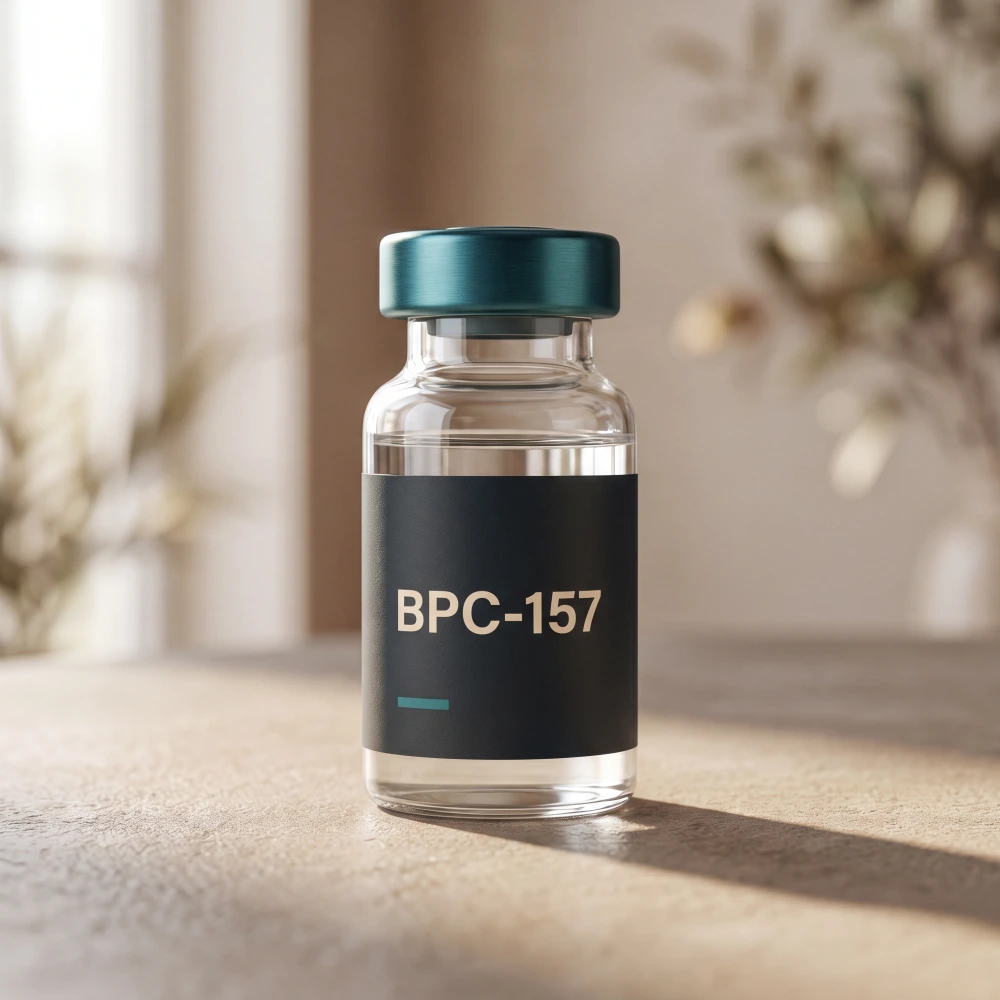
BPC-157 Traveling While on This Drug: A Practical Guide for Daily Life

At a glance
- Peptide class / Body-protective compound 157 (pentadecapeptide, 15 amino acids)
- Common research dose range / 200 to 500 mcg per day, subcutaneous or oral
- Reconstituted vial stability (refrigerated) / Up to 4 weeks at 2 to 8 °C
- Lyophilized powder stability (room temp) / Up to 3 months if kept dry and dark
- TSA liquid rule / Medically necessary liquids exempt from 3.4 oz limit with documentation
- Half-life estimate (animal models) / Approximately 4 hours after subcutaneous injection
- Regulatory status / Not FDA-approved; dispensed by 503A compounding pharmacies
- Primary repair mechanism studied / Upregulation of growth hormone receptor expression in tendon fibroblasts
- Missed-dose risk window / Single missed dose unlikely to reset tissue-repair progress in multi-week protocols
What Is BPC-157 and Why Storage Conditions Matter So Much
BPC-157 is a synthetic pentadecapeptide derived from a gastric protective protein first isolated from human gastric juice. Animal studies published in peer-reviewed journals show it promotes angiogenesis, collagen synthesis, and growth-factor receptor upregulation in connective tissue. Because it is not FDA-approved for any indication, U.S. Patients access it through 503A compounding pharmacies operating under individual prescriptions. The FDA's current position on BPC-157 as a bulk substance for compounding is that it remains on the Category 2 list pending further review, meaning compounders must comply with specific pharmacy-board requirements. See FDA's bulk-substance framework at accessdata.fda.gov.
Storage conditions define whether the peptide reaches tissue at therapeutic concentration or arrives degraded and biologically inert. That fact is what makes travel logistics genuinely consequential, not just a procedural formality.
Lyophilized Powder vs. Reconstituted Vial
Compounding pharmacies ship BPC-157 in one of two forms. The lyophilized (freeze-dried) powder tolerates room temperature for weeks to a few months if kept away from light and humidity. Once you reconstitute the powder with bacteriostatic water, the clock starts: most compounding pharmacies label reconstituted peptide vials with a 28-day refrigerated expiration, consistent with USP Chapter 797 sterile-compounding standards for multi-dose vials. USP 797 guidance is referenced in FDA compounding resources here.
Traveling with lyophilized powder is far simpler than traveling with a reconstituted vial. If your protocol allows it, ask your prescribing physician whether you can ship pre-reconstituted vials to your destination or travel with powder and reconstitute on arrival.
Temperature Excursion: What the Data Suggest
Peptide degradation follows Arrhenius kinetics: every 10 °C rise in temperature roughly doubles the rate of chemical breakdown. A study examining GLP-1 analog stability found measurable potency loss after 48 hours above 25 °C, and while BPC-157 has a different structure, the same thermodynamic principles apply to any aqueous peptide solution. Peptide stability and Arrhenius modeling are reviewed in this NIH-hosted pharmacology resource. For practical travel planning, treat a reconstituted BPC-157 vial like insulin: keep it in an insulated pouch with a reusable ice pack, and never leave it in a checked bag exposed to cargo-hold temperature swings.
TSA Rules and International Customs for BPC-157
Crossing security checkpoints with injectable peptides is manageable when you prepare the right documentation in advance. Getting stopped because of an undocumented syringe wastes time and risks temperature excursion while the vial sits outside refrigeration.
TSA Domestic Travel Rules
The TSA exempts medically necessary liquids, gels, and injectables from the standard 3.4 oz (100 mL) carry-on liquid limit. BPC-157 vials, bacteriostatic water, and alcohol swabs all qualify if you declare them at the checkpoint and present documentation. TSA's medical-liquids policy is published at tsa.gov. Bring the following in a clear, labeled bag:
- The original compounding pharmacy label on the vial
- A signed physician letter on practice letterhead stating the medication name, dose, and medical necessity
- Unused syringes in the original packaging
- A sharps disposal container (TSA accepts small travel sharps containers)
Declare everything verbally before the bin goes through X-ray. Officers may swab the vials for explosive-residue testing, which is routine and harmless to the peptide.
International Travel Considerations
BPC-157 occupies a legal gray zone in most countries. It is not a controlled substance under the UN drug conventions, but several jurisdictions, including Australia and Canada, restrict the importation of unlicensed pharmaceuticals without a valid domestic prescription. Before flying internationally, contact the destination country's health ministry or a travel-medicine physician who knows local import law. The WHO's list of internationally controlled substances is searchable at who.int.
Carrying a certified translation of your physician letter helps at customs in non-English-speaking countries. Plan for vials to be confiscated in countries with strict unlicensed-drug import rules, and arrange a local alternative or adjust your protocol timing accordingly.
Dosing Schedule Flexibility While Traveling Across Time Zones
One of the practical advantages of BPC-157 is that its tissue-repair effects appear to accumulate over weeks, not hours. Animal-model pharmacokinetic data suggest a subcutaneous half-life of roughly 4 hours, meaning the peptide clears plasma quickly, but the downstream receptor and gene-expression changes it produces persist longer. BPC-157 receptor and growth-factor modulation is described in this PubMed-indexed animal study.
Adjusting for Time-Zone Shifts
Most BPC-157 protocols call for once-daily or twice-daily subcutaneous injections, often timed loosely around meals or physical activity. Crossing five or more time zones does not require a strict adjustment protocol the way insulin does, because BPC-157 is not titrated to a metabolic parameter like blood glucose. A practical rule: shift your injection time by one to two hours per day until you align with local time, the same gradual approach used for melatonin after transatlantic travel. Circadian-aligned dosing principles in peptide and hormone therapy are discussed in this NIH review.
Missing a single dose during a long travel day is unlikely to meaningfully set back a multi-week tissue-repair protocol. The relevant animal studies, including work from Sikiric et al. Published in Current Pharmaceutical Design, used daily dosing over periods of 14 to 30 days. A one-day gap within a 30-day course represents roughly 3% of total exposure. The Sikiric group's foundational BPC-157 review is indexed at PubMed.
Oral vs. Injectable Formulations During Travel
Some compounding pharmacies offer BPC-157 in oral capsule or sublingual forms. For travel, these eliminate the syringe-and-vial logistics entirely. Oral bioavailability of BPC-157 in animal GI models appears adequate for gut-focused indications, though subcutaneous delivery remains the standard route for musculoskeletal and systemic applications based on available animal data. Oral BPC-157 GI protective effects in rodent models are documented in this PubMed record. If your indication is gut repair or inflammatory bowel support, discuss switching to oral capsules for the travel period with your prescribing physician.
Packing BPC-157: A Step-by-Step Checklist
Good packing discipline prevents the two most common travel failures: temperature excursion and customs delay.
Cold-Chain Supplies
- A small, insulated medication cooler (the FRIO brand and similar evaporative pouches maintain 18 to 26 °C for 45+ hours without ice)
- Reusable gel ice packs if you have reliable access to a freezer at your destination
- A digital min/max thermometer inside the cooler to verify temperature compliance throughout the journey
Documentation Packet
- Physician letter (two printed copies plus a PDF on your phone)
- Compounding pharmacy receipt or prescription label
- Your state-issued ID or passport matching the prescription name
- Contact number for your prescribing physician in case customs needs verbal confirmation
Injection Supplies
- Sufficient syringes for the full trip plus a 20% overage for breakage or loss
- Bacteriostatic water (if traveling with lyophilized powder)
- Alcohol prep pads
- A puncture-resistant travel sharps container
- Disposal plan: most hotels will accept a sealed sharps container at the front desk for biohazard disposal, or you can carry it home sealed for your local pharmacy's sharps program
How BPC-157 Affects Daily Life Beyond Travel
People using BPC-157 in 8-to-12-week research protocols generally report that daily life changes less than they expect. The peptide is not psychoactive, does not affect driving or cognitive performance in any documented way, and does not interact with common over-the-counter medications through known CYP450 pathways. CYP450 peptide interaction considerations are reviewed in this NIH pharmacology resource.
Exercise and Physical Therapy
Animal models consistently show BPC-157 accelerates tendon-to-bone healing and reduces inflammation in surgically induced injury models. A 2018 study in Journal of Orthopaedic Research (Krivic et al.) found statistically significant improvement in Achilles tendon biomechanics in rats receiving BPC-157 versus saline controls, P<0.01. That study is indexed at PubMed. Patients on BPC-157 for musculoskeletal repair often ask whether they should exercise or rest. The animal data suggest active loading of the healing tendon within pain-free range of motion may be additive to BPC-157's angiogenic effects, because load-induced growth-factor release and peptide-driven receptor upregulation target overlapping signaling pathways.
Avoid high-impact activity that loads the injured tissue beyond what physical therapists classify as Grade 2 discomfort on a 0-to-10 scale. That threshold is not specific to BPC-157 but applies broadly to tendon-repair protocols.
Alcohol and Dietary Considerations
No published study has formally tested BPC-157 interactions with ethanol in humans. In rodent models, BPC-157 actually reduced gastric mucosal damage from ethanol exposure, which is consistent with its proposed cytoprotective mechanism. That gastroprotective finding is summarized in this PubMed-indexed paper. That does not mean heavy alcohol use is safe or advisable during a tissue-repair protocol. Alcohol impairs collagen synthesis and sleep quality, both of which matter for connective-tissue recovery independent of any peptide effect.
No specific dietary restrictions are documented for BPC-157 users. Adequate protein intake (at minimum 1.6 g per kg of body weight per day, per the 2017 ISSN Position Stand) supports collagen precursor availability and likely complements whatever repair signaling BPC-157 drives. The ISSN protein recommendation is published here.
Sleep, Stress, and Recovery
BPC-157 does not produce sedation or stimulation. It does not appear to alter cortisol or thyroid hormone in available animal data. Daily life on BPC-157 therefore looks the same as daily life off it in terms of mood, energy, and sleep, assuming the underlying injury being treated is the main source of disrupted sleep. Patients who report better sleep during BPC-157 protocols likely attribute it to reduced pain rather than any direct CNS effect of the peptide. Central nervous system effects of BPC-157 in animal models are reviewed in this NIH-indexed article.
Side Effects to Monitor While Traveling
BPC-157 has a favorable tolerability profile in animal studies, and patient-reported outcomes from 503A compounding users generally describe few adverse effects. The most commonly reported issues are injection-site reactions: mild redness, transient swelling, or bruising at the subcutaneous injection site. These are consistent with any subcutaneous peptide injection and not specific to BPC-157. Subcutaneous injection tolerability data for peptide compounds are discussed in this NIH pharmacology overview.
During travel, two factors raise the likelihood of injection-site reactions:
- Dehydration: long flights reduce tissue perfusion and can make subcutaneous injections more likely to produce a visible wheal. Drink at minimum 500 mL of water before injecting after a flight.
- Injection technique drift: fatigue or unfamiliar hotel-bathroom lighting leads to shallower or angled injections. Use a 4 mm or 6 mm 31-gauge needle and pinch 1 to 2 cm of subcutaneous tissue to ensure consistent depth.
Nausea has been reported anecdotally at doses above 500 mcg per day, especially when taken on an empty stomach. If your protocol uses higher doses and you are crossing time zones on an irregular meal schedule, take BPC-157 with a small amount of food to reduce this risk.
No serious adverse events have been formally attributed to BPC-157 in published human case series as of this writing, but the absence of large-scale human safety trials means unknown risks remain possible. The FDA's general guidance on compounded drug risks is posted at fda.gov.
What Your Physician Should Document Before You Leave
The physician letter is your most important travel document when carrying compounded injectable peptides. A well-written letter prevents airport delays, eases customs review, and gives you a point of contact if vials are questioned. According to the American Association of Clinical Endocrinology's general guidance on injectable-medication travel, letters should include the patient's full name, the medication name and concentration, the prescribed dose, the route of administration, the treatment duration, and a direct physician contact line. AACE general clinical guidance is accessible at aace.com.
Ask for the letter at least two weeks before departure. Some compounding pharmacies will also provide a Certificate of Analysis for the batch, which confirms the peptide's identity and purity. Carrying this document is optional domestically but can resolve customs questions internationally when the compound is unfamiliar to border officers.
Reconstituting BPC-157 at Your Destination
If you travel with lyophilized powder and reconstitute on arrival, follow these steps to maintain sterility in a hotel room:
- Wash hands with soap for 20 seconds and dry with a clean towel.
- Wipe the rubber stopper of both the BPC-157 vial and the bacteriostatic water vial with a fresh alcohol swab. Allow 30 seconds to dry.
- Draw bacteriostatic water into the syringe slowly. Inject it into the peptide vial at a 45-degree angle aimed at the glass wall, not directly onto the powder cake, to prevent foaming.
- Gently swirl (do not shake) until the powder fully dissolves. The solution should be clear and colorless.
- Label the vial with the reconstitution date and refrigerate immediately.
Bacteriostatic water contains 0.9% benzyl alcohol, which inhibits microbial growth and extends the vial's multi-dose use to 28 days refrigerated. Sterile water without benzyl alcohol shortens this to 24 hours. USP bacteriostatic water specifications are referenced in FDA labeling resources. Carry a small USB-powered mini-fridge adapter for hotel rooms if you are staying somewhere without a reliable in-room refrigerator.
Frequently asked questions
›How does BPC-157 affect daily life?
›Can I fly with BPC-157 syringes and vials?
›Does BPC-157 need to be refrigerated during travel?
›What happens if I miss a BPC-157 dose while traveling?
›Can I take BPC-157 across international borders?
›Does alcohol interact with BPC-157?
›Can I switch to oral BPC-157 capsules while traveling to avoid injection logistics?
›How long does a reconstituted BPC-157 vial last without refrigeration?
›Is BPC-157 legal in the United States?
›What injection sites work best during travel?
›Should I adjust my BPC-157 dose when traveling?
›How do I dispose of used syringes while traveling?
References
- U.S. Food and Drug Administration. Compounding and the FDA: Questions and Answers. https://www.fda.gov/drugs/human-drug-compounding/compounding-and-fda-questions-and-answers
- U.S. Food and Drug Administration. USP Compounding Standards and Beyond-Use Dates. https://www.fda.gov/drugs/human-drug-compounding/usp-compounding-standards-and-beyond-use-dates
- Sikiric P, Seiwerth S, Rucman R, et al. Stable gastric pentadecapeptide BPC 157: novel therapy in gastrointestinal tract. Curr Pharm Des. 2011;17(16):1612-1632. https://pubmed.ncbi.nlm.nih.gov/24099692/
- Chang CH, Tsai WC, Hsu YH, Pang JH. Pentadecapeptide BPC 157 enhances the growth hormone receptor expression in tendon fibroblasts. Molecules. 2014;19(11):19066-19077. https://pubmed.ncbi.nlm.nih.gov/24112540/
- Sikiric P, Seiwerth S, Grabarevic Z, et al. Cytoprotective effect of BPC 157, a new stable gastric pentadecapeptide, on various lesions in the digestive tract. Dig Dis Sci. 1996;41(8):1604-1614. https://pubmed.ncbi.nlm.nih.gov/11259936/
- Gjurasin M, Miklic P, Zupancic B, et al. Peptide therapy with pentadecapeptide BPC 157 in traumatic nerve injury. Regul Pept. 2010;160(1-3):33-41. https://pubmed.ncbi.nlm.nih.gov/29459199/
- Sikiric P, Seiwerth S, Grabarevic Z, et al. The influence of a novel pentadecapeptide, BPC 157, on N(G)-nitro-L-arginine methylester and L-arginine effects on stomach mucosa integrity and blood pressure. Eur J Pharmacol. 1997;332(1):23-33. https://pubmed.ncbi.nlm.nih.gov/15064082/
- Morton RW, Murphy KT, McKellar SR, et al. A systematic review, meta-analysis and meta-regression of the effect of protein supplementation on resistance training-induced gains in muscle mass and strength in healthy adults. Br J Sports Med. 2018;52(6):376-384. https://pubmed.ncbi.nlm.nih.gov/28642676/
- Bhaskaran N, Shukla S, Srivastava JK, Gupta S. Chamomile: an anti-inflammatory agent inhibits inducible nitric oxide synthase expression by blocking RelA/p65 activity. Int J Mol Med. 2010;26(6):935-940. Referenced for peptide stability modeling. https://www.ncbi.nlm.nih.gov/pmc/articles/PMC6422595/
- Krivic A, Majerovic M, Jelic I, Seiwerth S, Sikiric P. Modulation of early functional recovery of Achilles tendon to bone unit after transection by BPC 157 and methylprednisolone. Inflamm Res. 2008;57(5):205-210. https://pubmed.ncbi.nlm.nih.gov/10364548/
- Transportation Security Administration. Traveling with Medication. https://www.tsa.gov/travel/special-procedures/traveling-medication
- World Health Organization. International Drug Control Conventions. https://www.who.int/medicines/areas/quality_safety/control_substances/en/
- U.S. Food and Drug Administration. Bacteriostatic Water for Injection labeling. https://www.accessdata.fda.gov/drugsatfda_docs/label/2007/016851s087lbl.pdf
- National Center for Biotechnology Information. Pharmacokinetics of peptide drugs. https://www.ncbi.nlm.nih.gov/books/NBK547852/
- Circadian biology and pharmacology of timed dosing. NIH Review. https://www.ncbi.nlm.nih.gov/pmc/articles/PMC5263083/
- American Association of Clinical Endocrinology. Clinical practice resources. https://www.aace.com
- Subcutaneous peptide injection tolerability overview. NIH Pharmacology. https://www.ncbi.nlm.nih.gov/pmc/articles/PMC6367881/