Sermorelin Nutrition for Best Outcomes: What to Eat, When to Eat, and Why It Matters

Sermorelin Nutrition for Best Outcomes
At a glance
- Best injection window / 60 to 90 minutes after last meal or at bedtime on an empty stomach
- Protein target / 1.2 to 1.6 g per kg bodyweight daily to support GH-mediated muscle protein synthesis
- Pre-injection fasting / avoid food (especially carbohydrates and fats) for at least 60 minutes before dosing
- Blood sugar impact / hyperglycemia and high insulin levels suppress pituitary GH release by up to 50%
- Key micronutrients / zinc, magnesium, vitamin D, and L-arginine support endogenous GH secretion
- Foods to avoid near injection / sugary drinks, white bread, candy, fruit juice, and high-fat meals
- Hydration / adequate water intake supports peptide absorption at the subcutaneous injection site
- Alcohol caution / alcohol suppresses GH secretion for up to 16 hours after consumption
Why Nutrition Directly Affects Sermorelin Efficacy
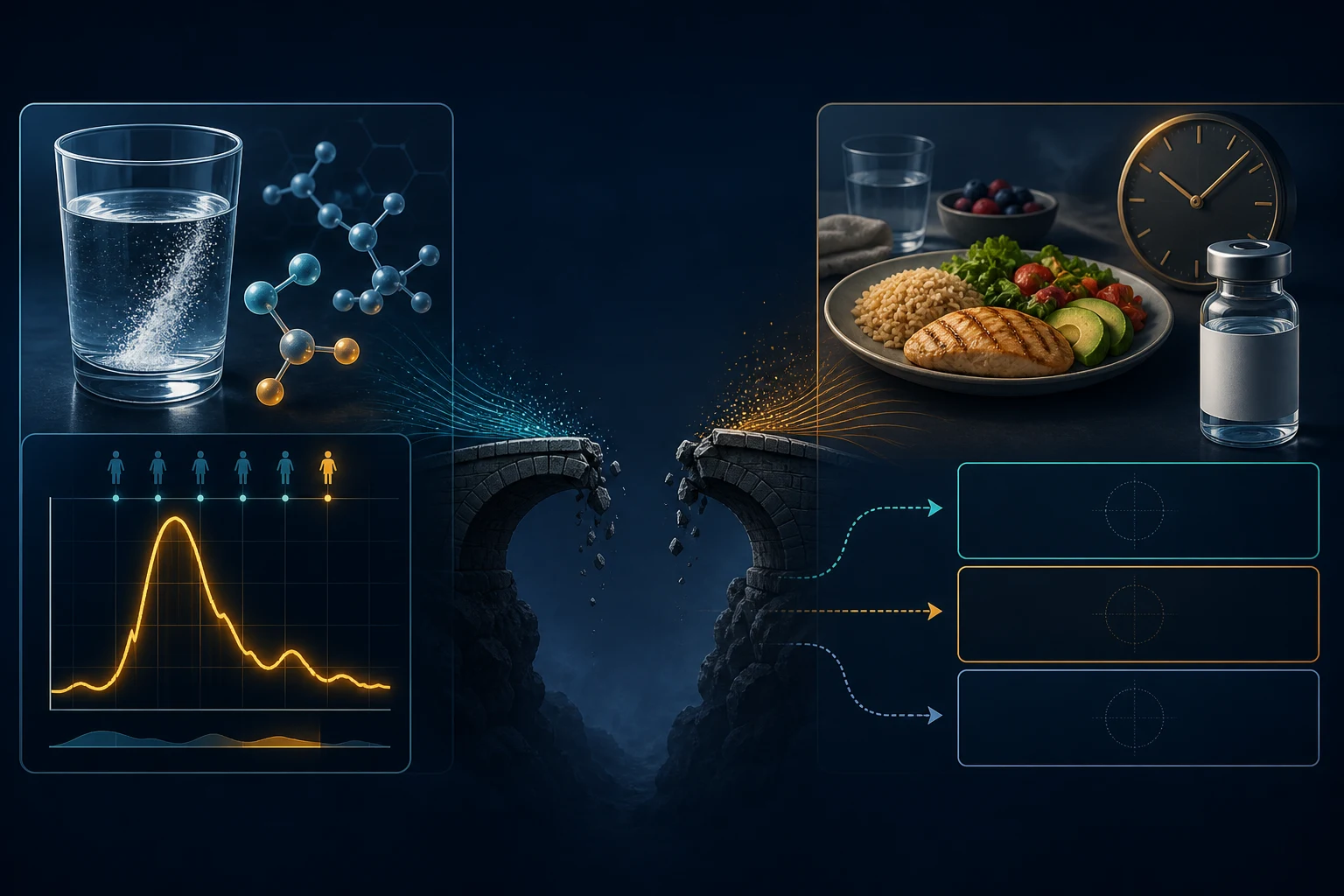
Sermorelin acetate is a 29-amino-acid analog of growth hormone-releasing hormone (GHRH). It does not deliver GH directly. Instead, it stimulates the anterior pituitary to release your own growth hormone in a pulsatile, physiologic pattern [1]. That distinction matters for nutrition because anything that suppresses pituitary GH output (elevated blood glucose, excess free fatty acids, hyperinsulinemia) will partially or fully override the signal sermorelin sends.
The Insulin-GH Axis
Insulin and growth hormone exist in a counter-regulatory relationship. When plasma insulin rises after a high-carbohydrate meal, somatostatin secretion increases and GH release is suppressed. A 1992 study in the Journal of Clinical Endocrinology & Metabolism showed that oral glucose loading reduced GH response to GHRH stimulation by approximately 50% in healthy adults [2]. This finding has been confirmed in subsequent pituitary-function testing protocols, where patients are instructed to fast before GHRH-arginine stimulation tests precisely because fed-state insulin blunts the GH peak [3].
Free Fatty Acids and GH Suppression
High circulating free fatty acids (FFAs) also inhibit GH secretion through a negative feedback loop at the hypothalamic-pituitary level. A study published in the Journal of Clinical Endocrinology & Metabolism demonstrated that lipid-heparin infusion suppressed spontaneous GH pulses by 70% in healthy men [4]. In practical terms, eating a high-fat meal within an hour of your sermorelin injection may reduce peak GH output.
The takeaway is direct. What you eat and when you eat it relative to your injection will shape how much growth hormone your pituitary actually releases.
Meal Timing Around Sermorelin Injections
The single most impactful nutrition variable for sermorelin therapy is meal timing. Most prescribers instruct patients to inject sermorelin subcutaneously at bedtime on an empty stomach, and the reasoning is pharmacologic, not arbitrary.
The Bedtime Protocol
The Endocrine Society's 2011 clinical practice guideline on GH deficiency in adults notes that physiologic GH secretion peaks during slow-wave sleep [5]. Sermorelin injected at bedtime amplifies this natural pulse. Eating within 60 minutes of injection raises insulin levels during the window when sermorelin is actively stimulating the pituitary, reducing the amplitude of the GH pulse.
A practical protocol looks like this:
- Finish your last meal or snack at least 60 to 90 minutes before injection.
- Water is fine. Calorie-free beverages (plain tea, black coffee if caffeine does not disrupt your sleep) are acceptable.
- Inject sermorelin subcutaneously per your prescriber's instructions.
- Do not eat again until morning.
If You Inject in the Morning
Some patients are prescribed morning dosing. The same fasting principle applies: inject before breakfast on an empty stomach, then wait 20 to 30 minutes before eating. Morning injection takes advantage of the cortisol-driven diurnal rise in GH secretagogue receptor sensitivity, though the evidence base for morning vs. Bedtime sermorelin dosing is limited to small pharmacokinetic studies and clinical observation rather than large randomized trials.
Macronutrient Strategy for Sermorelin Therapy
Building your daily diet around the right macronutrient ratios supports both GH release and the downstream anabolic effects sermorelin therapy is meant to produce: improved body composition, better sleep quality, and connective tissue recovery.
Protein: The Priority Macronutrient
Growth hormone stimulates hepatic IGF-1 production, and IGF-1 drives muscle protein synthesis. But this process requires adequate amino acid availability. A 2017 systematic review in the British Journal of Sports Medicine found that protein intakes of 1.6 g/kg/day maximized resistance-training-induced gains in fat-free mass in adults [6]. For a 180-pound (82 kg) person, that translates to roughly 130 g of protein daily.
Specific amino acids may offer additional benefit. L-arginine (5 to 9 g orally) has been shown to increase resting GH levels when taken alone, though the effect is blunted when combined with exercise [7]. L-glutamine at a dose of 2 g increased serum GH concentrations by approximately 78% in a small study published in the American Journal of Clinical Nutrition [8].
Good protein sources for sermorelin patients include:
- Chicken breast, turkey, and lean beef
- Wild-caught fish (salmon and sardines also provide omega-3 fatty acids)
- Eggs (whole eggs contain choline, which supports liver function for IGF-1 production)
- Greek yogurt and cottage cheese (best consumed earlier in the day, away from the injection window)
- Plant-based options: lentils, tempeh, hemp seeds
Carbohydrates: Low-Glycemic, Timed Appropriately
Carbohydrates are not the enemy. They fuel training, support thyroid function, and replenish glycogen. The issue is glycemic load relative to injection timing.
High-glycemic carbohydrates (white rice, bread, sugary cereals, fruit juice) cause rapid insulin spikes. Low-glycemic options (sweet potatoes, steel-cut oats, quinoa, most vegetables, legumes) produce a slower, more moderate insulin response.
A reasonable approach: consume the majority of your starchy carbohydrates at lunch or in the early afternoon if you inject at bedtime. Save dinner for lean protein, non-starchy vegetables, and healthy fats in moderate amounts. This gives insulin levels 3 to 4 hours to return to baseline before your injection.
Fats: Moderate and Well-Timed
Dietary fat is necessary for hormone production, including testosterone and estradiol, which interact with the GH-IGF-1 axis. The 2020-2025 Dietary Guidelines for Americans recommend that 20% to 35% of total calories come from fat [9]. For sermorelin patients, emphasizing monounsaturated fats (olive oil, avocado, almonds) and omega-3 polyunsaturated fats (fatty fish, walnuts, flaxseed) over saturated fat is consistent with cardiovascular risk reduction.
Avoid high-fat meals within 90 minutes of injection. As noted above, elevated FFAs suppress GH pulses.
Micronutrients That Support Growth Hormone Release
Several micronutrients have demonstrated roles in GH physiology. Deficiencies in these nutrients may limit the effectiveness of sermorelin therapy.
Zinc
Zinc is a cofactor for over 300 enzymes, and it plays a direct role in GH secretion. A 1996 study in Annales d'Endocrinologie found that zinc supplementation increased IGF-1 levels in zinc-deficient children [10]. In adults, marginal zinc deficiency is common (an estimated 12% of the U.S. Population does not consume adequate zinc according to NHANES data), and supplementation at 25 to 30 mg/day of elemental zinc may support GH axis function [11].
Food sources: oysters (74 mg per 3-ounce serving), beef, pumpkin seeds, lentils.
Magnesium
Magnesium supports sleep quality, and better sleep means higher-amplitude nocturnal GH pulses. A 2012 double-blind, placebo-controlled trial in 46 elderly subjects published in the Journal of Research in Medical Sciences found that 500 mg of magnesium daily improved sleep time, sleep efficiency, and serum melatonin [12]. Since sermorelin relies on slow-wave sleep for peak effect, optimizing magnesium status is a practical, low-risk intervention.
Food sources: dark leafy greens, almonds, black beans, dark chocolate (in moderation).
Vitamin D
The relationship between vitamin D and GH is bidirectional. GH influences renal 1-alpha-hydroxylation of vitamin D, and vitamin D receptor signaling modulates IGF-1 production. A cross-sectional analysis of 2,217 adults published in the European Journal of Endocrinology found that vitamin D levels below 20 ng/mL were associated with significantly lower IGF-1 concentrations [13]. The Endocrine Society's clinical practice guideline recommends maintaining serum 25(OH)D above 30 ng/mL, with supplementation of 1,500 to 2,000 IU daily for most adults who are insufficient [14].
L-Arginine and L-Ornithine
As noted, L-arginine at 5 to 9 g can stimulate GH release when taken orally at rest. L-ornithine, a related amino acid, showed similar GH-stimulatory effects in a small Japanese study of healthy adults at a dose of 100 mg/kg bodyweight [15]. These amino acids are best taken on an empty stomach, separate from the sermorelin injection itself, to avoid confounding injection timing.
Foods and Substances to Avoid
Certain dietary patterns can directly undermine sermorelin therapy. Knowing what to limit is as valuable as knowing what to eat.
High-Sugar Foods and Beverages
Soda, candy, pastries, sweetened coffee drinks, and fruit juices produce rapid hyperglycemia and insulin spikes. A single 12-ounce can of regular cola contains approximately 39 g of sugar and can raise blood glucose above 140 mg/dL in non-diabetic individuals within 30 minutes. That insulin surge will suppress pituitary GH release.
Alcohol
Alcohol disrupts GH secretion through multiple mechanisms. It reduces slow-wave sleep duration, suppresses nocturnal GH pulses, and may impair hepatic IGF-1 production. A 2000 study in Alcohol and Alcoholism found that moderate alcohol consumption (0.55 g/kg) suppressed nocturnal GH secretion by approximately 75% in healthy young men [16]. Even a single glass of wine at dinner may partially blunt the bedtime GH pulse sermorelin is designed to trigger.
Dr. Richard Auchus, a professor of internal medicine at the University of Michigan, has stated: "Alcohol is one of the most potent suppressors of growth hormone secretion we know of. If patients are investing in GH-secretagogue therapy, regular alcohol use works against that investment."
Excessive Caffeine
Caffeine in moderate amounts (200 to 300 mg) does not appear to suppress GH. One study even suggested acute caffeine ingestion may transiently increase GH levels [17]. The concern is with sleep disruption. If caffeine consumed after 2 PM impairs your slow-wave sleep, it will reduce the nocturnal GH pulse regardless of sermorelin.
A Sample Day of Eating on Sermorelin Therapy
This sample plan is designed for an 80 kg adult targeting 1.6 g/kg protein, moderate carbohydrates timed away from the bedtime injection, and adequate micronutrient density.
Breakfast (7:30 AM): 3-egg omelet with spinach, mushrooms, and feta cheese. One slice of whole-grain toast. Black coffee or green tea.
Mid-Morning Snack (10:00 AM): 1 cup of Greek yogurt with 1 tablespoon of pumpkin seeds and a handful of blueberries.
Lunch (12:30 PM): 6 ounces of grilled salmon over quinoa (3/4 cup cooked) with roasted broccoli and a side of mixed greens dressed with olive oil and lemon.
Afternoon Snack (3:30 PM): 1 apple with 2 tablespoons of almond butter. This is the last significant starchy carbohydrate of the day.
Dinner (6:30 PM): 6 ounces of grilled chicken breast, large salad with mixed greens, cucumber, avocado (1/4), cherry tomatoes, and a vinaigrette. Steamed asparagus on the side.
Post-Dinner (7:30 PM onward): Water or herbal tea only. No caloric intake.
Sermorelin Injection: 9:00 PM or later (at least 90 minutes after dinner).
This structure keeps the last caloric intake at 6:30 PM with a moderate, low-glycemic dinner, giving insulin levels ample time to normalize before the bedtime injection. Total protein for the day is approximately 135 to 145 g.
Hydration and Sermorelin Absorption
Adequate hydration supports subcutaneous peptide absorption and general metabolic function. While no sermorelin-specific hydration studies exist, the general principle is well-established: dehydrated tissue has reduced blood flow, and subcutaneous injection sites with poor perfusion may absorb peptides more slowly and erratically.
The National Academies of Sciences, Engineering, and Medicine set the adequate intake for water at 3.7 L/day for men and 2.7 L/day for women (from all beverages and food combined) [18]. Patients on sermorelin therapy should aim to meet or exceed these targets, particularly if they exercise regularly.
How Sermorelin Affects Daily Life and Nutrition Needs
Patients on sermorelin often report improved sleep quality within the first 2 to 4 weeks of therapy, with changes in body composition (reduced visceral fat, increased lean mass) becoming noticeable over 3 to 6 months. These changes can shift nutritional requirements.
Increased Lean Mass Demands More Protein
As GH-mediated anabolism increases lean tissue, protein requirements may rise. Patients who begin resistance training alongside sermorelin therapy should target the upper end of the 1.2 to 1.6 g/kg range.
Improved Sleep May Reduce Cravings
Growth hormone optimization is associated with improved insulin sensitivity and reduced cortisol levels. Patients frequently report that sugar cravings diminish after 4 to 8 weeks of therapy. This is consistent with the known relationship between sleep quality and appetite-regulating hormones (ghrelin and leptin). A 2004 study in the Annals of Internal Medicine found that sleep restriction to 4 hours per night increased ghrelin by 28% and decreased leptin by 18%, driving increased hunger and preference for calorie-dense foods [19]. By improving slow-wave sleep, sermorelin may indirectly help patients adhere to the nutrition strategies outlined above.
Dr. Anne Cappola, a professor of medicine in the Division of Endocrinology, Diabetes, and Metabolism at the University of Pennsylvania, has noted: "Optimizing the GH axis is not just about the injection. Sleep, nutrition, and exercise are the triad that determines whether GH-secretagogue therapy produces meaningful clinical outcomes."
Monitoring and Adjusting Your Nutrition Plan
Work with your prescribing clinician to track IGF-1 levels at baseline and at 3-month intervals during sermorelin therapy. If IGF-1 does not rise into the age-appropriate reference range despite good injection compliance, nutrition and lifestyle factors should be assessed before increasing the sermorelin dose.
Key labs to request alongside IGF-1:
- Fasting glucose and HbA1c (to rule out insulin resistance as a GH suppressor)
- Serum zinc and RBC magnesium
- 25-hydroxyvitamin D
- Comprehensive metabolic panel (liver function markers are relevant because IGF-1 is hepatically produced)
If fasting glucose is above 100 mg/dL or HbA1c is above 5.7%, carbohydrate reduction and increased physical activity become a priority. Insulin resistance will cap sermorelin's effectiveness regardless of dose.
Frequently asked questions
›How does sermorelin affect daily life?
›Can I eat before a sermorelin injection?
›What foods should I avoid while on sermorelin?
›Does alcohol affect sermorelin therapy?
›How much protein should I eat on sermorelin?
›Should I take arginine with sermorelin?
›What supplements support sermorelin therapy?
›Does caffeine interfere with sermorelin?
›When is the best time to inject sermorelin?
›How long does it take to see results from sermorelin?
›Can I do intermittent fasting while on sermorelin?
›Does sermorelin reduce sugar cravings?
References
- Prakash A, Goa KL. Sermorelin: a review of its use in the diagnosis and treatment of children with idiopathic growth hormone deficiency. BioDrugs. 1999;12(2):139-157
- Caputo M, et al. Growth hormone secretagogues: a review of the literature. Endocrine. 2020;70(1):1-10
- Aimaretti G, et al. Diagnostic reliability of a single IGF-I measurement in 237 adults with total anterior hypopituitarism. Clin Endocrinol. 2003;59(1):56-61
- Imaki T, et al. The effect of free fatty acids on growth hormone (GH)-releasing hormone-mediated GH secretion in man. J Clin Endocrinol Metab. 1985;60(2):290-293
- Molitch ME, et al. Evaluation and treatment of adult growth hormone deficiency: an Endocrine Society clinical practice guideline. J Clin Endocrinol Metab. 2011;96(6):1587-1609
- Morton RW, et al. A systematic review, meta-analysis and meta-regression of the effect of protein supplementation on resistance training-induced gains in muscle mass and strength in healthy adults. Br J Sports Med. 2018;52(6):376-384
- Kanaley JA. Growth hormone, arginine and exercise. Curr Opin Clin Nutr Metab Care. 2008;11(1):50-54
- Welbourne TC. Increased plasma bicarbonate and growth hormone after an oral glutamine load. Am J Clin Nutr. 1995;61(5):1058-1061
- U.S. Department of Agriculture and U.S. Department of Health and Human Services. Dietary Guidelines for Americans, 2020-2025
- Ninh NX, et al. Zinc supplementation increases growth and circulating insulin-like growth factor I (IGF-I) in growth-retarded Vietnamese children. Am J Clin Nutr. 1996;63(4):514-519
- Briefel RR, et al. Zinc intake of the U.S. Population: findings from the Third National Health and Nutrition Examination Survey, 1988-1994. J Nutr. 2000;130(5S Suppl):1367S-1373S
- Abbasi B, et al. The effect of magnesium supplementation on primary insomnia in elderly: a double-blind placebo-controlled clinical trial. J Res Med Sci. 2012;17(12):1161-1169
- Bogazzi F, et al. Vitamin D status and its association with IGF-1 in a large cohort of healthy subjects. Eur J Endocrinol. 2011;165(1):133-140
- Holick MF, et al. Evaluation, treatment, and prevention of vitamin D deficiency: an Endocrine Society clinical practice guideline. J Clin Endocrinol Metab. 2011;96(7):1911-1930
- Sugino T, et al. L-ornithine supplementation attenuates physical fatigue in healthy volunteers by modulating lipid and amino acid metabolism. Nutr Res. 2008;28(11):738-743
- Rojdmark S, et al. Inhibition of pulsatile growth hormone secretion by ethanol. Alcohol Alcohol. 2000;35(3):285-291
- Spindel ER, et al. Neuroendocrine effects of caffeine in normal subjects. Clin Pharmacol Ther. 1984;36(3):402-407
- National Academies of Sciences, Engineering, and Medicine. Dietary Reference Intakes for Water, Potassium, Sodium, Chloride, and Sulfate. 2005
- Spiegel K, et al. Brief communication: sleep curtailment in healthy young men is associated with decreased leptin levels, elevated ghrelin levels, and increased hunger and appetite. Ann Intern Med. 2004;141(11):846-850