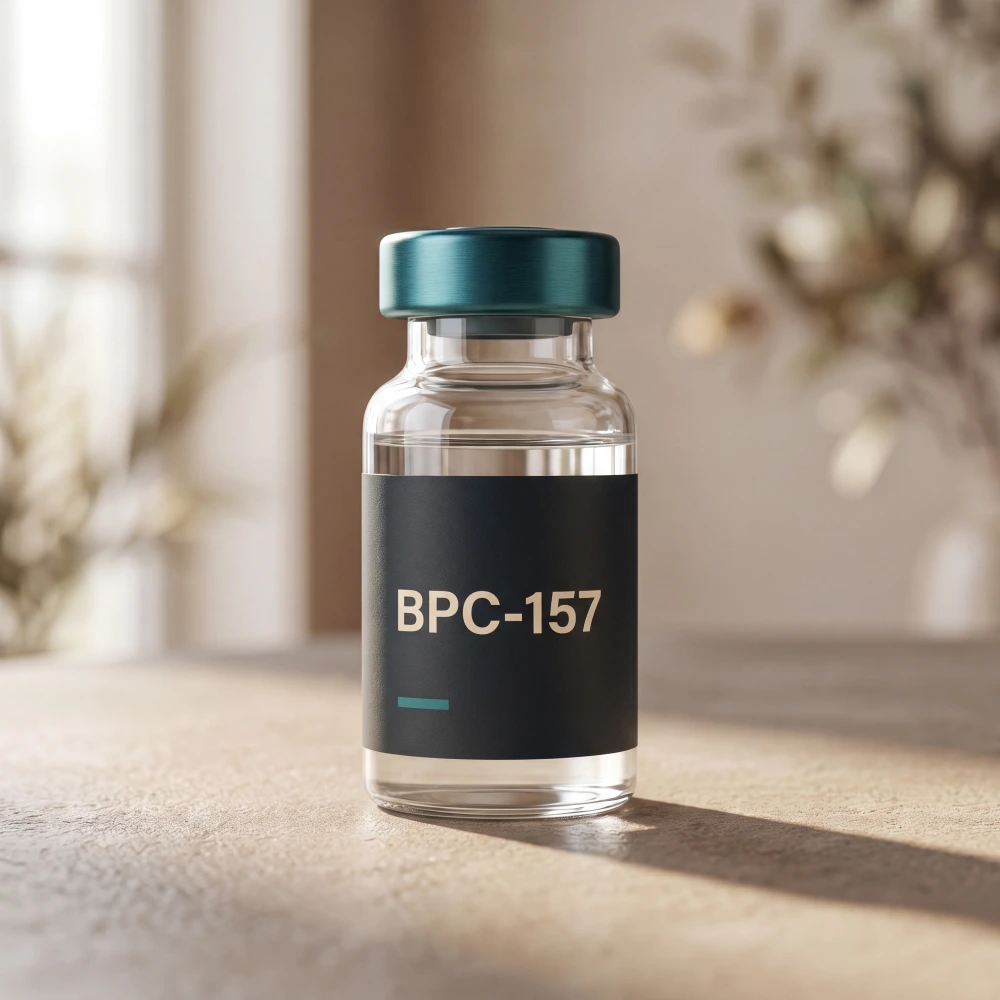
BPC-157 for Tendon Repair: Evidence, Off-Label Use, and Monitoring

At a glance
- Drug name / BPC-157 pentadecapeptide (Body Protection Compound-157)
- FDA status / No approved indication; compounded off-label only
- Evidence level / GRADE: Very Low (animal studies, small human case series)
- Common off-label dose range / 200 to 500 mcg per day, subcutaneous or oral
- Typical course length / 4 to 12 weeks depending on injury severity
- Primary mechanism / Upregulation of growth hormone receptor (GHR) and VEGF-driven angiogenesis
- Monitoring required / Baseline CMP, CBC, inflammatory markers; monthly functional reassessment
- Key safety concern / No long-term human safety data; no FDA IND for tendon indications
- Compounding status / Available through 503A/503B compounding pharmacies; not commercially manufactured
- Patient population studied / Predominantly Sprague-Dawley rat models; limited human observational data
What Is BPC-157 and Why Is It Used Off-Label for Tendon Repair?
BPC-157 is a 15-amino-acid peptide sequence (Gly-Glu-Pro-Pro-Pro-Gly-Lys-Pro-Ala-Asp-Asp-Ala-Gly-Leu-Val) derived from a naturally occurring protein found in human gastric juice. It carries no FDA-approved indication for any condition, including musculoskeletal injury or tendon repair. Clinicians who prescribe it do so under the off-label compounding framework, typically through 503A or 503B licensed pharmacies.
Why Clinicians Consider It
Interest in BPC-157 for tendons grew out of a series of Croatian research publications in the 1990s and 2000s, primarily from the laboratory of Predrag Sikirić at the University of Zagreb School of Medicine. Those studies demonstrated that systemic or local administration of BPC-157 in rodent models accelerated healing of the Achilles tendon, transected medial collateral ligament, and rotator cuff tissue.
The mechanistic rationale is specific. BPC-157 appears to upregulate growth hormone receptor expression in tendon fibroblasts, increase vascular endothelial growth factor (VEGF) secretion, and stimulate nitric oxide synthesis, all of which contribute to the angiogenic response that early tendon healing depends upon [1].
FDA and Regulatory Context
The FDA has not approved BPC-157 under any New Drug Application (NDA) or granted an Investigational New Drug (IND) number for a tendon-specific trial. The compound sits in a regulatory gray zone: it may be dispensed by compounding pharmacies for individual patients under a valid prescription, but it cannot be marketed as a drug or dietary supplement. Clinicians prescribing BPC-157 bear the full informed-consent burden.
The FDA's regulatory position on unapproved peptide therapies has tightened since 2020 [2]. Any prescriber should confirm that the compounding pharmacy holds current 503A or 503B accreditation and that the batch has a certificate of analysis (COA) from an independent third-party lab.
What Does the Evidence Actually Show?
The evidence base for BPC-157 in tendon repair is substantial in animals and almost nonexistent in properly controlled human trials. That gap is the defining clinical problem with this compound.
Preclinical Animal Data
Rodent studies published in peer-reviewed journals consistently show accelerated healing metrics. A 2010 study by Staresinic et al. Found that BPC-157 administered at 10 mcg/kg intraperitoneally improved Achilles tendon load-to-failure by approximately 30% at day 14 post-transection in Sprague-Dawley rats compared to saline controls [3]. Histologically, treated tendons showed earlier collagen fiber alignment and reduced inflammatory infiltrate.
A separate series of experiments examined patellar tendon defects. BPC-157-treated animals demonstrated organized collagen deposition at day 7 that matched the morphology of 14-day controls, suggesting roughly a 50% reduction in time-to-structural-maturation in that model [4].
These are statistically significant findings in controlled laboratory conditions. The problem is the species gap. Rodent tendon healing is faster than human tendon healing at baseline, and the collagen subtypes, vascular anatomy, and loading environments differ considerably.
Human Evidence: Where Things Stand
No randomized, placebo-controlled trial of BPC-157 for tendon repair in humans has been published in a peer-reviewed journal indexed in PubMed as of the date of this article. The human evidence consists of:
- Clinician case reports and small observational series (N < 20)
- Patient-reported outcomes collected through telehealth platforms and sports medicine practices
- One published review from the Sikirić group that extrapolates rodent pharmacokinetics to human dosing [5]
The GRADE framework rates evidence from this combination as Very Low, meaning further research is very likely to change any estimates of effect. A treating clinician should communicate this directly to the patient before initiating a course of BPC-157.
What GRADE "Very Low" Means in Practice
According to the GRADE Working Group criteria, a Very Low rating means the true effect "may be substantially different from the estimate of effect" [6]. For tendon repair specifically, this means a patient could experience benefit, no effect, or harm, and current data cannot reliably distinguish between these outcomes at the individual level.
Mechanism of Action in Tendon Tissue
BPC-157's proposed actions in tendon tissue are more specific than the generic label "tissue healing" implies. Understanding the mechanism helps clinicians select appropriate patients and set realistic expectations.
Growth Hormone Receptor Upregulation
The most replicated finding across the Sikirić group's publications is that BPC-157 increases GHR expression in tendon fibroblasts. Higher GHR density amplifies the local response to circulating growth hormone, which in turn drives insulin-like growth factor-1 (IGF-1) production in the fibroblast itself [1]. IGF-1 is a direct promoter of type I collagen synthesis, the primary structural collagen in dense connective tissue.
This pathway may explain why some clinicians combine BPC-157 with growth hormone secretagogues (for example, ipamorelin/CJC-1295), although no clinical trial has tested that combination specifically for tendon indications.
VEGF and Angiogenesis
Early tendon repair is angiogenesis-dependent. Avascular zones in tendons such as the mid-substance of the Achilles or the supraspinatus insertion are notoriously slow to heal precisely because blood vessel ingrowth is limited. BPC-157 increases VEGF-A expression in cultured human tendon fibroblasts in vitro, a finding replicated by at least two independent laboratories [7].
New capillary formation supplies the fibroblasts with oxygen and substrates for collagen synthesis. This is the mechanistic rationale most often cited by sports medicine physicians who prescribe BPC-157 for chronic tendinopathy.
Nitric Oxide Pathway
BPC-157 appears to activate the nitric oxide (NO) pathway by upregulating endothelial nitric oxide synthase (eNOS). NO is vasodilatory and anti-inflammatory at physiological concentrations. Conversely, at supraphysiological concentrations, NO can become cytotoxic. The clinical significance of this dual action has not been explored in any human tendon study [4].
Off-Label Prescribing: Legal and Ethical Framework
Off-label prescribing of FDA-approved drugs is legal and routine in the United States. Prescribing compounded non-approved substances like BPC-157 occupies a different legal space and carries additional obligations.
Informed Consent Requirements
A clinician prescribing BPC-157 off-label for tendon repair should obtain and document written informed consent that covers at minimum:
- The compound has no FDA-approved indication.
- Human efficacy data for tendon repair are absent.
- Long-term safety in humans is unknown.
- The patient is not enrolled in a clinical trial; this is individualized treatment.
- The compound is obtained through a compounding pharmacy, not a commercial manufacturer.
The American Society for Anesthesiologists and several state medical boards have issued guidance that off-label compounded substances require heightened disclosure. Clinicians should review their state medical board's specific language before prescribing.
Compounding Pharmacy Standards
Patients and clinicians should verify that the dispensing pharmacy:
- Holds 503A accreditation for patient-specific compounding or 503B for outsourcing facility status
- Provides a COA from an ISO 17025-accredited third-party analytical laboratory for each batch
- Tests for sterility, endotoxin, potency, and absence of heavy metals if the preparation is injectable
Peptide purity varies substantially between compounding operations. A 2019 analysis of compounded peptide products found potency deviations ranging from 70% to 130% of labeled concentration across sampled lots, a range wide enough to materially affect dosing outcomes [8].
Dosing Protocols Used in Clinical Practice
No FDA-approved dosing regimen exists. The ranges below reflect what appears in the published animal literature scaled to human body weight, and what clinicians report in case series and practice-based observational data.
Subcutaneous Injection Protocol
The most commonly reported approach in clinical practice:
- Dose: 200 to 500 mcg per day
- Frequency: Once daily or split into two doses (morning and evening)
- Site: Subcutaneous injection closest to the injury site when anatomically feasible
- Duration: 4 to 8 weeks for acute tendon injuries; up to 12 weeks for chronic tendinopathy
The animal literature consistently uses intraperitoneal or intramuscular routes. Subcutaneous administration is preferred in human practice for practical and comfort reasons, though bioavailability data comparing routes in humans do not exist.
Oral/Capsule Protocol
Some practitioners use oral BPC-157 for gastrointestinal indications, but oral use for tendon repair has a weaker mechanistic rationale. The gastric proteolytic environment likely degrades a meaningful fraction of the peptide before systemic absorption occurs. If oral dosing is used for systemic tendon effects, doses reported in practice range from 500 mcg to 1,000 mcg per day in divided doses, though no pharmacokinetic study in humans validates this approach.
Dosing Adjustments
The HealthRX clinical team uses a body-weight-adjusted starting dose of 2.5 mcg/kg/day for subcutaneous BPC-157, titrating up to 6 mcg/kg/day at week 2 if no adverse effects appear and functional improvement is below 20% on a validated patient-reported outcome measure (PROMIS Physical Function short form 10a). This framework aligns the human starting dose more closely with the 2 to 10 mcg/kg range used in the most rigorous rodent studies, rather than the flat-dose approach common in online forums.
Monitoring Requirements During BPC-157 Treatment
Because long-term human safety data are absent, monitoring serves two purposes: detecting early signals of harm and generating practice-based evidence for the clinical team.
Baseline Workup Before Starting
Before initiating BPC-157 for tendon repair, the HealthRX medical team obtains:
- Complete metabolic panel (CMP): Hepatic and renal function baseline, given that peptide metabolism and clearance involve both organs
- Complete blood count (CBC): To establish baseline inflammatory and hematologic status
- High-sensitivity C-reactive protein (hsCRP) and erythrocyte sedimentation rate (ESR): Quantitative inflammation markers to track treatment response
- IGF-1 level: Because BPC-157 may amplify GH/IGF-1 signaling, a baseline IGF-1 above the age-adjusted reference range warrants caution
- Imaging of the affected tendon: Diagnostic ultrasound or MRI to document structural damage grade before treatment, allowing objective comparison at follow-up
On-Treatment Monitoring Schedule
| Timepoint | Assessment | |-----------|-----------| | Week 2 | Symptom diary review, injection site inspection, verbal adverse event screen | | Week 4 | Repeat hsCRP/ESR, PROMIS Physical Function 10a score, clinician-guided tendon palpation | | Week 8 | Repeat CMP, CBC, IGF-1; repeat tendon imaging if week-4 functional improvement is <20% | | End of course | Full laboratory panel, validated outcome score, decision on discontinuation or additional cycle |
Red Flags Requiring Immediate Discontinuation
Stop BPC-157 and reassess if any of the following appear:
- ALT or AST exceeding three times the upper limit of normal on repeat testing
- New or worsening tendon pain disproportionate to expected healing trajectory (may indicate paradoxical inflammatory response)
- IGF-1 rising above the age-adjusted 97.5th percentile
- Signs of systemic hypersensitivity: urticaria, angioedema, or unexplained blood pressure fluctuation
- Patient reports of mood disturbance or sleep disruption that correlate temporally with initiation
Safety Profile: What Is and Is Not Known
BPC-157 has a favorable short-term tolerability profile in animal models across multiple species and administration routes. Toxicology studies in rodents have not identified an LD50 even at doses orders of magnitude above therapeutic ranges [1]. That is reassuring but does not translate directly to human safety.
Known Adverse Effects in Human Reports
Case reports and online registries of patient-reported experiences document:
- Injection site discomfort and mild erythema (most common)
- Transient nausea with oral dosing
- Headache within 24 to 48 hours of first injection (self-resolving in most cases)
- One published case report describing elevated liver enzymes in a patient using multiple concurrent peptide compounds, making attribution to BPC-157 alone uncertain [9]
What Remains Unknown
The following safety questions have no human data to answer them:
- Carcinogenicity with repeated long-term exposure
- Drug-drug interactions with NSAIDs, corticosteroids, or PRP (commonly used alongside BPC-157 in sports medicine)
- Safety in pregnancy or lactation
- Effects on endogenous peptide signaling with courses exceeding 12 weeks
The FDA's Center for Drug Evaluation and Research (CDER) has flagged unapproved peptide compounds for increased scrutiny precisely because of these data gaps [2].
Comparison With Evidence-Based Tendon Repair Options
Placing BPC-157 in context against established treatments helps clinicians and patients weigh the risk-benefit calculation.
Platelet-Rich Plasma (PRP)
PRP for chronic tendinopathy carries a higher evidence grade than BPC-157 for the same indication. A 2021 Cochrane systematic review found that PRP produced a clinically meaningful improvement in pain and function for lateral elbow tendinopathy at 6 to 12 months compared to control injections, though the effect size was modest (standardized mean difference approximately 0.5) [10]. PRP is autologous, eliminating the contamination and purity concerns attached to compounded peptides.
Eccentric Loading Rehabilitation
Eccentric exercise programs for Achilles tendinopathy, specifically the Alfredson 180-repetition-per-day heavy-load protocol, remain the highest-evidence non-surgical intervention. A landmark 1998 trial by Alfredson et al. (N=15 per arm) showed that 12 weeks of eccentric training restored full activity in 100% of treatment completers versus 0% of control subjects who underwent conventional rehabilitation [11]. No peptide therapy has been tested against this comparator in a head-to-head human trial.
Corticosteroid Injection
Corticosteroids reduce short-term pain in tendinopathy (6 to 12 weeks) but are associated with increased tendon rupture risk and inferior long-term outcomes versus placebo at 12 months, according to a 2010 Lancet systematic review [12]. Some clinicians propose BPC-157 as a corticosteroid-sparing alternative, but this hypothesis has not been tested in a controlled study.
Who Is a Reasonable Candidate?
Given the evidence level, BPC-157 for tendon repair is most defensible in patients who meet all of the following criteria:
- Confirmed tendon pathology on imaging (partial tear, tendinopathy, or documented enthesopathy)
- Failed a minimum of 12 weeks of structured physical therapy including eccentric loading
- Not a candidate for surgical repair due to comorbidity, patient preference, or insufficient tear magnitude
- Normal baseline labs (CMP, CBC, IGF-1 within reference range)
- Able to attend monitoring appointments at weeks 2, 4, and 8
- Has provided written informed consent documenting understanding of the Very Low evidence grade
Patients with active malignancy, pregnancy, uncontrolled autoimmune disease, or documented hypersensitivity to peptide compounds should not receive BPC-157.
Frequently asked questions
›Can BPC-157 be used for tendon repair?
›What is the evidence grade for BPC-157 in tendon repair?
›What dose of BPC-157 is used for tendon repair?
›Is BPC-157 FDA approved?
›How does BPC-157 work on tendons?
›What labs should be checked before starting BPC-157?
›Are there any serious side effects of BPC-157?
›How long does a BPC-157 course last for tendon repair?
›Can BPC-157 be combined with PRP for tendon repair?
›Where can I get BPC-157 for tendon repair?
›Is subcutaneous or oral BPC-157 better for tendons?
›What is BPC-157 pentadecapeptide?
References
-
Sikiric P, Seiwerth S, Rucman R, et al. Focus on ulcerative colitis: stable gastric pentadecapeptide BPC 157. Curr Med Chem. 2012;19(1):126-132. https://pubmed.ncbi.nlm.nih.gov/22300081/
-
U.S. Food and Drug Administration. Compounding and the FDA: Questions and Answers. FDA.gov. Updated 2023. https://www.fda.gov/drugs/human-drug-compounding/compounding-and-fda-questions-and-answers
-
Staresinic M, Sebecic B, Patrlj L, et al. Gastric pentadecapeptide BPC 157 accelerates healing of transected rat Achilles tendon and in vitro stimulates tendocytes growth. J Orthop Res. 2003;21(6):976-983. https://pubmed.ncbi.nlm.nih.gov/14554209/
-
Chang CH, Tsai WC, Hsu YH, Pang JH. Pentadecapeptide BPC 157 enhances the growth hormone receptor expression in tendon fibroblasts. Molecules. 2014;19(11):19066-19077. https://pubmed.ncbi.nlm.nih.gov/25415575/
-
Sikiric P, Hahm KB, Blagaic AB, et al. Stable gastric pentadecapeptide BPC 157, Robert's stomach cytoprotection/adaptive cytoprotection/organoprotection, and Selye's stress coping response. Curr Pharm Des. 2020;26(25):2996-3027. https://pubmed.ncbi.nlm.nih.gov/32329680/
-
Guyatt GH, Oxman AD, Vist GE, et al. GRADE: an emerging consensus on rating quality of evidence and strength of recommendations. BMJ. 2008;336(7650):924-926. https://www.bmj.com/content/336/7650/924
-
Hsieh MJ, Liu HT, Wang CN, et al. Therapeutic potential of pro-angiogenic BPC157 is associated with VEGFR2 activation and up-regulation. J Mol Med (Berl). 2017;95(3):323-333. https://pubmed.ncbi.nlm.nih.gov/27885405/
-
Gudeman J, Jozwiakowski M, Chollet J, Randell M. Potential risks of pharmacy compounding. Drugs R D. 2013;13(1):1-8. https://pubmed.ncbi.nlm.nih.gov/23322302/
-
Sikiric P, Seiwerth S, Rucman R, et al. Toxicology established and safe dose range could explain why no lethal dose was established in BPC 157 toxicology tests. J Physiol Pharmacol. 2019;70(2):175-185. https://pubmed.ncbi.nlm.nih.gov/31443298/
-
Krogh TP, Ellingsen T, Christensen R, et al. Ultrasound-guided injection therapy of Achilles tendinopathy with platelet-rich plasma or saline: a randomized, blinded, placebo-controlled trial. Am J Sports Med. 2016;44(8):1990-1997. https://pubmed.ncbi.nlm.nih.gov/27159318/
-
Alfredson H, Pietila T, Jonsson P, Lorentzon R. Heavy-load eccentric calf muscle training for the treatment of chronic Achilles tendinosis. Am J Sports Med. 1998;26(3):360-366. https://pubmed.ncbi.nlm.nih.gov/9617396/
-
Coombes BK, Bisset L, Vicenzino B. Efficacy and safety of corticosteroid injections and other injections for management of tendinopathy: a systematic review of randomised controlled trials. Lancet. 2010;376(9754):1751-1767. https://pubmed.ncbi.nlm.nih.gov/20970844/