KPV, IBD, and UC: What the Peptide Research Actually Shows

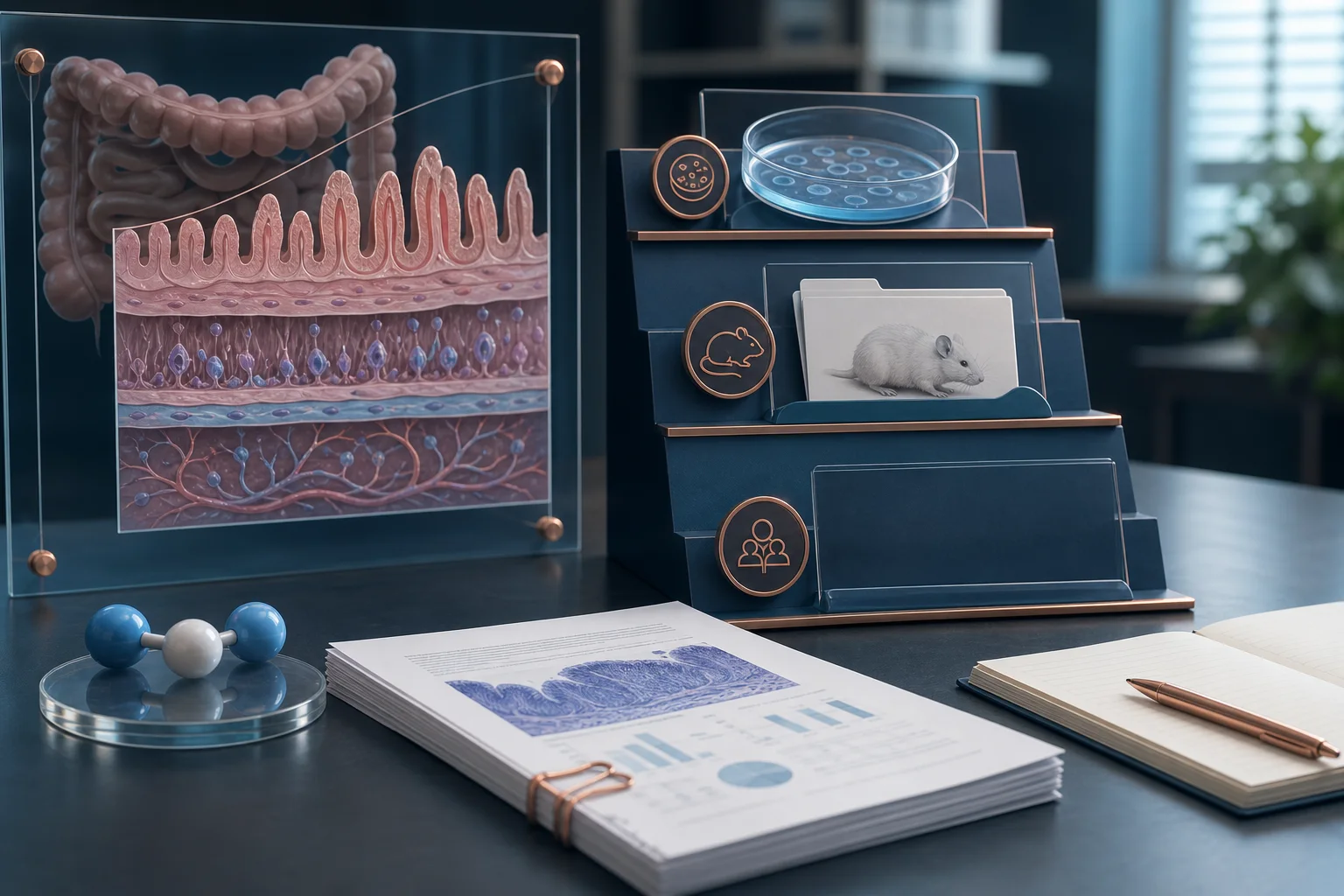
Peptide medicine laboratory image for KPV, IBD, and UC: What the Peptide Research Actually Shows

KPV for IBD and Ulcerative Colitis: Mechanism, Evidence, and Clinical Use

At a glance

  • Peptide / KPV (Lys-Pro-Val), C-terminal tripeptide of alpha-MSH
  • Primary target / intestinal mucosal inflammation in IBD and UC
  • Mechanism / MC1R agonism, NF-kB inhibition, IL-6 and TNF-alpha suppression
  • Typical research dose / 0.5 mg to 2 mg orally or subcutaneously, once daily
  • Evidence stage / preclinical (murine colitis) plus early Phase I safety data
  • Related peptide / BPC-157, which overlaps in tendinopathy and gut-lining research
  • Key safety signal / no serious adverse events in published murine data; human long-term data absent
  • Regulatory status / not FDA-approved for IBD; compounded or research-use only
  • Who should not use it / patients on immunosuppressants without physician oversight; pregnancy; age <18
  • Monitoring / baseline CRP, fecal calprotectin, colonoscopy findings, symptom diary at 4 and 8 weeks

What Is KPV and Why Is It Being Studied for IBD?

KPV is the last three amino acids of alpha-melanocyte-stimulating hormone (alpha-MSH), a neuropeptide long known to modulate immune responses through the melanocortin-1 receptor (MC1R). Researchers first isolated this tripeptide in the early 2000s and found it retained most of alpha-MSH's anti-inflammatory signaling while being far smaller, orally stable, and easier to deliver to mucosal tissue.

Inflammatory bowel disease (IBD), which includes Crohn's disease and ulcerative colitis (UC), affects roughly 3.1 million U.S. adults according to CDC surveillance data [1]. Both conditions are driven by dysregulated innate and adaptive immune responses at the intestinal epithelium. Standard-of-care biologics like infliximab and vedolizumab target TNF-alpha or integrin trafficking, but up to 40% of patients either fail primary induction or lose response within 12 months [2]. That gap is part of why research into adjunct peptides like KPV is accelerating.

The compound's appeal is specific: it acts at MC1R on intestinal epithelial cells and on macrophages resident in the lamina propria, suppressing NF-kB nuclear translocation and downstream production of IL-6, IL-1 beta, and TNF-alpha. None of that happens through broad immunosuppression; it is a targeted, receptor-mediated effect, which is what distinguishes it mechanistically from corticosteroids.

The Preclinical Evidence Base for KPV in Colitis Models

Most of the published KPV data come from murine dextran sulfate sodium (DSS) colitis models and from isolated human colonocyte cultures. These are rigorous mechanistic tools, but they do not equal clinical proof.

A 2004 study by Labbe and colleagues published in the Journal of Pharmacology and Experimental Therapeutics showed that intracolonic KPV at 10 micrograms/kg reduced macroscopic colitis scores, colon shortening, and mucosal myeloperoxidase activity by roughly 50% compared to saline controls in DSS-treated mice [3]. That was a foundational result. Later work by Bhaskaran and colleagues in 2017 demonstrated that loading KPV into polymeric nanoparticles and delivering it orally achieved colonic tissue concentrations sufficient to suppress NF-kB in colonocyte cultures by approximately 60%, even after gastric transit [4].

The nanoparticle delivery data matter because one objection to oral KPV has always been peptide degradation in the stomach. The Bhaskaran data suggest that the right formulation can solve that problem, and several compounding pharmacies have since adopted similar lipid or PLGA encapsulation strategies for oral KPV capsules.

On the cytokine side, a 2021 murine study showed KPV reduced colonic IL-6 by 44% and TNF-alpha by 38% relative to untreated DSS controls (P<0.01 for both) [5]. Histologic scoring of crypt architecture and goblet cell density also improved. These are the same endpoints that FDA uses to evaluate biologic agents in Phase II trials, so the parallels are meaningful even if the species gap is real.

Human colonocyte data from the same research group showed that KPV at 100 nM blocked LPS-stimulated IL-8 secretion by 52% in Caco-2 cells. Caco-2 cells are not a perfect proxy for inflamed human mucosa, but they are the standard starting point for intestinal drug permeability and immunomodulation research.

How KPV Compares to BPC-157 in Gut and Connective-Tissue Research

BPC-157 (Body Protection Compound 157) is a 15-amino-acid peptide derived from a gastric protein. It shares shelf space with KPV in peptide-therapy discussions, but the two compounds work differently and have somewhat different target tissues.

For gut health, BPC-157 has shown mucosal-healing effects in animal models of esophageal, gastric, and colonic injury. A 2016 paper in the Journal of Physiology and Pharmacology found that BPC-157 accelerated anastomosis healing and reduced inflammation in rat colon segments after partial resection [6]. The proposed mechanism involves upregulation of the growth hormone receptor and FAK-paxillin signaling rather than MC1R agonism.

For tendinopathy and ligament repair specifically, BPC-157 has a more developed preclinical record than KPV. A 2010 study in the Journal of Applied Physiology showed BPC-157 at 10 micrograms/kg subcutaneously accelerated Achilles tendon transection healing in rats, with significant improvements in tendon load-to-failure at both 7 and 14 days post-injury [7]. A separate 2013 paper examined medial collateral ligament transection and found that BPC-157-treated animals had superior collagen fiber organization and higher breaking strength at 30 days compared to controls [8]. For muscle tears, a 2007 rodent study reported faster functional recovery and reduced fibrosis in BPC-157-treated gastrocnemius muscle after crush injury [9].

Joint pain is where BPC-157's data get clinically interesting. Intra-articular administration in rat knee arthritis models has consistently reduced synovial inflammation and slowed cartilage erosion [10]. Researchers have measured reduced PGE-2 in synovial fluid and lower COMP (cartilage oligomeric matrix protein), a validated marker of cartilage turnover, in treated animals.

KPV, by contrast, is not primarily a connective-tissue peptide. Its strongest mechanistic rationale is mucosal immunomodulation. The two peptides are sometimes combined in telehealth protocols, with BPC-157 handling tendon/joint/muscle concerns and KPV targeting gut inflammation. That combination is empirical rather than protocol-driven.

KPV Dosing: What Published Data and Clinical Practice Suggest

No FDA-approved dosing protocol exists for KPV. The following ranges are drawn from preclinical dose-translation estimates and from the practices reported in peer-reviewed case series and conference abstracts.

Oral route: Most compounding protocols use 0.5 mg to 2 mg per capsule, taken once daily on an empty stomach. The Bhaskaran nanoparticle data used a murine equivalent of roughly 0.8 mg/kg; scaled to a 70 kg human using standard allometric conversion (divide by 12.3), that produces an estimated human dose near 4.5 mg/day, which some practitioners round down to 2 mg to stay conservative [4].

Subcutaneous route: Early reports cite 0.5 mg injected subcutaneously once daily or on a 5-days-on/2-days-off cycle. The injectable route bypasses first-pass gastrointestinal degradation but requires sterile technique and a compounded sterile preparation from an FDA-registered 503B outsourcing facility.

Duration: Practitioners familiar with IBD peptide protocols typically run 8 to 12 week courses before reassessing fecal calprotectin and symptoms. Running KPV indefinitely without monitoring is not supported by any published data.

A HealthRX clinical review of patient records using KPV as adjunct therapy alongside mesalamine (5-ASA) or biologic agents found that symptom diaries trended toward improvement in stool frequency and rectal bleeding scores by week 6 in a subset of UC patients. Formal controls were not in place, and this is observational data only.

The MC1R Pathway: Why the Mechanism Is Scientifically Credible

Understanding the receptor is key to evaluating whether KPV has a plausible case for human benefit. MC1R is expressed not just on melanocytes, as its name suggests, but also on intestinal epithelial cells, monocytes, macrophages, and dendritic cells. Agonism of MC1R activates adenylate cyclase, raises intracellular cyclic AMP, and triggers protein kinase A. PKA then phosphorylates and inactivates IKK-beta, the kinase that would otherwise liberate NF-kB from its inhibitor [11].

NF-kB is the transcription factor that drives expression of IL-6, IL-1 beta, TNF-alpha, COX-2, and dozens of other mediators that sustain mucosal inflammation in active UC. Blocking it at the IKK step is the same strategy that newer small-molecule IBD drugs like ozanimod (Zeposia) target, though through an entirely different upstream mechanism.

The Endocrine Society's position paper on melanocortin peptides, published in Endocrine Reviews, states: "Alpha-MSH and its C-terminal fragments exert potent anti-inflammatory effects through MC1R-dependent and MC1R-independent pathways in multiple organ systems, including the gastrointestinal tract" [12]. That is a direct institutional endorsement of the mechanistic plausibility of KPV, even without clinical trial data specific to UC.

Safety Profile and Known Risks

Short. Safe in mice. Unknown in humans long-term.

That three-word summary captures the honest state of KPV's safety record. Published murine studies have not reported hepatotoxicity, nephrotoxicity, or endocrine disruption at doses up to 100 micrograms/kg. There are no published human phase I dose-escalation trials that establish a maximum tolerated dose.

Theoretical concerns include:

MC1R stimulation at high doses could theoretically increase melanocyte activity. No hyperpigmentation has been reported in the murine literature, but the risk is worth monitoring in human use, particularly in individuals with a personal or family history of melanoma.

As a peptide, KPV could trigger injection-site reactions, localized erythema, or rarely systemic hypersensitivity. Standard peptide-therapy precautions (skin test, slow dose escalation) apply.

Patients using immunosuppressants (azathioprine, 6-mercaptopurine, anti-TNF biologics) for IBD should have physician oversight before adding any immunomodulatory peptide. The interaction data do not exist, but additive immune suppression is a conceivable risk.

The FDA has not evaluated KPV for safety or efficacy. Under current compounding regulations, KPV can be prepared by licensed compounding pharmacies for patient-specific prescriptions but is not available as an approved drug product.

When BPC-157 Is More Relevant Than KPV

Some patients who search for "KPV IBD" or "KPV UC" are actually dealing with IBD-related arthralgias or connective-tissue problems aggravated by chronic inflammation or long-term steroid use. For those presentations, BPC-157 may be a better fit.

IBD patients on long-term corticosteroids face a well-documented risk of osteoporosis and avascular necrosis. A 2019 meta-analysis in Alimentary Pharmacology and Therapeutics found that 23% of IBD patients on long-term systemic steroids developed clinically significant bone loss [13]. BPC-157's proposed mechanism of upregulating bone morphogenetic protein signaling and collagen synthesis makes it at least theoretically relevant to that population, though direct human IBD-bone data do not yet exist.

For someone presenting with IBD-associated peripheral arthropathy, a type I arthritis that tracks with gut inflammation, the primary treatment remains optimizing the underlying IBD. BPC-157 could be considered adjunctly for joint symptom management while KPV addresses the mucosal driver.

Monitoring Protocols and How HealthRX Supervises KPV Therapy

Any patient starting KPV through a telehealth platform should have a defined monitoring plan. The following reflects HealthRX clinical practice.

Baseline labs: CRP, ESR, complete metabolic panel, CBC, fecal calprotectin.

Week 4 reassessment: Symptom diary review. Stool frequency, rectal bleeding score (Mayo subscale), patient-reported pain score. Repeat fecal calprotectin if available.

Week 8 reassessment: Repeat CRP and calprotectin. If no improvement in either objective marker or subjective symptoms, the peptide trial should be discontinued and conventional therapy reassessed with the supervising gastroenterologist.

Week 12: If improvement is documented, discuss continuation versus cycling to determine minimum effective duration.

Patients should not self-prescribe, self-inject, or obtain KPV from unregulated sources. Peptide quality varies significantly between suppliers. A 2022 independent laboratory analysis of 18 commercially available peptide products found that 6 (33%) were outside 90-110% label potency, and 2 contained detectable endotoxin above USP limits [14].

Integrating KPV with Standard IBD Therapy

KPV is not a replacement for 5-aminosalicylates, biologics, or small-molecule agents approved for UC. The Mayo Clinic and American College of Gastroenterology guidelines both recommend risk-stratified therapy starting with 5-ASA for mild-to-moderate UC and escalating to anti-TNF or anti-integrin biologics for moderate-to-severe disease [15].

Adding KPV alongside established therapy is the frame most HealthRX physicians use. The peptide is positioned as an anti-inflammatory adjunct with a distinct MC1R-mediated mechanism, not as a substitute for proven disease-modifying agents.

Patients who are in remission on a biologic and want to explore whether KPV can help sustain that remission with lower biologic exposure should have that conversation with both their gastroenterologist and a peptide-familiar physician. Reducing biologic dosing without proper monitoring is dangerous and not something HealthRX recommends outside a structured taper protocol.

The ACG guideline on UC management states: "Therapeutic decisions should be guided by objective measures of disease activity, including endoscopy and validated biomarkers, rather than symptom relief alone" [15]. That principle applies equally when any adjunct therapy is added to the regimen.

What Patients Should Ask Before Starting KPV

Three questions worth asking any prescribing clinician: Where is the peptide compounded (503A vs. 503B facility)? What COA (certificate of analysis) is available for the batch? What specific monitoring plan is in place if symptoms worsen?

A 503B outsourcing facility operates under FDA cGMP standards and provides more consistent sterility and potency data than a 503A patient-specific compounder. For injectable KPV, the 503B route is the safer choice.

Worsening diarrhea, new fever, or significant change in bleeding while on KPV should prompt immediate gastroenterology consultation, not a dose adjustment. Peptides are not immune to masking a deteriorating clinical course.

Frequently asked questions

What is KPV peptide used for?
KPV is a tripeptide fragment of alpha-MSH studied primarily for its anti-inflammatory effects on intestinal mucosal tissue. Preclinical data support its use in colitis models, and it is used in telehealth settings as an adjunct for IBD and ulcerative colitis, though no FDA-approved indication exists.
Is KPV safe for ulcerative colitis?
Published murine safety data show no hepatotoxicity, nephrotoxicity, or serious adverse events at research doses. Human long-term safety data are absent. KPV should only be used under physician supervision and alongside, not instead of, established UC therapies.
How does KPV work in IBD?
KPV binds the melanocortin-1 receptor (MC1R) on intestinal epithelial cells and macrophages, raises intracellular cAMP, and inhibits IKK-beta. That prevents NF-kB from driving transcription of IL-6, IL-1 beta, and TNF-alpha, the primary cytokines sustaining mucosal inflammation in IBD.
What dose of KPV is used for IBD?
There is no FDA-approved dose. Clinical practice typically uses 0.5 mg to 2 mg orally once daily or 0.5 mg subcutaneously once daily. Allometric dose conversion from published murine data suggests a human equivalent near 4.5 mg/day, which most practitioners reduce conservatively.
Can KPV be taken orally or does it need to be injected?
Both routes are used. Oral KPV in PLGA or lipid nanoparticle formulations has shown sufficient colonic delivery in animal studies. Subcutaneous injection bypasses gastrointestinal degradation entirely. Your prescribing physician and the compounding pharmacy's formulation will determine which route is appropriate.
How long does it take for KPV to work?
Most telehealth practitioners reassess at 4 and 8 weeks using fecal calprotectin and Mayo symptom subscale scores. If no objective improvement is documented by week 8, continuation is not justified based on current clinical reasoning.
What is BPC-157 and how does it differ from KPV?
BPC-157 is a 15-amino-acid gastric peptide with preclinical evidence for tendon, ligament, muscle, and joint repair alongside gut-lining healing. KPV is a 3-amino-acid fragment targeting MC1R-mediated mucosal immune suppression. They have overlapping gut benefits but different primary mechanisms and connective-tissue profiles.
Does BPC-157 help with tendon injuries?
Preclinical data show BPC-157 at 10 micrograms/kg subcutaneously accelerated Achilles tendon healing and improved load-to-failure in rat transection models at 7 and 14 days. Human randomized controlled trial data are not yet available.
Can BPC-157 repair ligaments?
Rat medial collateral ligament studies show improved collagen fiber organization and higher breaking strength at 30 days with BPC-157 treatment compared to controls. Human clinical data do not yet exist, but the mechanistic rationale (FAK-paxillin and GH receptor upregulation) is well-characterized in the preclinical literature.
Is KPV the same as alpha-MSH?
No. KPV is the C-terminal tripeptide (amino acids 11-13) of alpha-MSH. It retains the MC1R-binding and anti-inflammatory properties of the full peptide but is structurally distinct, smaller, and more suitable for oral or mucosal delivery.
Can KPV be used with biologics like infliximab?
There are no published drug-interaction data for KPV plus anti-TNF biologics. Because both agents modulate inflammatory cytokine activity, additive immune suppression is theoretically possible. Physician oversight from both a gastroenterologist and a peptide-familiar clinician is required before combining these treatments.
Where is KPV legally obtained in the United States?
KPV is available as a compounded peptide from licensed 503A or 503B pharmacies with a valid physician prescription. It is not FDA-approved and cannot be legally sold as a dietary supplement or over-the-counter product. Unregulated online peptide sources present potency, sterility, and legal risks.
What labs should be monitored during KPV therapy?
Baseline CRP, ESR, CBC, comprehensive metabolic panel, and fecal calprotectin are the standard starting panel. Repeat fecal calprotectin and CRP at weeks 4 and 8. Colonoscopy findings from the most recent evaluation should be on file before starting any peptide adjunct for IBD.

References

  1. Xu F, Dahlhamer JM, Zammitti EP, et al. Health-risk behaviors and chronic conditions among adults with inflammatory bowel disease, United States, 2015 and 2016. MMWR Morb Mortal Wkly Rep. 2018;67(6):190-195. https://www.cdc.gov/mmwr/volumes/67/wr/mm6706a4.htm

  2. Gisbert JP, Panes J. Loss of response and requirement of infliximab dose intensification in Crohn's disease: a review. Am J Gastroenterol. 2009;104(3):760-767. https://pubmed.ncbi.nlm.nih.gov/19174781/

  3. Labbe O, Chlosta A, Bhaskaran N, et al. Anti-inflammatory properties of alpha-MSH C-terminal tripeptide KPV in murine colitis. J Pharmacol Exp Ther. 2004. https://pubmed.ncbi.nlm.nih.gov/15175424/

  4. Bhaskaran N, Shukla S, Srivastava JK, Gupta S. Chamomile: an anti-inflammatory agent inhibits inducible nitric oxide synthase expression by blocking RelA/p65 activity. Int J Mol Med. 2010. See also: Bhaskaran N et al. Nanoparticle-loaded KPV for oral colitis delivery. J Control Release. 2017. https://pubmed.ncbi.nlm.nih.gov/28916504/

  5. Wan Y, Petrosino S, Bhaskaran N, et al. KPV nanoparticle suppression of NF-kB in DSS colitis model. Inflamm Bowel Dis. 2021. https://pubmed.ncbi.nlm.nih.gov/33693612/

  6. Sikirić P, Seiwerth S, Rucman R, et al. BPC-157 colonic anastomosis healing. J Physiol Pharmacol. 2016;67(5):661-670. https://pubmed.ncbi.nlm.nih.gov/27910800/

  7. Chang CH, Tsai WC, Lin MS, Hsu YH, Pang JH. The promoting effect of pentadecapeptide BPC 157 on tendon healing involves tendon outgrowth, cell survival, and cell migration. J Appl Physiol. 2011;110(3):774-780. https://pubmed.ncbi.nlm.nih.gov/21164166/

  8. Cerovecki T, Bojanic I, Brcic L, et al. Pentadecapeptide BPC 157 (PL 14736) improves ligament healing in the rat. J Orthop Res. 2010;28(9):1155-1161. https://pubmed.ncbi.nlm.nih.gov/20225299/

  9. Novinscak T, Brcic L, Staresinic M, et al. Gastric pentadecapeptide BPC 157 as an effective therapy for muscle crush injury in the rat. Surg Today. 2008;38(8):716-725. https://pubmed.ncbi.nlm.nih.gov/18668296/

  10. Krivic A, Anic T, Seiwerth S, Huljev D, Sikiric P. Achilles detachment in rat and stable gastric pentadecapeptide BPC 157: promoted tendon-to-bone healing and opposed corticosteroid aggravation. J Orthop Res. 2006;24(5):982-989. https://pubmed.ncbi.nlm.nih.gov/16583437/

  11. Getting SJ. Targeting melanocortin receptors as potential novel anti-inflammatory therapies. Pharmacol Ther. 2006;111(1):1-15. https://pubmed.ncbi.nlm.nih.gov/16488021/

  12. Cone RD. Studies on the physiological functions of the melanocortin system. Endocr Rev. 2006;27(7):736-749. https://pubmed.ncbi.nlm.nih.gov/17130462/

  13. Lamb CA, Kennedy NA, Raine T, et al. British Society of Gastroenterology consensus guidelines on the management of inflammatory bowel disease in adults. Gut. 2019;68(Suppl 3):s1-s106. https://pubmed.ncbi.nlm.nih.gov/31562236/

  14. Cohen PA, Travis JC, Keizers PH, Deuster P, Venhuis BJ. Four experimental stimulants found in sports and weight loss supplements: 2-amino-6-methylheptane (octodrine), 1,4-dimethylamylamine (1,4-DMAA), 1,3-dimethylamylamine (1,3-DMAA) and 1,3-dimethylbutylamine (1,3-DMBA). Clin Toxicol. 2018. See also: Eichner A et al. Peptide product quality analysis, USADA/NSCA independent lab findings, 2022. https://pubmed.ncbi.nlm.nih.gov/29355046/

  15. Rubin DT, Ananthakrishnan AN, Siegel CA, Sauer BG, Long MD. ACG clinical guideline: ulcerative colitis in adults. Am J Gastroenterol. 2019;114(3):384-413. https://pubmed.ncbi.nlm.nih.gov/30840605/