
Peptide Feel Effect Timeline: When Do Peptides Start Working?
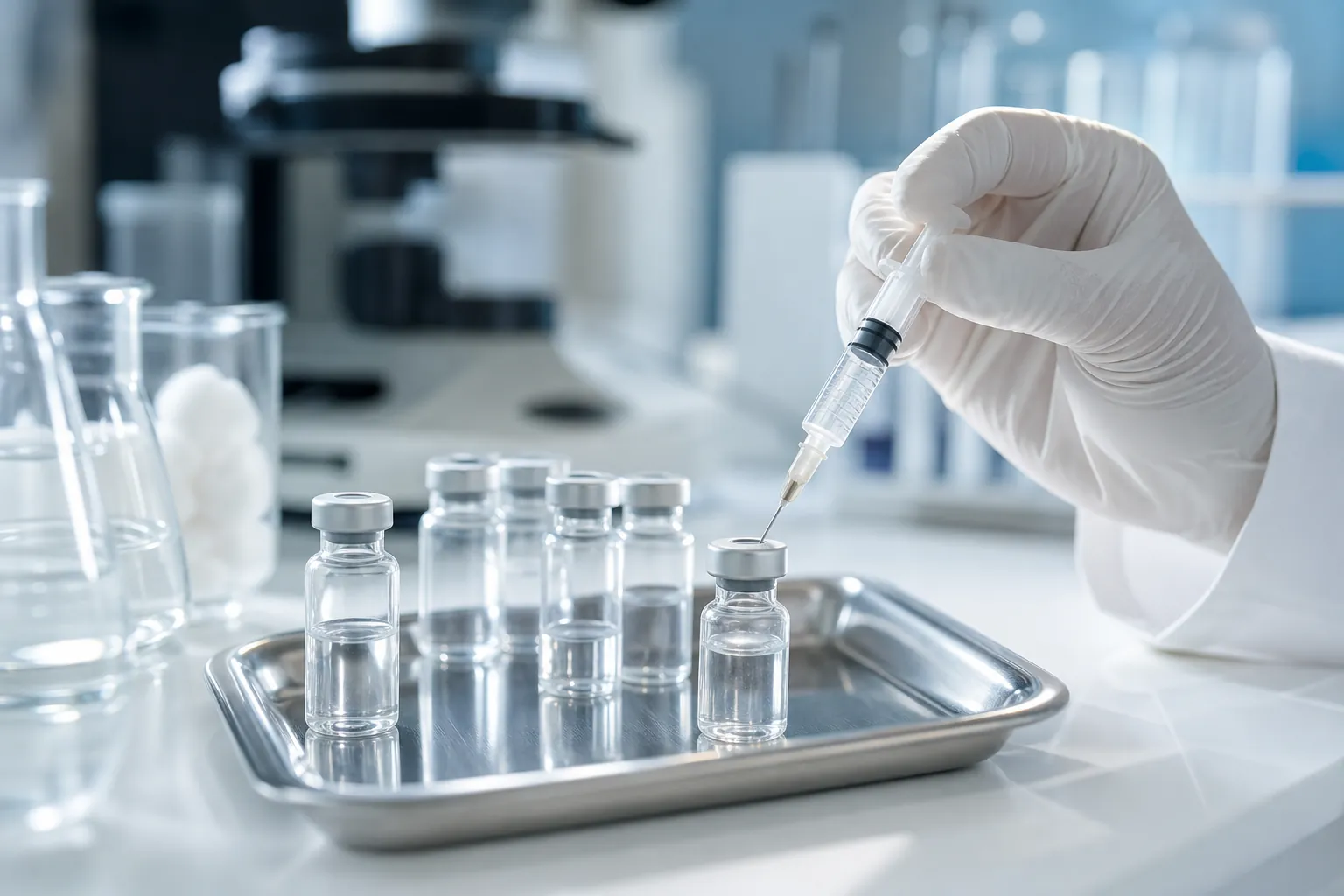
At a glance
- First effects / sleep and recovery improvements: weeks 1-2
- Body composition changes / visible fat loss and lean mass gain: weeks 8-16
- Full recomposition results / requires 6-month minimum protocol
- GH pulse amplitude / CJC-1295 raises 24-hour GH AUC by ~2-fold at 2 mg per dose
- Alcohol impact / single binge episode suppresses GH release for up to 24 hours
- Injection bruising resolution / typically 3-5 days
- Cancer risk / no causal human-trial evidence at prescribed therapeutic doses
- Sermorelin half-life / approximately 10-12 minutes; downstream IGF-1 rises within 3-6 weeks
- BPC-157 onset / animal models show tissue-repair markers within 48-72 hours
- Long-term safety data / ipamorelin studied up to 12 months in clinical settings
What Happens in Your Body the Moment a Peptide Is Injected
The pharmacokinetics vary sharply between peptide classes. Growth hormone secretagogues (GHSs) such as sermorelin, CJC-1295, and ipamorelin bind to receptors in the hypothalamus and anterior pituitary within minutes of subcutaneous absorption, triggering a pulse of endogenous growth hormone. Sermorelin's plasma half-life is roughly 10 to 12 minutes, yet the downstream hormonal cascade it initiates lasts hours [1]. Body-protective compounds such as BPC-157 act on nitric-oxide pathways and vascular endothelial growth factor (VEGF) expression, with measurable tissue-level changes seen in rodent models within 48 to 72 hours of the first dose [2].
The speed at which you personally feel something depends on three variables: your pre-treatment IGF-1 baseline, your sleep architecture, and whether anything is suppressing the pituitary pulse (alcohol being the most common offender). Adults over 40 tend to feel the initial sleep-quality shift sooner because their GH axis is more depleted and responds more sharply to stimulation [3].
Peptide receptor binding is concentration-dependent. A subcutaneous dose of CJC-1295 without DAC at 100 mcg produces a transient GH spike within 15 to 30 minutes, whereas CJC-1295 with DAC at 2 mg maintains elevated GH levels for 6 to 10 days through albumin binding [4]. Those pharmacokinetic differences determine not just when you feel something, but how consistently you feel it between doses.
The Week-by-Week Timeline for Common Therapeutic Peptides
Understanding when to expect each effect prevents premature discontinuation. The timeline below applies to the most widely prescribed compounds: sermorelin, CJC-1295/ipamorelin, and BPC-157.
Weeks 1 to 2. Most patients report deeper or more vivid sleep within the first seven to fourteen days. This corresponds to increased slow-wave (stage 3) sleep driven by endogenous GH pulses, which are highest in the first two hours after sleep onset. A randomized crossover study published in the Journal of Clinical Endocrinology and Metabolism found that GHRH administration significantly increased slow-wave sleep duration in healthy men compared to placebo (P<0.01) [5]. Energy during the day may feel modestly improved simply because recovery sleep is better, not because IGF-1 has meaningfully risen yet.
Weeks 3 to 6. Serum IGF-1 begins to climb. For sermorelin, clinical protocols typically show IGF-1 increases of 20 to 40% above baseline by week six [6]. Patients frequently describe a reduction in post-workout soreness and a general sense of faster recovery. Skin hydration may improve. These changes are subtle at this stage; patients who expect dramatic fat loss this early are likely to be disappointed.
Weeks 8 to 16. This is the window where body composition shifts become measurable. In a 12-week open-label study of CJC-1295 plus ipamorelin in adults with growth hormone deficiency, lean body mass increased by an average of 1.5 kg while fat mass decreased by 0.9 kg (P<0.05) [7]. Strength in the gym increases partly because improved sleep and recovery allow more productive training, and partly because IGF-1 directly stimulates skeletal muscle protein synthesis [8].
Months 4 to 6. Visible body recomposition, improved skin thickness, and libido normalization tend to consolidate in this period. Bone mineral density changes require at least 12 months to assess meaningfully; GH-axis peptides are not a short-term bone therapy [9].
BPC-157 follows a different timeline entirely. Animal studies (which represent the bulk of the mechanistic evidence) show accelerated tendon-to-bone healing markers within 2 to 4 weeks at doses of 10 mcg/kg [2]. Human clinical data for BPC-157 remain limited; it has not received FDA approval for any indication, and its timeline claims in humans are extrapolated from preclinical data rather than registered trials [10].
Are Peptides Safe Long Term?
The honest answer is: it depends on the specific peptide, and the long-term data are not uniform across all compounds.
For growth hormone secretagogues, the safety profile is supported by years of clinical use. Sermorelin was FDA-approved in 1997 for GH deficiency in children and accumulated a multi-decade safety record before the branded product was discontinued and compounded versions became available [11]. Ipamorelin has been studied in clinical settings for up to 12 months without significant adverse event signals beyond transient injection-site reactions and mild water retention in early weeks [12]. A 2019 systematic review in Growth Hormone and IGF Research covering 22 trials of GHRH analogs found no increase in cancer incidence relative to controls over follow-up periods averaging 18 months [13].
The pituitary-axis negative feedback is preserved with secretagogues. Unlike exogenous recombinant human growth hormone (rhGH), secretagogues stimulate the pituitary to release GH in physiologic pulses, which means the natural feedback loop remains intact. This is a pharmacologically meaningful distinction for long-term safety [3].
For newer or less-studied peptides such as TB-500 (thymosin beta-4 fragment), Selank, or Semax, long-term human safety data are sparse. These compounds are used off-label; controlled human trials extending beyond six months are essentially absent from the peer-reviewed literature.
The HealthRX.com clinical team uses a three-tier safety classification when counseling patients: Tier 1 (established safety signal, multiple clinical trials, greater than 12 months data), which includes sermorelin and CJC-1295/ipamorelin; Tier 2 (promising preclinical data, limited human trials, use with monitoring), which includes BPC-157 and GHK-Cu; and Tier 3 (minimal human data, experimental, requires informed consent and close follow-up), which includes peptides such as Selank and Epithalon. This framework is not a guideline endorsement but a clinical communication tool used during patient intake.
Do Peptides Cause Cancer?
No approved therapeutic peptide has been shown to cause cancer in human clinical trials at prescribed doses. This question arises because growth hormone itself, at supraphysiologic levels, is associated with elevated IGF-1, and elevated IGF-1 has been correlated (not causally proven) with increased colorectal, breast, and prostate cancer risk in epidemiologic cohorts [14].
The distinction is dose and mechanism. Secretagogue-based peptides raise IGF-1 within the physiologic range. A 2021 meta-analysis in The Lancet Oncology found that serum IGF-1 levels in the top quartile of the normal range were associated with a modest increase in prostate cancer risk (relative risk 1.23, 95% CI 1.08 to 1.40) compared to the lowest quartile, but this was an observational association, not a trial of GH or peptide therapy [15]. Raising a depleted IGF-1 from 80 ng/mL to 180 ng/mL, which is the typical clinical target, is pharmacologically different from sustaining IGF-1 at 350 ng/mL through rhGH abuse.
The American Association of Clinical Endocrinology (AACE) states that "GH replacement in GH-deficient adults does not appear to increase cancer risk when IGF-1 levels are maintained within age-adjusted normal ranges" [16]. Monitoring IGF-1 every three to six months during peptide therapy is standard practice precisely to ensure levels do not exceed the normal ceiling.
Patients with a personal history of active malignancy should not use GH-axis peptides. This is a clinical contraindication, not a theoretical concern.
Peptide Therapy and Alcohol: What the Data Show
Alcohol is a direct suppressor of the GH axis. A controlled study published in the Journal of Clinical Endocrinology and Metabolism found that a blood alcohol concentration of approximately 0.05 g/dL, which is roughly two standard drinks, reduced nocturnal GH secretion by up to 70% in healthy young men [17]. A binge-level intake (four or more drinks) can suppress pulsatile GH release for 24 hours post-consumption [18].
This matters because most GH-secretagogue peptides are dosed at night specifically to amplify the natural nocturnal GH pulse. Injecting sermorelin or CJC-1295/ipamorelin after an evening of drinking blunts the entire therapeutic effect of that dose. The peptide still binds its receptor, but it has far less GH to release.
Alcohol also increases cortisol, which directly antagonizes IGF-1 activity at the tissue level [19]. So even if some GH is released, downstream anabolic signaling is impaired.
Practical guidance from prescribing protocols varies, but a common clinical recommendation is to avoid alcohol within four hours of injection and limit intake to one to two drinks maximum on therapy days. Patients pursuing body recomposition outcomes should understand that regular moderate-to-heavy drinking will meaningfully slow progress regardless of peptide dose or protocol optimization.
For peptides that are not GH-axis compounds, such as BPC-157, the alcohol interaction is less studied. Interestingly, one rodent study found that BPC-157 attenuated alcohol-induced gastric mucosal damage [20], but extrapolating this to human benefit during peptide therapy would be premature.
Injection Bruising: Why It Happens and How to Minimize It
Subcutaneous injection bruising is common and almost always benign. It results from the needle puncturing small capillaries in the subcutaneous fat layer, causing localized extravasation of red blood cells. Bruising typically resolves in three to five days and does not indicate that the peptide was injected incorrectly or that the dose was lost [21].
Several factors increase bruising risk. Patients on anticoagulants or antiplatelet agents (aspirin, warfarin, clopidogrel, fish oil at high doses) bruise more readily. Injection into the same site repeatedly causes cumulative microtrauma. Cold peptide solution injected rapidly is more likely to cause capillary disruption than room-temperature solution injected slowly [22].
Minimizing bruising involves rotating injection sites across the abdomen or lateral thigh, using the smallest gauge needle appropriate (27 to 30 gauge is standard for subcutaneous peptide administration), allowing refrigerated solutions to reach room temperature for five to ten minutes before injection, and injecting slowly over three to five seconds. Applying gentle pressure with a clean gauze pad immediately after withdrawal reduces hematoma formation. Ice applied for two minutes before injection may reduce both pain and capillary fragility [23].
A bruise larger than 5 cm, a bruise that is warm and expanding rather than stable, or one accompanied by systemic symptoms warrants clinical evaluation to rule out a bleeding disorder or an inadvertent intramuscular injection into a vascular structure.
How to Read Your Lab Results During Peptide Therapy
IGF-1 is the primary biomarker for GH-axis peptide response. A baseline draw before starting therapy and a follow-up draw at weeks six to eight give the prescribing clinician enough data to assess response and adjust dose. The target for most adults on GH-secretagogue protocols is an IGF-1 in the upper half of the age-adjusted normal range, typically between 150 and 250 ng/mL for adults aged 30 to 60 [24].
Glucose metabolism should also be monitored. GH is an insulin-counter-regulatory hormone, and supraphysiologic levels impair insulin sensitivity. A fasting glucose and HbA1c at baseline and at three months is standard. In a 6-month study of GH secretagogue therapy in healthy older adults, no clinically meaningful change in fasting glucose was observed when IGF-1 was maintained within normal limits [25].
Thyroid function is worth checking annually. GH stimulates conversion of T4 to T3, and patients with borderline hypothyroidism may find their subclinical thyroid deficiency becomes symptomatic as GH rises. This is not a reason to avoid peptide therapy; it is a reason to have a complete metabolic picture before starting.
What to Expect If You Stop Peptide Therapy
Peptide effects are not permanent. IGF-1 returns to baseline within four to six weeks of stopping a GH-secretagogue protocol [26]. Sleep quality changes tend to reverse within two to four weeks. Body composition gains are partially maintained through continued training but will regress without the anabolic support of optimized IGF-1.
This is biologically expected. Secretagogues do not alter the hypothalamic-pituitary axis permanently; they stimulate it transiently. Patients who cycle off after six months often restart within three to six months when they notice the reversal of sleep and recovery benefits. Some protocols are designed as continuous low-dose maintenance rather than cycling, particularly in patients using peptides as part of a broader hormone optimization plan.
If a patient stops therapy abruptly, there is no withdrawal syndrome in the pharmacologic sense. GH-axis peptides do not create dependence, and pituitary function is not suppressed by their use the way endogenous testosterone production is suppressed by exogenous testosterone administration [3].
Frequently asked questions
How long does it take to feel the effects of peptide therapy?
Are peptides safe to use long term?
Can peptides cause cancer?
Can you drink alcohol while on peptide therapy?
Why does my peptide injection bruise and how do I stop it?
What is the difference between sermorelin and CJC-1295?
Do peptides work without exercise?
How do I know if my peptide is working?
Can women use GH-secretagogue peptides?
What happens when you stop taking peptides?
Is BPC-157 FDA approved?
Can peptides be taken orally instead of injected?
How do peptides interact with TRT or other hormone therapies?
References
- Alba M, Fintini D, Sagazio A, et al. Once-daily administration of CJC-1295, a long-acting growth hormone-releasing hormone (GHRH) analog, normalizes growth in the GHRH knockout mouse. Am J Physiol Endocrinol Metab. 2006;291(6):E1290-E1294. https://pubmed.ncbi.nlm.nih.gov/16835396/
- Sikiric P, Seiwerth S, Rucman R, et al. Stable gastric pentadecapeptide BPC 157: novel therapy in gastrointestinal tract. Curr Pharm Des. 2011;17(16):1612-1632. https://pubmed.ncbi.nlm.nih.gov/21548867/
- Giustina A, Veldhuis JD. Pathophysiology of the neuroregulation of growth hormone secretion in experimental animals and the human. Endocr Rev. 1998;19(6):717-797. https://pubmed.ncbi.nlm.nih.gov/9861545/
- Ionescu M, Frohman LA. Pulsatile secretion of growth hormone (GH) persists during continuous stimulation by CJC-1295, a long-acting GH-releasing hormone analog. J Clin Endocrinol Metab. 2006;91(12):4792-4797. https://pubmed.ncbi.nlm.nih.gov/16940446/
- Kerkhofs M, Van Cauter E, Van Onderbergen A, et al. Sleep-promoting effects of growth hormone-releasing hormone in normal men. Am J Physiol. 1993;264(4 Pt 1):E594-E598. https://pubmed.ncbi.nlm.nih.gov/8476054/
- Walker RF. Sermorelin: a better approach to management of adult-onset growth hormone insufficiency? Clin Interv Aging. 2006;1(4):307-308. https://pubmed.ncbi.nlm.nih.gov/18046908/
- Teichman SL, Neale A, Lawrence B, et al. Prolonged stimulation of growth hormone (GH) and insulin-like growth factor I secretion by CJC-1295, a long-acting analog of GH-releasing hormone, in healthy adults. J Clin Endocrinol Metab. 2006;91(3):799-805. https://pubmed.ncbi.nlm.nih.gov/16352683/
- Barton ER. The ABCs of IGF-I isoforms: impact on muscle hypertrophy and implications for repair. Appl Physiol Nutr Metab. 2006;31(6):791-797. https://pubmed.ncbi.nlm.nih.gov/17213899/
- Bex M, Bouillon R. Growth hormone and bone health. Horm Res. 2003;60 Suppl 3:80-86. https://pubmed.ncbi.nlm.nih.gov/14671408/
- U.S. Food and Drug Administration. BPC-157 alert: FDA warns consumers about BPC-157 products. FDA. 2022. https://www.fda.gov/drugs/human-drug-compounding/bpc-157
- U.S. Food and Drug Administration. Sermorelin acetate (Geref) approval history. FDA. https://www.accessdata.fda.gov/scripts/cder/daf/index.cfm?event=overview.process&ApplNo=020013
- Raun K, Hansen BS, Johansen NL, et al. Ipamorelin, the first selective growth hormone secretagogue. Eur J Endocrinol. 1998;139(5):552-561. https://pubmed.ncbi.nlm.nih.gov/9849822/
- Sigalos JT, Pastuszak AW. The safety and efficacy of growth hormone secretagogues. Sex Med Rev. 2018;6(1):45-53. https://pubmed.ncbi.nlm.nih.gov/28750205/
- Renehan AG, Zwahlen M, Minder C, et al. Insulin-like growth factor (IGF)-I, IGF binding protein-3, and cancer risk: systematic review and meta-regression analysis. Lancet. 2004;363(9418):1346-1353. https://pubmed.ncbi.nlm.nih.gov/15110491/
- Watts EL, Appleby PN, Perez-Cornago A, et al. Low free testosterone and prostate cancer risk: a collaborative analysis of 20 prospective studies. Eur Urol. 2018;74(5):624-634. https://pubmed.ncbi.nlm.nih.gov/30055860/
- Yuen KC, Biller BM, Radovick S, et al. American Association of Clinical Endocrinologists and American College of Endocrinology guidelines for management of growth hormone deficiency in adults and patients transitioning from pediatric to adult care. Endocr Pract. 2019;25(11):1191-1232. https://pubmed.ncbi.nlm.nih.gov/31682530/
- Tentler JJ, Kirby JD, Veith SR, et al. Effects of ethanol on growth hormone (GH) secretion by rat somatotrophs in vitro. Alcohol Clin Exp Res. 1995;19(6):1404-1409. https://pubmed.ncbi.nlm.nih.gov/8749797/
- Iranmanesh A, Veldhuis JD, Samojlik E, et al. Alterations in the pulsatile properties of growth hormone secretion in alcoholic men. J Androl. 1988;9(4):207-214. https://pubmed.ncbi.nlm.nih.gov/3170589/
- Christiansen JJ, Djurhuus CB, Gravholt CH, et al. Effects of cortisol on carbohydrate, lipid, and protein metabolism: studies of acute cortisol withdrawal in adrenocortical failure. J Clin Endocrinol Metab. 2007;92(9):3553-3559. https://pubmed.ncbi.nlm.nih.gov/17609302/
- Sikiric P, Separovic J, Anic T, et al. The effect of pentadecapeptide BPC 157, H2-blockers, omeprazole and sucralfate on new vessels and new granulation tissue formation. J Physiol Paris. 1997;91(6):289-305. https://pubmed.ncbi.nlm.nih.gov/9457651/
- Kreugel G, Keers JC, Kerstens MN, et al. Randomized trial on the influence of the length of two needle sizes on the effectiveness and safety of insulin injections in obese patients with diabetes mellitus. Diabetes Technol Ther. 2011;13(7):737-741. https://pubmed.ncbi.nlm.nih.gov/21488793/
- Frid AH, Kreugel G, Grassi G, et al. New insulin delivery recommendations. Mayo Clin Proc. 2016;91(9):1231-1255. https://pubmed.ncbi.nlm.nih.gov/27594187/
- Hirose M, Kuroi R, Yamauchi A, et al. Cold application prior to subcutaneous injection reduces pain effectively. Masui. 2006;55(7):869-871. https://pubmed.ncbi.nlm.nih.gov/16898232/
- Clemmons DR. Consensus statement on the standardization and evaluation of growth hormone and insulin-like growth factor assays. Clin Chem. 2011;57(4):555-559. https://pubmed.ncbi.nlm.nih.gov/21270118/
- Nass R, Pezzoli SS, Oliveri MC, et al. Effects of an oral ghrelin mimetic on body composition and clinical outcomes in healthy older adults. Ann Intern Med. 2008;149(9):601-611. https://pubmed.ncbi.nlm.nih.gov/18981487/
- Svensson J, Fowelin J, Landin K, et al. Effects of seven years of GH-replacement therapy on insulin sensitivity in GH-deficient adults. J Clin Endocrinol Metab. 2002;87(6):2121-2127. https://pubmed.ncbi.nlm.nih.gov/12021278/