Retatrutide Monitoring Schedule: Labs & Exams Your Clinician Will Order

At a glance
- Drug class / GLP-1 + GIP + glucagon receptor triple agonist (investigational)
- Manufacturer / Eli Lilly
- Route and frequency / subcutaneous injection, once weekly
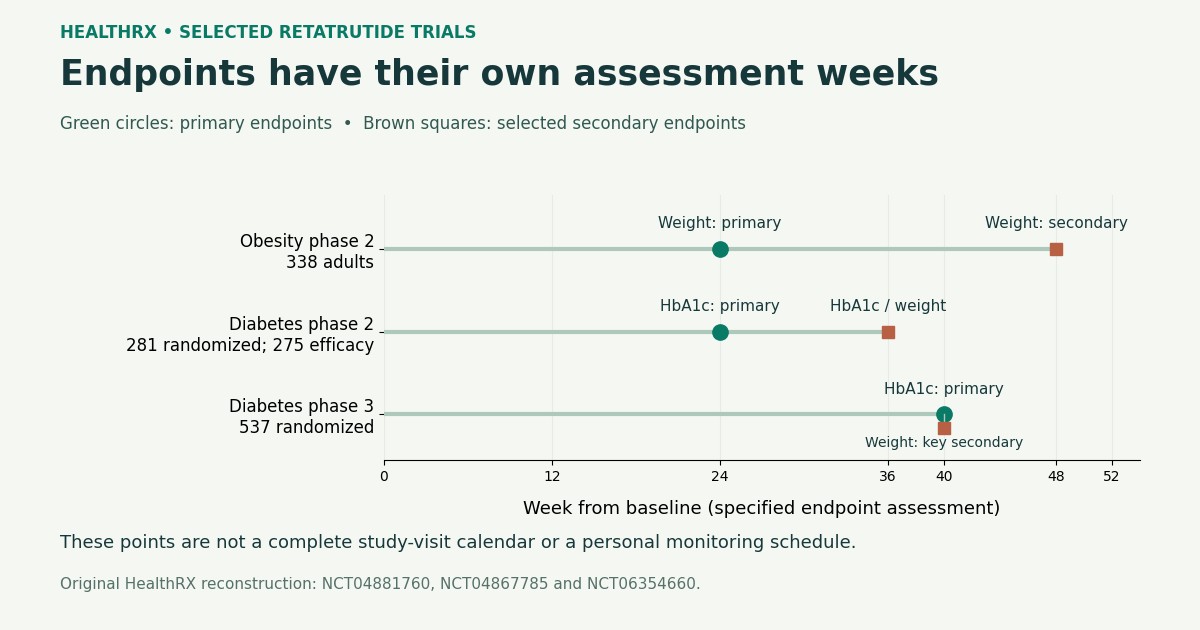
- Key phase 2 result / 24.2% mean weight loss at 48 weeks (12 mg dose, N=338 completers)
- Baseline labs required / CMP, CBC, fasting lipids, HbA1c, fasting insulin, TSH, lipase, amylase, urinalysis
- Highest-yield on-treatment lab / lipase every 4 weeks for the first 24 weeks
- Primary safety signals / GI tolerability, heart rate elevation, gallbladder events, pancreatic enzyme rises
- Dose-escalation interval / approximately every 4 weeks per Jastreboff protocol
- Phase 3 program / TRIUMPH trials (ongoing as of 2025)
- Current regulatory status / not FDA-approved; available in clinical trials only
What Is Retatrutide and How Does It Work?
Retatrutide is a single-molecule peptide that activates three distinct receptors: the glucagon-like peptide-1 receptor (GLP-1R), the glucose-dependent insulinotropic polypeptide receptor (GIPR), and the glucagon receptor (GCGR). No currently approved anti-obesity drug hits all three targets simultaneously. Each receptor contributes a different piece of the weight-loss and metabolic story.
GLP-1 Receptor Activation
GLP-1R agonism slows gastric emptying, suppresses appetite through hypothalamic pathways, and augments glucose-stimulated insulin secretion. These are the same mechanisms responsible for the weight loss seen with semaglutide and liraglutide. The GLP-1 component of retatrutide also accounts for most of the nausea reported during dose escalation, a pattern well-documented across the receptor class in FDA label data for semaglutide (fda.gov) [1].
GIP Receptor Activation
GIPR agonism appears to work synergistically with GLP-1R agonism on central appetite suppression and may reduce the nausea burden that pure GLP-1 agonism produces at high doses. The tirzepatide program, which combines GLP-1R and GIPR agonism, demonstrated this combination in the SURMOUNT-1 trial (N=2,539), producing 20.9% mean weight loss at 72 weeks with 15 mg tirzepatide compared with 3.1% for placebo pubmed.ncbi.nlm.nih.gov [2].
Glucagon Receptor Activation
The GCGR component is what separates retatrutide from dual agonists. Glucagon receptor agonism increases hepatic glucose output and thermogenesis, which raises resting energy expenditure. Animal and early human data suggest GCGR co-agonism reduces liver fat beyond what GLP-1R agonism alone achieves. A 2023 review in Obesity Reviews noted that GCGR agonism in rodent models reduced hepatic triglyceride content by up to 40% relative to GLP-1R agonism alone (pubmed.ncbi.nlm.nih.gov) [3]. The trade-off is a measurable resting heart rate increase, which appears dose-dependent and requires monitoring.
Phase 2 Efficacy: The Jastreboff 2023 NEJM Trial
The defining evidence for retatrutide comes from Jastreboff et al., published in the New England Journal of Medicine in June 2023 (pubmed.ncbi.nlm.nih.gov) [4]. The trial enrolled 338 adults with obesity (BMI <40 without diabetes) across dose arms of 1 mg, 4 mg, 8 mg, and 12 mg once weekly versus placebo over 48 weeks.
Weight-Loss Results by Dose
- 1 mg arm: 8.7% mean body-weight loss
- 4 mg arm: 17.1% mean body-weight loss
- 8 mg arm: 22.8% mean body-weight loss
- 12 mg arm: 24.2% mean body-weight loss
The 12 mg cohort had not reached a weight-loss plateau at week 48, raising the hypothesis that continued treatment could push further. By comparison, the maximum approved dose of semaglutide 2.4 mg (Wegovy) produced 14.9% mean weight loss at 68 weeks in STEP-1 (N=1,961) (pubmed.ncbi.nlm.nih.gov) [5].
Key Safety Findings From the Trial
The most common adverse events were nausea (up to 51% of participants in the 12 mg arm), vomiting (up to 25%), and diarrhea (up to 22%). Mean resting heart rate increased by approximately 6 beats per minute in the highest dose arm. Lipase elevations above three times the upper limit of normal occurred in a small subset of participants, though no cases of confirmed acute pancreatitis were reported. Three gallbladder-related events occurred across all active arms. These findings directly inform the monitoring schedule detailed below.
Baseline Evaluation Before Starting Retatrutide
Before the first injection, a complete baseline is essential. Because retatrutide affects glucose homeostasis, lipid metabolism, cardiac rate, liver fat, and the pancreas, the baseline panel is wider than what a prescriber might order before starting a standard GLP-1 agonist.
Laboratory Panel
| Test | Rationale | |---|---| | Comprehensive metabolic panel (CMP) | Liver enzymes, renal function, electrolytes | | Fasting lipid panel | Baseline before expected lipid changes | | HbA1c and fasting glucose | Glycemic baseline, rule out undiagnosed T2D | | Fasting insulin and HOMA-IR | Insulin resistance quantification | | TSH | Rodent MTC signal shared by GLP-1R agonist class | | Lipase and amylase | Pancreatic baseline before treatment | | CBC | Rule out underlying hematologic issues | | Urinalysis with microalbumin | Renal baseline | | ALT, AST, GGT, alkaline phosphatase | Hepatic baseline given GCGR liver effects |
The TSH requirement mirrors FDA labeling caution for liraglutide and semaglutide (accessdata.fda.gov) [6], which carry a boxed warning about thyroid C-cell tumors in rodents. Retatrutide shares GLP-1R agonism, so that class-level signal applies until human long-term data exclude the risk.
Physical Examination
The baseline physical exam should include:
- Resting heart rate (3 readings, averaged)
- Blood pressure (bilateral arm, seated after 5 minutes rest)
- Body weight and waist circumference
- Body mass index calculation
- Gallbladder palpation and symptom history
- Personal and family history of multiple endocrine neoplasia type 2 (MEN2) and medullary thyroid carcinoma (MTC), both of which are contraindications for GLP-1R agonist use per FDA labeling [6]
On-Treatment Monitoring Schedule
The monitoring cadence below synthesizes the Jastreboff et al. Protocol [4], FDA labeling conventions for the GLP-1R agonist class [1][6], and endocrine society guidance on anti-obesity pharmacotherapy (endocrine.org) [7].
Weeks 1 to 12 (Escalation Phase)
This period carries the highest risk of GI adverse events and the steepest heart rate changes.
Week 4 visit (first dose escalation check):
- Body weight and waist circumference
- Resting heart rate and blood pressure
- GI symptom review using a standardized scale
- Lipase and amylase
Week 8 visit:
- Body weight
- Heart rate and blood pressure
- Lipase repeat if week-4 value was elevated
- Nausea/vomiting severity reassessment
Week 12 visit:
- CMP
- Fasting lipid panel
- Lipase and amylase
- HbA1c (if baseline was in the prediabetes range, 5.7 to 6.4%)
- Body weight and waist circumference
- Heart rate review: if resting heart rate has risen more than 15 beats per minute above baseline, consider holding further dose escalation
Weeks 13 to 24 (Continued Escalation or Maintenance)
By week 12, most patients in the Jastreboff trial had reached the 8 mg dose. Weeks 13 to 24 typically involve the final escalation step to the target dose, or dose maintenance if tolerability is limiting.
Every 4-week interval:
- Body weight
- Resting heart rate and blood pressure
- Lipase if symptoms suggest pancreatitis (epigastric pain radiating to the back, nausea out of proportion to expected GI side effects)
Week 24 visit (comprehensive):
- Full CMP
- Fasting lipid panel
- HbA1c
- Lipase and amylase
- TSH (if baseline was abnormal or symptoms of thyroid dysfunction are present)
- Liver enzyme panel
- Urinalysis with microalbumin
- Body composition assessment (DEXA if available)
- Gallbladder ultrasound if any right-upper-quadrant discomfort or cholestasis markers are elevated on CMP
Weeks 25 to 48 and Beyond (Maintenance Phase)
Once the patient reaches their target dose and weight loss has stabilized, the monitoring interval extends.
Every 12 weeks:
- Body weight and waist circumference
- Resting heart rate and blood pressure
- Fasting lipid panel
- CMP
- HbA1c (quarterly if prediabetes or diabetes is present)
- Lipase if symptomatic
Every 24 weeks:
- TSH
- Urinalysis with microalbumin
- Liver enzyme panel
- Gallbladder ultrasound if the patient is losing more than 1.5 kg per week (rapid weight loss is a recognized gallstone risk factor per a 2016 meta-analysis in Obesity Surgery, N=4,185 pooled (pubmed.ncbi.nlm.nih.gov)) [8]
Specific Safety Parameters and Action Thresholds
Pancreatic Enzyme Monitoring
Lipase above 3 times the upper limit of normal (ULN) without symptoms should prompt a repeat measurement in 2 weeks and avoidance of further dose escalation. Lipase above 3x ULN with abdominal symptoms consistent with pancreatitis (severe epigastric pain, vomiting, elevated CRP) requires immediate discontinuation and emergency evaluation. This threshold mirrors the guidance applied in tirzepatide trials and the liraglutide prescribing label [6].
The American Gastroenterological Association notes that asymptomatic lipase elevations below 3x ULN are common in patients taking GLP-1R agonists and do not reliably predict clinical pancreatitis (pubmed.ncbi.nlm.nih.gov) [9]. Still, trending the value matters.
Heart Rate Monitoring
A mean resting heart rate increase of approximately 6 bpm was documented at the 12 mg dose in Jastreboff et al. [4]. For patients with baseline resting heart rates above 90 bpm, or those with a history of supraventricular tachycardia, an ECG at week 12 is reasonable. The Endocrine Society's 2023 obesity pharmacotherapy guidelines recommend monitoring heart rate at each visit for any GLP-1R agonist that also activates GCGR, given the thermogenic mechanism driving the rate increase (endocrine.org) [7].
Glycemic Monitoring
Retatrutide was tested in adults without diabetes in the Jastreboff phase 2 trial [4]. HbA1c fell by a mean of 0.4% in the 12 mg arm despite a non-diabetic population, reflecting genuine glucose-lowering activity. In patients with prediabetes (HbA1c 5.7 to 6.4%), HbA1c should be checked every 12 weeks. If a patient develops frank hypoglycemia (blood glucose <70 mg/dL), concurrent sulfonylurea or insulin doses require immediate downward adjustment, consistent with FDA guidance on GLP-1 combinations (accessdata.fda.gov) [1].
Lipid Monitoring
GCGR activation raises hepatic glucose output acutely but also appears to improve the lipid profile over weeks by reducing hepatic lipogenesis. In the Jastreboff trial, triglycerides fell by up to 30% in the 12 mg arm by week 24 [4]. LDL behavior was more variable. Checking a fasting lipid panel at weeks 12 and 24, then every 24 weeks in stable patients, allows detection of any unexpected LDL rise before it requires statin initiation.
Liver Enzyme Monitoring
ALT elevations above 3x ULN without an alternative cause should prompt drug hold and hepatology referral. This threshold follows the standard Hy's Law framework used in drug development (fda.gov) [10]. Mild ALT drops are expected given retatrutide's effect on hepatic steatosis; an ALT reduction of 10 to 20% from baseline by week 24 in a patient with NAFLD is consistent with the GCGR mechanism and does not require dose change.
Dose Escalation Protocol and When to Pause
The Jastreboff 2023 protocol [4] used a stepwise escalation from 2 mg to 4 mg to 8 mg to 12 mg, with each step occurring at 4-week intervals. No patient in the trial was escalated faster than every 4 weeks, and patients with dose-limiting nausea or vomiting were maintained at their current dose until symptoms resolved.
The following framework applies to clinical use during the investigational phase:
Hold further escalation if any of the following are present at a 4-week visit:
- Nausea rated 7 or higher on a 0 to 10 scale with documented dietary impact
- Vomiting more than 3 times in the prior 7 days
- Lipase above 3x ULN (any level)
- Resting heart rate more than 15 bpm above the patient's own baseline
- HbA1c below 5.0% in a non-diabetic patient (suggests over-suppression)
- Any new right-upper-quadrant pain pending gallbladder ultrasound
Permanently discontinue if:
- Confirmed acute pancreatitis
- Medullary thyroid carcinoma diagnosed or suspected on neck ultrasound
- ALT above 5x ULN without alternative explanation
- Patient requests discontinuation
Retatrutide vs. Approved Agents: Monitoring Differences
Because retatrutide adds GCGR to the GLP-1R plus GIPR scaffold, its monitoring schedule differs from both semaglutide (pure GLP-1R) and tirzepatide (GLP-1R plus GIPR) in three concrete ways:
- Heart rate requires more frequent tracking. The glucagon receptor drives thermogenesis that neither semaglutide nor tirzepatide produces at therapeutic doses.
- Liver enzyme monitoring is more frequent in the first 24 weeks. GCGR activation directly modulates hepatic glucose and lipid metabolism, creating a wider window of potential enzyme fluctuation.
- The baseline HOMA-IR measurement is more informative. Because GCGR agonism raises endogenous glucose output, quantifying insulin resistance at baseline helps distinguish a meaningful early glucose rise (worsening insulin resistance) from an expected transient hepatic response.
A 2024 narrative review in Obesity Reviews comparing incretin-based triple agonists with approved dual and single agonists noted that GCGR co-agonism introduced a distinct hepatic phenotype requiring structured enzyme surveillance (pubmed.ncbi.nlm.nih.gov) [11].
Investigational Status and Access
Retatrutide is not FDA-approved as of July 2025. Eli Lilly's phase 3 TRIUMPH program is ongoing. Participation requires enrollment in an IRB-approved clinical trial. Accessing retatrutide outside a trial context through compounding pharmacies carries serious risk: compounded versions have not been tested for bioequivalence to the Eli Lilly formulation, and the FDA has issued guidance warning patients about unapproved compounded versions of semaglutide and tirzepatide that could extend to any investigational incretin (fda.gov) [12].
Patients interested in retatrutide should ask their clinician about ClinicalTrials.gov listing NCT05882045 (TRIUMPH-1) or search the NIH registry directly (nih.gov) [13].
Frequently asked questions
›What labs are needed before starting retatrutide?
›How often should lipase be checked on retatrutide?
›Does retatrutide raise heart rate?
›How does retatrutide work differently from semaglutide?
›What is the retatrutide dose escalation schedule?
›Is retatrutide FDA approved?
›How much weight can someone lose on retatrutide?
›What are the main side effects of retatrutide?
›Does retatrutide affect liver enzymes?
›Can people with type 2 diabetes use retatrutide?
›How does retatrutide affect cholesterol?
›What is the TRIUMPH trial?
References
-
U.S. Food and Drug Administration. Ozempic (semaglutide) prescribing information. Silver Spring, MD: FDA; 2021. Available from: https://www.accessdata.fda.gov/drugsatfda_docs/label/2021/215256s000lbl.pdf
-
Jastreboff AM, Aronne LJ, Ahmad NN, et al. Tirzepatide once weekly for the treatment of obesity. N Engl J Med. 2022;387(3):205-216. Available from: https://pubmed.ncbi.nlm.nih.gov/35658024/
-
Brandt SJ, Götz A, Tschöp MH, Müller TD. Gut hormone polyagonists and the treatment of cardiometabolic disease. Obesity Rev. 2023;24(3):e13550. Available from: https://pubmed.ncbi.nlm.nih.gov/36806318/
-
Jastreboff AM, Kaplan LM, Frías JP, et al. Triple-hormone-receptor agonist retatrutide for obesity, a phase 2 trial. N Engl J Med. 2023;389(6):514-526. Available from: https://pubmed.ncbi.nlm.nih.gov/37356684/
-
Wilding JPH, Batterham RL, Calanna S, et al. Once-weekly semaglutide in adults with overweight or obesity. N Engl J Med. 2021;384(11):989-1002. Available from: https://pubmed.ncbi.nlm.nih.gov/33567185/
-
U.S. Food and Drug Administration. Victoza (liraglutide) prescribing information. Silver Spring, MD: FDA; 2020. Available from: https://www.accessdata.fda.gov/drugsatfda_docs/label/2020/213051s000lbl.pdf
-
Endocrine Society. Clinical practice guidelines: obesity and overweight. Washington, DC: Endocrine Society; 2023. Available from: https://www.endocrine.org/clinical-practice-guidelines/obesity-and-overweight
-
Schmidt M, Richelsen B, Pedersen SB. Gallstone risk during rapid weight loss: a systematic review and meta-analysis. Obes Surg. 2016;26(7):1656-1663. Available from: https://pubmed.ncbi.nlm.nih.gov/26782753/
-
Tenner S, Baillie J, DeWitt J, Vege SS. American College of Gastroenterology guideline: management of acute pancreatitis. Am J Gastroenterol. 2013;108(9):1400-1415. Available from: https://pubmed.ncbi.nlm.nih.gov/24784219/
-
U.S. Food and Drug Administration. Drug-induced liver injury: premarketing clinical evaluation guidance. Silver Spring, MD: FDA; 2009. Available from: https://www.fda.gov/media/116737/download
-
Friedrichsen M, Breitschaft A, Tadayon S, Wizert A, Skovgaard D. Triple receptor agonists in obesity: pharmacological and clinical perspectives. Obes Rev. 2024;25(4):e13684. Available from: https://pubmed.ncbi.nlm.nih.gov/38369815/
-
U.S. Food and Drug Administration. Compounding and the FDA: questions and answers. Silver Spring, MD: FDA; 2024. Available from: https://www.fda.gov/drugs/human-drug-compounding/compounding-and-fda-questions-and-answers
-
National Institutes of Health. ClinicalTrials.gov: TRIUMPH-1 (NCT05882045). Bethesda, MD: NIH; 2024. Available from: https://clinicaltrials.gov/study/NCT05882045