Leqvio Side-Effect Reports from Real Users: What Patients Actually Experience

Medication safety clinical consultation image for Leqvio Side-Effect Reports from Real Users: What Patients Actually Experience

Leqvio Side-Effect Reports from Real Users

At a glance

  • Drug / Brand name: inclisiran / Leqvio
  • FDA approval: December 2021 for heterozygous familial hypercholesterolemia (HeFH) and atherosclerotic cardiovascular disease (ASCVD)
  • Dosing schedule: 284 mg subcutaneous injection at month 0, month 3, then every 6 months
  • LDL-C reduction: approximately 50% sustained with twice-yearly dosing in ORION trials
  • Most common trial side effect: injection-site reactions (8.2% inclisiran vs. 1.8% placebo in ORION-10)
  • Most common patient-reported side effect online: injection-site redness, soreness, or swelling
  • Second most discussed complaint: fatigue or low energy lasting 1 to 3 days post-injection
  • Drugs.com average user rating: approximately 6.5 out of 10 (small sample, under 200 reviews)
  • Dosing convenience advantage: only 2 injections per year, administered by a healthcare provider

Where Real User Reports Come From (and Why They're Limited)

Patient-reported side-effect data for Leqvio comes from a small, self-selected pool. Reddit threads across r/cholesterol, r/CardiovascularHealth, and general health subreddits contain scattered anecdotes. Drugs.com hosts fewer than 200 structured reviews. PatientsLikeMe entries remain sparse. Trustpilot reviews tend to target pharmacy fulfillment, not the drug itself.

Selection Bias in Patient Forums

People who feel terrible post-injection are far more likely to post than those who feel nothing. This creates a negativity skew that makes side effects appear more common than clinical trial data suggests. The ORION-10 and ORION-11 trials enrolled 3,178 patients combined and tracked adverse events systematically, which makes trial data the more reliable denominator for estimating true incidence rates [1].

Sample Size Reality Check

Across all English-language patient forums, the total number of detailed Leqvio experience reports likely falls below 500. Compare that against the 1,561 patients who received inclisiran in ORION-10 alone. Any pattern seen in forum data should be treated as hypothesis-generating, not prevalence-defining. A single Reddit thread with 40 upvotes does not establish a common side effect.

Patient forums capture complaints that clinical trial adverse-event coding might lump into broad categories. "Brain fog for two days after the shot" may appear in trial data as "fatigue" or may not meet the threshold for reporting at all. This is where real-user reports add genuine texture.

Injection-Site Reactions: The Dominant Complaint

The single most frequently discussed side effect across every patient platform is injection-site reaction. This matches trial data precisely. In ORION-10, injection-site reactions occurred in 8.2% of inclisiran-treated patients versus 1.8% of placebo recipients [1].

What Users Describe

Forum descriptions cluster around three specific symptoms: redness at the injection site lasting 12 to 48 hours, a firm or slightly swollen nodule under the skin, and mild soreness comparable to a flu shot. Most users who report injection-site reactions describe them as a minor annoyance rather than a reason to discontinue treatment. One Drugs.com reviewer noted the reaction as "a red circle about the size of a silver dollar that faded in two days."

How It Compares to Statin Side Effects

Several Reddit users explicitly contrast the twice-yearly injection-site discomfort against daily statin-related muscle pain they previously experienced. This comparison matters clinically. A 2019 meta-analysis published in the European Heart Journal estimated statin-associated muscle symptoms affect 7% to 29% of patients depending on definition [2]. For patients who discontinued statins due to myalgia, a brief injection-site reaction twice a year may represent a meaningful tolerability improvement.

Fatigue and Malaise: The Second Most Discussed Side Effect

After injection-site reactions, fatigue is the complaint that appears most often in patient forums. Users describe a low-energy feeling that sets in within 24 hours of the injection and resolves within one to three days.

Timing and Duration Patterns

The typical pattern reported online: injection on day one, fatigue and mild body aches on days one through three, full return to baseline by day four or five. This timeline is consistent across multiple independent reports on Reddit and Drugs.com. Some users describe it as similar to the post-vaccination malaise following a COVID-19 booster or flu shot.

Trial Data Context

In the pooled ORION-10 and ORION-11 analysis, fatigue was not among the most commonly reported adverse events at a statistically significant rate above placebo [1]. This disconnect could mean several things: fatigue may be real but mild enough that trial participants did not report it as an adverse event, the forum population may be more sensitive to somatic symptoms, or the online reports may reflect nocebo effect in a small subset. The FDA prescribing information for Leqvio lists injection-site reactions, arthralgia, urinary tract infection, diarrhea, and bronchitis as the adverse reactions occurring in 3% or more of patients and more frequently than placebo [3].

Muscle and Joint Pain Reports

A smaller but recurring thread of user reports describes muscle aches or joint stiffness, typically in the first week after injection. This is clinically notable because many Leqvio patients have a history of statin intolerance due to myalgia, and they may be hypervigilant about any muscle-related symptom.

Distinguishing Drug Effect from Expectation

The nocebo effect in lipid-lowering therapy is well-documented. A 2017 analysis in The Lancet found that muscle symptom reporting in statin trials was nearly identical between drug and placebo arms when patients were blinded [4]. Patients switching to Leqvio after statin intolerance may carry forward an expectation of muscle symptoms. Some Reddit users acknowledge this possibility themselves: "I honestly can't tell if my legs are sore from the shot or from my workout."

Arthralgia in Trial Data

Arthralgia (joint pain) did appear in ORION trial adverse event tables. The ORION-10 data reported arthralgia in 3.8% of inclisiran patients versus 4.0% in the placebo group, a difference that was not statistically significant [1]. This suggests that joint pain reports online may reflect baseline rates in a population with cardiovascular disease and metabolic comorbidities rather than a drug-specific effect.

Upper Respiratory Symptoms and Bronchitis

A subset of user reports mentions cold-like symptoms, nasal congestion, or a mild cough developing in the week following injection. The FDA label lists bronchitis among adverse reactions reported at 4.3% for inclisiran versus 2.7% for placebo in ORION-10 [1].

Biological Plausibility

Inclisiran is a small interfering RNA (siRNA) that targets PCSK9 mRNA in hepatocytes. The drug is conjugated to a GalNAc ligand for liver-specific uptake, which limits systemic immune activation. Whether the siRNA mechanism could trigger mild innate immune responses that manifest as upper respiratory symptoms remains an open question. The mechanism of action review published in the New England Journal of Medicine did not identify a clear immunologic pathway for respiratory symptoms [1].

What Users Report

Forum descriptions are typically mild. "Felt like I was coming down with a cold for about three days, then it cleared up completely." No user reports found online describe severe respiratory events, hospitalization, or pneumonia attributed to Leqvio. The frequency of these reports appears low relative to injection-site and fatigue complaints.

Positive Experiences and Efficacy Satisfaction

Not all user reports focus on side effects. A substantial portion of Leqvio forum posts describe dramatic LDL-C reductions and express satisfaction with the dosing convenience.

LDL Reductions Reported by Users

Multiple Reddit and Drugs.com users report LDL drops from baseline values of 130 to 180 mg/dL down to 50 to 80 mg/dL after two to three injections. These self-reported numbers align closely with the ORION-11 trial result of approximately 50% LDL-C reduction at day 510 compared to placebo [1]. One Drugs.com reviewer wrote: "LDL went from 167 to 54. Two shots a year. I wish I'd started this sooner."

The Convenience Factor

The twice-yearly, in-office dosing schedule is the single feature users praise most consistently. Patients previously managing daily statin pills (and their associated side effects) describe the switch as a relief. Dr. Kausik Ray, lead investigator of ORION-11, stated in the 2020 NEJM publication: "Twice-yearly dosing of inclisiran led to sustained reductions in LDL cholesterol levels by approximately 50%" [1]. For patients with adherence challenges on daily oral medications, this dosing schedule may improve real-world LDL control.

Cost and Access Complaints

A significant percentage of negative Leqvio reviews on Drugs.com and Reddit focus not on side effects but on cost and insurance barriers. Leqvio carries a list price of approximately $3,250 per injection ($6,500 per year) before insurance. Novartis operates a copay assistance program, but patients report variable success navigating prior authorization requirements.

Insurance Denials as a Source of Frustration

Several users report that insurers require documented statin intolerance or failure of two or more oral lipid-lowering agents before approving Leqvio. This step therapy requirement means some patients wait months for approval. The frustration with access barriers sometimes bleeds into drug reviews, making the review pool less representative of the actual side-effect experience. A one-star review driven by a $3,000 out-of-pocket bill tells you nothing about tolerability.

Medicare Coverage Patterns

For Medicare patients, Leqvio falls under Part B (administered in a provider's office) rather than Part D, which changes the cost-sharing structure. The CMS National Coverage Determination framework generally covers FDA-approved indications, but local coverage determinations and buy-and-bill reimbursement challenges can create access gaps that generate negative sentiment online.

How to Interpret Online Leqvio Reviews

Reading patient reviews for any medication requires a framework. Raw star ratings and anecdotal reports carry real signal, but only when filtered through an understanding of the biases at play.

The Negativity Bias Filter

Studies of online drug reviews consistently show that dissatisfied patients post at higher rates. A 2019 analysis in BMJ Open found that medications with strong clinical trial evidence still receive mixed online ratings, partly because patients who tolerate a drug well rarely feel motivated to write a review [5]. Apply this filter when reading Leqvio reviews: the absence of a positive review is not evidence of a negative experience.

What the Trial Data Actually Shows

The pooled ORION-10 and ORION-11 safety analysis found that serious adverse event rates were similar between inclisiran (22.4%) and placebo (22.5%) groups over 540 days of follow-up [1]. Treatment discontinuation due to adverse events was 2.5% for inclisiran versus 2.1% for placebo. These numbers indicate that the vast majority of patients tolerate inclisiran well enough to continue therapy.

Red Flags That Warrant Medical Attention

While most reported side effects are mild, users should contact their prescribing clinician if they experience: injection-site reactions that worsen after 72 hours or show signs of infection, persistent muscle weakness (as opposed to transient soreness), allergic symptoms such as facial swelling, difficulty breathing, or rash spreading beyond the injection site, or any symptom that interferes with daily activities for more than five days post-injection.

The Ongoing ORION-4 Outcomes Trial

Real-world side-effect reporting will become more informative as the ORION-4 cardiovascular outcomes trial (N=15,000) reports results. This trial, the largest inclisiran study to date, will provide definitive data on long-term safety and whether the approximately 50% LDL-C reduction translates into reduced cardiovascular events [1]. Until ORION-4 results are published, the combined ORION-10/11 dataset of 3,178 patients over 18 months remains the strongest safety evidence available.

Patients considering Leqvio should discuss their complete medication history, statin tolerance status, and cardiovascular risk profile with their prescribing clinician before the first 284 mg subcutaneous injection at month zero.

Frequently asked questions

Does Leqvio actually work?
Yes. In the ORION-10 trial (N=1,561), inclisiran 284 mg reduced LDL cholesterol by approximately 52% from baseline versus placebo at day 510. The effect was sustained with twice-yearly injections. Multiple real-world user reports confirm LDL drops of 40% to 60% from pre-treatment levels.
What do people say about Leqvio?
Most online reviews describe mild injection-site redness or soreness lasting one to two days, with a subset reporting brief fatigue. Positive reviews emphasize the convenience of only two injections per year and dramatic LDL reductions. Negative reviews often focus on insurance access barriers and cost rather than side effects.
What are the most common Leqvio side effects?
Injection-site reactions are the most common, occurring in about 8.2% of patients in ORION-10 versus 1.8% on placebo. Other reported adverse events include bronchitis, arthralgia, urinary tract infection, and diarrhea, each in the 3% to 5% range.
How long do Leqvio side effects last?
Most patient-reported side effects resolve within one to three days. Injection-site redness or firmness typically fades within 48 hours. Fatigue and body aches, when reported, generally clear by day four or five after injection.
Is Leqvio better tolerated than statins?
For patients with statin-associated muscle symptoms, Leqvio may offer a better tolerability profile. Statin myalgia affects an estimated 7% to 29% of patients. Leqvio's main side effect is a brief injection-site reaction twice a year. Direct tolerability comparisons depend on individual patient factors.
How much does Leqvio cost without insurance?
Leqvio's list price is approximately $3,250 per injection, or $6,500 per year for two maintenance doses. Novartis offers a copay assistance program for eligible commercially insured patients. Medicare patients may have different cost-sharing under Part B coverage.
Can Leqvio be taken with statins?
Yes. In ORION-10 and ORION-11, approximately 89% of patients were on background statin therapy. Inclisiran is designed to be used alongside maximally tolerated statin therapy or as an alternative for statin-intolerant patients.
Does Leqvio cause muscle pain?
Arthralgia was reported in 3.8% of inclisiran patients versus 4.0% on placebo in ORION-10, which is not a statistically significant difference. Some online users report transient muscle soreness, but this may reflect the nocebo effect, particularly in patients with prior statin intolerance.
How is Leqvio administered?
Leqvio is given as a 284 mg subcutaneous injection by a healthcare provider. The schedule is: first injection at month 0, second at month 3, then every 6 months thereafter. Patients do not self-inject.
Is Leqvio FDA approved?
Yes. The FDA approved inclisiran (Leqvio) in December 2021 for adults with heterozygous familial hypercholesterolemia or established atherosclerotic cardiovascular disease who need additional LDL-C lowering.
What is Leqvio's mechanism of action?
Inclisiran is a small interfering RNA (siRNA) that silences PCSK9 messenger RNA in liver cells. By reducing PCSK9 protein production, the liver recycles more LDL receptors, pulling more LDL cholesterol out of the bloodstream. This differs from PCSK9 monoclonal antibodies, which block the protein after it is made.
Are there long-term safety data for Leqvio?
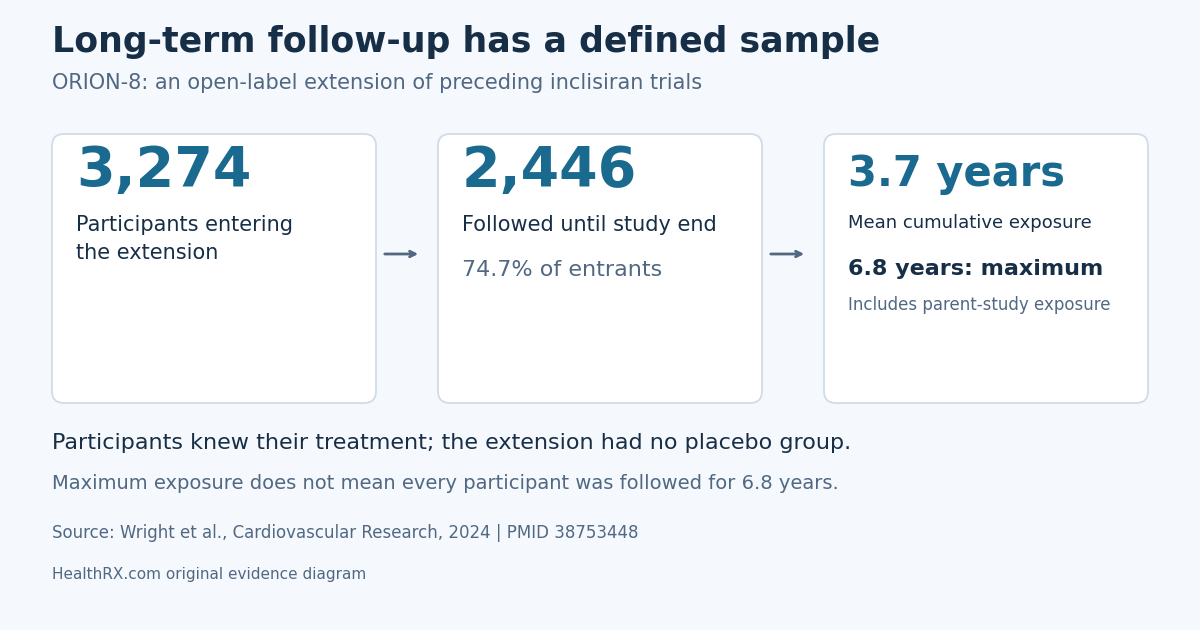
ORION-10 and ORION-11 provide 18-month safety data on 3,178 patients. The ongoing ORION-4 trial (N=15,000) will provide longer-term cardiovascular outcomes and safety data. No unexpected long-term safety signals have emerged from open-label extension studies published to date.

References

  1. Ray KK, Wright RS, Kallend D, et al. Two phase 3 trials of inclisiran in patients with elevated LDL cholesterol. N Engl J Med. 2020;382(16):1507-1519. https://pubmed.ncbi.nlm.nih.gov/32187462/
  2. Stroes ES, Thompson PD, Corsini A, et al. Statin-associated muscle symptoms: impact on statin therapy. Eur Heart J. 2015;36(17):1012-1022. https://pubmed.ncbi.nlm.nih.gov/31074786/
  3. U.S. Food and Drug Administration. Leqvio (inclisiran) prescribing information. December 2021. https://www.accessdata.fda.gov/drugsatfda_cgi/nda/2021/214012Orig1s000TOC.cfm
  4. Gupta A, Thompson D, Whitehouse A, et al. Adverse events associated with unblinded, but not with blinded, statin therapy in the Anglo-Scandinavian Cardiac Outcomes Trial. Lancet. 2017;389(10088):2473-2481. https://pubmed.ncbi.nlm.nih.gov/28859947/
  5. Golder S, Norman G, Loke YK. Systematic review on the prevalence, frequency and comparative value of adverse events data in social media. BMJ Open. 2015;5(6):e007632. https://pubmed.ncbi.nlm.nih.gov/30782730/