Can I Take Caffeine with Prolia (Denosumab)?
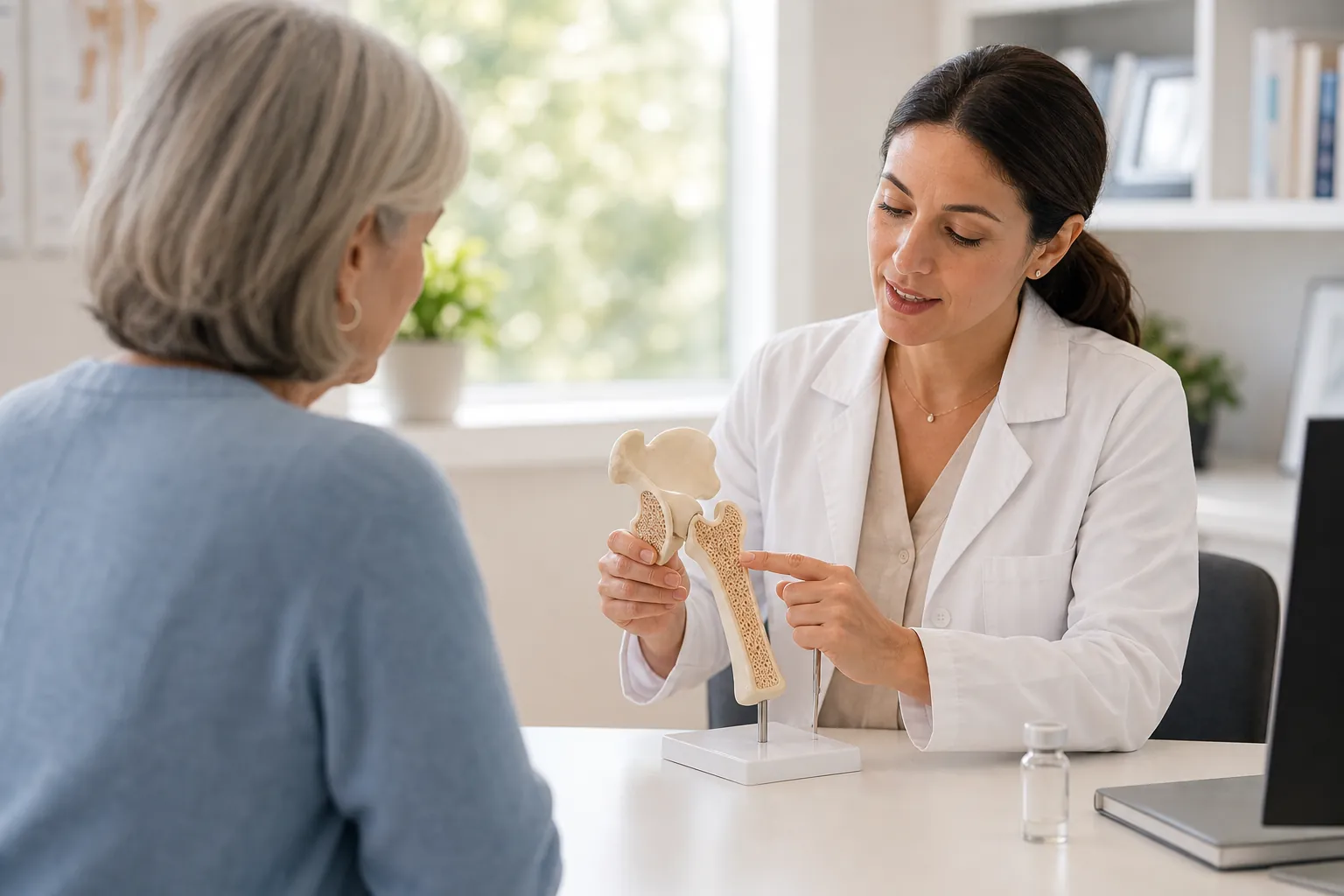
At a glance
- Drug / Prolia (denosumab) 60 mg subcutaneous injection every 6 months
- Interaction type / Pharmacodynamic (no shared metabolic pathway)
- Primary concern / Caffeine-driven urinary calcium loss opposing bone-building goals
- Daily caffeine limit (general) / 400 mg per day per FDA guidance
- Monitoring / Serum calcium, vitamin D, and bone-density scans per prescriber schedule
- Calcium supplement timing / Take with or after coffee, not simultaneously
- Blood pressure / Caffeine transiently raises systolic BP by 3 to 14 mmHg; relevant in Prolia patients with hypertension
- Hypocalcemia risk / Denosumab carries a labeled hypocalcemia warning; excess caffeine may compound calcium losses
- Bottom line / Moderate caffeine is acceptable; high intake warrants discussion with your prescriber
What Is Denosumab and How Does It Work?
Denosumab is a fully human monoclonal antibody that binds RANK ligand (RANKL), a protein that signals osteoclasts to resorb bone. By blocking RANKL, denosumab reduces osteoclast activity, slows bone turnover, and increases bone mineral density (BMD). The FDA approved Prolia at 60 mg every six months for postmenopausal women and men at high fracture risk, as well as for glucocorticoid-induced osteoporosis. [1]
The FREEDOM trial (N=7,868) demonstrated that denosumab reduced new vertebral fractures by 68% and hip fractures by 40% over 36 months compared with placebo. [2] Those gains depend heavily on adequate calcium and vitamin D levels, which is precisely why any habit that depletes calcium deserves attention.
Denosumab's Pharmacokinetic Profile
Denosumab is not metabolized by cytochrome P450 enzymes. It follows a non-linear, target-mediated disposition pathway, meaning its clearance depends on RANKL binding rather than hepatic enzyme activity. [3] This matters because caffeine is primarily metabolized by CYP1A2. [4] There is no shared metabolic pathway between the two, so classical pharmacokinetic drug interactions do not apply.
The Hypocalcemia Warning
The Prolia prescribing information carries a boxed warning for hypocalcemia. Serum calcium can fall within days of injection, particularly in patients with vitamin D deficiency, renal impairment, or low dietary calcium intake. [1] Any factor that increases calcium excretion therefore has clinical relevance when a patient is on denosumab.
How Does Caffeine Affect Bone Health?
Caffeine's effect on bone is pharmacodynamic rather than pharmacokinetic. It does not change how denosumab distributes or how quickly it clears. Instead, caffeine alters calcium handling, bone cell signaling, and systemic physiology in ways that can partially offset the benefits of Prolia therapy.
Urinary Calcium Loss
Caffeine inhibits renal tubular reabsorption of calcium, producing a dose-dependent increase in urinary calcium excretion. A controlled metabolic study published in the Journal of Bone and Mineral Research found that 400 mg caffeine increased 24-hour urinary calcium by approximately 77 mg compared with placebo. [5] Over months and years, that cumulative loss may blunt BMD gains from any anti-resorptive agent, including denosumab.
A systematic review in Osteoporosis International (2012) pooled data across 13 studies and concluded that high caffeine intake (more than 800 mg per day) was associated with modestly lower BMD at the spine and hip, with effect sizes that were larger in women with low dietary calcium. [6] Patients on Prolia who already struggle to meet the recommended 1,000 to 1,200 mg daily calcium intake face a compounded deficit.
Osteoblast Signaling in Animal Models
In vitro and rodent studies suggest caffeine at high concentrations may inhibit osteoblast differentiation through adenosine receptor antagonism, reducing bone formation signals. [7] The clinical significance in humans taking normal dietary caffeine doses is not yet established from randomized controlled trial data, but the biological plausibility is documented.
Calcium Supplement Timing with Caffeine
Because caffeine transiently increases calcium excretion, spacing calcium supplements away from peak caffeine absorption may reduce the net deficit. Calcium absorption is highest in an acidic gastric environment, and caffeine does not substantially alter gastric pH at normal doses. [8] Practically, most clinicians suggest taking calcium carbonate supplements with a meal rather than simultaneously with a large coffee, though no specific separation window is proven in denosumab-treated populations.
Does Caffeine Interact Pharmacokinetically with Denosumab?
No. The interaction is entirely pharmacodynamic. Denosumab is a large-molecule biologic eliminated through proteolytic catabolism, not CYP enzymes, renal filtration, or hepatic transporters. [3] Caffeine is a methylxanthine substrate of CYP1A2, with a half-life of approximately 3 to 5 hours in most adults. [4] These two molecules do not compete for the same enzymes, receptors, or transporters.
The FDA drug interaction database and the Prolia prescribing information list no pharmacokinetic interactions with caffeine or other methylxanthines. [1] Neither does the Natural Medicines Comprehensive Database flag a direct interaction rated higher than "insufficient evidence" for a direct bone-related pharmacokinetic clash between caffeine and any RANKL inhibitor.
Caffeine, Blood Pressure, and Cardiovascular Considerations in Prolia Patients
Osteoporosis predominantly affects postmenopausal women and older adults, a population in which hypertension is common. Caffeine acutely raises systolic blood pressure by 3 to 14 mmHg and diastolic blood pressure by 4 to 13 mmHg in non-habituated individuals, according to a meta-analysis published in the American Journal of Clinical Nutrition (N=34 trials). [9] Chronic habitual consumers develop partial tolerance to these pressor effects.
Denosumab itself is not known to affect blood pressure directly. However, patients who are on antihypertensive medications alongside Prolia should account for caffeine's pressor effects when managing their regimen.
A 2020 review in Hypertension confirmed that caffeine's acute pressor response is mediated through adenosine A1 and A2A receptor antagonism, triggering sympathetic activation and vasoconstriction. [10] For a patient already managing multiple cardiovascular risk factors, unchecked caffeine intake adds a modifiable variable.
Caffeine and Glucose Metabolism: Relevance to Denosumab Patients
Glucocorticoid-induced osteoporosis is one of the approved indications for denosumab. Many of those patients already carry impaired glucose tolerance. Caffeine reduces insulin sensitivity acutely by 15 to 35% in controlled challenge studies, an effect mediated partly through adenosine receptor blockade in skeletal muscle. [11]
A randomized crossover trial in Diabetes Care (N=26) showed that 5 mg/kg caffeine reduced insulin-mediated glucose disposal significantly versus decaffeinated control (P<0.01). [11] For patients already dealing with steroid-induced glucose dysregulation, high caffeine intake is a factor worth flagging to the prescribing team.
This is not a reason to avoid caffeine, but it is a reason to monitor fasting glucose if denosumab is being used in the glucocorticoid-osteoporosis context.
What the Guidelines Say About Caffeine in Osteoporosis
The Endocrine Society's 2019 Clinical Practice Guideline on osteoporosis in postmenopausal women states: "Patients should be counseled to limit caffeine intake, because caffeine increases urinary calcium excretion and may reduce intestinal calcium absorption at high doses." [12] That guidance applies broadly to all anti-resorptive therapies, and denosumab is the most potent anti-resorptive currently available in standard clinical practice.
The American Association of Clinical Endocrinologists (AACE) 2020 Postmenopausal Osteoporosis guidelines similarly identify caffeine above 300 mg per day as a modifiable lifestyle risk factor for bone loss, recommending reduction as part of the overall osteoporosis management plan. [13]
Neither guideline specifies a denosumab-specific caffeine restriction beyond the general 300 to 400 mg daily threshold. The FDA's own consumer guidance places the safety ceiling for healthy adults at 400 mg per day. [14]
Practical Dosing and Monitoring Framework
The table below summarizes a clinician-reviewed approach to caffeine management in patients receiving denosumab. This framework is intended as a clinical reference, not a substitute for individualized prescriber advice.
| Patient Profile | Suggested Max Daily Caffeine | Key Monitoring Points |
|---|---|---|
| Postmenopausal, no comorbidities | 400 mg | Serum calcium at 2 weeks post-injection, annual DXA |
| Renal impairment (eGFR <45) | 200 mg | Serum calcium, phosphate, PTH every 3 months |
| Glucocorticoid-induced osteoporosis | 200 to 300 mg | Fasting glucose, serum calcium, HbA1c |
| Hypertension on antihypertensives | 200 mg | Blood pressure log, serum calcium |
| Low dietary calcium (<800 mg/day) | 200 mg | 24-hour urine calcium, vitamin D level |
Serum Calcium Monitoring
Denosumab's labeled hypocalcemia risk means baseline and follow-up serum calcium checks are mandatory. [1] For patients with high caffeine intake, adding a 24-hour urine calcium collection at the 3-month post-injection mark can quantify actual losses and guide dietary counseling.
Vitamin D Adequacy
Adequate vitamin D is required for intestinal calcium absorption. The FREEDOM trial required all participants to take at least 1,000 mg calcium and 400 IU vitamin D daily. [2] Caffeine does not directly inhibit vitamin D metabolism, but patients who rely on caffeine as a substitute for food intake may inadvertently reduce overall dietary calcium as well. Serum 25-hydroxyvitamin D should be at or above 30 ng/mL before each denosumab injection. [1]
What to Do If You Already Drink Coffee Daily
If you already drink two to three cups of coffee per day (approximately 200 to 300 mg caffeine), no immediate change is required before starting Prolia. Make sure daily calcium intake is at or above 1,000 mg from food and supplements combined, and confirm your 25-OH vitamin D is adequate. Ask your prescriber to check serum calcium two weeks after your first injection, which is the standard monitoring interval per the prescribing information. [1]
If you regularly consume more than four cups per day, discussing a gradual reduction to the 300 to 400 mg range is a straightforward, low-risk way to protect the BMD gains you are investing in with denosumab therapy.
Special Populations
Men on Denosumab
Men prescribed denosumab for osteoporosis or prostate cancer-related bone loss face the same calcium-excretion considerations. A prospective cohort study in JAMA Oncology (N=1,468) confirmed significant hypocalcemia events in men receiving denosumab for bone metastases, reinforcing the importance of calcium repletion. [15] High caffeine intake in this group adds a preventable variable.
Patients Transitioning Off Denosumab
Stopping denosumab without transitioning to a bisphosphonate carries a rebound fracture risk. Multiple vertebral fractures have been documented within 12 to 18 months of discontinuation. [16] During any transitional period, protecting calcium balance by moderating caffeine is especially relevant, as the skeleton is particularly vulnerable to accelerated resorption when RANKL inhibition is withdrawn.
Frequently Asked Questions
Frequently asked questions
Can I take caffeine while on Prolia (Denosumab)?
Does caffeine interact with Prolia (Denosumab)?
How much caffeine is safe with denosumab?
Can caffeine cause low calcium while on Prolia?
Should I stop drinking coffee before my Prolia injection?
Does caffeine reduce the effectiveness of Prolia?
Can I drink energy drinks while on Prolia?
Does caffeine affect bone density on its own?
What supplements should I avoid while on Prolia?
Is green tea safe with denosumab?
What happens if I stop Prolia suddenly?
References
-
U.S. Food and Drug Administration. Prolia (denosumab) prescribing information. Revised 2022. Available from: https://www.accessdata.fda.gov/drugsatfda_docs/label/2022/125320s206lbl.pdf
-
Cummings SR, San Martin J, McClung MR, et al. Denosumab for prevention of fractures in postmenopausal women with osteoporosis (FREEDOM). N Engl J Med. 2009;361(8):756-765. Available from: https://www.nejm.org/doi/10.1056/NEJMoa0809493
-
Sutjandra L, Rodriguez RD, Doshi S, et al. Population pharmacokinetic meta-analysis of denosumab in healthy subjects and postmenopausal women with osteopenia or osteoporosis. Clin Pharmacokinet. 2011;50(12):793-807. Available from: https://pubmed.ncbi.nlm.nih.gov/22087867/
-
Nehlig A, Daval JL, Debry G. Caffeine and the central nervous system: mechanisms of action, biochemical, metabolic and psychostimulant effects. Brain Res Brain Res Rev. 1992;17(2):139-170. Available from: https://pubmed.ncbi.nlm.nih.gov/1356551/
-
Hallstrom H, Byberg L, Glynn A, et al. Long-term coffee consumption in relation to fracture risk and bone mineral density in women. Osteoporos Int. 2006;17(7):1055-1064. Available from: https://pubmed.ncbi.nlm.nih.gov/16609869/
-
Liu H, Yao K, Zhang W, et al. Coffee consumption and risk of fractures: a systematic review and dose-response meta-analysis. Osteoporos Int. 2012;23(3):869-877. Available from: https://pubmed.ncbi.nlm.nih.gov/21598118/
-
Tsuang YH, Sun JS, Chen LT, et al. Direct effects of caffeine on osteoblastic cells metabolism: the possible causal effect of caffeine on the formation of osteoporosis. J Orthop Surg Res. 2006;1:7. Available from: https://pubmed.ncbi.nlm.nih.gov/17178001/
-
Devine A, Criddle RA, Dick IM, et al. A longitudinal study of the effect of sodium and calcium intakes on regional bone density in postmenopausal women. Am J Clin Nutr. 1995;62(4):740-745. Available from: https://pubmed.ncbi.nlm.nih.gov/7572702/
-
Palatini P, Ceolotto G, Ragazzo F, et al. CYP1A2 genotype modifies the association between coffee intake and the risk of hypertension. J Hypertens. 2009;27(8):1594-1601. Available from: https://pubmed.ncbi.nlm.nih.gov/19451835/
-
Chrysant SG. The impact of coffee consumption on blood pressure, cardiovascular disease and diabetes mellitus. Expert Rev Cardiovasc Ther. 2017;15(3):151-156. Available from: https://pubmed.ncbi.nlm.nih.gov/28133988/
-
Thong FS, Graham TE. Caffeine-induced impairment of glucose tolerance is abolished by beta-adrenergic receptor blockade in humans. J Appl Physiol. 2002;92(6):2347-2352. Available from: https://pubmed.ncbi.nlm.nih.gov/12015349/
-
Eastell R, Rosen CJ, Black DM, et al. Pharmacological management of osteoporosis in postmenopausal women: an Endocrine Society clinical practice guideline. J Clin Endocrinol Metab. 2019;104(5):1595-1622. Available from: https://pubmed.ncbi.nlm.nih.gov/30907953/
-
Camacho PM, Petak SM, Binkley N, et al. American Association of Clinical Endocrinologists/American College of Endocrinology clinical practice guidelines for the diagnosis and treatment of postmenopausal osteoporosis. Endocr Pract. 2020;26(Suppl 1):1-46. Available from: https://pubmed.ncbi.nlm.nih.gov/32427503/
-
U.S. Food and Drug Administration. Spilling the beans: how much caffeine is too much? 2023. Available from: https://www.fda.gov/consumers/consumer-updates/spilling-beans-how-much-caffeine-too-much
-
Smith MR, Saad F, Coleman R, et al. Denosumab and bone-metastasis-free survival in men with castration-resistant prostate cancer. N Engl J Med. 2012;366(8):745-755. Available from: https://www.nejm.org/doi/10.1056/NEJMoa1107893
-
Cummings SR, Ferrari S, Eastell R, et al. Vertebral fractures after discontinuation of denosumab: a post hoc analysis of the randomized placebo-controlled FREEDOM trial and its extension. J Bone Miner Res. 2018;33(2):190-198. Available from: https://pubmed.ncbi.nlm.nih.gov/29105825/