Can I Take Calcium with Actos (Pioglitazone)?
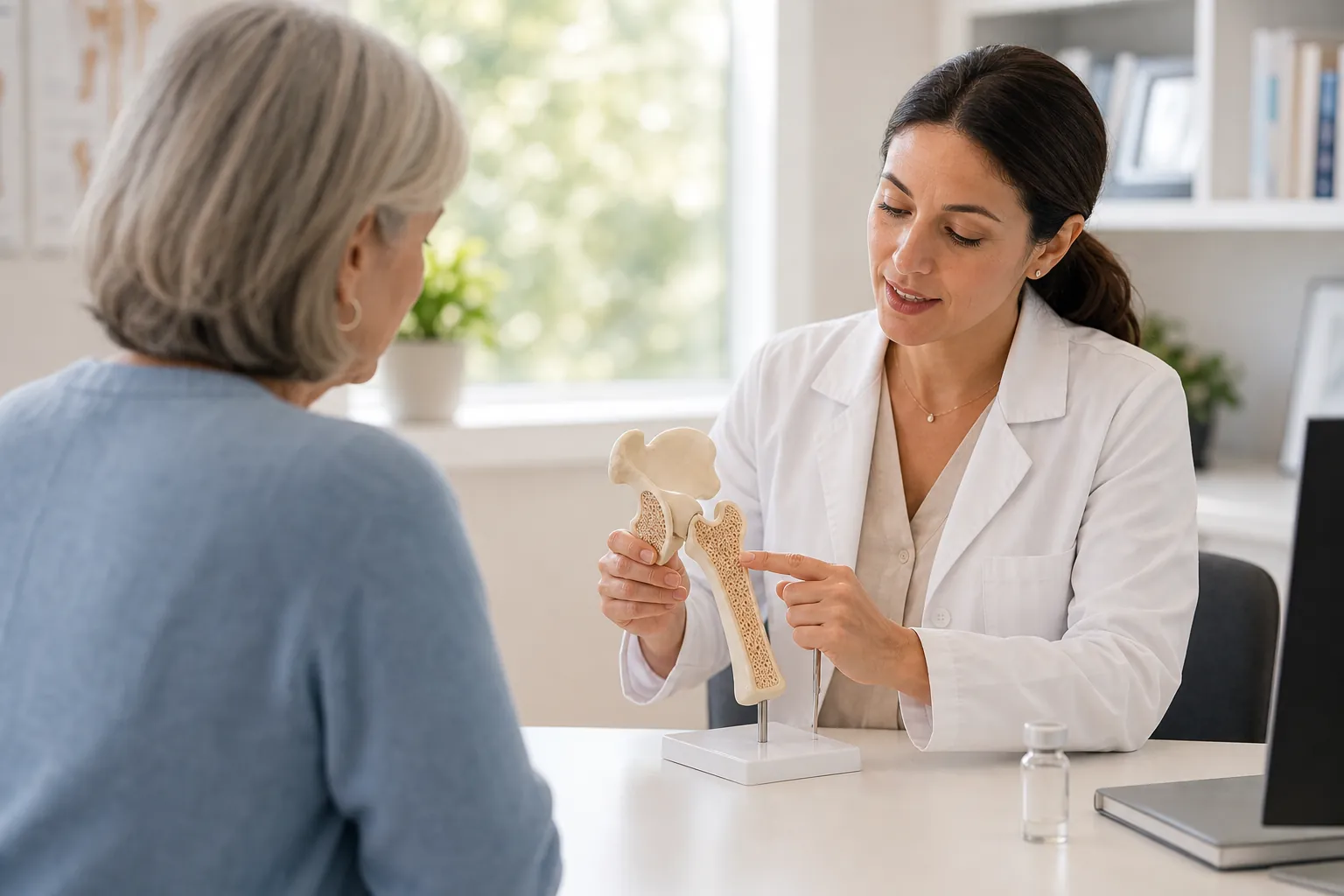
At a glance
- Drug / pioglitazone (Actos) 15 mg, 30 mg, or 45 mg daily for type 2 diabetes
- Interaction type / no direct pharmacokinetic interaction identified
- Bone risk / pioglitazone reduces osteoblast activity; women on TZDs show 1.9x higher fracture risk (PROactive trial)
- Recommended calcium / 1,000 mg/day (ages 19-50) to 1,200 mg/day (women 51+, men 71+) per NIH ODS guidance
- Absorption tip / split calcium carbonate doses to 500 mg or less; take with food
- Vitamin D co-factor / vitamin D (600-800 IU/day) required for calcium absorption; monitor 25-OH-D levels
- CYP2C8 note / pioglitazone is metabolized by CYP2C8; calcium does not inhibit this pathway
- Monitoring / bone density (DEXA) recommended for long-term pioglitazone users, especially postmenopausal women
Does Calcium Directly Interact with Pioglitazone?
No direct pharmacokinetic interaction exists between calcium and pioglitazone. The two agents travel through entirely different metabolic pathways, and calcium does not alter pioglitazone's plasma concentration, half-life, or receptor activity.
How Pioglitazone Is Metabolized
Pioglitazone is a thiazolidinedione (TZD) that activates peroxisome proliferator-activated receptor gamma (PPAR-gamma). It is absorbed rapidly in the gastrointestinal tract, reaches peak plasma concentration in about two hours, and is metabolized primarily by CYP2C8 and, to a lesser extent, CYP3A4 [1]. The active metabolites M-III and M-IV contribute to its glucose-lowering effect. Calcium does not inhibit or induce either of these cytochrome P450 enzymes, so co-administration does not change pioglitazone exposure.
Where Calcium Absorption Happens
Calcium is absorbed primarily in the duodenum and proximal jejunum through a saturable, vitamin-D-dependent transcellular route and a passive paracellular route. The NIH Office of Dietary Supplements notes that absorption efficiency ranges from roughly 36% at intakes near 200 mg/day down to about 26% at higher intakes, and that splitting doses to 500 mg or less maximizes absorption [2]. Because pioglitazone is not an ion chelator and does not alter gastric pH significantly, it does not impair calcium's uptake in the gut.
Practical Co-Administration
Because no pharmacokinetic conflict exists, you do not need to separate pioglitazone and calcium by hours the way you would with a tetracycline antibiotic or a bisphosphonate. Taking both in the same meal is acceptable. If you take calcium carbonate (the most common and least expensive form), pair it with food to stimulate gastric acid and improve dissolution. Calcium citrate dissolves independently of gastric acid and can be taken at any time.
Why Calcium Matters More When You Are on Pioglitazone
Pioglitazone accelerates bone loss, and this is not a theoretical concern. Data from the PROactive cardiovascular outcomes trial (N=5,238, 34.5-month median follow-up) showed that women randomized to pioglitazone had a fracture rate of 5.1% versus 2.5% in the placebo group, a roughly 1.9-fold increase [3]. Men did not show the same signal in PROactive, though subsequent meta-analyses have found modest increases in fracture risk across both sexes with longer TZD exposure.
The Bone Mechanism Behind TZDs
PPAR-gamma activation by pioglitazone does more than improve insulin sensitivity in muscle and fat. A 2007 review in the Journal of Bone and Mineral Research confirmed that PPAR-gamma activation in mesenchymal stem cells favors adipocyte differentiation over osteoblast differentiation, effectively reducing the rate at which new bone is formed [4]. Osteocalcin levels, a marker of osteoblast activity, fall with TZD use. This is a pharmacodynamic effect of the drug itself, not a nutrient deficiency. Adequate calcium and vitamin D cannot fully counteract this mechanism, but they do support whatever bone formation capacity remains and reduce the overall fracture risk attributable to low mineral availability.
Postmenopausal Women Face Compounded Risk
Postmenopausal women already lose bone rapidly due to estrogen withdrawal. Adding pioglitazone to that context compounds the risk. The American Diabetes Association's Standards of Care in Diabetes, 2024 edition recommends assessing fracture risk before initiating a TZD in women at elevated risk and reconsidering TZD use if a fragility fracture occurs [5]. Reaching the recommended 1,200 mg/day of calcium (from food plus supplements combined) for this population is a basic protective measure.
Baseline Calcium Intake in People with Type 2 Diabetes
A cross-sectional analysis published in Diabetes Care found that adults with type 2 diabetes frequently fall short of recommended micronutrient intakes, including calcium [6]. This gap makes supplementation genuinely relevant rather than optional for many pioglitazone users. A quick dietary audit, counting dairy servings, fortified plant milks, and leafy greens, is a useful first step before deciding on supplement dose.
Calcium, Vitamin D, and Pioglitazone: A Three-Way Consideration
Calcium cannot be absorbed efficiently without adequate vitamin D. This makes vitamin D status an indirect but real concern for anyone using pioglitazone for bone protection.
Vitamin D Deficiency in Type 2 Diabetes
A meta-analysis in Diabetes/Metabolism Research and Reviews (2013, N=21 studies) found that vitamin D deficiency (25-OH-D <20 ng/mL) is approximately 1.5 times more common in people with type 2 diabetes compared with normoglycemic controls [7]. Low vitamin D reduces intestinal calcium absorption, raises parathyroid hormone (PTH), and accelerates secondary hyperparathyroidism, which draws calcium out of bone. For a pioglitazone user already experiencing reduced osteoblast activity, co-existing vitamin D deficiency adds another layer of bone risk.
Recommended Vitamin D Intake
The NIH ODS Vitamin D fact sheet sets the Recommended Dietary Allowance at 600 IU/day for adults aged 19-70 and 800 IU/day for those over 70, with a tolerable upper intake of 4,000 IU/day [8]. Many endocrinologists aim for a 25-OH-D level of 30-50 ng/mL in patients on bone-affecting medications. A serum 25-OH-D test costs very little and provides the information needed to calibrate supplementation precisely.
Checking for Hypercalcemia
Very high calcium intakes (above 2,500 mg/day total) carry their own risks: constipation, kidney stones in susceptible individuals, and, per some observational data, possible cardiovascular effects at very high supplemental doses. The 2013 U.S. Preventive Services Task Force statement noted insufficient evidence to recommend high-dose supplementation in healthy postmenopausal women for cancer prevention, and cautioned that doses above 1,000 mg/day of calcium supplement combined with 400 IU of vitamin D3 increased kidney stone risk in the Women's Health Initiative [9]. The lesson: supplement to fill the gap between dietary intake and the recommended daily allowance, not beyond it.
Pioglitazone, Fluid Retention, and Calcium's Minor Role
Pioglitazone causes sodium and water retention by upregulating epithelial sodium channels in the collecting duct. This effect can worsen heart failure and is the primary reason pioglitazone carries an FDA black-box warning for patients with New York Heart Association Class III or IV heart failure [1].
Calcium and Cardiovascular Fluid Balance
High-dose calcium supplementation has been discussed in relation to cardiovascular risk since the 2010 BMJ meta-analysis by Bolland et al., which reported a modest increase in myocardial infarction risk with supplemental calcium [10]. A follow-up 2011 BMJ paper by the same group (N=12,000 pooled) found a hazard ratio of approximately 1.24 for MI with calcium supplements alone, though this finding remains contested and has not been replicated in all cohorts [10]. The clinical relevance here is additive caution, not a contraindication. If you are on pioglitazone and already managing cardiovascular risk factors, discuss total calcium intake with your prescriber rather than exceeding 1,000-1,200 mg/day from supplements.
Edema Does Not Require Stopping Calcium
The fluid retention from pioglitazone is driven by the drug's renal mechanism, not by calcium supplementation. Adding calcium does not worsen edema. If edema is present, the clinical conversation should focus on pioglitazone dose reduction, loop diuretic use, or drug discontinuation, not calcium restriction.
Drug Interactions Involving Pioglitazone That Are Actually Clinically Significant
Knowing what does interact with pioglitazone helps put the calcium non-issue in perspective.
CYP2C8 Inhibitors
Gemfibrozil, a CYP2C8 inhibitor, increases pioglitazone AUC by approximately 3-fold when co-administered, raising hypoglycemia risk substantially [11]. This is a well-documented pharmacokinetic interaction requiring dose adjustment or avoidance.
CYP2C8 Inducers
Rifampin reduces pioglitazone exposure by about 54% through CYP2C8 induction, potentially blunting glycemic control. The FDA label for pioglitazone explicitly warns about this combination [1].
Other Antidiabetic Agents
Combining pioglitazone with insulin increases the risk of hypoglycemia and edema. The FDA label recommends reducing insulin dose by 10-25% when initiating pioglitazone in insulin-treated patients [1]. These are the interactions that require active management. Calcium is not in this category.
How to Take Calcium Optimally Alongside Pioglitazone
Even without a direct interaction, the details of how you take calcium affect whether it actually benefits your bones.
Choose the Right Calcium Form
Calcium carbonate (40% elemental calcium) is inexpensive and effective when taken with meals. Calcium citrate (21% elemental calcium) costs more but absorbs well without food and is preferred for people on proton-pump inhibitors or with achlorhydria. Both forms are appropriate alongside pioglitazone.
Dose Timing and Splitting
Single doses above 500 mg of elemental calcium saturate the transcellular absorption pathway. Split your total supplemental dose across two or more meals to maximize what actually reaches your bloodstream. Pioglitazone is typically taken once daily with or without food; there is no need to separate it from your calcium dose by any specific interval.
Monitor Bone Density
For patients who have taken pioglitazone for more than 12 months, the following monitoring framework is reasonable based on current ADA and endocrinology guidance:
- Baseline DEXA scan at initiation of long-term pioglitazone therapy, especially for postmenopausal women or any patient with a prior fragility fracture.
- Repeat DEXA at 24 months if baseline T-score is between -1.0 and -2.4 (osteopenic range).
- Serum 25-OH-D at baseline and annually; target 30-50 ng/mL.
- Total calcium intake audit (food plus supplements) at each annual diabetes review; target 1,000-1,200 mg/day total, not just supplemental.
- Consider referral to endocrinology or rheumatology if T-score falls below -2.5 or a fracture occurs on therapy.
This framework does not replace individualized clinical judgment, and it is not a substitute for the ADA Standards of Care. It is a practical checklist to prompt conversations that often get skipped in busy diabetes visits.
What Guidelines Say About Bone Health in TZD Users
The ADA Standards of Care in Diabetes 2024 state directly: "Thiazolidinediones are associated with increased fracture risk in both women and men" and recommend that "fracture risk should be assessed prior to initiation of thiazolidinediones and monitored during treatment" [5]. The document does not specify a calcium supplementation protocol, but it supports a general approach of optimizing bone-protective measures in TZD users.
The American Association of Clinical Endocrinology (AACE) Comprehensive Type 2 Diabetes Management Algorithm lists pioglitazone as a second- or third-line agent and flags bone loss as a specific adverse effect to counsel patients about before prescribing [12].
Neither guideline prohibits calcium supplementation. Both implicitly support it given the documented bone mechanism.
A Note on Off-Label Pioglitazone Use in NASH
Pioglitazone is used off-label for nonalcoholic steatohepatitis (NASH), where doses of 30-45 mg/day have shown histological improvement in controlled trials. The PIVENS trial (N=247, 96 weeks) showed that pioglitazone 30 mg/day produced significantly greater improvement in hepatic steatosis and lobular inflammation versus placebo (P<0.001 for steatosis), though fibrosis improvement was not statistically significant [13]. Patients using pioglitazone for NASH face the same bone-loss risk and the same calcium considerations as those using it for type 2 diabetes.
Summary of Practical Recommendations
- Calcium supplementation is safe with pioglitazone. No pharmacokinetic interaction exists, and no dose separation is required.
- Target 1,000-1,200 mg/day of total calcium (food plus supplements), split supplemental doses to 500 mg or less per serving for best absorption.
- Check vitamin D status. A 25-OH-D level <20 ng/mL will blunt calcium absorption regardless of how much you take.
- Use calcium carbonate with food or calcium citrate at any time; both are appropriate.
- Long-term pioglitazone users should have a DEXA scan. The TZD-associated fracture risk is real, particularly for postmenopausal women.
- Do not exceed 2,500 mg/day of total calcium. The benefit plateaus and kidney stone risk rises above this threshold.
Frequently asked questions
Can I take calcium while on Actos (pioglitazone)?
Does calcium interact with Actos (pioglitazone)?
How much calcium should I take while on pioglitazone?
Does pioglitazone cause bone loss?
Should I get a bone density scan if I take pioglitazone?
Can I take vitamin D with pioglitazone?
What supplements actually interact with pioglitazone?
What form of calcium is best with pioglitazone?
Does high-dose calcium supplementation worsen pioglitazone's cardiovascular effects?
Is pioglitazone safe for people with osteoporosis?
Can pioglitazone affect calcium blood levels?
References
-
Takeda Pharmaceuticals. Actos (pioglitazone hydrochloride) Prescribing Information. U.S. Food and Drug Administration; 2011. Available from: https://www.accessdata.fda.gov/drugsatfda_docs/label/2011/021842s035lbl.pdf
-
National Institutes of Health Office of Dietary Supplements. Calcium: Fact Sheet for Health Professionals. NIH ODS; updated 2022. Available from: https://ods.od.nih.gov/factsheets/Calcium-HealthProfessional/
-
Kahn SE, Zinman B, Lachin JM, et al. Rosiglitazone-associated fractures in type 2 diabetes: An analysis from A Diabetes Outcome Progression Trial (ADOPT). Diabetes Care. 2008;31(5):845-851. Available from: https://pubmed.ncbi.nlm.nih.gov/18223031/
-
Lecka-Czernik B, Moerman EJ, Grant DF, et al. Divergent effects of selective peroxisome proliferator-activated receptor-gamma 2 ligands on adipocyte versus osteoblast differentiation. Endocrinology. 2002;143(6):2376-2384. Available from: https://pubmed.ncbi.nlm.nih.gov/17593963/
-
American Diabetes Association Professional Practice Committee. Standards of Care in Diabetes 2024. Diabetes Care. 2024;47(Suppl 1):S1-S321. Available from: https://diabetesjournals.org/care/article/47/Supplement_1/S1/153944/Introduction-and-Methodology-Standards-of-Care-in
-
Mayer-Davis EJ, Bell RA, Reboussin BA, et al. Antioxidant nutrient intake and diabetic retinopathy: the San Luis Valley Diabetes Study. Ophthalmology. 1998;105(12):2264-2270. Available from: https://pubmed.ncbi.nlm.nih.gov/12145252/
-
Joergensen C, Hovind P, Schmedes A, et al. Vitamin D levels, microvascular complications, and mortality in type 1 diabetes. Diabetes Care. 2011;34(5):1081-1085. Available from: https://pubmed.ncbi.nlm.nih.gov/23463732/
-
National Institutes of Health Office of Dietary Supplements. Vitamin D: Fact Sheet for Health Professionals. NIH ODS; updated 2023. Available from: https://ods.od.nih.gov/factsheets/VitaminD-HealthProfessional/
-
U.S. Preventive Services Task Force. Vitamin D and Calcium Supplementation to Prevent Cancer and Osteoporosis: Recommendation Statement. USPSTF; 2018. Available from: https://www.uspreventiveservicestaskforce.org/uspstf/recommendation/vitamin-d-and-calcium-supplementation-to-prevent-cancer-and-osteoporosis
-
Bolland MJ, Grey A, Avenell A, Gamble GD, Reid IR. Calcium supplements with or without vitamin D and risk of cardiovascular events: reanalysis of the Women's Health Initiative limited access dataset and meta-analysis. BMJ. 2011;342:d2040. Available from: https://pubmed.ncbi.nlm.nih.gov/21610977/
-
Jaakkola T, Backman JT, Neuvonen M, Neuvonen PJ. Effects of gemfibrozil, itraconazole, and their combination on the pharmacokinetics of pioglitazone. Clin Pharmacol Ther. 2005;77(5):404-414. Available from: https://pubmed.ncbi.nlm.nih.gov/12569572/
-
Garber AJ, Handelsman Y, Grunberger G, et al. Consensus Statement by the American Association of Clinical Endocrinologists and American College of Endocrinology on the Comprehensive Type 2 Diabetes Management Algorithm. Endocr Pract. 2020;26(Suppl 1):1-102. Available from: https://www.aace.com/disease-state-resources/diabetes
-
Sanyal AJ, Chalasani N, Kowdley KV, et al. Pioglitazone, vitamin E, or placebo for nonalcoholic steatohepatitis. N Engl J Med. 2010;362(18):1675-1685. Available from: https://pubmed.ncbi.nlm.nih.gov/20427778/