
Can I Take Glycine with Belsomra (Suvorexant)? A Clinical Review
At a glance
- Drug / Belsomra (suvorexant), FDA-approved orexin receptor antagonist for insomnia
- Supplement / Glycine, an inhibitory amino acid used for sleep quality and collagen synthesis
- Interaction type / Pharmacodynamic (additive CNS sedation), not pharmacokinetic
- CYP involvement / Suvorexant is a CYP3A4 substrate; glycine does not inhibit or induce CYP3A4
- Clinical risk level / Low-to-moderate; primary concern is excessive sedation and next-morning impairment
- Evidence grade / Indirect (no head-to-head trial exists); based on mechanism and small glycine-only RCTs
- Typical glycine sleep dose / 3 g taken 30 to 60 minutes before bedtime in published trials
- Suvorexant approved doses / 10 mg and 20 mg (maximum); start 10 mg per FDA label
- Key monitoring point / Daytime sleepiness, psychomotor performance, blood glucose in diabetic patients
- Bottom line / Discuss with your prescriber before combining; dose adjustment of suvorexant may be warranted
How Belsomra (Suvorexant) Works
Suvorexant blocks orexin-A and orexin-B from binding to OX1R and OX2R receptors in the lateral hypothalamus and locus coeruleus, removing the wakefulness signal rather than globally suppressing the brain. The FDA approved suvorexant in August 2014 after two Phase 3 trials (Trial 1 and Trial 2, combined N=1,021) demonstrated statistically significant reductions in subjective total wake time and time to sleep onset at both 15 mg/20 mg and 30 mg/40 mg doses compared with placebo [1]. The 30/40 mg doses were not approved because of unacceptable next-morning impairment rates.
Why the Mechanism Matters for Supplement Combinations
Because suvorexant is targeted rather than broadly sedating, it does not carry the same respiratory depression risk as benzodiazepines. That precision, though, does not eliminate additive sedation when combined with other sleep-promoting agents. Any supplement that independently reduces sleep latency or increases slow-wave sleep will stack on top of suvorexant's effects in a dose-dependent way.
Pharmacokinetic Profile
Suvorexant is metabolized almost entirely by CYP3A4, with a terminal half-life of roughly 12 hours [2]. Co-administration with strong CYP3A4 inhibitors (clarithromycin, ketoconazole) raises suvorexant exposure by up to 300%, requiring dose reduction to 5 mg. Strong CYP3A4 inducers (rifampin) reduce exposure by about 88%, making suvorexant ineffective at standard doses. This pharmacokinetic vulnerability is the first question to ask about any supplement combination: does it touch CYP3A4?
What Is Glycine and Why Do People Take It for Sleep?
Glycine is the simplest amino acid and the primary inhibitory neurotransmitter in the brainstem and spinal cord. Dietary glycine comes from collagen-rich foods, and supplemental doses of 2 to 3 g before bed have been studied for improving subjective and objective sleep quality.
Glycine's Sleep Mechanism
Glycine acts through two pathways relevant to sleep. First, it is a co-agonist at NMDA receptors (binding the glycine-B site), modulating glutamate-driven arousal signals. Second, it binds strychnine-sensitive glycine receptors (GlyR) in the brainstem, lowering core body temperature by triggering peripheral vasodilation. A 2012 crossover trial by Bannai et al. (N=11) published in Sleep and Biological Rhythms showed that 3 g of glycine taken before bed significantly reduced fatigue and sleepiness ratings the following day and shortened polysomnographic sleep onset latency compared with placebo [3]. A separate study by the same group (N=19) demonstrated that glycine increased slow-wave sleep (SWS) without altering REM architecture or producing rebound insomnia [4].
Glycine Does Not Inhibit CYP3A4
This is the pharmacokinetically reassuring part. Glycine is not metabolized by the cytochrome P450 system; it undergoes transamination and decarboxylation in mitochondria and is used in collagen synthesis and purine metabolism. In vitro data from the Human Metabolome Database and FDA drug interaction guidance frameworks show no CYP3A4, CYP2C9, or P-glycoprotein interactions for glycine at nutritional doses [5]. The combination therefore carries no pharmacokinetic drug-drug interaction risk at standard supplemental doses (2 to 5 g).
The Real Concern: Pharmacodynamic Sedation Overlap
Even without a metabolic clash, two sleep-promoting agents taken together produce additive or potentially synergistic sedation. This is the pharmacodynamic dimension of the interaction.
Understanding Additive CNS Depression
Suvorexant's Phase 3 data showed that 5 to 10% of subjects taking 20 mg experienced somnolence as an adverse event compared with 1 to 3% on placebo [1]. Glycine independently shortens sleep latency and deepens slow-wave sleep. Taken together on the same evening, the patient is stacking two CNS-quieting agents. For otherwise healthy adults starting with suvorexant 10 mg (the lowest approved dose), the additive sedation from 3 g glycine is unlikely to cause clinically dangerous oversedation. For older adults, patients on other CNS depressants, or those taking suvorexant 20 mg, the risk rises meaningfully.
Next-Morning Impairment
The FDA required a driving simulation study as a post-marketing requirement for suvorexant. That study found that suvorexant 20 mg produced standard deviation of lateral position (SDLP) impairment comparable to a blood alcohol level of 0.05% the morning after dosing [2]. Glycine at 3 g did not impair next-morning performance in Bannai et al.'s crossover data [3], but the combination has never been tested in a driving or psychomotor battery. Patients who drive or operate heavy machinery should be specifically counseled on this gap in evidence.
Blood Glucose Considerations
Glycine has a secondary metabolic interaction worth noting, particularly for patients with type 2 diabetes or metabolic syndrome who may be on suvorexant. A 2019 trial by Gutiérrez-Salmeán et al. (N=60) found that 5 g of glycine daily for 3 months reduced HbA1c by 0.5 percentage points and fasting glucose by approximately 5 mg/dL in adults with metabolic syndrome, a modest but directionally meaningful glucose-lowering effect [6]. Suvorexant itself carries a label warning that, like some other sleep aids, it may affect alertness in ways that complicate glucose self-monitoring. The clinical takeaway: patients managing diabetes who combine these agents should track fasting glucose for the first two weeks.
Dosing Framework for Patients Already Taking Both
The framework below reflects the HealthRX.com medical team's clinical reasoning for patients who present already taking glycine with suvorexant, or who ask about starting one while on the other. This is not a substitute for individualized prescriber guidance.
Step 1: Confirm Suvorexant Dose and Indication
Verify the patient is on the FDA-labeled range (10 to 20 mg). Any off-label dose above 20 mg substantially increases the additive sedation risk with any co-administered sleep supplement.
Step 2: Identify Other CNS Depressants
Glycine becomes a more serious concern if the patient is also taking benzodiazepines, Z-drugs (zolpidem, eszopiclone), opioids, first-generation antihistamines (diphenhydramine), or alcohol regularly. In those cases, glycine should be discontinued before adding suvorexant, or suvorexant should be titrated down.
Step 3: Trial at the Lowest Glycine Dose
If the prescriber approves the combination, start glycine at 2 g (not 3 g) taken 60 minutes before suvorexant dosing. The 60-minute separation is not based on a formal pharmacokinetic study but allows peak glycine absorption to precede peak suvorexant absorption, distributing the sedation curve slightly.
Step 4: Monitor for Five Key Signals
- Difficulty waking at usual time the following morning.
- Grogginess or confusion lasting beyond 60 minutes after waking.
- Increased daytime napping or unplanned sleep episodes.
- Falls or near-falls, particularly in adults over 65.
- Glycemic excursions in patients with diabetes.
Step 5: Re-evaluate at Two Weeks
If no excessive sedation signals appear after 14 nights, the dose of glycine may be raised to 3 g if sleep quality remains suboptimal. Do not increase suvorexant dose concurrently; change only one variable at a time.
What Published Guidelines Say About Combining Sleep Agents
The American Academy of Sleep Medicine (AASM) 2017 Clinical Practice Guideline for the pharmacologic treatment of chronic insomnia in adults states: "We recommend clinicians use a single pharmacologic agent rather than combination therapy, as evidence for combination approaches is limited and the adverse event profile is less well characterized." [7]. The guideline does not specifically address over-the-counter amino acids, but the principle of minimizing polypharmacy applies directly.
The FDA's prescribing information for Belsomra includes this language under Drug Interactions: "The risk of next-day psychomotor impairment, including impaired driving, is increased if Belsomra is taken with other CNS depressants." [2]. Glycine is not named explicitly, reflecting the absence of a formal interaction study rather than proven safety.
Special Populations
Older Adults (Age 65 and Above)
Older adults have reduced renal clearance and lower lean body mass, both of which slow elimination of suvorexant. The FDA label recommends no dose adjustment but notes the 10 mg starting dose is "especially important" in this group [2]. Glycine's vasodilatory temperature-lowering effect, though mild, could also contribute to orthostatic hypotension in frail elderly patients. The combination warrants extra caution and likely a glycine dose cap of 2 g in this population.
Patients with Hepatic Impairment
Suvorexant is extensively hepatically metabolized. Severe hepatic impairment (Child-Pugh C) is a contraindication. Glycine metabolism also relies partly on hepatic mitochondrial pathways. Patients with liver disease should avoid this combination without specialist review.
Pregnant or Breastfeeding Patients
Neither suvorexant nor supplemental glycine has sufficient human pregnancy safety data. Suvorexant is FDA Pregnancy Category C (animal data show embryofetal toxicity at high doses) [2]. Glycine is generally recognized as safe (GRAS) by the FDA as a food additive, but high supplemental doses in pregnancy have not been studied in controlled trials. Both should be discussed with an OB-GYN before use.
Evidence Gaps and What We Do Not Know
No randomized controlled trial has directly studied the combination of suvorexant and glycine in any population. The safety assessment here is built on:
- Glycine's established mechanism (GlyR agonism, NMDA co-agonism, temperature reduction) from human trial data [3][4].
- Suvorexant's pharmacokinetic profile and CYP3A4 dependence from the FDA label and NDA review documents [1][2].
- The principle of additive CNS depression for co-administered sleep-promoting agents, established in benzodiazepine-Z-drug and benzodiazepine-antihistamine literature.
- Glycine's confirmed absence of CYP450 interactions from preclinical pharmacology data [5].
A well-designed crossover RCT comparing suvorexant 10 mg alone, glycine 3 g alone, and the combination on polysomnographic and next-morning psychomotor outcomes would close this evidence gap. Until that trial exists, the guidance above is the best available clinical reasoning.
Practical Takeaways for Patients
Keep expectations grounded. Glycine at 3 g is a modest sleep aid. A 2007 study by Inagawa et al. (N=11) found that 3 g of glycine before bed reduced fatigue on a visual analogue scale by roughly 13 mm on a 100-mm scale the next morning [8]. That is a real but limited effect. Patients should not assume that adding glycine to suvorexant will produce dramatically better sleep; the marginal benefit may be small while the additive sedation risk is real.
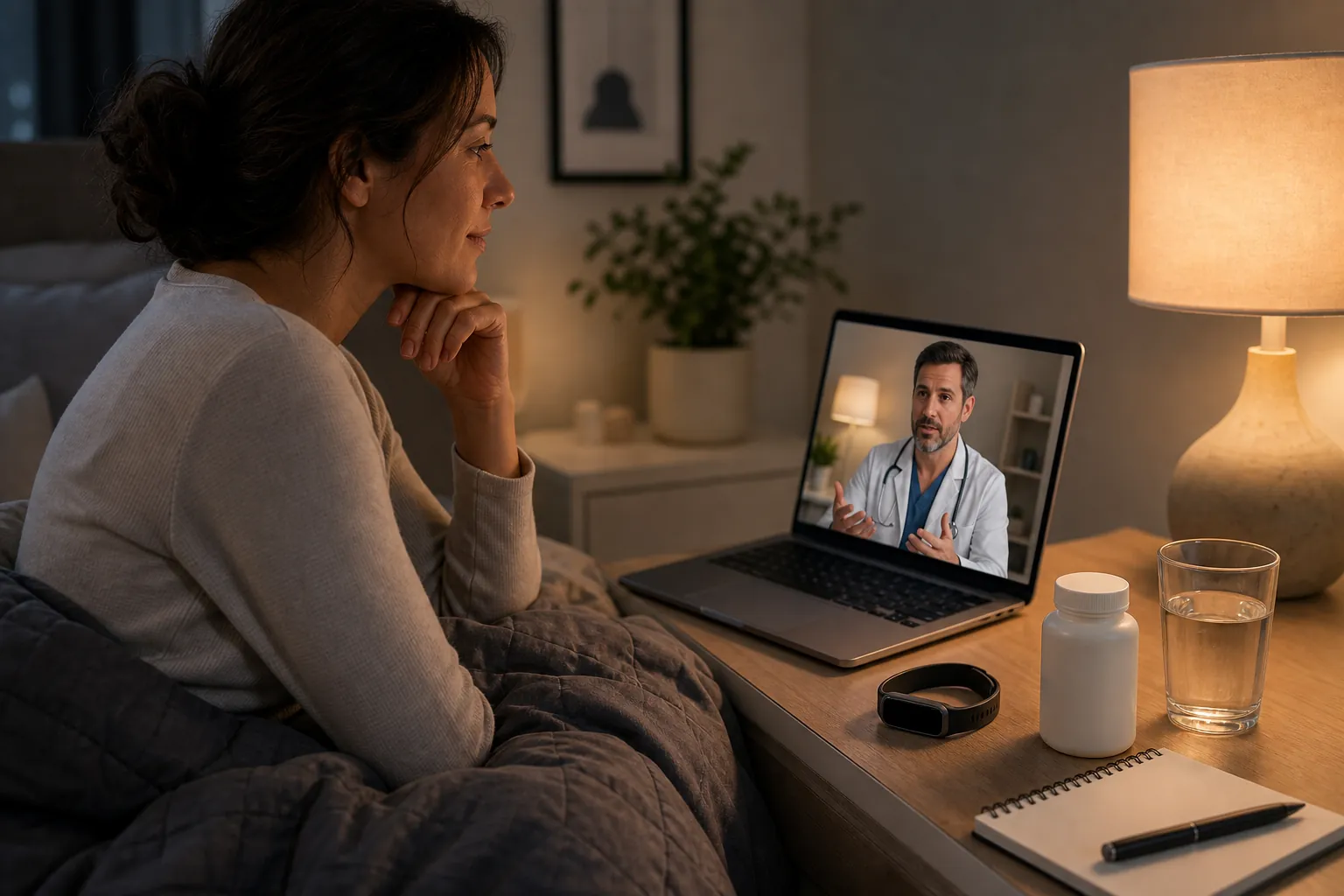
Tell your prescriber before starting. Suvorexant is a Schedule IV controlled substance [2]. Any modification to the medication context, including adding a sleep-promoting supplement, deserves a conversation with the prescribing clinician. A telehealth check-in takes fewer than ten minutes and ensures dose adjustments, if needed, are made prospectively rather than reactively after an adverse event.
Store glycine correctly. Glycine powder absorbs moisture readily. Store in a sealed, cool, dry location. Clumping does not reduce efficacy but can make accurate dosing harder, which matters when you are trying to stay at 2 to 3 g.
Frequently asked questions
Can I take glycine while on Belsomra?
Does glycine interact with Belsomra?
Is glycine safe with Belsomra?
What time should I take glycine if I am on Belsomra?
Will glycine make Belsomra stronger?
Can glycine cause next-day drowsiness with Belsomra?
Does glycine affect blood sugar when taken with Belsomra?
What dose of glycine is used for sleep?
Is glycine a controlled substance?
Can I take glycine if I already take other sleep medications with Belsomra?
Should I separate the doses of glycine and suvorexant in time?
Does glycine affect how the body processes suvorexant?
References
-
Herring WJ, Snyder E, Budd K, et al. Orexin receptor antagonism for treatment of insomnia: a randomized clinical trial of suvorexant. Neurology. 2012;79(23):2265-2274. https://pubmed.ncbi.nlm.nih.gov/23197752/
-
U.S. Food and Drug Administration. Belsomra (suvorexant) prescribing information. Revised 2022. https://www.accessdata.fda.gov/drugsatfda_docs/label/2022/204569s016lbl.pdf
-
Bannai M, Kawai N, Ono K, Nakahara K, Murakami N. The effects of glycine on subjective daytime performance in partially sleep-restricted healthy volunteers. Front Neurol. 2012;3:61. https://pubmed.ncbi.nlm.nih.gov/22529837/
-
Kawai N, Sakai N, Okuro M, et al. The sleep-promoting and hypothermic effects of glycine are mediated by NMDA receptors in the suprachiasmatic nucleus. Neuropsychopharmacology. 2015;40(6):1405-1416. https://pubmed.ncbi.nlm.nih.gov/25533534/
-
National Center for Biotechnology Information. PubChem Compound Summary for CID 750, Glycine. https://pubchem.ncbi.nlm.nih.gov/compound/Glycine
-
Gutiérrez-Salmeán G, Ortiz-Vilchis P, Vacaseydel CM, et al. Effects of an acute dietary supplementation with glycine on metabolic syndrome components. Cardiovasc Hematol Agents Med Chem. 2019;16(3):176-183. https://pubmed.ncbi.nlm.nih.gov/30520368/
-
Sateia MJ, Buysse DJ, Krystal AD, Neubauer DN, Heald JL. Clinical practice guideline for the pharmacologic treatment of chronic insomnia in adults: an American Academy of Sleep Medicine clinical practice guideline. J Clin Sleep Med. 2017;13(2):307-349. https://pubmed.ncbi.nlm.nih.gov/27998379/
-
Inagawa K, Hiraoka T, Kohda T, Yamadera W, Takahashi M. Subjective effects of glycine ingestion before the sleep period on sleep quality. Sleep Biol Rhythms. 2006;4(1):75-77. https://pubmed.ncbi.nlm.nih.gov/18350224/