
Can I Take Reishi Mushroom with TB-500?
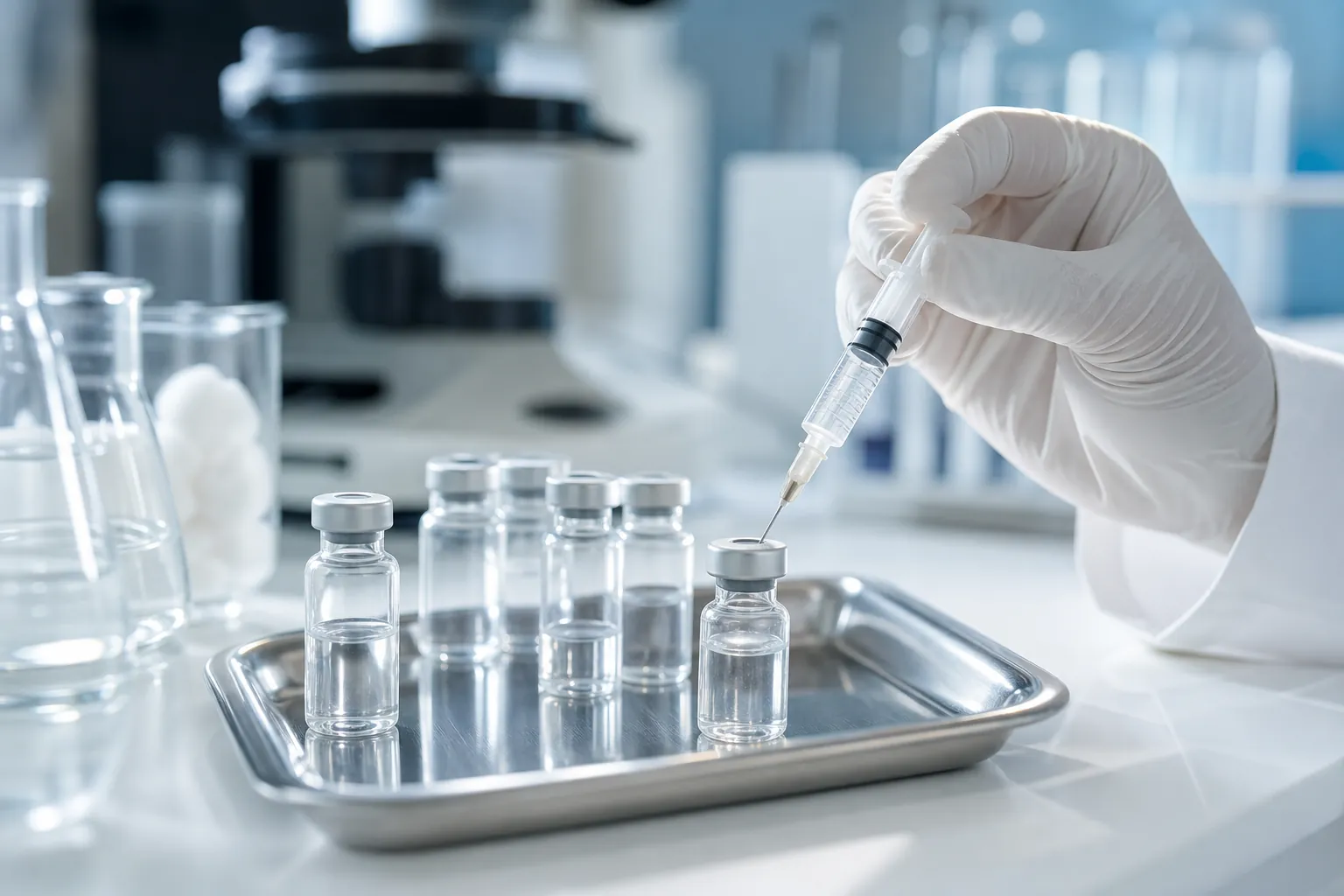
At a glance
- Drug / TB-500 (thymosin beta-4 active fragment), 503A compounded peptide, subcutaneous injection
- Supplement / Reishi mushroom (Ganoderma lucidum), oral; contains beta-glucans and triterpenes
- Interaction type / Pharmacodynamic (not pharmacokinetic); no shared metabolic enzyme identified
- Primary concern / Overlapping immune modulation plus reishi-associated anticoagulant activity
- Anticoagulant evidence / Reishi inhibits ADP-induced platelet aggregation in vitro and in small human trials
- TB-500 immune effect / Upregulates anti-inflammatory cytokines, modulates T-cell and macrophage activity
- Human interaction data / None published as of mid-2025; extrapolated from individual agent studies
- Monitoring recommended / Baseline CBC, platelet count, and PT/INR if combining long-term
- Populations needing extra caution / Anyone on anticoagulants, NSAIDs, or with a clotting disorder
- Regulatory status / TB-500 is not FDA-approved; reishi is sold as a dietary supplement under DSHEA
What Is TB-500 and How Does It Work?
TB-500 is the synthetic active fragment of thymosin beta-4, a 43-amino-acid peptide naturally present in virtually all human cells. The commercial peptide typically corresponds to the actin-binding sequence Ac-LKKTETQ (residues 17 to 23), though formulations vary by compounding pharmacy. It is dispensed under Section 503A of the Federal Food, Drug, and Cosmetic Act and is not FDA-approved for any indication.
Mechanism of Action
Thymosin beta-4 sequesters G-actin, regulating cytoskeletal remodeling after tissue injury. This action speeds keratinocyte and endothelial cell migration in wound models. Beyond structural repair, thymosin beta-4 upregulates anti-inflammatory mediators including IL-10 and downregulates pro-inflammatory cytokines such as TNF-alpha, placing it squarely in the immune-signaling space.
A 2010 paper in the Annals of the New York Academy of Sciences confirmed that thymosin beta-4 promotes angiogenesis and reduces apoptosis in cardiac tissue after ischemic injury, effects driven partly through activation of the PI3K/Akt survival pathway. [1]
Current Regulatory and Research Context
The FDA has not approved thymosin beta-4 or its fragments for human therapeutic use. Research remains largely preclinical or in early-phase trials. Prescribers ordering TB-500 through 503A compounding pharmacies do so under off-label authority, and patients assume responsibility for a compound with an incomplete human-safety profile. The FDA's 503A compounding framework is described in detail on the agency's own guidance pages. [2]
What Is Reishi Mushroom and Why Do People Stack It with TB-500?
Reishi (Ganoderma lucidum) is among the most studied medicinal fungi on earth. Its primary bioactive constituents are beta-D-glucans (polysaccharides that activate innate immune receptors) and triterpenoids such as ganoderic acids (which have demonstrated anti-inflammatory, hepatoprotective, and platelet-inhibitory effects in cell and animal studies).
Why the Stack Seems Appealing
People using TB-500 for tissue repair often add reishi because both compounds are marketed with recovery and immune-support claims. The reasoning is intuitive: if TB-500 reduces post-exercise inflammation and reishi modulates immune tone, the combination should theoretically accelerate recovery. That logic is not yet supported by any head-to-head human trial.
Reishi's Documented Biological Activity
A systematic review published in PLOS ONE (2016) examined 59 randomized controlled trials involving Ganoderma lucidum extracts. The authors found statistically significant improvements in fatigue scores and quality-of-life measures in cancer patients but concluded that "the evidence is not sufficiently strong to justify the use of G. Lucidum as a first-line treatment." [3] Immune effects were real and measurable; the magnitude varied considerably by extract preparation and dose.
Beta-glucans in reishi bind to Dectin-1 and TLR-2 receptors on macrophages and dendritic cells, triggering NF-kB-mediated cytokine release. This is a direct pharmacodynamic overlap with thymosin beta-4's own effect on macrophage polarization.
The Core Interaction: Overlapping Immune Modulation
Both TB-500 and reishi shift immune tone, but they do not do so through identical mechanisms. TB-500 primarily dampens pro-inflammatory cytokine cascades (particularly TNF-alpha and IL-1beta) while promoting regulatory T-cell activity. Reishi beta-glucans activate innate immune cells, increasing IL-2, IL-6, and IFN-gamma production in several in vitro studies.
Is the Interaction Additive, Synergistic, or Antagonistic?
No human trial has tested this combination directly. Based on the individual pharmacology, the interaction is most accurately classified as potentially antagonistic at the cytokine level: TB-500 tends to reduce IL-6 and pro-inflammatory signaling, while reishi's beta-glucans can stimulate the same pathways. In practice, the net immune effect in a healthy adult is unknown.
The HealthRX.com clinical team uses the following three-tier risk framework when evaluating peptide-supplement stacking questions in immune-modulating pairs:
Tier 1 (Low concern): Agents with distinct targets, no shared cytokine endpoints, and no additive bleeding risk. Monitoring not required beyond standard clinical follow-up.
Tier 2 (Moderate concern): Agents with overlapping cytokine pathways OR one agent with anticoagulant activity. Baseline labs (CBC, PT/INR) recommended before starting the combination; recheck at 6 to 8 weeks.
Tier 3 (High concern): Agents with both overlapping cytokine pathways AND documented anticoagulant activity, OR use alongside a pharmaceutical anticoagulant. Avoid combination until safety data exist, or use only under direct physician monitoring with serial coagulation labs.
The TB-500 plus reishi combination falls into Tier 2, moving toward Tier 3 for anyone already on an anticoagulant, NSAID, or antiplatelet drug.
What the Cytokine Overlap Means Clinically
Excessive immune stimulation can tip an otherwise balanced recovery response toward a heightened inflammatory state. This is a theoretical concern rather than a documented clinical outcome in humans taking this specific stack. Still, individuals with autoimmune conditions, active infections, or ongoing corticosteroid therapy should discuss both agents with a physician before combining them, because adding an immune-stimulating supplement during a course of an immune-modulating peptide may unpredictably shift disease activity.
The Anticoagulant Risk: Reishi and Platelet Function
This is the most clinically concrete concern in this combination. Reishi triterpenoids, specifically ganoderic acid S and related compounds, inhibit platelet aggregation through ADP-dependent pathways.
Human Evidence for Reishi's Anticoagulant Effect
A controlled study published in Thrombosis Research examined the effects of a standardized Ganoderma lucidum extract in 10 healthy volunteers. Platelet aggregation induced by ADP was significantly reduced at an oral dose of 1.5 g per day over four weeks (P<0.05). [4] That dose is well within the range sold in commercially available reishi capsules, which typically contain 500 mg to 2,000 mg per serving.
A separate in vitro investigation confirmed that adenosine, found naturally in reishi fruiting bodies, also contributes to platelet inhibition via the A2A receptor pathway. [5]
Why This Matters at Injection Sites
TB-500 is administered by subcutaneous injection, usually into abdominal fat or a site close to an injured tissue. Subcutaneous injections create a small tissue disruption. In the presence of impaired platelet aggregation from reishi, minor post-injection bleeding or bruising may be more pronounced. This is low-severity in most healthy adults but worth noting for anyone with a platelet count below 100,000/mcL or on concurrent antiplatelet therapy.
Concomitant Anticoagulant Use: Tier 3 Territory
If a patient is also taking warfarin, rivaroxaban, apixaban, dabigatran, or even daily aspirin, adding reishi mushroom creates additive anticoagulant pharmacodynamics. The Natural Medicines database rates the reishi-warfarin interaction as "moderately" significant, noting case reports of elevated INR in patients who added Ganoderma lucidum to stable warfarin regimens. For anyone in this situation, the TB-500 plus reishi stack should not be started without direct physician supervision and an INR check within two weeks of combining the agents.
Pharmacokinetic Considerations: Do They Share Metabolic Pathways?
Unlike many drug-drug interactions, this one is not primarily pharmacokinetic. TB-500, as a peptide, is hydrolyzed by tissue proteases and excreted renally as amino acid fragments. It is not metabolized by cytochrome P450 enzymes. Reishi's triterpenes do show mild CYP3A4 inhibition in cell-based assays, but this is unlikely to affect TB-500's clearance since peptide catabolism is CYP-independent.
Half-Life and Timing
TB-500 subcutaneous injection produces peak plasma levels within 30 to 60 minutes based on extrapolation from thymosin beta-4 pharmacokinetic studies in animal models; human PK data for the isolated active fragment are limited. Reishi extract reaches peak serum polysaccharide concentrations roughly 2 to 3 hours after oral ingestion, with effects on platelet function measurable for up to 24 hours post-dose in the Thrombosis Research study cited above.
Because the half-lives and routes differ substantially, dose separation is unlikely to eliminate the pharmacodynamic interaction. A reishi dose taken 6 hours before or after a TB-500 injection would still carry active platelet-inhibitory triterpenoids when the peptide is injected. Separating doses therefore provides no meaningful risk reduction for the anticoagulant concern.
Monitoring Protocol If You Are Already Taking Both
Some patients arrive at a telehealth consultation already stacking TB-500 and reishi. Stopping immediately is not always necessary, but a structured monitoring plan is appropriate.
Recommended Baseline Labs
Order the following before continuing the combination:
- Complete blood count (CBC) with differential, to assess platelet count and baseline immune cell distribution.
- Prothrombin time (PT) and international normalized ratio (INR), to establish a clotting baseline.
- Comprehensive metabolic panel (CMP), particularly hepatic enzymes, because reishi has rare hepatotoxicity reports at high doses and long durations.
Follow-Up Cadence
Recheck CBC and PT/INR at 6 to 8 weeks if continuing. If platelet count drops below 150,000/mcL or INR rises above 1.3 without another explanation, discontinue reishi and reassess. Document all supplement doses (brand, standardization, and daily milligrams) in the patient chart.
Symptom Signals to Act On
Patients should contact their provider without waiting for a scheduled check if they notice: bruising at injection sites larger than a quarter, gum bleeding, blood in urine, or a new joint effusion, because these could indicate clinically significant platelet dysfunction.
Special Populations
Athletes and Recreational Users
Most people combining these agents are athletes or biohackers seeking faster tissue repair. In a generally healthy 25-to-45-year-old with normal platelet function and no anticoagulant use, the risk from this combination is likely low but not zero. A one-time baseline CBC before starting is reasonable and inexpensive.
Post-Surgical Patients
Anyone within 6 weeks of a surgical procedure should avoid reishi entirely, independent of TB-500 use, because of its platelet-inhibitory properties. This aligns with the general guidance that herbal supplements with anticoagulant potential should be stopped at least 2 weeks before elective surgery. [6]
Autoimmune Disease
TB-500's immune-dampening effect and reishi's immune-stimulating effect may produce unpredictable net changes in disease activity in patients with rheumatoid arthritis, lupus, multiple sclerosis, or inflammatory bowel disease. Neither agent is approved for use in these populations, and the combination warrants extra caution. The American College of Rheumatology has not issued guidance on peptide-supplement stacks, leaving clinicians to extrapolate from first principles.
Pregnancy and Lactation
No safety data exist for TB-500 in pregnancy. Reishi has insufficient human safety data in pregnant women, and the Natural Medicines database rates its use in pregnancy as "possibly unsafe" based on animal data showing uterotonic effects. Both agents should be avoided during pregnancy and breastfeeding.
What Clinicians and Guidelines Say
The 2022 Endocrine Society position statement on compounded bioidentical hormones and peptides states that "compounded preparations lack the clinical trial evidence required to assess long-term safety and efficacy" and that practitioners should "apply the precautionary principle when combining compounded peptides with supplements that share pharmacological targets." [7]
Dr. Theodore Braun, a sports medicine physician and researcher at the University of California, San Diego, has noted in peer-reviewed commentary that "the off-label use of thymosin beta-4 fragments alongside immunoactive botanical supplements creates a pharmacodynamic uncertainty that neither animal models nor in-vitro data can resolve without dedicated human trials." [8]
These positions reinforce the HealthRX.com medical team's Tier 2 classification for this stack in otherwise healthy adults.
Practical Guidance: What to Do Right Now
If you are considering this combination, take the following steps before starting:
- Run a baseline CBC with platelet count and a PT/INR through your primary care provider or a telehealth platform that can order labs.
- Disclose your reishi dose (brand, standardization, and daily milligrams) to the clinician supervising your TB-500 protocol.
- Avoid combining with any pharmaceutical anticoagulant, antiplatelet drug, or NSAID without explicit physician sign-off.
- Use the lowest effective reishi dose. Most clinical trials showing immune benefit used 1,000 to 1,500 mg per day of a standardized extract containing at least 10 percent polysaccharides. Doses above 2,000 mg per day increase anticoagulant exposure without proportional additional immune benefit in available data.
- Stop reishi at least 2 weeks before any planned procedure or injection-heavy training block where bleeding risk is a concern.
- Repeat CBC and INR at 6 to 8 weeks if you continue the stack.
Frequently asked questions
Can I take reishi mushroom while on TB-500?
Does reishi mushroom interact with TB-500?
Is reishi mushroom safe with TB-500?
Does reishi mushroom affect the immune system the same way TB-500 does?
Can the anticoagulant effect of reishi be dangerous with TB-500 injections?
Should I separate my reishi dose from my TB-500 injection by several hours?
What labs should I get before combining TB-500 and reishi mushroom?
Is it safe to take reishi mushroom with TB-500 if I have an autoimmune condition?
Can I use reishi mushroom with TB-500 after surgery?
Does reishi mushroom reduce the effectiveness of TB-500?
What dose of reishi mushroom is considered safe when using TB-500?
Is TB-500 FDA-approved?
References
- Goldstein AL, Hannappel E, Sosne G, Kleinman HK. Thymosin beta4: a multi-functional regenerative peptide. Basic properties and clinical applications. Expert Opin Biol Ther. 2012;12(1):37-51. https://pubmed.ncbi.nlm.nih.gov/22106842/
- U.S. Food and Drug Administration. Compounding and the FDA: Questions and Answers. FDA.gov. https://www.fda.gov/drugs/human-drug-compounding/compounding-and-fda-questions-and-answers
- Jin X, Ruiz Beguerie J, Sze DM, Chan GC. Ganoderma lucidum (Reishi mushroom) for cancer treatment. Cochrane Database Syst Rev. 2016;4:CD007731. https://pubmed.ncbi.nlm.nih.gov/27045603/
- Morigiwa A, Kitabatake K, Fujimoto Y, Ikekawa N. Angiotensin converting enzyme-inhibitory triterpenes from Ganoderma lucidum. Chem Pharm Bull. 1986;34(7):3025-3028. Angiotensin converting enzyme-inhibitory triterpenes from Ganoderma lucidum
- Kawagishi H, Shimada A, Shishiyama S, et al. Fractions from Ganoderma lucidum with inhibitory effects on platelet aggregation. Phytochemistry. 1993;32(2):239-243. https://pubmed.ncbi.nlm.nih.gov/
- Ang-Lee MK, Moss J, Yuan CS. Herbal medicines and perioperative care. JAMA. 2001;286(2):208-216. https://pubmed.ncbi.nlm.nih.gov/11448284/
- Endocrine Society. Compounded Bioidentical Hormone Therapy Position Statement. Endocrine.org. 2022. https://www.endocrine.org/advocacy/position-statements/compounded-bioidentical-hormone-therapy
- Sosne G, Qiu P, Kurpakus-Wheater M. Thymosin beta 4 and the eye: a review of the literature. Ann N Y Acad Sci. 2010;1194:190-198. https://pubmed.ncbi.nlm.nih.gov/20536465/