
Can I Take Rhodiola with Reclast (Zoledronic Acid)?
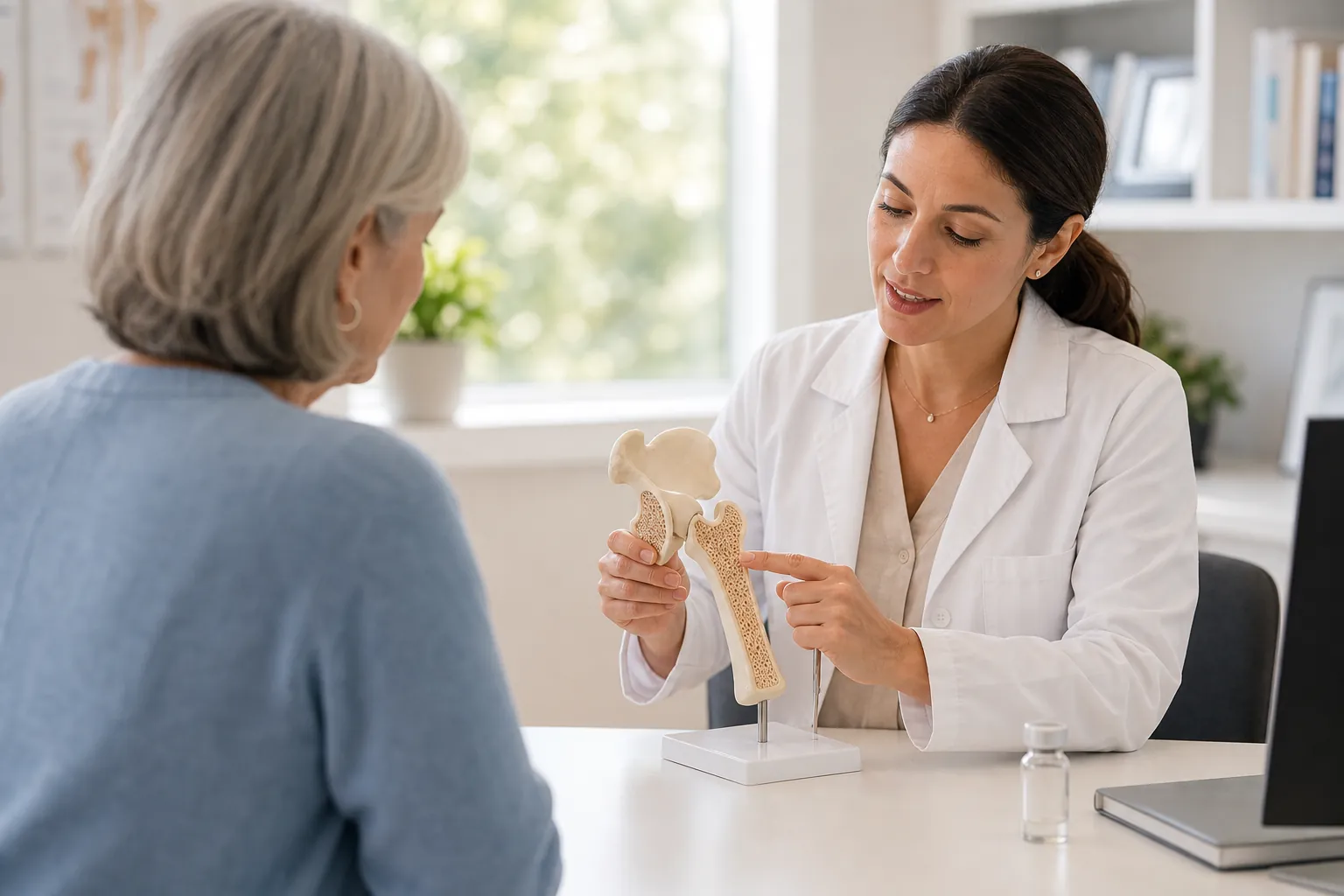
At a glance
- Drug / Reclast (zoledronic acid 5 mg IV, once yearly for osteoporosis)
- Supplement / Rhodiola rosea (typical dose 200 to 600 mg/day standardized to 3% rosavins)
- Interaction type / Pharmacodynamic only; no shared metabolic pathway identified
- Primary concern / Mild serotonergic and MAOI-like activity of rhodiola
- Renal caution / Zoledronic acid is renally cleared; supplements affecting renal blood flow warrant monitoring
- Evidence level / Theoretical; no published human trials on this specific combination
- Practical guidance / Inform your prescriber; timing separation from the Reclast infusion is prudent
- Monitoring / Serum creatinine before and after Reclast infusion per FDA labeling
What Is Zoledronic Acid (Reclast) and How Does It Work?
Zoledronic acid is a third-generation nitrogen-containing bisphosphonate approved by the FDA for postmenopausal osteoporosis, osteoporosis in men, and glucocorticoid-induced osteoporosis [1]. A single 5 mg intravenous infusion given once yearly suppresses osteoclast-mediated bone resorption for 12 months, making it one of the longest-acting agents in its class.
Mechanism of Bone Action
Bisphosphonates bind hydroxyapatite at sites of active bone remodeling. Zoledronic acid then enters osteoclasts and inhibits farnesyl pyrophosphate synthase, an enzyme in the mevalonate pathway [2]. This disrupts the prenylation of small GTPase proteins that osteoclasts need to survive, triggering apoptosis. The net result is a sustained reduction in bone turnover markers and a measurable gain in bone mineral density.
The HORIZON Key Fracture Trial (N=7,765 postmenopausal women) showed that annual zoledronic acid 5 mg reduced vertebral fracture risk by 70% and hip fracture risk by 41% over 3 years compared with placebo [3]. That evidence base is why this drug has remained a first-line agent in major osteoporosis guidelines.
Pharmacokinetics Relevant to Interactions
Zoledronic acid is not metabolized by hepatic cytochrome P450 enzymes. It is excreted unchanged in the urine, with roughly 39 to 55% of an administered dose recovered in urine within 24 hours [1]. This renal-only clearance pathway has two practical implications. First, hepatic drug-drug interactions are essentially off the table. Second, any agent that impairs renal perfusion or tubular secretion could theoretically delay zoledronic acid clearance and increase exposure, raising the risk of nephrotoxicity.
What Is Rhodiola Rosea and Why Do People Use It?
Rhodiola rosea is an adaptogenic herb that grows in cold, high-altitude regions of Europe and Asia. It has been used in traditional Scandinavian and Russian medicine for decades to reduce fatigue and improve stress resilience [4]. Modern standardized extracts typically contain two groups of active constituents: rosavins (rosavin, rosin, rosarin) and salidroside (also called p-tyrosol glucoside).
Active Constituents and Pharmacology
Salidroside and its aglycone tyrosol are structurally related to tyrosine. In vitro and rodent studies show salidroside inhibits monoamine oxidase A and B activity, which slows the breakdown of serotonin, dopamine, and norepinephrine [5]. This is the basis for the MAOI-like label that appears in interaction databases. The inhibition appears weaker than pharmaceutical MAOIs, but the mechanism is real at pharmacologically relevant concentrations.
Rosavins may weakly stimulate serotonin receptor activity and have demonstrated adaptogenic effects in multiple animal models [4]. A 2009 randomized controlled trial (N=101) published in Phytomedicine found that rhodiola extract SHR-5 at 340 to 680 mg/day for 10 weeks produced significant reductions in burnout symptoms compared with placebo, with no serious adverse events reported [6].
Cytochrome P450 and Transporter Effects
In vitro data suggest rhodiola extracts may inhibit CYP3A4 and CYP2C9 at high concentrations [7]. Because zoledronic acid bypasses hepatic metabolism entirely, CYP inhibition by rhodiola is not a clinically meaningful concern for this particular drug pair. The transporter picture is less clear, but no studies have examined rhodiola's effect on the renal organic anion transporters that handle bisphosphonate excretion.
Is There a Direct Pharmacokinetic Interaction Between Rhodiola and Zoledronic Acid?
No published human pharmacokinetic study has examined this combination. Based on current mechanistic data, a direct pharmacokinetic interaction is unlikely for one straightforward reason: zoledronic acid skips hepatic metabolism, and rhodiola's most studied drug-interaction pathway is CYP enzyme inhibition in the liver [1, 7].
Why the Renal Route Still Matters
Rhodiola is not known to be nephrotoxic at standard doses. Still, the FDA prescribing information for Reclast carries a boxed warning about renal impairment [1]. Patients with a creatinine clearance below 35 mL/min should not receive Reclast. Any supplement that affects renal blood flow or tubular function in a renally vulnerable patient could theoretically worsen this risk, even if the probability is low with rhodiola specifically.
A reasonable precaution: confirm that baseline renal function is within the approved threshold before your infusion, and hold any non-essential supplements for at least 48 to 72 hours around the infusion date.
The Pharmacodynamic Concern: Serotonergic and MAOI-Like Activity
This is the area that warrants the most attention. Rhodiola's salidroside component inhibits monoamine oxidase, raising synaptic levels of serotonin and norepinephrine [5]. Zoledronic acid itself has no serotonergic properties. The concern arises when a patient takes rhodiola alongside other serotonergic drugs and also uses Reclast, because the risk of serotonin syndrome compounds with each additional agent in the stack.
Serotonin Syndrome Risk Factors
Serotonin syndrome is a drug-induced excess of serotonergic activity at postsynaptic 5-HT1A and 5-HT2A receptors. Classic features include agitation, hyperthermia, clonus, and diaphoresis. The Hunter Criteria, published in the Quarterly Journal of Medicine, offer the standard diagnostic framework [8]. Risk rises when two or more serotonergic agents are combined; adding a weak MAOI-like compound such as rhodiola to an SSRI or SNRI could contribute to that risk, even if the individual contribution of rhodiola is modest.
Patients on Reclast for osteoporosis often carry comorbidities managed with SSRIs, SNRIs, or tricyclic antidepressants. If you are in that group, your prescriber needs to know you are also taking rhodiola.
Does Rhodiola Act as a True MAOI?
The MAO-inhibiting activity of rhodiola extracts has been demonstrated in vitro and in animal models but has not been confirmed in a rigorous human pharmacodynamic study [5]. The practical implication is that rhodiola probably does not carry the same serotonin-syndrome risk as pharmaceutical MAOIs such as phenelzine or tranylcypromine, but it occupies a similar mechanistic space at lower potency. Treating it with the same caution as a mild MAOI is reasonable, which means avoiding tyramine-rich foods is not strictly necessary but layering it on top of multiple serotonergic drugs is inadvisable.
Bone Health: Does Rhodiola Affect the Efficacy of Reclast?
No published data show that rhodiola directly antagonizes or enhances zoledronic acid's effect on bone mineral density or fracture outcomes. Rhodiola does not appear to alter the mevalonate pathway or osteoclast apoptosis that bisphosphonates target [2, 4].
Potential Indirect Effects on Bone Metabolism
Chronic stress and elevated cortisol are independent risk factors for low bone mineral density. Rhodiola's adaptogenic effects may theoretically reduce cortisol-driven bone loss, which would be complementary rather than antagonistic to Reclast's direct anti-resorptive action [4]. A 2010 study in the International Journal of Sport Nutrition and Exercise Metabolism found that acute rhodiola supplementation blunted the cortisol rise associated with exercise stress [9], though chronic skeletal effects have not been measured.
Vitamin D and calcium status matter more than any herb for supporting bisphosphonate efficacy. The HORIZON trial required participants to receive 1,000 to 1,500 mg/day of calcium and 400 to 1,200 IU/day of vitamin D alongside the infusion [3]. Ensuring those targets are met is a higher clinical priority than worrying about rhodiola's indirect cortisol effects.
Practical Guidance: What to Do If You Are Already Taking Both
The following decision framework reflects the HealthRX medical team's clinical approach to patients who report taking rhodiola and are scheduled for or already receiving annual Reclast infusions.
Step 1: Disclose to Your Prescriber
Tell your ordering clinician about every supplement you take, including rhodiola, at least two weeks before your Reclast infusion is scheduled. The prescriber can review your full medication list for serotonergic overlap and assess your renal function.
Step 2: Check Renal Function
The FDA requires a serum creatinine check within 24 hours before administering Reclast [1]. Patients with creatinine clearance below 35 mL/min are contraindicated. Holding rhodiola for 48 to 72 hours before and after the infusion is a conservative but low-cost precaution, given the theoretical renal considerations.
Step 3: Audit Your Serotonergic Load
List every drug and supplement with serotonergic or MAOI-like properties you currently take. SSRIs, SNRIs, tramadol, triptans, linezolid, St. John's wort, and high-dose rhodiola each contribute to total serotonergic load. If that list contains two or more agents, discuss whether rhodiola is a necessary addition with your prescriber or a clinical pharmacist.
Step 4: Optimize the Foundational Supplements
Calcium (1,000 to 1,200 mg/day from diet plus supplement) and vitamin D (800 to 2,000 IU/day, titrated to a serum 25-OH-D level of 30 to 50 ng/mL) are the supplements that directly support Reclast's efficacy [3, 10]. These should be confirmed and optimized before adding adaptogenic herbs.
Step 5: Monitor After the Infusion
Post-infusion monitoring for nephrotoxicity and the acute-phase reaction (fever, myalgia, flu-like symptoms in the first 72 hours) should follow standard clinical protocol [1]. If you notice unusual neurological symptoms, agitation, or elevated heart rate after resuming rhodiola, contact your prescriber promptly.
Who Is Most at Risk for an Adverse Interaction?
Most patients on Reclast who take standard-dose rhodiola (200 to 400 mg/day) alongside no other serotonergic drugs face a low theoretical interaction risk. Risk is higher in specific subgroups.
Higher-Risk Patient Profiles
Patients taking concurrent SSRIs or SNRIs carry the greatest serotonergic overlap risk when rhodiola is added. Those with chronic kidney disease or baseline creatinine clearance between 35 to 60 mL/min should be especially cautious about any supplement given the renal clearance of zoledronic acid. Older adults (65 and above) often have reduced renal reserve and a higher baseline burden of concurrent medications, making the audit in Step 3 above especially relevant for this group.
The American Society for Bone and Mineral Research recommends reassessing the risk-benefit profile of all long-term bisphosphonate users every 3 to 5 years [10]. That same review visit is a logical time to re-evaluate supplement use.
What Do Guidelines and Databases Say About This Combination?
No major osteoporosis guideline (Endocrine Society, American Association of Clinical Endocrinology, or the National Osteoporosis Foundation) specifically addresses the rhodiola plus zoledronic acid combination, because no clinical trial data exist on it. The Natural Medicines Database (a subscription resource used by pharmacists and clinicians) classifies rhodiola as having a "possible" interaction with serotonergic drugs based on mechanistic evidence, and flags the MAOI-like activity as a category of concern [5].
The Endocrine Society's 2019 clinical practice guideline on pharmacological management of osteoporosis in postmenopausal women states: "Calcium and vitamin D supplementation should be recommended for all patients being treated for osteoporosis" [10]. That language underscores that guideline committees focus on evidence-based supplements for bone health. Adaptogens like rhodiola sit outside that evidence base for osteoporosis specifically.
The FDA Reclast prescribing information advises clinicians to "use caution when Zoledronic Acid is used in conjunction with other potentially nephrotoxic or renally eliminated drugs" [1]. Rhodiola does not appear on published lists of nephrotoxic botanicals, but the general caution applies to any peri-infusion supplement review.
Key Takeaways for Patients and Clinicians
Zoledronic acid (Reclast) and rhodiola rosea do not share a metabolic pathway, so classic pharmacokinetic drug-supplement interactions are unlikely. The real clinical question is pharmacodynamic: rhodiola's mild MAOI-like and serotonergic properties create additive risk when combined with other serotonergic agents, and a thorough medication audit is the single most useful safety step.
Patients scheduled for annual Reclast infusions should disclose all supplements to their prescriber, confirm renal function is adequate per FDA requirements, and hold rhodiola for 48 to 72 hours around the infusion as a simple precautionary measure. Ensure calcium and vitamin D targets from the HORIZON trial protocol (1,000 to 1,500 mg calcium/day and 400 to 1,200 IU vitamin D/day) are met before adding any adaptogenic supplement [3].
Frequently asked questions
Can I take rhodiola while on Reclast (Zoledronic Acid)?
Does rhodiola interact with Reclast (Zoledronic Acid)?
Is rhodiola safe with Reclast (Zoledronic Acid)?
Does rhodiola affect bone density or bisphosphonate efficacy?
Should I stop rhodiola before my Reclast infusion?
Can rhodiola cause kidney problems that affect Reclast clearance?
What supplements are safe to take with Reclast?
Does rhodiola act as a true MAOI?
What is the serotonin syndrome risk of combining rhodiola with antidepressants while on Reclast?
How often is Reclast given and does that affect supplement timing?
References
- FDA. Reclast (zoledronic acid) injection prescribing information. U.S. Food and Drug Administration; 2022. Available from: https://www.accessdata.fda.gov/drugsatfda_docs/label/2022/021817s040lbl.pdf
- Dunford JE, Rogers MJ, Ebetino FH, Phipps RJ, Coxon FP. Inhibition of protein prenylation by bisphosphonates causes sustained activation of Rac, Cdc42, and Rho GTPases. J Bone Miner Res. 2006;21(5):684-694. Available from: https://pubmed.ncbi.nlm.nih.gov/16734383/
- Black DM, Delmas PD, Eastell R, Reid IR, Boonen S, Cauley JA, et al. Once-yearly zoledronic acid for treatment of postmenopausal osteoporosis (HORIZON). N Engl J Med. 2007;356(18):1809-1822. Available from: https://www.nejm.org/doi/full/10.1056/NEJMoa067204
- Panossian A, Wikman G. Effects of adaptogens on the central nervous system and the molecular mechanisms associated with their stress-protective activity. Pharmaceuticals (Basel). 2010;3(1):188-224. Available from: https://pubmed.ncbi.nlm.nih.gov/27713248/
- Van Diermen D, Marston A, Bravo J, Reist M, Carrupt PA, Hostettmann K. Monoamine oxidase inhibition by Rhodiola rosea L. Roots. J Ethnopharmacol. 2009;122(2):397-401. Available from: https://pubmed.ncbi.nlm.nih.gov/19168123/
- Olsson EM, von Scheele B, Panossian AG. A randomised, double-blind, placebo-controlled, parallel-group study of the standardised extract SHR-5 of the roots of Rhodiola rosea in the treatment of subjects with stress-related fatigue. Planta Med. 2009;75(2):105-112. Available from: https://pubmed.ncbi.nlm.nih.gov/19016404/
- Hellum BH, Nilsen OG. In vitro inhibition of CYP3A4 metabolism and P-glycoprotein-mediated transport by trade herbal products. Basic Clin Pharmacol Toxicol. 2008;102(5):466-475. Available from: https://pubmed.ncbi.nlm.nih.gov/18346061/
- Dunkley EJ, Isbister GK, Sibbritt D, Dawson AH, Whyte IM. The Hunter Serotonin Toxicity Criteria: simple and accurate diagnostic decision rules for serotonin toxicity. QJM. 2003;96(9):635-642. Available from: https://pubmed.ncbi.nlm.nih.gov/12925718/
- Abidov M, Crendal F, Grachev S, Seifulla R, Ziegenfuss T. Effect of extracts from Rhodiola rosea and Rhodiola crenulata (Crassulaceae) roots on ATP content in mitochondria of skeletal muscles. Bull Exp Biol Med. 2003;136(6):585-587. Available from: https://pubmed.ncbi.nlm.nih.gov/15500079/
- Eastell R, Rosen CJ, Black DM, Cheung AM, Murad MH, Shoback D. Pharmacological management of osteoporosis in postmenopausal women: an Endocrine Society clinical practice guideline. J Clin Endocrinol Metab. 2019;104(5):1595-1622. Available from: https://pubmed.ncbi.nlm.nih.gov/30907953/