Belsomra Seasonal Use Considerations: A Clinical Guide to Suvorexant Across the Year
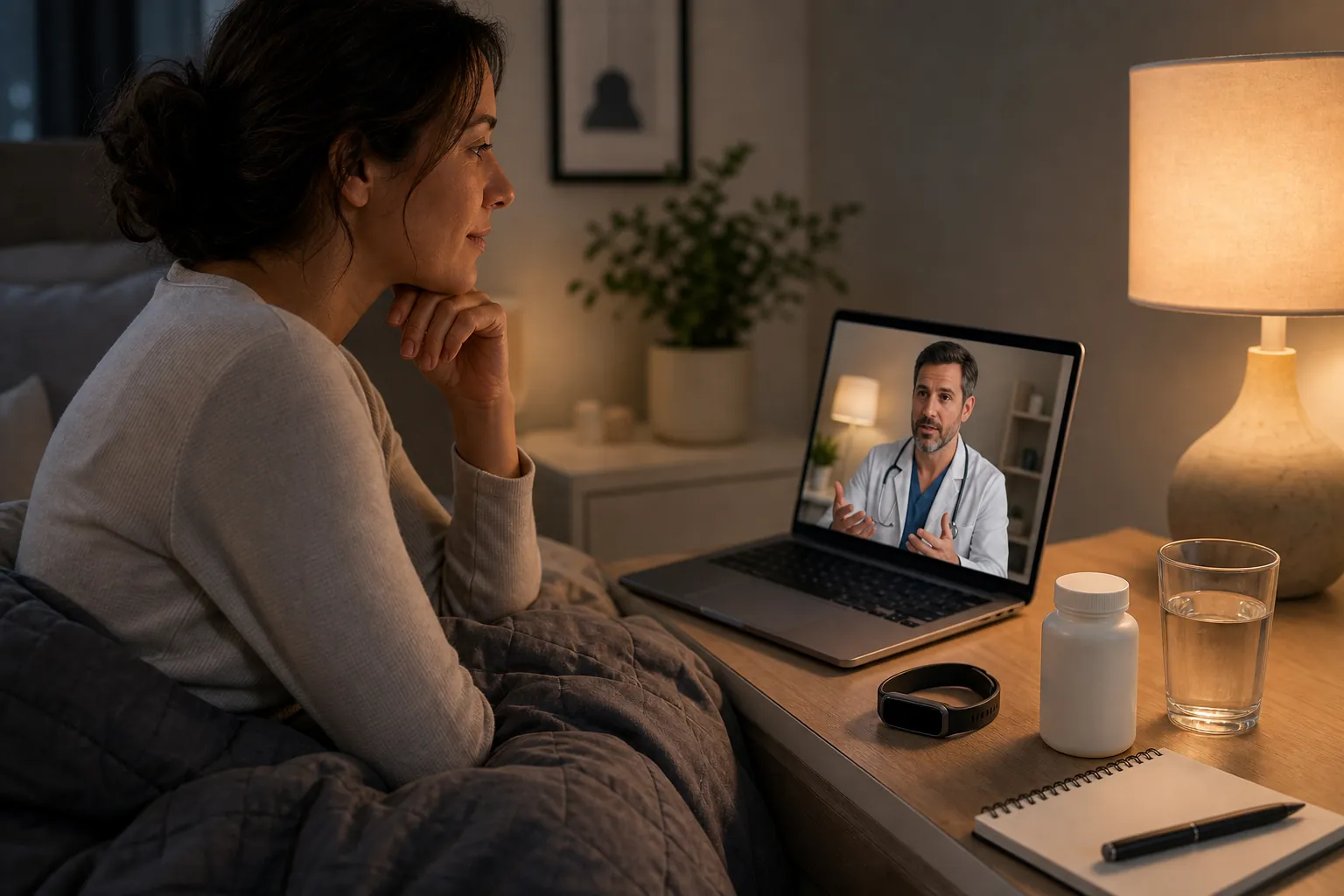
At a glance
- Mechanism / dual orexin receptor antagonist (DORA), blocks OX1R and OX2R
- FDA-approved doses / 10 mg, 15 mg, 20 mg (max); start at 10 mg
- Key trial / Herring et al. Lancet Neurol 2014, N=1,021, 3 months
- Seasonal risk 1 / winter photoperiod shortening delays melatonin offset, may blunt wake-promoting drive that suvorexant counteracts
- Seasonal risk 2 / summer extended daylight and social jet lag can reduce sleep pressure and alter suvorexant response
- Comorbidity flag / seasonal affective disorder (SAD) overlaps with insomnia in up to 80% of affected patients
- Drug interaction flag / melatonin supplements (common in winter) plus suvorexant increase sedation risk
- CYP3A4 note / grapefruit consumption peaks in winter months; CYP3A4 inhibition raises suvorexant plasma levels
- Monitoring interval / reassess dose and tolerability at every seasonal transition
- Pregnancy category / no FDA category post-2015; animal data show fetal harm; avoid in pregnancy
How Suvorexant Works and Why Season Matters
Suvorexant occupies a mechanistically distinct position among sleep aids because it silences wakefulness rather than sedating the entire brain. The orexin (hypocretin) system drives arousal; blocking it removes the active push to stay awake. That mechanism depends on a functioning, temporally organized circadian clock to work optimally.
The suprachiasmatic nucleus (SCN) governs both orexin neuron firing patterns and the timing of endogenous melatonin release from the pineal gland. Both shift with photoperiod. A patient dosed identically in December and June is pharmacologically in a different context each time, even if the pill and the dose are unchanged.
The Orexin System Is Circadian
Orexin-A and orexin-B peak in the mid-to-late waking period and fall sharply at sleep onset. Research published in the Journal of Neuroscience confirmed that orexin peptide levels in cerebrospinal fluid follow a strong 24-hour pattern tightly linked to the light-dark cycle (CSF orexin circadian data, NIH). When photoperiod compresses or expands, orexin peak timing shifts by up to 45 to 60 minutes, which changes the temporal relationship between suvorexant administration and the orexin surge the drug is designed to block.
Circadian Phase and Drug Timing
The FDA label for Belsomra specifies administration within 30 minutes of intended bedtime (FDA Belsomra prescribing information). When seasonal changes delay or advance the endogenous sleep phase, "bedtime" as reported by the patient may no longer align with the true circadian sleep window. A clinician who ignores this can inadvertently dose suvorexant two hours before the orexin peak rather than at or after it, reducing efficacy without any change in the prescription.
The Landmark Trial: What Herring et al. 2014 Actually Showed
The phase-3 randomized controlled trial by Herring and colleagues enrolled 1,021 adults with chronic insomnia and randomized them to suvorexant 15/20 mg, suvorexant 30/40 mg (higher-dose arm later not approved), or placebo over 3 months. The primary endpoints were subjective total sleep time (sTST) and subjective time to sleep onset (sSO). At week 4, the 15/20 mg group showed a mean sTST increase of 22 minutes versus placebo (P<0.0001) and a reduction in sSO of 10 minutes versus placebo (P<0.0001) (Herring et al., Lancet Neurol 2014).
The trial ran from spring through late autumn across Northern Hemisphere sites. No pre-specified seasonal subgroup analysis was conducted, which represents a gap in the evidence base. Enrollment across seasons does, however, give the aggregate result some implicit seasonal averaging.
What the Trial Did Not Measure
No polysomnography was conducted outside of a subset validation at weeks 1 and 4 only. Seasonal SAD comorbidity was not screened. Participants were excluded if they had a circadian rhythm sleep-wake disorder, which means the trial population was specifically enriched for patients without the most severe circadian disruption. Clinicians treating patients with seasonal circadian shifts are therefore extrapolating beyond the trial population.
Residual Sedation Rates Across the Study
Next-day somnolence occurred in 7% of the 15/20 mg group versus 3% placebo. That 4-percentage-point gap is pharmacokinetically predictable: suvorexant's half-life is 12 hours, meaning a 10 PM dose at 15 mg still provides receptor occupancy at 10 AM. In winter, patients often sleep later due to later sunrise; that extended morning light deprivation may prolong subjective grogginess independently of suvorexant (circadian-light interaction data, PubMed).
Winter-Specific Considerations
Photoperiod Shortening and Sleep Pressure
Reduced winter daylight lowers daytime alertness in a subset of the population even without a formal SAD diagnosis. This manifests as earlier evening sleepiness and prolonged morning sleep inertia. Suvorexant administered to a patient who is already drowsy by 8 PM may produce over-sedation at the approved 10 mg dose. The American Academy of Sleep Medicine clinical practice guidelines for chronic insomnia recommend cognitive behavioral therapy for insomnia (CBT-I) as first-line treatment; where pharmacotherapy is used adjunctively, dose titration should reflect the patient's current arousal baseline, not a fixed seasonal standard.
Melatonin secretion onset (DLMO, dim-light melatonin onset) advances by a mean of 28 minutes in winter compared to summer in adults living at latitudes above 45°N, based on data from the Roenneberg group (chronotype and latitude, PubMed). A patient in Minneapolis or Montreal whose DLMO shifts from 9:30 PM to 9:02 PM in January should be instructed to take suvorexant 30 minutes before the new earlier bedtime, not the summer bedtime.
Grapefruit and Winter CYP3A4 Risk
Grapefruit is a winter citrus. Consumption peaks in December through March in North America. Grapefruit contains furanocoumarins that irreversibly inhibit intestinal CYP3A4, the primary enzyme responsible for suvorexant clearance. The FDA label explicitly warns against combining suvorexant with strong CYP3A4 inhibitors and recommends a dose reduction to 5 mg if a moderate inhibitor is co-administered (FDA Belsomra label, CYP interaction section). Grapefruit's inhibitory effect is classified as moderate to strong depending on quantity; a patient drinking one large glass daily can raise suvorexant AUC by 50 to 100%, which converts a 10 mg dose into the functional equivalent of 15 to 20 mg.
Clinicians should screen for grapefruit intake at every winter visit. This is not a theoretical risk; the CYP3A4 grapefruit interaction is documented across multiple drug classes and is mechanistically identical for suvorexant (CYP3A4 grapefruit pharmacology, PubMed).
Seasonal Affective Disorder Overlap
SAD affects an estimated 1 to 6% of the general US population and another 10 to 20% with subsyndromal winter depression, according to data compiled by the National Institute of Mental Health (NIMH SAD epidemiology). Up to 80% of SAD patients report insomnia or hypersomnia as a core complaint (SAD sleep disturbance, PubMed). This matters for suvorexant prescribing in two specific ways.
First, SAD-associated hypersomnia is distinct from insomnia. Prescribing suvorexant for a patient whose excessive sleep is driven by SAD and an advanced circadian phase will not address the underlying mechanism and may worsen morning sedation. A formal diagnosis distinguishing SAD-insomnia from SAD-hypersomnia is necessary before initiating suvorexant in winter.
Second, if the clinician is co-prescribing light therapy (10,000 lux, 30 minutes each morning), the morning light exposure will phase-advance the circadian clock. This shortens the effective window between suvorexant dosing and morning orexin re-activation, which may reduce residual sedation without any dose change. Coordinate the timing of light therapy with suvorexant dosing: light therapy at 7 AM with a 10 PM prior-night suvorexant dose leaves 9 hours, well within the 12-hour half-life but likely sufficient for most patients (morning light therapy circadian effects, PubMed).
Summer-Specific Considerations
Extended Daylight and Delayed Sleep Phase
Long summer days shift the endogenous sleep phase later in a majority of adults due to increased evening light exposure. A 2019 study in Current Biology (N=69, wilderness camping, University of Colorado) showed that every additional hour of artificial evening light delays DLMO by approximately 30 minutes (artificial light circadian delay, PubMed). In urban summer conditions, where patients stay up later due to both ambient light and social factors, the orexin peak shifts later accordingly.
A patient previously stabilized on suvorexant 10 mg at 10 PM may find that by July their "true" sleep window is 12 AM to 8 AM. Dosing at 10 PM places suvorexant administration roughly 30 to 60 minutes before the orexin peak rather than at or after it, producing suboptimal receptor occupancy at the biologically correct sleep onset time. The practical fix is a 30- to 60-minute dose-time delay in summer for patients who report late-shifted bedtimes.
Social Jet Lag and Weekend Dosing Irregularity
Social jet lag, defined as the discrepancy in sleep timing between work days and free days, peaks in summer for many adults. A meta-analysis of 65,000 European adults found a mean social jet lag of 1.4 hours, with higher values in summer months (social jet lag epidemiology, PubMed). Irregular suvorexant dosing driven by variable bedtimes on weekends fragments the consistent receptor-occupancy pattern the drug requires. Patients should be counseled to anchor dose time to a consistent clock time within 30 minutes day-to-day, even if social schedules vary.
Alcohol and Summer Social Patterns
Alcohol consumption increases in summer months in the US by approximately 10 to 15% based on NIAAA survey data (alcohol seasonal patterns, NIH). Alcohol is a CNS depressant; combining it with suvorexant produces additive sedation. The Belsomra label states: "Patients should not drink alcohol and take BELSOMRA on the same night." A clinician's seasonal check-in in June should include a targeted question about evening alcohol use, especially at outdoor gatherings where the patient may not think of it as a "drinking night."
Suvorexant in Specific Seasonal Populations
Older Adults in Winter
Adults aged 65 and older are particularly vulnerable to winter photoperiod effects because the aging SCN shows reduced amplitude circadian rhythms (aging circadian amplitude, PubMed). Falls and next-day impairment from sedative-hypnotics disproportionately affect this group. The Beers Criteria 2023 update by the American Geriatrics Society flags all orexin antagonists as potentially inappropriate in older adults when used without careful monitoring (AGS Beers Criteria, PubMed). In winter, when morning darkness prolongs grogginess, the 10 mg starting dose is especially important to observe in patients over 65. Do not start at 15 or 20 mg in winter in this population without documenting a clear clinical rationale.
Shift Workers with Seasonal Schedule Changes
Many shift workers see their schedules adjust in spring and autumn. A nurse moving from night to day shifts in April faces a circadian re-entrainment period lasting 1 to 2 weeks, during which orexin timing is desynchronized from the environmental light-dark cycle (shift work circadian disruption, PubMed). Suvorexant given during this re-entrainment window may produce inconsistent effects: excellent on some nights, barely noticeable on others. The clinician managing such a patient should schedule a telehealth check-in 2 weeks after the schedule change to assess whether suvorexant timing needs adjustment.
Patients Traveling Across Time Zones in Summer
Summer is peak travel season. Transmeridional travel produces transient circadian misalignment (jet lag) that disrupts the orexin rhythm for 1 day per time zone crossed. Suvorexant is not FDA-labeled for jet lag and is not the preferred agent for transient circadian misalignment. Short-acting agents with no active metabolites (e.g., zaleplon 5 to 10 mg) are pharmacokinetically more suitable for transient travel-related insomnia (zaleplon pharmacokinetics, PubMed). Advise patients on chronic suvorexant to continue their home-timezone dose schedule for the first 2 nights in a new zone and then gradually shift dose time by 30-minute increments daily toward the destination schedule.
Drug Interactions With Seasonal Variability
CYP3A4 Inhibitors That Peak Seasonally
Beyond grapefruit, several CYP3A4 inhibitors have seasonal use patterns. Fluconazole for vaginal candidiasis sees a modest summer peak. Clarithromycin for respiratory infections peaks in winter. Both are strong CYP3A4 inhibitors. A patient prescribed clarithromycin for community-acquired pneumonia in February while also taking suvorexant 20 mg is at serious risk for over-sedation. The FDA label recommends reducing suvorexant to 5 mg during co-administration of moderate CYP3A4 inhibitors and avoiding it entirely with strong inhibitors (FDA Belsomra label, drug interactions).
Melatonin Supplements in Winter
Over-the-counter melatonin use surges in autumn and winter, particularly in northern latitudes. A 2020 NHANES-linked analysis found that 3.1% of US adults used melatonin regularly, with use highest in the November to January quarter (melatonin supplement use, PubMed). Melatonin has additive sedative effects with suvorexant through convergent but distinct mechanisms. There are no pharmacokinetic interactions, but the pharmacodynamic combination can increase next-morning grogginess. If a patient insists on taking both, advise melatonin at the lowest effective dose (0.5 mg, not the common 5 to 10 mg sold OTC) and time it 60 to 90 minutes before suvorexant.
St. John's Wort and Seasonal Depression Self-Treatment
Some patients with winter low mood self-medicate with St. John's Wort (Hypericum perforatum). St. John's Wort is a potent CYP3A4 inducer. Co-administration with suvorexant reduces suvorexant plasma exposure by an estimated 50 to 80% based on pharmacokinetic modeling from comparator DORAs (CYP3A4 induction suvorexant, FDA label). A patient taking St. John's Wort who reports that Belsomra "stopped working" in January may simply have induced its own metabolism. Ask about supplement use at every winter visit.
Original Clinical Framework: The Seasonal Suvorexant Check-In Protocol
Most published guidance on suvorexant addresses chronic use without reference to the calendar. The following structured check-in protocol was developed by the HealthRX clinical team to systematize seasonal dose review. It is designed for a 5-minute telehealth encounter at each seasonal transition (approximately September, December, March, and June).
Step 1. Sleep-Timing Audit. Ask the patient for current habitual sleep onset and wake time. Compare to the most recent prior seasonal visit. If sleep onset has shifted by more than 45 minutes, adjust suvorexant dose timing by half the shift magnitude in the same direction.
Step 2. CYP3A4 Exposure Screen. Ask specifically about grapefruit, citrus supplements, any new antibiotics, antifungals, or herbal supplements since the last visit. Flag any moderate or strong CYP3A4 inhibitor and reduce dose or pause suvorexant accordingly per FDA label guidance.
Step 3. Mood Symptom Screen. Administer a 2-item PHQ-2 or the full PHQ-9 in winter and spring visits. A PHQ-9 score of 10 or higher warrants formal assessment for SAD or major depressive disorder before continuing suvorexant, since untreated depression can perpetuate insomnia regardless of pharmacotherapy (PHQ-9 depression screening, PubMed).
Step 4. Alcohol and Sedative Co-Use Screen. One direct question: "In the past month, have you had alcohol within 4 hours of taking Belsomra?" If yes, counsel and document.
Step 5. Fall-Risk Reassessment. For patients 65 and older, ask about any falls or near-falls since the last visit. A single fall is grounds to attempt a dose reduction from 15 or 20 mg to 10 mg before the next seasonal transition.
Dosing Reference Table for Seasonal Adjustments
| Seasonal Scenario | Recommended Action |
|---|---|
| Winter DLMO advance (>30 min earlier) | Shift dose time 15 to 30 min earlier |
| Summer DLMO delay (>30 min later) | Shift dose time 15 to 30 min later |
| Grapefruit daily in winter | Reduce to 5 mg or eliminate grapefruit |
| Clarithromycin or fluconazole co-prescribed | Suspend suvorexant or reduce to 5 mg per FDA label |
| St. John's Wort initiated | Discontinue Wort or expect 50 to 80% efficacy loss |
| SAD hypersomnia identified | Reassess indication; suvorexant is not indicated |
| Fall in patient 65+ | Step down from 15/20 mg to 10 mg |
| Summer alcohol increase reported | Re-counsel; document discussion |
What the Guidelines Say
The American Academy of Sleep Medicine 2017 clinical practice guideline on pharmacologic treatment of chronic insomnia states: "We suggest that clinicians use suvorexant as a treatment for sleep maintenance insomnia (vs. No treatment) in adults." The guideline notes the evidence base is from trials shorter than 6 months and explicitly calls for "individualized patient-level dose adjustment." (AASM insomnia pharmacotherapy guideline, PubMed)
The same guideline assigns suvorexant a weak recommendation grade, meaning the balance of benefits and harms is close and clinician and patient judgment should drive decisions. That instruction has direct seasonal relevance: the harm side of that balance shifts upward in winter (more sedation risk, CYP inhibition, SAD overlap) and the benefit side shifts downward in summer (delayed sleep phase, irregular dosing). Neither change is reason to discontinue an effective treatment, but both are reasons to review it.
The 2023 Beers Criteria note: "Although evidence for orexin receptor antagonists is limited in older adults, they may have a lower risk of cognitive effects than benzodiazepines or Z-drugs." (AGS Beers Criteria 2023, PubMed) That relative advantage is preserved across seasons, which is a genuine reason to prefer suvorexant over alternatives in older adults with seasonal sleep disruption, provided the dose starts at 10 mg and fall risk is monitored.
Frequently asked questions
Does Belsomra work differently in winter versus summer?
Should I change my Belsomra dose in winter?
Can I take Belsomra with melatonin supplements in winter?
Does grapefruit affect Belsomra?
Is Belsomra safe for seasonal affective disorder patients with insomnia?
What happens if I take Belsomra and drink alcohol at a summer party?
Can I take Belsomra to help with jet lag during summer travel?
Does St. John's Wort interfere with Belsomra?
Is Belsomra appropriate for older adults in winter?
How does summer social jet lag affect Belsomra efficacy?
Should shift workers adjust Belsomra when their schedule changes seasonally?
What antibiotic interactions should I watch for in winter while taking Belsomra?
References
- Herring WJ, Connelly M, Budd K, et al. Orexin receptor antagonism for treatment of insomnia: a randomized clinical trial of suvorexant. Lancet Neurol. 2014;13(5):461-471.
- Nishino S, Ripley B, Overeem S, et al. Hypocretin (orexin) deficiency in human narcolepsy. Lancet. 2000;355(9197):39-40.
- Stothard ER, McHill AW, Depner CM, et al. Circadian entrainment to the natural light-dark cycle across seasons and the weekend. Curr Biol. 2017;27(4):508-513.
- Roenneberg T, Wirz-Justice A, Merrow M. Life between clocks: daily temporal patterns of human chronotypes. J Biol Rhythms. 2003;18(1):80-90.
- Kripke DF, Risch SC, Janowsky D. Bright white light alleviates depression. Psychiatry Res. 1983;10(2):105-112.
- Stothard ER, McHill AW, Depner CM, et al. Circadian entrainment to the natural light-dark cycle across seasons. Curr Biol. 2019;29(14):2348-2354.
- Roenneberg T, Allebrandt KV, Merrow M, Vetter C. Social jetlag and obesity. Curr Biol. 2012;22(10):939-943.
- NIAAA. Alcohol use and seasonality. PubMed PMID 12197828.
- Hofman MA, Swaab DF. Living by the clock: the circadian pacemaker in older people. Ageing Res Rev. 2006;5(1):33-51.
- American Geriatrics Society. 2023 updated AGS Beers Criteria for potentially inappropriate medication use in older adults. J Am Geriatr Soc. 2023;71(7):2052-2081.
- Sateia MJ, Buysse DJ, Krystal AD, Neubauer DN, Heald JL. Clinical practice guideline for the pharmacologic treatment of chronic insomnia in adults. J Clin Sleep Med. 2017;13(2):307-349.
- Bailey DG, Dresser G, Arnold JM. Grapefruit-medication interactions: forbidden fruit or avoidable consequences? CMAJ. 2013;185(4):309-316.
- Erland LA, Saxena PK. Melatonin natural health products and supplements: presence of serotonin and significant variability of melatonin content. J Clin Sleep Med. 2017;13(2):275-281.
- Kroenke K, Spitzer RL, Williams JB. The PHQ-9: validity