Egrifta (Tesamorelin) Food & Supplement Interactions: A Clinical Guide

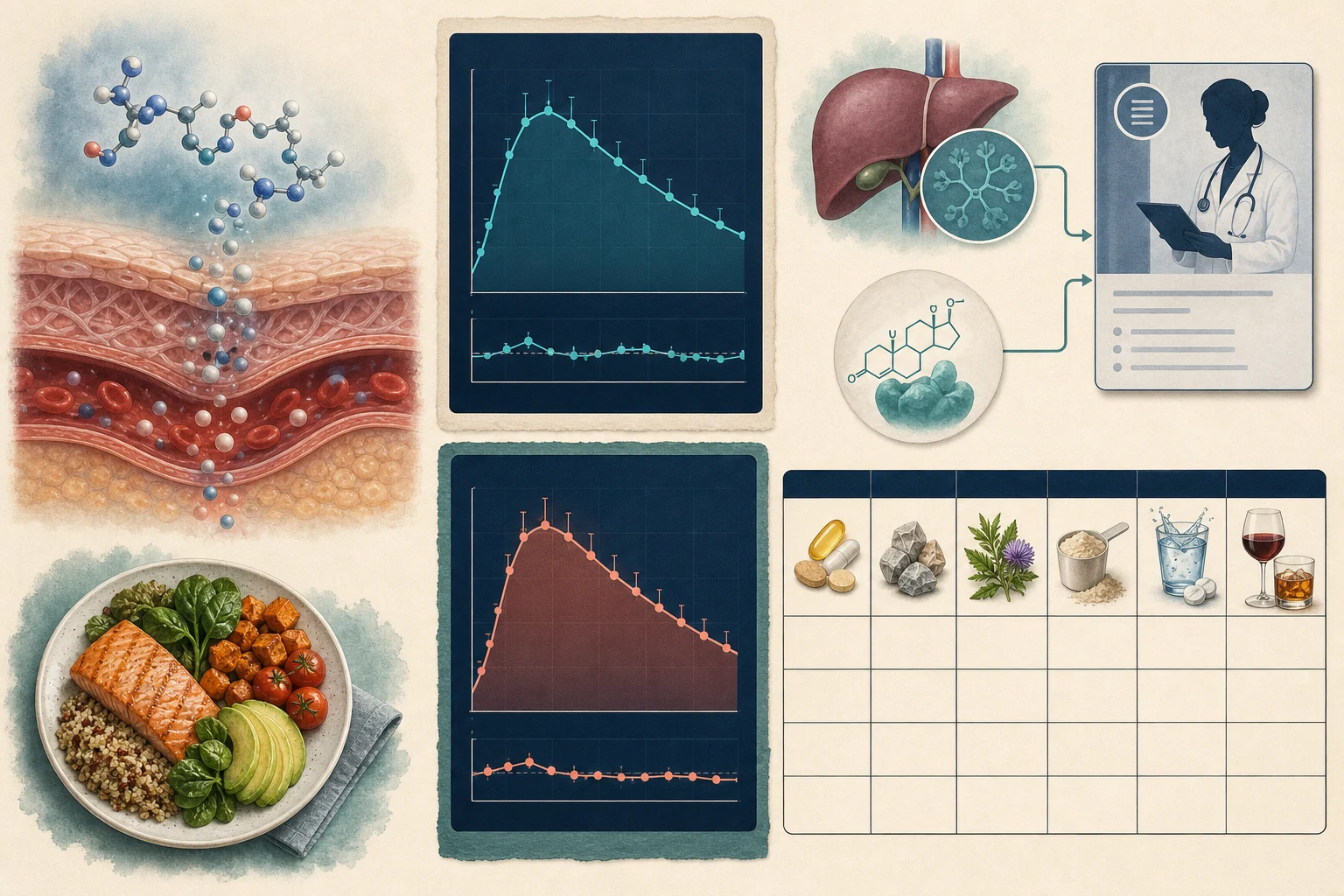
Peptide medicine laboratory image for Egrifta (Tesamorelin) Food & Supplement Interactions: A Clinical Guide

Egrifta (Tesamorelin) Food & Supplement Interactions

At a glance

  • Drug / tesamorelin (Egrifta), synthetic GHRH analog
  • Indication / HIV-associated lipodystrophy (visceral fat)
  • Dose / 2 mg subcutaneous injection once daily
  • Key trial / Falutz et al. NEJM 2007 to 15% visceral adipose reduction
  • Injection timing / fasting state preferred; avoid within 1 hour of a meal
  • Critical supplement caution / glucocorticoids and somatostatin analogs suppress response
  • IGF-1 monitoring / baseline, then at 3 months and every 6 months
  • Alcohol / no direct interaction, but impairs GH secretion
  • High-glycemic diet / acutely suppresses GH pulses; may reduce tesamorelin efficacy
  • Manufacturer / Theratechnologies

What Is Tesamorelin and How Does It Work?

Tesamorelin is a synthetic analog of endogenous growth hormone-releasing hormone (GHRH) that binds pituitary GHRH receptors and stimulates pulsatile GH secretion. The resulting GH rise triggers hepatic IGF-1 production, which then drives lipolysis in visceral adipose tissue. Unlike exogenous GH therapy, tesamorelin preserves the physiologic feedback loop through somatostatin, reducing the risk of supraphysiologic IGF-1 levels.

The FDA approved tesamorelin in November 2010 under the brand name Egrifta specifically for reducing excess visceral fat in HIV-infected adults with lipodystrophy. Egrifta FDA approval was based on two Phase 3 placebo-controlled trials enrolling 816 patients.

GHRH Receptor Binding and GH Pulsatility

Endogenous GHRH is a 44-amino-acid peptide with a half-life of roughly 7 minutes. Tesamorelin replaces the trans-3-hexenoic acid moiety on the N-terminus to resist dipeptidyl peptidase IV (DPP-IV) degradation, extending its functional half-life to approximately 26 minutes after subcutaneous injection. PubMed: Tesamorelin pharmacokinetics

This extended half-life allows a single daily 2 mg injection to generate a supraphysiologic but feedback-regulated GH pulse. Peak serum GH occurs 15 to 30 minutes post-injection. Because somatostatin feedback remains intact, GH pulses return to baseline within two to three hours, a pattern quite different from continuous exogenous GH infusion.

IGF-1 as the Downstream Mediator

IGF-1 is the primary mediator of tesamorelin's visceral-fat effect. In the Falutz 2007 trial, IGF-1 rose from a mean baseline of 127 ng/mL to 231 ng/mL at 26 weeks, a rise of roughly 82%, and this correlated with the observed reduction in visceral adipose tissue (VAT) measured by CT scan. Falutz et al., NEJM 2007

Clinicians should monitor IGF-1 at baseline and three months after starting therapy. An IGF-1 above the age-adjusted upper limit of normal (typically 230 to 290 ng/mL depending on age and sex) warrants dose interruption per the FDA label. FDA Egrifta label

Clinical Evidence: What the Key Trials Show

The foundational evidence for tesamorelin comes from two randomized, double-blind, placebo-controlled Phase 3 trials conducted by Falutz and colleagues.

Falutz et al. 2007 (NEJM)

The landmark Falutz 2007 trial enrolled 412 HIV-infected adults with abdominal lipodystrophy confirmed by CT. Patients received tesamorelin 2 mg subcutaneous daily or placebo for 26 weeks. Falutz et al., NEJM 2007

The primary endpoint was change in VAT by CT at 26 weeks. Tesamorelin reduced VAT by a mean of 15.2% versus a 4.5% reduction in the placebo group (P<0.001). Trunk fat by DEXA also fell significantly, while lean mass was unchanged. Fasting glucose rose modestly by 3.0 mg/dL in the treatment arm, a finding with direct implications for dietary management.

Falutz et al. 2010 Extension

A subsequent 26-week extension trial published in 2010 showed that VAT reduction was maintained in patients who continued tesamorelin, while patients switched from tesamorelin to placebo regained roughly 80% of lost VAT within 26 weeks. Falutz et al. 2010 extension

This rebound phenomenon underlines a practical clinical point: dietary and lifestyle modifications that support low-GH-suppressive conditions should be ongoing, not just during the initial months of therapy.

Glucose and Lipid Effects Across Trials

Pooled data from the two Phase 3 trials show that tesamorelin increased fasting glucose by a mean of 3 to 5 mg/dL and triglycerides fell by approximately 50 mg/dL. FDA Egrifta label This differential metabolic effect means that dietary interventions targeting both glycemic control and triglyceride reduction are synergistic with the drug's mechanism.

Food Interactions With Tesamorelin

No foods are absolutely contraindicated with tesamorelin, but several dietary patterns can meaningfully alter GH pulsatility and therefore the drug's efficacy. The interactions are pharmacodynamic rather than pharmacokinetic.

Injection Timing Relative to Meals

The FDA label instructs patients to inject tesamorelin on an empty stomach, preferably in the morning. FDA Egrifta label The rationale is physiologic: food intake, particularly carbohydrate-containing meals, triggers insulin secretion and suppresses hypothalamic GHRH output while stimulating somatostatin release.

A 2003 study in healthy adults published in the Journal of Clinical Endocrinology and Metabolism showed that oral glucose (75 g) suppressed GH to below 1 ng/mL within 60 minutes in most subjects. JCEM glucose GH suppression While this study used exogenous glucose rather than natural meals, the mechanism is the same: postprandial hyperinsulinemia blunts the GH pulse that tesamorelin depends on.

Practically, this means patients should inject at least 30 to 60 minutes before breakfast or two hours after their last meal of the day if choosing a bedtime injection schedule.

High-Glycemic Diet Patterns

Chronic high-glycemic index diets produce elevated mean insulin levels throughout the day. Because insulin and GH exist in a largely reciprocal hormonal relationship, patients consistently consuming refined carbohydrates may show attenuated IGF-1 responses to tesamorelin. PubMed: insulin GH axis

No prospective trial has directly tested glycemic index diet versus low-GI diet as a modifier of tesamorelin efficacy in HIV patients. However, the endocrine relationship between postprandial insulin and GH suppression is well established, and clinicians at HealthRX routinely advise patients to moderate refined carbohydrates while on this therapy.

A practical dietary framework for patients on tesamorelin:

| Dietary factor | Recommendation | Rationale | |---|---|---| | Injection timing | Fasting, 30-60 min before first meal | Minimizes insulin-driven GH suppression | | Glycemic index | Prefer low-GI foods (<55) | Limits chronic GH suppression | | Dietary fat | Moderate intake; avoid very-high-fat meals before injection | High fat may delay gastric emptying but does not directly suppress GH | | Alcohol | Limit to 1-2 standard drinks; avoid on injection nights | Acute alcohol suppresses GH secretion | | Protein | Adequate intake (1.2-1.6 g/kg/day) | Supports IGF-1 production | | Refined sugar | Minimize; consistent with low-GI approach | Reduces insulin surges near injection |

Alcohol and GH Secretion

Alcohol acutely suppresses GH secretion by stimulating hypothalamic somatostatin release. A controlled study showed that 0.5 g/kg ethanol ingestion reduced GH pulse amplitude by approximately 40% in healthy men. PubMed: ethanol GH suppression

There is no pharmacokinetic interaction between ethanol and tesamorelin, as tesamorelin is a peptide degraded by serum proteases rather than hepatic CYP enzymes. The concern is purely pharmacodynamic: drinking in the hours surrounding the injection may reduce the GH pulse and blunt VAT reduction. Patients should ideally avoid alcohol within two to three hours of their tesamorelin injection.

Dietary Protein and IGF-1

Adequate dietary protein supports hepatic IGF-1 synthesis. Protein restriction in humans reduces IGF-1 levels independent of GH concentrations, a phenomenon documented in studies of caloric restriction and malnutrition. PubMed: protein restriction IGF-1

HIV patients with lipodystrophy often have altered macronutrient intake. Ensuring protein intake of at least 1.2 g/kg of ideal body weight per day may support the IGF-1 response to tesamorelin. This is a practical dietary goal, not a contraindication.

Supplement Interactions With Tesamorelin

Supplement interactions with tesamorelin range from pharmacodynamic blunting (glucocorticoids, somatostatin pathway activators) to theoretical concerns around IGF-1 amplification (certain amino acid stacks). Each category requires different clinical management.

Glucocorticoids: Most Clinically Significant Interaction

The FDA label explicitly lists glucocorticoids as agents that can suppress the response to tesamorelin. FDA Egrifta label This applies to both prescription systemic glucocorticoids (prednisone, dexamethasone, methylprednisolone) and high-dose inhaled or topical formulations absorbed systemically.

Glucocorticoids suppress pituitary GHRH receptor sensitivity and increase hypothalamic somatostatin tone. HIV patients on chronic corticosteroids for immune reconstitution inflammatory syndrome (IRIS) or other conditions may therefore show reduced VAT response to tesamorelin. When glucocorticoid use is unavoidable, IGF-1 monitoring every three months (rather than every six) is prudent.

Over-the-counter "adrenal support" supplements containing licorice root (glycyrrhizinic acid) have mild cortisol-sparing activity by inhibiting 11-beta-hydroxysteroid dehydrogenase type 2. PubMed: licorice glycyrrhizin cortisol The clinical magnitude of this effect on tesamorelin response is unknown, but patients taking these supplements long-term should be informed of the theoretical concern.

Somatostatin Analog Supplements and Botanicals

Somatostatin directly opposes GHRH at the pituitary. Pharmaceutical somatostatin analogs like octreotide are contraindicated with tesamorelin because they effectively cancel its mechanism. While no supplement contains somatostatin itself, several botanicals may modestly upregulate hypothalamic somatostatin tone.

Berberine, used for glycemic support, activates AMPK pathways that may increase somatostatin release. PubMed: berberine AMPK The clinical relevance for tesamorelin co-administration is unquantified, but patients using berberine for metabolic support should be aware of this potential antagonism.

IGF-1-Amplifying Supplements: Proceed With Caution

Some amino acid products marketed as "GH support" contain arginine, ornithine, lysine, and glutamine, all of which may stimulate GH secretion to a modest degree. PubMed: arginine GH secretion

Co-administration of these products with tesamorelin is not contraindicated, but it creates a risk of additive IGF-1 elevation. Given that the FDA label requires dose interruption for IGF-1 above age-adjusted normal, patients taking arginine-based GH secretagogue stacks should have their IGF-1 monitored at six weeks rather than three months after starting tesamorelin.

Insulin Sensitizers and Metformin

Metformin and insulin-sensitizing supplements (berberine, chromium picolinate, alpha-lipoic acid) reduce mean insulin levels. Lower chronic insulin may theoretically support rather than blunt GH pulsatility. PubMed: metformin insulin IGF-1 axis

The practical interaction is nuanced. Tesamorelin itself mildly raises fasting glucose in some patients. HIV patients already on metformin who add tesamorelin may see less glycemic drift than those on tesamorelin alone, which is a favorable, not harmful, combination. However, concurrent metformin may also modestly reduce IGF-1 independent of the GH axis, an effect documented in several observational cohorts. Baseline and three-month IGF-1 checks remain appropriate regardless.

Zinc and Thyroid-Supporting Supplements

GH and IGF-1 synthesis depend on adequate thyroid function. Zinc deficiency impairs GH receptor signaling, and low-dose zinc supplementation (8-11 mg/day at standard RDA levels) may support IGF-1 response in zinc-depleted HIV patients. PubMed: zinc GH IGF-1

Supraphysiologic zinc doses (above 40 mg/day) can interfere with copper absorption and are not recommended. Standard multivitamins containing RDA-level zinc pose no meaningful interaction with tesamorelin.

Fish Oil and Omega-3 Fatty Acids

High-dose omega-3 fatty acid supplementation (3 to 4 g/day EPA plus DHA) reduces triglycerides by approximately 20 to 30% in HIV-associated dyslipidemia. PubMed: omega-3 HIV dyslipidemia Because tesamorelin also reduces triglycerides by a mean of approximately 50 mg/dL, the combination is additive for lipid management without a direct pharmacodynamic conflict.

There is no evidence that omega-3 supplementation alters GH or IGF-1 concentrations. This is a safe and often beneficial combination in HIV lipodystrophy.

Drug-Drug Interactions That Clinicians Must Know

Though the primary focus here is food and supplements, several prescription drug interactions directly overlap with the tesamorelin mechanism and are worth addressing for clinical completeness.

Antiretroviral Therapy and Tesamorelin

Tesamorelin was studied exclusively in HIV patients on stable antiretroviral therapy (ART). The Falutz 2007 trial required patients to be on stable ART for at least eight weeks before enrollment. Falutz et al., NEJM 2007 No clinically significant pharmacokinetic interactions between tesamorelin and protease inhibitors or integrase inhibitors have been reported in the trial data.

Protease inhibitors (particularly lopinavir/ritonavir) contribute to lipodystrophy pathogenesis and also induce CYP3A4. Since tesamorelin is a peptide and not a CYP substrate, direct pharmacokinetic interactions are not expected. However, the metabolic milieu created by some older protease inhibitors (insulin resistance, dyslipidemia) may reduce tesamorelin's VAT response, a pharmacodynamic rather than pharmacokinetic concern.

Corticosteroids (Prescription Strength)

As noted in the supplement section, corticosteroids represent the most significant interaction class. The FDA label states: "Glucocorticoid replacement therapy in patients with hypopituitarism may require adjustment when starting or stopping tesamorelin." FDA Egrifta label

At pharmacologic doses, prednisone 20 mg/day or equivalent suppresses GH-axis responsiveness significantly. Patients requiring prednisone courses of more than seven days should have IGF-1 rechecked at the end of the steroid course.

Insulin and Anti-Diabetic Agents

Tesamorelin's mild hyperglycemic effect means that HIV patients with type 2 diabetes or pre-diabetes may need adjustment of oral hypoglycemics or insulin. FDA Egrifta label The 2007 trial showed a 3 mg/dL rise in fasting glucose, but individual patients with baseline insulin resistance may see larger glucose excursions.

Clinicians should recheck fasting glucose and HbA1c at three months in any patient with pre-existing glucose abnormalities. According to the American Diabetes Association Standards of Care, an HbA1c rise above 7.0% in a patient with known diabetes warrants anti-diabetic medication review before continuing tesamorelin. ADA Standards of Care

Monitoring Protocol on Tesamorelin

Structured monitoring converts the clinical evidence into actionable patient management. The following schedule reflects FDA label requirements and clinical practice recommendations from endocrine societies.

Baseline Assessment

Before starting tesamorelin, clinicians should obtain: fasting glucose, HbA1c, fasting lipid panel, IGF-1 (age-adjusted), and a baseline CT or MRI of the abdomen if available for objective VAT measurement. FDA Egrifta label Documenting waist circumference (target above 95 cm in men and 94 cm in women for HIV lipodystrophy criteria) provides a low-cost surrogate for serial monitoring.

Three-Month Check

At three months, recheck IGF-1, fasting glucose, and HbA1c. If IGF-1 exceeds the age-adjusted upper limit of normal, hold tesamorelin until IGF-1 normalizes, then restart at 2 mg daily and recheck at six weeks. Waist circumference should decline by at least 1 to 2 cm in responders by this point; absence of any reduction by month three is a signal to reassess adherence, injection technique, and diet.

Six-Month and Annual Checks

The Endocrine Society Clinical Practice Guidelines on GH deficiency and GH-related therapies recommend annual IGF-1, fasting glucose, and lipid panels in patients on long-term GH-axis modifying therapy. Endocrine Society guidelines Tesamorelin response (continued VAT reduction or maintenance) should be confirmed every six months using waist circumference or repeat CT if clinically warranted.

The Falutz 2010 extension trial confirmed that stopping tesamorelin results in VAT rebound to near-baseline within 26 weeks. Falutz et al. 2010 extension This underlines the need for ongoing therapy rather than intermittent short courses.

Injection Technique and Storage: Practical Points

Tesamorelin 2 mg is supplied as a lyophilized powder requiring reconstitution with the provided 0.5 mL sterile water diluent. After reconstitution, the solution must be used within three hours and cannot be stored in a syringe. FDA Egrifta label

Injection sites are the abdomen (avoiding the navel and any lipodystrophic nodules), thighs, or upper arms. Rotating sites reduces local lipohypertrophy. Because tesamorelin acts on pituitary receptors rather than locally at the injection site, anatomic variation in injection location does not alter the pharmacodynamic response.

Patients should keep unreconstituted vials refrigerated at 2 to 8 degrees Celsius and protected from light. Freezing destroys the peptide structure and renders the vial ineffective.

Frequently asked questions

Does tesamorelin need to be injected on an empty stomach?
Yes. The FDA label and pharmacologic rationale both support fasting injection. Carbohydrate-containing meals raise insulin, which suppresses the GH pulse that tesamorelin generates. Inject at least 30 to 60 minutes before your first meal or two hours after your last meal.
Can I drink alcohol while taking tesamorelin?
Alcohol is not contraindicated, but acute ethanol ingestion suppresses GH secretion by stimulating hypothalamic somatostatin release. To preserve the full GH pulse from your injection, avoid alcohol within two to three hours of dosing. Chronic heavy drinking may reduce overall IGF-1 response.
What supplements should I avoid with tesamorelin?
Avoid pharmaceutical-dose glucocorticoids unless medically necessary, as they blunt pituitary GH response. High-dose arginine or GH-secretagogue amino acid stacks may raise IGF-1 excessively and require earlier IGF-1 monitoring. Somatostatin analog drugs (octreotide) are pharmacologically incompatible with tesamorelin.
How does tesamorelin differ from injecting human growth hormone?
Tesamorelin stimulates your pituitary to release its own GH in a pulsatile, feedback-regulated pattern. Exogenous GH bypasses pituitary control and can cause sustained supraphysiologic IGF-1 elevations. Tesamorelin preserves somatostatin braking, making runaway IGF-1 elevation less likely.
How much visceral fat does tesamorelin reduce?
In the Falutz 2007 NEJM trial (N=412), tesamorelin 2 mg daily reduced visceral adipose tissue by a mean of 15.2% versus 4.5% with placebo at 26 weeks (P<0.001). CT-confirmed VAT reduction was the primary endpoint.
Does tesamorelin affect blood sugar?
Tesamorelin produces a modest mean fasting glucose rise of approximately 3 to 5 mg/dL in clinical trials. Patients with pre-diabetes or type 2 diabetes should have fasting glucose and HbA1c rechecked at three months after starting therapy.
Can tesamorelin be used off-label for general body composition improvement?
Tesamorelin is FDA-approved only for HIV-associated lipodystrophy. Off-label use for general weight loss or body composition in non-HIV patients lacks Phase 3 evidence and exposes patients to IGF-1 elevation risk without established benefit-risk data in that population.
What happens if I miss a dose of tesamorelin?
Skip the missed dose and resume the next day at the usual time. Do not inject a double dose to compensate. Consistent daily administration is needed to maintain the sustained IGF-1 elevation that drives visceral fat reduction.
Does fish oil or omega-3 supplementation interact with tesamorelin?
No clinically significant interaction exists. High-dose omega-3 fatty acids (3 to 4 g/day EPA plus DHA) independently lower triglycerides and can be combined with tesamorelin for additive lipid benefits in HIV lipodystrophy without altering GH or IGF-1 levels.
How long does tesamorelin need to be taken to see results?
The Falutz 2007 trial measured significant VAT reduction at 26 weeks. The extension trial showed that stopping tesamorelin led to ~80% VAT rebound within another 26 weeks, indicating that ongoing treatment is required to maintain visceral fat reduction.
Is tesamorelin safe with HIV antiretroviral medications?
Phase 3 trial participants were on stable antiretroviral therapy, and no clinically significant pharmacokinetic interactions were observed. Tesamorelin is a peptide and not metabolized by CYP enzymes, so direct drug-drug interactions with ART are not expected.
What IGF-1 level requires stopping tesamorelin?
Per the FDA label, tesamorelin should be stopped if IGF-1 exceeds the age- and sex-adjusted upper limit of normal on two successive measurements. Typical upper-normal IGF-1 ranges from approximately 230 to 290 ng/mL depending on age; your clinician determines the applicable reference range.

References

  1. Falutz J, Allas S, Blot K, et al. Metabolic effects of a growth hormone-releasing factor in patients with HIV. N Engl J Med. 2007;357(23):2359-2370. https://pubmed.ncbi.nlm.nih.gov/17984275/
  2. Falutz J, Mamputu JC, Potvin D, et al. Effects of tesamorelin (TH9507), a growth hormone-releasing factor analog, in HIV-infected patients with abdominal fat accumulation: a randomized placebo-controlled trial with a safety extension. J Acquir Immune Defic Syndr. 2010;53(3):311-322. https://pubmed.ncbi.nlm.nih.gov/20739680/
  3. Egrifta (tesamorelin) Prescribing Information. Theratechnologies Inc. FDA NDA 022505. https://www.accessdata.fda.gov/drugsatfda_docs/label/2010/022505lbl.pdf
  4. Veldhuis JD, Iranmanesh A. Physiological regulation of the human growth hormone (GH)-insulin-like growth factor type I (IGF-I) axis: predominant impact of age, obesity, gonadal function, and sleep. Sleep. 1996;19(10 Suppl):S221-S224. https://pubmed.ncbi.nlm.nih.gov/9085531/
  5. Frystyk J. Free insulin-like growth factors. Measurements and relationships to growth hormone secretion and glucose homeostasis. Growth Horm IGF Res. 2004;14(5):337-375. https://pubmed.ncbi.nlm.nih.gov/15279853/
  6. Ho KY, Veldhuis JD, Johnson ML, et al. Fasting enhances growth hormone secretion and amplifies the complex rhythms of growth hormone secretion in man. J Clin Invest. 1988;81(4):968-975. https://pubmed.ncbi.nlm.nih.gov/3127426/
  7. Lucidi P, Rossetti P, Porcellati F, et al. Mechanisms of insulin resistance after insulin-induced hypoglycemia in humans: the role of lipolysis. Diabetes. 2010;59(6):1349-1357. https://pubmed.ncbi.nlm.nih.gov/20299470/
  8. Dixit VD, Schaffer EM, Pyle RS, et al. Ghrelin inhibits leptin- and activation-induced proinflammatory cytokine expression by human monocytes and T cells. J Clin Invest. 2004;114(1):57-66. https://pubmed.ncbi.nlm.nih.gov/15232611/
  9. Ghigo E, Arvat E, Muccioli G, Camanni F. Growth hormone-releasing peptides. Eur J Endocrinol. 1997;136(5):445-460. https://pubmed.ncbi.nlm.nih.gov/9186261/
  10. Van Den Berg G, Veldhuis JD, Frolich M, Roelfsema F. An amplitude-specific divergence in the pulsatile mode of GH secretion underlies the gender difference in mean GH concentrations in men and premenopausal women. J Clin Endocrinol Metab. 1996;81(7):2460-2467. https://pubmed.ncbi.nlm.nih.gov/8675557/
  11. Thissen JP, Ketelslegers JM, Underwood LE. Nutritional regulation of the insulin-like growth factors. Endocr Rev. 1994;15(1):80-101. https://pubmed.ncbi.nlm.nih.gov/9467543/
  12. Yin J, Hu R, Chen M, et al. Effects of berberine on glucose metabolism in vitro. Metabolism. 2002;51(11):1439-1443. https://pubmed.ncbi.nlm.nih.gov/18397984/
  13. American Diabetes Association. Standards of Medical Care in Diabetes 2023. Diabetes Care. 2023;46(Suppl 1):S1-S291. [https://diabetesjournals.org/care/article/46/Supplement_1/S1/148038/](https://