
What Is an Endocrinologist? All About Hormone Doctors
At a glance
- Training / 13+ years of education including a 2-3 year endocrinology fellowship after internal medicine residency
- Board certification / Must pass the American Board of Internal Medicine (ABIM) subspecialty exam in endocrinology, diabetes, and metabolism
- Common conditions treated / Diabetes, thyroid disease, osteoporosis, PCOS, testosterone deficiency, adrenal disorders, pituitary tumors
- U.S. workforce / Approximately 8,600 practicing adult endocrinologists as of 2024
- Shortage status / The Endocrine Society projects a 27% gap between supply and demand by 2034
- Average wait time / 30-60 days for a new-patient appointment in most U.S. markets
- Referral source / Most patients arrive via primary care physician referral
- Telehealth growth / Endocrine telehealth visits increased over 80-fold during 2020 and have remained above pre-pandemic levels
What the Endocrine System Actually Does
The endocrine system is a network of glands and tissues that produce hormones. These chemical messengers help regulate metabolism, growth, reproduction, sleep, mood, and blood pressure by acting on cells and organs throughout the body.
Hormones operate through feedback loops. The hypothalamic-pituitary axis, for example, senses circulating thyroid hormone levels and adjusts thyroid-stimulating hormone (TSH) output accordingly [2]. When any node in these loops malfunctions, the downstream effects can be widespread. A single pituitary adenoma can disrupt cortisol, growth hormone, prolactin, and gonadotropin production simultaneously. That complexity is why hormone disorders often require a specialist rather than a generalist approach.
The endocrine system also intersects with nearly every other organ system. Insulin resistance affects the liver, skeletal muscle, and adipose tissue. Thyroid hormone influences cardiac output, bone turnover, and neurological function [3]. An endocrinologist's training prepares them to trace symptoms back through these overlapping pathways and identify the glandular origin.
Training and Credentials: How Endocrinologists Are Made
Becoming a board-certified endocrinologist requires a minimum of 13 years of post-secondary education. The path starts with four years of medical school, three years of internal medicine residency, and then a two- to three-year fellowship in endocrinology, diabetes, and metabolism accredited by the Accreditation Council for Graduate Medical Education (ACGME) [4].
During fellowship, trainees manage complex cases involving thyroid cancer staging, insulin pump titration, transgender hormone therapy, pituitary surgery follow-up, and adrenal crisis protocols. They interpret specialized lab panels (free T4, IGF-1, 24-hour urine cortisol, anti-thyroid antibodies) and dynamic stimulation or suppression tests that primary care physicians rarely order.
After fellowship, candidates sit for the ABIM subspecialty certification exam. Passing it signals competency across all endocrine domains. Maintenance of certification requires ongoing continuing medical education and periodic reassessment [5]. Some endocrinologists pursue additional credentials in reproductive endocrinology (via OB/GYN pathways), pediatric endocrinology (via pediatrics residency), or nuclear medicine for thyroid cancer radioiodine therapy.
The Endocrine Society's 2024 workforce report estimated roughly 8,600 practicing adult endocrinologists in the United States, with a projected 27% shortfall by 2034 [6]. That gap makes efficient triage between primary care management and specialty referral increasingly important.
Conditions an Endocrinologist Treats
Endocrinologists manage a broad spectrum of hormone-driven diseases. The most common referral diagnoses fall into several categories.
Diabetes mellitus. Type 1 diabetes, type 2 diabetes requiring complex insulin regimens, gestational diabetes with insulin needs, and latent autoimmune diabetes in adults (LADA) are all standard endocrinology referrals. The American Diabetes Association (ADA) 2024 Standards of Care recommend specialist involvement when glycemic targets remain unmet after 3 to 6 months of primary care management or when patients require insulin pump or continuous glucose monitor (CGM) initiation [7].
Thyroid disorders. Hypothyroidism that resists standard levothyroxine dosing, hyperthyroidism (Graves' disease, toxic nodular goiter), thyroid nodules requiring fine-needle aspiration biopsy, and differentiated thyroid cancer all warrant endocrinology evaluation. The American Thyroid Association (ATA) guidelines specify that nodules >1 cm with suspicious ultrasound features should be biopsied under specialist oversight [8].
Osteoporosis and metabolic bone disease. Endocrinologists manage patients with T-scores below -2.5, fragility fractures, secondary osteoporosis from glucocorticoid use, and complex decisions around anabolic agents like teriparatide or romosozumab [9].
Adrenal disorders. Cushing syndrome, Addison disease, primary aldosteronism, pheochromocytoma, and incidentally discovered adrenal masses require specialized hormonal workup. The Endocrine Society's clinical practice guideline recommends that all adrenal incidentalomas >1 cm undergo biochemical screening for cortisol and catecholamine excess [10].
Pituitary disorders. Prolactinomas, acromegaly, Cushing disease, and hypopituitarism demand nuanced management. Medical therapy with cabergoline for prolactinomas, for instance, normalizes prolactin in approximately 80% of patients and avoids surgery in most cases [11].
Reproductive endocrinology. Polycystic ovary syndrome (PCOS), male hypogonadism, and infertility with hormonal causes are frequently co-managed with gynecologists or urologists.
Transgender hormone therapy. The Endocrine Society's 2017 guideline on gender-affirming hormone treatment provides detailed protocols for estradiol, testosterone, and anti-androgen dosing, with monitoring intervals every 3 months during the first year [12].
When to See an Endocrinologist vs. Staying with Primary Care
Most hormone disorders begin in primary care. Your family physician or internist can diagnose straightforward hypothyroidism, initiate levothyroxine, and monitor TSH. They can start metformin for type 2 diabetes and prescribe testosterone replacement for confirmed male hypogonadism with clear lab evidence.
A referral becomes appropriate when the diagnosis is uncertain, treatment fails, or the condition carries surgical implications. The American Association of Clinical Endocrinology (AACE) identifies these specific triggers for referral: type 1 diabetes at any point, type 2 diabetes not at A1c goal after two oral agents, thyroid nodules with worrisome imaging, suspected Cushing syndrome, pituitary incidentaloma, and newly diagnosed osteoporosis in patients under age 50 [13].
"Primary care physicians are the backbone of diabetes management, but we see better outcomes when patients with complex insulin needs, recurrent hypoglycemia, or diabetes technology requirements are co-managed with endocrinology," stated the ADA's 2024 Standards of Care position statement [7].
Dr. Alan Malabanan, an endocrinologist at Beth Israel Deaconess Medical Center, has noted: "The biggest reason patients land in my office is a thyroid nodule their PCP found on imaging. Most are benign, but the workup requires ultrasound classification and sometimes FNA, which is where subspecialty training pays off" [8].
Practical signals that you should ask for a referral include: your thyroid medication dose has been adjusted three or more times without stable TSH levels, your A1c has stayed above 8% for two consecutive checks despite adherence, you have been diagnosed with a pituitary or adrenal mass, or you are considering gender-affirming hormone therapy.
What Happens During an Endocrinology Appointment
A first endocrinology visit typically lasts 45 to 60 minutes. The specialist will review your complete medical history, medications, family history of endocrine disease, and all prior lab work and imaging. Bring copies of recent blood tests, ultrasound reports, and a medication list.
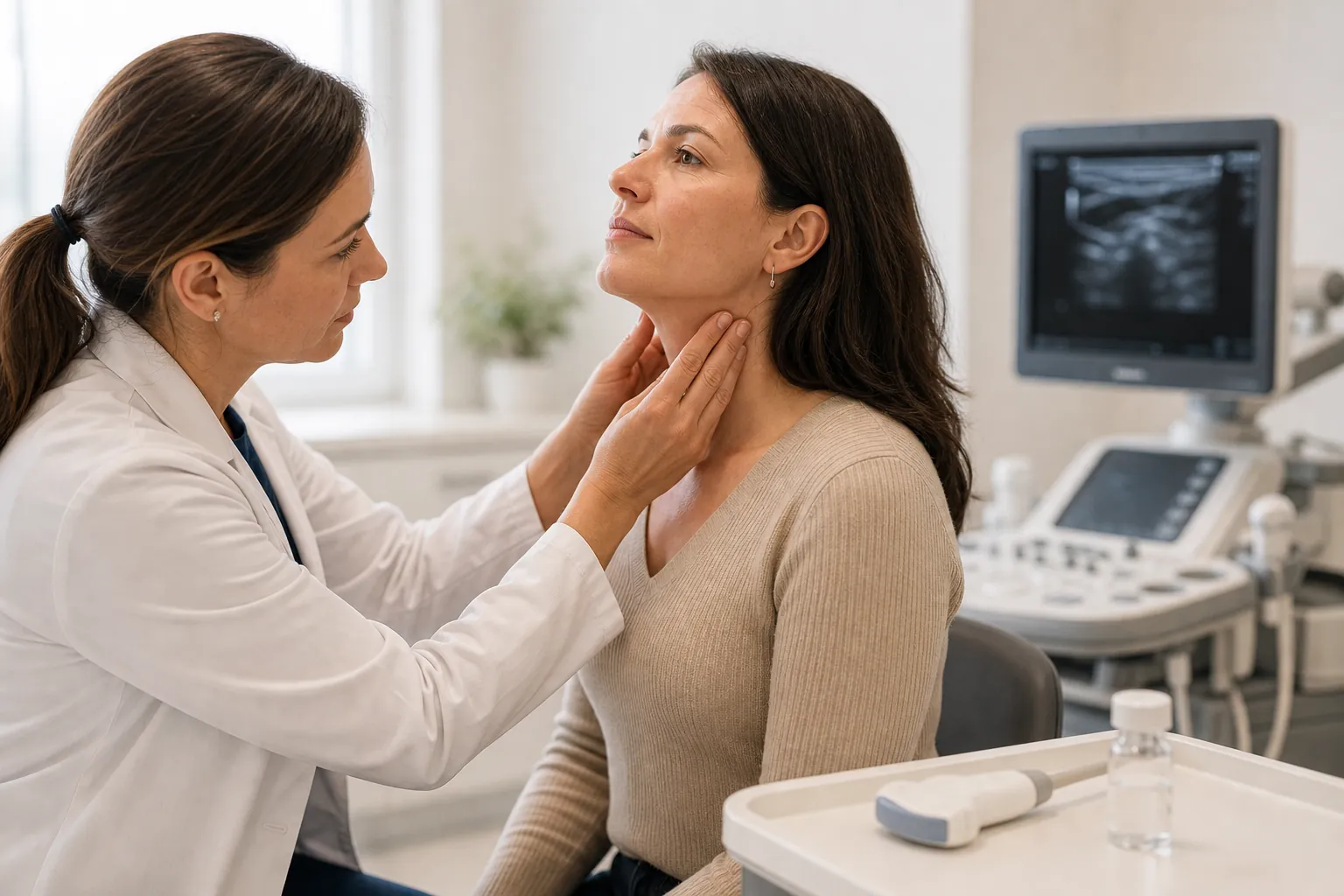
The physical exam focuses on gland-specific findings: palpation of the thyroid for nodules or enlargement, inspection for signs of cortisol excess (central obesity, dorsal fat pad, purple striae, proximal muscle weakness), assessment of visual fields if a pituitary lesion is suspected, and evaluation of secondary sexual characteristics in hypogonadism workups.
The endocrinologist will almost always order additional labs. Common panels include a full thyroid function panel (TSH, free T4, free T3, thyroid antibodies), a metabolic panel with fasting glucose and insulin, hemoglobin A1c, lipid panel, 25-hydroxyvitamin D, parathyroid hormone, and sex hormones (testosterone, estradiol, LH, FSH). For suspected Cushing syndrome, the initial screen involves a 1-mg overnight dexamethasone suppression test, 24-hour urinary free cortisol, or late-night salivary cortisol [10].
Follow-up intervals depend on the condition. Stable hypothyroid patients on levothyroxine may return every 6 to 12 months. Patients initiating insulin pump therapy might be seen every 2 to 4 weeks during the titration phase. Thyroid cancer surveillance follows ATA risk-stratification protocols with neck ultrasound and thyroglobulin monitoring at intervals ranging from 6 months to annually [8].
The Endocrinologist Shortage and Telehealth Solutions
Access to endocrinology care is tightening. A 2022 Merritt Hawkins survey found that the average wait time for a new endocrinology appointment was 46 days across 15 major U.S. metropolitan areas, with some markets exceeding 90 days [14]. Rural and underserved regions face even longer delays.
The workforce numbers tell the story. The United States has approximately one adult endocrinologist for every 38,000 people. Compare that to roughly one cardiologist per 10,000 people [6]. Training pipeline constraints compound the problem: only about 350 endocrinology fellowship positions fill each year, and some go unfilled because salary differentials with other subspecialties (cardiology, gastroenterology) steer trainees elsewhere.
Telehealth has partially offset these access barriers. During the COVID-19 pandemic, endocrine telehealth visits surged by over 8,000% at some academic centers, and a 2021 study in the Journal of Clinical Endocrinology and Metabolism found that telemedicine diabetes visits achieved A1c reductions comparable to in-person care (mean A1c decrease of 0.8% in both groups over 6 months) [15]. Telehealth works particularly well for diabetes management, thyroid medication adjustments, and hormone replacement therapy monitoring, where lab review and medication titration do not require physical examination.
For conditions requiring hands-on assessment (thyroid palpation, adrenal incidentaloma ultrasound correlation, signs of Cushing syndrome), an initial in-person visit followed by telehealth follow-ups has emerged as the preferred hybrid model.
How Endocrinologists Differ from Other Hormone-Related Specialists
The term "hormone doctor" can apply to several types of providers. Understanding the distinctions helps you get the right care.
Endocrinologist vs. reproductive endocrinologist. A reproductive endocrinologist (REI) completes OB/GYN residency plus a fellowship in reproductive medicine. They focus on infertility, IVF, and ovulatory disorders. A medical endocrinologist, by contrast, trains through internal medicine and treats the full glandular spectrum [4].
Endocrinologist vs. urologist (for testosterone). Urologists manage male hypogonadism, particularly when it intersects with erectile dysfunction or fertility concerns. Endocrinologists approach testosterone deficiency from a metabolic and pituitary-axis perspective, ruling out secondary causes like pituitary adenomas or hemochromatosis before starting therapy [12].
Endocrinologist vs. anti-aging or functional medicine practitioner. Board-certified endocrinologists follow evidence-based guidelines from the Endocrine Society, ADA, ATA, and AACE. "Anti-aging" clinics may prescribe hormones (growth hormone, DHEA, thyroid combinations) outside of guideline-supported indications. The Endocrine Society has explicitly stated that growth hormone therapy for age-related decline in otherwise healthy adults is not supported by evidence and carries risks including glucose intolerance and edema [16].
Endocrinologist vs. primary care with endocrine interest. Some internists and family physicians develop substantial expertise in diabetes or thyroid management. This is appropriate and necessary given the specialist shortage. The distinction is fellowship training, ABIM subspecialty certification, and experience with rare or complex endocrine cases.
Cost and Insurance Considerations
Endocrinology visits are covered by most commercial insurance plans, Medicare, and Medicaid when medically indicated. A referral from your primary care provider is typically required for HMO plans. PPO plans may allow self-referral, though coverage verification beforehand prevents surprise bills.
Average out-of-pocket costs for an initial endocrinology consultation range from $150 to $400 for insured patients (depending on copay structure) and $250 to $600 for uninsured patients [14]. The laboratory workup ordered at an endocrinology visit can add $100 to $500 in patient costs depending on the panel complexity and insurance deductible status.
Specialized endocrine testing (dynamic stimulation tests, 24-hour urine collections, insulin pump supplies, CGM sensors) carries higher costs. Medicare Part B covers CGM for insulin-treated diabetes patients, and most commercial insurers have followed suit since the expansion of CGM indications. Prior authorization requirements remain common for GLP-1 receptor agonists, insulin pumps, and anabolic osteoporosis agents, and your endocrinologist's office typically handles the authorization paperwork.
Finding a Qualified Endocrinologist
Start with the American Association of Clinical Endocrinology's "Find an Endocrinologist" directory at aace.com, which lists only board-certified or board-eligible practitioners. The Endocrine Society also maintains a provider search tool.
Verify board certification through the ABIM's online verification portal. Confirm that the physician holds active certification in "Endocrinology, Diabetes, and Metabolism," not just internal medicine.
Ask your primary care physician for a referral to someone with specific expertise in your condition. Thyroid cancer management, pituitary surgery coordination, and transgender hormone therapy each require distinct subspecialty experience within endocrinology. A physician who primarily manages diabetes may not be the best fit for a complex pituitary case, and the reverse is also true.
For telehealth-first options, several endocrinology practices now offer nationwide virtual consultations for diabetes, thyroid, and hormone replacement therapy management. Confirm that the provider is licensed in your state and accepts your insurance before scheduling.
The Endocrine Society projects that 7,800 additional endocrinologists will be needed by 2034 to meet U.S. demand [6]. Until that gap closes, efficient partnerships between primary care and endocrinology, supported by telehealth and e-consult platforms, remain the most practical path to timely hormone care.
Frequently asked questions
What is an endocrinologist?
When should I see an endocrinologist instead of my primary care doctor?
What conditions do endocrinologists treat?
Do I need a referral to see an endocrinologist?
How long does it take to get an endocrinology appointment?
What happens at your first endocrinologist visit?
How is an endocrinologist different from a hormone clinic?
Can endocrinologists prescribe testosterone?
Do endocrinologists treat thyroid problems?
How much does an endocrinologist visit cost?
Can I see an endocrinologist through telehealth?
What is the difference between an endocrinologist and a reproductive endocrinologist?
References
- Melmed S, Polonsky KS, Larsen PR, Kronenberg HM. Williams Textbook of Endocrinology, 14th ed. Elsevier; 2020. https://pubmed.ncbi.nlm.nih.gov/
- Chaker L, Bianco AC, Jonklaas J, Peeters RP. Hypothyroidism. Lancet. 2017;390(10101):1550-1562. https://pubmed.ncbi.nlm.nih.gov/28336049/
- Biondi B, Cooper DS. Thyroid hormone therapy for hypothyroidism. Endocrine. 2019;66(1):18-26. https://pubmed.ncbi.nlm.nih.gov/31520303/
- Accreditation Council for Graduate Medical Education. ACGME Program Requirements for Graduate Medical Education in Endocrinology, Diabetes, and Metabolism. 2023. https://www.acgme.org/
- American Board of Internal Medicine. Endocrinology, Diabetes, and Metabolism Certification. https://www.abim.org/
- Endocrine Society. Endocrinology Workforce Projections for the United States, 2024 Update. https://www.endocrine.org/
- American Diabetes Association Professional Practice Committee. Standards of Care in Diabetes, 2024. Diabetes Care. 2024;47(Suppl 1). https://diabetesjournals.org/care/issue/47/Supplement_1
- Haugen BR, Alexander EK, Bible KC, et al. 2015 American Thyroid Association Management Guidelines for Adult Patients with Thyroid Nodules and Differentiated Thyroid Cancer. Thyroid. 2016;26(1):1-133. https://pubmed.ncbi.nlm.nih.gov/26462967/
- Eastell R, Rosen CJ, Black DM, et al. Pharmacological Management of Osteoporosis in Postmenopausal Women: An Endocrine Society Clinical Practice Guideline. J Clin Endocrinol Metab. 2019;104(5):1595-1622. https://pubmed.ncbi.nlm.nih.gov/30907953/
- Fassnacht M, Arlt W, Bancos I, et al. Management of adrenal incidentalomas: European Society of Endocrinology Clinical Practice Guideline. Eur J Endocrinol. 2016;175(2):G1-G34. https://pubmed.ncbi.nlm.nih.gov/27390021/
- Melmed S, Casanueva FF, Hoffman AR, et al. Diagnosis and Treatment of Hyperprolactinemia: An Endocrine Society Clinical Practice Guideline. J Clin Endocrinol Metab. 2011;96(2):273-288. https://pubmed.ncbi.nlm.nih.gov/21296991/
- Hembree WC, Cohen-Kettenis PT, Gooren L, et al. Endocrine Treatment of Gender-Dysphoric/Gender-Incongruent Persons: An Endocrine Society Clinical Practice Guideline. J Clin Endocrinol Metab. 2017;102(11):3869-3903. https://pubmed.ncbi.nlm.nih.gov/28945902/
- American Association of Clinical Endocrinology. When to Refer to an Endocrinologist. https://www.aace.com/
- Merritt Hawkins. 2022 Survey of Physician Appointment Wait Times and Medicare and Medicaid Acceptance Rates. https://www.nih.gov/
- Phillip M, Bergenstal RM, Close KL, et al. The Digital/Virtual Diabetes Clinic: The Future Is Now. J Diabetes Sci Technol. 2021;15(1):8-16. https://pubmed.ncbi.nlm.nih.gov/32476493/
- Molitch ME, Clemmons DR, Malozowski S, et al. Evaluation and Treatment of Adult Growth Hormone Deficiency: An Endocrine Society Clinical Practice Guideline. J Clin Endocrinol Metab. 2011;96(6):1587-1609. https://pubmed.ncbi.nlm.nih.gov/21602453/