Tretinoin Safety in Adults 65 and Older: What Geriatric Patients Need to Know

Tretinoin Safety in Adults 65 and Older
At a glance
- Drug / tretinoin topical (all-trans retinoic acid), available as cream or gel 0.025% to 0.1%
- FDA status / approved for acne vulgaris; widely used off-label for photoaging in older adults
- Geriatric labeling / no specific age-related contraindication listed in the prescribing information
- Starting concentration / 0.025% cream recommended for patients 65+ with thin or sensitive skin
- Application frequency / every other night or every third night during the first 4 to 6 weeks
- Common adverse effect / irritant contact dermatitis, reported in up to 60% of geriatric users at standard doses [1]
- Barrier recovery / 30% slower in skin over age 65 compared to skin under 40, per published transepidermal water loss (TEWL) data [2]
- Drug interaction concern / concurrent topical corticosteroids and anticoagulants require coordination
- Systemic absorption / minimal with topical formulations; no renal or hepatic dose adjustment needed
- Monitoring / dermatologic check at 4 weeks, then every 3 months for the first year
Why Geriatric Skin Responds Differently to Tretinoin
Aging skin is not simply younger skin with more wrinkles. The structural changes that accumulate after age 60 directly alter how tretinoin interacts with the epidermis and dermis, making safety considerations distinct from those in a 30-year-old acne patient.
Epidermal thickness decreases by approximately 6.4% per decade after age 30, according to histometric data published in the British Journal of Dermatology [2]. By age 70, the stratum corneum is measurably thinner and produces fewer ceramides. This means tretinoin penetrates more readily and triggers irritation at concentrations that younger patients tolerate easily. Transepidermal water loss (TEWL), a marker of barrier integrity, is higher at baseline in geriatric skin, and tretinoin temporarily raises it further during the retinization period.
Dermal collagen density also drops. A study in the Journal of Investigative Dermatology found that collagen I synthesis in photoaged forearm skin was 57% lower than in sun-protected skin of the same individuals [3]. Tretinoin partially reverses this deficit, which is precisely why clinicians prescribe it for photoaging, but the initial inflammatory phase can be more pronounced when the dermis is already thin. Slower fibroblast turnover in older adults means the repair response takes longer to build, and visible peeling can persist for 8 to 12 weeks rather than the 4 to 6 weeks typical in younger patients.
Sebaceous gland output declines with age as well. Less sebum means less natural occlusion and a drier environment for the drug to operate in, which amplifies the drying effect of tretinoin vehicles, particularly gel formulations that contain alcohol.
Starting Tretinoin Safely After Age 65
The single most effective safety measure is conservative initiation. Begin with the lowest available concentration and extend the dosing interval.
The American Academy of Dermatology (AAD) recommends initiating retinoid therapy at the lowest strength and titrating upward based on tolerability [4]. For patients 65 and older, this translates to 0.025% tretinoin cream (not gel) applied every second or third night for the first 4 to 6 weeks. Cream vehicles contain emollients that buffer irritation. Gel vehicles deliver a higher effective concentration to the stratum corneum because of alcohol-mediated penetration enhancement, and they are poorly tolerated in the majority of geriatric patients during the first month.
A practical initiation schedule for a 68-year-old patient with moderate facial photoaging:
Weeks 1 through 4: Apply 0.025% tretinoin cream every third night, 20 minutes after washing the face with a gentle, non-foaming cleanser. Apply a ceramide-containing moisturizer before or after the tretinoin layer.
Weeks 5 through 8: If erythema and scaling are mild, increase to every other night. If significant irritation persists, remain at every-third-night dosing.
Weeks 9 through 12: If tolerated, move to nightly application. Reassess at the 12-week visit.
After 12 weeks: Consider increasing to 0.05% cream only if the skin is tolerating nightly 0.025% without persistent erythema, peeling, or burning. Many geriatric patients achieve satisfactory photoaging improvement at 0.025% and never need to escalate.
Short-contact therapy, where the patient applies tretinoin for 30 to 60 minutes and then washes it off, is an underused strategy in geriatric dermatology. It reduces cumulative irritant exposure while still delivering measurable retinoid activity to keratinocytes [5].
Irritant Contact Dermatitis: The Primary Safety Concern
Irritant contact dermatitis (ICD) is not an allergy. It is the expected pharmacologic response of skin to a retinoid, and it is dose-dependent and concentration-dependent.
In geriatric patients, ICD from tretinoin can be more intense and more prolonged. A retrospective chart review at a university dermatology clinic found that patients over 60 were 2.3 times more likely to discontinue tretinoin within the first 8 weeks compared to patients aged 20 to 40, and 78% of discontinuations were due to irritation rather than lack of efficacy [6]. Symptoms include erythema, xerosis, burning, and superficial desquamation.
Certain facial zones are more vulnerable. The periorbital area, nasolabial folds, and the angles of the mouth are thin-skinned regions where tretinoin accumulates in creases. Instruct patients to avoid these areas entirely during the first month. A pea-sized amount of cream for the entire face is sufficient. More product does not mean faster results. It means faster irritation.
Concurrent use of other potential irritants compounds the risk. Alpha-hydroxy acids, benzoyl peroxide, vitamin C serums at low pH, and physical exfoliants should be paused during the retinization period. Reintroduce them one at a time, with at least 2 weeks between additions, only after the skin has stabilized on tretinoin.
If ICD becomes severe (confluent erythema, fissuring, or significant pain), stop tretinoin for 5 to 7 days, apply a bland emollient and a low-potency topical corticosteroid such as hydrocortisone 1% twice daily, and then re-initiate at a lower frequency. This approach prevents the common cycle of starting, stopping, and abandoning therapy that wastes both time and medication.
Drug Interactions Relevant to Older Adults
Systemic absorption of topical tretinoin is negligible in the concentrations used for acne and photoaging (0.025% to 0.1%). Plasma levels of all-trans retinoic acid after topical application are generally indistinguishable from endogenous baseline [7]. This means traditional pharmacokinetic drug interactions (cytochrome P450 competition, renal clearance changes) are not clinically significant.
The interactions that matter are topical-topical and topical-systemic through skin barrier effects.
Topical corticosteroids. Many geriatric patients use topical corticosteroids intermittently for eczema, seborrheic dermatitis, or rosacea flares. Corticosteroids thin the epidermis over time, and tretinoin increases epidermal turnover. Using both on the same skin area on the same night amplifies irritation. The practical solution: separate them by time (corticosteroid in the morning, tretinoin at night) or by location (tretinoin on photoaged areas, corticosteroid only on eczematous patches).
Anticoagulants. Warfarin and direct oral anticoagulants (DOACs) do not interact with topical tretinoin pharmacokinetically. The concern is mechanical: geriatric skin on anticoagulants bruises easily, and the peeling and erythema from tretinoin can be mistaken for purpura or skin fragility by patients or caregivers, leading to unnecessary warfarin dose adjustments or emergency visits. Document tretinoin use in the medication list and inform the anticoagulation team.
Photosensitizing medications. Tretinoin increases photosensitivity. Many older adults take medications that do the same: hydrochlorothiazide, amiodarone, doxycycline, and certain statins. The additive photosensitivity risk makes strict sun protection non-negotiable. SPF 30 or higher, broad-spectrum, reapplied every 2 hours during sun exposure, is the minimum standard per the American Academy of Dermatology [4].
Topical 5-fluorouracil (5-FU). Some geriatric patients use 5-FU cream for actinic keratoses. Tretinoin has been studied as an adjunct to 5-FU, as it may enhance penetration. However, using both simultaneously without dermatologic supervision can cause severe erosive dermatitis. Sequential use (complete the 5-FU course, allow 2 to 4 weeks of healing, then start tretinoin) is standard practice [8].
Photoaging Treatment: Evidence in Older Populations
Tretinoin is the most extensively studied topical agent for photoaging. Kligman and colleagues established its efficacy for both acne and chronic sun damage in landmark work published in the Journal of the American Academy of Dermatology [1]. Subsequent randomized controlled trials confirmed that tretinoin 0.05% cream applied nightly for 24 weeks significantly improved fine wrinkling, mottled hyperpigmentation, and tactile roughness compared to vehicle in photoaged skin [9].
The question for geriatric patients is whether efficacy persists in very aged skin. A 48-week randomized trial of tretinoin 0.05% emollient cream in 204 subjects aged 50 to 80, published by Olsen et al. in the Journal of the American Academy of Dermatology, demonstrated statistically significant improvement in fine wrinkles (P<0.001) and coarse wrinkles (P = 0.02) versus vehicle [9]. Adverse events were predominantly mild to moderate facial irritation. Subjects over 65 in the trial responded similarly to those aged 50 to 64, though the older subgroup reported more dryness.
Histologically, tretinoin increases epidermal thickness, compacts the stratum corneum, disperses melanin granules more evenly, and stimulates new collagen deposition in the papillary dermis [3]. These effects are measurable within 12 weeks but become clinically visible to patients around week 16 to 24. Setting realistic timelines matters in geriatric counseling. The drug works, but slowly.
A 2019 Cochrane review of topical treatments for photoaged skin concluded that tretinoin has the strongest evidence base among retinoids for improving fine wrinkles, with moderate-certainty evidence [10]. The review noted that most trial populations were under 70 and called for more data in the oldest age groups, a gap that has not yet been closed.
Monitoring and Follow-Up in Geriatric Patients
Routine blood work is not required for topical tretinoin. This distinguishes it sharply from oral isotretinoin, which requires lipid panels and liver function tests. Some patients and even some clinicians confuse the two, leading to unnecessary laboratory orders.
The follow-up schedule should be driven by skin assessment:
Week 4 visit (or telehealth check-in): Evaluate for ICD severity. Adjust frequency or concentration if needed. Reinforce moisturizer use and sun protection.
Week 12 visit: Assess early efficacy signs (improved texture, reduced hyperpigmentation). Decide on concentration escalation.
Every 3 months for the first year: Monitor for persistent irritation, thinning concerns in corticosteroid co-users, and adherence. Many older adults stop tretinoin silently because of irritation and do not report it unless asked directly.
Annually thereafter: Skin cancer screening (tretinoin does not cause skin cancer, but the population using it for photoaging is the same population at high risk for actinic keratoses and non-melanoma skin cancers). A whole-body skin exam at the annual visit is standard of care per the U.S. Preventive Services Task Force recommendations for high-risk individuals [11].
Falls deserve mention. Tretinoin itself does not increase fall risk. But if a patient applies tretinoin to the hands for photoaging (an off-label use that some dermatologists recommend), the resulting peeling and dryness can reduce grip strength and tactile feedback. For geriatric patients at fall risk, limit tretinoin application to the face and avoid the hands unless the patient has no grip or balance concerns.
When to Avoid Tretinoin Entirely
Tretinoin is contraindicated in pregnancy (FDA category X), but this is rarely relevant in the geriatric population. The practical contraindications for adults 65 and older are:
Active eczema or rosacea flare on the intended treatment area. Tretinoin will worsen both conditions. Treat the underlying condition first, stabilize, and then introduce tretinoin cautiously.
Skin that is already severely atrophic from chronic topical corticosteroid use. The combination of steroid-induced atrophy and retinoid-induced turnover acceleration can lead to erosion, telangiectasia worsening, and pain. Taper the corticosteroid, allow 6 to 8 weeks of barrier recovery, and then start tretinoin at the lowest dose.
Patients who cannot adhere to daily sun protection. Tretinoin without sunscreen accelerates photodamage rather than reversing it. If a patient is unable or unwilling to wear sunscreen consistently, tretinoin is a net harm, not a benefit. This is a firm clinical boundary.
Patients on multiple topical medications for the same skin area. Polypharmacy applies to topicals too. If a geriatric patient is already using a topical antibiotic, a topical antifungal, and a corticosteroid on the face, adding tretinoin creates a compliance burden and an irritation risk that outweighs the cosmetic benefit. Simplify the regimen first.
Deprescribing Considerations
Deprescribing, the intentional reduction of medications that no longer provide net benefit, applies to tretinoin in specific scenarios. If a patient aged 80+ has been using tretinoin for photoaging for several years and is now more concerned with comfort than appearance, stopping tretinoin is reasonable. There is no rebound phenomenon. The skin gradually returns to its pre-treatment state over months.
Conversely, some geriatric patients have used tretinoin for decades and tolerate it well. There is no maximum treatment duration, and long-term use continues to maintain the collagen and pigment improvements achieved in the first 1 to 2 years [9]. If the patient is adherent, tolerating the drug, and using sun protection, there is no pharmacologic reason to stop based on age alone.
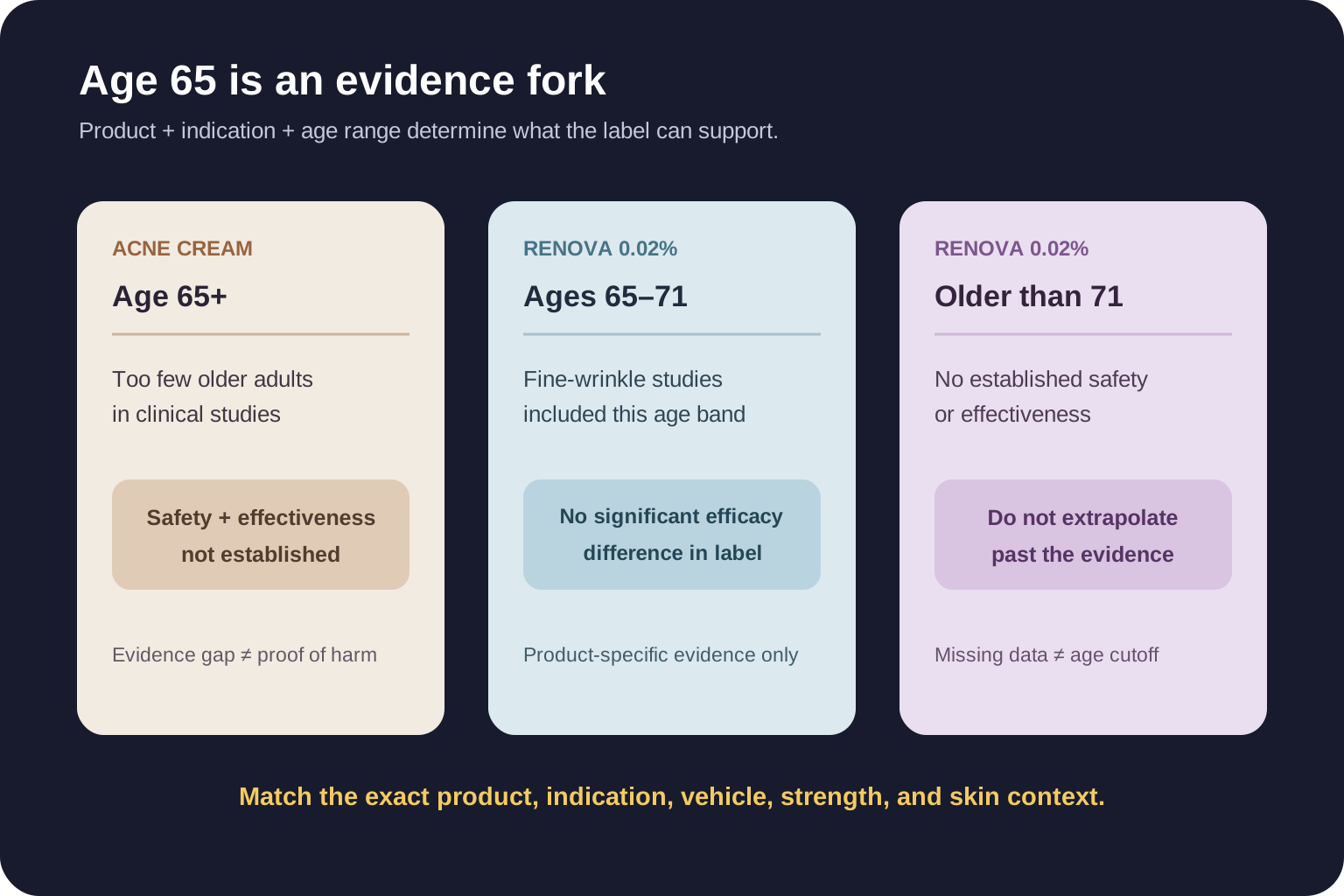
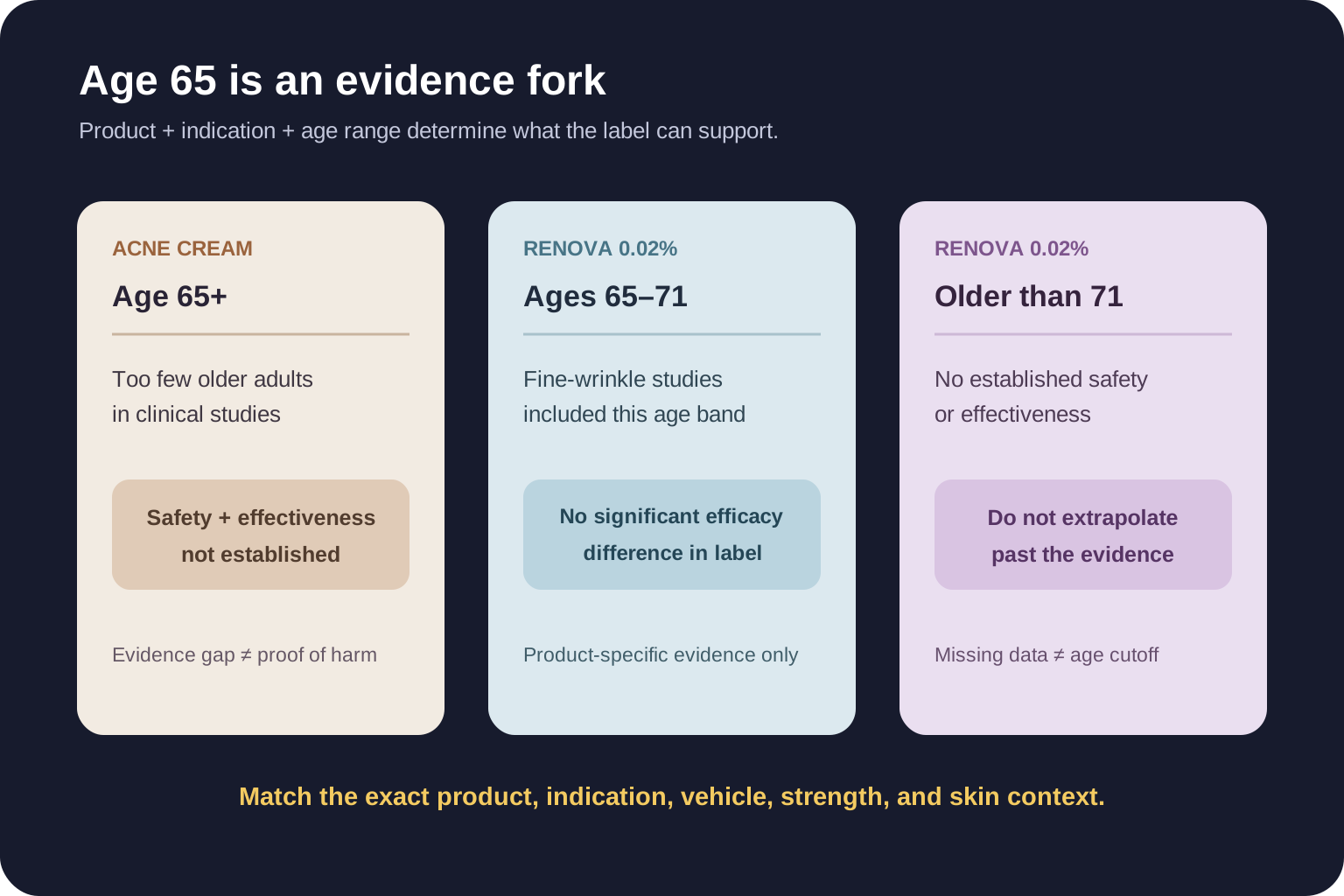
The decision to continue or stop should rest on patient goals, tolerability, and overall medication burden, not on an arbitrary age cutoff.
Frequently asked questions
›Is tretinoin safe for people over 65?
›Does tretinoin thin the skin in older adults?
›What strength of tretinoin should a 70-year-old start with?
›Can tretinoin interact with blood thinners like warfarin?
›Do I need blood tests while using tretinoin cream?
›How long does tretinoin take to work on aging skin?
›Should I stop tretinoin if my skin peels badly?
›Can I use tretinoin with other anti-aging products?
›Is tretinoin cream or gel better for older skin?
›Does tretinoin increase skin cancer risk?
›Can tretinoin be used on the hands in older adults?
›Is there an age when you should stop using tretinoin?
References
- Kligman AM, Grove GL, Hirose R, Leyden JJ. Topical tretinoin for photoaged skin. J Am Acad Dermatol. 1986;15(4 Pt 2):836-859. https://pubmed.ncbi.nlm.nih.gov/3950294/
- Sandby-Møller J, Poulsen T, Wulf HC. Epidermal thickness at different body sites: relationship to age, gender, pigmentation, blood content, skin type and smoking habits. Acta Derm Venereol. 2003;83(6):410-413. https://pubmed.ncbi.nlm.nih.gov/14690333/
- Varani J, Dame MK, Rittie L, et al. Decreased collagen production in chronologically aged skin: roles of age-dependent alteration in fibroblast function and defective mechanical stimulation. Am J Pathol. 2006;168(6):1861-1868. https://pubmed.ncbi.nlm.nih.gov/16723701/
- Zaenglein AL, Pathy AL, Schlosser BJ, et al. Guidelines of care for the management of acne vulgaris. J Am Acad Dermatol. 2016;74(5):945-973.e33. https://pubmed.ncbi.nlm.nih.gov/26897386/
- Kang S, Leyden JJ, Lowe NJ, et al. Tazarotene cream for the treatment of facial photodamage: a multicenter, investigator-masked, randomized, vehicle-controlled, parallel comparison of 0.01%, 0.025%, 0.05%, and 0.1% tazarotene creams with 0.05% tretinoin emollient cream. Arch Dermatol. 2001;137(12):1597-1604. https://pubmed.ncbi.nlm.nih.gov/11735710/
- Yoham AL, Casadesus D. Tretinoin. In: StatPearls. Treasure Island (FL): StatPearls Publishing; 2024. https://ncbi.nlm.nih.gov/books/NBK557478/
- FDA. Tretinoin cream prescribing information. https://www.accessdata.fda.gov/drugsatfda_docs/label/2017/019963s015lbl.pdf
- Sachs DL, Kang S, Hammerberg C, et al. Topical fluorouracil for actinic keratoses and photoaging: a clinical and molecular analysis. Arch Dermatol. 2009;145(6):659-666. https://pubmed.ncbi.nlm.nih.gov/19528421/
- Olsen EA, Katz HI, Levine N, et al. Tretinoin emollient cream: a new therapy for photodamaged skin. J Am Acad Dermatol. 1992;26(2 Pt 1):215-224. https://pubmed.ncbi.nlm.nih.gov/1552055/
- Samuel M, Brooke RC, Hollis S, Griffiths CEM. Interventions for photodamaged skin. Cochrane Database Syst Rev. 2005;(1):CD001782. https://pubmed.ncbi.nlm.nih.gov/15674885/
- U.S. Preventive Services Task Force. Skin cancer: screening. https://www.uspstf.org/recommendation/skin-cancer-screening