
Saxenda Adolescent (Ages 12 to 17) Transition to Adult Care: A Clinical Guide
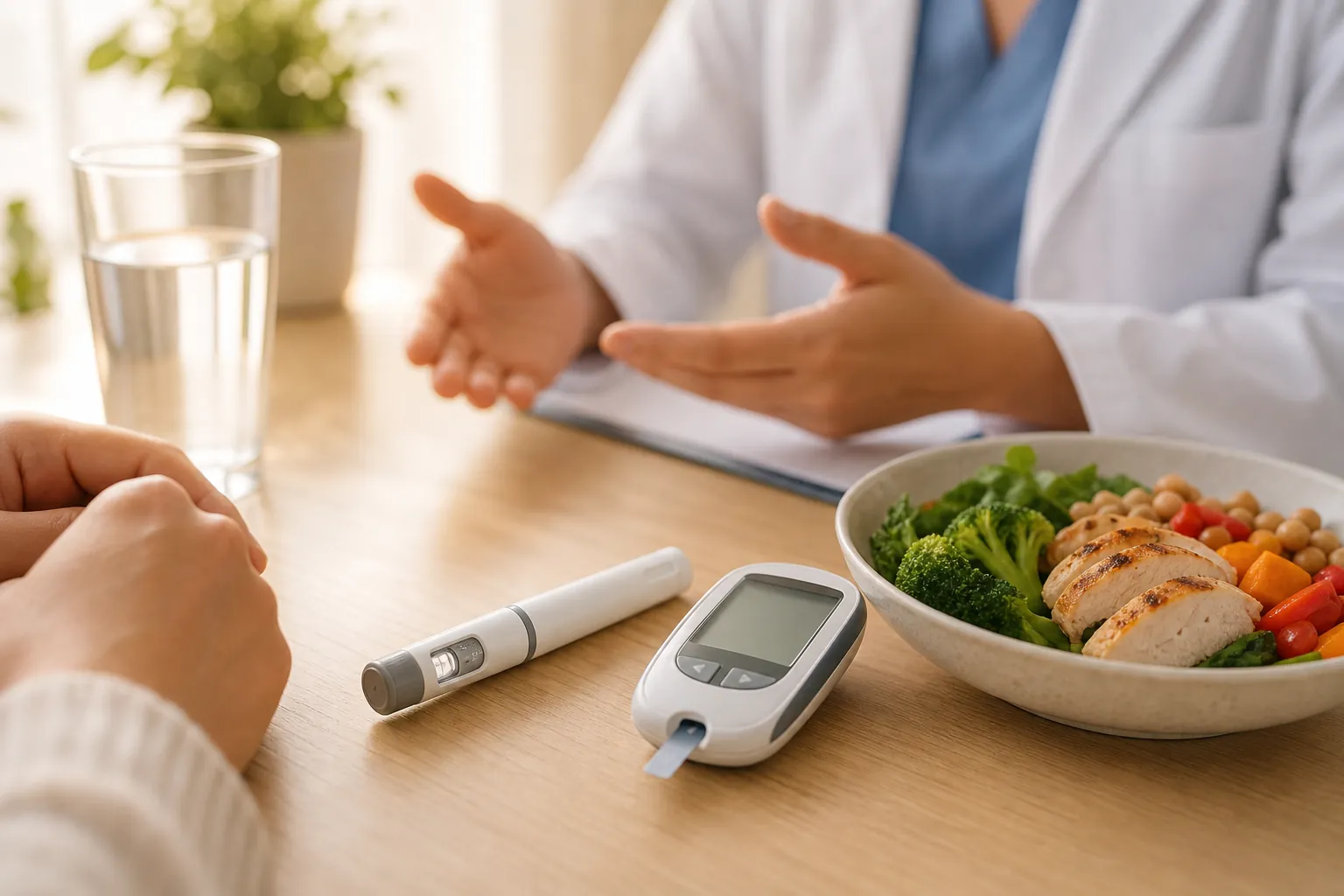
At a glance
- Drug / liraglutide 3 mg (Saxenda), subcutaneous daily injection
- Adolescent indication / BMI at or above the 95th percentile, ages 12 to 17, approved by FDA in December 2020
- Adult indication / BMI ≥30, or BMI ≥27 with at least one weight-related comorbidity
- Max dose / 3.0 mg daily for both adolescents and adults (identical ceiling)
- Transition age / 18 years; insurance and prescribing authority change, not the molecule
- Key trial (adolescents) / SCALE Teens (NCT02700555): 56-week RCT, N=251, mean BMI reduction 5.0% vs. 1.6% placebo
- Key trial (adults) / SCALE Obesity and Prediabetes (NCT01272219): 56-week RCT, N=3,731, mean weight loss 8.4 kg vs. 2.8 kg placebo
- Rebound risk / weight regain documented after liraglutide discontinuation in adolescents; continuation is preferred when tolerated
Why the Transition Matters Clinically
Transitioning from pediatric to adult obesity care is not a paperwork exercise. It is a medically consequential handoff that determines whether a young person maintains the metabolic gains achieved during adolescence. Obesity that persists from adolescence into adulthood carries substantially higher cardiovascular, hepatic, and glycemic risk over a lifetime, and abrupt discontinuation of an effective GLP-1 receptor agonist at age 18 frequently reverses those gains within months.
The FDA approved liraglutide 3 mg (Saxenda) for adolescents aged 12 to 17 in December 2020, making it the first GLP-1 receptor agonist with a dedicated pediatric obesity label in the United States. [1] The adult indication had already existed since 2014. Because the maximum dose is 3.0 mg daily under both labels, the pharmacology does not change at age 18. What changes is the regulatory framing, the treating specialty, and frequently the insurer's coverage criteria.
The SCALE Teens Trial: What the Adolescent Evidence Actually Shows
The key adolescent trial, SCALE Teens (NCT02700555, N=251), randomized adolescents with obesity to liraglutide 3 mg or placebo for 56 weeks alongside lifestyle intervention. [2] Liraglutide-treated participants achieved a mean BMI standard deviation score (SDS) reduction of 0.22 versus 0.00 in the placebo group (P<0.001). Roughly 43.3% of liraglutide participants achieved at least a 5% reduction in BMI versus 18.7% with placebo.
Critically, SCALE Teens also included a 26-week follow-up off treatment. BMI SDS rebounded in the liraglutide group after discontinuation, reinforcing that obesity is a chronic condition requiring ongoing pharmacotherapy. [2] This single finding is the strongest clinical argument for uninterrupted continuation through the age-18 transition.
Adult Efficacy: The SCALE Program Confirms the Same Mechanism Works
In adults, the SCALE Obesity and Prediabetes trial (NCT01272219, N=3,731) demonstrated that liraglutide 3 mg produced a mean weight loss of 8.4 kg over 56 weeks versus 2.8 kg with placebo, and 63.2% of participants lost at least 5% of body weight. [3] The biological mechanism (GLP-1 receptor activation in the hypothalamus reducing appetite and slowing gastric emptying) operates identically across age groups. An 18-year-old who responded during adolescence has no pharmacological reason to expect diminished efficacy under the adult label.
FDA Label Differences Between the Adolescent and Adult Indications
Both labels share the 3.0 mg daily ceiling, the 0.6 mg weekly titration schedule, and the requirement to discontinue after 16 weeks if the patient has not lost at least 4% of body weight (pediatric) or 4 to 5% (adult, depending on baseline BMI). [1, 4] The table below summarizes the label-level differences that affect clinical management at transition.
| Feature | Adolescent Label (12 to 17) | Adult Label (≥18) |
|---|---|---|
| BMI threshold | ≥95th percentile | ≥30, or ≥27 with comorbidity |
| Minimum age | 12 years | 18 years |
| Maximum dose | 3.0 mg/day | 3.0 mg/day |
| Response criterion | <4% BMI reduction at 16 weeks | <4% weight loss at 16 weeks |
| REMS program | None currently required | None currently required |
| Pregnancy category guidance | Avoid; animal teratogenicity data | Discontinue if pregnancy detected |
The clinical implication: an 18-year-old transitioning to the adult label who has a BMI between 27 and 29.9 with no comorbidities does not technically qualify under the adult label. Providers must document a qualifying comorbidity (hypertension, prediabetes, dyslipidemia, sleep apnea) or note that BMI has not yet reached 30. This gap is the most common insurance-coverage disruption at the transition point.
Dose Titration Does Not Restart at Transition
Some clinicians mistakenly restart the 0.6 mg titration when issuing an adult prescription. This is unnecessary and exposes the patient to six additional weeks of subtherapeutic dosing. If the patient is stable on 3.0 mg daily, the new adult prescription should reflect 3.0 mg daily from day one, with a clinical note documenting dose tolerance. The FDA's Prescribing Information for both age groups supports this approach. [1, 4]
Contraindications That May Become Relevant After Adolescence
Liraglutide carries a boxed warning for thyroid C-cell tumors based on rodent data, and is contraindicated in personal or family history of medullary thyroid carcinoma or Multiple Endocrine Neoplasia syndrome type 2 (MEN 2). [4] These contraindications apply equally under both labels. During the adult intake, providers should re-confirm the patient's family history, because a new MEN 2 diagnosis in a first-degree relative between ages 17 and 18 would change the risk calculus.
Building the Transition Plan: A Step-by-Step Framework
A structured transition reduces the probability of a medication gap at age 18. The American Academy of Pediatrics (AAP) 2023 Clinical Practice Guideline on obesity recommends that weight-management pharmacotherapy be continued through transitions of care rather than discontinued by default, treating obesity as a chronic disease with the same continuity expectations as hypertension or asthma. [5]
Step 1: Start the Handoff at Age 16 or 17, Not at 18
Transition planning should begin 12 to 24 months before the patient turns 18. The Society for Adolescent Health and Medicine recommends beginning transition preparation at age 14 for youth with chronic conditions. [6] For Saxenda patients, the 12-month pre-transition window should include:
- Identifying an adult endocrinologist, obesity medicine specialist, or primary care provider willing to prescribe GLP-1 receptor agonists
- Completing a summary letter of care that documents current dose, titration history, side-effect profile, response (% BMI change), and relevant labs (HbA1c, lipid panel, liver enzymes)
- Confirming that the adult provider's practice accepts the patient's insurance
Step 2: Verify Adult Insurance Coverage Before the Birthday
Insurance coverage for Saxenda under adult criteria may require prior authorization with documentation of a qualifying BMI and comorbidity. Medicaid expansion plans and commercial insurers frequently use different formulary tiers for adolescent versus adult GLP-1 prescriptions. A coverage gap at age 18 can last 30 to 90 days without proactive outreach to the insurer.
The pediatric provider should initiate a bridge supply (up to 90 days of medication) before the 18th birthday when clinically appropriate, while the adult provider completes the prior authorization process. This bridge approach is consistent with chronic disease transition standards and does not violate any FDA label requirement. [4]
Step 3: Conduct a Formal Transition Visit
The transition visit is ideally a joint appointment or a structured warm handoff between the outgoing pediatric provider and the incoming adult provider. Key clinical items to address:
- Reconfirm BMI and confirm adult-label eligibility (BMI ≥30 or ≥27 with comorbidity)
- Review current HbA1c, fasting glucose, lipid panel, and thyroid function
- Reassess cardiovascular risk using adult screening tools (ACC/AHA Pooled Cohort Equations for patients aged 20 and above, or Framingham score approximation for 18 to 19 year-olds)
- Document informed consent under the adult label, including updated pregnancy counseling for female patients
Step 4: Set New Adult Weight Goals
Pediatric obesity treatment uses BMI percentile and BMI SDS as the primary endpoints. Adult obesity treatment uses percent body weight lost and absolute BMI reduction. At the transition visit, convert the patient's existing progress into adult-framework metrics. A patient who reduced BMI SDS by 0.3 during adolescence may have achieved a 6 to 10% body weight reduction, which is a meaningful adult-level endpoint and should be documented as such to establish the insurance baseline.
Managing Common Complications at Transition
Gastrointestinal Side Effects in Young Adults
Nausea, vomiting, and diarrhea affect approximately 33 to 38% of liraglutide patients during titration and taper off over 8 to 12 weeks at a stable dose. [3] Patients who have been on 3.0 mg daily for 12 or more months typically have minimal GI symptoms by the time they turn 18. If a dose was reduced due to GI intolerance during adolescence, the adult provider should document the maximum tolerated dose rather than re-attempting 3.0 mg without clinical rationale.
Pancreatitis Risk
The FDA label carries a warning for acute pancreatitis. [4] In the SCALE program, pancreatitis occurred in 0.3% of liraglutide patients versus 0.1% of placebo patients, though causality was not definitively established. [3] At the adult transition visit, providers should ask about any episodes of abdominal pain during adolescent treatment and review amylase or lipase values if a prior episode was documented. Liraglutide should be discontinued if pancreatitis is confirmed.
Mental Health Screening
Adolescents with obesity have higher rates of depression and anxiety than their peers. A 2023 observational cohort study published in JAMA Pediatrics (N=4,047) found that 26.4% of adolescents with severe obesity had a concurrent depressive disorder. [7] The adult transition visit should include a validated depression screen (PHQ-9) and, for adolescents with a prior mental health history, coordination with a behavioral health provider who operates within adult care frameworks.
When to Consider Switching to Semaglutide After Transition
Liraglutide 3 mg (Saxenda) requires a daily injection. Semaglutide 2.4 mg (Wegovy), a once-weekly GLP-1 receptor agonist, received FDA approval for adults in June 2021 and for adolescents aged 12 and older in December 2022. [8] For a patient turning 18 who has responded adequately to liraglutide, switching may not be necessary. For a patient with suboptimal response or injection fatigue from daily dosing, the adult transition is a reasonable clinical inflection point to discuss a switch.
The STEP-1 trial (N=1,961) demonstrated that semaglutide 2.4 mg produced a mean body weight reduction of 14.9% at 68 weeks versus 2.4% with placebo. [9] This magnitude of effect is roughly double the 8.4 kg seen with liraglutide in SCALE, though direct head-to-head trials between the two agents do not yet exist in adult populations. STEP TEENS (NCT04102189, N=201) showed a 16.1% mean BMI reduction with semaglutide 2.4 mg in adolescents aged 12 to 17 at 68 weeks versus a 0.6% increase in the placebo group. [10]
A clinician considering a switch should cross-taper carefully. No validated cross-titration protocol exists in published literature. A conservative approach used in obesity medicine practice involves discontinuing liraglutide and beginning semaglutide at 0.25 mg weekly, titrating every 4 weeks to the maintenance dose of 2.4 mg.
The Role of Lifestyle Intervention Through the Transition
Liraglutide is approved as an adjunct to a reduced-calorie diet and increased physical activity. [4] Adolescents enrolled in intensive lifestyle programs may have had structured dietitian and behavioral counseling as part of their pediatric obesity treatment. Adult primary care settings often lack this infrastructure.
The Endocrine Society 2023 Clinical Practice Guideline on pharmacological management of obesity states: "Pharmacotherapy for obesity should always be prescribed alongside structured behavioral intervention addressing diet quality, physical activity, and sleep." [11] For a transitioning patient, the adult provider should identify a registered dietitian experienced in young adult populations before or at the transition visit, not as an afterthought several months into adult care.
Physical activity recommendations for adults (150 minutes of moderate-intensity aerobic activity per week per the 2018 Physical Activity Guidelines for Americans) [12] differ in framing from pediatric guidelines but are broadly compatible. A patient who was active during adolescent treatment should be encouraged to maintain the same volume.
Documentation Standards for Transition Records
The outgoing pediatric provider's transition summary should include all of the following to reduce delays and errors in the adult setting:
- Current liraglutide dose and start date
- Dose titration history, including any dose reductions and the reason for each
- Maximum tolerated dose if less than 3.0 mg
- BMI trajectory from treatment start to transition (in both BMI SDS and absolute BMI units)
- Relevant laboratory results: HbA1c, fasting glucose, fasting lipid panel, ALT, AST, TSH
- Adverse events: any episode of nausea, vomiting, diarrhea, abdominal pain, or hypoglycemia
- Comorbidities addressed: prediabetes resolution or persistence, blood pressure trend, lipid response
- Current behavioral health status and any active mental health diagnoses
- Contraception status for female patients of reproductive age
The Endocrine Society recommends structured transition documentation for all youth with chronic endocrine conditions, noting that gaps in medication records at transition are associated with higher rates of treatment discontinuation and worse long-term outcomes. [11]
What Happens If There Is a Medication Gap
Weight regain following GLP-1 receptor agonist discontinuation is well-documented. In the SCALE Teens withdrawal period, patients who stopped liraglutide regained a mean of 0.17 BMI SDS units over 26 weeks. [2] In adults, the SCALE Maintenance trial (NCT01296555, N=422) showed that patients randomized to placebo after 12 weeks of liraglutide lost an average of 3.0% additional weight on drug but regained weight promptly after stopping. [13]
If a coverage gap occurs at transition, the adult provider has three options. First, apply for manufacturer patient assistance (Novo Nordisk Patient Assistance Program covers Saxenda for qualifying patients). Second, initiate a temporary lower-dose prescription to maintain partial GLP-1 receptor engagement while prior authorization is processed. Third, intensify behavioral intervention to minimize regain during the gap. No published trial has tested these bridge strategies specifically at the adolescent-to-adult transition, which represents a gap in the literature that warrants prospective study.
Frequently asked questions
Does Saxenda need to be re-prescribed when a patient turns 18?
Can an adolescent's pediatric obesity provider continue prescribing Saxenda after the patient turns 18?
Does the dose of Saxenda change when transitioning to the adult label?
What BMI qualifies for Saxenda under the adult label?
Will insurance cover Saxenda after the transition to adult care?
What happens to weight if Saxenda is stopped at the transition?
Should a transitioning patient switch from Saxenda to [Wegovy](/wegovy) at age 18?
Does Saxenda affect fertility or require contraception in female patients turning 18?
How long can a young adult stay on Saxenda?
What labs should be checked at the transition visit?
Is a pediatric endocrinologist or an adult obesity medicine specialist better for post-transition care?
Can a telehealth provider prescribe Saxenda for an 18-year-old transitioning from pediatric care?
References
- U.S. Food and Drug Administration. Saxenda (liraglutide injection 3 mg) Prescribing Information, Adolescent label supplement, December 2020. https://www.accessdata.fda.gov/drugsatfda_docs/label/2020/206321s011lbl.pdf
- Kelly AS, Auerbach P, Barrientos-Perez M, et al. A randomized, controlled trial of liraglutide for adolescents with obesity. N Engl J Med. 2020;382(22):2117 to 2128. https://www.nejm.org/doi/10.1056/NEJMoa1916038
- Pi-Sunyer X, Astrup A, Fujioka K, et al. A randomized, controlled trial of 3.0 mg of liraglutide in weight management. N Engl J Med. 2015;373(1):11 to 22. https://www.nejm.org/doi/10.1056/NEJMoa1411892
- U.S. Food and Drug Administration. Saxenda (liraglutide) Full Prescribing Information, Adult label. https://www.accessdata.fda.gov/drugsatfda_docs/label/2021/206321s016lbl.pdf
- Hampl SE, Hassink SG, Skinner AC, et al. Clinical practice guideline for the evaluation and treatment of children and adolescents with obesity. Pediatrics. 2023;151(2):e2022060640. https://pubmed.ncbi.nlm.nih.gov/36622115/
- Society for Adolescent Health and Medicine. Transition to adult health care for adolescents and young adults with chronic conditions. J Adolesc Health. 2020;67(3):438 to 440. https://pubmed.ncbi.nlm.nih.gov/32807337/
- Rankin J, Matthews L, Cobley S, et al. Psychological consequences of childhood obesity: psychiatric comorbidity and prevention. Adolesc Health Med Ther. 2016;7:125 to 146. https://pubmed.ncbi.nlm.nih.gov/27881930/
- U.S. Food and Drug Administration. FDA approves new drug treatment for chronic weight management in patients 12 years and older. December 2022. https://www.fda.gov/news-events/press-announcements/fda-approves-new-drug-treatment-chronic-weight-management-patients-12-years-and-older
- Wilding JPH, Batterham RL, Calanna S, et al. Once-weekly semaglutide in adults with overweight or obesity. N Engl J Med. 2021;384(11):989 to 1002. https://www.nejm.org/doi/10.1056/NEJMoa2032183
- Weghuber D, Barrett T, Barrientos-Perez M, et al. Once-weekly semaglutide in adolescents with obesity. N Engl J Med. 2022;387(24):2245 to 2257. https://www.nejm.org/doi/10.1056/NEJMoa2208601
- Apovian CM, Aronne LJ, Bessesen DH, et al. Pharmacological management of obesity: an Endocrine Society clinical practice guideline. J Clin Endocrinol Metab. 2015;100(2):342 to 362. https://academic.oup.com/jcem/article/100/2/342/2815222
- U.S. Department of Health and Human Services. Physical Activity Guidelines for Americans, 2nd edition. 2018. https://www.cdc.gov/physicalactivity/basics/pa-health/index.htm
- Lean ME, Carraro R, Finer N, et al. Tolerability of nausea and vomiting and associations with weight loss in a randomized trial of liraglutide in obese, non-diabetic adults. Int J Obes (Lond). 2014;38(5):689 to 697. Tolerability of nausea and vomiting and associations with weight loss in a randomized trial of liraglutide in obese, non-diabetic adults