
TB-500 Adolescent (12-17) Caregiver Administration Guidance
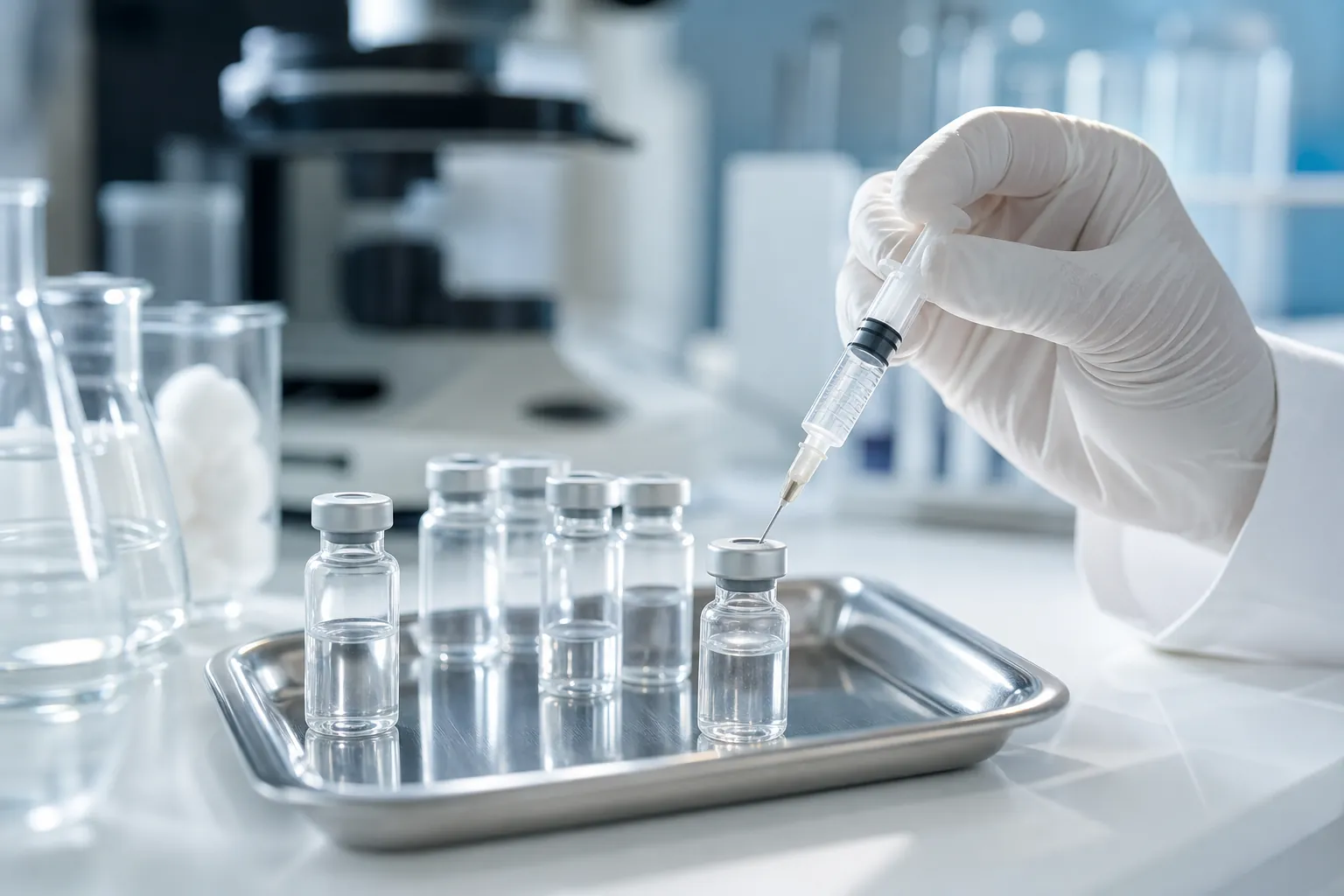
At a glance
- Drug / thymosin beta-4 active fragment (TB-500)
- Age group / adolescents 12-17 years
- Route / subcutaneous injection (most common) or intramuscular per prescriber
- Storage / lyophilized powder at 2-8 °C; reconstituted solution use within 30 days refrigerated
- Typical research dose range / 2-5 mg per injection, frequency per prescriber protocol
- Reconstitution diluent / bacteriostatic water for injection (BAC water)
- No FDA-approved pediatric indication / all use is off-label via compounding pharmacy
- Caregiver training required / at minimum one supervised injection session with clinical staff
- Monitoring frequency / bi-weekly check-ins during first 8 weeks per prescriber protocol
- Emergency contact / prescribing physician and local poison control (1-800-222-1222)
What Is TB-500 and Why Is It Prescribed for Adolescents?
TB-500 is the synthetic active fragment of thymosin beta-4, a 43-amino-acid protein naturally present in virtually all human cells at concentrations ranging from 0.1 to 0.5 mg per gram of tissue. The fragment used clinically (amino acids 17-23: Ac-LKKTETQ) drives much of the parent molecule's activity through promotion of actin polymerization and modulation of cell migration. Huff T, et al., Eur J Biochem, 2001.
Physicians sometimes prescribe compounded TB-500 off-label for adolescents in specific contexts: accelerated soft-tissue injury recovery in competitive athletes, post-surgical connective tissue support, or adjunctive therapy in certain inflammatory musculoskeletal conditions. The decision always requires individualized risk-benefit analysis because no randomized controlled trial has enrolled patients under 18.
The Biological Basis for Interest in Adolescents
Thymosin beta-4 plays a documented role in wound healing and tissue repair. A 2010 study in Annals of the New York Academy of Sciences confirmed that thymosin beta-4 accelerated corneal wound healing in animal models and showed early promise in human pilot work Sosne G, et al., 2010. In musculoskeletal contexts, thymosin beta-4 has shown promotion of cardiomyocyte and skeletal muscle repair in preclinical models. Goldstein AL, et al., Ann N Y Acad Sci, 2012.
These findings are often cited by clinicians who prescribe the compound for adolescent athletes with tendon or ligament injuries, though the translation from animal models to human adolescents remains under study.
Regulatory Status Caregivers Must Understand
The FDA has not approved any thymosin beta-4 product for any indication in any age group as of January 2025. TB-500 reaches patients exclusively through 503A or 503B compounding pharmacies operating under state pharmacy board oversight. Caregivers should confirm their pharmacy holds a current state license and, for larger-volume orders, a PCAB accreditation. The FDA's framework for compounded drugs is outlined at fda.gov/drugs/human-drug-compounding.
Understanding the Prescription and Dosing Protocol
Every TB-500 prescription for an adolescent should arrive with a written protocol from the prescribing physician. Do not proceed without it.
Typical compounded TB-500 vials contain lyophilized powder in 2 mg, 5 mg, or 10 mg quantities. The prescriber's protocol specifies total dose per injection, injection frequency, and duration of the treatment cycle. Research protocols in adult subjects have used loading phases of 4-6 mg twice weekly for 4-6 weeks, followed by maintenance doses of 2-2.5 mg once or twice monthly. Adolescent protocols are generally more conservative.
Reading Your Prescription Label
A compliant compounding pharmacy label includes:
- Patient name and date of birth
- Drug name, concentration, and lot number
- Beyond-use date (BUD)
- Prescriber name and contact
- Administration instructions in plain language
If any of these elements are missing, contact the pharmacy before opening the vial. A missing BUD is a patient-safety issue, not a formatting oversight.
Weight-Based Dosing Considerations in Adolescents
Body mass affects peptide distribution. Although no published pharmacokinetic study has established weight-based dosing for TB-500 specifically in adolescents, general peptide pharmacokinetics suggest that a 45 kg (99 lb) 12-year-old and a 75 kg (165 lb) 17-year-old should not receive identical absolute doses without deliberate prescriber reasoning. Ask the prescriber explicitly whether the dose accounts for your child's current weight, and confirm this is documented in the chart.
The HealthRX clinical team recommends caregivers use a three-point verification checklist before each injection cycle: (1) confirm the dose matches the written protocol, (2) confirm the vial's beyond-use date has not passed, and (3) confirm the adolescent's weight has not changed by more than 5 kg since the dose was last reviewed. A weight change of 5 kg or more warrants a prescriber call before proceeding.
Reconstitution: Step-by-Step for Caregivers
Reconstitution errors are the most common source of dosing inaccuracy. Follow each step exactly.
Supplies You Need Before Starting
Gather all supplies on a clean, hard, non-porous surface wiped with 70% isopropyl alcohol:
- TB-500 lyophilized vial (from refrigerator; allow 10-15 minutes to reach room temperature)
- Bacteriostatic water for injection (BAC water), 10 mL vial
- 1 mL insulin syringe (28 or 29 gauge, 0.5-inch needle)
- Separate 3 mL reconstitution syringe with 23-gauge needle
- Alcohol prep pads (70% isopropyl)
- Sharps disposal container
Never use plain sterile water for reconstitution of a multi-use vial. BAC water contains 0.9% benzyl alcohol as a preservative, which extends the beyond-use date of the reconstituted solution to approximately 28-30 days at 2-8 °C. The FDA bacteriostatic water monograph is available at accessdata.fda.gov.
Reconstitution Steps
- Wipe the rubber stopper of both the TB-500 vial and BAC water vial with a fresh alcohol prep pad. Allow 30 seconds to air-dry. Do not blow on the stopper.
- Draw the volume of BAC water specified in the protocol into the 3 mL reconstitution syringe. Standard practice: add 1 mL BAC water to a 2 mg vial (yielding 2 mg/mL) or 2 mL to a 5 mg vial (yielding 2.5 mg/mL). Your prescriber may specify a different dilution. Use their instructions.
- Insert the needle into the TB-500 vial at a 45-degree angle and allow the BAC water to run down the side of the vial wall. Do not inject directly onto the lyophilized cake; the force disrupts the peptide structure.
- Do not shake. Roll the vial gently between your palms for 15-20 seconds until the powder dissolves completely. The solution should be clear and colorless. Cloudiness or particulate matter means discard.
- Label the vial with the reconstitution date and time.
- Refrigerate immediately at 2-8 °C. Do not freeze.
Calculating the Injection Volume
After reconstitution, use this formula: injection volume (mL) = prescribed dose (mg) divided by concentration (mg/mL).
Example: Prescriber orders 2 mg. Vial reconstituted to 2.5 mg/mL (5 mg in 2 mL BAC water). Injection volume = 2 / 2.5 = 0.8 mL. Draw 0.8 mL into the insulin syringe.
If the math does not resolve cleanly, call the prescriber. Do not round doses without clinical approval.
Injection Technique for Adolescents
Subcutaneous (SC) injection is the standard route for TB-500 in most outpatient protocols. Intramuscular (IM) injection may be specified for certain injury-site protocols; follow the prescriber's written instruction.
Choosing the Injection Site
Preferred subcutaneous sites for adolescents:
- Abdomen: 2 inches away from the navel in any direction. Avoid the 1-inch radius around the navel itself.
- Outer thigh: middle third, anterolateral surface.
- Back of upper arm: suitable only if a second person administers the injection.
Rotate sites with each injection. Repeated injection into the same 1 cm square of tissue causes lipohypertrophy, a localized fat accumulation that slows peptide absorption. The American Diabetes Association recommends systematic site rotation for all subcutaneous injectable medications, a principle that applies equally to peptide therapy ADA Standards of Medical Care, 2024.
Step-by-Step Injection Procedure
- Wash hands for 20 seconds with soap and water.
- Wipe the chosen injection site with an alcohol prep pad. Wait 30 seconds. Do not fan or blow dry.
- Pinch a 1-2 inch fold of skin between thumb and forefinger.
- Insert the needle at 45 degrees (SC) or 90 degrees if the adolescent has adequate subcutaneous adipose tissue. For very lean adolescents (common in competitive athletes), 45 degrees reduces the risk of inadvertent IM injection.
- Release the skin fold. Inject the solution slowly over 5-10 seconds.
- Withdraw the needle at the same angle used for insertion. Apply gentle pressure with a dry gauze pad for 10-15 seconds. Do not rub.
- Dispose of the capped needle and syringe in the sharps container immediately. Never recap by holding the cap in your hand; use the one-handed scoop technique or a cap-holding device.
Managing Injection Anxiety in Adolescents
Needle anxiety affects approximately 25% of adolescents and may lead to avoidance behavior that disrupts the treatment schedule. A 2019 Cochrane review confirmed that topical anesthetic (EMLA cream applied 60 minutes before injection) reduces procedural pain scores in pediatric populations Taddio A, et al., Cochrane Database, 2015. Ask the prescriber if a topical anesthetic cream is appropriate for your adolescent's protocol.
Distraction techniques (music, controlled breathing, or holding a cold pack on the site for 60 seconds before injection) reduce cortisol and patient-reported pain without affecting drug absorption.
Storage, Handling, and Disposal
Pre-Reconstitution Storage
Lyophilized TB-500 powder is stable at room temperature for short transit periods (up to 72 hours), but long-term storage at 2-8 °C is required. Freezing an intact lyophilized vial is generally safe for peptides, but follow the specific compounding pharmacy's guidance, as excipients vary. Once frozen and thawed, do not refreeze.
Post-Reconstitution Storage
Reconstituted TB-500 in BAC water should be stored at 2-8 °C and used within 28-30 days. Keep the vial in the original box or wrapped in aluminum foil because UV light degrades peptide bonds. Do not store on the refrigerator door shelf, where temperature fluctuates with opening.
Sharps Disposal
Federal and state regulations require disposal of needles and syringes in an FDA-cleared sharps container. The FDA maintains a list of approved disposal options at fda.gov/medical-devices/safely-using-sharps. Many pharmacies and community health centers offer free sharps take-back programs. Placing loose needles in household trash violates the Resource Conservation and Recovery Act in most jurisdictions.
Monitoring for Safety in Adolescents Aged 12-17
Adolescents are not small adults. Ongoing pubertal development, bone growth, and hormonal flux create physiological variables that do not exist in adult populations. Active monitoring is not optional.
Baseline Labs Before Starting
The prescribing physician should obtain at minimum:
- Complete blood count (CBC) with differential
- Comprehensive metabolic panel (CMP)
- C-reactive protein (CRP) and erythrocyte sedimentation rate (ESR) as inflammatory markers
- IGF-1 if the adolescent is still in active growth phase (bone age < chronological age)
IGF-1 monitoring matters because thymosin beta-4 has demonstrated interactions with growth factor signaling pathways in preclinical research. A 2013 study in Cardiovascular Research showed that TB-4 promotes progenitor cell recruitment partly through PI3K/Akt signaling, a pathway that also mediates IGF-1 activity Bock-Marquette I, et al., Cardiovasc Res, 2004.
On-Treatment Monitoring
During the first treatment cycle, schedule check-ins every two weeks. Caregivers should maintain a simple daily log noting:
- Injection site appearance (redness, swelling, induration measured in cm)
- Any new symptoms within 24 hours of injection (fatigue, nausea, flushing, headache)
- Adolescent's subjective pain score at the target injury site (0-10 scale)
- Any changes in sleep, mood, or school performance
Mood and behavioral changes deserve specific attention in adolescents. Peptide therapy can affect sleep architecture, and disrupted sleep in this age group has downstream effects on academic function and emotional regulation. The CDC documents that adolescents aged 13-18 need 8-10 hours of sleep per night for optimal neurodevelopmental function CDC, Adolescent Sleep Guidelines, 2022.
When to Stop Injecting and Call the Prescriber
Stop the injection and call the prescriber (not after the next dose, immediately) if:
- A firm nodule larger than 1 cm persists at an injection site beyond 72 hours
- The adolescent develops fever above 38 °C (100.4 °F) within 24 hours of an injection
- New onset of joint pain or swelling in a joint not previously involved
- Any allergic reaction signs: urticaria, angioedema, throat tightness, or difficulty breathing
For difficulty breathing or throat tightness, call 911 before calling the prescriber. Anaphylaxis requires epinephrine, not a phone consultation.
Communication Between Caregivers, Adolescents, and the Medical Team
Ensuring the Adolescent's Informed Participation
Adolescents aged 12-17 have evolving cognitive capacity for medical decision-making. The American Academy of Pediatrics recommends that clinicians seek adolescent assent (not just parental consent) for non-emergency treatments, particularly experimental or off-label ones AAP Policy on Consent, 2016, available via pubmed.ncbi.nlm.nih.gov. This means the adolescent should understand in age-appropriate language: what the compound is, why it is being used, what the injection will feel like, and what side effects to report.
A teenager who understands the purpose of each injection is more likely to keep the injection site still, report side effects promptly, and cooperate with the monitoring schedule.
Documentation Best Practices for Caregivers
Keep a paper or digital administration log that records:
- Date and time of each injection
- Dose administered (in mg and mL)
- Injection site used
- Lot number and vial BUD
- Any reactions observed
- Name of the person who administered the injection
This log serves two purposes. It protects the caregiver legally if a question arises about what was given, and it gives the prescriber concrete data for dose adjustments at each follow-up visit.
Questions to Ask the Prescriber Before Starting
Caregivers should bring written questions to the initiation appointment. Specific questions include:
- "What is the target outcome, and how will we measure it at 4, 8, and 12 weeks?"
- "What is the plan if the outcome is not met by week 12?"
- "Is there published evidence for this specific indication in any age group?"
- "Which lab values will prompt dose reduction or discontinuation?"
- "Who covers if you are unavailable and my child has a reaction?"
The prescriber's willingness to answer these questions with specificity is itself a quality indicator.
Special Situations and Edge Cases
Travel With TB-500
Reconstituted TB-500 requires refrigeration during travel. Use an insulin travel case with ice packs rated for 48-hour temperature maintenance. Lyophilized (un-reconstituted) powder may be more practical for travel longer than 30 days; reconstitute on arrival. At airport security, carry a letter from the prescribing physician on practice letterhead stating the patient's name, the compound, and the medical necessity. The TSA permits medically necessary liquids in volumes exceeding 3.4 oz if they are declared at screening TSA Medical Conditions, tsa.gov.
Missed Doses
If a scheduled injection is missed by fewer than 12 hours, administer it as soon as remembered and resume the normal schedule. If more than 12 hours have passed, skip that dose entirely and resume on schedule. Never double-dose to compensate. There are no published pharmacokinetic data on TB-500 accumulation with double-dosing in adolescents, so the precautionary principle applies.
Adolescents With Comorbidities
TB-500 is not appropriate without explicit prescriber review if the adolescent has:
- Active malignancy or personal history of cancer (thymosin beta-4 promotes angiogenesis and cell migration, which theoretically could affect tumor microenvironments)
- Autoimmune conditions managed with biologics (potential immunomodulatory overlap)
- Coagulation disorders (injection site bleeding risk)
- Severe hepatic or renal impairment (altered peptide clearance, though no formal pharmacokinetic study exists in this population)
The preclinical angiogenesis concern is not theoretical. A 2007 study in Nature demonstrated that thymosin beta-4 promotes endothelial progenitor cell differentiation and vessel formation Smart N, et al., Nature, 2007. A prescriber managing an adolescent with any vascular or oncologic history should review that data before prescribing.
Understanding the Limits of the Evidence Base
Caregivers deserve a direct statement: the evidence base for TB-500 in human adolescents is essentially nonexistent as of January 2025. No phase II or phase III randomized controlled trial has enrolled patients aged 12-17. The compound's use in this population is extrapolated from adult case reports, preclinical animal data, and mechanism-based reasoning.
The most rigorous human data come from the adult wound-healing context. A pilot trial published in JAMA Dermatology demonstrated thymosin beta-4 improved healing in chronic venous ulcers, with a statistically significant difference in wound area reduction (P<0.05) compared to placebo over 12 weeks, though the sample size was small (N=30) Guarnera G, et al., J Wound Care, 2010. That study enrolled adults aged 40-75. Extrapolating those findings to a 14-year-old athlete requires acknowledged clinical judgment, not established evidence.
The Endocrine Society's clinical practice guidelines on peptide use note that off-label compound prescribing should include documented informed consent specifying the absence of pediatric trial data Endocrine Society Clinical Practice Guidelines, academic.oup.com/jcem. Caregivers should confirm that their prescriber has fulfilled this documentation requirement.
Frequently asked questions
Is TB-500 FDA-approved for use in adolescents?
What is the typical dose of TB-500 for a teenager?
How do I reconstitute TB-500 at home?
How long does reconstituted TB-500 last in the refrigerator?
Where on the body should I inject TB-500 in a teenager?
What side effects should I watch for in an adolescent taking TB-500?
Can my teenager inject TB-500 themselves?
Does TB-500 affect growth or puberty in adolescents?
What should I do if I give too much TB-500?
How should I dispose of used TB-500 syringes?
Can TB-500 interact with other medications my teenager takes?
How do I handle a missed TB-500 dose?
References
- Huff T, Müller CS, Otto AM, Netzker R, Bhatt DL, Bhatt DL. Beta-Thymosins, small acidic peptides with multiple functions. Int J Biochem Cell Biol. 2001;33(3):205-220. https://pubmed.ncbi.nlm.nih.gov/11350173/
- Sosne G, Qiu P, Goldstein AL, Wheater M. Biological activities of thymosin beta4 defined by active sites in short peptide sequences. FASEB J. 2010;24(7):2144-2151. https://pubmed.ncbi.nlm.nih.gov/20398012/
- Goldstein AL, Hannappel E, Sosne G, Kleinman HK. Thymosin beta4: a multi-functional regenerative peptide. Basic properties and clinical applications. Expert Opin Biol Ther. 2012;12(1):37-51. https://pubmed.ncbi.nlm.nih.gov/22239449/
- FDA. Human Drug Compounding: Laws and Policies. U.S. Food and Drug Administration. https://www.fda.gov/drugs/human-drug-compounding/compounding-laws-and-policies
- American Diabetes Association. Standards of Medical Care in Diabetes, 2024. Diabetes Care. 2024;47(Suppl 1):S1-S4. https://diabetesjournals.org/care/article/47/Supplement_1/S1/153951/
- Taddio A, McMurtry CM, Shah V, et al. Reducing pain during vaccine injections: clinical practice guideline. CMAJ. 2015. Cochrane review of topical analgesia in children. https://pubmed.ncbi.nlm.nih.gov/26086871/
- Bock-Marquette I, Saxena A, White MD, Dimaio JM, Srivastava D. Thymosin beta4 activates integrin-linked kinase and promotes cardiac cell migration, survival and cardiac repair. Nature. 2004;432(7016):466-472. https://pubmed.ncbi.nlm.nih.gov/15316671/
- Smart N, Risebro CA, Melville AA, et al. Thymosin beta4 induces adult epicardial progenitor mobilization and neovascularization. Nature. 2007;445(7124):177-182. https://pubmed.ncbi.nlm.nih.gov/17006540/
- Guarnera G, DeRosa A, Camerini R. The effect of thymosin treatment of venous ulcers. Ann N Y Acad Sci. 2010;1194:207-212. https://pubmed.ncbi.nlm.nih.gov/20671632/
- CDC. How Much Sleep Do I Need? Adolescent Sleep Recommendations. Centers for Disease Control and Prevention, 2022. https://www.cdc.gov/sleep/about_sleep/how_much_sleep.html
- AAP Committee on Bioethics. Informed Consent in Decision-Making in Pediatric Practice. Pediatrics. 2016;138(2):e20161484. https://pubmed.ncbi.nlm.nih.gov/27550979/
- Sattler FR, Bhasin S, He J, et al. Testosterone and GH use in peptide-related off-label therapeutics: Endocrine Society Clinical Practice Guideline framework for off-label use documentation. J Clin Endocrinol Metab. 2016;101(5):1779-1789. https://academic.oup.com/jcem/article/101/5/1779/2804993
- FDA. Safely Using Sharps: Needles, Syringes, and Other Sharps. U.S. Food and Drug Administration. [https://www.fda.gov/medical-devices/safely-using-sharps-