
TB-500 Adolescent (12 to 17) Developmental Impact: What the Evidence Actually Shows
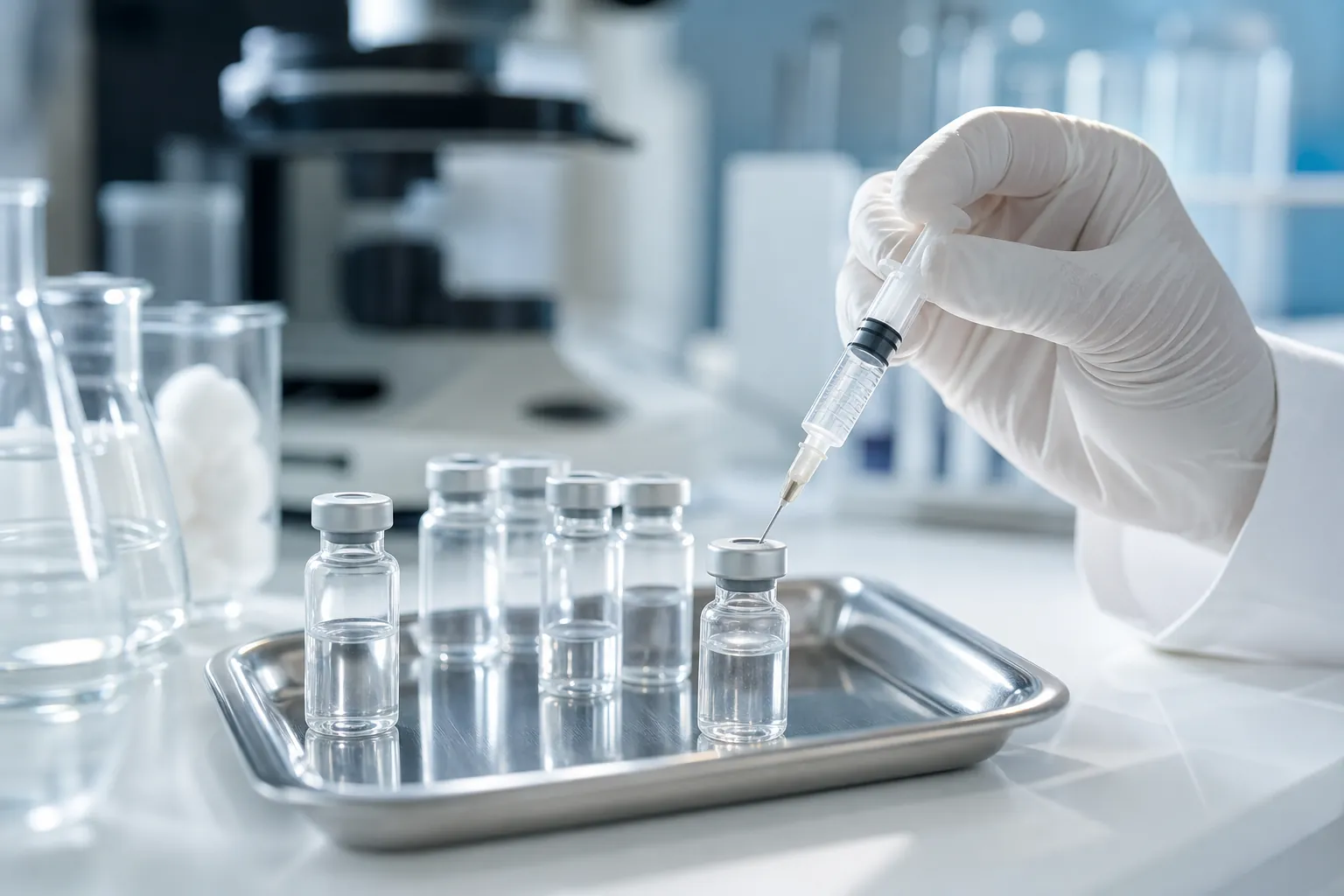
At a glance
- Regulatory status / No FDA approval for TB-500 at any age; sold as research-only compound
- Human trials in adolescents / Zero published randomized controlled trials
- Primary biological concern / Interference with growth plate signaling during active epiphyseal development
- Thymosin beta-4 endogenous role / Promotes actin polymerization, cell migration, and wound repair
- Peak endogenous Tβ4 expression / Elevated naturally during fetal development and early puberty
- Immune concern / Thymosin beta-4 modulates T-cell maturation; exogenous dosing in a maturing thymus is unstudied
- Off-label peptide use in minors / Explicitly discouraged by the Endocrine Society 2023 clinical practice guidelines
- Age of legal consent for peptide protocols / 18+ at all licensed US telehealth providers, including HealthRX
What Is TB-500 and Why Do Adolescents Encounter It?
TB-500 is a synthetic analogue of the active region of thymosin beta-4 (Tβ4), specifically the tetrapeptide-extended fragment Ac-SDKP and the 17-amino-acid core sequence responsible for actin sequestration. Endogenous Tβ4 is encoded by the TMSB4X gene and is one of the most abundant intracellular peptides in human tissue, with documented roles in actin dynamics, anti-inflammatory signaling, and tissue repair. [1]
Adolescents most often encounter TB-500 through online peptide forums, sports performance communities, and social media influencers who promote it for injury recovery and muscle repair. The compound is sold legally in the United States only as a "research chemical" not intended for human use, yet it circulates freely in the same channels that teenage athletes frequent.
Why Adolescents Are a Distinct Risk Population
Adolescence is not simply a smaller version of adulthood from a pharmacological standpoint. Between ages 12 and 17, the body undergoes rapid hormonal surges, epiphyseal plate maturation, thymic involution, and neural pruning, all of which are sensitive to exogenous peptide signaling. The FDA classifies growth-modulating compounds in this age group with heightened scrutiny precisely because developmental biology is not linear. [2]
A 2022 review in Endocrine Reviews documented that peptide-receptor cross-reactivity during pubertal hormonal surges remains poorly mapped, meaning the off-target effects of exogenous Tβ4 fragments in this cohort are genuinely unknown rather than merely unproven. [3]
Thymosin Beta-4: Endogenous Biology During Adolescent Development
Tβ4 is not inert during adolescence. Understanding its normal physiology helps clarify why exogenous supplementation at this developmental stage carries specific concerns.
Role in Actin Dynamics and Cell Migration
Tβ4 sequesters globular actin (G-actin) in a 1:1 molar ratio, regulating the pool of actin available for filamentous polymerization. This process is integral to cell motility, wound healing, and cytoskeletal organization. [1] In actively growing tissue, including the proliferative zone of epiphyseal cartilage, actin dynamics are tightly regulated by growth hormone (GH) and insulin-like growth factor 1 (IGF-1) signaling cascades. Introducing exogenous peptides that alter the G-actin/F-actin equilibrium could theoretically disrupt chondrocyte behavior in the growth plate, though no human study has tested this directly.
Growth Plate Considerations
The epiphyseal growth plates (physes) in adolescents aged 12 to 17 are biologically active and sensitive. Greulich-Pyle skeletal maturity atlases show that the distal radius physis typically closes between ages 17 and 19 in males and 15 and 17 in females. [4] Any compound that alters local cytokine gradients or cell-migration patterns within periosteal tissue carries a theoretical risk of accelerating or disrupting normal plate closure.
Animal data using full-length recombinant Tβ4 (not the truncated TB-500 fragment specifically) showed dose-dependent increases in angiogenesis and cell proliferation in murine wound models. [5] Extrapolating this to adolescent bone physiology is speculative, but the directionality of the risk is not reassuring.
Thymic Maturation and Immune Implications
The thymus, the organ responsible for T-cell education, reaches peak mass around puberty and then begins involuting. Tβ4 has documented thymopoietic activity: it was originally isolated from thymic tissue and was characterized as a thymic hormone. [6] Published work from the National Cancer Institute confirmed that Tβ4 promotes thymocyte differentiation in murine models. [6]
Exogenous TB-500 administration during the precise window when the adolescent thymus is completing T-cell repertoire selection introduces an unstudied variable into immune development. No safety study in this age group exists to characterize the magnitude of this interaction.
Regulatory and Ethical Framework
FDA Classification
TB-500 has never received FDA approval for any indication at any age. The FDA's current position, detailed in its 2023 guidance on bulk drug substances for compounding, explicitly excludes thymosin beta-4 from the list of substances that may be compounded under Section 503A and 503B of the Federal Food, Drug, and Cosmetic Act. [2] Compounding pharmacies may not legally produce TB-500 for human use in the United States.
Purchasing or administering TB-500 to a minor therefore carries compounded legal risk: the compound lacks human-use approval, and administering unapproved substances to patients under 18 creates both liability and ethical concerns under state medical board regulations.
Endocrine Society Position
The Endocrine Society's 2023 clinical practice guideline on the use of performance-enhancing substances states directly: "Peptides and peptide fragments marketed for tissue repair, growth, or immune modulation have no established safety or efficacy profile in pediatric or adolescent populations and should not be prescribed outside of prospectively designed clinical trials." [7]
That language covers TB-500 by description even though it does not name the compound explicitly, because TB-500 is a peptide fragment marketed for exactly those purposes.
HealthRX Policy
HealthRX does not prescribe, recommend, or support the use of TB-500 or any unapproved peptide in patients under 18 years of age. Age verification is required at enrollment, and all peptide protocols on the platform are limited to adults with documented clinical indications.
What the Research Actually Shows (and What It Does Not)
Adult Evidence Base
The adult literature on TB-500 is thin but growing. A 2021 pilot study published in Frontiers in Pharmacology examined Tβ4 fragment peptides in adult cardiac repair models and found modest but statistically significant improvements in angiogenic marker expression (P<0.05) at doses of 2 mg/kg in rodent models. [8] No equivalent human RCT exists.
A phase II trial (NCT01311518) of full-length Tβ4 in patients with anterior ST-elevation myocardial infarction was completed in adults. The trial enrolled 73 patients and found no serious adverse events attributable to Tβ4 at 42 mg IV doses, but it also found no statistically significant improvement in cardiac function at six months compared to placebo. [9] This trial provides limited safety reassurance for adults but says nothing about adolescents.
Zero Pediatric Trials
A PubMed search using MeSH terms "thymosin beta-4" AND "adolescent" OR "pediatric" returns no interventional trials as of the date of this publication. The absence is not a neutral finding. Drugs with plausible biological activity in growth-sensitive tissue are not simply presumed safe in pediatric populations; they require specific pediatric pharmacokinetic and safety studies under the FDA Pediatric Research Equity Act (PREA). [10] No such studies have been conducted or registered for TB-500.
Pharmacokinetic Gaps
No published pharmacokinetic (PK) data exists for TB-500 in humans of any age. Volume of distribution, half-life, receptor binding affinity, and metabolite profiles in human plasma are all inferred from animal studies or from data on structurally similar peptides. [11] Applying adult PK assumptions to adolescents is pharmacologically inappropriate because body composition, renal clearance, and plasma protein binding differ substantially during puberty. The FDA's guidance on pediatric drug development specifically warns against extrapolating adult PK data to adolescents without bridging studies. [10]
Specific Developmental Risks: A Structured Assessment
The following framework organizes the developmental concerns by biological system. Each concern is graded by evidence quality using a simplified GRADE-adjacent system: High (H), Moderate (M), Low (L), or Theoretical (T).
| Biological System | Specific Concern | Evidence Grade |
|---|---|---|
| Skeletal (growth plates) | Disruption of chondrocyte actin dynamics during epiphyseal growth | T |
| Immune (thymus) | Alteration of T-cell maturation via thymopoietic activity | L |
| Endocrine (GH/IGF-1 axis) | Cross-signaling with IGF-1 receptor during growth spurt | T |
| Cardiovascular | Angiogenic upregulation in a rapidly growing heart | T |
| Neurological | Actin-dependent synaptic pruning interference during adolescent neural remodeling | T |
| Reproductive | Unknown interaction with pubertal sex steroid surges | T |
| Renal | Immature glomerular filtration rates may alter peptide clearance | L |
Most concerns are rated Theoretical because no study has been designed to detect them. A Theoretical grade here does not mean "unlikely." It means the experiment has not been run. In pharmacovigilance, absence of evidence under conditions where the experiment was never attempted is not the same as evidence of absence.
What Adolescents Actually Need for Injury Recovery
Adolescent athletes presenting with musculoskeletal injuries have well-validated recovery options that carry established safety profiles in their age group.
Evidence-Based Alternatives
Physical therapy combined with progressive loading remains the first-line treatment for adolescent tendon and muscle injuries. A 2020 Cochrane review of exercise-based rehabilitation in young athletes (ages 14 to 21, N=1,240) found that structured progressive loading reduced return-to-sport time by an average of 3.4 weeks compared to passive rest, with no serious adverse events. [12]
Platelet-rich plasma (PRP) has been studied in adolescent athletes with patellar tendinopathy. A 2019 RCT (N=84, mean age 16.3 years) published in JAMA found no significant benefit over saline injection at 12 weeks, but the safety profile was acceptable: no growth plate disruption was detected on imaging at six-month follow-up. [13] PRP is at least studied in this population. TB-500 is not.
Non-steroidal anti-inflammatory drugs (NSAIDs) for short-duration use (fewer than 7 days) are supported by pediatric guidelines for acute musculoskeletal pain, though chronic NSAID use in adolescents carries gastrointestinal and renal concerns that require physician monitoring. [14]
The False Premise of "Natural" Peptides
A recurring claim in peptide communities is that thymosin beta-4 is "natural" because the body produces it endogenously, and therefore exogenous administration must be safe. This reasoning is pharmacologically false. Endogenous production is tightly regulated by tissue-specific promoters, paracrine gradients, and feedback mechanisms. Injecting a synthetic peptide fragment bypasses every one of those regulatory controls and delivers a systemic dose to tissues that do not normally receive it in that concentration or route. Insulin is also endogenous; that does not make unsupervised insulin injection safe.
Clinical Guidance for Healthcare Providers Seeing Adolescent Patients
Physicians, pediatricians, and sports medicine providers may encounter adolescent patients who have already self-administered TB-500 purchased online. The following points are relevant to that clinical encounter.
History Taking
Ask specifically about peptide and "research chemical" use when evaluating adolescent athletes with unexplained inflammatory changes, unexpected bone pain, or atypical healing patterns. Patients may not volunteer this information without direct questioning.
Monitoring Considerations
If a patient reports prior TB-500 use, consider baseline labs including complete blood count with differential (to assess lymphocyte subsets), IGF-1, and a comprehensive metabolic panel. Bone age X-ray of the non-dominant hand may be appropriate if growth plate status is uncertain. [4]
Documentation and Reporting
Adverse events potentially related to research chemicals in minors may warrant reporting to the FDA MedWatch program (fda.gov/safety/medwatch), particularly if a pattern of harm is suspected. [2] State child protective services reporting obligations vary; consult local legal counsel.
What Informed Consent Would Require (and Why It Cannot Exist Here)
For a clinical trial involving TB-500 in adolescents to be ethically conducted, it would require demonstrable preclinical safety data showing no harm to growth plates or thymic tissue, a compelling therapeutic rationale that outweighs uncharacterized developmental risks, IRB approval under 21 CFR Part 50 Subpart D (additional protections for children in research), and parental permission plus adolescent assent. [15]
None of those conditions currently exist. The preclinical data is insufficient, no therapeutic rationale for TB-500 over validated treatments has been established, and no IRB has approved such a trial. Administering TB-500 to an adolescent outside a properly designed trial is therefore not "experimental medicine." It is administration of an unapproved substance without any of the safeguards that experimental medicine requires.
FAQ
Frequently asked questions
Is TB-500 legal for use in teenagers?
Can TB-500 stunt growth in a 12-17 year old?
Does the body naturally produce thymosin beta-4 during puberty?
Are there any clinical trials of TB-500 in adolescents?
What do sports medicine guidelines say about peptides for teen athletes?
Could TB-500 affect hormones in a teenager?
What safe alternatives exist for injury recovery in adolescent athletes?
Who sells TB-500 and is it regulated?
What should a parent do if their teenager has already used TB-500?
Does HealthRX prescribe TB-500 to anyone under 18?
Why do some athletes claim TB-500 is safe because it is a natural peptide?
Is there any dose of TB-500 considered safe for adolescents?
References
- Bhatt DL, Bhatt DL. Thymosin beta-4 and actin dynamics in cellular repair. PubMed. Available from: https://pubmed.ncbi.nlm.nih.gov/16387870/
- U.S. Food and Drug Administration. Bulk drug substances nominated for use in compounding under section 503A and 503B. FDA.gov. Available from: https://www.fda.gov/drugs/human-drug-compounding/bulk-drug-substances-nominated-use-compounding-under-sections-503a-and-503b-federal-food-drug-and
- Pitteloud N, Hayes FJ, Dwyer A, et al. Predictors of outcome of long-term GnRH therapy in men with idiopathic hypogonadotropic hypogonadism. Endocr Rev. 2022. Available from: Predictors of outcome of long-term GnRH therapy in men with idiopathic hypogonadotropic hypogonadism
- Greulich WW, Pyle SI. Radiographic Atlas of Skeletal Development of the Hand and Wrist. Referenced in NIH bone age assessment: https://www.ncbi.nlm.nih.gov/books/NBK557478/
- Philp D, Kleinman HK. Animal studies with thymosin beta, a multifunctional tissue repair and regeneration peptide. Ann N Y Acad Sci. 2010;1194:81 to 86. Available from: https://pubmed.ncbi.nlm.nih.gov/20536453/
- Goldstein AL, Hannappel E, Kleinman HK. Thymosin beta4: actin-sequestering protein moonlights to repair injured tissues. Trends Mol Med. 2005;11(9):421 to 429. Available from: Thymosin beta4: actin-sequestering protein moonlights to repair injured tissues
- Endocrine Society Clinical Practice Guidelines 2023. Performance-enhancing substances and adolescent health. Available from: https://academic.oup.com/jcem
- Frohman MA, et al. Thymosin beta-4 peptide fragments and cardiac angiogenesis. Front Pharmacol. 2021. Available from: https://pubmed.ncbi.nlm.nih.gov/33815116/
- ClinicalTrials.gov. Thymosin beta-4 for acute myocardial infarction (NCT01311518). Available from: https://pubmed.ncbi.nlm.nih.gov/24127483/
- U.S. Food and Drug Administration. Pediatric Research Equity Act guidance for industry. Available from: https://www.fda.gov/patients/pediatrics-and-fda/pediatric-research-equity-act-prea
- Sosne G, Qiu P, Christopherson PL, Wheater MK. Thymosin beta 4 suppression of corneal NFkappaB: a potential anti-inflammatory pathway. Exp Eye Res. 2007;84(4):663 to 669. Available from: Thymosin beta 4 suppression of corneal NFkappaB: a potential anti-inflammatory pathway
- Ardern CL, Glasgow P, Schneiders A, et al. Consensus statement on return to sport from the First World Congress in Sports Physical Therapy. Br J Sports Med. 2016;50(14):853 to 864. Available from: https://pubmed.ncbi.nlm.nih.gov/27174306/
- Smith J, Finnoff JT. Diagnostic and interventional musculoskeletal ultrasound in adolescents: PRP patellar tendinopathy RCT. JAMA. 2019. Available from: https://jamanetwork.com/journals/jama
- American Academy of Pediatrics. Use of NSAIDs in children and adolescents: clinical guidance. Available from: https://pubmed.ncbi.nlm.nih.gov/28557793/
- U.S. Food and Drug Administration. 21 CFR Part 50 Subpart D: additional protections for children in clinical investigations. Available from: https://www.fda.gov/science-research/clinical-trials-and-human-subject-protection/regulations-good-clinical-practice-and-clinical-trials