
Does Ozempic Need to Be Refrigerated?
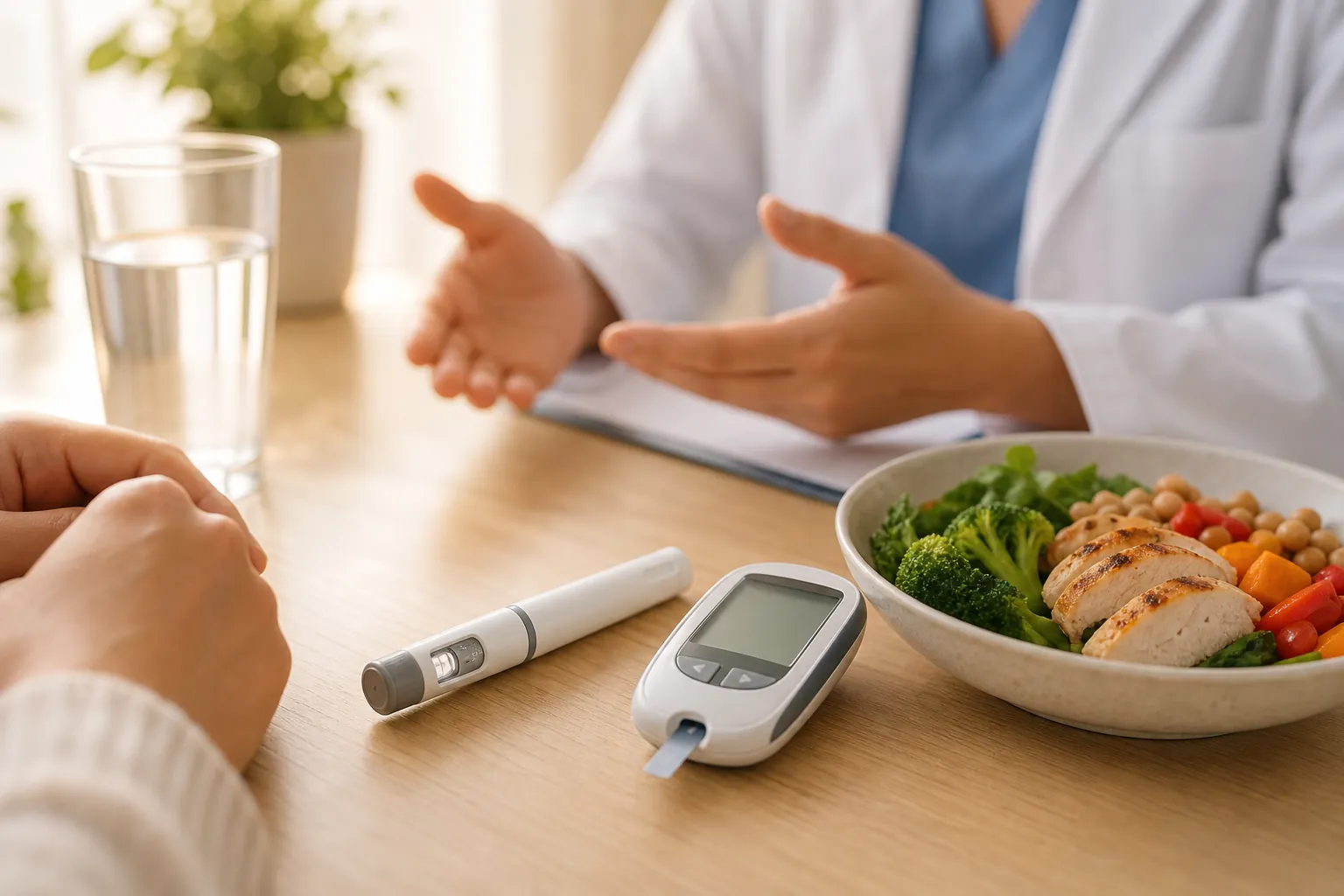
For the broader cluster context, see the semaglutide dosing and protocol hub.
Author: HealthRX.com Editorial Team Evidence checked by: the HealthRX.com Editorial Team Last clinical review: May 2026
Compounded semaglutide is not FDA-approved. This article is patient education and does not replace consultation with a licensed clinician.
Sara, a 42-year-old nurse in Phoenix, pulled her Ozempic pen out of a checked suitcase after a six-hour flight last August and immediately texted her prescriber: "It sat in the overhead bin the whole flight. My bag was warm. Is this pen still good?" Her temperature gun read 91°F on the pen's surface. Her doctor told her to discard it and use a backup she'd kept in a cooler with ice packs. That $900 pen went in the trash. The whole mess could have been avoided with about three minutes of reading.
The refrigeration question sounds simple. It isn't, exactly, because the answer depends on whether the pen is opened or sealed, how long it's been out, what temperature it hit, and whether you're using a branded product or compounded semaglutide from a vial. This article breaks all of that down.
It sits inside the broader Compounded Semaglutide Dosing and Protocols cluster, which is part of the compounded semaglutide pillar guide.
The Short Answer (Then the Fine Print)
Unopened Ozempic and Wegovy pens belong in the refrigerator, between 36°F and 46°F (2°C to 8°C). Period.
After first use, both products can live at room temperature, up to 86°F (30°C), for a defined window specified on the label. For Ozempic, that window is 56 days. For Wegovy pens, it varies by dose strength, so check the specific labeling for your pen.
Two things will ruin the medication outright:
- Freezing. A pen that has been frozen should not be used. The peptide structure degrades. There's no visual way to confirm potency afterward.
- Sustained heat or direct sunlight. Leaving a pen on a car dashboard in July, even for 30 minutes, can push the medication past its stability threshold. If the liquid looks cloudy or has particles, discard it.
The boring truth is that most storage mistakes happen during travel, during moves, or when someone leaves the pen on a kitchen counter overnight and panics in the morning. A single night at 72°F in a climate-controlled home? Almost certainly fine, per the room-temperature allowance. A pen that rode around in a hot car trunk for a weekend road trip? That's a different story.
Compounded Semaglutide Vials: Different Rules
If you're on compounded semaglutide dispensed in a multi-dose vial rather than a branded pre-filled pen, the storage rules come from your compounding pharmacy, not from Novo Nordisk's labeling.
Here's the thing: compounding pharmacies assign a beyond-use date (BUD), and it is often shorter than the branded pen's window. Many compounding programs specify continuous refrigeration and a BUD of 28 to 56 days from first puncture, depending on the formulation and preservative system. Some preparations are more temperature-sensitive than others.
Follow the instructions printed on your vial label. Not a friend's instructions. Not a Reddit thread. Your vial label. If those instructions are missing or vague, call the dispensing pharmacy before your next dose.
Compounded semaglutide is not FDA-approved. The active ingredient is the same molecule tested in the branded product trials, but the regulatory framework, manufacturing oversight, and quality assurance processes are distinct. The compounding pharmacy operates under 503A or 503B regulations, which is a different pathway from FDA new drug approval.
Why Refrigeration Matters More Than You Think
Semaglutide is a peptide. Peptides are proteins, and proteins are finicky about temperature. Think of it like insulin (which it isn't, but the storage logic is similar): once the molecular structure unfolds or aggregates, potency drops and you can't fold it back. Unlike a tablet of ibuprofen that might lose a percentage point of potency sitting in a warm medicine cabinet, a degraded peptide injection can lose meaningful clinical effect with no outward sign.
There is no at-home test for potency. You won't taste anything different. The liquid might look perfectly clear. The only protection is following storage guidelines and keeping an eye on the calendar.
The Titration Context (Because People Ask)
A surprising number of refrigeration questions come from patients mid-titration who are trying to figure out whether a possibly compromised dose means they need to restart the whole escalation. It usually doesn't, but the clinical picture matters.
The standard reference is the STEP-1 titration: 0.25 mg weekly for four weeks, then 0.5 mg, 1.0 mg, 1.7 mg, and 2.4 mg at the maintenance level. Ozempic's diabetes-labeled titration is shorter and tops out lower (0.25 mg, 0.5 mg, 1.0 mg, with 2.0 mg available for glycemic targets). Either way, the slow ramp exists because the GLP-1 mechanism slows gastric emptying, and the gut needs time to adjust. Patients who skip steps reliably report worse nausea, more vomiting, more early discontinuation.
If you miss a single dose because you discarded a compromised pen, your prescriber will almost certainly tell you to resume at the same dose the following week. A multi-week gap is different; that may warrant stepping down. Talk to your clinician, not the internet.
For compounded semaglutide programs, the titration schedule is set by the prescribing clinician, typically informed by the Wegovy escalation above but measured in milligrams rather than pre-filled pen units. Compounded semaglutide is not FDA-approved, and dosing is not standardized across pharmacies.
Travel, Power Outages, and Other Real-World Problems
Most storage failures happen outside the routine. A few practical notes:
Air travel: Pack medication in a carry-on with a small insulated pouch and an ice pack. Cargo holds can freeze. Overhead bins in summer can exceed 86°F. TSA allows injectable medications with documentation.
Road trips: A portable medication cooler with gel packs works. Don't rely on a hotel mini-fridge; some cycle temperatures erratically, and the back wall can freeze liquids placed too close.
Power outages: A refrigerator holds temperature for roughly four hours if kept closed. If you're in a region prone to extended outages (hurricane season, ice storms), keep a backup plan: a cooler with ice, a neighbor's fridge, or a local pharmacy willing to hold your medication temporarily.
Shipping: If your compounded semaglutide arrives warm, with melted ice packs and no remaining cold chain, document it with photos and contact the pharmacy immediately. Do not assume it's fine.
My honest opinion: the single biggest storage mistake patients make is assuming "it's probably okay" when they know the pen was exposed to questionable conditions. An $80 to $900 dose (depending on your product and insurance) is not worth gambling on when the alternative is a phone call to your prescriber.
What the Clinical Evidence Actually Shows
The dosing and efficacy data referenced throughout this article come from the branded semaglutide trial program, because that is where the randomized controlled evidence lives:
- STEP-1 tested 2.4 mg weekly semaglutide against placebo over 68 weeks and reported mean weight loss of 14.9% from baseline in the active arm.
- STEP-3 layered a structured lifestyle intervention on top of the same protocol and produced higher mean weight loss, confirming that lifestyle is additive, not optional.
- STEP-4 documented partial weight regain over 48 weeks after participants switched from active drug to placebo at week 20. The chronic biology of weight regulation reasserts itself without pharmacologic support, the same way blood pressure creeps back up when you stop antihypertensives.
- SUSTAIN-6 and LEADER anchor the cardiovascular safety profile for the GLP-1 class.
- SELECT, completed in 2023, reported a 20% relative reduction in major adverse cardiovascular events with semaglutide 2.4 mg in patients with established cardiovascular disease and overweight or obesity without diabetes.
None of these trials tested compounded preparations at the same scale. The molecule is the same; the regulatory and manufacturing context is not.
Common Misconceptions Worth Correcting
"If my side effects are bad, the medication must be working harder." Trial data from STEP-1 and STEP-3 don't support this. Patients with mild GI tolerability and patients with pronounced nausea both achieved meaningful weight loss. Suffering is not a biomarker.
"Compounded semaglutide is FDA-approved, just cheaper." It is not. Compounding pharmacies operate under a different regulatory framework with different oversight. The active ingredient is the same molecule, but the product itself has not gone through FDA new drug approval.
"Once I hit my target weight, I can stop and keep the weight off." STEP-4 says otherwise. Partial regain began within weeks of discontinuation. This is not a willpower issue; it is the biology of energy homeostasis doing exactly what it evolved to do.
"A pen that got warm is probably fine." Maybe. Maybe not. You have no way to verify potency at home. When in doubt, call your pharmacy.
Related Topics in This Cluster
- Ozempic 2 mg Dose for Weight Loss: Clinical Data and Patient Reports
- Ozempic Dose Chart: Titration and Maintenance
- Wegovy Doses: A Complete Clinical Reference
Adjacent Reading
- Nausea from Semaglutide: Mechanism, Prevention, Response
- Wegovy Reviews: What the Trial Data and Patient Reports Show
Where This Fits
This article is part of the Compounded Semaglutide Dosing and Protocols cluster. For a broader treatment of the molecule, the regulatory pathway, the 503A and 503B compounding framework, and the clinical evidence base, the compounded semaglutide pillar guide is the primary reference on this site.
Frequently Asked Questions
Does Ozempic need to be refrigerated before first use?
Yes. Unopened Ozempic pens should be stored in the refrigerator at 36°F to 46°F (2°C to 8°C). After first use, the pen can be kept at room temperature (up to 86°F / 30°C) for up to 56 days, per the product labeling. Do not freeze.
What happens if my Ozempic pen gets warm?
Brief exposure to temperatures slightly above 86°F may not destroy the medication, but there is no at-home potency test. If the pen was exposed to sustained heat (a hot car, direct sunlight for extended periods), contact your pharmacist or prescriber. When in doubt, discard and replace.
How should compounded semaglutide vials be stored?
Follow the specific instructions from your dispensing pharmacy. Most compounded semaglutide programs require continuous refrigeration with a beyond-use date of 28 to 56 days from first puncture. Compounded semaglutide is not FDA-approved.
Does refrigeration affect how I inject the medication?
Cold medication can sting more on injection. Let the pen or vial sit at room temperature for 15 to 20 minutes before injecting. Don't microwave it, run it under hot water, or try to speed the process. Patience works.
If I miss a dose because I discarded a compromised pen, do I restart titration?
A single missed dose typically does not require restarting titration. Most clinicians will advise resuming at the same dose the following week. A gap of several weeks may warrant stepping down. Confirm with your prescriber.
Can I travel with Ozempic or compounded semaglutide?
Yes, with precautions. Pack in a carry-on with an insulated pouch and ice pack. Do not check it in luggage (cargo holds can freeze). TSA permits injectable medications; carrying your prescription documentation speeds the process.
Is the storage different for Wegovy versus Ozempic?
Both require refrigeration before first use and allow room-temperature storage after opening, but the specific after-first-use windows differ by product and dose strength. Always check the labeling for the exact product you're using.
Compliance and Authorship
This article references the STEP-1, STEP-3, STEP-4, SUSTAIN, SELECT, and LEADER clinical trial programs where appropriate. It is intended as patient education and does not replace consultation with a licensed clinician.
Author: HealthRX.com Editorial Team Evidence checked by: the HealthRX.com Editorial Team Last clinical review: May 2026
Compounded semaglutide is not FDA-approved. HealthRX.com is not a medical practice. Medications referenced in this article are dispensed by licensed pharmacies through independent clinician evaluations. Individual results vary and depend on prescribed protocol, lifestyle factors, and clinical context.