
How Do You Stop Sulfur Burps on Semaglutide?
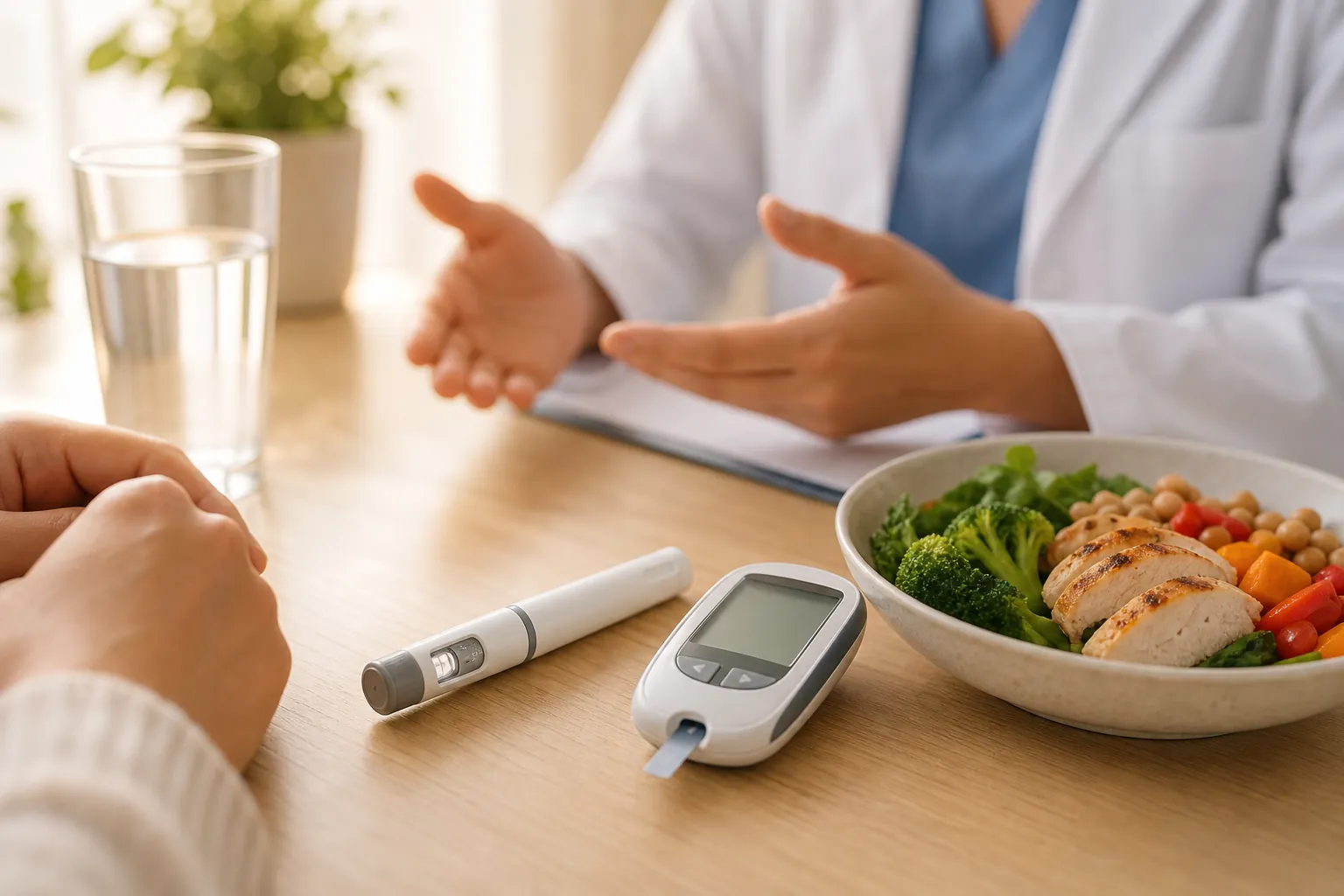
For the broader cluster context, see the semaglutide long-term maintenance hub.
Author: HealthRX.com Editorial Team Evidence checked by: the HealthRX.com Editorial Team Last clinical review: May 2026
Compounded semaglutide is not FDA-approved. This article is patient education and does not replace consultation with a licensed clinician.
Rachel, 41, a dental hygienist in Chandler, Arizona, was ten weeks into compounded semaglutide (0.5 mg weekly) when she messaged her prescriber at 6:30 a.m. on a Tuesday. "I just burped and my husband left the bedroom," she wrote. "It smells like rotten eggs. Is this normal? I can't go to work like this." Her provider replied within the hour: skip the eggs and onion for 48 hours, eat smaller meals, and call if it persists past the weekend. By Friday, the sulfur burps were gone. She stayed on therapy and lost another 14 pounds over the next three months.
Her experience is common enough that it shows up constantly in patient forums, clinic inboxes, and the questions people type into search bars at odd hours. So let's talk about what's actually happening, what works, and when to worry (spoiler: almost never).
This guide sits inside the broader Semaglutide Long-Term and Maintenance cluster, which is part of the compounded semaglutide pillar guide.
Why Semaglutide Causes That Rotten-Egg Taste
The boring truth is that sulfur burps are a plumbing problem.
Semaglutide slows gastric emptying. That's part of how it works: food sits in the stomach longer, you feel fuller, you eat less. But when food lingers, bacteria get to work on it. Sulfur-containing amino acids in foods like eggs, dairy, garlic, onions, and cruciferous vegetables break down into hydrogen sulfide gas. That gas has to go somewhere, and "up" is the path of least resistance.
The symptom is most common in the first few weeks of therapy or right after a dose increase, when the gut is adjusting to a new speed of transit. For most patients, it fades as the body acclimates. It's benign. Unpleasant, sometimes mortifying, but benign.
What Actually Stops Them
There's no prescription fix for sulfur burps specifically. The interventions are dietary and behavioral, and they work well for the majority of patients.
Reduce the sulfur load. In the 24 to 48 hours after your weekly injection (when gastric slowing peaks), cut back on eggs, garlic, onions, broccoli, cauliflower, cabbage, and high-fat dairy. You don't have to eliminate them permanently. Just time them away from the window when your stomach is slowest.
Eat smaller meals. A stomach that's emptying slowly doesn't need a large volume of food sitting in it. Three smaller meals, or even four to five mini-meals, reduce the fermentation substrate.
Avoid carbonated drinks. Sparkling water, soda, beer. They add gas to a system that's already producing too much of it.
Stay upright after eating. Lying down slows emptying further and traps gas.
Consider a short course of simethicone. Over-the-counter Gas-X won't address the root cause, but it can break up gas bubbles and reduce the intensity of belching episodes while dietary changes take effect.
Here's the thing: these adjustments tend to work within days, not weeks. If you've made all of them and you're still getting sulfur burps three or four weeks later, that's worth a call to your prescriber. Not because it's dangerous, but because there may be a dose-timing or meal-timing adjustment that a clinician can fine-tune better than a search engine can.
When Sulfur Burps Are Actually a Problem
For the vast majority of patients, they aren't. But there are a few situations where the symptom deserves clinical attention rather than home management:
- Sulfur burps accompanied by vomiting, severe abdominal pain, or inability to keep fluids down. These could signal gastroparesis or a more significant motility issue.
- Symptoms that appeared suddenly after months of stable dosing with no dietary change. That pattern is unusual and worth investigating.
- Burps with a fecal (not just sulfur) odor. This is rare but can indicate a different GI issue unrelated to semaglutide.
The honest assessment: most people who search "how do you stop sulfur burps on semaglutide" are experiencing something annoying but self-limiting. A minority need medical input. Almost nobody needs to stop therapy because of this symptom alone.
Does Side Effect Intensity Predict How Well the Drug Works?
No. This is one of the most persistent misconceptions in GLP-1 communities, and the trial data simply don't support it. In the STEP-1 and STEP-3 programs, patients with mild GI tolerability and patients with pronounced GI symptoms both achieved meaningful weight loss. There's no correlation between how miserable your stomach feels and how much weight you'll lose.
If anything, the patients who learn to manage GI side effects early (through the dietary adjustments above, through dose-timing tweaks, through communication with their prescriber) tend to stay on therapy longer. And staying on therapy longer is what actually predicts outcomes.
The Chronic-Condition Framing Matters Here
Understanding why sulfur burps happen requires understanding what semaglutide is doing to your gut. And understanding that requires accepting a framework that a lot of patients resist: this is a chronic therapy for a chronic condition.
The STEP-4 trial is the clearest evidence for this framing. Patients who completed a 20-week run-in on active drug were randomized to either continue at 2.4 mg or switch to placebo. The placebo group regained roughly two-thirds of the weight they'd lost over the next 48 weeks. The active group continued to lose modest additional weight.
The takeaway isn't that the drug "stops working" when you stop it. The takeaway is that obesity's underlying biology reasserts itself without pharmacologic support, the same way blood pressure climbs when you discontinue your antihypertensive. Sulfur burps, in this context, are a side effect of a medication you may be on for a long time. That makes learning to manage them a practical skill, not a temporary inconvenience.
STEP-3 adds another layer. That trial paired semaglutide with a structured lifestyle intervention and produced greater mean weight loss than STEP-1, which used the medication with standard counseling alone. Translation: the dietary changes that help with sulfur burps (smaller meals, less high-fat food, more attention to what you eat and when) are the same changes that improve weight loss outcomes on the drug. Two problems, one set of solutions.
What About Restarting After a Break?
Some patients take a break from therapy (insurance gaps, supply issues, personal choice) and then restart. A quick note on this, because sulfur burps tend to come back during re-titration.
Restarting after a multi-month gap means resuming titration from a lower dose rather than jumping back to where you left off. This isn't just about rebuilding GI tolerability (though it is partly that). It also gives your prescriber a chance to reassess your clinical picture before ramping back up. Expect the sulfur burps to reappear during those early re-titration weeks. The same dietary management applies.
A Note on Compounded Preparations
Compounded semaglutide uses the same active molecule as Wegovy and Ozempic. The clinical evidence base from the SUSTAIN, STEP-1, STEP-3, STEP-4, LEADER, and SELECT trials applies to semaglutide as a molecule. But compounded preparations are not FDA-approved, and the regulatory pathway, oversight, and supply chain for compounded products are distinct from branded versions. Compounded semaglutide has not been independently tested in randomized trials at the same scale.
What this means practically: the side effect profile (sulfur burps included) should be essentially the same because the molecule is the same. But your relationship with your prescribing clinician matters more with compounded preparations, not less. A program that responds to side effects with appropriate adjustments and provides clear follow-up between refills is worth more than a program with slick marketing and nobody answering the phone when your burps smell like a hot spring.
Related Topics in This Cluster
- How to Taper Off Wegovy
- Tapering Off Ozempic: A Clinical Framework
- When Can I Resume Semaglutide After Surgery?
Adjacent Reading
- Strength Training on Compounded Semaglutide
- Ozempic 2 mg Dose for Weight Loss: Clinical Data and Patient Reports
Where This Fits
This article is part of the Semaglutide Long-Term and Maintenance cluster. For a broader treatment of the molecule, the regulatory pathway, the 503A and 503B compounding framework, and the clinical evidence base, the compounded semaglutide pillar guide is the primary reference on this site.
Frequently Asked Questions
What causes sulfur burps on semaglutide?
Semaglutide slows gastric emptying, which allows bacteria in the stomach and upper GI tract to ferment sulfur-containing foods (eggs, garlic, onions, cruciferous vegetables, dairy). The byproduct is hydrogen sulfide gas, which produces that distinctive rotten-egg smell. It's most common in the first weeks of therapy or after a dose increase.
Do sulfur burps mean the medication is working?
Not necessarily. The STEP-1 and STEP-3 trials showed no correlation between GI side effect severity and weight loss outcomes. Some patients lose significant weight with minimal GI symptoms. Others have pronounced side effects and more modest results. They're a sign that the drug is slowing gastric emptying, which is one of its mechanisms, but they aren't a reliable proxy for efficacy.
How long do sulfur burps last on semaglutide?
For most patients, they're most pronounced in the first two to four weeks at a given dose and then taper off as the gut adjusts. If you've made dietary adjustments (smaller meals, reduced sulfur-heavy foods around injection day) and they persist beyond three to four weeks, contact your prescriber.
Is tapering off semaglutide necessary?
There's no defined withdrawal syndrome with semaglutide, but most clinicians taper to allow appetite signals to return gradually and to make it easier to assess maintenance habits at lower doses.
What happens to weight after stopping semaglutide?
STEP-4 showed that switching from active drug to placebo at week 20 was followed by partial regain of lost weight (roughly two-thirds) over the subsequent 48 weeks. The pattern is consistent with the chronic-condition framing of obesity.
Can a patient restart semaglutide after a long break?
Yes. Restarting after a multi-month gap typically involves resuming titration from a lower step rather than going directly to the prior maintenance dose, both for tolerability and clinical safety. Expect the early side effects (including sulfur burps) to recur during re-titration.
Should I stop semaglutide because of sulfur burps?
Almost never. Sulfur burps are benign and manageable with dietary adjustments. The only scenarios that warrant stopping (or pausing) therapy are severe GI symptoms like persistent vomiting, inability to keep fluids down, or significant abdominal pain, and those decisions should always be made with your prescriber rather than unilaterally.
Compliance and Authorship
This article references the STEP-1, STEP-3, STEP-4, SUSTAIN, SELECT, and LEADER clinical trial programs where appropriate. It is intended as patient education and does not replace consultation with a licensed clinician.
Author: HealthRX.com Editorial Team Evidence checked by: the HealthRX.com Editorial Team Last clinical review: May 2026
Compounded semaglutide is not FDA-approved. Not FDA-approved. HealthRX.com is not a medical practice. Medications referenced in this article are dispensed by licensed pharmacies through independent clinician evaluations. Individual results vary and depend on prescribed protocol, lifestyle factors, and clinical context.