
Sleep and Compounded Semaglutide
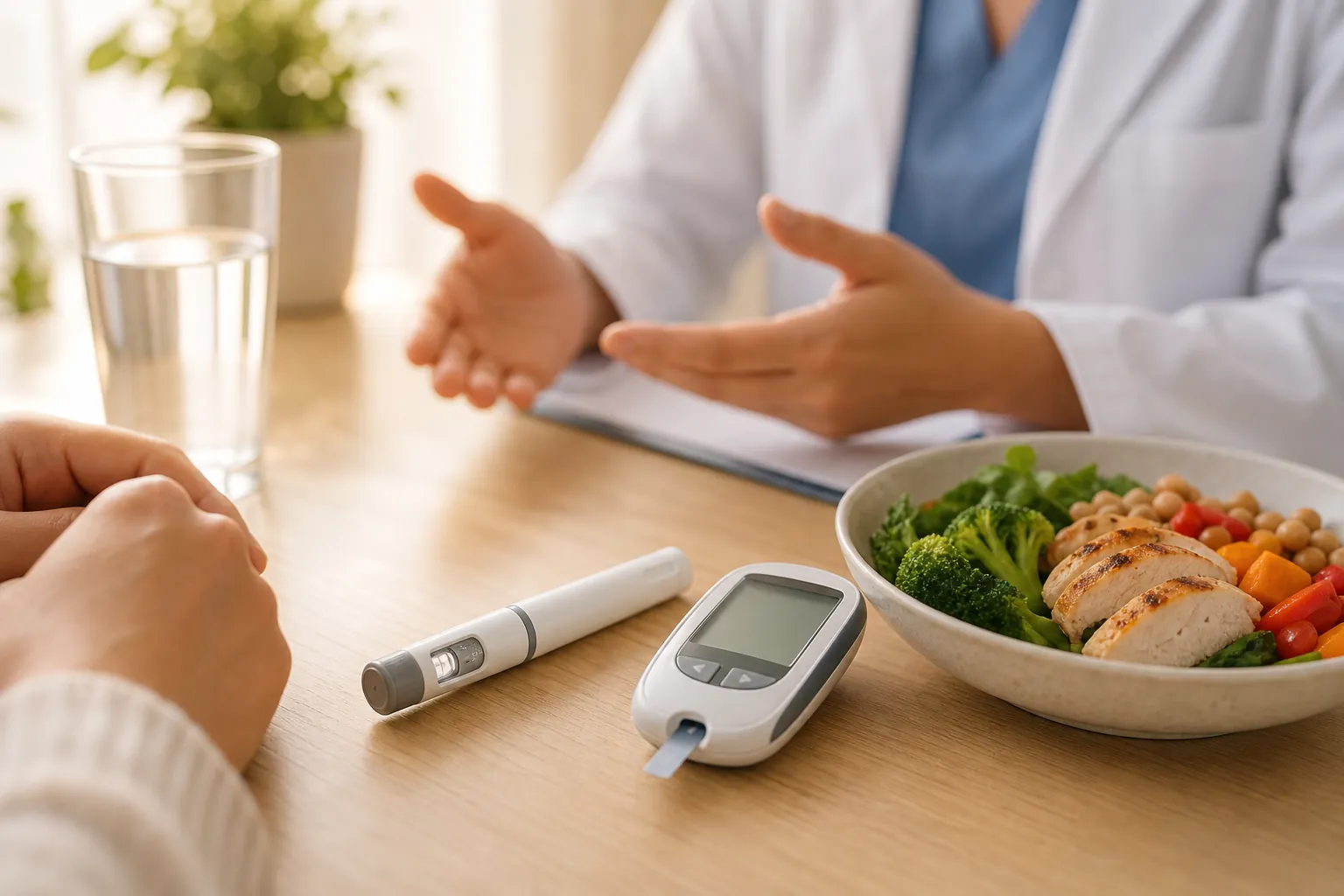
For the broader cluster context, see the semaglutide lifestyle and adherence hub.
Author: HealthRX.com Editorial Team Status: Patient education content, pending qualified clinician review
Compounded semaglutide has not received FDA approval. The information here is meant to educate patients and should not be used instead of talking to your doctor.
The quick version
Compounded semaglutide contains the same active molecule used in the FDA-approved products Wegovy and Ozempic, but it is prepared by a licensed compounding pharmacy under an individual prescription and is not itself FDA-approved. The clinical evidence base for semaglutide comes from trials of the branded, FDA-approved products, including STEP-1, STEP-3, and STEP-4, along with SUSTAIN, LEADER, and SELECT. No randomized trial of comparable size has tested compounded semaglutide specifically, so anything below drawn from the branded-product trials should be read as evidence about the molecule, not proof of identical results from a compounded preparation.
Sleep affects appetite hormones, glucose regulation, food-related decision-making, and follow-through on exercise. Once a GLP-1 medication has already reduced how much a person eats, these secondary factors matter more per remaining calorie. Sleep is one of the more overlooked variables in GLP-1 therapy outcomes, though the evidence linking it specifically to compounded semaglutide users has not been separately studied.
Why sleep matters more once appetite is suppressed
Semaglutide lowers appetite, which narrows the amount of food a person is working with each day. Someone eating 2,400 calories before treatment who now eats 1,500 has less margin for error: protein intake, meal timing, and the hormonal state a person brings to each meal all carry more weight. It is similar to driving on a quarter tank instead of a full one. A wrong turn barely registers with a full tank; with a quarter tank, every mile counts.
In STEP-3, semaglutide combined with an intensive behavioral counseling program produced greater mean weight loss than semaglutide alone did in STEP-1 (Wadden et al., 2021; Wilding et al., 2021). These were separate trials with different designs, not a head-to-head comparison, so the difference cannot be attributed to lifestyle support alone with certainty. Still, the direction is consistent with the idea that behavioral support is additive rather than optional: the medication drives the caloric reduction, and daily habits, sleep among them, shape composition and whether results hold.
How sleep loss can work against GLP-1 therapy
Sleep duration affects ghrelin and leptin, the two hormones most directly tied to hunger and fullness signaling. Semaglutide acts through GLP-1 receptor agonism, a separate pathway, so ghrelin and leptin continue to respond to sleep independent of the medication. Short sleep tends to raise ghrelin and lower leptin, which can mean waking up hungrier and feeling full less reliably, even with the medication on board.
Sleep quality, apart from total duration, affects executive function, the mental processes involved in planning and impulse control. Poor sleep is associated with worse in-the-moment food choices and skipped exercise. These are predictable cognitive effects of poor sleep, not failures of willpower.
Sleep timing also affects glucose regulation through circadian pathways separate from GLP-1 signaling. Irregular bedtimes and late-night eating have documented effects on insulin sensitivity that a GLP-1 medication does not fully offset.
Some sources describe a general association between short sleep and poorer weight-loss outcomes across dieting populations. That association has not been specifically studied in people using compounded semaglutide, so treat it as a plausible contributing mechanism rather than a confirmed, quantified effect in this population. If a clinician or researcher can point to a source with a specific effect size for this population, that number should replace this general statement.
Practical starting points a prescriber may raise: a consistent sleep and wake schedule, limiting large meals close to bedtime, watching alcohol and screen use before bed, and evaluating for sleep disorders such as obstructive sleep apnea, which is common among people using GLP-1 therapy for weight management.
Plateaus: what they usually are, and are not
Many clinicians describe a plateau as three or more weeks without scale movement during active therapy at a stable dose. Plateaus are common and often reflect a new caloric equilibrium at current intake and activity levels rather than the medication failing.
Daily weight can fluctuate a few pounds from water balance, glycogen stores, hormonal cycling, sodium intake, and bowel patterns. A single weigh-in can be misleading; a weekly average tracked over several weeks gives a more reliable picture.
The interventions clinicians typically try before a dose change are lifestyle-first: reviewing sleep, increasing protein, adding resistance training, and rechecking portion sizes. In STEP-4, participants who continued semaglutide after week 20 kept losing weight, while those switched to placebo regained a meaningful portion of the weight they had lost by week 48 (Rubino et al., 2021). That trial was about stopping the medication entirely, not about dose adjustments mid-treatment, but it illustrates that weight regulation biology reasserts itself once pharmacologic support is removed, which is one reason clinicians are often cautious about changing a working regimen based on a short plateau. If lifestyle adjustments do not move a plateau over roughly six to eight weeks at a stable dose, a dose conversation with the prescribing clinician is a reasonable next step. Dose changes are a decision made with the prescriber, not a self-directed one.
Sleep-and-plateau decision framework
This is a general framework for thinking through a stall in weight loss on compounded semaglutide. It does not replace an individual conversation with a prescriber.
| Situation | What it usually points to | Reasonable next step | When to involve your prescriber |
|---|---|---|---|
| Weight stalled 3+ weeks, averaging under 7 hours of sleep, schedule has been irregular | Sleep and circadian disruption may be blunting the hormonal and behavioral side of weight loss | Stabilize bedtime and wake time, limit late meals and alcohol before bed, recheck weight as a weekly average | If the plateau persists after 6 to 8 weeks of consistent sleep and other lifestyle steps |
| Weight stalled, sleep is consistent and 7+ hours, but protein intake or activity has drifted | Caloric or macronutrient equilibrium at current habits, not a sleep issue | Review protein target and resistance training frequency before assuming sleep is the cause | If adjustments do not change the trend over several weeks |
| New snoring, gasping during sleep, witnessed breathing pauses, or morning headaches | Possible undiagnosed obstructive sleep apnea, common in this population | Raise it with a clinician for a sleep evaluation regardless of weight-loss timeline | Promptly; this is a medical evaluation, not a lifestyle tweak |
| Plateau persists 6 to 8 weeks despite stable sleep, protein, and activity | Current dose may have reached its effect ceiling for this person | Prepare specifics (sleep pattern, food log, activity) for a dose discussion | Yes, this is the point to schedule that conversation |
| Rapid unexplained weight loss, severe or worsening insomnia, new chest pain, fainting, or other acute symptoms | Not a routine plateau or lifestyle issue | Do not self-manage or wait for a routine follow-up | Contact the prescriber or seek urgent care promptly |
Exceptions worth naming: shift workers and people with irregular schedules may not be able to hit a fixed bedtime, so the target should be consistency in total sleep duration rather than a specific clock time. People with diagnosed sleep apnea already on treatment (such as CPAP) should have that treatment reviewed for adherence before assuming sleep duration alone is the issue.
Common misconceptions worth correcting
"Compounded semaglutide has the same regulatory status as Wegovy or Ozempic." It does not. Wegovy and Ozempic are FDA-approved products with their own labeling (Wegovy label; Ozempic prescribing information). Compounded semaglutide is prepared by a compounding pharmacy under a different regulatory framework and is not FDA-approved.
"Worse side effects mean the drug is working harder." Trial data do not support this. In STEP-1 and STEP-3, participants with mild gastrointestinal side effects and participants with significant nausea both achieved meaningful weight loss.
"The medication does all the work." In STEP-3, adding structured behavioral support to semaglutide was associated with greater mean weight loss than semaglutide alone in STEP-1. Lifestyle factors, including sleep, appear to matter for the size and durability of results, even though the two trials cannot be compared as a controlled head-to-head test.
"Sleep is a nice-to-have, not a clinical variable." Ghrelin, leptin, cortisol, insulin sensitivity, and executive function all shift with inadequate sleep, and all plausibly affect outcomes on GLP-1 therapy, even though the specific size of that effect in compounded semaglutide users has not been measured directly.
Related topics in this cluster
- Semaglutide Plateau: Why Weight Loss Stalls and What to Do
- Does Semaglutide Increase Metabolism?
- Semaglutide and Sleep Apnea: The SURMOUNT-OSA Adjacent Evidence
Adjacent reading
- Semaglutide Treatment: What a Course of Therapy Looks Like
- When Can I Resume Semaglutide After Surgery?
Where this fits
This article is part of the Semaglutide Lifestyle and Adherence cluster. For the regulatory pathway, the 503A and 503B compounding framework, and the broader clinical evidence base, see the compounded semaglutide pillar guide.
Frequently asked questions
Does activity affect weight loss on semaglutide?
Resistance training during weight loss helps preserve lean mass, which matters for long-term metabolic rate and body composition. In STEP-3, semaglutide combined with a structured lifestyle intervention including physical activity produced greater weight loss than semaglutide alone did in STEP-1, though the two trials were not designed as a direct comparison.
What is a weight loss plateau on semaglutide?
Many clinicians describe a plateau as three or more weeks without scale movement during active therapy. It is common and often reflects a new caloric equilibrium rather than the medication failing. Reviewing sleep, protein intake, and resistance training are typical first steps before a dose change is discussed.
Does sleep really matter that much?
Sleep affects ghrelin, leptin, glucose regulation, and the daily decisions that drive food and activity choices. General population research links inadequate sleep with poorer weight-loss outcomes, though this hasn't been specifically studied in people using compounded semaglutide. It is a reasonable variable to check during a plateau, not a proven fix.
Can poor sleep cause weight gain even on semaglutide?
It can slow or stall weight loss. Sleep deprivation raises ghrelin, lowers leptin, and impairs the executive function involved in consistent food and activity choices. The medication blunts appetite through a separate pathway, but it does not override all of these effects.
Should I change my dose if I hit a plateau?
Not usually as a first step. Reviewing sleep, protein intake, resistance training, and portion sizes is the typical starting point. If a plateau persists for roughly six to eight weeks despite those adjustments, a dose conversation with the prescribing clinician is reasonable. Dose changes are made with a prescriber, not on a self-directed basis.
References
- Wilding JPH, et al. Once-Weekly Semaglutide in Adults with Overweight or Obesity (STEP-1). https://pubmed.ncbi.nlm.nih.gov/33567185/
- Wadden TA, et al. Effect of Subcutaneous Semaglutide vs Placebo as an Adjunct to Intensive Behavioral Therapy on Body Weight (STEP-3). https://pubmed.ncbi.nlm.nih.gov/33625476/
- Rubino D, et al. Effect of Continued Weekly Subcutaneous Semaglutide vs Placebo on Weight Loss Maintenance (STEP-4). https://pubmed.ncbi.nlm.nih.gov/33755728/
- FDA-approved prescribing information, Wegovy (semaglutide) injection. https://www.accessdata.fda.gov/drugsatfda_docs/label/2023/213051s012lbl.pdf
Compliance and authorship
This article references the STEP-1, STEP-3, and STEP-4 clinical trial programs, along with general references to SUSTAIN, LEADER, and SELECT, where relevant. It is intended as patient education and does not replace consultation with a licensed clinician.
Author: HealthRX.com Editorial Team Status: Patient education content, pending qualified clinician review
Compounded semaglutide has not received FDA approval. HealthRX.com does not operate as a medical practice. Any medications mentioned in this blog are provided by licensed pharmacies working with independent clinicians who perform their own evaluations. Outcomes differ for each person based on their specific treatment plan, daily habits, and overall health situation.