
What Jonathan Van Ness's Reported Protocol Might Look Like Clinically
The public record: what Jonathan Van Ness has (and has not) said
Jonathan Van Ness, the grooming expert and host of Netflix's Queer Eye, has spoken openly about body image, weight fluctuations, and the social pressures around appearance. In a 2019 memoir and subsequent interviews, JVN discussed living with HIV and the physical changes that accompanied antiretroviral therapy. Weight shifts have been visible across seasons of the show and on JVN's Instagram feed.
What JVN has not done is confirm, hint at, or address GLP-1 medication use. No public interview, podcast appearance, or social-media post ties JVN to semaglutide (Ozempic, Wegovy), tirzepatide (Mounjaro, Zepbound), or any other incretin-based therapy. The speculation exists entirely in comment sections, Reddit threads, and tabloid blind items. The HealthRX.com Medical Team treats this distinction seriously: speculation is not evidence, and repeating it without qualification contributes to a culture of diagnosing strangers.
Still, the public conversation itself matters. When millions of people Google "Jonathan Van Ness Ozempic," the information they find shapes how they think about GLP-1 drugs. That gap between curiosity and clinical literacy is exactly what this page addresses.
Why public speculation about GLP-1s keeps growing
GLP-1 receptor agonists became the fastest-adopted drug class in endocrinology history after the FDA approved semaglutide 2.4 mg for chronic weight management in June 2021. Prescriptions for semaglutide surged past 9 million in 2023 alone. Tirzepatide, a dual GIP/GLP-1 agonist, followed with its own obesity indication in November 2023.
The cultural side effect: any public figure who appears thinner becomes a target for GLP-1 speculation. This pattern repeated with Oprah Winfrey (who eventually confirmed use), the Kardashians (mixed confirmations), and dozens of others. JVN fits the template, having a highly public body that audiences feel entitled to comment on, but fitting the template is not the same as fitting the diagnosis.
If a clinician were prescribing: the GLP-1 protocol, step by step
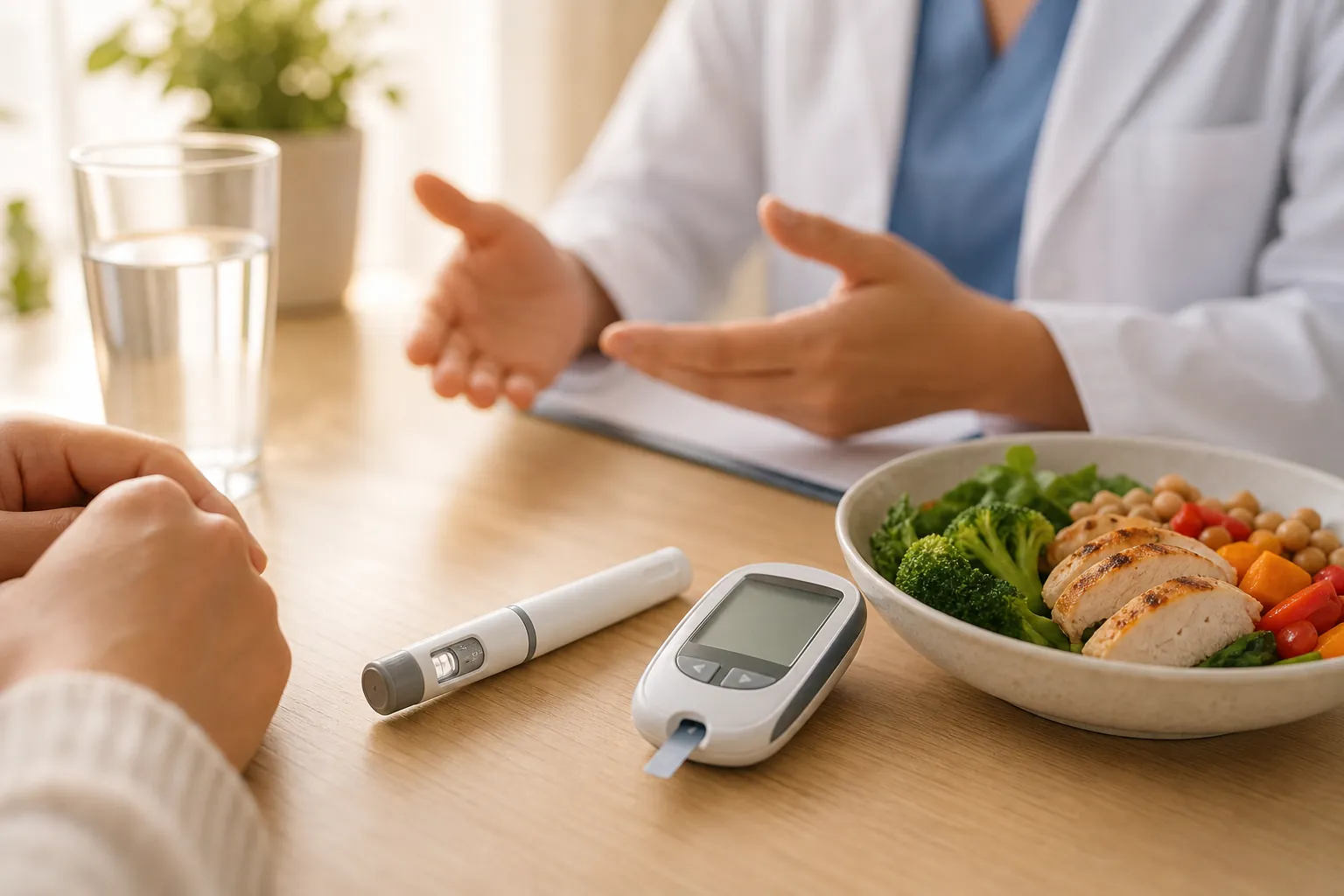
The HealthRX.com Medical Team built the following hypothetical protocol based on current prescribing guidelines. This is not a claim about JVN's medical care. It is a clinical walkthrough for anyone curious about what GLP-1 therapy actually involves.
Step 1: Eligibility screening
FDA-approved GLP-1 therapies for weight management require a BMI of 30 kg/m² or higher, or a BMI of 27 kg/m² with at least one weight-related comorbidity (type 2 diabetes, hypertension, dyslipidemia, obstructive sleep apnea). A prescriber would also screen for contraindications: personal or family history of medullary thyroid carcinoma or MEN2 syndrome, history of pancreatitis, and severe gastrointestinal disease.
For patients living with HIV on antiretroviral therapy, a prescriber would evaluate potential drug interactions and metabolic effects. Some antiretrovirals (particularly older protease inhibitors) carry their own metabolic burden, including insulin resistance and lipodystrophy. GLP-1 agents are not contraindicated in HIV, but the clinical picture requires closer monitoring.
Step 2: Dose titration
Both semaglutide and tirzepatide follow a slow up-titration schedule designed to reduce gastrointestinal side effects.
Semaglutide (Wegovy): 0.25 mg weekly for 4 weeks, then 0.5 mg for 4 weeks, then 1.0 mg for 4 weeks, then 1.7 mg for 4 weeks, reaching the maintenance dose of 2.4 mg weekly. Total ramp-up: roughly 16 to 20 weeks.
Tirzepatide (Zepbound): 2.5 mg weekly for 4 weeks, then 5 mg for 4 weeks, with optional increases in 2.5 mg increments every 4 weeks up to a maximum of 15 mg weekly.
Clinicians who rush titration see higher rates of nausea, vomiting, and early discontinuation. The HealthRX.com Medical Team notes that this is the most common point of failure in real-world protocols: patients (or prescribers) push the dose too fast.
Step 3: Monitoring and expected outcomes
The STEP 1 trial showed that semaglutide 2.4 mg produced a mean weight loss of 14.9% from baseline at 68 weeks, compared to 2.4% with placebo. The SURMOUNT-1 trial for tirzepatide 15 mg demonstrated 22.5% mean weight loss at 72 weeks. These are population averages. Individual response varies widely, from <5% to over 25%.
A prescribing clinician would order baseline labs (HbA1c, lipid panel, liver enzymes, renal function) and recheck at 12 and 24 weeks. For someone on antiretroviral therapy, CD4 counts and viral load would be monitored on their existing schedule, with extra attention to any caloric-restriction effects on immune recovery.
Step 4: Side effects and discontinuation realities
The most common adverse events are gastrointestinal: nausea (44% with semaglutide 2.4 mg in STEP 1), diarrhea, vomiting, and constipation. Most GI symptoms are transient and improve after 8 to 12 weeks at a stable dose.
More serious but rarer risks include acute pancreatitis, gallbladder disease, and potential thyroid C-cell effects observed in rodent models. The FDA mandates a boxed warning for thyroid C-cell tumors on all GLP-1 labels, although human epidemiological data have not confirmed this risk to date.
Weight regain after discontinuation is well documented. The STEP 1 extension trial showed that participants regained roughly two-thirds of lost weight within one year of stopping semaglutide. This is not a failure of willpower. It reflects the biology of weight regulation: the hypothalamic set point, ghrelin rebound, and adaptive thermogenesis work against sustained loss once the pharmacological signal is removed.
At a glance
- Has JVN confirmed GLP-1 use? No. There is zero public confirmation from Jonathan Van Ness regarding semaglutide, tirzepatide, or any GLP-1 medication.
- Why does speculation exist? Visible weight changes combined with the cultural moment around GLP-1 drugs. This pattern repeats for nearly every public figure whose body changes visibly.
- What would a real protocol look like? 16 to 20 weeks of dose titration, baseline lab work, regular monitoring, and a maintenance phase that often lasts years.
- Do GLP-1s work? Clinical trials show 15% to 22% mean body weight reduction, depending on the agent and dose. Individual results vary.
- What happens when you stop? Most people regain a significant portion of lost weight within 12 months of discontinuation.
The HealthRX.com Medical Team take
The speculation around JVN and GLP-1s is, bluntly, unfounded by any public evidence. Our clinical concern is different from the gossip. When the public associates visible weight loss with a specific drug class, it compresses a complex medical decision into a before-and-after narrative. GLP-1 therapy is not cosmetic. It involves metabolic screening, slow titration, ongoing lab surveillance, management of GI side effects, and a serious conversation about what happens if and when the drug is stopped.
For someone living with HIV, the calculus adds another dimension. Antiretroviral-associated metabolic changes, the importance of maintaining lean body mass for immune function, and potential drug interactions all require careful clinical oversight. Prescribing a GLP-1 in this context is not reckless, but it is not casual either.
The HealthRX.com Medical Team position: if you are considering a GLP-1 medication, the right starting point is a conversation with your own prescriber about your own labs, your own medical history, and your own goals. Celebrity speculation, regardless of the celebrity, is not a treatment plan.
Frequently asked questions
Has Jonathan Van Ness publicly confirmed taking Ozempic or any GLP-1 drug?
No. As of the last review date of this page, JVN has made no public statement confirming, denying, or addressing GLP-1 medication use. All claims circulating online are speculation without sourcing.
Can people living with HIV safely take GLP-1 medications?
GLP-1 receptor agonists are not contraindicated in HIV. Prescribers should evaluate drug-drug interactions with antiretroviral regimens, monitor metabolic panels more frequently, and ensure caloric restriction does not compromise immune recovery. The clinical data in this specific population remains limited.
How long does it take for a GLP-1 to reach full dose?
Semaglutide (Wegovy) takes approximately 16 to 20 weeks to reach its 2.4 mg maintenance dose. Tirzepatide (Zepbound) can reach 15 mg in as few as 20 weeks, though many patients stabilize at lower doses. Rushing titration increases nausea and dropout.
What percentage of body weight do GLP-1 drugs typically reduce?
In randomized trials, semaglutide 2.4 mg produced 14.9% mean weight loss at 68 weeks. Tirzepatide 15 mg achieved 22.5% at 72 weeks. Real-world results may differ based on adherence, diet, and concurrent conditions.
Is weight regain inevitable after stopping a GLP-1?
Studies show significant regain after discontinuation, with participants recovering roughly two-thirds of lost weight within a year. This reflects normal physiology, not personal failure. Many clinicians now recommend long-term or indefinite therapy for sustained benefit, though cost and supply remain barriers.
References
- FDA Wegovy Prescribing Information
- FDA Zepbound Prescribing Information
- FDA Safety Communication: Semaglutide
- STEP 1 Trial: Semaglutide 2.4 mg in Obesity (NEJM 2021)
- SURMOUNT-1 Trial: Tirzepatide in Obesity (NEJM 2022)
- Weight Regain After Semaglutide Withdrawal (PubMed)
- Metabolic Complications of Antiretroviral Therapy (PubMed)
- GLP-1 Prescription Trends 2023 (PubMed)