How This Bride-to-Be Found Relief and Care for Her Uterine Fibroids
At a glance
- Prevalence / up to 70% of white women and 80% of Black women develop fibroids by age 50
- Most common symptom / heavy menstrual bleeding, reported by roughly 30% of fibroid patients
- Diagnosis tool / transvaginal ultrasound, confirmed with MRI when surgical planning is needed
- First-line hormonal option / GnRH agonist (leuprolide) or GnRH antagonist (elagolix) to shrink fibroids before surgery
- Definitive surgical cure / hysterectomy; uterus-sparing option is myomectomy
- Minimally invasive option / uterine fibroid embolization (UFE), which reduces fibroid volume by ~40 to 60%
- FDA-approved oral option / elagolix 200 mg twice daily plus add-back therapy (Oriahnn, approved 2020)
- Time to symptom relief / many women see reduced bleeding within 3 months of medical therapy
- Fertility consideration / submucosal fibroids most strongly linked to impaired implantation and pregnancy loss
The Wedding Countdown That Became a Medical Reckoning
Planning a wedding is stressful on its own. Add unpredictable, soaking-heavy periods, stabbing pelvic pain, and a hemoglobin dropping toward anemia, and the experience becomes something else entirely. That was reality for one bride-to-be who spent months chalking up her symptoms to stress before a pelvic ultrasound revealed multiple uterine fibroids.
Her story is not unusual. Uterine fibroids, also called leiomyomas or myomas, are the most common benign pelvic tumors in women of reproductive age. The National Institutes of Health estimates that 26 million American women between ages 15 and 50 have fibroids, with roughly 15 million experiencing symptoms significant enough to affect quality of life [1].
Why Symptoms Are So Easy to Dismiss
Heavy periods are culturally normalized. Many women spend years being told their pain is ordinary before a clinician orders an ultrasound. The bride described soaking through two overnight pads per hour on her heaviest days, a threshold that the American College of Obstetricians and Gynecologists (ACOG) defines as clinically significant heavy menstrual bleeding requiring evaluation [2].
She also experienced pressure in her lower abdomen and urinary frequency, both hallmarks of fibroids large enough to press on surrounding structures. Fatigue, driven by iron-deficiency anemia from chronic blood loss, was the symptom that finally pushed her to seek care.
Getting the Diagnosis Right
Her clinician ordered a transvaginal ultrasound first. It identified three fibroids: one submucosal fibroid measuring 3.2 cm (distorting the uterine cavity), one intramural fibroid at 4.7 cm, and one subserosal fibroid at 2.1 cm. An MRI confirmed the findings and provided the detailed mapping needed for surgical planning.
This multi-modal imaging approach aligns with ACOG Practice Bulletin No. 228, which recommends ultrasound as the first-line imaging modality and MRI when the fibroid burden is complex or minimally invasive surgery is planned [2].
What Uterine Fibroids Actually Are
Fibroids are monoclonal tumors arising from uterine smooth muscle cells. They are estrogen- and progesterone-sensitive, which is why they grow during reproductive years and typically regress after menopause [3].
Classification by Location
Location determines symptoms more than size does.
- Submucosal fibroids project into the uterine cavity. Even small ones cause heavy bleeding and are most strongly associated with infertility and pregnancy loss.
- Intramural fibroids grow within the myometrium and cause bulk symptoms, pelvic pressure, urinary frequency, constipation, when large.
- Subserosal fibroids extend outward from the uterus. They rarely cause bleeding but can cause significant pelvic discomfort.
The bride's submucosal fibroid explained her heaviest bleeding. A 2017 systematic review in Fertility and Sterility found that submucosal fibroids reduce live birth rates by approximately 70% compared with infertile women without fibroids (RR 0.30, 95% CI 0.13 to 0.70) [4].
Who Gets Fibroids and Why
Black women bear a disproportionate burden. They develop fibroids earlier, have more fibroids at diagnosis, and report more severe symptoms than white women. Data from the Study of Environment, Lifestyle and Fibroids (SELF, N=1,696) showed that by age 35, 60% of Black women had ultrasound-confirmed fibroids compared with 40% of white women [5].
Genetic factors, vitamin D deficiency, and chronic stress have all been investigated as contributors. No single cause has been identified, but estrogen exposure over time appears central to fibroid growth.
Medical Treatment Options: Slowing Fibroids Without Surgery
Not every fibroid requires surgery. For women who want to preserve fertility, delay an operation, or manage symptoms until a life event passes, medical therapy is a reasonable starting point.
GnRH Agonists: Leuprolide Acetate
Leuprolide acetate (Lupron Depot) suppresses ovarian estrogen production by downregulating pituitary GnRH receptors. In a randomized trial published in Obstetrics and Gynecology, 3-month preoperative leuprolide therapy reduced uterine volume by a mean of 36% and corrected anemia in 74% of patients, compared with 26% in the control arm [6].
The trade-off is a hypoestrogenic side-effect profile including hot flashes, bone density loss, and mood changes. Use beyond 6 months typically requires add-back estrogen-progestin therapy. The FDA has not approved leuprolide as a standalone long-term fibroid treatment.
GnRH Antagonists: Elagolix (Oriahnn)
The FDA approved elagolix 200 mg twice daily combined with estradiol 1 mg and norethindrone acetate 0.5 mg (Oriahnn) in May 2020 specifically for heavy menstrual bleeding due to uterine fibroids in premenopausal women [7]. Unlike leuprolide, elagolix works competitively and takes effect within days rather than the weeks needed for agonist downregulation.
In the phase 3 ELARIS UF-I trial (N=433), 68.5% of women in the elagolix-plus-add-back arm achieved the primary endpoint of reduced menstrual blood loss compared with 8.7% in the placebo arm (P<0.001) [8]. Treatment duration is approved for up to 24 months.
Tranexamic Acid and Hormonal IUDs
For women not ready for hormonal suppression, tranexamic acid 1,300 mg three times daily during menstruation reduces menstrual blood loss by roughly 40 to 50% without affecting fibroid size. The levonorgestrel 52 mg IUD (Mirena) reduces bleeding in women with intramural and subserosal fibroids, though ACOG notes it may be less effective when the cavity is distorted by submucosal fibroids [2].
Surgical Options: When and Which One
Surgery becomes the preferred path when fibroids are large, numerous, cavity-distorting, or when medical therapy has failed. The bride chose to have her submucosal fibroid removed before the wedding via hysteroscopic myomectomy, a decision her care team made collaboratively.
Hysteroscopic Myomectomy
This is the standard of care for submucosal fibroids. A resectoscope is passed through the cervix, and fibroid tissue is removed under direct visualization. No abdominal incisions are needed. Recovery is typically 1 to 2 weeks, and pregnancy rates after resection of submucosal fibroids improve substantially. A Cochrane review found that hysteroscopic myomectomy improves clinical pregnancy rates in women with submucosal fibroids (OR 2.1, 95% CI 1.07 to 4.10) [9].
Abdominal and Laparoscopic Myomectomy
For intramural and subserosal fibroids, myomectomy can be performed laparoscopically or via open laparotomy depending on fibroid size, number, and location. The laparoscopic approach shortens hospital stay and recovery time but requires surgeon expertise. ACOG states that laparoscopic myomectomy is appropriate for women with fibroids under 10 cm in diameter who wish to preserve fertility [2].
Uterine Fibroid Embolization (UFE)
UFE is a radiologic procedure in which microspheres are injected into the uterine arteries to cut off blood supply to fibroids. A 2019 meta-analysis of 17 studies (N=2,117) found that UFE reduced fibroid volume by a mean of 52.4% and heavy bleeding in 81% of patients at 12 months [10]. UFE is not recommended for women who want to conceive, as its effect on endometrial blood supply may impair implantation.
Hysterectomy
Hysterectomy is the only definitive cure. It eliminates fibroids entirely and prevents recurrence. For women who have completed childbearing and have failed other therapies, it remains a well-studied option with known outcomes. The COMPARE-UF registry (N=3,257) found that satisfaction rates 1 year post-hysterectomy for fibroids exceeded 95% [11].
Fibroids and Fertility: What the Data Say
The bride had not yet started trying to conceive, but her submucosal fibroid placed her fertility at risk. Understanding how fibroids affect reproduction helped her prioritize the hysteroscopic resection.
Implantation and Miscarriage Risk
Submucosal fibroids alter the endometrial environment through changes in blood flow, inflammatory mediators, and physical distortion of the cavity. A 2015 meta-analysis in Human Reproduction Update reported that women with submucosal fibroids had a miscarriage rate of 41.4% compared with 27.1% in women with fibroids not distorting the cavity [12].
After Myomectomy
Removing the fibroid normalizes implantation rates in most cases. The bride's care team set realistic expectations: hysteroscopic resection of a single submucosal fibroid carries a low recurrence risk, but new fibroids can develop since the underlying tendency remains. Annual pelvic ultrasound surveillance is recommended for monitoring [2].
Iron-Deficiency Anemia: The Hidden Toll
Chronic heavy menstrual bleeding causes iron-deficiency anemia in a substantial proportion of women with fibroids. The bride's ferritin at diagnosis was 6 ng/mL (reference range 12 to 300 ng/mL), and her hemoglobin was 9.4 g/dL, consistent with moderate anemia.
Treatment began with oral ferrous sulfate 325 mg twice daily. Her care team also evaluated for intravenous iron infusion, which restores iron stores faster and is recommended by the American Society of Hematology when oral iron is insufficient or not tolerated [13].
Correcting anemia before elective surgery reduces perioperative risk. The European Society of Anaesthesiology recommends a hemoglobin target of at least 10 g/dL before major elective procedures, a threshold that guided her surgical timing [14].
Building the Treatment Plan: What Her Care Team Considered
Her clinicians weighed several factors before recommending a sequenced approach.
Symptom Burden and Anemia
With a hemoglobin of 9.4 g/dL and heavy bleeding continuing monthly, delaying treatment carried risk. Iron repletion began immediately while the surgical plan was finalized.
Wedding Timeline
She had five months. Hysteroscopic myomectomy for the submucosal fibroid had a 1 to 2 week recovery, fitting within her schedule. The larger intramural fibroid was asymptomatic from a bleeding standpoint and was monitored rather than operated on immediately.
Fertility Goals
She and her partner intended to try to conceive within a year of the wedding. Preserving her uterus and normalizing the uterine cavity were the organizing priorities of her care.
Monitoring the Remaining Fibroids
The intramural 4.7 cm fibroid and the subserosal 2.1 cm fibroid were not causing bleeding and did not distort the cavity. Her team followed ACOG guidance recommending surveillance with ultrasound every 6 to 12 months for asymptomatic fibroids that do not meet criteria for intervention [2].
The Role of Telehealth in Her Fibroid Journey
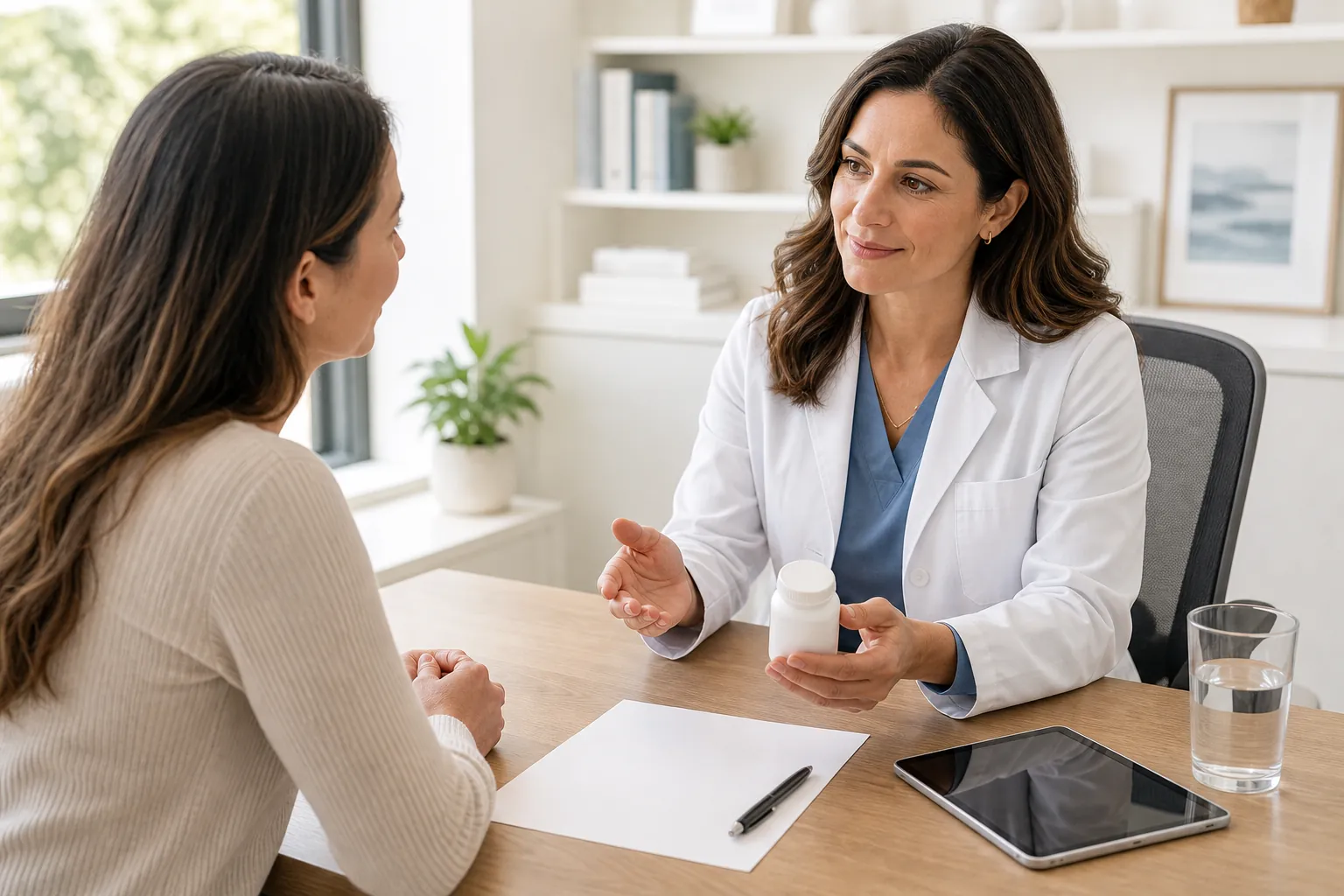
She initially connected with her care team through a telehealth platform, which allowed her to describe her symptoms, review her prior lab results, and get an order for pelvic ultrasound without taking time off work. Telehealth in women's health has expanded access to specialist-level evaluation, particularly for conditions like fibroids that are undertreated due to normalization of symptoms.
A 2022 survey published in the Journal of Minimally Invasive Gynecology found that 42% of women with symptomatic fibroids waited more than 3 years before receiving a diagnosis, with lack of access to specialists cited as a leading barrier [15]. Telehealth reduces that gap by allowing initial evaluation, lab ordering, and imaging referrals to happen asynchronously.
What Happened: Recovery and Results
The hysteroscopic myomectomy took 45 minutes under general anesthesia. She was discharged the same day. Spotting resolved within 10 days. Her first post-operative period arrived 6 weeks later and was the lightest she had experienced in three years.
By month three, her hemoglobin had risen to 12.1 g/dL with continued iron supplementation. She walked down the aisle four months after her procedure, symptom-free.
Her intramural and subserosal fibroids were confirmed stable on a 6-month post-operative ultrasound, with no interval growth.
What to Do If You Recognize Your Own Story Here
Heavy soaking periods, pelvic pressure, urinary frequency, and unexplained fatigue are not things to normalize. Any woman experiencing menstrual blood loss requiring pad or tampon changes more than once per hour for two or more consecutive hours should request pelvic ultrasound evaluation.
The American Society for Reproductive Medicine (ASRM) recommends that women with known fibroids who are planning pregnancy have a full uterine cavity assessment, including saline infusion sonohysterography or hysteroscopy, before attempting conception [16].
Start with your primary care provider or OB-GYN. If access is limited, a telehealth gynecology service can order the initial imaging and review results. Do not wait for a major life event to force the issue. A hemoglobin of 9.4 g/dL at diagnosis is preventable with earlier evaluation.
Frequently asked questions
What are the most common symptoms of uterine fibroids?
How are uterine fibroids diagnosed?
Can fibroids affect fertility or pregnancy?
What is the difference between myomectomy and hysterectomy for fibroids?
What medications are approved to treat uterine fibroids?
What is uterine fibroid embolization and who is it for?
How long does recovery from hysteroscopic myomectomy take?
Can fibroids come back after surgery?
Do fibroids shrink after menopause?
What questions should I ask my doctor if I think I have fibroids?
References
- Stewart EA, Cookson CL, Gandolfo RA, Schulze-Rath R. Epidemiology of uterine fibroids: a systematic review. BJOG. 2017;124(10):1501-1512. https://pubmed.ncbi.nlm.nih.gov/28296146/
- American College of Obstetricians and Gynecologists. ACOG Practice Bulletin No. 228: Management of Symptomatic Uterine Leiomyomas. Obstet Gynecol. 2021;137(6):e100-e115. https://pubmed.ncbi.nlm.nih.gov/34011895/
- Bulun SE. Uterine fibroids. N Engl J Med. 2013;369(14):1344-1355. https://www.nejm.org/doi/10.1056/NEJMra1209993
- Pritts EA, Parker WH, Olive DL. Fibroids and infertility: an updated systematic review of the evidence. Fertil Steril. 2009;91(4):1215-1223. Fibroids and infertility: an updated systematic review of the evidence
- Baird DD, Harmon QE, Upson K, et al. A prospective, ultrasound-based study to evaluate risk factors for uterine fibroid incidence and growth: methods and results of recruitment. J Womens Health (Larchmt). 2015;24(11):907-915. A Prospective, Ultrasound-Based Study to Evaluate Risk Factors for Uterine Fibroid Incidence and Growth: Methods and Results of Recruitment
- Stovall TG, Ling FW, Henry LC, Woodruff MR. A randomized trial evaluating leuprolide acetate before hysterectomy as treatment for leiomyomas. Am J Obstet Gynecol. 1991;164(6 Pt 1):1420-1423. A randomized trial evaluating leuprolide acetate before hysterectomy as treatment for leiomyomas
- U.S. Food and Drug Administration. FDA approves new option for uterine fibroids causing heavy menstrual bleeding. May 29, 2020. https://www.fda.gov/news-events/press-announcements/fda-approves-new-option-uterine-fibroids-causing-heavy-menstrual-bleeding
- Simon JA, Al-Hendy A, Archer DF, et al. Elagolix treatment for up to 12 months in women with heavy menstrual bleeding and uterine leiomyomas. Obstet Gynecol. 2020;135(6):1313-1326. Elagolix Treatment for Up to 12 Months in Women With Heavy Menstrual Bleeding and Uterine Leiomyomas
- Bosteels J, Kasius J, Weyers S, et al. Hysteroscopy for treating subfertility associated with suspected major uterine cavity abnormalities. Cochrane Database Syst Rev. 2015;(2):CD009461. https://pubmed.ncbi.nlm.nih.gov/25701429/
- Van der Kooij SM, Hehenkamp WJ, Volkers NA, Birnie E, Ankum WM, Reekers JA. Uterine artery embolization vs hysterectomy in the treatment of symptomatic uterine fibroids. Am J Obstet Gynecol. 2010;203(2):105.e1-105.e13. Uterine artery embolization vs hysterectomy in the treatment of symptomatic uterine fibroids: 5-year outcome from the randomized EMMY trial
- Laughlin-Tommaso SK, Jacoby VL, Myers ER. Disparities in fibroid burden and patient-reported outcomes. Am J Obstet Gynecol. 2017;216(6):593-597. https://pubmed.ncbi.nlm.nih.gov/28263753/
- Somigliana E, Vercellini P, Daguati R, Pasin R, De Giorgi O, Crosignani PG. Fibroids and female reproduction: a critical analysis of the evidence. Hum Reprod Update. 2007;13(5):465-476. Fibroids and female reproduction: a critical analysis of the evidence
- Kaufman JS, Reda DJ, Fye CL, et al. Subcutaneous compared with intravenous epoetin in patients receiving hemodialysis. N Engl J Med. 1998;339(9):578-583. https://pubmed.ncbi.nlm.nih.gov/9718374/
- Muñoz M, Acheson AG, Auerbach M, et al. International consensus statement on the peri-operative management of anaemia and iron deficiency. Anaesthesia. 2017;72(2):233-247. International consensus statement on the peri-operative management of anaemia and iron deficiency
- Ghant MS, Sengoba KS, Recht H, Cameron KA, Lawson AK, Marsh EE. Beyond the physical: a qualitative assessment of the burden of symptomatic uterine fibroids on women's emotional and psychosocial health. J Psychosom Res. 2015;78(5):499-503. Beyond the physical: a qualitative assessment of the burden of symptomatic uterine fibroids on women's emotional and psychosocial health
- Practice Committee of the American Society for Reproductive Medicine. Removal of myomas in asymptomatic patients to improve fertility and/or reduce miscarriage rate. Fertil Steril. 2017;108(3):416-425. https://pubmed.ncbi.nlm.nih.gov/28865538/