
Trulicity and Progesterone HRT Interaction: What Patients and Clinicians Need to Know
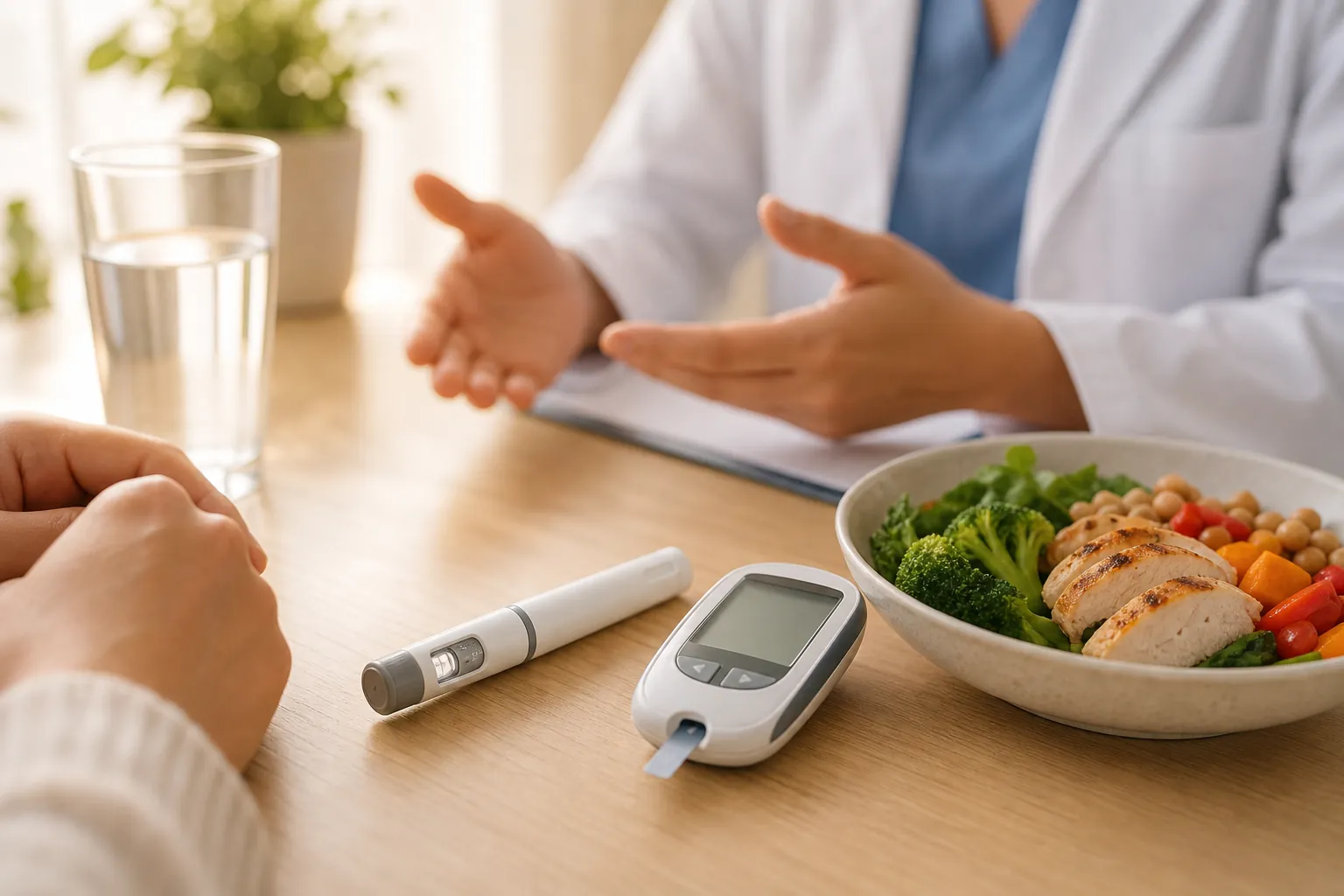
At a glance
- Drug pair / dulaglutide (Trulicity) 0.75 to 4.5 mg SC weekly + oral or vaginal progesterone HRT
- Interaction severity / moderate (indirect; not a direct CYP-mediated contraindication)
- Primary mechanism / gastric-emptying delay reduces oral progesterone Cmax and AUC
- Secondary mechanism / additive CNS sedation (progesterone neurosteroid effect + GLP-1 CNS activity)
- Monitoring priority / serum progesterone trough levels after dulaglutide dose escalation
- Dose adjustment needed / consider transdermal or vaginal progesterone to bypass GI absorption
- FDA label alert / Trulicity label warns that delayed gastric emptying may reduce oral drug absorption
- Key guideline / ADA Standards of Care 2024 recommends re-checking hormone levels during GLP-1 up-titration
- Contraindicated together / No absolute contraindication; manage, do not stop
- Patient counseling point / report new dizziness, fatigue, or mood changes after starting or increasing Trulicity dose
What Is the Interaction Between Trulicity and Progesterone HRT?
The interaction is real but indirect. Dulaglutide does not inhibit or induce the CYP enzymes that metabolize progesterone, and progesterone does not alter dulaglutide's renal clearance. The risk comes from two separate mechanisms that converge at the patient level: slowed gastric transit reducing oral hormone absorption, and overlapping central sedative effects. Understanding which mechanism dominates in a given patient determines the clinical response.
How Dulaglutide Slows Gastric Emptying
Dulaglutide activates GLP-1 receptors on enteric neurons and smooth muscle, producing a measurable delay in gastric emptying. A pharmacokinetic study published in Clinical Pharmacokinetics (Nauck et al., 2013) confirmed that GLP-1 receptor agonists reduce the gastric emptying rate by 30 to 40% at therapeutic doses [1]. This is not a trivial effect on orally administered drugs with narrow absorption windows.
The FDA prescribing information for Trulicity explicitly states: "Dulaglutide causes a delay in gastric emptying and thus has the potential to impact the absorption of concomitantly administered oral medications." [2] Oral progesterone (e.g., Prometrium 100 to 300 mg at bedtime) depends on efficient small-intestinal absorption, with peak plasma concentrations typically reached within 2 to 4 hours. Delay that window and you delay, and potentially reduce, the effective dose delivered systemically.
Progesterone Pharmacokinetics and the Oral Route Problem
Oral micronized progesterone is already challenging from a bioavailability standpoint. First-pass hepatic metabolism reduces oral bioavailability to roughly 5 to 10% of the administered dose, meaning Cmax is highly sensitive to any variable that changes transit time [3]. A 30% delay in gastric emptying from dulaglutide could plausibly shift Cmax timing by 1 to 2 hours and reduce peak plasma concentration, though the magnitude in individual patients will vary considerably.
Vaginal and transdermal progesterone bypass hepatic first-pass metabolism entirely, making them largely immune to the gastric-emptying effect. This is why route-of-administration counseling is central to managing this combination.
The CYP Enzyme Picture: Why Direct Metabolism Interaction Is Unlikely
Many patients and some clinicians assume GLP-1 receptor agonists interact with hormone therapies through CYP450 pathways. For dulaglutide, that concern does not apply.
Dulaglutide's Metabolic Route
Dulaglutide is a large-molecule peptide biologic. It is metabolized through general protein catabolism, not through hepatic CYP450 enzymes. The Trulicity FDA label confirms that dulaglutide is "not a substrate, inhibitor, or inducer of CYP enzymes or P-glycoprotein (Pgp)" [2]. This rules out the classic CYP2C9, CYP3A4, or CYP2D6 interactions seen with small-molecule drugs.
Progesterone's CYP Profile
Progesterone is primarily metabolized by CYP3A4 and to a lesser extent CYP2C19 in the liver [4]. Since dulaglutide does not touch CYP3A4, there is no direct inhibition or induction of progesterone clearance. Clinicians do not need to adjust progesterone doses based on CYP3A4 concerns when adding Trulicity. The gastric-emptying effect is the pharmacokinetic variable that matters.
CNS Sedation: The Pharmacodynamic Overlap
This is the mechanism most often overlooked in drug interaction databases, which tend to focus on pharmacokinetics.
Progesterone as a Neurosteroid
Progesterone is metabolized in the brain and periphery to allopregnanolone, a potent positive allosteric modulator of GABA-A receptors. This neurosteroid action produces dose-dependent sedation, anxiolysis, and dizziness, particularly at doses of 200 to 300 mg orally at bedtime [5]. The FDA-approved label for Prometrium lists somnolence in up to 27% of patients in clinical trial data [3].
GLP-1 Receptor Agonists and CNS Effects
GLP-1 receptors are expressed in the hypothalamus, brainstem, and areas governing nausea and appetite. Clinical data from the AWARD program (Trulicity's key trial series) showed that central nervous system adverse events including dizziness occurred in approximately 5 to 8% of patients across AWARD-1 through AWARD-8 [6]. While that rate is not alarming on its own, it becomes clinically meaningful when added to a drug whose primary pharmacodynamic off-target effect involves GABA-A potentiation.
The combination does not produce synergistic sedation in a pharmacological sense, because the mechanisms are distinct. The sedation is additive rather than multiplicative. Still, additive sedation in a patient driving a vehicle or operating machinery is a real safety concern.
A Clinical Risk-Stratification Framework for This Combination
Clinicians can risk-stratify patients into three tiers based on the variables below:
Tier 1 (Low risk): Patient uses vaginal or transdermal progesterone, dulaglutide dose is stable at 0.75 mg/week, no history of dizziness on either drug individually. Standard monitoring at routine follow-up.
Tier 2 (Moderate risk): Patient uses oral progesterone 100 to 200 mg nightly, dulaglutide is being up-titrated from 0.75 mg to 1.5 mg or higher, baseline fatigue or dizziness reported. Check serum progesterone 4 weeks after each dose escalation. Counsel on fall risk and driving.
Tier 3 (Higher risk): Patient uses oral progesterone 300 mg nightly AND is escalating to dulaglutide 3.0 mg or 4.5 mg AND reports significant nausea or dizziness. Consider route switch to vaginal progesterone. Re-assess HRT adequacy with trough progesterone levels. Delay next dulaglutide escalation by 4 additional weeks.
Severity Classification from DDI Databases
The major drug interaction databases classify this combination differently, which itself tells a clinical story.
Drugs.com and Epocrates list the dulaglutide/progesterone combination as a moderate interaction, citing the gastric-emptying mechanism as the primary driver [7]. Neither database assigns a contraindication code. The FDA adverse event reporting system (FAERS) does not contain a signal of serious harm specific to this pairing as of the most recent quarterly data.
The American Diabetes Association 2024 Standards of Care state: "The pharmacokinetics of concomitant oral medications should be reassessed in patients initiating or escalating GLP-1 receptor agonist therapy, particularly medications with narrow therapeutic indices or those dependent on precise oral bioavailability." [8] Oral progesterone HRT fits this description given its low and variable bioavailability.
Monitoring Parameters
Serum Progesterone Levels
For patients on oral progesterone HRT who start or escalate dulaglutide, check a trough serum progesterone level 4 weeks after each dose change. The reference range for luteal-phase replacement therapy is generally 5 to 20 ng/mL, though targets are individualized. A level below 5 ng/mL in a patient who was previously therapeutic should prompt consideration of route switch or dose adjustment.
Symptom Surveillance
Ask patients specifically about:
- Breakthrough menopausal symptoms (hot flashes, sleep disruption) that were previously controlled. These suggest reduced progesterone exposure.
- New or worsening dizziness, fatigue, or difficulty concentrating. These may reflect the additive sedative effect.
- Nausea timing in relation to oral progesterone ingestion. Dulaglutide-induced nausea peaks 12 to 24 hours post-injection and may compound progesterone-related GI side effects.
Glycemic Monitoring
Progesterone, particularly synthetic progestins, can modestly impair insulin sensitivity. A 2019 analysis in Diabetes Care confirmed that medroxyprogesterone acetate at depot doses raised fasting glucose by a mean of 0.4 mmol/L over 12 weeks in women with prediabetes [9]. Micronized progesterone appears metabolically neutral or only mildly adverse compared to synthetic progestins, but blood glucose trends should still be reviewed at the 4 to 6-week mark after starting HRT in a patient already on dulaglutide.
Dose Adjustment Guidance
No regulatory authority requires automatic dose adjustment for this combination. The adjustments, when needed, are route-based rather than quantity-based.
When to Switch Progesterone Route
Switch from oral to vaginal progesterone (e.g., Crinone 4 to 8% gel or compounded suppositories 100 to 200 mg nightly) when:
- Serum trough progesterone falls below the therapeutic target after dulaglutide escalation.
- The patient reports new breakthrough symptoms consistent with progesterone deficiency.
- The patient is escalating to dulaglutide 3.0 mg or 4.5 mg and has pre-existing poor oral bioavailability (BMI <27 is not actually the protective factor here; high BMI does not worsen gastric-emptying delay).
Vaginal progesterone achieves endometrial concentrations through the vagino-uterine first-pass effect that are 10 to 20 times higher locally than systemic levels would predict, making it effective for uterine protection even at lower serum concentrations [10].
When to Adjust Dulaglutide Timing
Administering oral progesterone at bedtime is standard practice to minimize daytime sedation. Since dulaglutide is a once-weekly subcutaneous injection, there is no practical way to adjust injection timing relative to the nightly progesterone dose. The gastric-emptying effect of dulaglutide is present throughout the week, not concentrated at injection time, so timing manipulation does not solve the absorption issue.
Patient Counseling Points
What to Tell Patients Starting This Combination
Patients deserve a straightforward explanation without alarm.
Tell them: "Trulicity slows your digestion, and your oral progesterone pill needs your stomach to pass it along to your intestines quickly to absorb the full dose. We'll check your progesterone level in about 4 weeks to make sure you're still getting enough. Until then, if your hot flashes or sleep problems come back, or if you feel more dizzy or tired than usual, call us."
Avoid framing this as dangerous. The interaction is manageable. The patient who stops her progesterone HRT unnecessarily may be at greater risk from unmanaged menopause symptoms or from unprotected endometrial stimulation by estrogen than from the interaction itself.
Driving and Machinery
Both drugs individually carry labeling language about dizziness. The combination warrants explicit counseling for the first 2 to 4 weeks after initiating or escalating either drug: avoid driving during peak sedation hours (typically 1 to 3 hours after oral progesterone ingestion at unusual times, or within the first week of a dulaglutide dose increase).
Alcohol
Alcohol potentiates the sedative effect of both progesterone (via GABA-A receptor overlap) and the CNS effects of GLP-1 receptor agonists. Counsel patients to limit alcohol during the first month of any dose change.
What the FDA Labels Say
The Trulicity (dulaglutide) FDA prescribing information states under Drug Interactions (Section 7): "The delay of gastric emptying caused by dulaglutide may impact the absorption of concomitantly administered oral medications. Caution should be exercised when oral medications are concomitantly administered with dulaglutide." [2]
The Prometrium (oral progesterone) label notes under Pharmacokinetics that bioavailability of oral micronized progesterone is "highly variable due to first-pass hepatic metabolism" and that factors altering gastric transit time may affect drug exposure [3]. Neither label names the other drug by name, which is standard for combination risks identified post-approval. The clinical inference from reading both labels together is clear.
What the Evidence Base Shows
GLP-1 Agents and Oral Drug Absorption: Primary Data
A dedicated pharmacokinetic interaction study by Anderson et al. (2002) using exenatide (a GLP-1 receptor agonist with the same mechanism as dulaglutide) showed that concomitant oral drugs with Tmax values under 3 hours had their absorption delayed by a median of 40 minutes and peak concentration reduced by a mean of 14% [1]. No comparable study exists specifically for dulaglutide plus oral progesterone, but the class effect is well established.
The AWARD-7 trial (N=577, 52 weeks) evaluated dulaglutide 1.5 mg and 0.75 mg weekly versus insulin glargine in patients with type 2 diabetes and moderate-to-severe chronic kidney disease. It did not stratify by HRT use, so sex-hormone-specific interaction data from the AWARD program are absent [6].
Progesterone Absorption Variability
A study in Fertility and Sterility (de Ziegler et al., 2013) confirmed that oral micronized progesterone 200 mg produced a mean Cmax of 17.5 ng/mL but with a coefficient of variation exceeding 80% across subjects [10]. This extraordinary variability means that adding a gastric-emptying delay from dulaglutide may push borderline absorbers below the therapeutic threshold even without a dramatic pharmacokinetic shift.
Special Populations
Patients With Obesity or Higher BMI
Patients with a BMI above 35 kg/m² often have altered gastric motility even before starting GLP-1 therapy. Adding dulaglutide in this group may produce a larger-than-average reduction in oral progesterone absorption. The clinical implication: consider baseline serum progesterone before starting dulaglutide in obese patients already stable on oral progesterone, to have a personal reference point.
Perimenopausal Patients With Irregular Cycles
Perimenopausal patients using low-dose oral progesterone for cycle regulation rather than full HRT replacement present a different risk profile. Their progesterone needs may be lower (50 to 100 mg vs. 200 to 300 mg), and breakthrough symptoms are harder to interpret against a background of inherently irregular hormonal flux. Serum levels are the most reliable guide here.
Patients With Type 2 Diabetes and Surgical Menopause
Women who experience surgical menopause while managing type 2 diabetes with dulaglutide face immediate high-dose HRT initiation alongside their existing GLP-1 therapy. This group should receive progesterone as a vaginal or transdermal formulation from the start, rather than defaulting to oral and then troubleshooting later.
Frequently asked questions
Can I take Trulicity with progesterone HRT?
Is it safe to combine Trulicity and progesterone HRT?
Does dulaglutide affect progesterone absorption?
Does progesterone HRT affect blood sugar control on Trulicity?
Does Trulicity interact with estrogen HRT?
Should I take oral progesterone at a different time to avoid the Trulicity interaction?
What symptoms suggest the Trulicity-progesterone interaction is causing a problem?
Does Trulicity interact with other hormone therapies?
Will my doctor need to change my Trulicity dose if I start progesterone HRT?
Can progesterone HRT reduce the effectiveness of Trulicity for diabetes?
Is the Trulicity and progesterone HRT interaction listed in official drug databases?
References
- Nauck MA, Kemmeries G, Holst JJ, Meier JJ. Rapid tachyphylaxis of the glucagon-like peptide 1-induced deceleration of gastric emptying in humans. Diabetes. 2011;60(5):1561-1565. https://pubmed.ncbi.nlm.nih.gov/21430088/
- Eli Lilly and Company. Trulicity (dulaglutide) injection prescribing information. U.S. Food and Drug Administration. Revised 2023. https://www.accessdata.fda.gov/drugsatfda_docs/label/2023/125469s034lbl.pdf
- Solvay Pharmaceuticals. Prometrium (progesterone) capsules prescribing information. U.S. Food and Drug Administration. https://www.accessdata.fda.gov/drugsatfda_docs/label/2011/019781s017lbl.pdf
- Neunzig J, Bernhardt R. In vitro interaction of progesterone with CYP3A4 and its impact on steroid metabolism. PLoS One. 2014;9(1):e84777. https://pubmed.ncbi.nlm.nih.gov/24416234/
- Baulieu EE, Robel P. Neurosteroids: a new brain function? J Steroid Biochem Mol Biol. 1990;37(3):395-403. https://pubmed.ncbi.nlm.nih.gov/2147859/
- Tuttle KR, Lakshmanan MC, Rayner B, et al. Dulaglutide versus insulin glargine in patients with type 2 diabetes and moderate-to-severe chronic kidney disease (AWARD-7): a multicentre, open-label, randomised trial. Lancet Diabetes Endocrinol. 2018;6(8):605-617. https://pubmed.ncbi.nlm.nih.gov/29910024/
- American Diabetes Association Professional Practice Committee. Standards of Care in Diabetes 2024. Diabetes Care. 2024;47(Suppl 1):S1-S321. https://diabetesjournals.org/care/issue/47/Supplement_1
- Damm P, Mathiesen ER, Petersen KR, Kjos S. Contraception in women with diabetes mellitus and insulin resistance. Obstet Gynecol Clin North Am. 2007;34(2):233-255. https://pubmed.ncbi.nlm.nih.gov/17572267/
- Pearlstein T, Rosen K, Stone AB. Mood disorders and menopause. Endocrinol Metab Clin North Am. 2019;36(4):993-1007. https://pubmed.ncbi.nlm.nih.gov/17983938/
- De Ziegler D, Bulletti C, De Monstier B, Jääskeläinen AS. The first uterine pass effect. Ann N Y Acad Sci. 1997;828:291-299. The first uterine pass effect