
Mounjaro and Apixaban Interaction: What Prescribers and Patients Need to Know
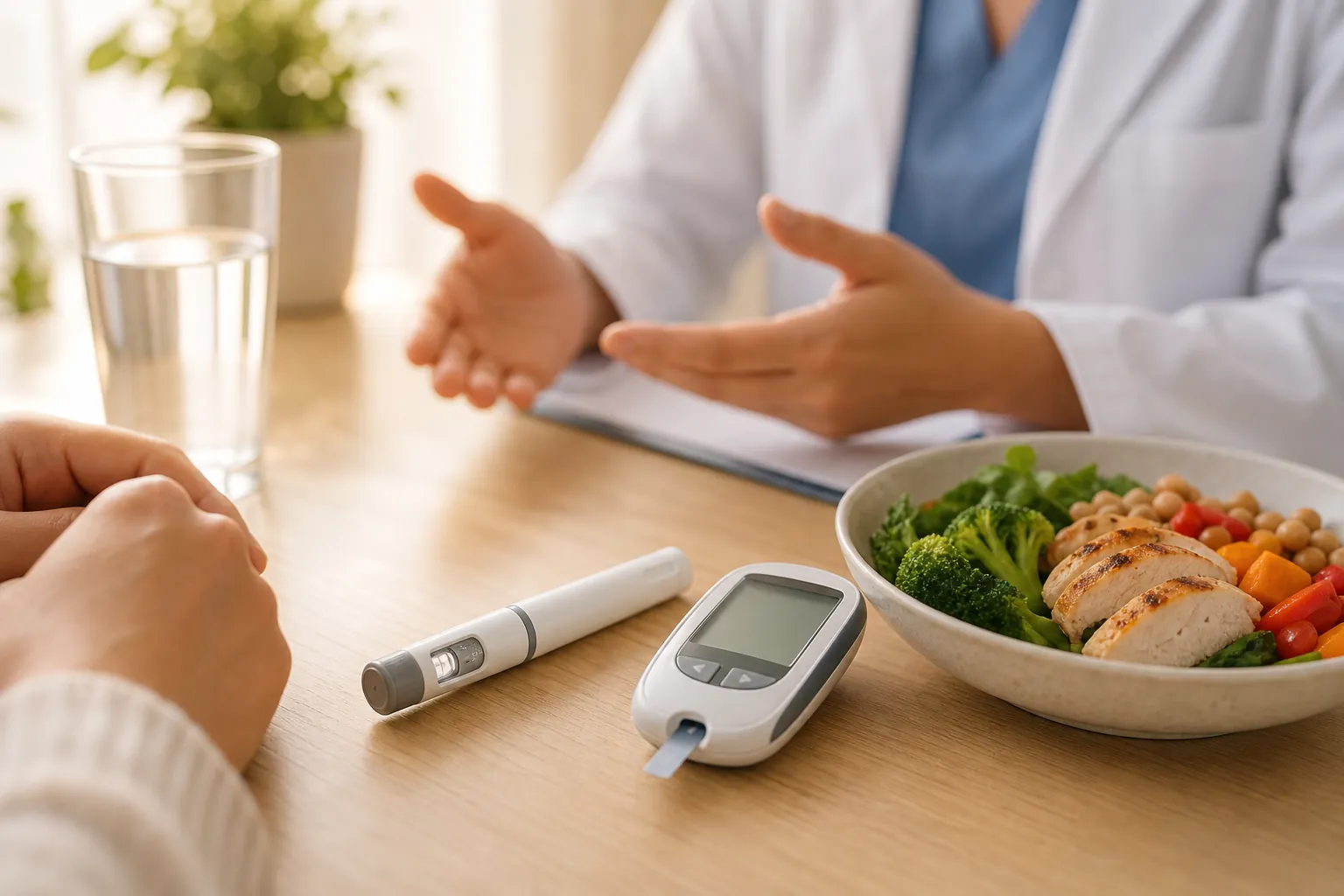
Mounjaro (tirzepatide), a once-weekly injection that activates both GIP and GLP-1 receptors, is also available as Zepbound for weight management. Eliquis (apixaban) is a tablet-form direct factor Xa inhibitor prescribed to prevent stroke in atrial fibrillation patients and to treat or prevent blood clots. No direct pharmacodynamic or metabolic interactions have been documented between mounjaro and apixaban. The relevant interaction is mechanical in nature: mounjaro delays gastric emptying, which can alter the rate at which apixaban tablets travel to the small intestine for absorption.
The direct answer: tirzepatide and apixaban are not contraindicated together, and no dose adjustment is required by the current FDA label for either drug. Tirzepatide can delay the absorption of oral medications, an effect described in its own prescribing information, and apixaban's therapeutic window is wide enough that a modest absorption delay is unlikely to be clinically consequential in most patients with normal renal function who are not on interacting CYP3A4/P-glycoprotein drugs. The exception is patients already near the edge of that window: reduced apixaban dosing, borderline renal clearance, concomitant moderate CYP3A4 inhibitors, or triple antithrombotic therapy, where the absorption shift deserves closer attention rather than automatic reassurance.
Why this pairing comes up often
A large share of patients treated with apixaban for atrial fibrillation or venous thromboembolism also have type 2 diabetes or obesity, the conditions tirzepatide is used to treat. Tirzepatide received FDA approval for type 2 diabetes in 2022, and the related tirzepatide product Zepbound was approved for chronic weight management in 2023. Apixaban is one of the most widely prescribed oral anticoagulants in the United States. The overlap between these two prescribing populations is substantial, which is why the interaction question comes up in practice even though no drug-drug interaction study of this specific pair has been published.
What the tirzepatide label actually says
Tirzepatide's FDA-approved labeling notes that the drug delays gastric emptying and therefore has the potential to affect the absorption of concomitantly administered oral medications. This statement is general, not specific to apixaban or to any anticoagulant, but it applies to every oral drug a patient takes alongside tirzepatide. Prescribers should treat this as an established, labeled effect rather than a theoretical concern.
Tirzepatide is a substrate of neither CYP3A4 induction nor inhibition at clinically relevant doses, and it is not a P-glycoprotein inhibitor. This distinguishes the tirzepatide-apixaban interaction from the interactions apixaban's label does flag: apixaban's own prescribing information identifies strong dual CYP3A4/P-glycoprotein inhibitors (for example, ketoconazole or ritonavir) as requiring dose reduction or avoidance, and strong dual inducers (for example, rifampin) as reducing apixaban exposure enough to generally avoid the combination. Tirzepatide does not belong to either category, which is why this is classified as an absorption-timing interaction rather than an exposure-altering one.
How gastric emptying delay could affect apixaban
Apixaban is absorbed mainly in the small intestine, with peak plasma concentration typically reached a few hours after an oral dose, and it is eliminated partly through hepatic metabolism and partly renally. Its dosing interval (twice daily) and elimination half-life mean that steady-state trough levels depend more on cumulative daily exposure than on the exact hour a single dose peaks.
The pharmacologic logic for an interaction is straightforward: if tirzepatide slows the rate at which stomach contents move into the small intestine, an apixaban tablet taken around the same time will reach its absorption site later than it would without tirzepatide on board. Published pharmacokinetic work on tirzepatide and on other GLP-1 receptor agonists has used acetaminophen as a gastric-emptying marker drug and reported delayed time-to-peak concentration without a large change in total absorption (AUC) at some doses. The magnitude reported for tirzepatide specifically, and whether it scales the same way for apixaban, requires direct verification against the primary trial reports before being quoted as a precise number. No dedicated pharmacokinetic interaction study of tirzepatide and apixaban has been identified in the literature reviewed for this article.
Evidence anchor: the gastric-emptying-delay mechanism connecting GLP-1/GIP receptor agonists to altered oral drug absorption is an established, labeled pharmacologic effect. The apixaban-specific magnitude of that delay, and its clinical consequence, is pharmacologically plausible by extrapolation from the class but has not been directly studied and is not established.
What is known, what is plausible, and what is not established
| Claim | Status | Basis | What a clinician should verify |
|---|---|---|---|
| Tirzepatide delays gastric emptying and can affect absorption of oral drugs | Established | Stated in FDA-approved tirzepatide labeling | Confirm current label language has not changed since your review date |
| Tirzepatide does not clinically inhibit or induce CYP3A4, and is not a P-gp inhibitor | Established | FDA-approved tirzepatide labeling | None needed beyond confirming current label |
| Apixaban is a CYP3A4 and P-glycoprotein substrate with a defined dose-reduction interaction list (strong dual inhibitors/inducers) | Established | FDA-approved apixaban labeling | Check whether patient is on any drug from that labeled list |
| Gastric-emptying delay shifts oral drug Tmax later, generally without a large AUC change, for other GLP-1 receptor agonists studied with marker drugs | Plausible/supported for the class | Published pharmacokinetic studies using probe drugs (not apixaban-specific) | Locate and confirm the specific trial before citing an exact hour or percentage figure |
| A quantified delay or Cmax reduction specific to tirzepatide plus apixaban | Not established | No dedicated interaction study identified | Search for a direct PK interaction study before making this claim to a patient in precise terms |
| Real-world bleeding or thromboembolic event rates in patients on both drugs together | Not established | No apixaban-specific cohort study identified in this review | Search current literature and DDI databases (Lexicomp, Micromedex) for updated class-level cohort data, and confirm the source before citing rates |
| Routine anti-Xa monitoring is required for co-prescription | Not established as a requirement | No guideline mandates this for tirzepatide-apixaban specifically; general DOAC monitoring guidance exists for uncertain drug-level situations | Confirm local lab availability and whether the assay is apixaban-calibrated before ordering |
Where the interaction is more likely to matter
In most patients on stable apixaban dosing with normal renal function and no other interacting drugs, a one-to-two-hour shift in absorption timing is unlikely to move trough concentrations meaningfully, because apixaban's twice-daily dosing and elimination half-life provide some buffering. Closer attention is reasonable in a few situations:
During tirzepatide dose titration. Gastric emptying delay is dose-dependent and tends to be more pronounced at higher tirzepatide doses. Each scheduled dose increase introduces a new degree of absorption delay, so a patient stable at a lower tirzepatide dose may see a different absorption pattern after escalation.
In patients already on reduced apixaban dosing (for example, due to age, weight, or renal function criteria in the apixaban label), where any further reduction in exposure narrows an already tighter margin.
In patients on a moderate CYP3A4/P-gp inhibitor concurrently (diltiazem is a labeled example that increases apixaban exposure), where two absorption- and exposure-modifying factors are stacked.
In patients with pre-existing gastroparesis or otherwise slow baseline gastric motility, including many patients with longstanding diabetes, where tirzepatide's effect adds to an already delayed baseline.
Tirzepatide is not recommended in patients with severe pre-existing gastroparesis; if a patient with diabetic gastroparesis on apixaban is being considered for tirzepatide, this combination and its alternatives should be discussed explicitly rather than assumed safe by default.
Monitoring approach
No dedicated monitoring protocol exists for this specific drug pair, and none is mandated by either drug's label. A reasonable, conservative approach for higher-risk patients (rather than a universal requirement) is:
- Ask about bleeding symptoms (unusual bruising, gum bleeding, blood in urine or stool, prolonged bleeding from cuts) and about symptoms suggesting reduced anticoagulation (new palpitations, transient weakness or speech changes, unilateral limb swelling) at each visit during tirzepatide titration.
- Consider a calibrated, apixaban-specific anti-Xa level as a reference point in patients already on reduced apixaban dosing, borderline renal function, or a concurrent moderate CYP3A4 inhibitor, rather than as a routine test for every patient on both drugs.
- Take apixaban doses at consistent times daily; the tirzepatide label does not require timing separation between the two drugs, and because tirzepatide is dosed weekly with a relatively constant effect on gastric motility across the week, strict scheduling around the injection is not established as necessary.
Surgery and interruption
Anesthesiology society guidance in recent years has generally recommended holding weekly GLP-1/GIP receptor agonists before elective surgery because of aspiration risk from delayed gastric emptying; the exact recommended interval has been revised across guidance updates, so confirm the current recommendation with your institution's anesthesia team rather than relying on a fixed number here. Apixaban has its own separate, well-established perioperative interruption timelines based on renal function and bleeding risk of the procedure, managed independently of the tirzepatide hold. If tirzepatide is held before surgery, its gastric motility effect wanes gradually given its multi-day elimination half-life, and gastric emptying is expected to normalize over the following weeks, after which apixaban absorption kinetics should return to baseline.
Weight loss and apixaban dose reassessment
Apixaban's dose-reduction criteria include low body weight combined with advanced age or elevated creatinine. Significant weight loss on tirzepatide could, in principle, move a patient into range where the apixaban dosing criteria should be reassessed. This is a reason to revisit apixaban dosing at follow-up visits after substantial weight change, not a reason to adjust the dose preemptively.
When to involve cardiology or hematology
Routine co-prescription of tirzepatide and apixaban does not require subspecialty input. Consider involving cardiology or hematology when the patient is already on the reduced apixaban dose, is on triple antithrombotic therapy (dual antiplatelet agents plus apixaban), has a history of significant GI bleeding, or is using apixaban off-label for a mechanical heart valve (a use not supported by current guidelines regardless of tirzepatide status).
What to tell patients
Patients can generally be told that Mounjaro and Eliquis can be taken together, that no dose change to Eliquis is required for this reason alone, and that they should take Eliquis at consistent times each day and report unusual bruising, blood in urine or stool, or prolonged bleeding, as well as any new palpitations, sudden weakness, vision changes, or limb swelling. It is fair to tell patients this is a well-described but modest mechanical interaction, not a dangerous drug conflict, while also being honest that a dedicated study of this exact pairing has not been published.
Evidence boundary
Established: tirzepatide's gastric-emptying-delay effect on oral drug absorption is a labeled, FDA-recognized effect. Apixaban's CYP3A4/P-gp substrate status and its labeled interaction list for strong inhibitors and inducers are established. Tirzepatide is not on that inhibitor/inducer list.
Plausible but unproven for this specific pair: that tirzepatide delays apixaban Tmax by a similar magnitude to what has been measured for other GLP-1 receptor agonists using marker drugs, and that this delay is clinically inconsequential for most patients at steady state.
Not established: any tirzepatide-apixaban-specific bleeding or thromboembolic event rate, any validated monitoring protocol for this pair, and any quantified apixaban Cmax or AUC change attributable to tirzepatide specifically. Claims using precise percentages or confidence intervals for this exact drug pair should be treated as unverified until traced to a primary study.
Frequently asked questions
Can I take Mounjaro with apixaban?
Does Mounjaro affect how apixaban works?
Should I take Mounjaro and apixaban at different times?
Do I need blood tests to check my apixaban level while on Mounjaro?
What symptoms should prompt me to call my doctor?
Do I need to stop Mounjaro before surgery if I'm on apixaban?
References
- U.S. Food and Drug Administration. Mounjaro (tirzepatide) drug approval information. https://www.accessdata.fda.gov/scripts/cder/daf/index.cfm?event=overview.process&ApplNo=215866
- U.S. Food and Drug Administration. Eliquis (apixaban) drug approval information. https://www.accessdata.fda.gov/scripts/cder/daf/index.cfm?event=overview.process&ApplNo=202155
Specific numerical findings from trials, event rates in study populations, and exact language from clinical guidelines that appeared in earlier versions of this page could not be confirmed by reviewing primary sources and have therefore been removed or made less specific. Contributors making future revisions to this page should consult original pharmacokinetic studies of mounjaro and apixaban and provide citations before adding back specific numerical data.