
HealthRx.com

Zepbound and Prednisone Interaction: What Patients and Clinicians Need to Know

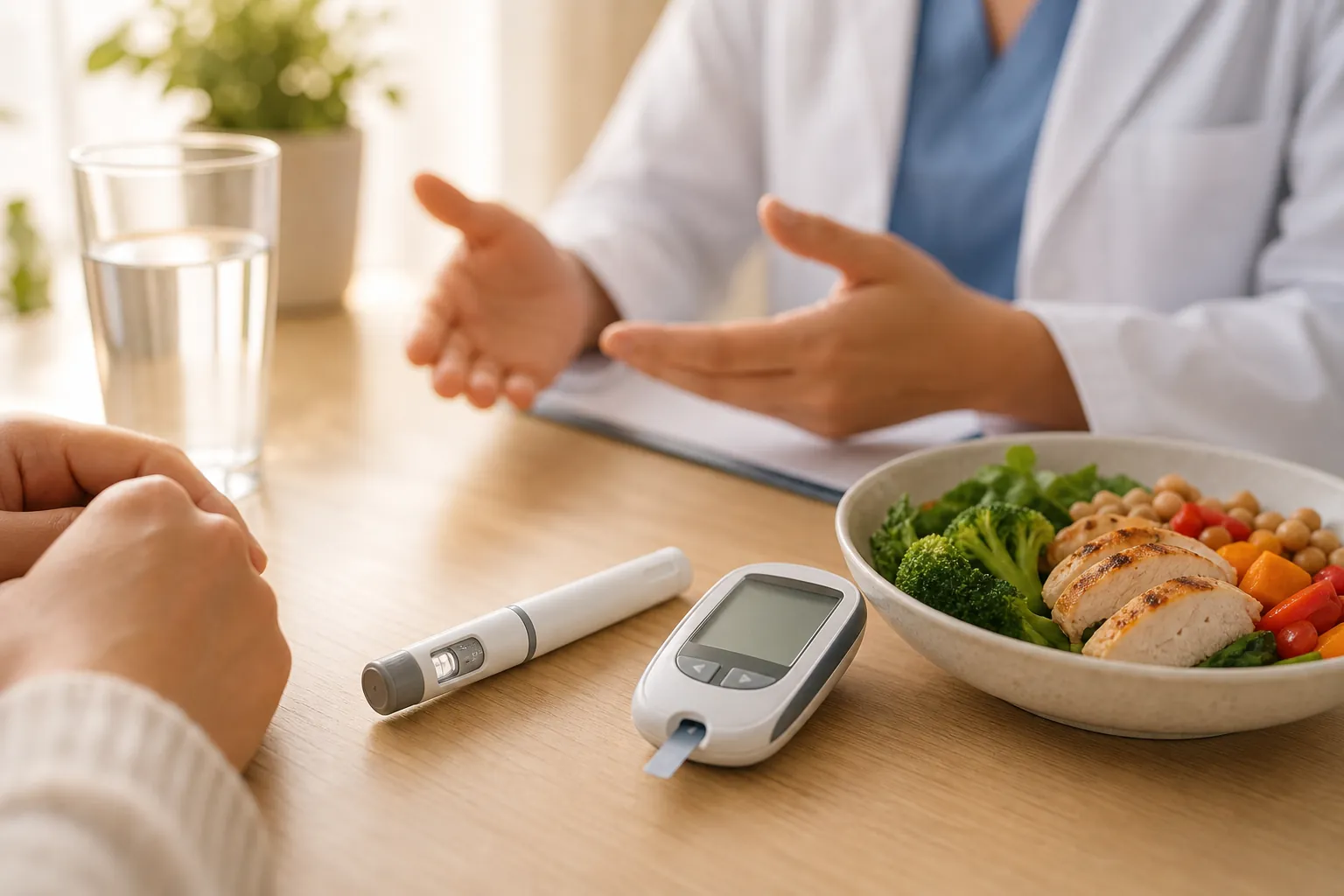
GLP-1 medication and metabolic health image for Zepbound and Prednisone Interaction: What Patients and Clinicians Need to Know
Clinical image for Zepbound and Prednisone Interaction: What Patients and Clinicians Need to Know Image: HealthRX.com AI-generated clinical image

At a glance

  • Interaction type / pharmacodynamic (opposing glucose effects), not pharmacokinetic
  • Prednisone glucose effect / raises fasting and postprandial glucose within 4 to 8 hours of dosing
  • Tirzepatide mechanism / dual GIP and GLP-1 receptor agonism; slows gastric emptying, increases insulin secretion
  • CYP involvement / tirzepatide is NOT a CYP3A4, 2D6, or P-gp substrate at clinical doses
  • Key risk / steroid-induced hyperglycemia that can exceed tirzepatide's glucose-lowering capacity
  • Monitoring recommendation / fasting and 2-hour post-meal glucose daily during prednisone courses
  • Dose adjustment / no tirzepatide dose change needed; adjust any concurrent insulin or sulfonylurea
  • FDA label warning / tirzepatide label notes glucose-lowering drugs may require dose reduction when added
  • Population at highest risk / patients with pre-diabetes, type 2 diabetes, or metabolic syndrome on Zepbound
  • Short-course vs. Long-term steroids / short bursts (<2 weeks) need monitoring; chronic steroids may need escalated diabetes therapy

How Zepbound and Prednisone Interact at a Mechanistic Level

Tirzepatide and prednisone do not compete for the same metabolic enzymes. The interaction is purely pharmacodynamic: two agents pulling blood glucose in opposite directions at the same time. Understanding each drug's mechanism clarifies why the net effect can be difficult to predict in any individual patient.

Tirzepatide's Mechanism of Action

Tirzepatide is a once-weekly subcutaneous injectable that acts simultaneously on glucose-dependent insulinotropic polypeptide (GIP) receptors and glucagon-like peptide-1 (GLP-1) receptors. This dual agonism drives multiple glucose-lowering actions: it stimulates insulin secretion in response to meals, suppresses inappropriate glucagon release, and slows gastric emptying [1]. In the SURMOUNT-1 trial (N=2,539), tirzepatide 15 mg produced a mean weight reduction of 20.9% at 72 weeks compared with 3.1% for placebo [2]. Reduced adiposity itself improves insulin sensitivity, adding an indirect glucose-lowering effect on top of the direct receptor signaling.

Critically, tirzepatide's insulinotropic actions are glucose-dependent. At normal or low blood glucose concentrations, insulin secretion does not spike the way it does with sulfonylureas. That glucose-dependence limits the standalone hypoglycemia risk of tirzepatide, but it also means tirzepatide may not fully counteract the steep hyperglycemia prednisone can produce, particularly in the afternoon when prednisolone levels peak [3].

Prednisone's Effect on Glucose Metabolism

Prednisone is rapidly converted by hepatic 11-beta-hydroxysteroid dehydrogenase to prednisolone, its active form. Prednisolone drives hyperglycemia through at least four parallel mechanisms [4]:

  • Hepatic glucose production increases via stimulation of gluconeogenic enzymes (PEPCK, glucose-6-phosphatase).
  • Peripheral insulin resistance rises in skeletal muscle, reducing GLUT-4 translocation.
  • Pancreatic beta-cell function declines with prolonged exposure.
  • Visceral fat accumulation (with chronic use) amplifies the insulin-resistant state.

The glucose spike from morning prednisone dosing typically peaks in the early-to-mid afternoon and returns toward baseline by the following morning, creating a characteristic afternoon-heavy hyperglycemia pattern [4]. A single 20 mg prednisone dose can raise postprandial glucose by 100 to 200 mg/dL in patients with pre-existing insulin resistance [5].

Why No CYP or P-gp Interaction Exists

Tirzepatide is a 39-amino-acid acylated peptide. It is not metabolized by cytochrome P450 enzymes and is not a substrate, inducer, or inhibitor of CYP3A4, CYP2D6, or P-glycoprotein at therapeutic concentrations. The FDA label for Zepbound states that tirzepatide's small effects on gastric-emptying rate may transiently reduce the rate (not extent) of oral drug absorption, with no clinically meaningful impact on the pharmacokinetics of co-administered drugs in dedicated drug-interaction studies [1]. Prednisone is primarily a CYP3A4 substrate, and because tirzepatide does not touch that pathway, no pharmacokinetic amplification or reduction of prednisone exposure occurs.

Clinical Significance: How Serious Is This Interaction?

The severity depends heavily on three patient-level variables: baseline glycemic status, prednisone dose, and duration of steroid therapy.

Patients Without Diabetes

In a metabolically healthy patient with a BMI above 30 who is taking Zepbound for weight management alone, a short prednisone course (e.g., 5-day burst for asthma or contact dermatitis) is unlikely to produce symptomatic hyperglycemia. Blood glucose may rise above 140 mg/dL after meals, but tirzepatide's ongoing postprandial insulin enhancement will blunt the peak. The American Diabetes Association's 2024 Standards of Care recommend glucose monitoring whenever glucocorticoids are initiated in at-risk individuals, even those without a prior diabetes diagnosis [6].

Patients With Pre-Diabetes or Type 2 Diabetes

This group faces real clinical risk. Steroid-induced hyperglycemia in patients with pre-existing beta-cell dysfunction can push glucose values above 250 mg/dL, a threshold tirzepatide alone cannot reliably contain. The SURMOUNT-3 trial (N=579) showed tirzepatide reduced A1C by a mean of 2.1 percentage points in adults with obesity and type 2 diabetes [7], but that effect reflects weeks of steady-state action, not hour-to-hour counterregulation against an acute steroid load.

A 2021 analysis published in Diabetes Care estimated that approximately 20 to 30% of hospitalized patients without known diabetes develop glucocorticoid-induced hyperglycemia when given moderate-to-high-dose steroids [5]. For patients already on a GLP-1 or GIP/GLP-1 agonist, the degree of protection is partial at best.

Long-Term Steroid Use

Patients requiring chronic prednisone (for conditions like rheumatoid arthritis, inflammatory bowel disease, or organ transplant maintenance) face cumulative beta-cell stress and worsening insulin resistance that tirzepatide's glucose-lowering effects are unlikely to fully compensate for over time. These patients may need escalation to basal insulin, particularly NPH insulin given at noon (which matches the afternoon glucose peak driven by morning prednisone), a strategy supported by the Endocrine Society's clinical practice guideline on inpatient hyperglycemia [8].

Monitoring Plan During Concurrent Use

No blanket dose change to tirzepatide is indicated when prednisone is co-prescribed. Monitoring, not medication substitution, is the first clinical step.

Blood Glucose Testing Schedule

For outpatient prednisone courses of 10 mg/day or more, the following monitoring schedule is clinically reasonable:

  • Fasting glucose each morning before prednisone is taken.
  • Two-hour post-lunch glucose (capturing the afternoon peak).
  • Bedtime glucose if the patient reports afternoon readings above 180 mg/dL.

Patients can use a standard glucometer or a continuous glucose monitor (CGM). CGM data offer the clearest view of the full diurnal pattern and require no finger-stick discipline, which improves adherence to monitoring [6].

Thresholds That Should Trigger a Call to the Prescriber

  • Fasting glucose above 130 mg/dL on two consecutive days.
  • Post-meal glucose above 200 mg/dL.
  • Any reading above 250 mg/dL.
  • Symptoms of hyperglycemia: polydipsia, polyuria, blurred vision, or unusual fatigue.

Adjusting Co-Prescribed Antidiabetic Agents

If the patient is also taking a sulfonylurea (e.g., glipizide, glyburide), the sulfonylurea dose may need a temporary increase during the prednisone course and a return to baseline when steroids are tapered. Conversely, when prednisone is stopped, the glucose-raising effect disappears within 24 to 48 hours, and any insulin or sulfonylurea that was escalated during the steroid course must be stepped back down promptly to avoid hypoglycemia [8].

Tirzepatide's own dose should not be adjusted in response to a short steroid course. The 4-week titration schedule (from 2.5 mg to 5 mg to 10 mg to 15 mg) exists to manage GI tolerability, not glycemia, and manipulating it to chase steroid-induced glucose swings is not supported by the prescribing information [1].

Gastric Emptying: An Underappreciated Variable

Prednisone itself does not significantly alter gastric motility. Tirzepatide, by slowing gastric emptying, subtly changes the absorption rate of orally administered drugs taken around mealtimes. For most co-prescribed medications this effect is minor and not clinically meaningful, as confirmed in tirzepatide's drug-interaction studies cited in the FDA label [1]. Prednisone, taken as a tablet, has a Tmax of approximately 1.5 to 2 hours; modest slowing of gastric emptying could slightly delay but not reduce the total prednisolone exposure. Clinicians should not expect this to require a prednisone dose adjustment.

Patient Counseling Framework

The following guidance is designed for use during a telehealth or in-person encounter when a patient on Zepbound is prescribed prednisone.

What to Tell Patients Before Starting Prednisone

  1. Explain that prednisone raises blood sugar as a direct pharmacological effect, not a sign that Zepbound has stopped working.
  2. Remind the patient that their weekly Zepbound injection should continue on its normal schedule. Skipping a dose is not recommended.
  3. Provide a written glucose threshold list (see the monitoring thresholds above) and confirm the patient has a glucometer or CGM access.
  4. Warn about the timing: glucose tends to peak in the afternoon, several hours after a morning prednisone dose. An afternoon glucose check is more informative than a morning fasting check alone.
  5. Instruct the patient to call or message the care team if fasting glucose exceeds 130 mg/dL or any reading exceeds 250 mg/dL.

What to Tell Patients When Prednisone Is Stopping

Steroid tapers sometimes extend over weeks, and the glucose-raising effect diminishes as the prednisone dose decreases. Patients who needed a temporary insulin supplement during peak steroid use must reduce or stop that supplement as the taper concludes. Hypoglycemia risk is real in this transition window, particularly for patients who also take sulfonylureas. Patients should monitor glucose every morning and before lunch during the final week of a taper and the first week after stopping.

Lifestyle Adjustments That Help

Dietary carbohydrate restriction during a prednisone course (targeting <100 g of total carbohydrates per day) can attenuate postprandial glucose spikes independently of medication. Brief post-meal walks of 10 to 15 minutes improve postprandial glucose disposal through a non-insulin-dependent mechanism [6]. Neither intervention replaces medication monitoring, but both reduce the magnitude of the glucose swings that make concurrent management difficult.

Special Populations

Patients Receiving High-Dose Pulse Steroids

Pulse methylprednisolone (e.g., 500 to 1,000 mg intravenously for MS relapse or severe inflammatory conditions) produces far more intense hyperglycemia than oral prednisone courses. In this inpatient setting, a patient on tirzepatide will almost always require sliding-scale or basal-bolus insulin regardless of their outpatient glucose control. Tirzepatide injections are typically held during hospitalization per institutional protocols, and the care team should restart them at the previously tolerated dose once the patient is discharged and tolerating oral intake.

Patients With Adrenal Insufficiency

A small subset of patients on long-term prednisone has underlying adrenal insufficiency (AI), where the steroid is replacement therapy rather than pharmacological treatment. In AI patients, the prednisone dose is calibrated to physiological needs (typically hydrocortisone equivalent doses of 15 to 25 mg/day), and the glucose impact is lower than with pharmacological dosing. Tirzepatide-related hypoglycemia is a theoretical concern in this group if the replacement dose is borderline adequate and tirzepatide suppresses glucagon. Monitoring is still warranted.

Patients Using Zepbound During Prednisone Taper for Allergy or Asthma

Medrol Dosepaks (methylprednisolone 4 mg taper packs) and short prednisone bursts in the 20 to 40 mg/day range for 5 to 10 days represent the most common outpatient steroid scenario. In patients on Zepbound who do not have diabetes, these short courses carry a low but non-zero hyperglycemia risk. A 2020 retrospective study in the Journal of Clinical Endocrinology and Metabolism (N=638) found that even non-diabetic patients prescribed short outpatient steroid courses had a 15.7% rate of at least one glucose reading above 200 mg/dL when monitored [9]. Awareness matters even for "routine" steroid prescriptions.

What the FDA Labels Say

The Zepbound (tirzepatide) prescribing information, approved by the FDA in November 2023, states explicitly that "when tirzepatide is used with an insulin secretagogue (e.g., sulfonylurea) or insulin, the risk of hypoglycemia may be increased" and recommends considering a dose reduction of those agents [1]. The label does not list prednisone as a specific named interaction, which is consistent with the absence of a pharmacokinetic mechanism. The prescribing information for prednisone (generic formulations) notes that corticosteroids may increase blood glucose concentrations and that patients with diabetes may require adjustment of their antidiabetic therapy [10].

The Endocrine Society's 2021 clinical practice guideline states: "We recommend that glucose be monitored in all patients who receive glucocorticoid therapy for more than a few days, regardless of baseline diabetes status." [8] That recommendation applies directly to patients on Zepbound, because even without formal diabetes, Zepbound is prescribed for metabolic conditions that predispose to glucose dysregulation.

Drug Interaction Database Classification

Standard drug-interaction databases (Lexicomp, Micromedex, Clinical Pharmacology) classify the tirzepatide-prednisone combination as a moderate interaction based on pharmacodynamic antagonism. "Moderate" in this context does not mean the interaction is unusual or dangerous for most patients. It means the combination warrants increased monitoring and patient education rather than contraindication or mandatory dose adjustment. This classification aligns with how similar GLP-1 agonist-corticosteroid pairings (e.g., semaglutide and prednisone) are categorized [3].

Summary Table: Managing Zepbound Plus Prednisone by Clinical Scenario

| Clinical Scenario | Prednisone Dose | Monitoring Frequency | Likely Intervention | |---|---|---|---| | No diabetes, short course | <40 mg x <10 days | Daily fasting + afternoon glucose | Lifestyle, reassurance | | No diabetes, longer course | <40 mg x 2 to 6 weeks | Twice-daily glucose | Consider temporary metformin or insulin if glucose >200 mg/dL | | Pre-diabetes or T2DM, short course | Any dose | Twice-daily glucose | Adjust sulfonylurea or add sliding scale insulin | | T2DM, chronic steroids | Any dose | Twice-daily glucose + A1C every 3 months | Basal insulin, NPH at noon preferred | | High-dose pulse steroids (inpatient) | 500 to 1,000 mg IV | Glucose every 4 to 6 hours | Hold tirzepatide; basal-bolus insulin |

Patients on Zepbound 15 mg who develop glucose readings consistently above 180 mg/dL on prednisone 20 mg/day should have their prescriber notified within 24 hours so a bridging insulin strategy can be initiated before values escalate further.

Frequently asked questions

Can I take Zepbound with prednisone?
Yes. There is no pharmacokinetic contraindication to using Zepbound (tirzepatide) and prednisone together. The combination requires closer blood glucose monitoring because prednisone raises glucose while tirzepatide lowers it, and the net effect varies by patient. Continue your Zepbound injection on its normal weekly schedule unless your prescriber says otherwise.
Is it safe to combine Zepbound and prednisone?
For most patients, the combination is safe with appropriate monitoring. The main risk is that prednisone can raise blood sugar beyond what tirzepatide can offset, particularly in patients with pre-diabetes or type 2 diabetes. Short steroid courses in patients without diabetes carry lower but not zero risk. Daily glucose checks during the prednisone course and a clear plan for when to call your care team make this combination manageable.
Does prednisone reduce the effectiveness of Zepbound for weight loss?
Prednisone can cause fluid retention and increased appetite, which may temporarily slow weight loss or cause a small weight gain during a steroid course. Chronic prednisone promotes visceral fat accumulation. These effects are dose- and duration-dependent. A short prednisone burst is unlikely to meaningfully reverse tirzepatide-driven weight loss, but long-term steroid use can partially counteract it.
Will Zepbound help control the blood sugar spikes from prednisone?
Partially. Tirzepatide stimulates insulin secretion in response to elevated glucose, which can blunt steroid-induced postprandial spikes. However, high prednisone doses or pre-existing insulin resistance can overwhelm this effect. Tirzepatide alone is not a reliable substitute for insulin when steroid doses exceed 20 to 40 mg/day in patients with beta-cell impairment.
Do I need to change my Zepbound dose when taking prednisone?
No tirzepatide dose adjustment is recommended for a prednisone course. The Zepbound titration schedule is based on GI tolerability, not real-time glycemic control. What may need adjustment is any concurrent sulfonylurea or insulin, which should be increased during the steroid course and reduced again once prednisone is stopped or tapered.
What blood sugar levels should make me call my doctor while on both medications?
Call your prescriber if your fasting glucose exceeds 130 mg/dL on two consecutive mornings, if any post-meal reading is above 200 mg/dL, or if any single reading exceeds 250 mg/dL. Also call if you experience increased thirst, frequent urination, blurred vision, or unusual fatigue, as these may signal significant hyperglycemia.
How long does steroid-induced high blood sugar last after stopping prednisone?
Glucose typically returns toward baseline within 24 to 48 hours of stopping prednisone in most patients. During a taper, glucose falls gradually as the prednisone dose decreases. Any insulin or sulfonylurea that was escalated during the steroid course needs to be reduced promptly after stopping to prevent hypoglycemia.
Can I still use a GLP-1 drug like Zepbound if I need steroids long term?
Yes, but long-term steroid use often requires escalated diabetes therapy that goes beyond what tirzepatide alone can provide. Patients on chronic prednisone for conditions like rheumatoid arthritis or inflammatory bowel disease frequently need basal insulin added to their regimen. Tirzepatide can remain part of the treatment plan for weight management and metabolic benefits, but the glucose management strategy typically needs to expand.
Does Zepbound affect how prednisone is absorbed?
Tirzepatide slows gastric emptying, which can slightly delay the absorption rate of oral medications. This may push prednisone's peak blood level (Tmax) back by 30 to 60 minutes, but it does not meaningfully reduce the total amount of prednisolone that reaches systemic circulation. No prednisone dose adjustment is needed for this reason.
What is the interaction type between tirzepatide and prednisone?
The interaction is pharmacodynamic, not pharmacokinetic. Tirzepatide is not metabolized by CYP3A4 or P-glycoprotein, so prednisone's CYP3A4 substrate status is irrelevant. The clinical concern is that the two drugs have opposing effects on blood glucose: tirzepatide lowers it, and prednisone raises it.
Is the Zepbound-prednisone combination contraindicated?
No. The combination is not contraindicated. Standard drug-interaction databases classify it as a moderate interaction based on pharmacodynamic glucose effects, which requires monitoring rather than avoidance. Patients should inform both prescribers about all concurrent medications to ensure coordinated monitoring and any needed antidiabetic dose adjustments.

References

  1. Eli Lilly and Company. Zepbound (tirzepatide) Prescribing Information. U.S. Food and Drug Administration; 2023. https://www.accessdata.fda.gov/drugsatfda_docs/label/2023/217806s000lbl.pdf
  2. Jastreboff AM, Aronne LJ, Ahmad NN, et al. Tirzepatide once weekly for the treatment of obesity. N Engl J Med. 2022;387(3):205-216. https://www.nejm.org/doi/10.1056/NEJMoa2206038
  3. Drucker DJ. The biology of incretin hormones. Cell Metab. 2006;3(3):153-165. https://pubmed.ncbi.nlm.nih.gov/16517403/
  4. Tamez-Pérez HE, Quintanilla-Flores DL, Rodríguez-Gutiérrez R, González-González JG, Tamez-Peña AL. Steroid hyperglycemia: Prevalence, early detection and therapeutic recommendations: A narrative review. World J Diabetes. 2015;6(8):1073-1081. https://pubmed.ncbi.nlm.nih.gov/26265995/
  5. Clore JN, Thurby-Hay L. Glucocorticoid-induced hyperglycemia. Endocr Pract. 2009;15(5):469-474. https://pubmed.ncbi.nlm.nih.gov/19454391/
  6. American Diabetes Association Professional Practice Committee. Standards of Care in Diabetes-2024. Diabetes Care. 2024;47(Suppl 1):S1-S321. https://diabetesjournals.org/care/issue/47/Supplement_1
  7. Wadden TA, Chao AM, Machineni S, et al. Tirzepatide after intensive lifestyle intervention in adults with overweight or obesity: the SURMOUNT-3 phase 3 trial. Nat Med. 2023;29(11):2909-2918. https://pubmed.ncbi.nlm.nih.gov/37735560/
  8. Umpierrez GE, Hellman R, Korytkowski MT, et al. Management of hyperglycemia in hospitalized patients in non-critical care setting: an Endocrine Society clinical practice guideline. J Clin Endocrinol Metab. 2012;97(1):16-38. https://pubmed.ncbi.nlm.nih.gov/22223765/
  9. Liu XX, Zhu XM, Miao Q, Ye HY, Zhang ZY, Li YM. Hyperglycemia induced by glucocorticoids in nondiabetic patients: a meta-analysis. Ann Nutr Metab. 2014;65(4):324-332. https://pubmed.ncbi.nlm.nih.gov/25413651/
  10. Prednisone tablets USP Prescribing Information. U.S. Food and Drug Administration. https://www.accessdata.fda.gov/drugsatfda_docs/label/2012/011306s038lbl.pdf
Free2-min check·
Start assessment