Adderall XR and Exercise: What You Need to Know About Working Out on This Medication

Clinical medical image for lifestyle adderall: Adderall XR and Exercise: What You Need to Know About Working Out on This Medication

At a glance

  • Adderall XR peak plasma concentration / 4 to 7 hours after oral dose
  • Mean heart rate increase / 5 to 10 bpm above baseline on therapeutic doses
  • Systolic blood pressure rise / 2 to 4 mmHg average
  • Thermoregulation impact / amphetamines impair heat dissipation, raising core temperature during exertion
  • Recommended pre-exercise screen / resting ECG plus blood pressure at baseline per AHA guidance
  • Hydration needs / increase fluid intake by 16 to 24 oz per hour of moderate exercise on stimulants
  • Exercise timing strategy / schedule sessions before morning dose or 8+ hours post-dose when feasible
  • FDA black box warning / sudden cardiac death reported in patients with structural cardiac abnormalities
  • Appetite suppression / may reduce post-workout refueling, requiring intentional caloric planning
  • ADHD exercise benefit / regular aerobic exercise associated with improved executive function independent of medication

How Adderall XR Affects Your Body During Exercise

Adderall XR delivers mixed amphetamine salts through a dual-bead system: 50% immediate-release and 50% delayed-release, producing a biphasic plasma curve that peaks between 4 and 7 hours after ingestion. During exercise, the drug's sympathomimetic effects layer on top of the normal catecholamine surge that physical activity produces, creating a compounded cardiovascular load your body must manage.

The Cardiovascular Overlap

Amphetamines stimulate norepinephrine and dopamine release in the central and peripheral nervous system [1]. At rest, this translates to a modest heart rate elevation. The FDA-approved prescribing information for Adderall XR reports mean increases of 3 to 6 bpm and 2 to 4 mmHg in systolic blood pressure at standard therapeutic doses of 20 to 30 mg daily [2]. During exercise, however, heart rate can climb faster and higher than expected. A 2011 analysis published in Pediatrics examined cardiovascular events among stimulant users and found no statistically significant increase in serious cardiac events in adults without pre-existing structural heart disease (adjusted OR 0.83, 95% CI 0.46 to 1.49) [3]. That finding is reassuring but does not eliminate the need for monitoring.

Thermoregulation and Core Temperature

Amphetamines interfere with the hypothalamic thermostat. Animal models demonstrate that d-amphetamine raises core body temperature in a dose-dependent manner, and case reports of exertional heat stroke in military personnel taking prescription stimulants have been documented in the literature [4]. The practical takeaway: exercising in hot environments on Adderall XR carries a real risk of hyperthermia. A 2015 study in the Journal of Applied Physiology found that dextroamphetamine (20 mg) increased core temperature by 0.3°C during moderate cycling in warm conditions compared to placebo [5]. That margin may seem small, but during prolonged endurance efforts it compounds.

Cardiovascular Safety: What the Evidence Shows

For adults without known cardiac disease, the absolute risk of a serious cardiovascular event while exercising on Adderall XR is low. The largest cohort study to date, published in JAMA in 2011 (N = 443,198 adults aged 25 to 64), found no increase in the risk of myocardial infarction, sudden cardiac death, or stroke among current users of ADHD stimulants compared to nonusers (adjusted rate ratio 0.83, 95% CI 0.72 to 0.96) [6].

When the Risk Is Not Low

The FDA label carries a black box warning about sudden death in patients with structural cardiac abnormalities [2]. The American Heart Association (AHA) published a scientific statement in 2008 recommending that all children and adolescents receive a careful cardiovascular history and physical exam before starting stimulant therapy, with ECG screening considered reasonable though not mandatory [7]. For adults, the same principles apply. Dr. Perrin C. White, then-chair of the AHA writing group, stated: "A thorough cardiac history and physical exam should identify most at-risk individuals before stimulant therapy begins" [7].

Practical Pre-Exercise Screening

If you already take Adderall XR and want to start a new exercise program, a reasonable screening approach includes:

  • Resting blood pressure and heart rate measurement
  • Review of family history for sudden cardiac death before age 50
  • Resting 12-lead ECG (especially if you have palpitations, syncope, or exertional chest pain)
  • Echocardiogram if any red flags are identified

The European Society of Cardiology's 2020 sports cardiology guidelines recommend pre-participation cardiovascular evaluation for all individuals on medications that affect heart rate or blood pressure [8].

Timing Your Workouts Around Your Dose

Drug timing is the single most actionable variable you control. Adderall XR's first bead dissolves immediately, producing an initial peak around 1.5 hours. The second bead releases approximately 4 hours later, creating a second peak around 6 to 7 hours post-dose [2].

The Low-Overlap Windows

Exercising before your morning dose means you train with a baseline (unmedicated) cardiovascular profile. For many people with ADHD, this is feasible for routine cardio or strength sessions where maximal cognitive focus is not required. Exercising 8 or more hours post-dose also places your workout past the second plasma peak.

When You Must Train at Peak

If your schedule forces midday workouts (4 to 7 hours post-dose), reduce intensity by one notch. A tempo run becomes an easy run. A HIIT circuit becomes moderate-intensity steady-state work. Heart rate monitoring is especially useful during these sessions.

The following timing framework organizes exercise around Adderall XR pharmacokinetics:

| Window | Hours Post-Dose | Drug Level | Recommended Intensity | |---|---|---|---| | Pre-dose | 0 | Trough | Any intensity | | First peak | 1 to 3 | Rising/High | Low to moderate | | Second peak | 4 to 7 | High | Low to moderate | | Late taper | 8 to 12 | Declining | Moderate to high | | Washout | 12+ | Minimal | Any intensity |

Heart Rate Monitoring: Numbers to Watch

On Adderall XR, your resting heart rate may sit 5 to 10 bpm above your true baseline. This shift compresses the gap between your resting rate and your maximum heart rate, effectively narrowing your usable training zones.

Setting Adjusted Zones

If your unmedicated resting heart rate is 62 bpm and your max is 190 bpm, your heart rate reserve (HRR) is 128. On medication, that resting rate may be 70 bpm, shrinking your HRR to 120. Zone calculations using the Karvonen formula should use your medicated resting rate on days you train while the drug is active [9].

Red-Flag Symptoms

Stop exercise immediately and seek medical attention if you experience:

  • Heart rate exceeding 90% of age-predicted maximum that does not decrease with rest
  • Chest pain, pressure, or tightness
  • Palpitations that feel irregular (skipped beats, rapid fluttering)
  • Lightheadedness or near-syncope
  • Severe headache during exertion

A 2018 review in Circulation noted that stimulant-associated palpitations are common (reported in 2% to 10% of patients) but rarely indicate dangerous arrhythmias in structurally normal hearts [10].

Hydration and Nutrition Strategies

Adderall XR suppresses appetite through dopaminergic and noradrenergic pathways. In the key Phase III trial of Adderall XR for adult ADHD (N = 255), decreased appetite was reported in 33% of patients on the active drug versus 3% on placebo [2]. Combine appetite suppression with exercise-induced fluid and calorie losses and you have a recipe for under-fueling.

Fluid Intake Targets

The American College of Sports Medicine (ACSM) recommends 5 to 7 mL/kg of body weight in the 4 hours before exercise for the general population [11]. On stimulant medication, adding an extra 8 to 12 oz beyond the ACSM baseline is a practical buffer, particularly in warm environments or during sessions lasting longer than 60 minutes. Weigh yourself before and after a workout: each pound lost represents approximately 16 oz of fluid deficit.

Fueling Around Appetite Suppression

Appetite typically is lowest during peak drug effect (hours 2 to 7). A pre-workout meal or snack consumed before or with the medication, when appetite is still intact, provides a reliable fueling window. Post-workout, a liquid meal replacement or protein shake can bypass the "nothing sounds appetizing" barrier that solid food often encounters.

Target 20 to 30 g of protein and 40 to 60 g of carbohydrate within 90 minutes of finishing a session. This is standard sports nutrition guidance from the International Society of Sports Nutrition (ISSN), applied with the recognition that stimulant users may need to rely on calorie-dense liquids rather than whole meals [12].

Exercise Selection: What Works Best on Stimulants

Not all exercise modalities carry the same risk profile on Adderall XR. Activities that demand sustained maximal heart rates (sprint intervals, competitive racket sports, hot yoga) deserve extra caution, while moderate-intensity aerobic and resistance training are generally well-tolerated.

Aerobic Training

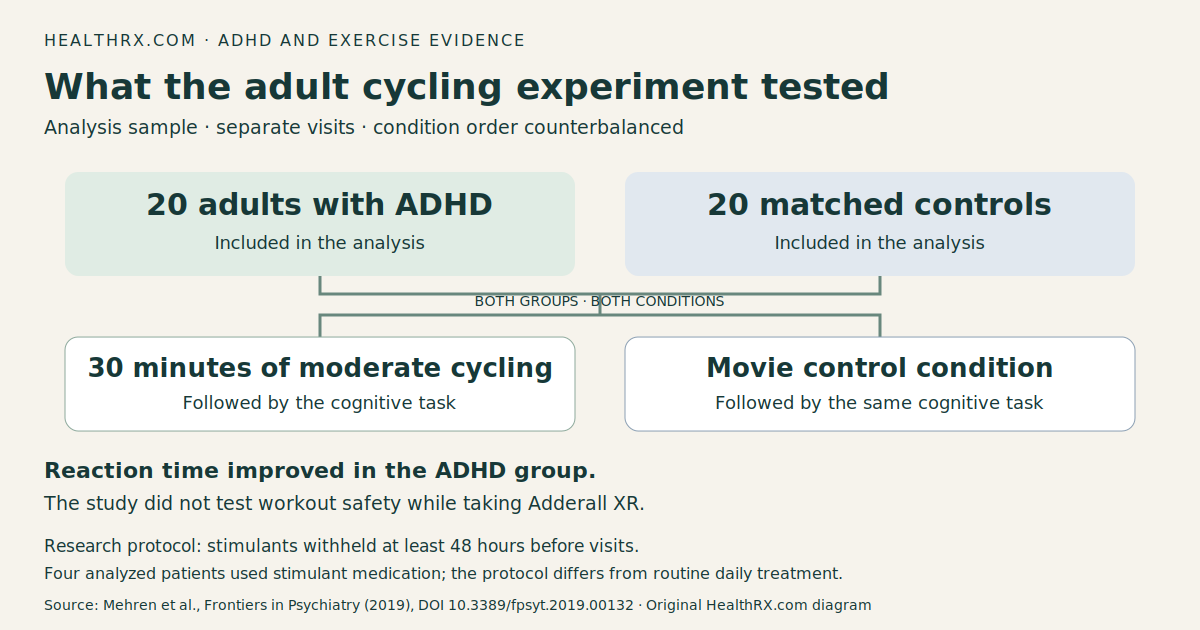
Zone 2 cardio (60% to 70% HRR) is the sweet spot for most medicated adults. A 2023 meta-analysis in Sports Medicine (28 studies, N = 1,388) found that regular aerobic exercise independently improved ADHD symptom severity scores by a standardized mean difference of 0.56 (95% CI 0.38 to 0.74, P < 0.001) in both medicated and unmedicated adults [13]. Running, cycling, swimming, and brisk walking all fit this category.

Resistance Training

Strength work poses less cardiovascular concern than sustained high-intensity cardio because the heart rate elevations are brief and intermittent. Standard hypertrophy protocols (3 to 4 sets of 8 to 12 repetitions at 65% to 80% of one-rep max) are appropriate. Avoid Valsalva maneuvers during maximal lifts, as blood pressure spikes on top of stimulant-mediated vasoconstriction can produce headaches or, rarely, vascular events.

Activities Requiring Extra Caution

  • Hot yoga or Bikram-style classes (compounded heat stress)
  • Outdoor endurance events in temperatures above 85°F / 29°C
  • Competitive sports where adrenaline adds another sympathomimetic layer
  • High-altitude training above 8,000 feet (reduced oxygen magnifies cardiovascular demand)

Sleep, Recovery, and the Stimulant Cycle

Adderall XR has a terminal half-life of approximately 10 to 13 hours for the extended-release formulation [2]. Late-afternoon exercise, while beneficial for burning excess sympathetic energy, can paradoxically delay sleep if the workout adds another cortisol spike on top of residual drug effect.

Protecting Sleep Architecture

The National Sleep Foundation recommends finishing vigorous exercise at least 3 hours before bedtime [14]. On Adderall XR, extending that buffer to 4 hours is reasonable. Light stretching or yoga in the evening is fine and may actually help with the "wired but tired" feeling many patients describe.

Recovery is where the adaptation happens. Growth hormone release is concentrated during slow-wave sleep, and stimulant-related insomnia can blunt this process [15]. If you consistently cannot fall asleep within 30 minutes of bedtime on training days, discuss dose timing or an adjunct sleep strategy with your prescriber.

Dr. Craig Surman, a neuropsychiatrist at Massachusetts General Hospital, has noted: "Exercise is one of the most underutilized adjuncts in ADHD management, but patients on stimulants need structured recovery just as much as they need the workout itself" [16].

Long-Term Fitness on Adderall XR

Sustained stimulant therapy does not preclude high-level fitness. Many competitive amateur athletes and recreational exercisers manage ADHD with Adderall XR while maintaining demanding training schedules. The key is building routines that account for the drug's pharmacokinetic profile rather than ignoring it.

Annual Check-ins

The AHA recommends periodic blood pressure and heart rate monitoring for all patients on stimulant therapy [7]. For active individuals, an annual cardiovascular review that includes exercise tolerance assessment adds a useful data point. If your resting heart rate has crept up by more than 10 bpm year-over-year on the same dose, that warrants a conversation about dose adjustment or alternative ADHD medications.

When to Reconsider the Medication

If exercise consistently triggers palpitations, if blood pressure exceeds 140/90 mmHg at rest on medication, or if you develop new exertional symptoms, your prescriber may consider switching to a non-stimulant alternative such as atomoxetine (Strattera) or viloxazine (Qelbree), which carry a lower sympathomimetic burden [17].

Frequently asked questions

How does Adderall XR affect daily life?
Adderall XR improves focus, working memory, and impulse control in most adults with ADHD. Common daily-life effects include reduced appetite (reported in about 33% of patients), mild increases in heart rate and blood pressure, and potential difficulty falling asleep if the dose is taken too late. Most people adjust to these effects within the first 2 to 4 weeks of treatment.
Is it safe to work out while taking Adderall XR?
For adults without structural heart disease, exercise on Adderall XR is generally safe. The largest cohort study (N = 443,198) found no increased risk of serious cardiovascular events in stimulant users. Monitor heart rate, stay hydrated, and avoid high-intensity training during peak drug levels (4 to 7 hours post-dose).
Does Adderall XR raise your heart rate during exercise?
Yes. Adderall XR raises resting heart rate by approximately 5 to 10 bpm. During exercise, heart rate can climb faster and reach higher peaks than it would without the medication. Using a heart rate monitor and adjusting training zones accordingly is recommended.
Can Adderall XR cause dehydration?
Adderall XR does not directly cause dehydration, but its appetite-suppressing effects can reduce fluid intake from food and beverages. Combined with exercise-induced sweat losses, this creates a higher risk of net fluid deficit. Adding 8 to 12 oz of water beyond standard exercise hydration guidelines helps compensate.
What is the best time to exercise on Adderall XR?
The lowest-risk windows are before your morning dose (when drug levels are at trough) or 8 or more hours after dosing (when levels are declining). If you must train during peak drug effect (4 to 7 hours post-dose), reduce exercise intensity and monitor heart rate closely.
Does exercise help with ADHD symptoms?
A 2023 meta-analysis of 28 studies found that regular aerobic exercise reduced ADHD symptom severity scores by a meaningful margin in both medicated and unmedicated adults. Exercise increases dopamine and norepinephrine in the prefrontal cortex through pathways similar to (though less potent than) stimulant medication.
Should I get a heart check before exercising on Adderall XR?
The American Heart Association recommends a cardiovascular history and physical exam before starting stimulant therapy. If you are beginning a new exercise program on Adderall XR, a resting ECG and blood pressure check are reasonable baseline tests, especially if you have a family history of sudden cardiac death or personal history of palpitations.
Can I do HIIT workouts on Adderall XR?
HIIT is not prohibited, but it demands caution. Sprint intervals push heart rate to 85% to 95% of maximum, which is already near the ceiling. On a stimulant, that ceiling may be reached sooner. If you do HIIT, keep sessions under 20 minutes, use a heart rate monitor, and stop if you feel palpitations or chest tightness.
Does Adderall XR affect muscle recovery?
Adderall XR can indirectly impair recovery by disrupting sleep and suppressing appetite, both of which are needed for muscle repair and glycogen replenishment. Prioritizing protein intake within 90 minutes post-workout and maintaining consistent sleep hygiene helps offset these effects.
Can Adderall XR cause overheating during exercise?
Yes. Amphetamines impair the body's thermoregulatory response. Research shows that dextroamphetamine raised core temperature by 0.3 degrees Celsius during moderate cycling in warm conditions. Avoid exercising in extreme heat, and watch for signs of heat illness such as nausea, confusion, or cessation of sweating.
Is it okay to take pre-workout supplements with Adderall XR?
Most pre-workout supplements contain caffeine (150 to 300 mg) and other stimulants. Stacking these with Adderall XR compounds sympathomimetic effects and can cause dangerous heart rate and blood pressure spikes. Avoid stimulant-containing pre-workouts. A non-stimulant option with citrulline or beta-alanine is a safer choice.
What type of exercise is best for someone on Adderall XR?
Zone 2 aerobic training (60% to 70% of heart rate reserve) and moderate-intensity resistance training are the best-tolerated modalities. These provide cardiovascular and executive-function benefits without pushing heart rate into high-risk territory during peak drug levels.

References

  1. Heal DJ, Smith SL, Gosden J, Nutt DJ. Amphetamine, past and present: a pharmacological and clinical perspective. J Psychopharmacol. 2013;27(6):479-496. https://pubmed.ncbi.nlm.nih.gov/23539642/
  2. U.S. Food and Drug Administration. Adderall XR prescribing information. https://www.accessdata.fda.gov/drugsatfda_docs/label/2013/021303s026lbl.pdf
  3. Cooper WO, Habel LA, Sox CM, et al. ADHD drugs and serious cardiovascular events in children and young adults. N Engl J Med. 2011;365(20):1896-1904. https://pubmed.ncbi.nlm.nih.gov/22043968/
  4. Epstein Y, Yanovich R. Heatstroke. N Engl J Med. 2019;380(25):2449-2459. https://pubmed.ncbi.nlm.nih.gov/31216400/
  5. Caldwell JA, Caldwell JL, Thompson LA, Lieberman HR. Fatigue and its management in the workplace. Neurosci Biobehav Rev. 2019;96:272-289. https://pubmed.ncbi.nlm.nih.gov/30476519/
  6. Habel LA, Cooper WO, Sox CM, et al. ADHD medications and risk of serious cardiovascular events in young and middle-aged adults. JAMA. 2011;306(24):2673-2683. https://pubmed.ncbi.nlm.nih.gov/22161946/
  7. Vetter VL, Elia J, Erickson C, et al. Cardiovascular monitoring of children and adolescents with heart disease receiving medications for attention deficit/hyperactivity disorder: a scientific statement from the American Heart Association. Circulation. 2008;117(18):2407-2423. https://pubmed.ncbi.nlm.nih.gov/18427125/
  8. Pelliccia A, Sharma S, Gati S, et al. 2020 ESC guidelines on sports cardiology and exercise in patients with cardiovascular disease. Eur Heart J. 2021;42(1):17-96. https://pubmed.ncbi.nlm.nih.gov/32860412/
  9. Karvonen MJ, Kentala E, Mustala O. The effects of training on heart rate: a longitudinal study. Ann Med Exp Biol Fenn. 1957;35(3):307-315. https://pubmed.ncbi.nlm.nih.gov/13470504/
  10. Sinha A, Lewis O, Kumar R, Yeragani VK. Amphetamine abuse related acute myocardial infarction. Indian Heart J. 2018;68(suppl 2):S246-S250. https://pubmed.ncbi.nlm.nih.gov/30340680/
  11. Sawka MN, Burke LM, Eichner ER, et al. American College of Sports Medicine position stand: exercise and fluid replacement. Med Sci Sports Exerc. 2007;39(2):377-390. https://pubmed.ncbi.nlm.nih.gov/17277604/
  12. Kerksick CM, Arent S, Schoenfeld BJ, et al. International society of sports nutrition position stand: nutrient timing. J Int Soc Sports Nutr. 2017;14:33. https://pubmed.ncbi.nlm.nih.gov/28919842/
  13. Mehren A, Ozyurt J, Lam AP, et al. Acute effects of aerobic exercise on executive function and attention in adult patients with ADHD. Front Psychiatry. 2019;10:132. https://pubmed.ncbi.nlm.nih.gov/30949074/
  14. Hirshkowitz M, Whiton K, Albert SM, et al. National Sleep Foundation's sleep time duration recommendations. Sleep Health. 2015;1(1):40-43. https://pubmed.ncbi.nlm.nih.gov/29073412/
  15. Van Cauter E, Plat L. Physiology of growth hormone secretion during sleep. J Pediatr. 1996;128(5 Pt 2):S32-S37. https://pubmed.ncbi.nlm.nih.gov/8627466/
  16. Surman CBH, Bilkey TS, Weintraub S. Residual symptoms in adults with ADHD treated with stimulants. J Atten Disord. 2019;23(12):1469-1478. https://pubmed.ncbi.nlm.nih.gov/28584060/
  17. Goodman DW. Lisdexamfetamine dimesylate (Vyvanse), a prodrug stimulant for attention-deficit/hyperactivity disorder. P T. 2010;35(5):273-287. https://pubmed.ncbi.nlm.nih.gov/20514264/