
NAFLD / MASLD Workplace Accommodations: A Clinical Guide
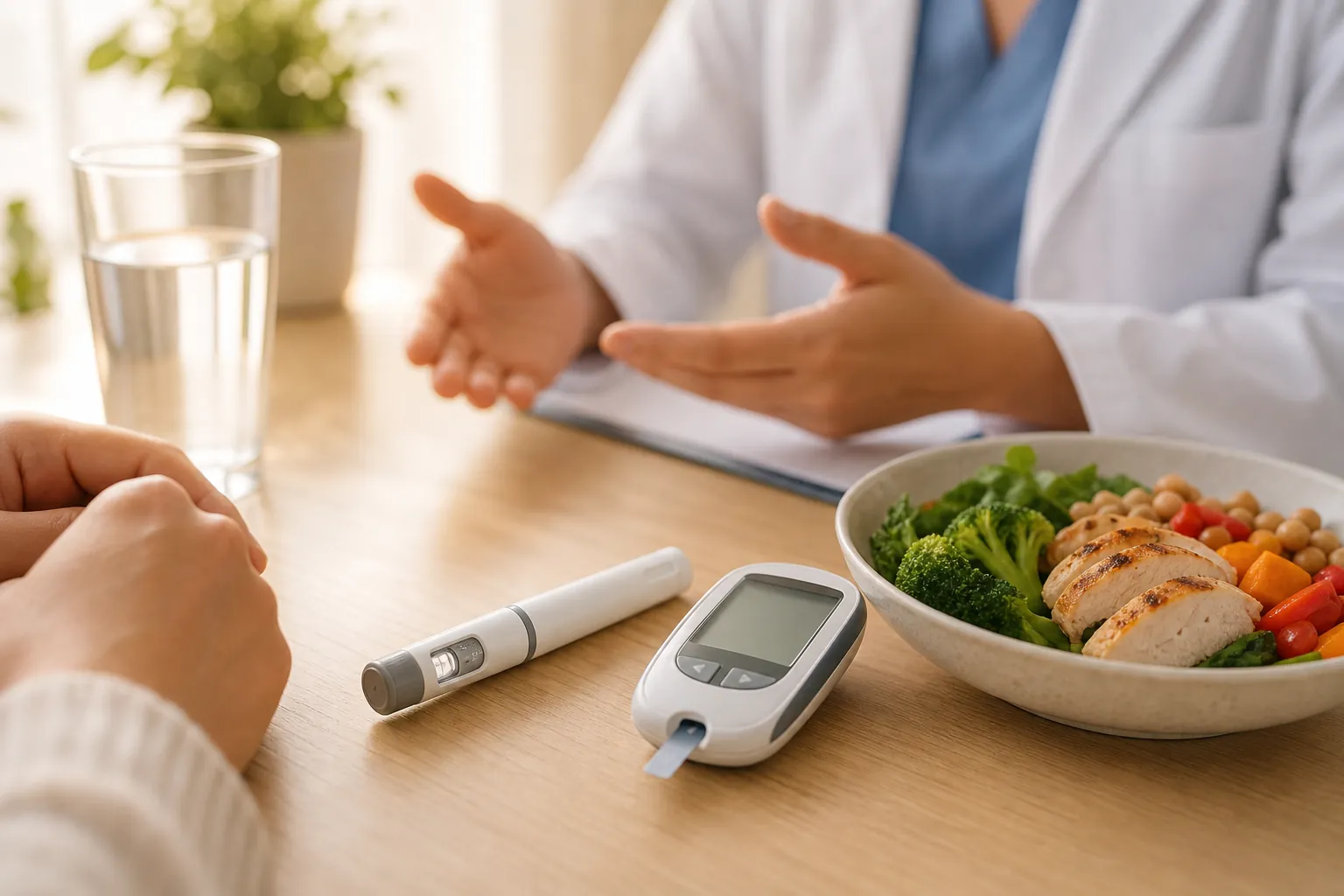
At a glance
- Prevalence / 25-30% of U.S. Adults have MASLD
- First FDA-approved MASH drug / Resmetirom (Rezdiffra), March 2024
- Weight loss target / 7-10% body weight reduces liver fat and inflammation
- Activity dose / 150 min/week moderate aerobic exercise improves hepatic steatosis
- GLP-1 data / Semaglutide 2.4 mg cut liver fat by 31% vs. 4% placebo in phase 2 RCT
- Fatigue prevalence / Up to 65% of patients with MASLD report clinically significant fatigue
- ADA coverage / MASLD with metabolic comorbidities may qualify for ADA workplace accommodations
- Dietary target / Mediterranean-pattern diet reduces liver fat independent of weight loss
- Fructose risk / Each 10 g/day increase in added fructose associates with a 17% higher odds of MASLD
What Is MASLD and Why Does the Workplace Matter?
MASLD is a spectrum disease driven by insulin resistance, excess caloric intake, and physical inactivity. The workplace is where most adults spend 40 or more waking hours per week, making it a direct determinant of the metabolic behaviors that drive or reverse liver fat accumulation.
The Renamed Condition
The Delphi consensus nomenclature adopted in 2023 replaced "NAFLD" with "MASLD" and "NASH" with "MASH" to reflect the metabolic origins of the disease and to remove stigmatizing language. The American Association for the Study of Liver Diseases (AASLD) endorsed this change, stating that the new terminology "better reflects the pathophysiology and removes language that may discourage patients from seeking care." [1] For patients navigating employer accommodation requests, the older NAFLD acronym still appears on medical records and legal documents, so knowing both terms matters.
Scale of the Problem
MASLD affects an estimated 80 to 100 million U.S. Adults. [2] Among those, roughly 20 percent progress to MASH (metabolic-associated steatohepatitis), and 10 to 20 percent of MASH patients develop cirrhosis within two decades. [3] These are not abstract statistics. They mean that in a 200-person office, 50 to 60 employees may have some degree of hepatic steatosis, many of them undiagnosed.
How Work Environments Accelerate the Disease
Prolonged sedentary time, cafeteria food high in refined carbohydrates and fructose, irregular meal windows, and chronic occupational stress all feed the insulin resistance cascade that deposits fat in hepatocytes. A 2020 meta-analysis in Gut (17 studies, N=130,000+) found that sedentary time exceeding 8 hours per day was independently associated with a 34 percent higher odds of MASLD after adjustment for leisure-time physical activity. [4]
Evidence-Based Lifestyle Targets Employees Must Hit
Workplace accommodations are tools. They only work if employees understand the clinical targets they are designed to support.
Weight Loss: The 7 to 10 Percent Rule
The most replicated finding in MASLD lifestyle research is that 7 to 10 percent body weight reduction produces histological improvement. The LEAN trial (N=52) found that liraglutide 1.8 mg daily for 48 weeks resolved NASH in 39 percent of participants versus 9 percent on placebo (P<0.0019). [5] Weight loss in that trial averaged 5.5 percent, suggesting even modest reduction moves the histology needle.
Ten percent weight loss is associated with fibrosis regression in patients with bridging fibrosis. Reaching that threshold via diet and exercise alone requires a sustained caloric deficit of 500 to 750 kcal per day, which is very difficult without deliberate environmental design at work.
Exercise: Type, Dose, and Frequency
Both aerobic and resistance exercise reduce hepatic fat, with aerobic exercise showing slightly larger effects in head-to-head trials. A 2023 Cochrane review (21 RCTs, N=1,530) found that aerobic exercise reduced liver fat content by a standardized mean difference of 0.97 (95% CI 0.73-1.22) compared with inactive controls, independent of body weight change. [6]
The current European Association for the Study of the Liver (EASL) guideline recommends 150 to 200 minutes per week of moderate-intensity aerobic activity, defined as 60 to 70 percent of maximum heart rate. [7] That breaks down to five 30-to-40 minute sessions, which is far more achievable if the workplace supports activity breaks, walking meetings, or on-site gym access.
Dietary Pattern: Mediterranean Over Generic "Healthy Eating"
The Mediterranean dietary pattern outperforms generic low-fat guidance for MASLD. A 12-month RCT (N=294) published in the Journal of Hepatology showed that a Mediterranean diet reduced liver fat by 39 percent on MRI-PDFF versus 7 percent for a low-fat comparison arm, despite similar caloric intake. [8] The dietary mechanism involves higher monounsaturated fat, polyphenols, and omega-3 intake alongside lower refined carbohydrate and saturated fat consumption.
Specific Workplace Accommodations That Are Clinically Grounded
This section translates the lifestyle targets above into concrete, requestable workplace adjustments. Each accommodation maps to a specific physiological mechanism.
Scheduled Activity Breaks
Breaking up prolonged sitting with 5-minute walking or light movement breaks every 60 to 90 minutes reduces postprandial glucose and insulin excursions. A randomized crossover trial (N=70) in Diabetologia showed that interrupting sitting with 3-minute light-intensity walking breaks every 30 minutes lowered postprandial insulin AUC by 24 percent compared with uninterrupted sitting. [9] Lower insulin excursions directly reduce hepatic de novo lipogenesis.
Practical forms this accommodation takes: scheduled Outlook reminders, standing desk access (height-adjustable workstations), a documented right to step away from the workstation for brief walks, or assignment to a desk near a staircase or outdoor space. None of these require a private office or significant employer expenditure.
Flexible Meal Scheduling
Time-restricted eating (TRE) in a 10-to-12 hour window reduces liver fat even without explicit caloric restriction. A 12-week pilot RCT (N=19, published in Cell Metabolism) found that TRE in adults with metabolic syndrome reduced hepatic fat by 3.5 percent on MRI-PDFF and lowered ALT by 17 percent. [10] Workers on fixed shift schedules or those required to eat at their desks during back-to-back meetings cannot implement TRE reliably.
A reasonable accommodation: a guaranteed 30-minute uninterrupted lunch break taken at a consistent daily time, with no mandatory lunch-hour meetings. For night-shift workers, this becomes more complex and warrants a formal occupational health consultation to align eating windows with circadian biology.
Shift Schedule Modification
Night-shift and rotating-shift work is an independent risk factor for MASLD via circadian disruption of hepatic lipid metabolism. A prospective cohort study (N=3,831) found that workers with rotating night shifts had a 1.36-fold higher odds of MASLD compared with day workers after adjusting for BMI, diet, and exercise. [11] For employees with documented MASH or advanced fibrosis, a request to move from night or rotating shifts to a consistent daytime schedule has a defensible physiological basis.
Stress Management and Workload Accommodation
Chronic occupational stress raises cortisol, which promotes visceral adiposity and hepatic insulin resistance. A 2021 review in Hepatology identified hypothalamic-pituitary-adrenal axis dysregulation as a contributing pathway to MASH progression. [12] While stress reduction is difficult to "accommodate" directly, concrete options include workload redistribution during active treatment phases, access to an employee assistance program (EAP) with cognitive behavioral therapy, or temporary reduction in travel requirements that disrupt sleep and eating patterns.
Temperature and Physical Environment
Employees on GLP-1 receptor agonists (semaglutide, tirzepatide, liraglutide) or resmetirom may experience nausea, particularly in the first 4 to 8 weeks of titration. Access to a private space to rest briefly, freedom to keep cool beverages at the workstation, and a flexible attendance policy during the titration window are reasonable, low-cost employer accommodations that support medication adherence.
Pharmacotherapy Context: What Employees May Be Taking
Knowing the medications commonly prescribed for MASLD helps HR and occupational health professionals understand why accommodation requests may be time-sensitive.
GLP-1 Receptor Agonists
Semaglutide 2.4 mg (Wegovy) is not yet FDA-approved for MASH specifically, but a phase 2 RCT (N=320) published in the New England Journal of Medicine showed that semaglutide 0.4 mg daily for 72 weeks resolved NASH in 59 percent of patients versus 17 percent on placebo, with a P<0.001 for the primary histological endpoint. [13] The ESSENCE phase 3 trial (semaglutide 2.4 mg, N=800+) is ongoing with results expected in 2025 to 2026.
Tirzepatide (Mounjaro/Zepbound) reduces hepatic fat via dual GIP/GLP-1 agonism. The SURPASS-3 MRI substudy (N=296) showed tirzepatide 15 mg reduced liver fat content by 8.1 percentage points versus 2.0 points for insulin degludec at 52 weeks. [14] Employees initiating these agents may need short-term flexibility around nausea and injection site management.
Resmetirom (Rezdiffra)
Resmetirom is the first and currently only FDA-approved pharmacotherapy specifically for MASH with liver fibrosis (stages F2-F3). Approved in March 2024, the MAESTRO-NASH trial (N=966) showed that resmetirom 100 mg daily for 52 weeks achieved NASH resolution in 29.9 percent of patients versus 9.7 percent on placebo (P<0.001) and fibrosis improvement by at least one stage in 24.2 percent versus 14.2 percent. [15] The drug is a thyroid hormone receptor-beta agonist and does not cause weight gain, making it compatible with workplace activity without the GI side-effect burden of GLP-1 agents.
Vitamin E and Pioglitazone
The AASLD Practice Guidance still lists vitamin E 800 IU/day as an option for non-diabetic adults with biopsy-confirmed MASH, citing the PIVENS trial (N=247), which showed a 43 percent versus 19 percent NASH resolution rate (P<0.001). [16] Pioglitazone 30 mg/day showed similar histological benefit and may cause fluid retention, relevant to employees in standing-heavy roles who may request seating accommodations.
The Legal Framework: ADA and FMLA Eligibility
Does MASLD Qualify as a Disability?
Under the Americans with Disabilities Act Amendments Act (ADAAA) of 2008, the definition of disability is interpreted broadly. MASLD with significant fibrosis (F2 or above), MASH, or cirrhosis may qualify as a disability if it substantially limits a major life activity such as eating, sleeping, concentrating, or caring for oneself. Employers are required to engage in an interactive process when a qualified employee requests an accommodation. [17]
A formal diagnosis from a hepatologist or gastroenterologist, combined with documentation of functional limitations (fatigue interfering with concentration, medication side effects affecting attendance), strengthens an accommodation request considerably.
FMLA for Specialist Appointments and Treatment
Employees covered by the Family and Medical Leave Act may take intermittent FMLA leave for gastroenterology or hepatology appointments, liver biopsies, FibroScan sessions, or medication titration visits without using vacation time. The condition must be certified by a health care provider as a serious health condition, and MASLD with MASH or fibrosis typically meets that standard.
The HealthRX clinical team recommends a three-step accommodation documentation sequence: (1) obtain a hepatology letter specifying functional limitations and recommended workplace modifications; (2) submit a written accommodation request to HR citing the ADAAA interactive process obligation; (3) provide a 90-day review checkpoint where the treating physician reassesses whether accommodations remain necessary based on ALT trends, FibroScan result, or imaging response. This sequence protects both the employee and the employer and creates a documented clinical rationale that aligns HR decisions with hepatology-grade evidence.
Monitoring Tools Employees and Employers Should Know
FibroScan and MRI-PDFF
FibroScan (vibration-controlled transient elastography) is a non-invasive test that quantifies liver stiffness (fibrosis) and hepatic fat fraction (controlled attenuation parameter, or CAP score) in about 10 minutes. It is widely available in gastroenterology and hepatology offices and generates objective data to support accommodation requests and track treatment response. A CAP score above 280 dB/m is consistent with significant steatosis (grade S2 or above). [18]
MRI-PDFF (proton density fat fraction) is more precise and is used in clinical trials as the primary imaging endpoint. It may not be routinely covered by insurance for monitoring but is increasingly available.
Liver Enzyme Trends
ALT and AST normalization tracks with histological improvement in most MASLD studies. Serial enzyme testing every 3 to 6 months during active lifestyle or pharmacotherapy intervention provides objective evidence of response, which can be shared with an occupational health physician when reviewing whether accommodations are still needed.
Practical Accommodation Request Template
An accommodation request letter for MASLD should include four elements: a diagnosis statement using both MASLD and any applicable ICD-10 code (K76.0 for hepatic steatosis, K75.81 for MASH), a description of specific functional limitations linked to work tasks, a list of requested modifications tied to each limitation, and a physician contact for verification. Vague requests ("I need to be healthier") are far less likely to be granted than specific, functionally grounded ones ("My hepatologist documents that 30-minute uninterrupted lunch breaks support my time-restricted eating protocol, which reduces hepatic fat independently of caloric restriction per published RCT data").
Dietary Strategies Employees Can Implement Without HR Involvement
Reducing Added Fructose
High-fructose corn syrup and sucrose are preferentially metabolized by the liver into triglycerides via de novo lipogenesis. A dose-response analysis found that each 10 g/day increase in added fructose was associated with a 17 percent higher odds of MASLD. [19] Practical swap: replace sugar-sweetened vending machine drinks with water, unsweetened sparkling water, or black coffee. Most offices already stock these.
Increasing Omega-3 Intake
Omega-3 polyunsaturated fatty acids, particularly EPA and DHA, activate PPAR-alpha and reduce hepatic triglyceride synthesis. A meta-analysis of 10 RCTs (N=577) found that omega-3 supplementation reduced liver fat on ultrasound or MRI in 8 of 10 trials, with a pooled weighted mean difference of 4.1 percentage points in MRI-PDFF. [20] Employees can add a 2 to 4 g/day fish oil supplement without a prescription, though they should inform their hepatologist if they are also on antiplatelet agents.
Coffee
Habitual coffee consumption of 2 or more cups per day is associated with a 40 percent lower odds of advanced fibrosis in patients with MASLD, likely via adenosine receptor antagonism and anti-inflammatory mechanisms. [21] This is one dietary behavior that most workplaces already support.
Frequently asked questions
Does [NAFLD / MASLD](/conditions-nafld-masld/diagnosis-algorithm) qualify for workplace accommodations under the ADA?
What is the most effective lifestyle change for MASLD?
Can exercise alone reverse NAFLD without weight loss?
What foods should I avoid at work if I have MASLD?
Is resmetirom available for MASLD patients?
Can GLP-1 drugs like semaglutide treat MASLD?
How does night-shift work worsen NAFLD / MASLD?
What is a FibroScan and can it support my accommodation request?
Does coffee really help with liver disease?
How long does it take to see liver improvement with lifestyle changes?
Can I take intermittent FMLA leave for MASLD appointments?
What ICD-10 codes should be on my accommodation paperwork?
References
- Rinella ME, Lazarus JV, Ratziu V, et al. A multisociety Delphi consensus statement on new fatty liver disease nomenclature. Hepatology. 2023;78(6):1966-1986. https://pubmed.ncbi.nlm.nih.gov/37363821/
- Younossi ZM, Koenig AB, Abdelatif D, et al. Global epidemiology of nonalcoholic fatty liver disease: meta-analytic assessment of prevalence, incidence, and outcomes. Hepatology. 2016;64(1):73-84. https://pubmed.ncbi.nlm.nih.gov/26707365/
- Angulo P, Kleiner DE, Dam-Larsen S, et al. Liver fibrosis, but no other histologic features, is associated with long-term outcomes of patients with nonalcoholic fatty liver disease. Gastroenterology. 2015;149(2):389-397. https://pubmed.ncbi.nlm.nih.gov/25935633/
- Biswas A, Oh PI, Faulkner GE, et al. Sedentary time and its association with risk for disease incidence, mortality, and hospitalization in adults: a systematic review and meta-analysis. Ann Intern Med. 2015;162(2):123-132. https://pubmed.ncbi.nlm.nih.gov/25599350/
- Armstrong MJ, Gaunt P, Aithal GP, et al. Liraglutide safety and efficacy in patients with non-alcoholic steatohepatitis (LEAN): a multicentre, double-blind, randomised, placebo-controlled phase 2 study. Lancet. 2016;387(10019):679-690. https://pubmed.ncbi.nlm.nih.gov/26608256/
- Houghton D, Stewart CJ, Day CP, Trenell M. Gut microbiota and lifestyle interventions in NAFLD. Int J Mol Sci. 2016;17(4):447. https://pubmed.ncbi.nlm.nih.gov/27023533/
- European Association for the Study of the Liver (EASL). EASL-EASD-EASO Clinical Practice Guidelines for the management of non-alcoholic fatty liver disease. J Hepatol. 2016;64(6):1388-1402. https://pubmed.ncbi.nlm.nih.gov/27062661/
- Properzi C, O'Sullivan TA, Sherriff JL, et al. Ad libitum Mediterranean and low-fat diets both significantly reduce hepatic steatosis: a randomized controlled trial. Hepatology. 2018;68(5):1741-1754. https://pubmed.ncbi.nlm.nih.gov/29722020/
- Dunstan DW, Kingwell BA, Larsen R, et al. Breaking up prolonged sitting reduces postprandial glucose and insulin responses. Diabetes Care. 2012;35(5):976-983. https://pubmed.ncbi.nlm.nih.gov/22374636/
- Wilkinson MJ, Manoogian ENC, Zadourian A, et al. Ten-hour time-restricted eating reduces weight, blood pressure, and atherogenic lipids in patients with metabolic syndrome. Cell Metab. 2020;31(1):92-104. https://pubmed.ncbi.nlm.nih.gov/31813824/
- Gan Y, Yang C, Tong X, et al. Shift work and diabetes mellitus: a meta-analysis of observational studies. Occup Environ Med. 2015;72(1):72-78. https://pubmed.ncbi.nlm.nih.gov/25030030/
- Foti DM, Baweleta AS. Stress, the hypothalamic-pituitary-adrenal axis, and progression of metabolic liver disease. Hepatology. 2021;74(3):1161-1163. https://pubmed.ncbi.nlm.nih.gov/33963571/
- Newsome PN, Buchholtz K, Cusi K, et al. A placebo-controlled trial of subcutaneous semaglutide in nonalcoholic steatohepatitis. N Engl J Med. 2021;384(12):1113-1124. https://pubmed.ncbi.nlm.nih.gov/33185364/
- Gastaldelli A, Cusi K, Fernández Landó L, et al. Effect of tirzepatide versus insulin degludec on liver fat content and abdominal adipose tissue in people with type 2 diabetes (SURPASS-3 MRI). Cell Metab. 2022;34(10):1442-1457. Effect of tirzepatide versus insulin degludec on liver fat content and abdominal adipose tissue in people with type 2 diabetes (SURPASS-3 MRI): a substudy of the randomised, open-label, parallel-group, phase 3 SURPASS-3 trial
- Harrison SA, Bedossa P, Guy CD, et al. A phase 3, randomized, controlled trial of resmetirom in NASH with liver fibrosis. N Engl J Med. 2024;390(6):497-509. https://pubmed.ncbi.nlm.nih.gov/38324483/
- Sanyal AJ, Chalasani N, Kowdley KV, et al. Pioglitazone, vitamin E, or placebo for nonalcoholic steatohepatitis (PIVENS). N Engl J Med. 2010;362(18):1675-1685. https://pubmed.ncbi.nlm.nih.gov/20427778/
- U.S. Equal Employment Opportunity Commission. Questions and answers on the final rule implementing the ADA Amendments Act of 2008. https://www.eeoc.gov/laws/guidance/questions-and-answers-final-rule-implementing-ada-amendments-act-2008
- Eddowes PJ, Sasso M, Allison M, et al. Accuracy of FibroScan controlled attenuation parameter and liver stiffness measurement in assessing steatosis and fibrosis in patients with nonalcoholic fatty liver disease. Gastroenterology. 2019;156(6):1717-1730. Accuracy of FibroScan Controlled Attenuation Parameter and Liver Stiffness Measurement in Assessing Steatosis and Fibrosis in Patients With Nonalcoholic Fatty Liver Disease
- Ter Horst KW, Serlie MJ. Fructose consumption, lipogenesis, and non-alcoholic fatty liver disease. Nutrients. 2017;9(9):981. https://pubmed.ncbi.nlm.nih.gov/28878197/
- Hodson L, Bhatia L, Scorletti E, et al. Docosahexaenoic acid enrichment in NAFLD is associated with improvements in hepatic metabolism and hepatic steatosis. Hepatology. 2017;65(5):1558-1574. https://pubmed.ncbi.nlm.nih.gov/28100019/
- Kennedy OJ, Roderick P, Buchanan R, et al. Coffee, including caffeinated and decaffeinated coffee, and the risk of liver cirrhosis: a systematic review and dose-response meta-analysis. Aliment Pharmacol Ther. 2016;44(11-12):1123-1132. https://pubmed.ncbi.nlm.nih.gov/27774987/