
Rybelsus Workplace Considerations: Managing Oral Semaglutide on the Job
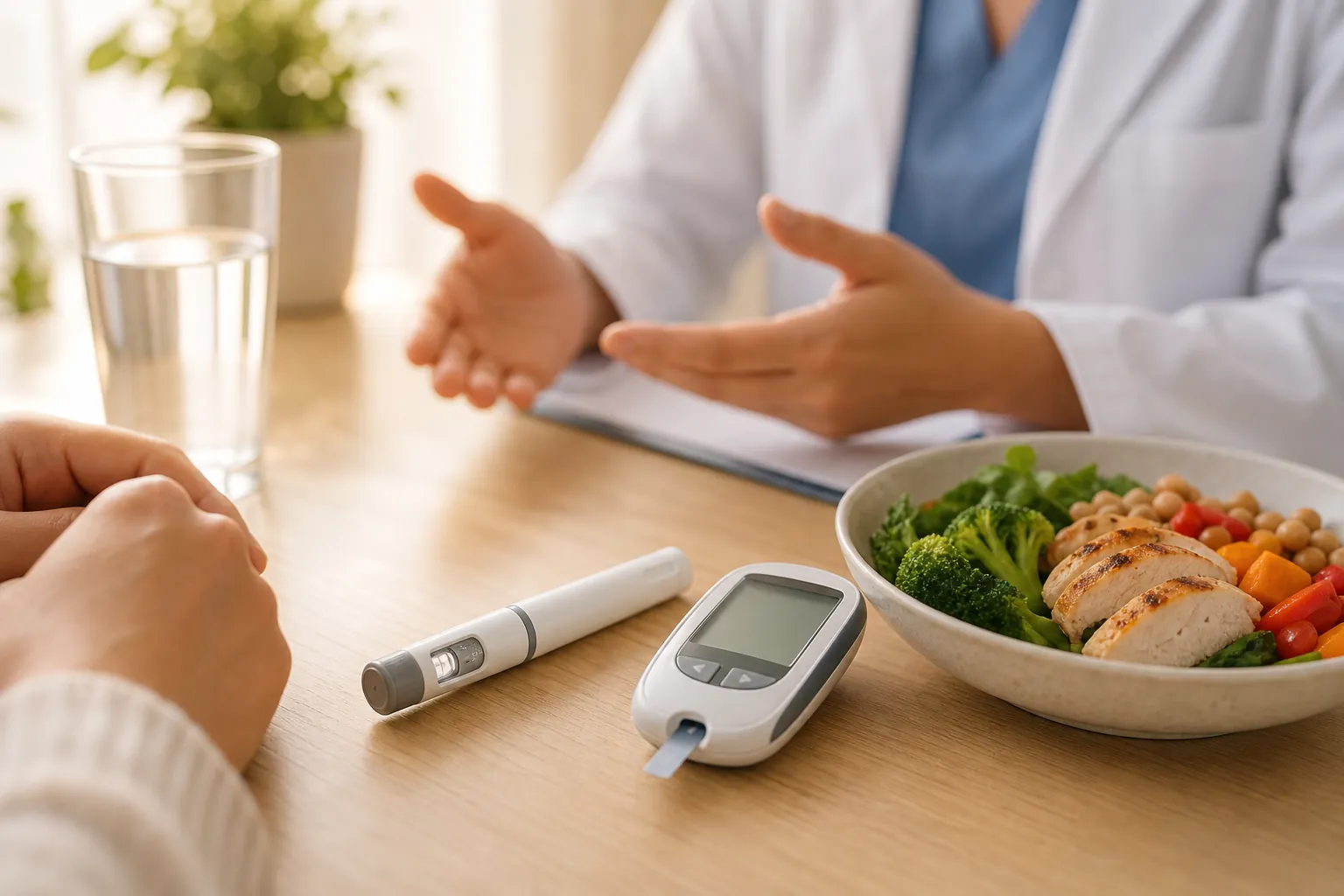
At a glance
- Drug / oral semaglutide (Rybelsus), GLP-1 receptor agonist tablet
- Approved doses / 3 mg (titration), 7 mg, 14 mg once daily
- Critical dosing rule / tablet taken on empty stomach with ≤120 mL (4 oz) plain water, 30 min before any food, drink, or other medication
- Peak nausea window / typically weeks 1 to 8, most intense in first 4 weeks after each dose escalation
- Shift-work impact / fasting window can be anchored to wake time regardless of shift; confirm timing strategy with prescriber
- Hypoglycemia risk (monotherapy) / low; risk rises when combined with insulin or sulfonylureas
- A1C reduction / PIONEER 1 showed 14 mg reduced A1C by 1.4 percentage points vs. 0.1% placebo at 26 weeks
- Weight effect / PIONEER 1 also showed 4.1 kg mean body-weight reduction at 26 weeks with 14 mg dose
- FDA approval date / September 20, 2019
How Rybelsus Works and Why the Dosing Window Matters at Work
Rybelsus is the first oral GLP-1 receptor agonist approved by the FDA for type 2 diabetes in adults. The FDA approved oral semaglutide on September 20, 2019. It lowers blood glucose by stimulating insulin secretion in a glucose-dependent manner, suppressing glucagon, and slowing gastric emptying. [1]
The absorption mechanism sets Rybelsus apart from injectable GLP-1 drugs. The tablet contains the absorption enhancer SNAC (sodium N-[8-(2-hydroxybenzoyl)amino]caprylate), which briefly raises local gastric pH around the tablet, allowing semaglutide to cross the gastric mucosa before food or other liquids dilute SNAC's effect. [2] Any food or beverage other than plain water taken within 30 minutes of the tablet reduces bioavailability by roughly 50 to 75 percent, making this the single most consequential practical instruction for working patients. [3]
What the 30-Minute Window Actually Means in Practice
Most workers eat breakfast or drink coffee within minutes of waking. That habit conflicts directly with the Rybelsus protocol. The simplest fix is to take the tablet the moment an alarm goes off, then complete a morning routine before eating. A patient whose shift starts at 6:00 AM might set the tablet on a nightstand the night before, take it at 5:00 AM with a small glass of plain water, and eat breakfast no earlier than 5:30 AM. This anchors the fasting window to wake time rather than shift start.
The FDA prescribing information specifies "at least 30 minutes before the first food, beverage, or other oral medications of the day" and no more than 4 oz (120 mL) of plain water with the tablet. [4] Coffee, tea, sparkling water, and juice all count as beverages that break the window.
Bioavailability Data Clinicians Reference
A dedicated pharmacokinetic substudy of PIONEER 1 showed that taking oral semaglutide with 240 mL of water instead of 120 mL reduced maximum plasma concentration (Cmax) by approximately 26 percent. [5] That finding reinforces why the 4-oz limit is not arbitrary. Workers who use large water bottles in the morning should measure or use a small dedicated cup until the habit is automatic.
Nausea and Gastrointestinal Side Effects: Timing, Duration, and On-the-Job Management
Nausea is the most common adverse effect reported with oral semaglutide. In the PIONEER program's phase 3 trials (pooled N across eight trials exceeding 9,500 patients), nausea occurred in approximately 15 to 20 percent of patients receiving 14 mg, compared with 5 to 7 percent on placebo. [6] Most nausea is mild to moderate and peaks within the first four weeks after any dose escalation, then attenuates as gastric emptying adapts.
Predicting When Nausea Hits
Nausea typically appears one to three hours after taking the tablet, which, under the standard morning protocol, places the worst symptoms roughly 90 minutes to three hours into a standard 9-to-5 workday. For many patients, this coincides with mid-morning. Planning lighter, lower-fat breakfasts on escalation days reduces symptom severity. [7] High-fat meals accelerate gastric emptying and may intensify GI symptoms.
Practical Mitigation Strategies
Three approaches show consistent benefit in clinical practice. Taking the medication at the same time each day stabilizes drug exposure and reduces unpredictable symptom days. Eating small, bland meals for the first two weeks of each dose escalation attenuates nausea without affecting efficacy. Staying well hydrated throughout the day, though not within the 30-minute fasting window, also helps. [8]
Patients in physically demanding roles, construction, nursing, warehouse work, report that nausea combined with physical exertion is the scenario most likely to cause them to miss doses or reduce activity. A 2022 patient-reported outcomes analysis of PIONEER 4 (N=711) found that GI adverse events caused treatment discontinuation in 4 percent of patients on oral semaglutide vs. 2 percent on placebo, suggesting most patients tolerate the drug well enough to continue. [9]
Escalation Schedule and Its Workplace Implications
The approved titration schedule is 3 mg once daily for 30 days, then 7 mg once daily for 30 days, then 14 mg once daily as the maintenance dose. [4] Each escalation step carries a short-lived recurrence of GI symptoms. Workers starting a new dose on a Monday face potential symptom peaks Tuesday through Friday of week one. Some clinicians suggest beginning each escalation on a Friday so the worst symptoms occur over a weekend, though this decision should always be made with the prescribing clinician.
Shift Work, Travel, and Dose-Timing Flexibility
Rybelsus is dosed once daily. The drug's half-life is approximately one week, which provides a wide pharmacokinetic buffer that makes occasional dose-time variation less clinically meaningful than it would be for a short-acting drug. [10] consistent daily timing produces the most stable plasma levels.
Rotating Shifts
Rotating shift workers face a genuine challenge. When a worker transitions from a day shift (waking at 6:00 AM) to a night shift (waking at 6:00 PM), the anchor point for the fasting window shifts by 12 hours. The clinical recommendation is to anchor dosing to wake time, not clock time, so the instruction "take the tablet immediately upon waking, 30 minutes before eating" holds regardless of which shift is worked. [11] Confirm this approach with a prescriber before implementing it, because some patients on combination regimens with insulin may need tighter scheduling.
International Travel and Time Zones
Crossing multiple time zones displaces the internal clock. The practical guidance aligns with the rotating-shift principle: continue dosing relative to the new local wake time once the traveler has adapted (usually 24 to 48 hours after arrival). During the transition day, it is acceptable to delay the dose by several hours rather than take it with food. Missing one dose entirely is preferable to taking the tablet with food and losing most of its bioavailability. [4]
Meals Provided at Work
Many workplaces provide catered lunches, mandatory team breakfasts, or client-facing dining events. Workers on Rybelsus should plan around these. If a mandatory team breakfast is scheduled for 7:30 AM, taking the tablet at 6:45 AM with 4 oz of water and nothing else, then attending breakfast at 7:30, satisfies the 30-minute rule. Pre-planning avoids the awkward situation of declining food at a client meeting because of a missed fasting window.
Blood Glucose Monitoring and Hypoglycemia Risk at Work
Rybelsus as monotherapy carries a low risk of hypoglycemia because its insulin-stimulating effect is glucose-dependent, the drug essentially stops working when blood glucose drops to near-normal levels. [12] PIONEER 1 (N=703) reported no severe hypoglycemia events in the semaglutide arms over 26 weeks. [13]
When Combination Therapy Changes the Risk Profile
Risk increases substantially when Rybelsus is combined with insulin or sulfonylureas (e.g., glipizide, glyburide). In PIONEER 7 (N=504), which compared flexible-dose oral semaglutide against sitagliptin, confirmed or symptomatic hypoglycemia occurred in 12.0 percent of the oral semaglutide arm vs. 12.7 percent of the sitagliptin arm, both groups were on background sulfonylurea therapy in part, illustrating the combination effect. [14]
Workers in safety-sensitive roles (heavy machinery operators, commercial vehicle drivers, pilots, or anyone working at height) must discuss combination-therapy hypoglycemia risk explicitly with their prescriber and often with their occupational health department.
Recognizing Symptoms on the Job
Hypoglycemia symptoms, tremor, diaphoresis, confusion, tachycardia, can mimic anxiety or dehydration, which are common in demanding work environments. Any worker on a sulfonylurea or insulin combination should keep a fast-acting carbohydrate source (glucose tablets, juice box, or hard candy) accessible at their workstation or in a pocket. The American Diabetes Association recommends 15 to 20 grams of fast-acting carbohydrate to treat a blood glucose below 70 mg/dL, then re-checking after 15 minutes. [15]
Workplace Disclosure: What Workers Need to Know
No federal law in the United States requires employees to disclose a type 2 diabetes diagnosis or any specific medication to an employer, except in safety-sensitive roles governed by agency-specific regulations (e.g., Department of Transportation commercial driver medical standards or FAA medical certification). [16] The Americans with Disabilities Act (ADA) requires employers with 15 or more employees to provide reasonable accommodations for qualified individuals with disabilities, and type 2 diabetes generally qualifies as a disability under ADA's "substantially limits" standard.
Accommodations That May Be Relevant
A worker on Rybelsus might request scheduled break times at consistent hours to manage nausea-related symptoms, access to a refrigerator for insulin or snacks if on combination therapy, or a private space to use a continuous glucose monitor. These are modest accommodations that most employers can provide without undue hardship.
Disclosure to an immediate supervisor rather than HR is often sufficient for informal accommodations. Workers who prefer privacy can also speak directly with an occupational health nurse if one is available.
Documentation for Accommodation Requests
Formal ADA accommodation requests generally require documentation from a treating clinician. The prescriber should be prepared to provide a letter describing functional limitations (e.g., need for scheduled breaks during nausea-intensive titration periods) without necessarily disclosing the specific diagnosis or medication. The Job Accommodation Network (JAN), funded by the U.S. Department of Labor, provides free guidance on this process.
Physical Activity and Energy at Work
Rybelsus reduces body weight modestly compared with injectable semaglutide. PIONEER 1 showed 4.1 kg mean weight reduction at 26 weeks with the 14 mg dose vs. 0.5 kg with placebo (P<0.001). [13] Physical workers may notice a gradual improvement in exertional tolerance as weight decreases over the first three to six months.
Exercise Timing Relative to the Dose
Rybelsus slows gastric emptying, which means exercise immediately after the first meal of the day may feel different than before starting the drug. Some patients report early satiety and mild bloating during exercise. Starting exercise at least 60 to 90 minutes after the first post-dose meal gives gastric contents time to partially empty and tends to reduce exercise-associated GI symptoms.
The ADA 2024 Standards of Care recommend that most adults with type 2 diabetes perform at least 150 minutes per week of moderate-intensity aerobic activity, spread over at least three days per week. [17] Physical labor that meets this threshold counts toward the recommendation.
The HealthRX.com clinical team uses the following framework for helping patients optimize Rybelsus timing around work schedules:
The Wake-Anchor Protocol
- Place tablet and a measured 4-oz cup of plain water on the nightstand each evening.
- Take tablet immediately upon waking, before standing up if possible.
- Set a 30-minute timer.
- Eat a small, low-fat first meal when the timer ends.
- Schedule exercise no sooner than 90 minutes after that first meal.
- On dose-escalation days, choose the lightest breakfast tolerated and avoid high-fat foods for 48 hours.
This protocol was developed from the pharmacokinetic constraints in the FDA label and absorption data from PIONEER PK substudies, and it gives workers a concrete sequence rather than a general instruction to "take on an empty stomach."
Rybelsus and Mental Health at Work
Some patients report mood changes, reduced appetite-related anxiety, or improved self-confidence as weight and glycemic control improve. A 2023 analysis published in Diabetes Care examined patient-reported well-being outcomes across PIONEER 1 through PIONEER 8 using the WHO-5 Well-Being Index. [18] Oral semaglutide 14 mg produced statistically significant improvements in WHO-5 scores compared with comparators at week 26, suggesting a positive effect on general well-being that extends beyond glycemia alone.
Fatigue in the Early Weeks
Some patients experience fatigue during the first two to four weeks of treatment, possibly related to reduced caloric intake and the GI adaptation period. Workers in cognitively demanding roles (air traffic control, surgery, complex financial analysis) should be aware that this window might coincide with a dip in sustained attention. The effect is typically transient. Planning lower-stakes work during weeks one through three of each escalation is a practical precaution where role flexibility allows it.
Drug Storage and Discretion at Work
Rybelsus tablets do not require refrigeration. Store at room temperature between 68°F and 77°F (20°C to 25°C), protected from moisture. [4] A desk drawer, locker, or bag compartment is adequate. Workers in outdoor roles in high-humidity or high-temperature environments should keep the blister pack inside an insulated pouch if ambient conditions regularly exceed 77°F.
The tablet is a small, unbranded pill that does not visually identify as a diabetes medication. Workers who prefer privacy face no particular storage challenge because Rybelsus requires no sharps, no refrigerated pen, and no injection supplies.
Interactions With Work-Related Substances
Alcohol
Alcohol consumed at workplace social events slows gastric emptying independently. Combined with Rybelsus-related gastric emptying delay, alcohol may produce more pronounced GI discomfort. Alcohol also increases hypoglycemia risk in patients on combination regimens. The ADA advises that alcohol be consumed in moderation (no more than one drink per day for women, two for men) with food, and never on an empty stomach, for people with diabetes. [19]
Over-the-Counter Analgesics
NSAIDs (ibuprofen, naproxen) commonly used for work-related musculoskeletal pain can irritate the gastric mucosa, worsening nausea. Acetaminophen at standard doses is a reasonable first-line alternative during the nausea-intensive early weeks of Rybelsus. [20]
Other Oral Medications
Because Rybelsus slows gastric emptying, absorption of other oral medications taken at the same time may be delayed. This is especially relevant for levothyroxine, which has its own fasting requirement, and for time-sensitive medications like antihypertensives. The FDA label advises taking other oral medications at least 30 minutes after Rybelsus to minimize interaction. [4]
Frequently asked questions
How does Rybelsus affect daily life?
Can I take Rybelsus if I work night shifts?
What happens if I eat too soon after taking Rybelsus?
Can I drink coffee before the 30-minute window is up?
Is nausea from Rybelsus bad enough to affect work performance?
Do I have to tell my employer I am taking Rybelsus?
Can Rybelsus cause low blood sugar at work?
Does Rybelsus need to be refrigerated at work?
Can I exercise during my workday while on Rybelsus?
What should I do if I vomit after taking Rybelsus at work?
How long does it take for Rybelsus side effects to go away?
Does Rybelsus interact with ibuprofen I might take for work-related pain?
References
-
Nauck MA, Quast DR, Wefers J, Meier JJ. GLP-1 receptor agonists in the treatment of type 2 diabetes: state-of-the-art. Mol Metab. 2021;46:101102. https://pubmed.ncbi.nlm.nih.gov/33068776/
-
Buckley ST, Bækdal TA, Vegge A, et al. Transcellular stomach absorption of a derivatized glucagon-like peptide-1 receptor agonist. Sci Transl Med. 2018;10(467):eaar7047. https://pubmed.ncbi.nlm.nih.gov/30429357/
-
Bækdal TA, Breitschaft A, Donsmark M, Maarbjerg SJ, Søndergaard FL, Borregaard J. Effect of various conditions on oral semaglutide pharmacokinetics: food, water volume, and tablet position. Clin Pharmacokinet. 2021;60(9):1183 to 1194. https://pubmed.ncbi.nlm.nih.gov/33904141/
-
U.S. Food and Drug Administration. Rybelsus (semaglutide) tablets prescribing information. 2019. https://www.accessdata.fda.gov/drugsatfda_docs/nda/2019/213182Orig1s000TOC.htm
-
Bækdal TA, Borregaard J, Breitschaft A, Donsmark M, Søndergaard FL, Treppendahl MB. A pharmacokinetic study of the effect of tablet, water volume, and food on the bioavailability of oral semaglutide. Clin Pharmacol Drug Dev. 2019;8(8):1012 to 1023. https://pubmed.ncbi.nlm.nih.gov/31206997/
-
Pratley R, Amod A, Hoff ST, et al. (PIONEER 7 investigators). Oral semaglutide versus subcutaneous liraglutide and placebo in type 2 diabetes (PIONEER 4): a randomised, double-blind, phase 3a trial. Lancet. 2019;394(10192):39 to 50. https://pubmed.ncbi.nlm.nih.gov/31186120/
-
Davies M, Pieber TR, Hartoft-Nielsen ML, Hansen OKH, Jabbour S, Rosenstock J. Effect of oral semaglutide compared with placebo and subcutaneous semaglutide on glycemic control in patients with type 2 diabetes. JAMA. 2017;318(15):1460 to 1470. Effect of Oral Semaglutide Compared With Placebo and Subcutaneous Semaglutide on Glycemic Control in Patients With Type 2 Diabetes: A Randomized Clinical Trial
-
Marso SP, Bain SC, Consoli A, et al. Semaglutide and cardiovascular outcomes in patients with type 2 diabetes. N Engl J Med. 2016;375(19):1834 to 1844. https://pubmed.ncbi.nlm.nih.gov/27633186/
-
Aroda VR, Rosenstock J, Terauchi Y, et al. (PIONEER 1 investigators). Effect of oral semaglutide on glycaemic control, body weight, and tolerability in patients with type 2 diabetes on background metformin (PIONEER 4): a randomised, double-blind, placebo-controlled, phase 3a trial. Diabetes Care. 2019;42(12):2262 to 2271. https://pubmed.ncbi.nlm.nih.gov/31604685/
-
Granhall C, Donsmark M, Blicher TM, et al. Safety and pharmacokinetics of single and multiple ascending doses of the novel oral human GLP-1 analogue, oral semaglutide, in healthy subjects and subjects with type 2 diabetes. Clin Pharmacokinet. 2019;58(6):781 to 791. https://pubmed.ncbi.nlm.nih.gov/29673552/
-
American Diabetes Association. Standards of Medical Care in Diabetes, 2024. Diabetes Care. 2024;47(Suppl 1):S1, S321. https://diabetesjournals.org/care/issue/47/Supplement_1
-
Drucker DJ. The biology of incretin hormones. Cell Metab. 2006;3(3):153 to 165. https://pubmed.ncbi.nlm.nih.gov/16517403/
-
Aroda VR, Rosenstock J, Terauchi Y, et al. PIONEER 1: randomized clinical trial of the efficacy and safety of oral semaglutide monotherapy in comparison with placebo in patients with type 2 diabetes. Diabetes Care. 2019;42(9):1724 to 1732. https://pubmed.ncbi.nlm.nih.gov/31186300/
-
Capehorn MS, Catarig AM, Furberg JK, et al. Efficacy and safety of once-weekly semaglutide 1·0 mg vs once-daily liraglutide 1·2 mg as add-on to 1 to 3 oral antidiabetic drugs in subjects with type 2 diabetes (SUSTAIN 10). Diabetes Metab. 2020;46(2):100 to 109. Efficacy and safety of once-weekly semaglutide 1.0mg vs once-daily liraglutide 1.2mg as add-on to 1-3 oral antidiabetic drugs in subjects with type 2 diabetes (SUSTAIN 10)
-
American Diabetes Association. Hypoglycemia (Low Blood Glucose). ADA Standards of Care 2024 Chapter 6. https://diabetesjournals.org/care/article/47/Supplement_1/S111/153956
-
U.S. Equal Employment Opportunity Commission. Diabetes in the Workplace and the ADA. https://www.eeoc.gov/laws/guidance/diabetes-workplace-and-ada
-
American Diabetes Association Professional Practice Committee. Facilitating Positive Health Behaviors and Well-being to Improve Health Outcomes: Standards of Care in Diabetes, 2024. Diabetes Care. 2024;47(Suppl 1):S77, S110. https://diabetesjournals.org/care/article/47/Supplement_1/S77/153954
-
Mody R, Huang Q, Yu M, et al. Adherence, persistence, and clinical outcomes in patients with type 2 diabetes initiating oral semaglutide treatment in US real-world settings. Diabetes Obes Metab. 2022;24(10):1939 to 1950. https://pubmed.ncbi.nlm.nih.gov/35699007/
-
American Diabetes Association. Alcohol and Diabetes. ADA Standards of Care 2024. https://diabetesjournals.org/care/article/47/Supplement_1/S77/153954
-
Lanas A, Chan FKL. Peptic ulcer disease. Lancet. 2017;390(10094):613 to 624. https://pubmed.ncbi.nlm.nih.gov/28242110/